Homemade Bread Recipe: Easy Stand Mixer Loaf for Busy Moms
Nothing beats the smell, warmth, and flavor of freshly baked bread—the perfect side for any dinner. Baking bread at home doesn’t require fancy equipment, just a bowl, measuring spoons, a stand mixer (or strong arms), a loaf pan, and a few pantry staples: flour, yeast, water, salt, and sugar.
Proofing Yeast (5-Minute Magic)
I start by proofing the yeast: 1¼ cups of warm water go into my stand mixer bowl with 1 tablespoon of sugar, then I sprinkle in 1 tablespoon of active dry yeast. I gently stir with a fork and wait. After about five minutes, the surface foams with that sweet, earthy yeast smell—like bread meets beer. At that point, I know the yeast is alive and ready.
Mixing the Easiest Bread Dough
In a separate bowl, I whisk together 3½ cups of bread flour and 1 teaspoon of salt until evenly mixed, feeling that familiar powdery texture between my fingers. I pour the foamy yeast mixture into the dry ingredients and start mixing with the dough hook on my stand mixer.
Soon, it comes together into a sticky shaggy dough—not pretty yet, but exactly where it should be.
I cover the bowl and let the dough rest (autolyse) for about 20 minutes. This lets the flour hydrate and makes the dough much easier to work with. When I uncover it, the transformation begins—shaggy mess to elastic dough ball. It still amazes me every time.
Kneading + First Rise (Therapy Time)
The kneading process is fun to watch. At first, the dough resists, but as the mixer works (or your hands knead), it slowly becomes smooth and supple, yielding to pressure and then springing back. After about 8–10 minutes of kneading, it’s ready for the first rise.
I leave the dough in the bowl, cover it, and let it rise for about an hour, until it has doubled in size.
While I wait, I prep my loaf pan with a thin layer of lard and flour for a natural nonstick surface—no special sprays or chemical coatings needed.
Shaping + Final Rise (Roasting Pan Hack)
After the first rise, I gently deflate the dough and turn it out onto a lightly floured surface. To shape the loaf, I stretch the top surface to create tension, pinch the bottom seam together, and roll it into a tight cylinder until I’m happy with the shape.
Then I place the shaped loaf into the prepared loaf pan. Here’s my busy mom hack: I set that loaf pan inside a medium-size roasting pan with a lid. I cover the roasting pan and let the dough rise again until it just crests above the edge of the loaf pan. This setup creates a Dutch-oven-style environment without needing to preheat a heavy Dutch oven.
Baking Perfect Bread Crumb
While the dough finishes its second rise, I preheat the oven to 425°F.
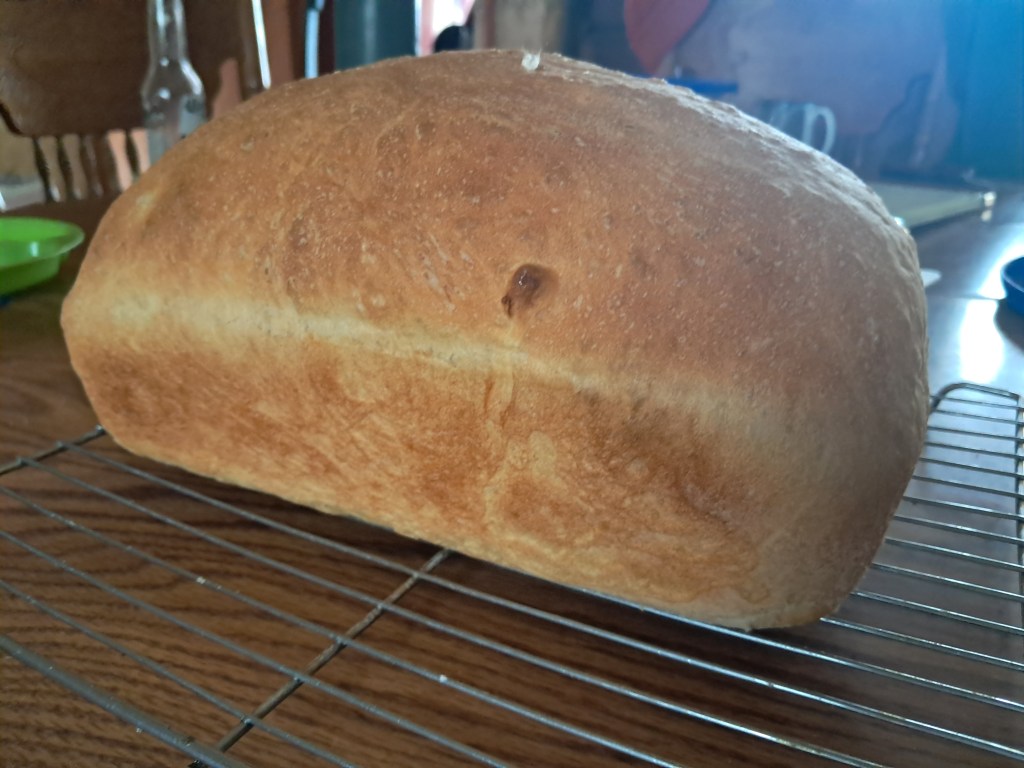
When the oven is ready, I slide the covered roasting pan (with the loaf pan inside) into the oven. The lid traps steam and helps the bread rise beautifully. I bake it covered for 25 minutes, then carefully remove the lid and bake for another 10 minutes, until the top is deeply golden.
The kitchen fills with that irresistible fresh bread aroma. Through the oven window, I watch the crust caramelize as the steam inside gives the loaf that gorgeous oven spring.
Cutting Fresh Bread (Patience Test)
This is the hardest part: waiting. I resist cutting the bread right away. The crust crackles softly as it cools, and I take that as my signal. Cutting too soon can squish the loaf and collapse the airy interior.
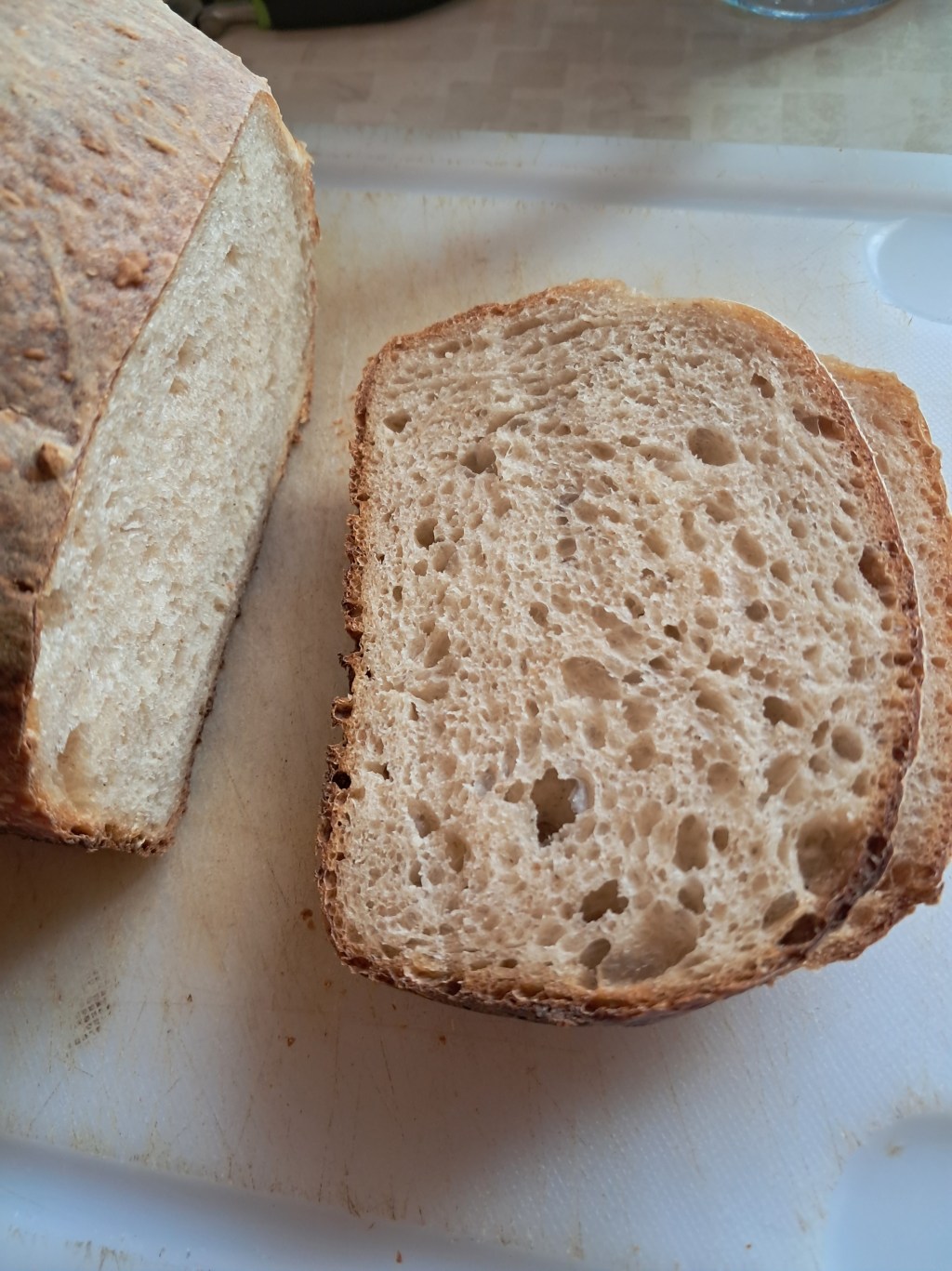
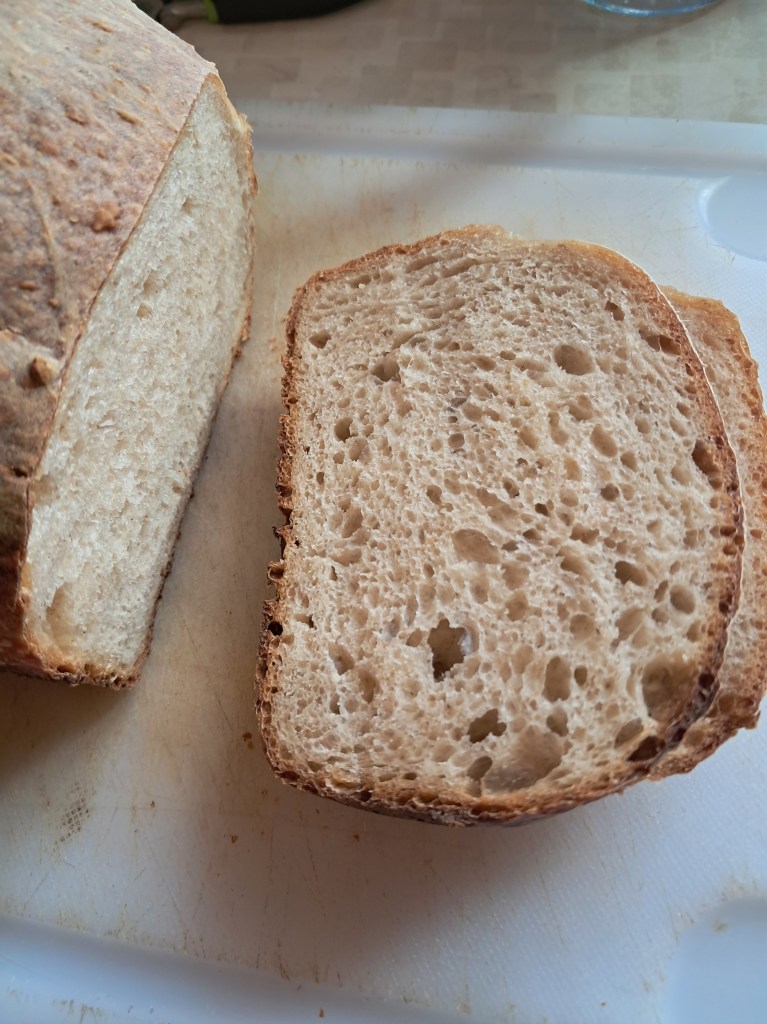
Once it’s cooled just enough, I slice into the loaf with a bread knife. Steam rushes out, and I see a soft, well-aerated crumb—those lovely little holes all the way through. A pat of butter melts on contact. Crunchy crust meets soft, tender interior. Simple, homestead perfection.
What’s your favorite way to eat fresh bread? As a dinner side, French toast, toast with jam?
❤️ Like if you can almost smell it through the screen.
📲 Share with a busy friend who’s always wanted to try baking bread.
💬 Comment your go-to topping: butter, honey, jam, or all of the above?



















 Practical Homesteading