Favorite Shoes: My Alaska-to-Homestead Life Journey
I’d have to say my favorite pair of shoes was a pair of really comfortable sandals. They weren’t fancy, but they were perfect. They were waterproof enough for wet grass and surprise puddles (though they’d get slippery when truly soaked), durable, and so comfortable they practically disappeared on my feet. I bought them the year we got married. As soon as weather warmed, they became my summer uniform—tucked away only when socks and sandals crossed the line.
Alaska Honeymoon Adventure Shoes
Those sandals carried me through epic travel adventures. I wore them hiking on our road trip honeymoon to Alaska, when endless roads met impossibly big skies. They took me down trails in Denali National Park and Kenai Fjords National Park, where crisp air made me feel gloriously small.
I had them on gold panning outside Anchorage (real prospecting is unglamorous!), watching the sun barely dip at 3 a.m. in that surreal twilight, and waiting for grizzlies at Fish Creek Wildlife Observation Site near Hyder. They climbed me to Salmon Glacier’s overlook, where I captured a magical shot—the straps already molded perfectly to my feet by then.
Homestead Life + Pregnancy Companion
Then life shifted from road maps to roots. Several months post-honeymoon, those same sandals walked our first homestead property. I squished through soft ground, stepped over pasture patches, and imagined gardens and animal pens. Soon after, pregnant with our son, they carried my slight waddle across that future home—trading Alaskan rivers for tall grass and fence lines.
Shoes That Lived My Story
They lasted several more seasons through new-mom routines—feedings, chores, sunset walks on our land. When frayed straps finally gave out, letting go felt like closing a chapter: newlywed adventures, homestead dreams, pregnancy possibility.
Replacements looked similar but lasted one season, not four. They didn’t live the same story.
When I think of my favorite travel shoes, they’re about transformation—from glacier overlooks to growing our family and homestead. They carried newly married me toward the life I’d only dreamed of.
Do your favorite shoes have a story? Let me know in the comments!
What’s YOUR favorite shoes story? ❤️ Like if sandals = life chapters 👶 Share with someone who loves Alaska travel stories 💬 Drop below: Hiking boots? Wedding shoes? Pregnancy sneakers?
Loved this? Subscribe for weekly homesteading tips:
When great news hits—like that electric “you won” phone ring or the email saying my writing got published in the local paper—I find my husband first. He’s my confidante, best friend, and life partner through every homestead adventure.
My heart’s pounding, but here’s the thing: I don’t post it on Facebook or call my best friend yet. I track him down right then—whether he’s upstairs sawing away at our renovation project, out back feeding the pigs, or in the kitchen helping our toddler reach for homemade bread.
“Hey,” I say, grabbing both his hands, “you will not believe this.” His eyes light up instantly, then he pulls me into that familiar hug where the world just quiets. We laugh, do a silly jig right there amid chicken chores or pancake batter splatters—letting that joy multiply before telling the kids.
Working Mom’s Homestead Wins On our homestead, big wins—like selling our pigs at market, getting my writing published locally, or nailing that sourdough starter—feel bigger shared soul-to-soul first. No fanfare needed, just us. Then we plan the family celebration: hamburgers on the picnic table under our maple tree, homemade ice cream under summer stars.
That’s our slow living rhythm. News shared heart-to-heart first builds everything else—family cheers, neighbor toasts, grateful posts. He grounds my excitement into something lasting, reminding me why we chose this simple, connected homestead life.
Four reasons he’s always first: Instant emotional anchor. Turns “my” news into “our” victory. Sets joyful tone for kids. Keeps our homestead priorities straight.
So tell me—who’s your first call when great news hits?
If this resonated with you, please like and share with others.
Loved this? Subscribe for weekly homesteading tips:
If this resonated with you, please like and share with others.
Loved this? Subscribe for weekly homesteading tips:
This prompt stumped me at first. I love cooking most things, especially when I get to share the meal with people I love. So I took the easy route and invited my six‑year‑old son into the kitchen to help me decide.
His first instinct was “cookie bars,” which is adorable and perfectly on brand for him—but for me? That’s too easy a win. So we pivoted, and his second answer surprised me: my Chinese‑inspired dumplings—proof he’s been paying attention.
A Learner in the Kitchen
I call them “Chinese‑inspired” because I’m not Chinese, and I’ve never been to China. That disclaimer isn’t an apology—it’s a reminder that I’m always learning in the kitchen.
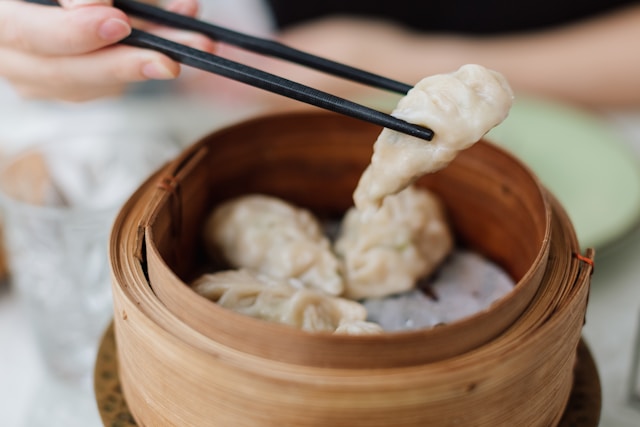
These dumplings are the kind you steam rather than fry: thin flour wrappers cradling a savory mix of meat and vegetables. I fold them with a rhythm that often makes it look like my son did the work, which feels exactly right—dumplings should look handled, not manufactured. Every crimped edge reminds me that cooking is more about process than perfection.
A College Detour in Mandarin
My dumpling story began long before the dough hit the counter. In college, I took three semesters of Chinese on a whim—Spanish was full, and Chinese looked interesting.
I learned how a stray tone could turn “mother” into “horse,” a lesson that stuck far beyond the classroom. On Friday nights, a Chinese roundtable met on campus. We practiced speaking—and sometimes, we shared steamed dumplings.
I can still taste that first one, dipped in soy sauce, black vinegar, and sesame oil: warm, tender, and endlessly comforting. It tasted like a small passport stamp on my college life.
The Janky Restaurant Valentine
Months later, early in our relationship, my now‑husband and I found ourselves in a tiny, sticky‑floored Chinese restaurant on State Street in Madison. It was Valentine’s Day. The décor was questionable, the menu unpredictable, but the dumplings? Pure joy.
We ate until we were full and a little giddy. That meal wasn’t about romance; it was about finding comfort in something humble and good—a truth the sticky floor couldn’t ruin.
Bringing Dumplings Home
As I started cooking more at home, I wanted to recreate that feeling. I planted bok choy in the garden—there’s something deeply satisfying about pulling a crisp green leaf from soil you’ve nurtured.
I experimented with what I had: powdered ginger instead of fresh, onions for sweetness, ground beef for substance. A simple bamboo steamer lined with cabbage leaves kept the dumplings from sticking to the rack.
The dumplings weren’t authentic, but they were ours. And authenticity, for me, isn’t a destination—it’s a doorway to learning and connection.
Learning Together, One Mess at a Time
Now, when my son and I roll dough together, the process has turned into a ritual. We talk, we laugh, we listen to a podcast, and flour drifts across the counter (and occasionally, Black Cat).
We’re not just making food—we’re making memories that stick, as any good dumpling does. And honestly, we laugh more over flour than over finished meals.
What It All Comes Back To
Food weaves together people, places, and time. These dumplings hold it all—college curiosity, early love, homegrown bok choy, and the joyful chaos of raising a child.
Growing food, raising kids, building community—it all finds its way back to the kitchen.
Until I attended college, I believed that cultural influences on food were largely a thing of the past. I grew up in a part of small-town Wisconsin where the cultural influence of my German dairy farming heritage had diminished over the years. Regional dishes, while still present, were largely nationalized. Food was sourced from boxes…
When I pulled open the long-forgotten box of clothes, I expected nothing more than sweaters and dresses that hadn’t seen daylight since before we moved. Instead, I uncovered an archive of myself—fabric woven with memory and identity, versions of me I thought I’d misplaced in the blur of motherhood, upheaval, and quiet reinvention. Threads I…
Sports have never been my main passion. But they always seem to sneak back into my life — especially when community and connection are involved.
For someone more comfortable in the garden than on the field, I’ve learned that sports aren’t really about keeping score. They’re about teamwork, laughter, and shared stories that stick with you long after the final whistle.
Back When I Played
Back in graduate school, a group of friends and colleagues had a standing tradition of meeting twice a week to rotate between volleyball, soccer, and ultimate frisbee. Rain or shine, homework or no, we almost always managed to get enough players for two teams. Those games were the highlight of my week — a sweaty, laughter-filled break from the grind of grad school. We learned to read each other’s signals, celebrate small victories, and laugh off missed goals. These lessons translated well both to the lab and to the classroom. And, of course, the post-game burgers and beers were every bit as important as the play itself.
The Knee Incident (and Das Boot)
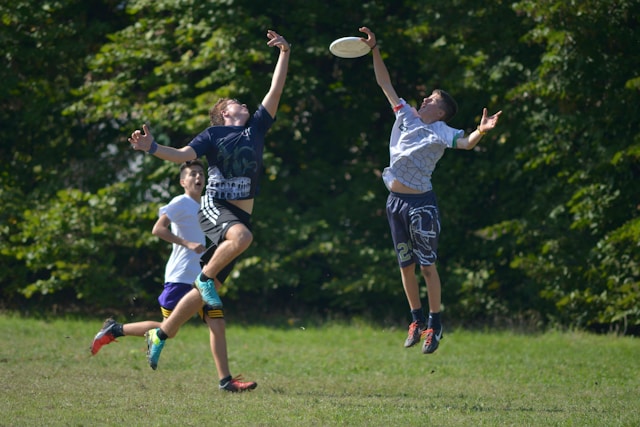
My sports “career,” however, took a dramatic turn during one fateful ultimate frisbee game. I jumped, landed wrong, and felt that awful twist — I had dislocated my right kneecap. That injury ended my athletic adventures at the tender age of 24. I still remember that sharp pop, the scramble to the sidelines, and the next day’s slow walk to urgent care. A few weeks later, at my own going-away party and still determined to have fun, I went with my crew to the Essenhaus to dance the polka. Let’s just say: bad idea. Same knee, same problem.
The type of jump I made when I dislocated my kneecap. I caught the frisbee too. Photo by Stefano Zocca on Unsplash
Looking back, I can admit that drinking Das Boot probably had something to do with my decision to hit the dance floor on a bum knee. Lesson learned, but it’s still one of those stories we laugh about around the table. Now, more than a decade later, the memory makes me smile far more than it aches.
Watching Now, Not Playing
These days, sports play a different role in my life. I may not be on the field anymore, but I love the energy of watching a good game — especially live. There’s something about a football or baseball crowd that brings people together so naturally. Strangers high-five after a score, pass along shared cheers, or tease rival fans in good fun. Tailgates are my favorite part — not because of the game itself, but for the food and fellowship that surround them. The smoky scent of burgers, laughter spilling from nearby tents, friends swapping recipes for dips or barbecue sauces — it’s all about connection. Like sharing a dish at a potluck or passing homegrown tomatoes over the fence, sports gatherings are another way we build community one joyful moment at a time.
From Tailgates to Home Games
On game days at home, the living room becomes our little stadium. The kids get into the excitement (mostly for the snacks), and we all share those small, easy moments of joy — a great play, a plate of nachos disappearing too quickly, and the cat hiding under the couch, wondering why the humans are hollering again. I may not follow every stat or play, but I love how sports create reasons to pause, eat, laugh, and just be together — much like a shared meal from the garden or a neighborhood cookout.
A Different Kind of Teamwork
I sometimes joke that I traded my frisbee for a trowel and volleyball sand for garden soil, but the lessons stuck. Whether it’s tending tomatoes, playing pickup soccer with my kids in the yard, or cheering from the sidelines, the spirit of teamwork, joy, and shared stories keeps showing up.
In the end, community is the real team sport — and that’s one I’ll never retire from.
What’s one sport or shared activity that’s helped your community grow closer?
If this story made you smile, share it with a friend. Better yet, invite them over for a game-day snack and a laugh. Subscribe for more reflections on growing food, raising kids, and building community.
If you started a sports team, what would the colors and mascot be? Some people dream of owning a football franchise or a professional basketball team. Me? I’d rather build something smaller—something you can actually show up for without needing a corporate sponsor or a teleprompter. Mainstream sports have their own kind of magic, sure,…
Raising kids, growing food, and building community on a real-life farmstead. A story about why we’re stronger together, at home, in the garden, and as a village.
What the seasons can teach us about slowing down, finding balance, and belonging A version of this essay appears in the January 8, 2026 edition of the Dodge County Pionier.
Ask most people how they measure time today, and the answers sound familiar: alarms, deadlines, color‑coded calendars, the endless scroll of days on a glowing screen. Phone notifications cut across dinner, school schedules slice afternoons into drop‑offs and pickups, and the next bill due date is never far from mind.
Where I live, time follows a different rhythm—guided not by screens but by the soil itself.
My family keeps time by the signals nature gives: sap rising in March, turtles crossing the road in May, fireflies at dusk in June, corn drying into gold by October. A cold north wind can say “November” more clearly than any app. These cycles remind us that time isn’t a race toward exhaustion; it’s a loop—a pattern of effort, rest, and return.
In a world obsessed with productivity, the land offers a quiet lesson: slowing down isn’t falling behind. It’s catching up to what matters.
Winter: the radical act of rest
When the holidays end and snow hushes the fields, stillness takes hold. The world outside the window turns soft and muted, as if someone turned down the volume. Days stretch long. Nights invite reading, conversation, and quiet.
In modern life, that slowness often gets labeled “unproductive.” Inbox counters climb even as the sun sets before dinner. But in the rural calendar, winter is preparation—the season the earth itself uses to heal. Under the frozen top layer, roots are resting, waiting for their cue.
Inside, a different kind of work takes over: soup on the stove, a deck of cards on the table, a cat snoring near the heat register. There’s no badge for this kind of work, but the house feels fuller for it.
Winter offers permission to pause. Even without a farm or a woodstove, anyone can claim a bit of that wisdom: choose a few evenings when nothing is scheduled, let the phone stay in another room, and let the quiet do its work.
Spring: a rehearsal for renewal
Spring announces itself quietly at first—a drip of meltwater from the eaves, the smell of mud, the first bird that sings before sunrise. One morning the snow looks tired; the next, you notice a thin green line where the lawn meets the sidewalk.
We tap trees and plant seeds, acts that serve no instant gratification. The sap runs clear and cold, one slow drop after another into plastic jugs. Seed trays sit under lights, all dirt and hope, for weeks before anything green appears. Yet when syrup warms pancakes or sprouts unfurl in a window box, you can taste reward drawn from patience.
Spring teaches urgency without panic. Ramps, asparagus, morels, and rhubarb arrive in a rush, then slip away as if they were never there. The season reminds us that beginnings are not one-time events but recurring invitations. The world doesn’t ask, “Did you start perfectly?” It asks, “Are you willing to start again?”
You don’t need a sugar bush or a greenhouse to feel this. A single pot of herbs on a balcony, or a commitment to walk the same city block once a week and notice what’s blooming, can turn spring into a ritual rather than a blur.
And after that first rush of green, the land hardly pauses—by July, it’s in full voice.
Summer: where work and joy meet
By midsummer, everything hums. In the afternoon heat, insects buzz like a low electric current in the fields. Lawnmowers start and stop up and down the street. Windows are open, and someone, somewhere, is grilling.
Gardens overflow. Tomatoes split if you don’t pick them in time. Zucchini multiplies on the counter and quietly appears on neighbors’ doorsteps. Kids shriek through sprinklers, leaving wet footprints on hot pavement. Even the air smells different: cut grass, sunscreen, diesel from a tractor on a distant road.
Like the growing season, our best days often mix effort with enjoyment. Summer’s lesson is simple: work and joy are not enemies. They often belong in the same hour. There is satisfaction in going to bed with dirt under your fingernails and the memory of a late sunset still bright in your mind.
The reward for effort can be as close as a ripe berry, a shared picnic in a city park, or a tired, happy body at the end of a long, light-filled day.
Autumn: gratitude and gathering
Autumn softens the light and sharpens the air. Mornings carry that first hint of frost, and you can see your breath if you step outside before the sun gets serious. Leaves turn from green to gold and red, then crunch underfoot in the driveway.
The season’s abundance—pumpkins on porches, apples piled in crates, shelves lined with jars and loaves—reminds us how much depends on cooperation: between people, earth, and time. No one person makes a harvest alone. There are seed savers, farm workers, truck drivers, grocers, and cooks all woven into the meal.
Gratitude, in this season, isn’t just a word reserved for a single holiday. It’s the habit of looking at an ordinary table—soup, bread, a piece of fruit—and seeing the many hands and seasons that brought it there.
Even in an apartment, autumn can become a practice of gathering: inviting friends over for a simple pot of chili, walking through a park under changing trees, or taking five extra minutes to watch the early dark settle in instead of rushing past it.
What circles can teach a linear world
When winter returns, it’s easy to see it as a setback: dark, cold, the end of something. But the more closely the seasons are watched, the clearer it becomes that time does not move in a straight line. It hums in a circle.
Each season brings another chance to begin again—not by doing more, but by noticing more. The calendar on the wall may march from one square to the next, but the world outside repeats its old, trustworthy patterns: thaw, bloom, heat, harvest, rest.
Wherever you live—city or countryside—you can keep time with the land in your own way. Let January be a little slower. Let spring mean at least one meal built around what is fresh where you are. Let summer include a night spent outdoors until it’s fully dark. Let autumn carry a moment of thanks, even if it’s just whispered over a sink full of dishes.
The land has never hurried. It always arrives where it should. Maybe we can too, if we’re willing to step out of the race now and then and walk in circles for a while instead.
How could you bring a bit of seasonal balance into your daily routine? Please let me know below in the comments.
If this reflection on seasonal living resonated with you, please take a moment to like and share it with someone who might need a gentler rhythm right now.
To receive future essays on slow, seasonal living straight to your inbox, subscribe to the blog and join this little community of people learning to keep time with the land.
Welcome to the rural economy—where value isn’t counted in cash but in connections. Beneath the wide-open sky, where grain silos and fence posts stitch the land into neat parcels, the real currency is not minted or printed. It’s grown and built, raised and traded. Trust, hard work, the barter of honest services and handmade goods.…
Happiness doesn’t come from perfect days—it grows in balance, family, friendship, and the quiet rhythm of everyday life. Here’s how I find joy in being present.
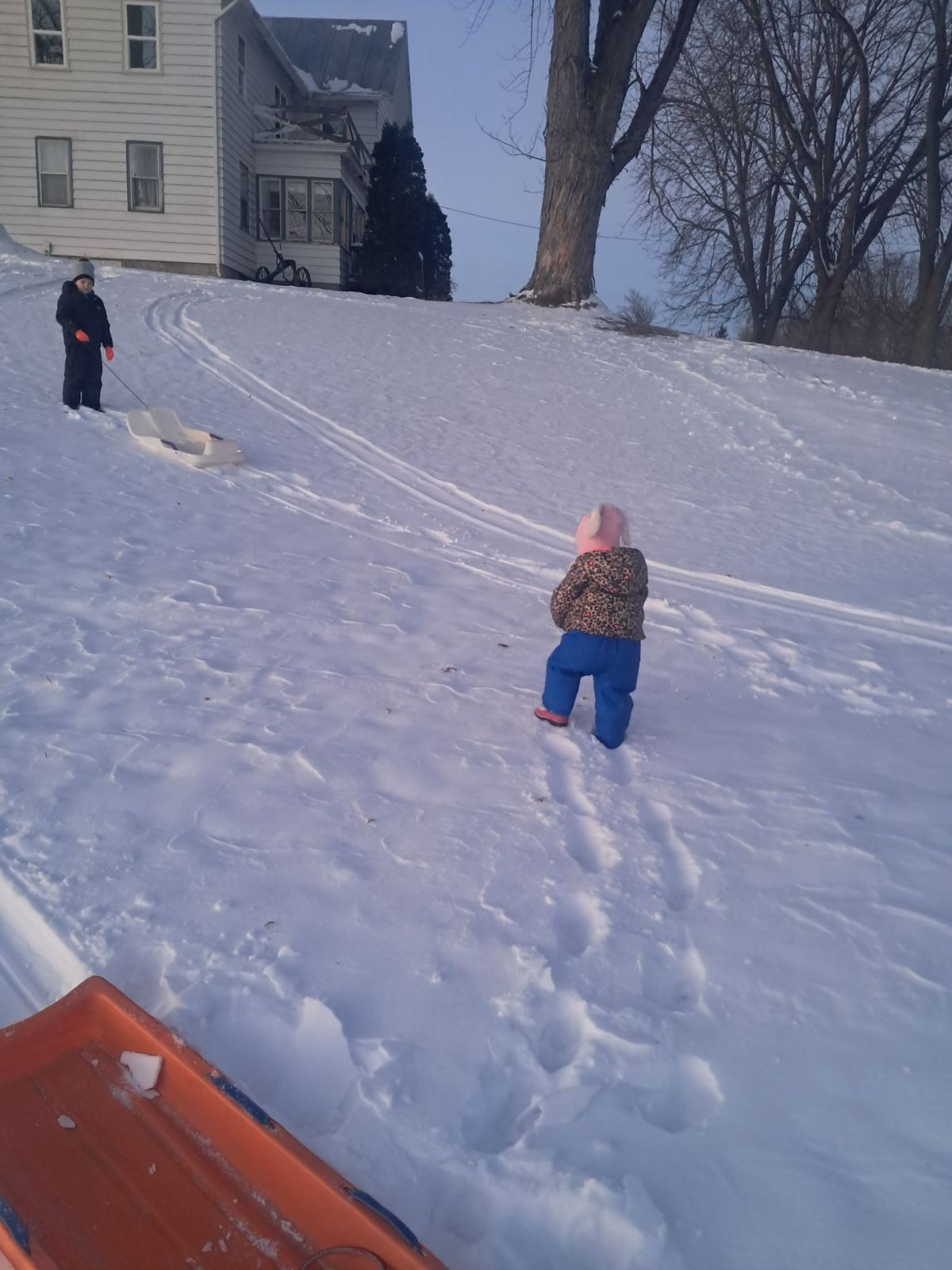
When my son asked to go sledding after a long week, my instinct was to say no. Dinner had to be made, and I was tired. But one small “yes” led to laughter, connection, and a moment that reminded me why slowing down matters most.
You never expect it—the way a few chords of a song or the smell of something sizzling in the kitchen can throw open a door straight into your past. Nostalgia sneaks in quietly like that. One moment, I’m focused on the day in front of me, and the next, I’m somewhere else entirely—caught between who I was and who I’ve become.
The Sound of Self-Discovery For me, music is the quickest time machine. Just a few seconds of a song, and I’m back in the place where it first meant something.
When “Fix You” by Coldplay plays, I’m no longer folding laundry or driving home—I’m back in my college dorm room, freshman year. The lights were harsh, the walls thin, and life felt uncertain in that way it only does when you’re eighteen and still finding your place in the world. I’d wait for my roommate to leave, turn up the volume, and sing at the top of my lungs—no audience, no expectations, just a girl trying to make peace with herself, one verse at a time.
A Taste of Freedom A few years later, life expanded far beyond that dorm room. When I taste pupusas, I’m taken back to my first time traveling internationally—a trip to San Salvador where I turned twenty-one. That birthday was wrapped in humidity, adventure, and the quiet thrill of doing something new and a little bit scary.
I remember sitting in a small open-air restaurant, watching the cook press pupusas by hand—pinto beans and cheese sealed inside dough, sizzling on the griddle. The first bite was simple but unforgettable: chewy, salty, rich, and alive with flavor. Maybe it tasted like freedom.
Or maybe it just marked the moment I realized how big the world really was.
Even now, I still try to recreate them at home. My husband doesn’t quite share the same fascination. They never taste exactly like they did that day. For me, they carry the rush of youth and discovery and the quiet joy of realizing how travel can stretch your sense of home.
A Song for the Road Ahead Years later, nostalgia found me again. It was during a bittersweet season of change. It was wrapped in the opening chords of “Helplessness Blues” by Fleet Foxes. I can still see it clearly. Our Subaru Crosstrek was packed with the last of our things as we left what I used to call our “dream home”.
My husband drove ahead in another vehicle. I followed behind, six months pregnant with our daughter. Our three-year-old son was strapped into his car seat. He watched out the window, humming softly. The sky was that early-summer color somewhere between gray and blue. It was the kind that feels like an ellipsis instead of a period.
As we drove, I sang along for my son, voice steady, heart full. We’d listened to Fleet Foxes so often that summer. He had chosen his own favorite song, “Quiet Houses.” He adorably called it “the Meh-me-gah song.” That tiny mispronunciation still makes me smile. It’s one of those details you don’t realize will someday become its own memory.
If “Fix You” reminds me who I was becoming, “Helplessness Blues” reminds me how far I’d come and how much life can change when you’re not looking.
Laughter That Lasts And then there’s “Jump Around.” That one doesn’t carry reflection—it’s pure, unfiltered joy. It takes me straight back to Camp Randall Stadium, surrounded by thousands of college students in a sea of red and white. We jumped in unison until the stands shook beneath our feet. Later, it made its way into every wedding of my college friends—ties loosened, heels kicked off, laughter spilling loud and unrestrained.
Every time that song comes on, I catch a glimpse of all those versions of me—young, hopeful, tired, happy—and somehow, they all still belong to each other.
Memory You Can Taste and Hear Music and food both have that power—to transport, to remind, to reawaken. Each song and flavor brings back a different version of who I’ve been, like pages from a well-loved journal I never meant to write but somehow did through living.
Nostalgia reminds me that our lives are stitched together by these small, unforgettable moments—songs, tastes, and places that once felt ordinary but now glow quietly in memory. It isn’t just remembering; it’s re-feeling. Every sensory spark reveals how much of us we carry forward, even without realizing it.
Maybe that’s what nostalgia really is—not a longing for the past, but a gentle reminder that who we were still lives within who we are. And when it sneaks up on me, I don’t resist it. I just pause, smile, and let the moment wash over me—one note, one flavor, one heartbeat at a time.
What sparks nostalgia for you? A song, a recipe, a smell you can’t forget? I’d love to hear what brings your favorite memories rushing back—share your story in the comments below.
If this story stirred a memory or made you smile, please take a moment to like, share, or subscribe. Your support helps this small corner of the internet grow into a space for family, reflection, and life’s beautifully ordinary moments.
Join me each week for reflections on family, simplicity, and the small sparks that make life meaningful. Subscribe below to bring a little calm nostalgia into your inbox.
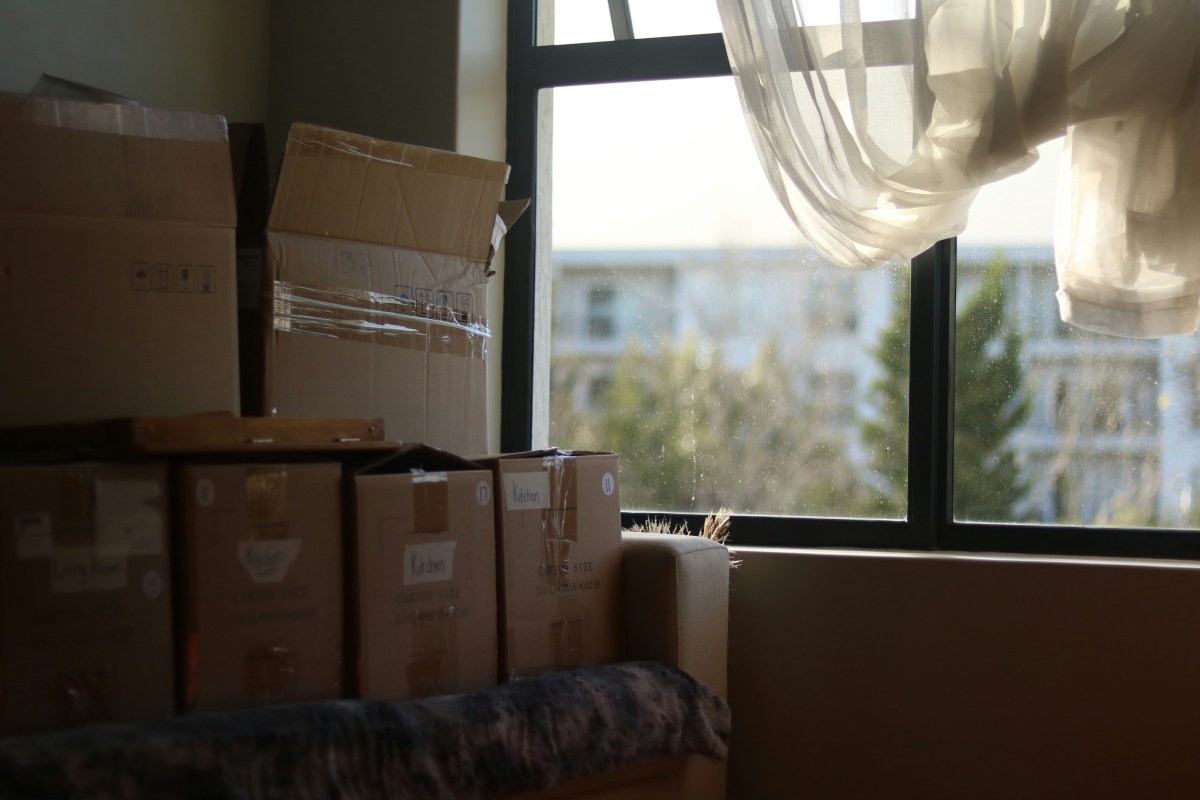
When my husband and I left our 18-acre homestead to move closer to family, pregnancy, exhaustion, and logistics forced me to rethink fate, free will, and the serenity prayer. A story about choosing change with support.
First time mom nerves about motherhood + pregnancy joy (belly talks, flutters). Honest story of life before kids freedom → Lake Michigan beach adventures with 6yo + 2yo sister. Motherhood trade-offs worth every goodbye.
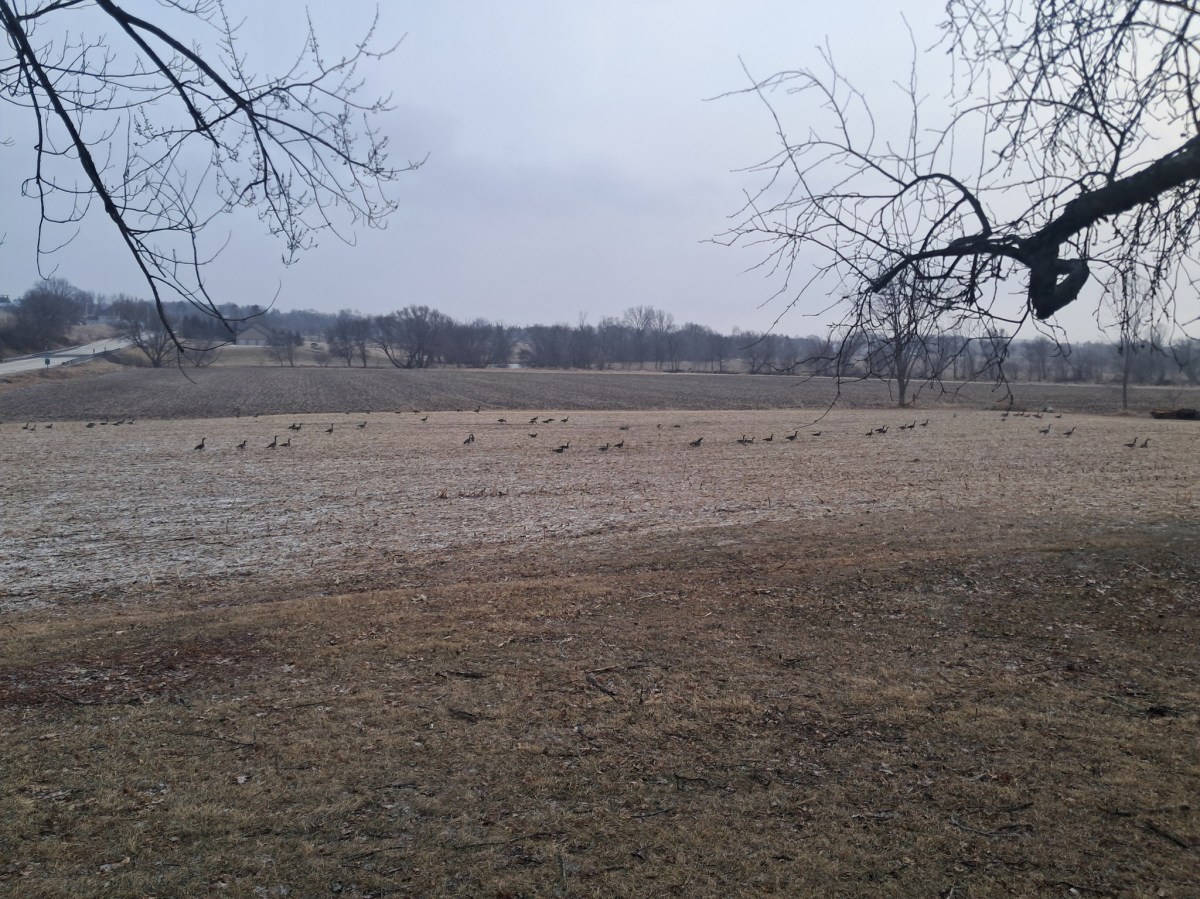
Early signs of spring on the homestead: geese at Horicon Marsh, melting snow, maple syrup temps (40°F/20°F), longer days. First signs of spring you might miss + subtle signs of spring everywhere. What’s YOUR first hint? 🌱
Every December, I feel the year take a deep, satisfied breath. The first frost settles on the garden beds and the house grows quiet under early sunsets.
The holidays don’t arrive in a rush of gifts or glitter. They come as a gentle exhale. It’s an invitation to pause, look back, and give thanks for all we’ve built together as a family.
The Joy of Holiday Cards
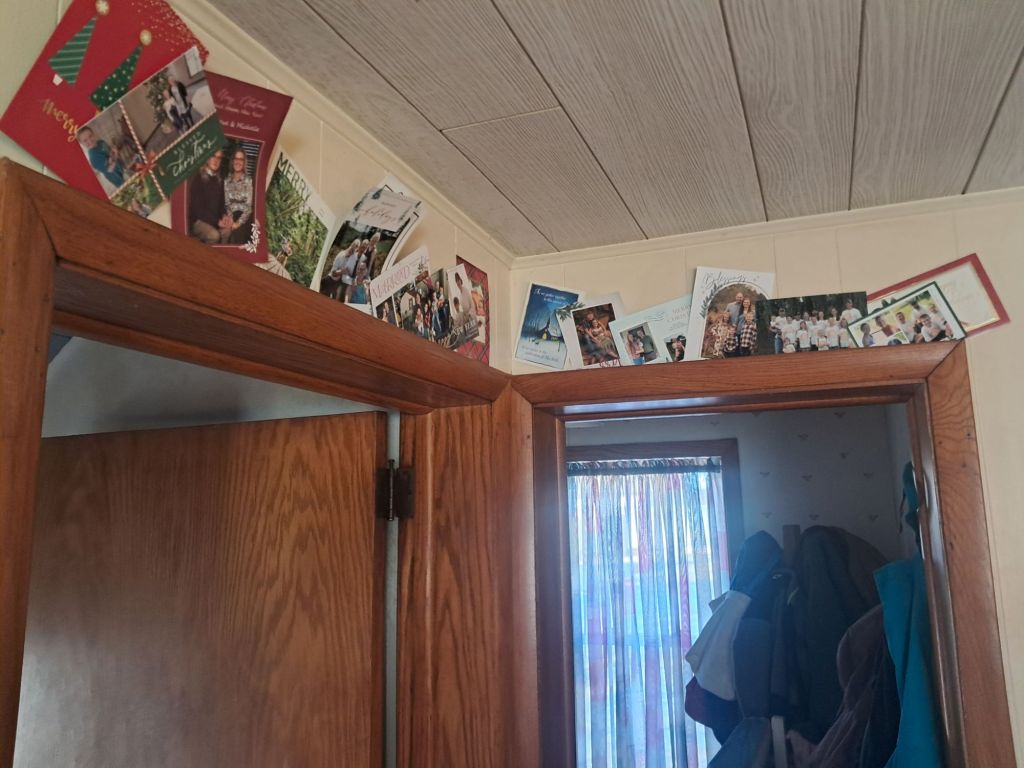
One of my favorite ways to mark the season is through the tradition of holiday cards. Each one feels like a small window into someone’s life. There’s a handwritten note, a new baby’s smile, a captured moment of love.
We hang the cards over our doorway. That way, each time we step outside, we pass under a colorful arch of friendship and memory. It’s a daily reminder that while we may live miles apart, the ties that bind us remain close and bright.
The Tree That Tells Our Story
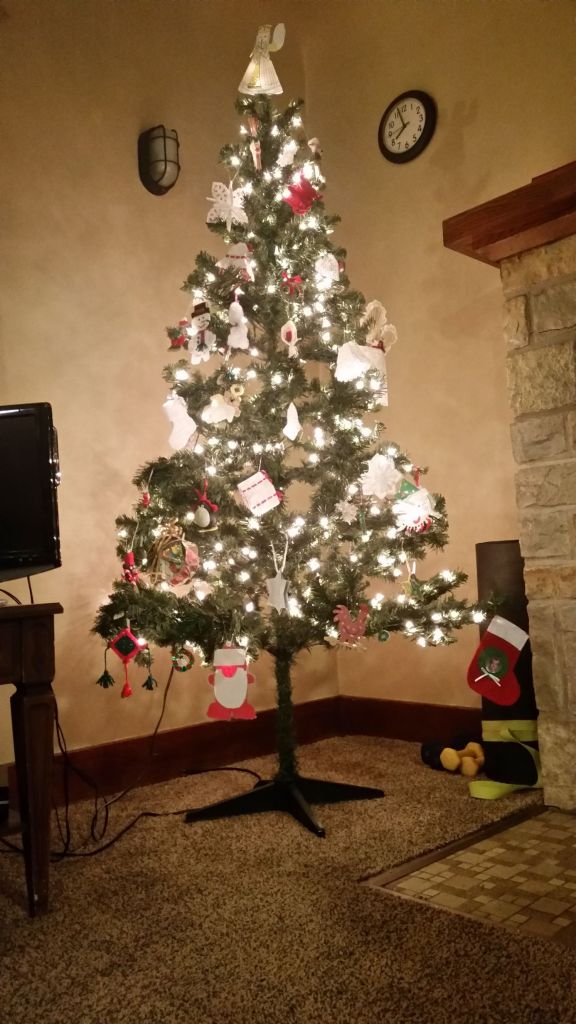
Our Christmas tree may not be grand or freshly cut. It’s an old artificial one, gifted by a coworker more than a decade ago. The branches are slightly bent, and a few bulbs refuse to light. Yet when we pull it from the box each year, it feels like greeting an old friend.
Each ornament holds a fragment of our story. There are handmade trinkets from the kids, crocheted snowflakes from my mother-in-law, and treasures from years past. The tree stands as a quiet symbol of continuity and gratitude. It reminds me that beauty often lives in what endures.
Simple Joys and Shared Stories
Every season brings a moment to slow down and savor the familiar. I always find myself rewatching It’s a Wonderful Life.
George Bailey’s struggles and small joys remind me that even in life’s messiest seasons, there’s beauty in simply showing up. I carry that spirit into my workplace, too. Working remotely most of the year, my in-person time with coworkers feels extra special.
There’s an ease in sharing stories beyond the screen. We share laughter over drinks, conversations that meander like old friendships, and the reminder that connection doesn’t depend on proximity.
A Season for Sweetness
At home, the kitchen becomes the heart of the season. The air fills with the scent of butter, cinnamon, and sugar—the unmistakable signal that it’s cookie time.
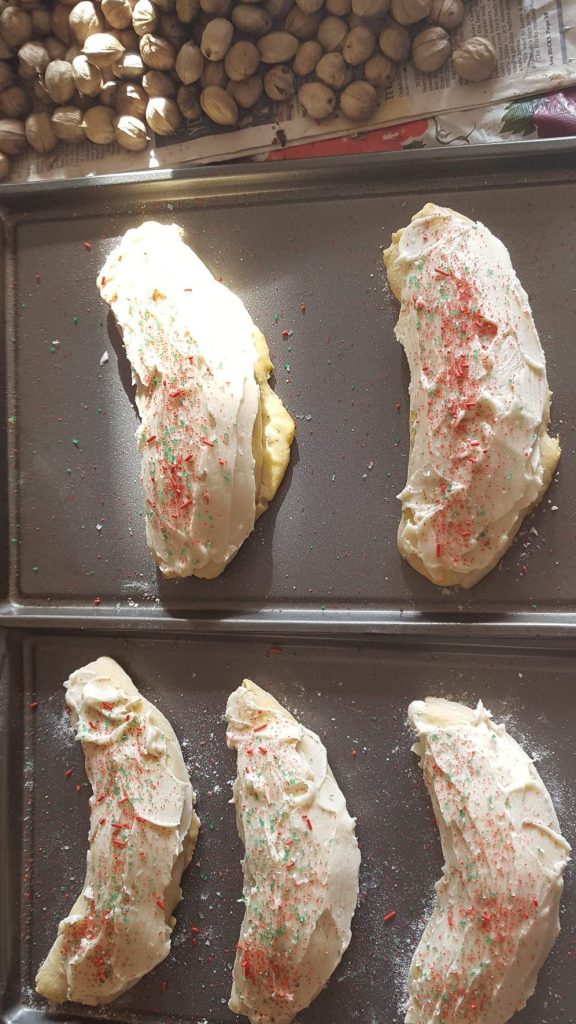
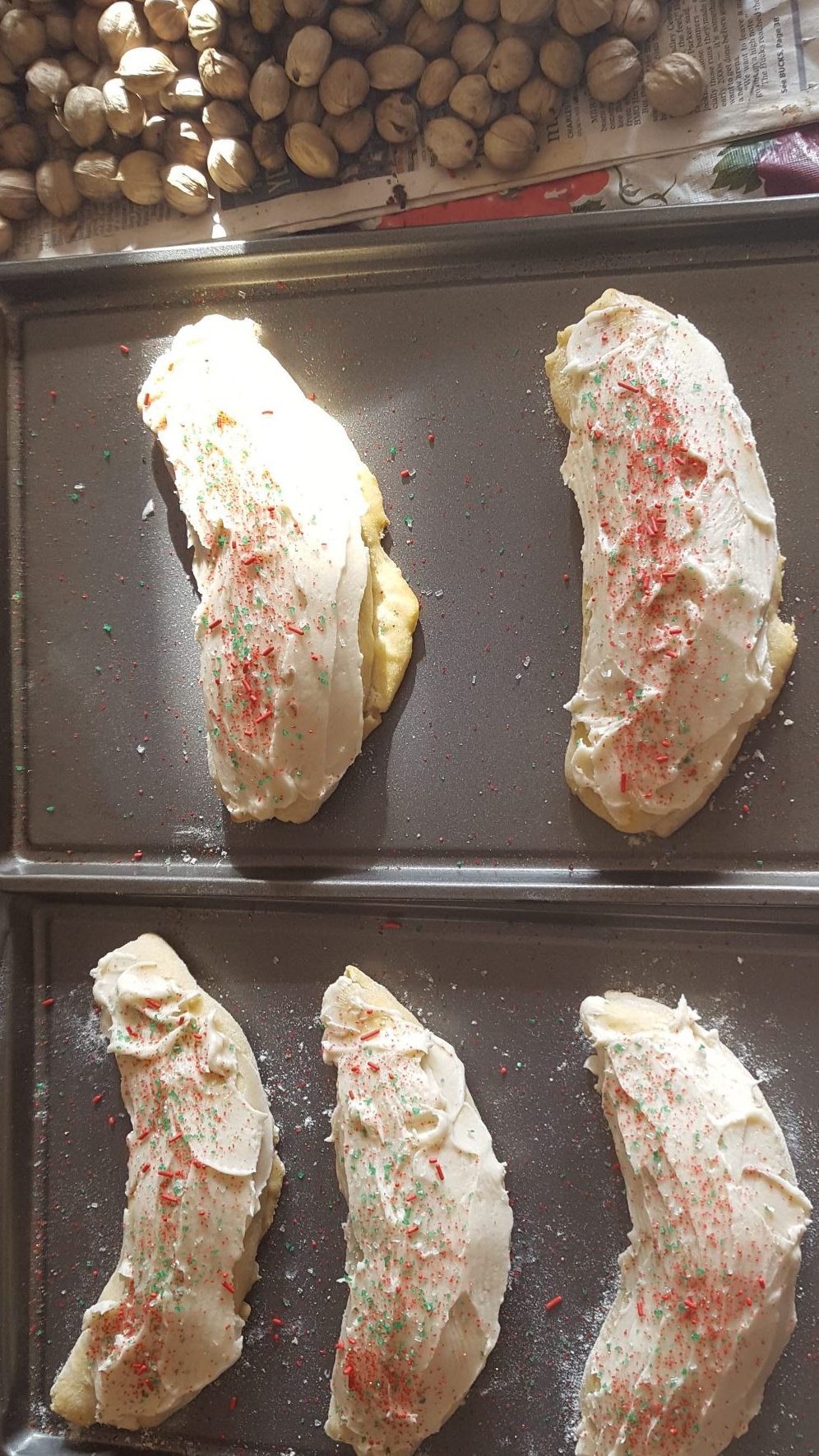
My favorite tradition, though, is baking kranz kuchen. It’s a tender, yeasted bread folded with hickory nuts, brown sugar, cinnamon, and dates. The recipe has been passed down through generations. Every year we forage the hickory nuts ourselves.
There’s something sacred about that ritual. We gather food from the land, turn it into something fragrant and celebratory, and share it with those I love.
Gifts Made of Experience
Instead of focusing on material gifts, our family gives each other an experience every year.
A few winters ago, we wandered through the glowing quiet of Cave of the Mounds. Last year, our son’s eyes lit up at the Manitowoc Maritime Museum as he marveled at the USS Cobia.
This year, we’re heading to Oshkosh to see the light show, visit the EAA Museum, and end the day with dinner and laughter at the Mineshaft. These experiences spark curiosity and wonder. They remind me that time and attention are the greatest gifts we can give our children.
Gathered Around the Table
Christmas Eve dinner with my parents is the anchor of the season.
We gather around a table filled with food that tells our story. The main coarse is pork roast from pigs we raised and sauerkraut made from cabbage grown in my parents’ garden. It’s more than a meal. It’s a celebration of patience, hard work, and the quiet rhythm of the land that sustains us. Every bite tastes like gratitude made tangible.
The next day, we join my in-laws for a night of laughter, games, and gift exchanges that always end in joyful mayhem.
Once February arrives, the festivities begin again when my extended family gathers for our belated celebration. Some of my sisters can’t travel in December, but that second gathering has become its own cherished tradition. It’s a spark of warmth that keeps the season alive well into the new year.
The Heart of Tradition
Each of these rituals—whether we’re baking, sharing stories through holiday cards, or sitting around the table—reminds me that traditions aren’t about repetition.
They’re about remembering who we are. The holidays teach me to slow down, to honor what we’ve grown, and to see abundance in what’s already here.
When the lights fade and the tree comes down, I tuck the cards into a small box. Their words and faces carry the season’s glow into the months ahead.
And I’m left with the same quiet truth: home isn’t a place or a moment. It’s a feeling—built from love, gratitude, and the steady rhythm of returning to what matters most.
Join the Conversation
If these reflections resonate with you, I’d love to share more glimpses of slow, seasonal living from our little homestead.
Like this post. Share it with someone who cherishes their own family traditions. Subscribe for more reflections on homesteading, family life, and intentional living.
Let’s keep growing together, one season and one story at a time.
Welcome to the rural economy—where value isn’t counted in cash but in connections. Beneath the wide-open sky, where grain silos and fence posts stitch the land into neat parcels, the real currency is not minted or printed. It’s grown and built, raised and traded. Trust, hard work, the barter of honest services and handmade goods.…
They say food is a universal language, but sometimes, it also has a quiet legacy. Eleven years ago, I was on a road trip with my mom, aunt, and sister when we stopped at a small restaurant and ordered Swedish meatballs. I still remember how delicious they were: comforting, perfectly spiced, and unforgettable. That afternoon,…
Discover why handmade holiday gifts like smoked cream cheese, kranz kuchen, and local shop finds beat online orders. Start small with meaningful traditions that support communities. #ShopSmall #HandmadeGifts
Some people guard their trust like a locked gate—but I’ve never been one of them. In homesteading and in life, I tend to meet others with open hands and an open heart. Out here, community isn’t just a pleasant idea. It’s something we build with every borrowed tool, shared chore, and kind word. I choose to believe the best of people, trusting they’re drawn by the same sense of purpose and generosity that keeps this way of life thriving.
When we brought our daughter home after she was born, that spirit of community wrapped around us in the most tangible way. We walked into a freshly mopped home, the dishes washed, the floor gleaming, and our table covered in homemade comfort—lasagna, sloppy Joe’s, meatloaf, and warm bread just out of the oven. It wasn’t just food; it was love, poured into every bite. Those acts of kindness reminded me that trust and connection don’t just make a community—they are the community.
Sure, now and then, I misjudge someone, and disappointment arrives like an unexpected frost. But time and again, choosing trust has brought more blessings than setbacks. It has built friendships rooted in understanding, neighbors who show up without being asked, and a shared sense that we’re stronger together than apart.
The land teaches that same truth daily. A garden can’t thrive without care, and neither can a community. When we nurture each other—with warmth, patience, and gratitude—we all flourish. That meal train, that clean house, those helping hands—they were proof that the seeds of kindness I try to plant don’t just grow; they multiply. And for that, I’ll always be thankful.
What’s one way your community has shown up for you when you needed it most?
If this story touched your heart, spread the warmth! 💛
Like this post, share it with someone who believes in the power of community, and subscribe to follow our journey of homesteading, family life, and personal growth. Together, we keep these roots—and relationships—growing deep.
Stone by stone, a farmer’s patient craft built more than a wall – it built a legacy. Discover a story of endurance, purpose, and quiet strength that still stands a century later.
Welcome to the rural economy—where value isn’t counted in cash but in connections. Beneath the wide-open sky, where grain silos and fence posts stitch the land into neat parcels, the real currency is not minted or printed. It’s grown and built, raised and traded. Trust, hard work, the barter of honest services and handmade goods.…
Growing up on a dairy farm in Wisconsin, my days were shaped by the rhythm of the cows and the turning of the seasons. Each morning began before sunrise, the air crisp with the scent of damp earth as my family and I made our way to the barn. The gentle lowing of the cows…
How Local and Handmade Traditions Make the Season Truly Meaningful
What if the best holiday gift wasn’t something you ordered in seconds, but something made by a neighbor, a local shop, or your own two hands?
Gifts That Actually Stick
Think about it: what was the last gift you really remembered a year later? Chances are, it wasn’t the priciest thing on your list. More often, it’s the homemade jam from a friend’s kitchen. It could be the mug thrown by a local potter. Perhaps it’s the scarf someone knitted while thinking about you. Those kinds of gifts carry a story and quietly say, “You’re worth my time.”
The Smoked Cream Cheese Surprise
One of my favorite examples came from a retired farmer who gifted us smoked cream cheese. It was infused with cherry and oak from his backyard smoker. Shared around the table on simple crackers, it tasted like patience and pride. It sparked a whole conversation about how he learned to smoke cheese—something no anonymous online order could ever deliver.
Family Recipes That Last Generations
That same spirit shows up in family traditions. In my family, my mom’s kranz kuchen—a crescent-shaped bread layered with dates, brown sugar, and hand-foraged hickory nuts—has been on the holiday table for four generations. It’s not just dessert; it’s a lineage of hands and stories. When someone slices into it, they’re tasting time, memory, and love as much as sugar and spice.
Local Shops, Real Connections
Local shops can hold that kind of magic, too. They’re often packed with small-batch cheeses, handmade ornaments, candles, and art that reflect the character of your town. A couple of years ago at a tiny cheese factory, I got chatting with the woman behind the counter. We swapped recipes and laughs. I walked out not just with cheese. She had tucked a quirky chocolate-pairing poster into my bag. No algorithm could have predicted how much that silly poster would delight me. I think of her now and then when I find it among my things.
Start Small This Holiday
You don’t have to overhaul your whole holiday routine to lean into this. Start small. Maybe this year you bake a batch of cookies. You could write a poem. Paint a simple ornament. Or put together a little basket featuring a couple of local favorites. Even if you don’t have many nearby shops, you can still support small makers online. Alternatively, share something only you can offer. This could be a playlist, a letter, a framed photo, or a recipe.
Over time, those small choices can grow into traditions: an annual baking day, a visit to a favorite market, a handmade gift exchange among friends. Years from now, when people look back on “the good holidays,” they probably won’t reminisce about two-day shipping. They’ll remember the smoked cream cheese, the kranz kuchen, the unexpected poster, and the feeling of being truly seen.
Your Turn to Share
What’s one handmade or local gift you’ve received (or given) that you still think about? Why did it stick with you?
If this resonated with you, tap like. Share it with someone who loves local makers. Subscribe so you don’t miss future posts on intentional, community-rooted living.
Some months pass quietly—but October lingers, glowing with memory, magic, and the warmth of home.
The Quiet Gift of Autumn’s Return
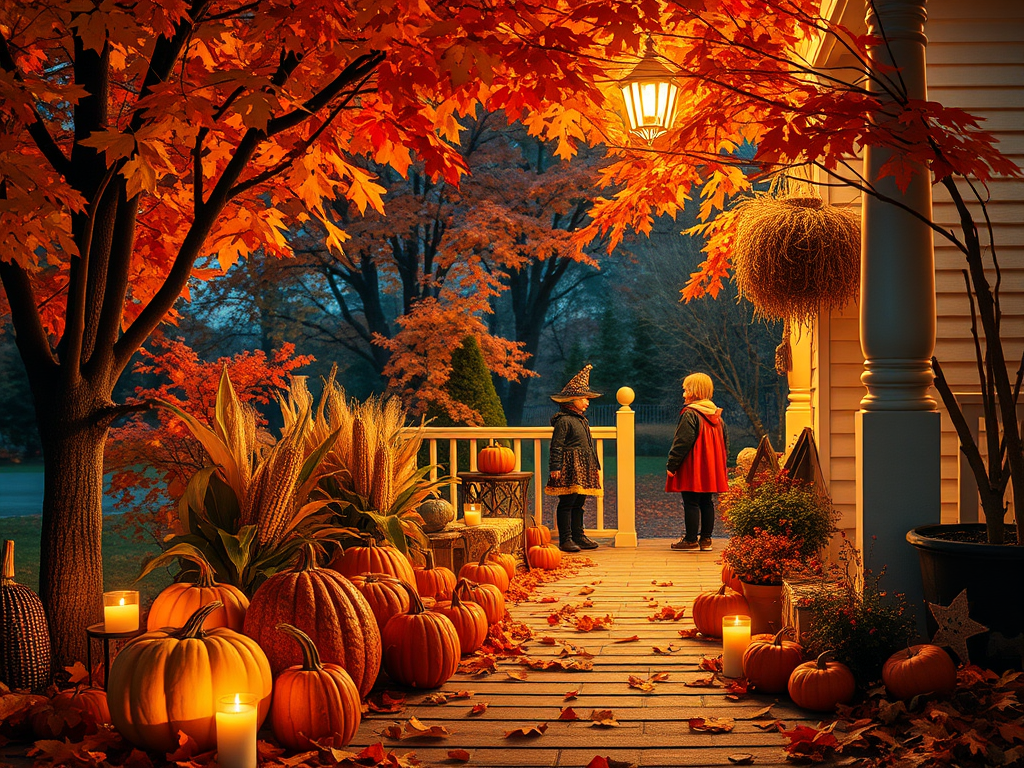
I love October. There’s something about this month that feels like coming home. The leaves shift from summer’s green to a fiery mosaic of gold, amber, and crimson. They swirl down streets and crunch softly beneath every step. Porches glow with pumpkins and corn stalks, windows flicker with candlelight, and neighborhoods seem to hum with gentle anticipation.
I love the comfort of pulling on a warm sweater as the evenings grow cooler. I enjoy wrapping up in a thick blanket. The air carries the first faint scent of wood smoke and fallen leaves. The gardens slow their rhythm. The soil rests after months of tireless giving. The earth itself seems to exhale—a sigh of contentment before winter’s long sleep. There’s peace in harvesting the last tomatoes. There’s tranquility in gathering the last handfuls of herbs. We savor one final taste of summer before the frost settles in.
A Childhood Revisited Through Pumpkin Light
But October’s beauty runs deeper than the colors and the cold. It reminds me of past celebrations, those experienced and those I simply wished to experience.
I think back to the St. Andrew’s costume party I attended once as a child. I can still picture the warm, crowded gym. The scent of caramel and popcorn filled the air. Laughter echoed between the walls. Though the old school is gone now, torn down years ago, the spirit of that place still lingers.
The party lives on in a new building, but when I returned last year for the first time in three decades—with my own children by my side—it felt as if time hadn’t passed at all. The candy walk, the costume contest, the same spirited laughter—it was all there. Even some of the faces were familiar, now softened by age and framed by parenthood. We smiled at each other knowingly, as if to say, we made it back.
That night reminded me how October can blur the line between past and present, turning nostalgia into something alive again.
The Magic of Living the Dreams We Once Imagined
And of course, there’s Halloween and the magic of trick-or-treating. It is a tradition I always longed for as a child but never had the chance to experience. I used to wonder what it felt like. I imagined the excitement of dressing up. I thought about the sound of other children’s laughter carried on the wind. I dreamt of the thrill of walking house to house, bag full of sweet treasures, under a canopy of stars. For years, it was a wish left unfulfilled, a tiny missing piece of wonder.
Now, through my children, I can finally live that dream. I watch their anticipation as they choose their costumes—a pirate and Tigger—and plan their routes with careful excitement.
The afternoon itself feels electric: porch lights glowing like beacons, leaves scattering under quick footsteps, the calls of “thank you!” trailing off into crisp air. I listen to their candy buckets clink, watch their laughter spill into the darkness, and think of all the years I imagined what this would feel like. In their joy, I see both who I was and who I’ve become: a child rediscovering wonder and a parent guiding it forward.
October, for me, has grown into something sacred—a bridge linking memory and experience, longing and fulfillment. It’s a season that teaches me about cycles, about how endings carry new beginnings quietly within them. Through my children, I relive the magic I once missed, while creating bright new memories all our own.
When the last porch lights flicker out and my children’s footsteps fade into the cool evening, I feel the month settle gently in my heart. October has a way of staying—with its color, its warmth, its echoes of laughter. It lingers like the glow of a jack-o’-lantern long after the candle inside has gone out.
Your turn
What’s your favorite October memory—the one that still feels alive no matter how many years have passed?
Keep the Story Going
If this story wraps you in that cozy fall feeling, give it a like. Then share it with someone who loves autumn too and subscribe for more stories that celebrate memory and meaning.

















 Practical Homesteading