Category: Family Life

  • Growing Together in Small Moments

    It had already been a week that stretched me thin. One of those weeks where fatigue doesn’t just live in your body—it seeps into your spirit. Each day stacked heavier than the last. Even small inconveniences pressed harder than they should have, like tiny weights layered until my shoulders ached. By Thursday, I was frayed at every seam, moving on nothing but habit and the faint hope of rest.

    So that evening, when I finally shuffled into the kitchen after a day that left me wrung out, all I wanted was silence. A moment to unclench. To exhale. My body sagged, my mind buzzed, and I was counting the minutes until I could collapse onto the couch.

    That’s when it happened.

    My toddler stood at the table with her cup of water. One slip, one sudden clatter—and water skidded across the linoleum, racing under chair legs in glistening threads. The sharp crash jolted me, slicing through the fog of my fatigue.

    Frustration surged, hot and quick. Words crowded behind my teeth, sharp enough to sting us both.

    I looked at her. Wide eyes. Startled. Searching. Not defiant, not careless—just small. Just learning.

    I stopped. Breathed. The anger loosened its grip.

    Instead of scolding, I bent and wrapped her soggy little frame in my arms. Relief softened her face as she leaned against me. I handed her a towel, and together we chased the puddle across the floor. Her laughter bubbled, bright and contagious. With each giggle, the cleanup turned from chore to game, our hands colliding in playful pursuit of running droplets.

    That sound stayed with me. She wasn’t only learning balance and cause and effect. I was learning too—how to pause before impatience, how to choose connection even when I am worn thin.

    When we finished, she lugged the damp towel to the basket with pride, dropping it like treasure. I kissed her damp hair and made a quiet vow: to keep trying. Even when I am tired. Even when the water runs wild again.

    That week had felt like a storm I couldn’t quite step out of. Yet in the middle of it, she reminded me of something I had forgotten. Growth doesn’t wait for the calm, polished moments. It slips in through the mess, through the spills, through the pauses where frustration almost overwhelms love.

    She is still learning how to hold her cup steady. And I am still learning how to hold my patience steady. Both of us fumbling, both of us growing—together.

    Have you ever caught yourself on the edge of snapping, only to realize that patience could change everything in that moment? Share your story below, and subscribe to join a group of like-minded people.

    #ParentingJourney #GentleParenting #PatiencePractice #EverydayLessons #ParentGrowth

  • Traveling Light, Remembering More

    I didn’t pack bathing suits, beach toys, or even chairs. Just me, two kids—almost six and almost two—and enough curiosity to see what might happen. Some might call it unwise to bring children to the beach without all the usual gear. I half expected chaos myself. But what unfolded that day at Lake Michigan wasn’t stressful at all. It was simple, joyful, and quietly unforgettable.

    The night before, on a whim, I decided we’d spend the next morning at a quiet county park along the lake. No boardwalk, no crowds—just open sand and water. To dodge the holiday crush, I aimed for a mid-morning arrival and an early-afternoon departure, the kind of window that still gave us sun but also let my daughter keep her nap.

    Even the drive became part of the adventure. Late summer light spilled across the Wisconsin hills, glancing off barns that leaned like tired elbows and threading silver into the rivers. My son sat at the window firing off questions as quickly as the scenery changed: “Why do hills rise like that? Why does the river bend? How do boats float if they’re heavy?” I answered as best I could—part science, part wonder—hoping not for perfect explanations but for him to feel that his questions mattered.

    When we finally pulled into the near-empty lot, my daughter was close to dozing off. But one glimpse of sand and water jolted her awake. She squealed, pointing first at the playground, then the waves, kicking her legs until I set her free. Her brother didn’t wait for permission; he sprinted toward the lake, shoes already tumbling behind him like breadcrumbs.

    The first steps in were cautious—the water cooler than we expected, toes retreating from the foamy edge. Within minutes, though, hesitation gave way to shrieks of laughter. We sprayed arcs of water, dug down until the sand swallowed our ankles, and filled pockets with chipped shells. My daughter crouched at the edge, giggling as the water tickled her toes while her brother shouted whenever he spotted glints in the sand that might be treasure.

    By noon, hunger caught up with us. On a car blanket, we unpacked leftovers—chicken strips and potato wedges—now lightly dusted with grit. A bite crunched the wrong way, and my toddler burst out laughing, calling it “crunchy chicken.” Her brother joined in, and somehow the sand didn’t matter anymore; giggles carried the meal.

    Our day settled into small turns and trade-offs. My son itched to dig holes while my daughter tugged toward the swings. I only wanted the luxury of watching them both without rushing. Even at two, she seemed to understand that we couldn’t each get everything at once. But her delighted squeals when the waves nudged her knees softened her disappointment at leaving the playground sooner than she wished.

    By early afternoon the trickle of families had turned into an incoming tide—umbrellas, coolers, floaties piled high. We had timed our escape just right. After one last climb, swing, and sandy slide, we gathered our belongings—lighter than most, heavier with tiredness—and headed back to the car.

    On the way home, we stopped at cheese store that doubled as an ice cream shop. By the time the highway unspooled beneath us, my daughter had slumped into sleep, cheeks sticky and sun-warmed. My son, eyes bright in the rearview mirror, recounted his favorites—the boats, the splashing, the shells—already asking when we could come back.

    That’s when it struck me: we hadn’t missed the beach toys, the swimsuits, or all the elaborate preparation. What we had was enough. More than enough, really—an unbroken stretch of laughter and sunlight stitched together by their curiosity. Parenting rarely feels simple, but that day it did. And that simplicity—the kind that travels home in sandy shoes and chocolate-stained cheeks—is the treasure I’ll keep long after they’ve outgrown my arms.

    Have you ever skipped the gear, the planning, or the ‘rules’—only to discover the best family day came from keeping it simple? Share your thoughts below, and subscribe to the link below to join a group of like-minded people.

  • A First Day for Both of Us

    This morning I realized that for the first time in nearly six years, my son will spend more waking hours away from me than with me. Tomorrow, he starts Kindergarten—8 am to 3 pm, five days a week. That single fact tightens my chest with a swirl of emotions: pride at the boy he’s becoming, excitement for what lies ahead, and a quiet ache that childhood is already stretching outward, faster than I imagined.

    He has always been more than just my firstborn—he’s been my partner in the rhythms of our home. Long before anyone asked him to, he stepped into the role of big brother with gentle authority. When his sister cries, he’s often the first to soothe or share his snack. He transforms chores into “missions,” making up systems and games the way only a five-year-old burgeoning engineer could. Where some children run away from responsibility, he seems to run toward it.

    Creativity pulses through everything he touches. A pile of bolts and wood becomes an articulating loader. A mundane cleanup turns into an exuberant Rube Goldberg chain reaction, laughter ringing as he proves it can work. Even when his energy overwhelms me—or when my patience runs thinner than I’d like—those flashes of frustration fade quickly into the larger truth: this is a boy brimming with imagination, kindness, and light.

    And now, Kindergarten.
    The world is about to widen for him—and, if I’m honest, narrow a bit for me.

    Every parent knows this moment comes, and yet when it finally arrives, it feels both ordinary and monumental at once.

    For years, his presence has been stitched into nearly every corner of my days: the sound of him humming while building, the way he shadows me from room to room. Tomorrow, the house will hold a new kind of quiet.

    Of course, he’s ready. He’s capable, curious, resilient—more than prepared to make friends, face challenges, and discover new parts of himself beyond my orbit. But readiness doesn’t erase tenderness. Because it isn’t only his milestone—it’s mine too. Tomorrow, I’m not just watching him step into a classroom. I’m practicing the art of letting go.

    Still, I imagine the moment at 3 o’clock: the doors swinging open, his backpack bouncing behind him, his cheeks flushed from a day full of new stories. I’ll see him running toward me, and I’ll know—the bond between us hasn’t shrunk in the slightest. It’s only grown larger, stretched across the space between home and school, making room for him to flourish.

    And that is the quiet gift of Kindergarten: not just that he is ready to step into the world, but that I am learning how to give him the space to grow in it. 🌱💛

    ➡️ For those who have walked this road before—what was the moment you realized your little one’s world was beginning to grow bigger than your own, and how did you navigate that shift? Share your stories below, and subscribe to join a group of like-minded people.

    #KindergartenJourney #FirstDayOfSchool #ParentingReflections #LettingGoAndGrowing #ParenthoodMoments #RaisingKindHumans #BittersweetMilestones #ChildhoodUnfolding #ParentingWithHeart #OrdinaryAndMonumental

  • Tickets, Trade-Offs, and Tilt-a-Whirls

    We stepped through the county fair gates with twenty ride tickets to last the whole day.

    To my five-year-old son, they were a golden key to unlimited fun. To me, they were a limited resource — and a math lesson waiting to happen.

    The August sun pressed down, bouncing off the metal siding of food carts, warming the air thick with sugar and frying oil. My daughter rode pressed against me in her carrier, legs dangling. My son’s grip on my hand was insistent, his eyes wide at the swirl of lights, music, and cotton candy threaded like clouds on sticks.

    Food first. He inhaled a slice of pizza that bent under its own cheese. My daughter and I nibbled golden little corn dogs, dipping them into mustard between chilly, sweet spoonfuls of chocolate malt. Around us, the whole fair smelled like carnival excess — fried dough and roasted corn braided with the faint, earthy whisper of hay from the barns.

    In the barns, we slowed. Cool sawdust underfoot. Pigs sprawled, twitching in their sleep. Cows blinked at us, slow and old as if they carried time in their eyelids. Ducks moved like a marching band, utterly synchronized. My daughter pressed her palm against the fence, giggling at the goats’ wiry coats, until my son tugged again: “Can we go see the rides now?” He could hardly hold still long enough to notice the animals.

    And so, to the midway. Even in daylight, the rides blazed with flashing reds, blues, and yellows. The Tilt‑a‑Whirl roared and spun as somewhere behind us a game vendor promised, “Everyone’s a winner!”

    At the ticket booth, the glossy sign read:
    $1.50 per ticket, or 20 tickets for $25.

    I slipped the bills across and felt the tickets fall into my palm, brittle and new. Twenty was both so many and so few. I crouched beside my son and set the rule: “This is all we have for rides. Once they’re gone—we’re done.”

    He looked so serious, nodding in a way almost too mature for him — and then, in the same breath, he pointed at the Ferris wheel, towering and slow, irresistible.

    “That costs twelve just to get us all on,” I reminded him. More than half, for one spin.

    He thought hard. I swear I could see the weight of the numbers pressing through his forehead. After a pause: “Hmm… maybe the train?”

    And so we boarded the little track, faces shining as we looped past hand‑painted scenery and strangers who waved like old friends. Each ride became a miniature act of accounting. Nine tickets for all three of us. Three if it was something just for him. By the next stop, he was calculating first before I could prompt, as if the tickets themselves had aged him in the space of an afternoon.

    We skipped bumper cars (he didn’t meet the height requirement), found delight in a giant slide, and ended at a kiddie racetrack where his laughter spun circles larger than the ride itself. The tickets thinned until only five were left, curling soft in my pocket.

    That’s when the firetrucks gleamed at us: bright red, silver bells clanging steadily. My son clutched three tickets with steady hands, climbing in like a child stepping into destiny. My daughter tugged me, wide‑eyed: “Mama, me too?”

    The operator leaned on the lever with a grin. “She can ride her own for two.”

    Perfect symmetry.

    I buckled her in, and when the trucks began to roll, her voice rang out: “Whee! Whee! Whee!” — not polite squeals, but unabashed joy so pure it turned heads. Parents around us laughed in recognition. My son dismounted, flushed and victorious, announcing, “We used them just right, huh, Mom?”

    And he was right. The Ferris wheel still turned in the distance, massive and romantic, but I didn’t regret skipping it. Twenty tickets had carried us farther than I’d expected. They had bought laughter, choice, restraint, and — maybe what moved me most — a glimpse of my son practicing something like grown‑up wisdom, while still small enough to believe everything around him was magic.

    We left with empty pockets, sticky fingers, tired children. But the memory lingers still — golden as the tickets themselves, and spent exactly right.

    Do you have experience with teaching children about money? Share your experiences below, and subscribe to join a group of like-minded people.

  • Rain and Resonance

    It rained all day, the steady drizzle blurring the view until the house itself seemed to shrink under the low sky.  Inside, cabin fever crept in, making the kitchen feel tight.

    My husband and I worked quietly together, turning weekend cherries into wine. The air was thick—crushed fruit, sugar, and the steam hissed from the pot. Our five-year-old son and toddler daughter darted through, their energy outsized for the cramped space. Warnings mingled with their laughter—don’t run near the stove, watch for hot water.

    “It’s dangerous,” I said, gripping the kettle handle; my heartbeat quickened.

    For a while, the kids took turns crushing fruit.

    “Look, Mom!  I figured out how to remove the cherry pits more quickly!” My older child said as he mashed enthusiastically, intent on the task.

    Suddenly, our toddler screeched—a wild, pterodactyl sound—snatching the masher and stabbing at the cherries.
    “Me too!” she demanded.

    “Hey!” my son yelled, trying to pull it back. Their fight was all quick hands and hot tempers, cherry seeds flung aside, sugar water hissing.

    “Enough!” My voice cracked through the kitchen as the mess and worry spilled out in a single word. Silence, except for the rain tapping on glass. My son’s face twisted in frustration; his sister clutched the masher, sticky-fingered, defiant.

    I knelt, arms open. The toddler crawled in—fight gone soft. Her brother retreated to the corner, assembling wooden toys with deliberate care, humming the Pirates theme he always chose after a storm.

    Across the room, my husband and I exchanged tired, knowing smiles.

    The toddler perched on a chair, popped cherries, painted crescents on her lips. The kitchen warmed—patience hemming in chaos, the air rich with fruit.

    After a while, my son returned, holding out a contraption of wood and rubber bands. “Look, Mom! I made an articulating loader. See? This part turns.”
    I pulled him close, inspected the jumble. His pride shone brighter than any accuracy. Rain blurred the world outside. Inside the kitchen, cherries stained little fingers, the air still warm and sweet. My son tinkered at the table, my daughter perched on a chair, chewing with slow satisfaction. We breathed together in that small space, finding each other again in the hush after the storm.

    How do you handle stressful and potentially dangerous situations? Share your experiences below, and subscribe to join a group of like-minded people.

  • Bread Crumbs of Connection

    They say food is a universal language, but sometimes, it also has a quiet legacy.

    Eleven years ago, I was on a road trip with my mom, aunt, and sister when we stopped at a small restaurant and ordered Swedish meatballs. I still remember how delicious they were: comforting, perfectly spiced, and unforgettable.

    That afternoon, my aunt casually mentioned that she had a recipe of her own. Thrilled by the meal and eager to impress my then-boyfriend (now husband), I asked her for it. I made a few small tweaks to suit what I had in my kitchen and gave it a try. The result? A hit. So much so that a few years later, I brought a batch to a family party.

    At that party, my sister-in-law had her first bite. She didn’t say much at the time, but apparently, something clicked. Inspired by the dish, she went home, searched for a recipe of her own (thank you, Google) and started making her version for her family.

    Fast forward to just recently: we were visiting her house, and guess what she served? Swedish meatballs. They were fantastic. And somewhere between compliments and second helpings, she told me how that dish had become one of her favorites, sparked years ago by the meatballs I had brought to that party.

    It’s amazing how a simple meal can ripple through lives, quietly leaving its mark. Food has this incredible way of bridging time, connecting us not just to one another, but to moments, emotions, and memories long past.

    And what struck me the most? That something as ordinary as a meatball could hold so much meaning: nostalgia, connection, love. What began as a vacation lunch with my mom, aunt, and sister lives on, now part of another family’s favorites list.

    That’s the magic of a good recipe: it’s never just food. It’s a story, a memory, a little piece of love passed from one plate to the next.

    Do you have a family recipe that has been passed down? Share your experiences below, and subscribe to join a group of like-minded people.

  • From ‘For-Et’ to Fortitude: A Story About Big Boxes and Big Feelings

    Sometimes the most important thing we build isn’t made of cardboard.

    A Big Idea (and a Bigger Mess)

    My 5-year-old son was determined to build a fort, though he pronounced it “for-et,” which made it even more endearing. I try hard to encourage his creative play, if it doesn’t involve wrecking things, so I said, “Of course, go ahead!”

    He began his mission by gathering the many cardboard boxes we had stacked in our basement waiting to be cleared. Soon, these became a haphazard fortress-in-progress outside our back door. It quickly turned into a cluttered obstacle course we had to navigate. My husband was less than thrilled.

    The Deal

    The next morning before leaving for work, my husband struck a deal with our fort architect:

    If he could move all the basement boxes for disposal and clear a large new box we’d just acquired, he could use that big box as the foundation of his fort.

    Simple enough.

    So before breakfast, my son excitedly dragged everything out of the biggest box and scattered its contents across the driveway, completely ignoring the deal. Then he bounded in, wide-eyed, asking me to help cut a door into the fort.

    One Box, Infinite Overwhelm

    I stepped outside and surveyed the scene. None of the other boxes had moved. And now, there was a fresh mess on top of the old one.

    When I gently reminded him of the first part of his task, his smile drooped. He looked at the towering stack of boxes and sighed.

    “There are so many,” he said. “It will take 100 years to move them all!”

    At first, I wanted to say what I usually say: It’s not that many. Or: If you’d started earlier, you’d be almost done by now.

    But I caught myself.

    Would those words help him—or just shame him?

    Choosing Empathy

    Instead, I sat down, pulled him into my lap, and gave him a squeeze.

    “Sounds like you’re feeling overwhelmed,” I said.

    He nodded, eyes watery.

    “You know, I feel that way sometimes too. When I have so much to do, I don’t even know where to start.”

    “You do?” he asked, brightening.

    “Of course,” I smiled. “When that happens, I take a deep breath.”

    I took an exaggerated inhale and exhale, which made him giggle. Then I added:

    “And I try to do just one thing at a time for half an hour. You’d be surprised how much you can get done that way.”

    “Okay!” he said.

    Momentum (and Breakfast)

    “But first,” I said, “you need breakfast. You’ll have more energy after eating.”

    “I’m already strong enough,” he insisted.

    “I know,” I smiled. “But strong people get hungry too.”

    After breakfast, he set to work. Later, he proudly announced:

    “Mom! I stacked some boxes inside others. It made moving them faster!”

    “Genius!” I said. “What about the other pile?”

    “Huh?!”

    A short follow-up pep talk was in order, and before long, he had moved all the boxes.

    It didn’t even take 100 years.

    Somewhere along the way, the project transformed from a for-et into a clubhouse (don’t ask me how).

    The Clubhouse Reveal

    Next came door-cutting. He wanted it done immediately.  I made him wait until I finished a task of my own.

    Then, I carefully helped carve a doorway into the giant box to his exacting specifications.

    After lunch, armed with a black Sharpie, he decorated the clubhouse with the enthusiasm that only kids can generate. He led me out for the grand tour:

    “See the man on the door? He’s inviting everyone inside.
    Here’s a sign that shows who can come in, even old people.
    What do these letters spell?” (They were random, adorable runes.)
    “There’s a whale… and another whale… and my name.
    And these are solar panels to power the clubhouse. Come inside!

    I squeezed through the narrow doorway. He followed.

    “Turn on the light, Mom!” he said. “The switch is right behind you.”

    Of course it was.

    What His Fort Taught Me

    Watching my son struggle reminded me how easy it is to feel overwhelmed when faced with a big, messy task.

    His honest frustration echoed feelings I often hide behind adult composure.
    And instead of rushing to correct him, I chose empathy, and it changed everything.

    Helping him break the job into tiny steps, encouraging him to breathe through the hard parts, taught both of us that real progress doesn’t come from powering through:  it comes from pausing, noticing, and taking the next small step.

    Final Thoughts

    I still lose my patience more often than I’d like to admit. But in moments like these, I’m reminded that the real “for-et” we build each day isn’t made of cardboard at all:
    it’s built of patienceunderstanding, and kindness.

    And just like my son’s fort, it might not look perfect.

    But it stands strong:  messy, magical, and full of love.💬 Got your own “clubhouse moment” or parenting win (or fail)? I’d love to hear it in the comments. Don’t forget to share and subscribe if this resonated with you.

  • Mixtapes, Meltdowns, and Magic: A Family Road Trip to Remember

    Mixtapes, Meltdowns, and Magic: A Family Road Trip to Remember

    My family recently went on a road trip to a lake cabin in the northern part of the state for a fishing getaway.  Anyone who’s traveled with a five year old boy and a 1.5 year old girl knows the unique blend of excitement and chaos that comes with such an undertaking.  Our teal 1997 Ford F-150 was packed to the brim with bikes, a bike trailer, snacks, and an impressive array of Tinker Toys to entertain our toddler.

    The drive was an odyssey.  Our toddler, never a fan of the car seat, took a mercifully short nap before waking up wriggling and fussing with all the determination of a 1.5-year-old.  Our F-150 has a cassette player, and my husband had recently acquired a collection of 1980s rock mixtapes:  Guns N’ Roses, Bon Jovi, and Candlebox are among the bands featured on the tapes.  As soon as our toddler woke, my husband tried to placate her by playing his favorite mixtape.  This only resulted in a competition between her and Bon Jovi to see who could be loudest in the truck.

    Meanwhile, our five-year-old son, whose curiosity knows no bounds, peppered us with questions: “How did Candlebox get its name?” “How do volcanoes work?” “Who decides where the roads go?” My husband and I took turns answering, sometimes explaining things to the best of our ability, sometimes consulting our phones, and sometimes just admitting we didn’t know.

    By the time we finally pulled into the gravel driveway of the cabin, supposedly a 4.5-hour drive on the map, but in reality just over six hours, we felt as though we’d completed a marathon.  The collective 2.5 hours of crying from the back seat had left us frazzled, but as we unpacked and cracked open a cold beer on the porch, the stress of the drive began to melt away.

    The cabin itself was a dream: spacious enough, rustic yet comfortable, and perched right on the edge of a sparkling lake.  Our friends, the couple who had invited us, greeted us with warm hospitality and laughter.  The next few days were a blur of simple joys.  Mornings were spent fishing.  Sometimes, it felt like the fish were practically leaping into our boat, much to the kids’ delight.  Cleaning the fish became an undertaking that also attracted the kids’ attention.  Afternoons brought leisurely walks, games of Uno, and stories shared over sparkling water and homemade margaritas. My son made new friends and played with them on the playground and the beach.

    The fish seemed to leap into the boat, these perch were caught during one excursion

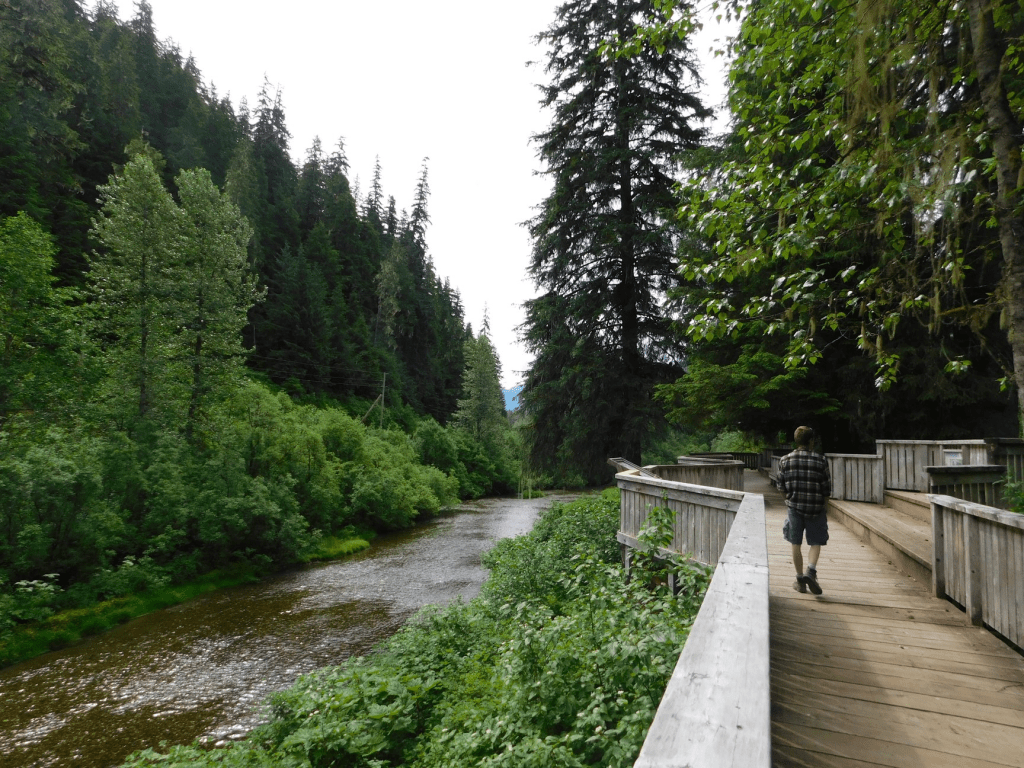
    One afternoon, I brought the others on an adventure to a hidden waterfall deep in the woods.  The sound of rushing water and the cool mist on my face felt like a secret reward for those willing to walk and explore.  

    Beautiful waterfall found after a 3/4-mile hike along a railroad bed trail

    Back at the cabin, our hosts, avid foodies, introduced us to an array of specialty cheeses, and together we crafted homemade pizzas, each person adding their favorite toppings.  We contributed our own homemade bread and fresh garden salad, which met with enthusiastic approval.  One lunch, we had their specialty fish fry, complete with the best onion rings I’ve ever eaten.  Evenings were filled with laughter, good food, and the kind of conversations that only happen when you’re far from the distractions of daily life.

    As our friends wisely observed, “Three days together is perfect.  Any longer, and we’d start to drive each other crazy.”  By the third morning, my family was ready to return to our routines and check on our garden and animals back home.

    The drive home started off much smoother.  There’s something about the return leg of a trip that always feels faster.  Perhaps this is because the route is familiar and the promise of home is on the horizon.  Our son’s curiosity was undiminished, and we did our best to answer his questions about highway rules and road signs, grateful for the distraction.  Our toddler napped again but woke up grumpy and restless.  This time, her big brother did his best to entertain her, singing silly songs and passing a ball back and forth while I helped my husband navigate.

    We made it to our planned halfway stop for lunch, gas, and bathroom breaks, feeling triumphant.  But not long after we hit the road again, we noticed something odd.  The truck began to shake: subtly at first, but soon with increasing intensity.  At first, we tried to ignore it, distracted by a passing train and the donuts I’d picked up at the gas station.  But as the shaking worsened, concern grew.

    About an hour from home, we finally pulled over to investigate.  Sure enough, one of the tires had developed a bulge: a ticking time bomb if we had continued at highway speeds.  We found a nearby equipment yard with a large gravel lot and pulled in, grateful not to be stranded on the shoulder of a busy highway.

    My husband sprang into action.  He crawled under the truck to free the spare tire, which, to our dismay, was flat.  Undeterred, he grabbed our trusty air compressor and plugged it into the cigarette lighter, inflating the spare while our son watched with wide eyes.  Next, he retrieved the jack and tire iron from under the seat and began loosening the lug nuts.  The stubborn tire refused to budge, so he pulled out a sledgehammer from the cross bed truck toolbox:  a tool we’d always joked was “just in case.”  After one solid whack, the tire finally relented.

    Once the 12-volt air compressor had fully inflated the tire, it was fitted and secured in place.  We packed up our tools and climbed back into the truck, feeling a little more like a team of adventurers than a family on a road trip.  I complimented my husband for handling the hiccup with finesse.

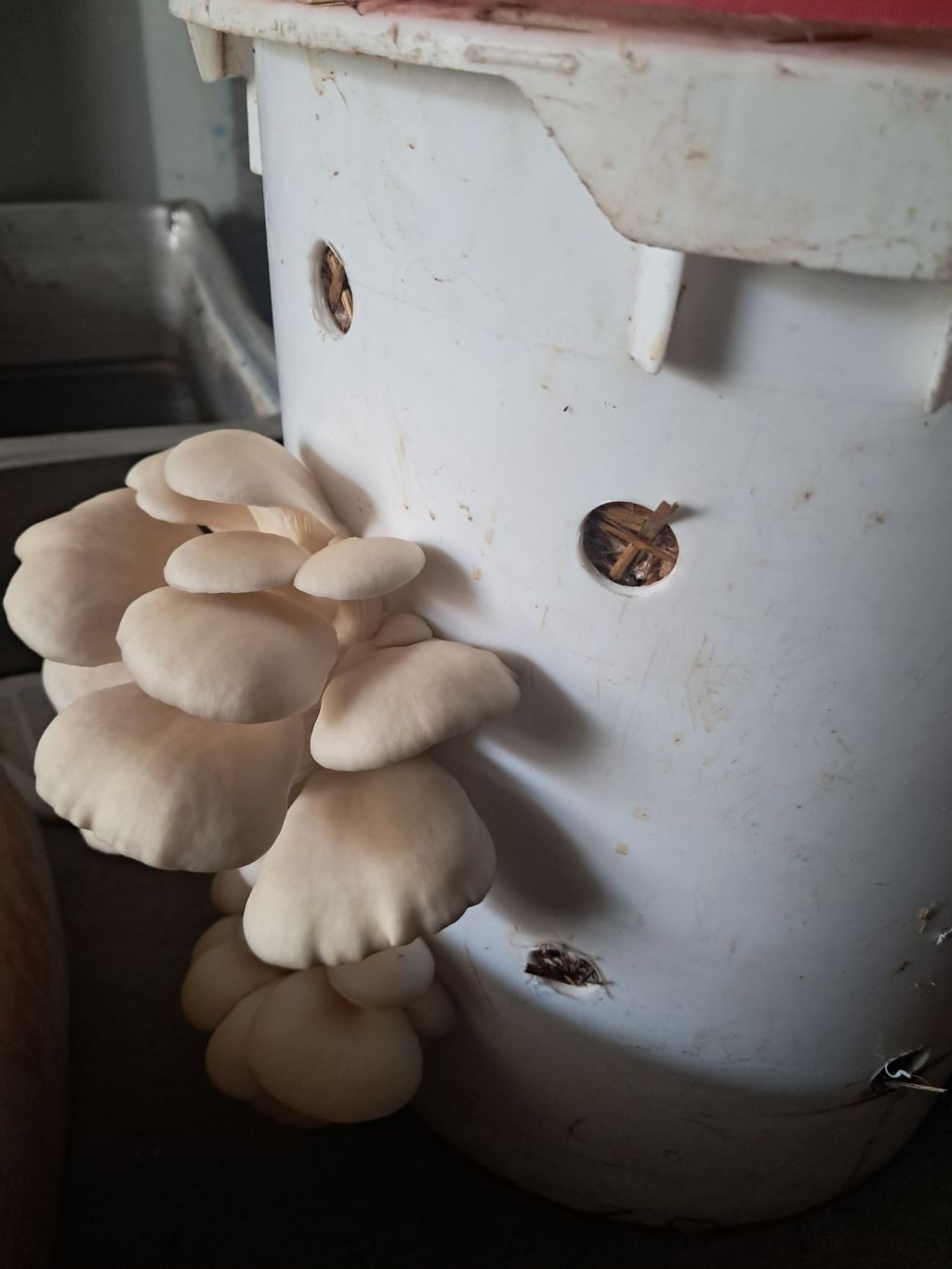
    The rest of the drive was uneventful, and as we pulled into our driveway, we were greeted by the familiar sights and sounds of home.  Our garden had flourished in our absence, my mushrooms had begun to fruit again, and our animals were eager for attention. As we settled back into our daily routines, I found myself replaying moments from our journey:  both the laughter and the chaos, the peaceful mornings on the lake, the delicious shared meals, and the seemingly effortless tire change on the roadside.  It struck me that these are the stories that become family legend, the ones our children will recount with wide-eyed wonder years from now.  In the end, it wasn’t the perfect itinerary or the smooth ride that made our trip memorable, but the shared challenges, the teamwork, and the joy we found in simply being together and with friends. Our road trip reminded me that adventure can be found in the most unexpected places, and that sometimes, a little trial is exactly what you need to bring a family closer together.

    If you enjoy content like this, subscribe below to join a circle of readers who understand the adventure of traveling with small children.

  • Generations on the Land: Reflections for June Dairy Month

    Generations on the Land: Reflections for June Dairy Month

    Growing up on a dairy farm in Wisconsin, my days were shaped by the rhythm of the cows and the turning of the seasons.  Each morning began before sunrise, the air crisp with the scent of damp earth as my family and I made our way to the barn.  The gentle lowing of the cows was our alarm clock, their needs dictating every hour.  Summers meant long days baling hay and tending fields; winters brought the challenge of breaking ice in water troughs and cleaning icy yards.  Even now, years after leaving the farm, that heritage remains woven into who I am.  The values of hard work, responsibility, and respect for the land and animals continue to guide me, especially as June Dairy Month arrives each year.

    June Dairy Month always brings a sense of pride and community across Wisconsin.  As families gather for breakfasts on the farm and other celebrations, I’m reminded of the camaraderie that comes from being part of such a vital tradition.  It’s a time to reflect on my roots, appreciate the dedication of today’s dairy farmers, and feel connected to the land and lifestyle that shaped my upbringing.

    As a child, I didn’t fully grasp the significance of June Dairy Month. I simply felt the special energy it brought:  early mornings in the barn, the mingled scents of fresh hay and silage, the gentle clatter of milk pails, and the creamy taste of fresh milk.  My parents stressed that cows don’t wait, and chores don’t take vacations.  I learned this during many summer afternoons as I missed parties and other gatherings to clean the cow yard.  The cows needed tending, indifferent to my disappointment and frustration.  In those moments, responsibility became more than a lesson, but a way of life.

    Looking back, I see how my family’s story is part of a much larger one.  Wisconsin’s identity as “America’s Dairyland” began with a dramatic transformation in the late-19th century, when wheat fields gave way to pastures and dairy barns.  Innovations like the refrigerated rail car and the Babcock butterfat tester, along with the support of the University of Wisconsin, helped turn the state into a national leader in milk and cheese production.  June Dairy Month, which began in 1937, celebrates the contributions of dairy farmers to our nutrition, agriculture, and economy.

    What stands out most from those years is the sense of community.  Our work mattered, not just to us, but to neighbors and friends who relied on us for fresh dairy, and to the local businesses that depended financially on our success.  June Dairy Month specifically meant hearty breakfasts on the farm, farm tours, and the joy of sharing what we produced.  These traditions instilled in me a deep appreciation for collaboration and generosity.

    Though I no longer live on a dairy farm, those values guide how I raise my own family.  We keep a small garden and some poultry, and I make sure my kids know where their food is sourced.  Every June, we attend the local Breakfast on the Farm, reconnecting with my roots and supporting our neighbors.  We make homemade ice cream and talk about the farmers who make it possible.  These experiences help my family feel connected not only to our food, but to the people who produce it.

    Today’s dairy farmers face unprecedented challenges: rising costs, unpredictable weather, ever-evolving pests and diseases, emotional strain, and the pressures of a global market, among many other worries.  The long hours and physical demands deter many from continuing the legacy.  And yet, every day, farmers rise before dawn, meeting each obstacle with grit and creativity.  Their perseverance sustains not only their families, but our communities and traditions. Recently, I attended a June Dairy Breakfast with my parents and children. The aroma of fresh pancakes mingled nicely with the scent of blooming lilacs, and my kids’ eyes lit up at the sights and sounds.  Watching my kids and my parents interacting together on the farm, I felt the invisible threads of community and legacy binding us together, a living tapestry woven from shared labor and respect.  The future of farming depends on all of us: supporting local farms, honoring the land, and teaching the next generation about where food is sourced.  In every glass of milk, every slice of cheese, and every community breakfast, the story of perseverance and pride continues.  It’s up to us to ensure this heritage thrives for generations to come.

    Do you celebrate June Dairy Month? Share your thoughts below, and subscribe to join a group of like-minded people.

    Photo by Pixabay: https://www.pexels.com/photo/red-barn-235725/

    #JuneDairyMonth

  • Saturday Morning Family Breakfast: A Recipe for Togetherness

    It’s a bright morning, the kind of day that feels full of promise and potential.  My husband Mitchel and I are sitting in the living room with our two children, a toddler girl named Olivia and a 5-year-old boy named Andrew.  Sunlight casts a warm glow over the carpet where toys, books, and a blanket fort are staged.  The television is broadcasting Saturday morning cartoons, and we discuss our dreams from the night before.  The gurgling of the coffeepot can be heard from the kitchen and the smell of coffee wafts into the room.  The day stretches ahead invitingly with no work or school obligations pressing, a perfect opportunity for family bonding and completing homestead tasks.  The pace is unhurried and the mood is light as the cartoons end and I shepherd my family into the kitchen to prepare breakfast. 

    Weekend breakfasts are a big deal in our household, and I pride myself in making a meal you could order in a greasy spoon diner.  I open the refrigerator to discover leftover boiled potatoes, fresh eggs, and the pound of ground pork that defrosted from last night.  Based on the contents of the refrigerator, I decide that we will prepare hashbrowns, eggs, and sausage.  I have two sous chefs and an assistant who will help me prepare the food.

    I locate the box grater and ask Andrew to help grate potatoes.  He excitedly pushes a chair over to the counter where the potatoes, grater, and cutting board are staged.  As he begins to grate potatoes, I hear Olivia screeching in protest as she toddles over to the chair, climbs up, and uses all her strength to push Andrew off the chair.  Andrew grunts in frustration as he struggles to maintain his position, gripping both hands on the counter.  Sensing a conflict, I push a second chair over to the counter and place Olivia there.  Olivia then contents herself with eating cold potatoes while Andrew continues his task.

    I proceed to my next job, preparing the seasoning for the pork sausage.  I slide past my son and daughter to gain access to the spice cabinet.  After spinning the lazy Susan a couple of times, I extract brown sugar, sage, paprika, salt, and pepper, then mix these spices in the proper ratio before adding the ground pork.  I squeeze the pork/spice mixture, trying to ignore the discomfort from cold exposure.  After the sausage is properly mixed, I divide it into 4 uneven balls:  a small one for Olivia, a medium one for Andrew, a large one for me, and an extra-large one for Mitchel.  Mitchel then stages two plates and two pieces of saran wrap, positioning the two plastic pieces between the plates.  He places the pork balls one by one between the two plastic pieces, using his weight to flatten the balls into sausage patties.

    While Mitchel is preparing the sausage patties, the cast iron skillet is preheating.  As the patties are formed, I place them into the skillet and hear the characteristic sizzle.  The kitchen begins to fill with the smell of rendering fat and toasting spices, blending well with the nutty coffee undertones.  After the sausage bottoms are properly browned, they release easily from the pan as I flip them.

    By this time, Andrew has grated most of the potatoes, and I place them into a bowl.  I also add dehydrated onion, celery, garlic, and green pepper, salt, and black pepper.  The sausage patties are removed from the pan and placed on a plate.  The rendered sausage fat is used to flavor and brown the grated potatoes.  In this way, nothing is wasted.

    As the hash browns cook in the pan, I remove the eggs from the refrigerator.  I crack the eggs, and Olivia insists on crushing the eggs to release the yolk and white.  Some eggshells inevitably find their way into the clear and marigold-colored mixture, but I do not mind expending extra effort to extract them.  I add a splash of milk, a few shakes of salt, and freshly cracked pepper.  I then pass the scrambling fork to Olivia.  She beams with pride as she blends the ingredients.  I am close by with a rag to wipe up spills.

    The smell of browned potatoes intermingles with the pork sausage, making my mouth water.  I flip the potatoes, remove a stainless-steel pan from my kitchen drawer, place it on the stove, and turn the dial to high heat.  The stove clicks to life, and blue flames emanate from the burner.  I point out the hot stove, then show Olivia and Andrew how a stainless-steel pan can be made non-stick by heating the pan hot enough for the water to dance rather than instantly evaporate.

    Once the pan is ready, I add oil, then ask Andrew to add the scrambled egg mixture.  Steam rises from the pan as the eggs rapidly cook.  I trust Andrew to stir the eggs until they are mostly cooked while remaining close by in case I am needed.  When the eggs are ready, they slide effortlessly from the pan onto a plate.  I remove the hashbrown skillet from the stove and place it in the middle of the table. 

    I thank my family for their help with preparing the meal.  Olivia has already climbed onto her dining chair booster seat in anticipation.  While I finish prepping, Mitchel places appropriate amounts of eggs, hashbrowns, and sausage on her plate, cuts the food, and allows her to eat.  She squeals in approval as she dives into the sausage, then asks for a cup of milk.  Andrew also starts with the sausage, then the eggs, then the hashbrowns. 

    Mitchel and I discuss our plans for the day as we savor our meal and our time together.  Andrew shares interesting facts about his newest fascination, the Titanic. The eggs are creamy and rich with a velvety texture.  The pork imparts an earthy, well-rounded taste that pairs well with the crispy exterior and juicy interior.  The hashbrowns offer a pleasant balance of saltiness and a satisfying crunch.  The trio together makes for an excellent meal, and a great way for me to bond with my family.

    After breakfast, I collect the dishes to wash.  Olivia and Andrew push chairs to the sink and play in the water while I wash the dishes.  As I dip my hands in the warm soapy water, I feel a deep sense of pride in their burgeoning skills.  Each small success, whether it’s a perfectly cracked egg or a well-seasoned hashbrown, sparks a gleam of confidence that I know will serve them far beyond the kitchen.

    The warmth of these moments lingers long after the plates are cleared and the dishes are washed.  We share stories, swap jokes, and sometimes, simply enjoy the quiet comfort of working side by side.  These are the moments when our bond grows stronger, forged in the gentle rhythm of morning routines and the shared satisfaction of a meal made together. I treasure these simple rituals, knowing they nourish more than just our bodies. They plant seeds of independence, resilience, and togetherness in my children and our family.  Years from now, I hope they will remember not just the taste of homemade sausage, but the feeling of belonging, capability, and love that filled our kitchen these mornings.  These memories, built one breakfast at a time, are the true sustenance of our family.

    Do you have a beloved tradition in your family? Share your experiences below, and subscribe to join a group of like-minded people.