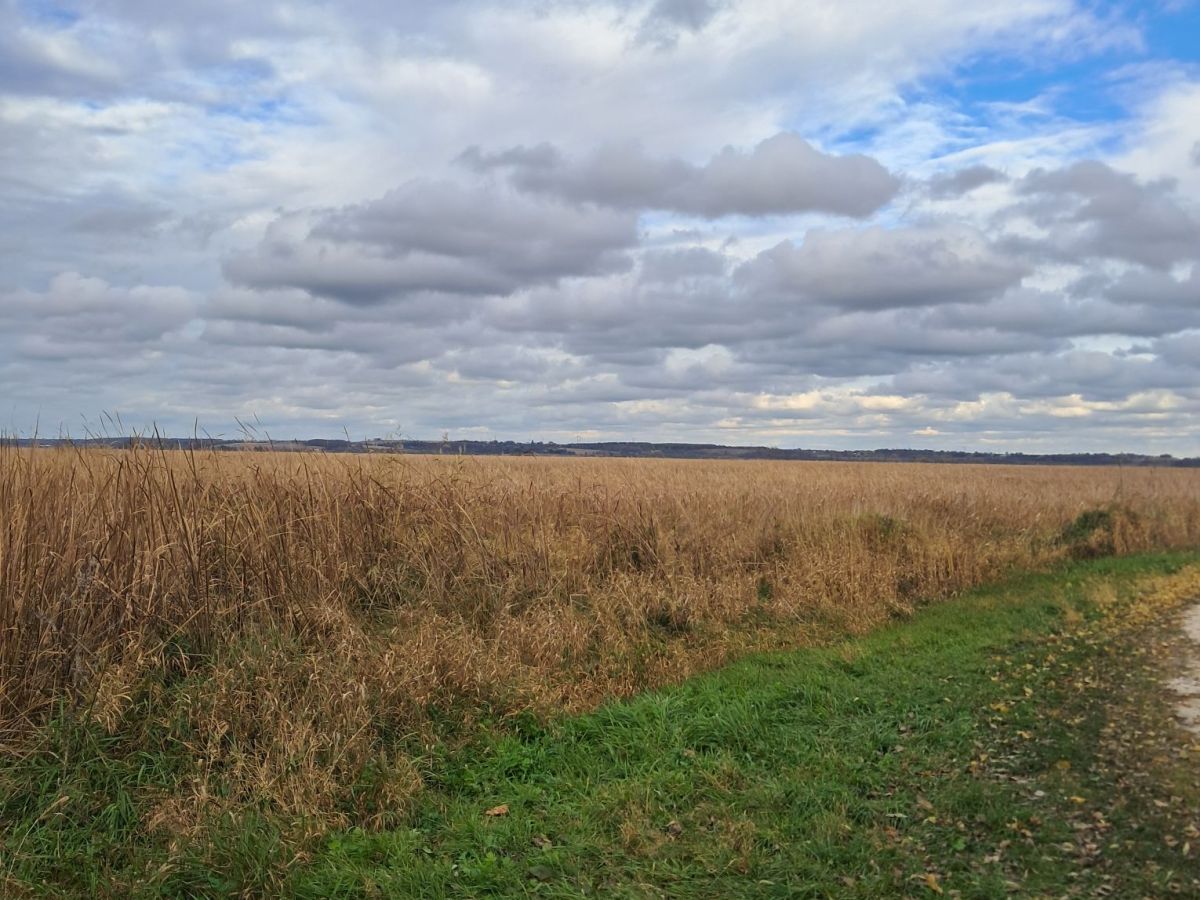
The hum of diesel engines and the scent of dusty corn fill the air every fall, signaling harvest season and long days ahead. For the local farmers, this time of year brings both relief and pressure—hundreds of acres to harvest before rain or early snow set in.
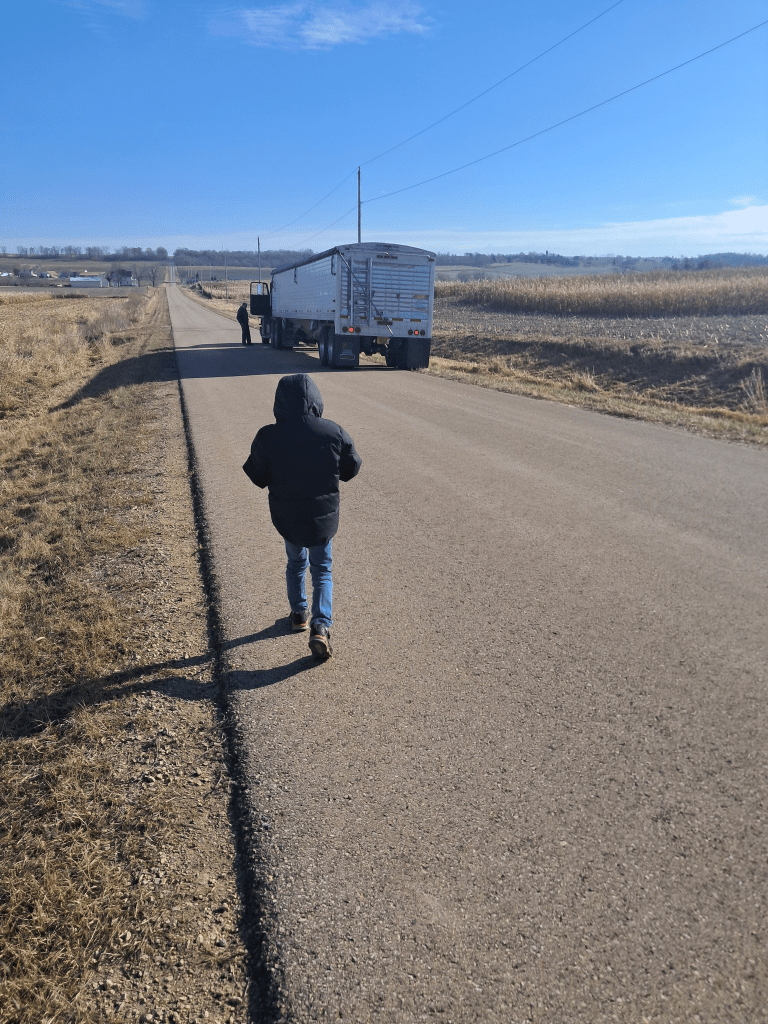
My dad is always there to help, his steady hands and decades of experience behind the wheel making all the difference. With his CDL and a lifetime spent operating heavy equipment, he’s the kind of person neighbors know they can count on when the fields demand every ounce of daylight and sometimes half the night.
This morning, he asked my six-year-old son to ride along as the corn was hauled from the field to the grain elevator to be processed. Before climbing into the truck, my son spotted a single kernel of corn lying by the road. He picked it up, studied it for a moment, and declared it his “lucky corn.” My dad just smiled, and together they climbed into the cab, a small tradition beginning in that instant.
As the truck pulled away, I realized that what my dad is teaching goes beyond driving or hard work. He’s showing the next generation what community looks like—the kind built not by grand gestures, but by showing up, season after season, when it matters most.
What traditions or small moments in your family remind you of where you come from?
What technology would you be better off without, why?
What if I unplugged everything—just one day—and watched my farmstead world grind back to its raw roots?
Sun crests the barn at 5:45 am. No alarm jolts me; instinct pulls me up. We feed the animals, hauling water, grinding feed. We dress kids by fading lantern glow. Husband carries our daughter down the grassy footworn path to Grandma’s. I hitch the old wagon, walking our son two miles to school through dust and dawn chatter—no 10-minute car hum.
Home, I’d scrub laundry in the tub, no machine whirl. Meals bubble over wood fire, not Crock-Pot ease. Bread dough yields to muscle on the oak table, sans Kitchen Aid. No working outside the home for me. Husband swings scythe and shovel where tractors rule now; breakdowns mean hammer, anvil, firelight fixes. We could do it all—generations did. But tasks balloon from minutes to hours, bones aching, daylight devoured.
Reality snaps back: technology saves my soul. Remote work keeps me here for first words, bus arrivals, story hours no commute steals. Farm machines turn brutality into rhythm, sustaining us without wrecking backs. Humans thrived millennia hauling water, grinding grain by hand. Yet why suffer when tools free us for laughter, learning, presence?
Smartphones, though—these pocket tyrants I’d temper first. Last week, a ping ripped me from our son’s magnatile tower mid-build. “Just one email,” I thought. Half an hour vanished, his glee stolen.
Notifications shred focus; feeds erode dinner talk; blue light robs sleep. We’d survive without them, grit conquering all. But boundaries—silent family hours, apps locked post-8—restore what tech should amplify.
No full unplugging for us. We’ve glimpsed the raw possible, but embracing tools with fierce reins honors ingenuity and roots. Here on the farmstead, kids’ laughter rises under starlit skies: progress, bounded, yields the richest harvest.
Like this glimpse into farm life? Hit subscribe for more raw stories on tech, family, and finding balance—never miss the next harvest of thoughts. Share with a friend wrestling their own screen habits, and drop a comment: What’s your pocket tyrant?
If you could meet a historical figure, who would it be and why? If given the chance to meet any historical figure, I would choose not a famous leader or thinker. I’d choose to meet my own ancestors in both Germany and Austria between the 1850s and 1870s. These were ordinary people facing an extraordinary…
Stone by stone, a farmer’s patient craft built more than a wall – it built a legacy. Discover a story of endurance, purpose, and quiet strength that still stands a century later.
Discover the forgotten history behind three thousand attic nails once used to dry corn. A heartfelt reflection on heritage, hard work, and the enduring rhythm of farm life.
What’s the hardest decision you’ve ever had to make? Why?
I walked the yard one last time, tracing fences and trees like scars on a lover’s skin. It’s crazy how something that once felt so familiar can suddenly feel worlds away.
The Drive That Broke Me That two-hour drive home from Christmas just dragged on. My husband kept saying, “Our son needs cousins nearby, grandparents around the corner. Your parents aren’t getting any younger. And that family diagnosis… it’s time we really thought about what matters most.”
His words kept piling up, like snow drifting over all those years we’d spent here. I was holding tight to this quiet rural life. Meanwhile, he quietly pulled away, and the distance between us grew every year.
Roots I Couldn’t Uproot I loved this land—finally had friends, a house that felt like mine after all that searching.
He never really settled. For him, this place felt more like a cage than a home.
The Moment Everything Changed That family diagnosis had been hanging over us, but what really broke me was Christmas at his parents’ house. Everything felt tight, forced—smiles stretched thin, pauses filled with unspoken tension. Our son didn’t know quite what to make of it all.
On top of that, my parents’ health kept slipping. The spaces in our family were widening. Staying meant risking losing them all.
The Yes That Broke Me We didn’t say much that night. The silence carried everything we couldn’t put into words. Finally, I just whispered, “Okay.”
No more tears left—just that stunned quiet as I wandered the yard, trying to soak in every curve, knowing I was letting go.
How It Changed Me Leaving meant giving up on solitude and peace for family and chaos—but honestly, no regrets.
Now, I watch our son laugh and play in his grandparents’ arms. I’ve held my parents through their darker days and welcomed our daughter into this tight-knit fold.
Sometimes love means stepping back to grow deeper roots—roots that grew stronger because I chose family over place. And yeah, I still miss the quiet sometimes. But this? This is home.
If this story hits close to home or sparked something for you, like, share it with someone facing a tough choice, and subscribe for more real-talk reflections on life’s big turns.
Do you or your family make any special dishes for the holidays?
Flour-dusted hands trembled over a bowl at 3 a.m., measuring cups snapping in the silent kitchen. Everything was a desperate attempt to summon my mother from the hospital. An undiagnosed intestinal blockage had her rejecting even water.
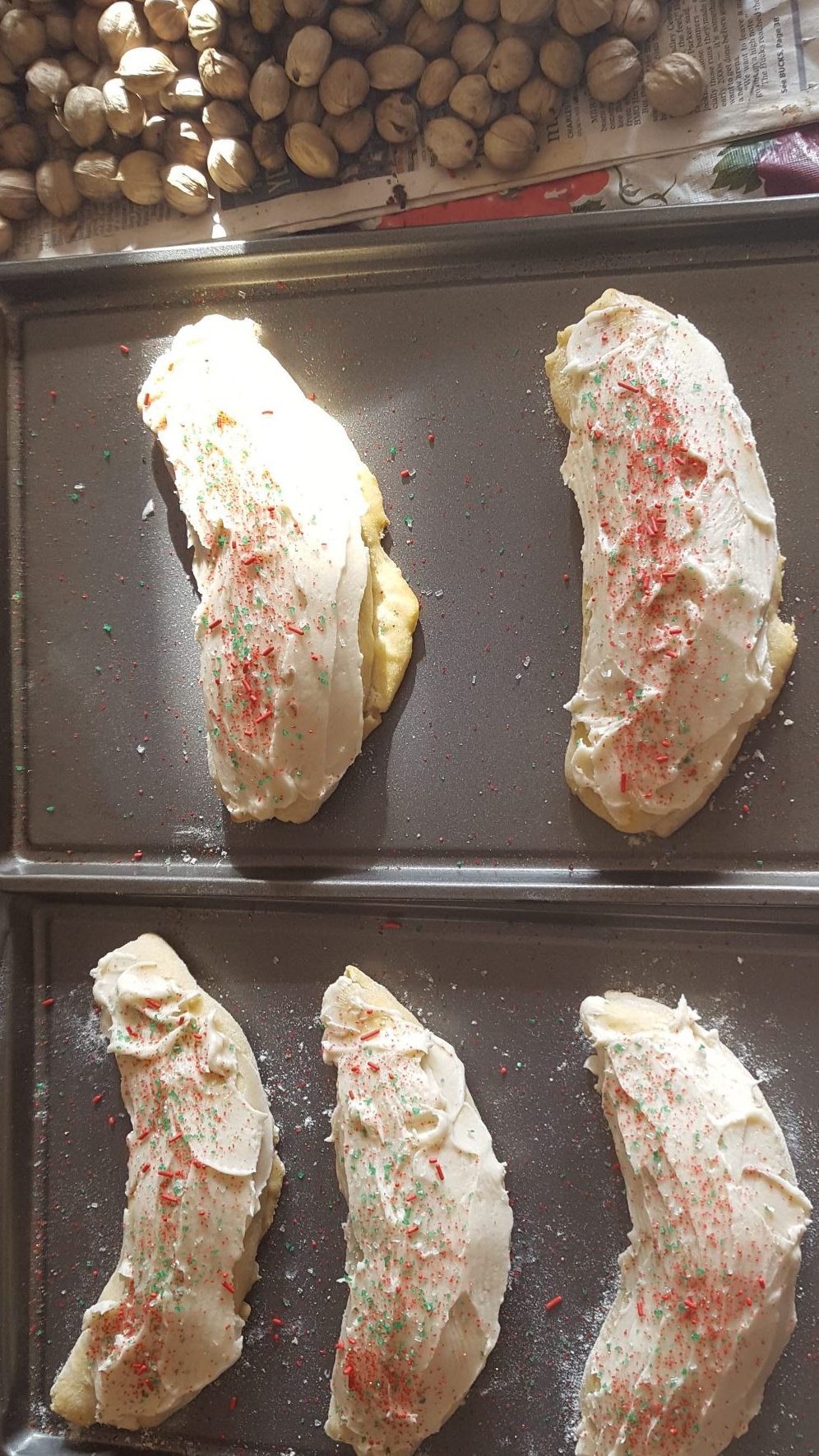
The family lineage traces to heavy German roots. My father’s ancestors came from Austria in the 1870s, my mother’s from northern Germany in the 1850s. Her kranz kuchen recipe endures from her grandmother’s penciled cards. Yeasted dough rolled thin, layered with my dad’s foraged hickory nuts, chopped dates, cinnamon, and brown sugar. Twisted into crescents, baked golden, and glazed, dozens emerge each year for us six daughters, neighbors, and church friends, embodying a quiet hospitality.
Last Christmas, that rhythm fractured. Hospitalized, she could not retain food; us sisters started a text string, asking one question. “What if they never pinpoint the cause?” No flour clouds rose, no yeasty warmth filled the air—only silence amplifying the dread of a holiday without her.
Insomnia seized the nights. Each fragmented update jolted awake any fragile rest. Kneading became refuge: egg yolks merging into warm, proofed milk and yeast, the dough yielding beneath palms like hope taking form. As it rose under a towel, yeast’s scent enveloped the darkness. Folding in the nuts, dates, and spice, then rolling and shaping crescents, the hands of generations guided mine.
The oven’s glow dispelled shadows; caramelized sugar perfumed the halls. Frosting traced uneven paths, mirroring hers. Those crescents transformed rupture into resilience.
A single bite of spice-laced crumb now evokes my dad’s meticulous toil, my mother’s assured fold, my midnight vigil—a resilient pastry proving adversity does not sever us but reshapes us, crescent intact. She recovered. The tradition persists. We endure.
If this story of family tradition and quiet strength resonates with you, like this post. Share it with someone who needs a reminder that resilience often starts in the kitchen. Subscribe for more heartfelt essays on heritage and hope.
Gobbles, our forty‑pound turkey, once refused to move for the lawnmower. My husband drove closer, then closer still, waiting for the bird to do the sensible thing. Gobbles didn’t budge, and that’s how we ended up with a turkey‑shaped patch of unmowed lawn—a small, stubborn monument to the wild experiment we’d started in our backyard.
A New Chapter in Backyard Farming
Chickens had already shown me that birds can be both hilarious and mean. Ducks had proven that cuteness and filth can happily coexist. A few years ago, after reading about a woman who raised her own Thanksgiving turkeys, I realized I wanted to go further. When our local hatchery couldn’t source ducklings one spring, it was a minor inconvenience. This became the excuse to bring home three turkey poults instead.
From Basement Brooder to Outdoor Coop
This time, my husband handled pickup duty. He arrived with a box of peeping chicks and poults. Their arrival turned the whole house electric with anticipation. The brooder—a repurposed water tank in our basement—waited with a heat lamp, water, feed, and a lid to contain the chaos. At first, the turkeys were only slightly larger than the chicks, all of them fluffy and awkward. Within days, though, the turkeys started to pull away. They doubled in size, then doubled again. It seemed their entire job was to eat, drink, and poop as efficiently as possible.
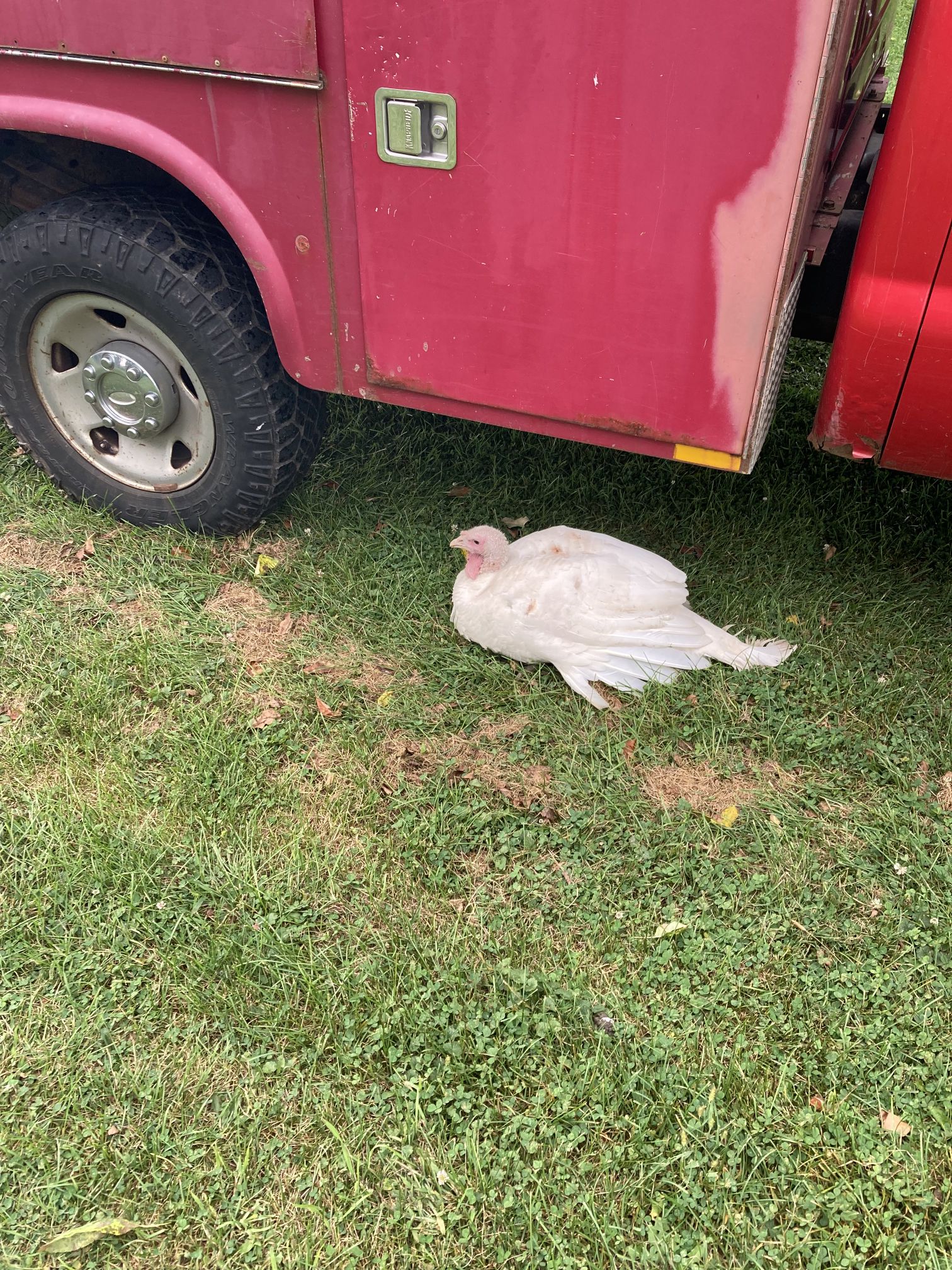
We lost one poult early on for reasons we never understood, and the sudden shift from three to two landed harder than I expected. It was a quiet, early lesson in how fragile life on a small farm can be. Of the survivors, one always had his feathers sticking out at odd angles, so we named him Gobbles, a little wink to anyone who’d seen South Park. The smaller bird became Jennie, after the frozen turkey brand that had defined “Thanksgiving” for us before we raised our own.
Gobbles
By early May, the brooder was bursting, and everyone was ready for fresh air. We tried separating the turkeys from the chickens that first night outside, but the noise they made made it clear we were fighting a losing battle. After one loud, sleepless experiment, we moved everyone into our mobile chicken coop and let them sort it out. During the day, they roamed the yard as a mismatched flock, and each evening they filed back into the coop like feathered commuters, jostling for their preferred spots.
Jennie
Personality Plus: Turkeys vs. Chickens
Living with both species at once made their differences obvious. The chickens were efficient, slightly tyrannical little dinosaurs. The turkeys seemed to have missed out on common sense entirely. On Memorial Day weekend, a big storm rolled in; the chickens headed straight for shelter, while the turkeys stood in the downpour, soaked and squawking as if the rain were a personal insult.
My husband and I slogged around in the storm, alternating between laughing and swearing as we scooped them up and shoved them under cover. We were half convinced they might drown standing there or draw an eagle with all that frantic noise. By summer, their physical transformation matched their larger‑than‑life behavior. If the chickens were little dinosaurs, the turkeys were the T‑rex cousins. After about four months, Gobbles weighed around forty pounds and Jennie about twenty‑five, and both strutted like they owned the place.
Rising Stakes: Growth and Pecking Order
Gobbles clearly saw himself at the top of the pecking order, inserting his bulk into whatever drama unfolded among the hens. Jennie, despite her smaller size, regularly put the roosters in their place and even bloodied one during a particularly heated round of dominance negotiations. The same birds that made us laugh with their antics were always moving toward the date we’d circled on the calendar. Around the five‑month mark, butcher day arrived—never something we looked forward to, but the reason we’d brought them home.
Butcher Day: The Hardest Part of the Journey
My husband handled the hardest part. Once it was done, I thanked the turkeys out loud before joining the work of plucking, stepping away now and then to check on the kids. Our five‑year‑old surprised me by wanting to help, his small fingers well suited to grabbing stubborn feathers, and I felt a brief tug between pride and discomfort as I let him join in. My husband’s father arrived and the day settled into a rhythm: music playing, adults talking, drinks in hand, hands busy. The work was still heavy, but it felt shared, almost like a ritual we were inventing as we went.
By the end, we had one dressed turkey at about thirty pounds and another around twenty, lined up for the freezer like oversized, deeply personal trophies of our effort.
Preparing the Turkey for the Table
I hauled Gobbles from the freezer about a week before Thanksgiving. I set him to defrost in our unheated upstairs. He loomed silently every time I walked past. Each glance reminded me of the fluffy, clumsy poult he had been. It also brought back the long, messy chain of chores that had brought him there.
Two days before Thanksgiving, I mixed a simple brine with salt, sugar, Worcestershire, garlic, and pepper. I discovered that the only vessel big enough was our turkey fryer, minus the basket. It was a ridiculous fit, but it worked. On Thanksgiving morning, we got up early, drained the brine, patted Gobbles dry, rubbed him with salt and oil, and wedged him into a large Nesco roaster so tightly we had to shove his legs down to close the lid. Then we poured in four cans of Miller Lite and turned our attention to the rest of the meal.
Waiting for that turkey to cook felt tense and nerve-wracking. It was like waiting for an exam grade posted in front of the entire extended family. Fifteen people, one bird, no backup plan if it turned out dry or oversalted. As the scent of beer, garlic, and roasting fat filled the house, my anxiety loosened its grip. It shifted into something closer to anticipation. Even if it wasn’t perfect, it was already unforgettable.
Thanksgiving Dinner: More Than Just a Meal
When we finally gathered around the table, Gobbles was as much story as food. As everyone carved off pieces, we traded memories of his lawnmower standoff. We recalled his attempts at intimidation. We laughed at the way he used to lumber after the flock like a confused bodyguard. Conversation took on the tone of a slightly irreverent eulogy as we honored his life in the most direct way possible. We ate the bird who had once stood his ground against a mower and won. It was the best turkey I’d ever tasted, not because it was flawless, but because we knew every step that had led to that plate.
Lessons Learned and Lasting Memories
Looking back, those turkeys demanded patience when they outgrew every space we gave them. They taught us humility when plans went sideways. We needed a sense of humor. We found ourselves sprinting through rainstorms to rescue birds that were too bewildered to seek shelter. They pulled Thanksgiving out of the grocery store freezer and dropped it squarely into our own backyard. I don’t know if I’ll raise turkeys again. Every November, when I see a frozen Jennie in the supermarket, I remember Gobbles and Jennie. I think about the stubborn patch of lawn out back. I recall the season when our holiday centerpiece had a personality—and a history—all his own.
If you’ve raised turkeys or other backyard poultry, share your stories, challenges, or favorite moments in the comments below! What surprises did your birds bring? What tips would you pass on to someone thinking about raising their own turkeys?
If you enjoyed this story, please like it. Share with your fellow backyard farmers. Subscribe for more honest, practical tales and tips from life on a small farm. Your support helps us keep these stories—and the learning—coming!
Everyone has pet peeves—those small irritations that can silently gnaw at our patience. For me, they reveal more than just frustration; they mark my journey toward empathy and self-awareness. I try hard not to complain because I know I am truly fortunate. I have a life filled with comfort and people who support me. When I’m asked about my top three pet peeves, I realize they reflect who I am beneath the surface. They also show how far I’ve come. My three top pet peeves are based on how we treat each other: moral superiority, selfishness, and condescension.
The Weight of Judgmental, Morally Superior People I learned a painful lesson about judgment from a friend. She rightfully withdrew after I reacted to her with criticism rather than compassion. That moment still lingers—when they vulnerably shared their struggles, and I judged their choices instead of hearing their heart. The sting of that loss taught me how easy it is to judge without walking in someone else’s shoes. Now, when I face moral superiority, from others or myself, I pause to remember. We all live complex lives shaped by experiences others can’t fully grasp. Judgment is a quick and lonely reaction; empathy takes more courage but builds connection.
The Sting of Selfishness and Isolation Selfishness frustrates me deeply. I am especially frustrated by the refusal to embrace community in parenting and care giving. I once believed I could handle everything alone, armed with sheer will and rigid routines. Yet endless sleepless nights and isolation soon shattered that illusion. I still recall the raw exhaustion and quiet desperation before I accepted help and found strength in community. Watching others withdraw or show impatience with children stings because it undermines what I now know. We thrive in villages, not in solo isolation. People can also act selfishly without fully understanding how their choices ripple outward and affect those around them. This makes compassion and honest conversation even more important.
The Quiet Poison of Condescension from a Loved One Condescension is unlike judgment in a profound way. It is steeped in strong feelings and visible actions: the raised eyebrow, the patronizing tone, the dismissive glance. These actions communicate contempt and make you feel small. I unfortunately became intimately familiar with those feelings from a trusted loved one during my childhood. Back then, I believed shrinking myself might somehow earn their approval. The sting of those subtle rejections echoed for years. Building my confidence has been a slow, ongoing process that still unfolds. Recognizing condescension as thought, behavior, and emotion has helped me protect my worth today. It has also marked a crucial part of healing.
From Peeves to Perspective These pet peeves are more than annoyances; they are milestones on my path of growth. They lay bare the familiar traps of judgment, selfishness, and contempt. They remind me of how far I have come in responding with compassion toward others and myself. Complaining only raises my heart rate and drags me into a negative head space. Instead, I lean into these moments of discomfort as invitations to think and learn. After all, life is a messy, beautiful journey, and we are all works in progress navigating it together.
If this essay resonated with you, please like, share, and subscribe to stay connected. Your support helps spread these reflections on growth and empathy to others who need them. Join the conversation and let’s learn and grow together.
Have you ever noticed how some people quietly root themselves into your life’s story, shaping you in ways you only recognize years later?
I have three such people. Each arrived in my life in a different month, under different skies. Yet all have become my most favorite—and every morning, her kisses remind me how deeply entwined we are.
The first person came into my life when I was twelve. It was on a crisp September morning on a creaky school bus. I remember deliberately slipping into his favorite seat, hoping for a moment of attention. He was the boy with the quick grin and sly humor, so different from my preppy, studious self. At first, he barely noticed, but gradually, our laughter bridged our worlds. We briefly drifted apart in high school. By college, weekends bloomed with him driving an hour to visit me, our shared adventures stitching us closer. Eight years later, we married—two lives grown together in love and understanding.
Two Novembers later—two years after marrying him—I awaited another arrival with nervous wonder. Six months earlier, I had learned I would become a mother. As he grew, I spoke often to him, calling him “little one.” I dreamt of the gardens we’d tend and the trips we’d take. He arrived on a blustery Saturday night, bearing a name passed down through generations. Our first year together was a storm, marked by sleepless nights, fears, and growth. But with each challenge, I found a deeper love while planting seeds both in soil and in his heart.
Four Octobers after that, our family welcomed a second burst of joy. She came into the world on a rainy October evening, her laughter a bright pulse in our new home. We had just moved closer to family, seeking the roots we needed. Now my mornings start with her tender toddler kisses—small reminders of the light and love she brings to every day. Watching her discover the world has taught me to find wonder in the small moments, and open my arms wide to life’s beautiful unpredictability.
These three—the boy from the school bus seat in September, the “little one” I awaited in November, and the joyful October child with kisses at dawn—are my heart’s home. My husband and two children, each planting roots, helping me grow, and teaching me what it truly means to love.
If this story touched your heart, please like, share, and subscribe to stay connected. Your support helps me continue to share meaningful moments and stories that inspire growth and love.
Test the repaired spikes by climbing and cutting down a dead pine in your parents’ yard.
Pose for pictures because your wife thinks this is pretty cool.
Try to fix the chainsaw that quit mid-climb. Fail.
Grab another chainsaw.
Buy gas for said chainsaw.
Get lunch. Listen to wife fume because they gave her sweet tea instead of unsweet.
Finally arrive at the tree.
Spend 20 minutes trying to start the skid loader parked 3 feet from your work zone. Whisper sweet nothings. Caress it. Nothing.
Place the skid loader in time out.
Climb and start limbing.
Ignore wife and dad warning about branches hitting the eavestrough and phone line. It’s just a phone line…
Try, fail, and give up on the skid loader again.
Hang from a limb in a way that makes wife and dad extra nervous.
Shake head as wife demands a “secluded spot” to pee rather than drive to the gas station a half-mile away.
Give the skid loader one last chance. It finally roars to life. Move the damn thing before it dies again.
Cut the final branch.
Wave proudly to bystanders.
Wrap rope around a big limb. Ask dad to guide it as you cut.
Ask dad to lower you down with rope. Appreciate his creative interpretation of “lower,” which leaves you dangling halfway.
Chat with impressed bystander while regaining circulation.
Wrap rope around tree trunk; hook it to the truck.
Examine the 1910s-era whiskey bottle your bystander buddy proudly shows off.
Cut a wedge in the direction the tree should fall.
Have dad ease the truck forward while wife hammers in a plastic wedge so the saw doesn’t jam.
Watch the tree crash down exactly as planned. Feel the earth shake.
Admire the glorious wooden carnage.
Leave. This list ends with cutting, not cleanup. Besides, the skid loader’s blocking the truck in the driveway anyway—perfect excuse to call it a day.
If this wild ride through homegrown “engineering” and accidental heroism brought a smile (or had you shaking your head in sympathy), hit that like button! Share this post so your fellow weekend warriors know they’re not alone in the chaos.
And if you enjoy a good mix of sawdust, sarcasm, and marital commentary, subscribe for more #MarriageHumor and #WeekendProjects gone spectacularly sideways.
The crunch of gravel echoes under the car tires as I set out for what has become a cherished ritual: a short drive to the nearest beach. It’s funny. When people ask me if I prefer the beach or the mountains, the answer isn’t as simple as it seems. It’s never really been about the stunning landscapes or sweeping views for me. It’s about how these places fit into the messy, beautiful chaos of my life right now.
Living in Southeastern Wisconsin, the mountains feel like a faraway dream—the closest being nearly 800 miles away. That distance means days of careful planning and long hours on the road. Add to that a husband who prefers the comfort of home, a lively 6-year-old bursting with questions, and a fearless 2-year-old who demands constant attention. The mountains—with their towering peaks and crisp, cool air—are breathtaking. But for us, they exist more as a distant escape than a feasible weekend plan.
On the other hand, Lake Michigan beckons like a constant friend. Its vast stretches of blue only a short forty-five-minute drive away. Sometimes, I even go on my own with just the kids—escaping into that familiar comfort whenever I need it most.
Pulling into the parking lot, I inhale deeply: the fresh tang of lake water mingling with sunscreen and the earthy aroma of pine trees bordering the beach parks. The warm sand cushions my feet as the kids sprint ahead, their laughter weaving through the calls of distant seagulls. I spread our picnic blanket on the sand near the shore. Then I watch my husband lean back, eyes closed, a rare and peaceful smile crossing his face. In that moment, I see what this place really means to us—it’s not about grandeur, but about ease and presence.
No elaborate packing lists, no complaints about long drives or restless children. We dive into the spontaneous joy of splashing in waters that are crisp but inviting. We build sandcastles topped with shells, and simply soaking in uninterrupted family time.
Choosing between beach and mountains might sound like deciding between two types of beauty. For me, it’s about the heartbeat of everyday life. The shore is tangible and near—a source of small adventures and lasting memories without the stress of far-flung travel. The mountains will always be there, a majestic possibility for the future. But for now, the beach is where we belong: close enough to visit often, yet vast enough to still feel like a treasured getaway.
What’s your favorite escape — beach or mountains? And how does that choice fit into your life and family? I’d love to hear your thoughts and stories in the comments below!
If you enjoyed this story, please hit like. Share it with someone who loves the outdoors. Subscribe for more personal essays about family, nature, and finding joy close to home.
Disclosure: This post contains affiliate links. As an Amazon Associate, I earn from qualifying purchases. Thanks for supporting Practical Homesteading!
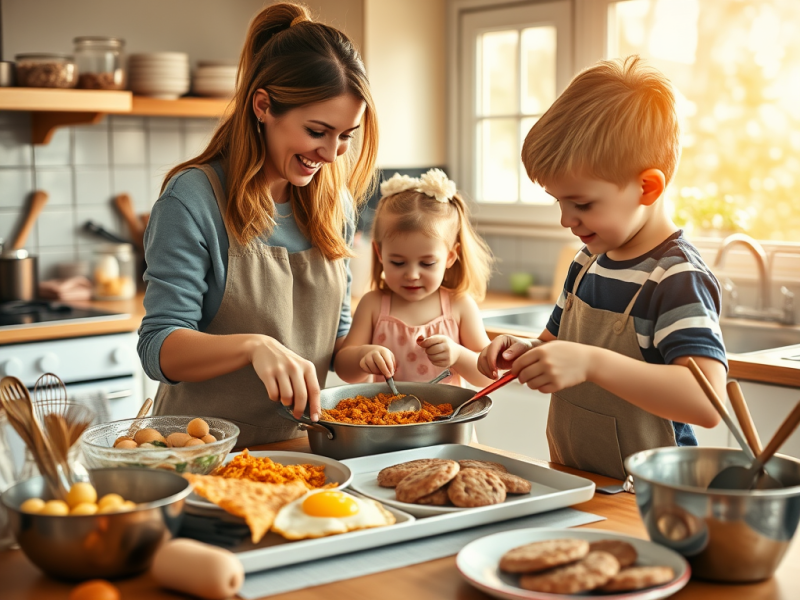
Imagine standing in your kitchen after a long day, staring into the fridge and pantry. Hungry family members are standing by waiting not-so-patiently. You juggle not only what tastes good but also what’s nutritious, budget-friendly, and available—all in one mental balancing act. As the main cook in our household, this daily challenge has encouraged me to develop a simple system. I choose meals based not just on flavor but also on their flexibility, ease, and heart.
At the core is a meal framework built around three essentials: protein, vegetables, and starch. This adaptable formula shifts with the seasons and what’s on hand. Proteins can be chicken, pork, beef, fish, or even plant-based, depending on our mood. Vegetables reflect the harvest—right now, that means home-preserved summer bounty or crisp fall favorites like cabbage, Brussels sprouts, and carrots. Starches might be boiled potatoes, rice (affiliate link), bread, or pasta.
Take Swedish meatballs simmered in savory sauce, paired with boiled potatoes and roasted Brussels sprouts. The meatballs release a comforting spiced aroma, while the tender potatoes soak up the sauce’s richness. The Brussels sprouts, caramelized and slightly crisp, add a satisfying texture. Sometimes, I swap the potatoes for egg noodles or rice. Other times, I substitute veggies with whatever is fresh or frozen—perhaps roasted cabbage or steamed broccoli. That’s what makes this dish endlessly flexible and flavorful.
Another deeply comforting meal we savor is our pork roast with baking powder dumplings and homemade sauerkraut. This dish carries the warmth of tradition—raised from hogs on our farm and fermented sauerkraut preserved each year. The dumplings, pillowy and light, take about 20 minutes to make, but their soft texture is worth the wait. On busier nights, a crusty loaf of bread stands in just fine. The tangy sauerkraut and savory pork meld beautifully. It’s a combination that our 6-year-old son eagerly requests, making it more than dinner—but a family ritual.
When I have more time to savor cooking, I prepare roasted lemon garlic salmon with rice and roasted broccoli. The salmon, infused with bright lemon and savory garlic flavors, roasts to tender perfection with a slightly crisp edge. The roasted broccoli brings a bit of earthiness and crunch, balancing the richness of the fish. Fluffy rice accompanies the dish, soaking up any juices and tying the meal together harmoniously. This combination can easily adjust. You can swap the rice for potatoes or pasta. Or you can switch up the veggies depending on what’s fresh or frozen. As a result, this meal is both versatile and inviting.
What unites these meals is more than just ingredients or technique. It’s the love poured into making them work for everyday life. These dishes mirror the seasons, our kitchen’s rhythm, and the joy of feeding family with less stress and fuss. They invite us to gather around the table, share stories, and create memories. Cooking, for me, is not just about sustenance; it’s an act of care and connection.
In the end, cooking for family is a dance of practicality and pleasure, tradition and innovation. Our favorite meals teach me that the best dinners aren’t about perfection—they’re about presence: being there, nourishing those you love, and turning the ordinary into something extraordinary.
Now it’s your turn! What are your family’s three favorite meals? Do you use a simple framework like protein-veggie-starch, or do you have a unique approach in your kitchen? Share your go-to dishes or meal hacks in the comments below. I love hearing how others bring their families together through food.
And for more easy, adaptable recipes and home-cooking tips, please like this post. Share it with friends who might find this inspiring. Don’t forget to subscribe or follow for regular updates—you won’t want to miss what’s cooking next!










 Practical Homesteading