Category: Holiday

  • Keeping Time With the Land: How Seasonal Living Can Help You Slow Down

    Keeping Time With the Land: How Seasonal Living Can Help You Slow Down

    What the seasons can teach us about slowing down, finding balance, and belonging
    A version of this essay appears in the January 8, 2026 edition of the Dodge County Pionier.


    Ask most people how they measure time today, and the answers sound familiar: alarms, deadlines, color‑coded calendars, the endless scroll of days on a glowing screen. Phone notifications cut across dinner, school schedules slice afternoons into drop‑offs and pickups, and the next bill due date is never far from mind.

    Where I live, time follows a different rhythm—guided not by screens but by the soil itself.

    My family keeps time by the signals nature gives: sap rising in March, turtles crossing the road in May, fireflies at dusk in June, corn drying into gold by October. A cold north wind can say “November” more clearly than any app. These cycles remind us that time isn’t a race toward exhaustion; it’s a loop—a pattern of effort, rest, and return.

    In a world obsessed with productivity, the land offers a quiet lesson: slowing down isn’t falling behind. It’s catching up to what matters.


    Winter: the radical act of rest

    When the holidays end and snow hushes the fields, stillness takes hold. The world outside the window turns soft and muted, as if someone turned down the volume. Days stretch long. Nights invite reading, conversation, and quiet.

    In modern life, that slowness often gets labeled “unproductive.” Inbox counters climb even as the sun sets before dinner. But in the rural calendar, winter is preparation—the season the earth itself uses to heal. Under the frozen top layer, roots are resting, waiting for their cue.

    Inside, a different kind of work takes over: soup on the stove, a deck of cards on the table, a cat snoring near the heat register. There’s no badge for this kind of work, but the house feels fuller for it.

    Winter offers permission to pause. Even without a farm or a woodstove, anyone can claim a bit of that wisdom: choose a few evenings when nothing is scheduled, let the phone stay in another room, and let the quiet do its work.


    Spring: a rehearsal for renewal

    Spring announces itself quietly at first—a drip of meltwater from the eaves, the smell of mud, the first bird that sings before sunrise. One morning the snow looks tired; the next, you notice a thin green line where the lawn meets the sidewalk.

    We tap trees and plant seeds, acts that serve no instant gratification. The sap runs clear and cold, one slow drop after another into plastic jugs. Seed trays sit under lights, all dirt and hope, for weeks before anything green appears. Yet when syrup warms pancakes or sprouts unfurl in a window box, you can taste reward drawn from patience.

    Spring teaches urgency without panic. Ramps, asparagus, morels, and rhubarb arrive in a rush, then slip away as if they were never there. The season reminds us that beginnings are not one-time events but recurring invitations. The world doesn’t ask, “Did you start perfectly?” It asks, “Are you willing to start again?”

    You don’t need a sugar bush or a greenhouse to feel this. A single pot of herbs on a balcony, or a commitment to walk the same city block once a week and notice what’s blooming, can turn spring into a ritual rather than a blur.

    And after that first rush of green, the land hardly pauses—by July, it’s in full voice.


    Summer: where work and joy meet

    By midsummer, everything hums. In the afternoon heat, insects buzz like a low electric current in the fields. Lawnmowers start and stop up and down the street. Windows are open, and someone, somewhere, is grilling.

    Gardens overflow. Tomatoes split if you don’t pick them in time. Zucchini multiplies on the counter and quietly appears on neighbors’ doorsteps. Kids shriek through sprinklers, leaving wet footprints on hot pavement. Even the air smells different: cut grass, sunscreen, diesel from a tractor on a distant road.

    Like the growing season, our best days often mix effort with enjoyment. Summer’s lesson is simple: work and joy are not enemies. They often belong in the same hour. There is satisfaction in going to bed with dirt under your fingernails and the memory of a late sunset still bright in your mind.

    The reward for effort can be as close as a ripe berry, a shared picnic in a city park, or a tired, happy body at the end of a long, light-filled day.


    Autumn: gratitude and gathering

    Autumn softens the light and sharpens the air. Mornings carry that first hint of frost, and you can see your breath if you step outside before the sun gets serious. Leaves turn from green to gold and red, then crunch underfoot in the driveway.

    The season’s abundance—pumpkins on porches, apples piled in crates, shelves lined with jars and loaves—reminds us how much depends on cooperation: between people, earth, and time. No one person makes a harvest alone. There are seed savers, farm workers, truck drivers, grocers, and cooks all woven into the meal.

    Gratitude, in this season, isn’t just a word reserved for a single holiday. It’s the habit of looking at an ordinary table—soup, bread, a piece of fruit—and seeing the many hands and seasons that brought it there.

    Even in an apartment, autumn can become a practice of gathering: inviting friends over for a simple pot of chili, walking through a park under changing trees, or taking five extra minutes to watch the early dark settle in instead of rushing past it.


    What circles can teach a linear world

    When winter returns, it’s easy to see it as a setback: dark, cold, the end of something. But the more closely the seasons are watched, the clearer it becomes that time does not move in a straight line. It hums in a circle.

    Each season brings another chance to begin again—not by doing more, but by noticing more. The calendar on the wall may march from one square to the next, but the world outside repeats its old, trustworthy patterns: thaw, bloom, heat, harvest, rest.

    Wherever you live—city or countryside—you can keep time with the land in your own way. Let January be a little slower. Let spring mean at least one meal built around what is fresh where you are. Let summer include a night spent outdoors until it’s fully dark. Let autumn carry a moment of thanks, even if it’s just whispered over a sink full of dishes.

    The land has never hurried. It always arrives where it should. Maybe we can too, if we’re willing to step out of the race now and then and walk in circles for a while instead.


    How could you bring a bit of seasonal balance into your daily routine? Please let me know below in the comments.

    If this reflection on seasonal living resonated with you, please take a moment to like and share it with someone who might need a gentler rhythm right now.

    To receive future essays on slow, seasonal living straight to your inbox, subscribe to the blog and join this little community of people learning to keep time with the land.

    Related Posts

    The Quiet Wealth of These Fields

    Welcome to the rural economy—where value isn’t counted in cash but in connections. Beneath the wide-open sky, where grain silos and fence posts stitch the land into neat parcels, the real currency is not minted or printed. It’s grown and built, raised and traded. Trust, hard work, the barter of honest services and handmade goods.…

    Keep reading
  • The Night After Christmas and the Family Flu

    The Night After Christmas and the Family Flu

    Sometimes the most memorable Christmases aren’t the picture-perfect ones, but the years when everything falls apart and love holds things together anyway. This is the story of the year the flu came to visit right after Christmas—and how crackers, Gatorade, and a lot of teamwork got us through.


    ’Twas the night after Christmas, all peaceful and deep,
    Our stockings hung empty, the house fast asleep.
    The lights softly shimmered, the hearth gave a sigh,
    While snow whispered secrets to stars in the sky.

    ’Round midnight it started—a twinge and a pain,
    A twist in my stomach I couldn’t explain.
    I tiptoed off slowly, the floorboards all still,
    I said to my husband, “I think I might be ill.”

    And I wasn’t alone—two soft feet drew near,
    My daughter behind me soon made herself clear.
    She followed and whimpered, her cries urgent, strong—
    She already knew that something was wrong.

    “Oh, sweetheart,” I whispered, though queasy and gray,
    “We’re in this together—it’s starting today.”
    Her little face wet, her sobs catching fast,
    I knew this long night would be sure to pass.

    Two more hours rolled by, and then, half past four,
    My son padded in through the barely cracked door.
    Still sleepy but worried, he frowned, half-convinced,
    “Is everyone sick now?”—and then we all winced.

    By morning, our room was a whirlwind of care—
    Blankets and towels were strewn everywhere.
    The tree in the corner still twinkled on cue,
    While a water cup army assembled in view.

    My husband, though sleepless, laced boots with intent,
    Murmured, “Crackers and Gatorade,” and then off he went.
    He came back exhausted but noble and true,
    His face wind-bitten, but his heart shining through.

    Later, with laughter he told me with glee,
    The noises I made (embarrassing me!).
    Not cruelly, of course—just the way that love leans,
    Finding small humor in less-than-grand scenes.

    Meanwhile our daughter, though fevered and small,
    Was strangely composed through the worst of it all.
    So dainty, so sweet in her sickly haze,
    Even illness can’t quite dent a toddler’s ways.

    And when things got rougher, we had helping hands near—
    Grandma and Grandpa, steadfast and dear.
    They took on our laundry, our chaos, our chores,
    Returning it folded with love through the doors.

    Our Black Cat peeked in from the kitchen’s safe line,
    Surveying the scene with a gaze most divine.
    He blinked, turned around with his usual grace,
    And decided, “I’ll check on them later—just in case.”

    The day after Christmas was quiet and slow,
    With naps and faint smiles in the furnace’s glow.
    Two days gone by, and though fevers still nipped,
    We were mostly upright, though thoroughly whipped.

    By three days post-Christmas, we’d climbed to a cheer—
    About eighty percent, though not quite in the clear.
    An ache here, a groan and a bit of fatigue,
    But hope had returned to the flu-ridden league.

    We smiled through the mess, the trials and dread,
    Through crackers and Gatorade close to each bed.
    It wasn’t the Christmas of bright, shining scenes,
    But it was real love—somewhere in between.

    So here’s to the chaos that family life knows,
    The laughter that follows wherever it goes.
    For even when plans fall wildly askew,
    We’re rich in the stories that see us all through.


    Have you ever had a holiday completely derailed by sickness, weather, or plans gone sideways? Share your story in the comments—I promise we’ll be over here laughing (and sympathizing) with you.

    If this made you smile or feel a little less alone in the chaos of family life, please take a moment to like, share, or subscribe. It helps this little corner of the internet reach more families who appreciate honest, imperfect holidays as much as we do.

    Related Posts

    If You Buy Your Wife a Chicken

    If you buy your wife a chicken, she’ll inevitably need a coop. If you build your wife a coop, she will need some feed. If you think ground feed is too expensive, you need to buy a tractor, corn planter, grain drill, and combine. If you plant too much grain to feed the chickens, she’ll…

    Keep reading

    #FamilyLife #RealChristmas #MomLife #ParentingHumor #HolidayStories #FluSeason #PerfectlyImperfect

  • Holiday Traditions That Root Us: Family, Food, and Connection on the Homestead

    Holiday Traditions That Root Us: Family, Food, and Connection on the Homestead

    Every December, I feel the year take a deep, satisfied breath. The first frost settles on the garden beds and the house grows quiet under early sunsets.

    The holidays don’t arrive in a rush of gifts or glitter. They come as a gentle exhale. It’s an invitation to pause, look back, and give thanks for all we’ve built together as a family.


    The Joy of Holiday Cards

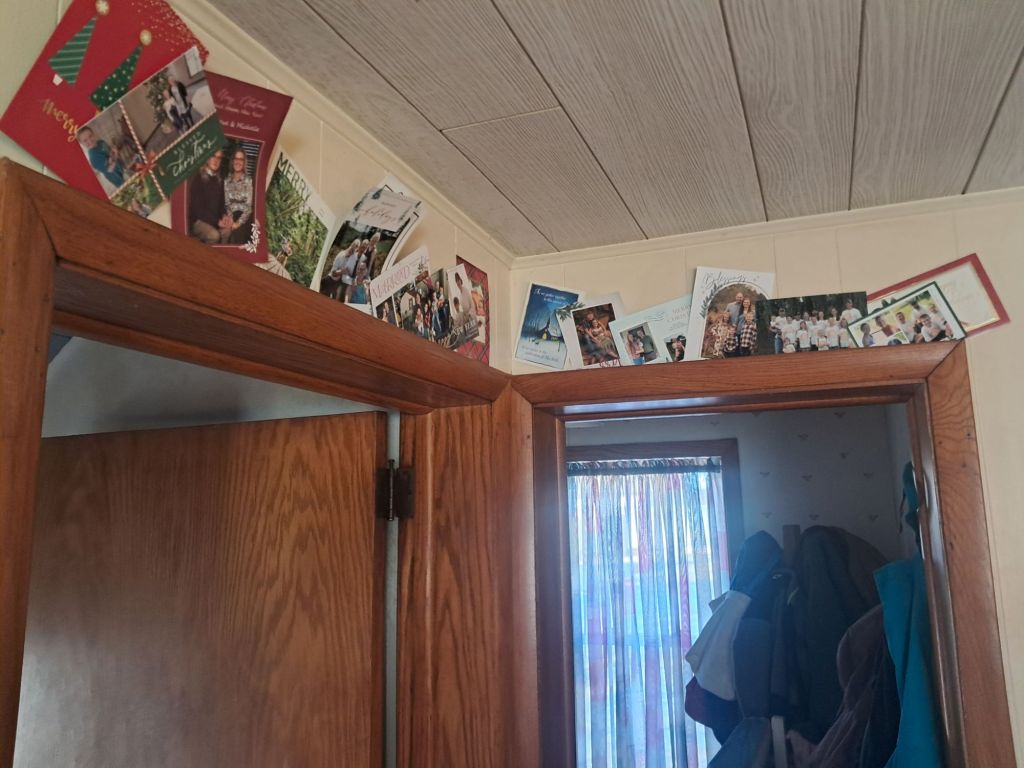
    One of my favorite ways to mark the season is through the tradition of holiday cards. Each one feels like a small window into someone’s life. There’s a handwritten note, a new baby’s smile, a captured moment of love.

    We hang the cards over our doorway. That way, each time we step outside, we pass under a colorful arch of friendship and memory. It’s a daily reminder that while we may live miles apart, the ties that bind us remain close and bright.


    The Tree That Tells Our Story

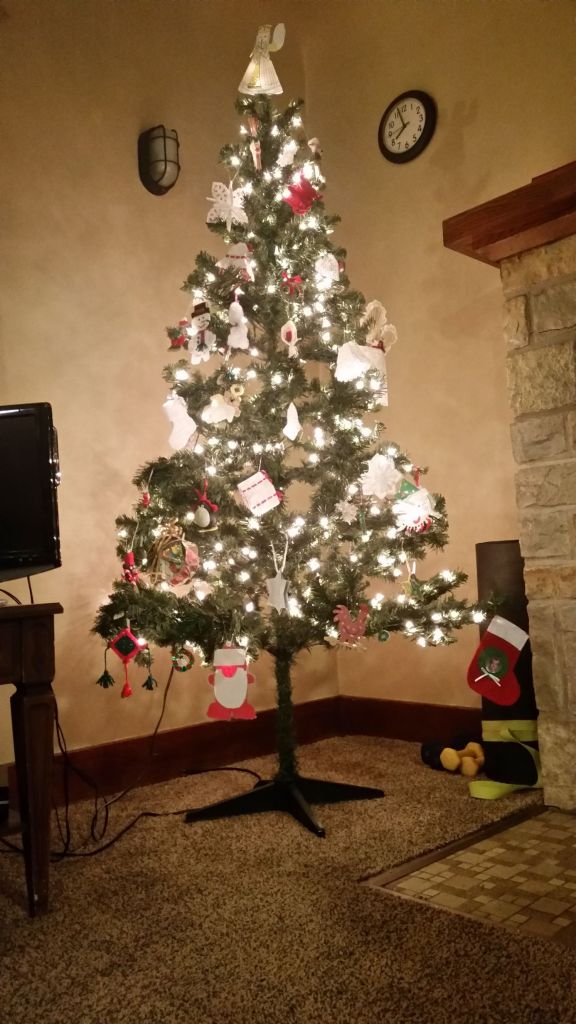
    Our Christmas tree may not be grand or freshly cut. It’s an old artificial one, gifted by a coworker more than a decade ago. The branches are slightly bent, and a few bulbs refuse to light. Yet when we pull it from the box each year, it feels like greeting an old friend.

    Each ornament holds a fragment of our story. There are handmade trinkets from the kids, crocheted snowflakes from my mother-in-law, and treasures from years past. The tree stands as a quiet symbol of continuity and gratitude. It reminds me that beauty often lives in what endures.


    Simple Joys and Shared Stories

    Every season brings a moment to slow down and savor the familiar. I always find myself rewatching It’s a Wonderful Life.

    George Bailey’s struggles and small joys remind me that even in life’s messiest seasons, there’s beauty in simply showing up. I carry that spirit into my workplace, too. Working remotely most of the year, my in-person time with coworkers feels extra special.

    There’s an ease in sharing stories beyond the screen. We share laughter over drinks, conversations that meander like old friendships, and the reminder that connection doesn’t depend on proximity.


    A Season for Sweetness

    At home, the kitchen becomes the heart of the season. The air fills with the scent of butter, cinnamon, and sugar—the unmistakable signal that it’s cookie time.

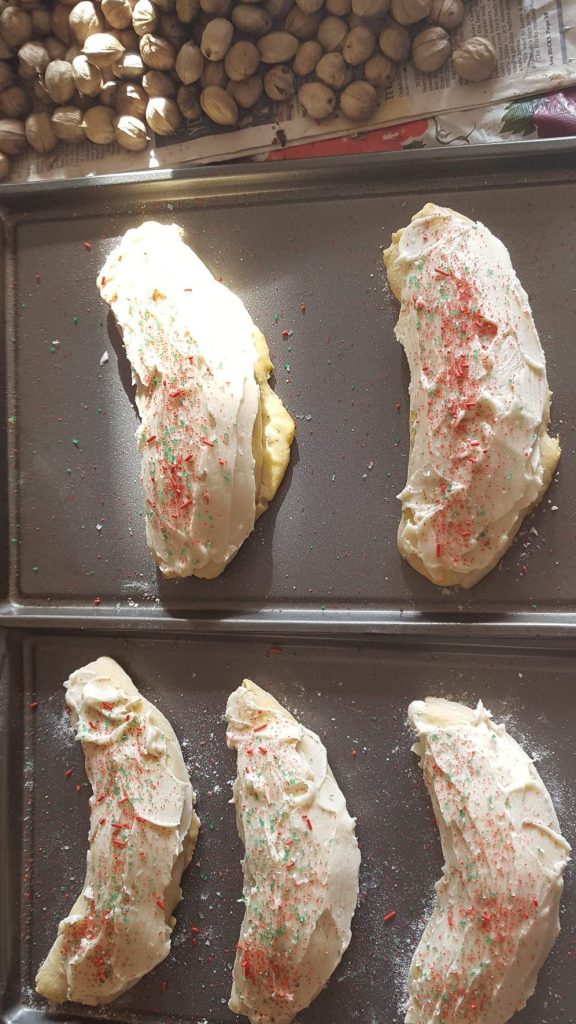
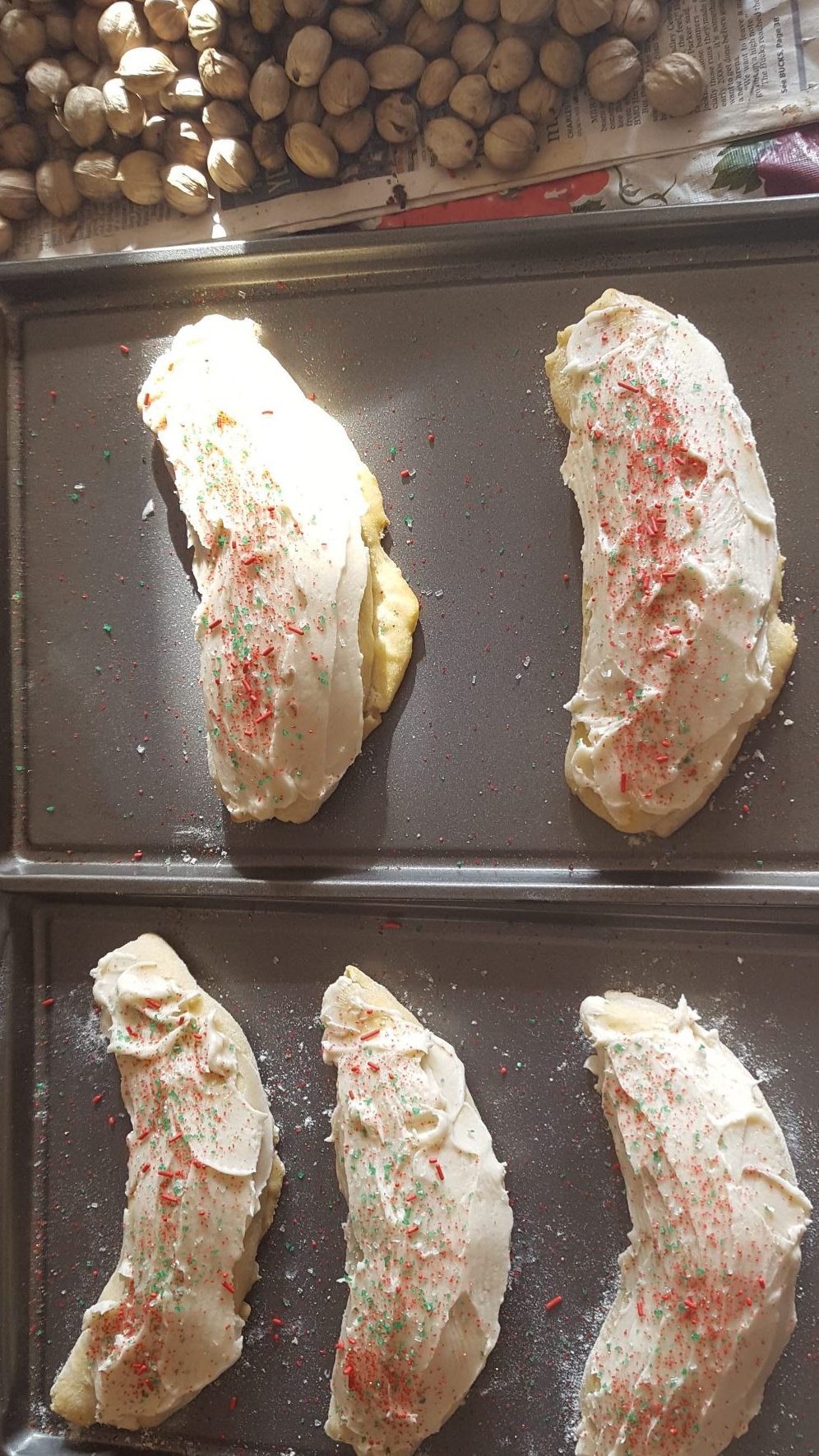
    My favorite tradition, though, is baking kranz kuchen. It’s a tender, yeasted bread folded with hickory nuts, brown sugar, cinnamon, and dates. The recipe has been passed down through generations. Every year we forage the hickory nuts ourselves.

    There’s something sacred about that ritual. We gather food from the land, turn it into something fragrant and celebratory, and share it with those I love.


    Gifts Made of Experience

    Instead of focusing on material gifts, our family gives each other an experience every year.

    A few winters ago, we wandered through the glowing quiet of Cave of the Mounds. Last year, our son’s eyes lit up at the Manitowoc Maritime Museum as he marveled at the USS Cobia.

    This year, we’re heading to Oshkosh to see the light show, visit the EAA Museum, and end the day with dinner and laughter at the Mineshaft. These experiences spark curiosity and wonder. They remind me that time and attention are the greatest gifts we can give our children.


    Gathered Around the Table

    Christmas Eve dinner with my parents is the anchor of the season.

    We gather around a table filled with food that tells our story. The main coarse is pork roast from pigs we raised and sauerkraut made from cabbage grown in my parents’ garden. It’s more than a meal. It’s a celebration of patience, hard work, and the quiet rhythm of the land that sustains us. Every bite tastes like gratitude made tangible.

    The next day, we join my in-laws for a night of laughter, games, and gift exchanges that always end in joyful mayhem.

    Once February arrives, the festivities begin again when my extended family gathers for our belated celebration. Some of my sisters can’t travel in December, but that second gathering has become its own cherished tradition. It’s a spark of warmth that keeps the season alive well into the new year.


    The Heart of Tradition

    Each of these rituals—whether we’re baking, sharing stories through holiday cards, or sitting around the table—reminds me that traditions aren’t about repetition.

    They’re about remembering who we are. The holidays teach me to slow down, to honor what we’ve grown, and to see abundance in what’s already here.

    When the lights fade and the tree comes down, I tuck the cards into a small box. Their words and faces carry the season’s glow into the months ahead.

    And I’m left with the same quiet truth: home isn’t a place or a moment. It’s a feeling—built from love, gratitude, and the steady rhythm of returning to what matters most.


    Join the Conversation

    If these reflections resonate with you, I’d love to share more glimpses of slow, seasonal living from our little homestead.

    Like this post. Share it with someone who cherishes their own family traditions. Subscribe for more reflections on homesteading, family life, and intentional living.

    Let’s keep growing together, one season and one story at a time.


    Related Posts

    The Quiet Wealth of These Fields

    Welcome to the rural economy—where value isn’t counted in cash but in connections. Beneath the wide-open sky, where grain silos and fence posts stitch the land into neat parcels, the real currency is not minted or printed. It’s grown and built, raised and traded. Trust, hard work, the barter of honest services and handmade goods.…

    Keep reading

    Bread Crumbs of Connection

    They say food is a universal language, but sometimes, it also has a quiet legacy. Eleven years ago, I was on a road trip with my mom, aunt, and sister when we stopped at a small restaurant and ordered Swedish meatballs. I still remember how delicious they were: comforting, perfectly spiced, and unforgettable. That afternoon,…

    Keep reading

    #HolidayTraditions #FamilyTime #HomesteadLife #SimpleLiving #SustainableHolidays #HomemadeHolidays #IntentionalLiving #FamilyTraditions #SlowLiving #ChristmasTheHomestead

  • The Best Holiday Gifts You Can’t Order Online

    The Best Holiday Gifts You Can’t Order Online

    How Local and Handmade Traditions Make the Season Truly Meaningful

    What if the best holiday gift wasn’t something you ordered in seconds, but something made by a neighbor, a local shop, or your own two hands?

    Gifts That Actually Stick

    Think about it: what was the last gift you really remembered a year later? Chances are, it wasn’t the priciest thing on your list. More often, it’s the homemade jam from a friend’s kitchen. It could be the mug thrown by a local potter. Perhaps it’s the scarf someone knitted while thinking about you. Those kinds of gifts carry a story and quietly say, “You’re worth my time.”

    The Smoked Cream Cheese Surprise

    One of my favorite examples came from a retired farmer who gifted us smoked cream cheese. It was infused with cherry and oak from his backyard smoker. Shared around the table on simple crackers, it tasted like patience and pride. It sparked a whole conversation about how he learned to smoke cheese—something no anonymous online order could ever deliver.

    Family Recipes That Last Generations

    That same spirit shows up in family traditions. In my family, my mom’s kranz kuchen—a crescent-shaped bread layered with dates, brown sugar, and hand-foraged hickory nuts—has been on the holiday table for four generations. It’s not just dessert; it’s a lineage of hands and stories. When someone slices into it, they’re tasting time, memory, and love as much as sugar and spice.

    Local Shops, Real Connections

    Local shops can hold that kind of magic, too. They’re often packed with small-batch cheeses, handmade ornaments, candles, and art that reflect the character of your town. A couple of years ago at a tiny cheese factory, I got chatting with the woman behind the counter. We swapped recipes and laughs. I walked out not just with cheese. She had tucked a quirky chocolate-pairing poster into my bag. No algorithm could have predicted how much that silly poster would delight me. I think of her now and then when I find it among my things.

    Start Small This Holiday

    You don’t have to overhaul your whole holiday routine to lean into this. Start small. Maybe this year you bake a batch of cookies. You could write a poem. Paint a simple ornament. Or put together a little basket featuring a couple of local favorites. Even if you don’t have many nearby shops, you can still support small makers online. Alternatively, share something only you can offer. This could be a playlist, a letter, a framed photo, or a recipe.

    Over time, those small choices can grow into traditions: an annual baking day, a visit to a favorite market, a handmade gift exchange among friends. Years from now, when people look back on “the good holidays,” they probably won’t reminisce about two-day shipping. They’ll remember the smoked cream cheese, the kranz kuchen, the unexpected poster, and the feeling of being truly seen.

    Your Turn to Share

    What’s one handmade or local gift you’ve received (or given) that you still think about? Why did it stick with you?

    If this resonated with you, tap like. Share it with someone who loves local makers. Subscribe so you don’t miss future posts on intentional, community-rooted living.

    #LocalGifts #HandmadeHolidays #ShopSmall #SupportLocalMakers #SlowLiving #IntentionalGifting #HolidayTraditions #SustainableGifting #CommunityOverConsumption #SmallBusinessLove

  • Crescents of Resilience

    Crescents of Resilience

    Do you or your family make any special dishes for the holidays?

    Flour-dusted hands trembled over a bowl at 3 a.m., measuring cups snapping in the silent kitchen. Everything was a desperate attempt to summon my mother from the hospital. An undiagnosed intestinal blockage had her rejecting even water.

    The family lineage traces to heavy German roots. My father’s ancestors came from Austria in the 1870s, my mother’s from northern Germany in the 1850s. Her kranz kuchen recipe endures from her grandmother’s penciled cards. Yeasted dough rolled thin, layered with my dad’s foraged hickory nuts, chopped dates, cinnamon, and brown sugar. Twisted into crescents, baked golden, and glazed, dozens emerge each year for us six daughters, neighbors, and church friends, embodying a quiet hospitality.

    Last Christmas, that rhythm fractured. Hospitalized, she could not retain food; us sisters started a text string, asking one question. “What if they never pinpoint the cause?” No flour clouds rose, no yeasty warmth filled the air—only silence amplifying the dread of a holiday without her.


    Insomnia seized the nights. Each fragmented update jolted awake any fragile rest. Kneading became refuge: egg yolks merging into warm, proofed milk and yeast, the dough yielding beneath palms like hope taking form. As it rose under a towel, yeast’s scent enveloped the darkness. Folding in the nuts, dates, and spice, then rolling and shaping crescents, the hands of generations guided mine.


    The oven’s glow dispelled shadows; caramelized sugar perfumed the halls. Frosting traced uneven paths, mirroring hers. Those crescents transformed rupture into resilience.


    A single bite of spice-laced crumb now evokes my dad’s meticulous toil, my mother’s assured fold, my midnight vigil—a resilient pastry proving adversity does not sever us but reshapes us, crescent intact. She recovered. The tradition persists. We endure.

    If this story of family tradition and quiet strength resonates with you, like this post. Share it with someone who needs a reminder that resilience often starts in the kitchen. Subscribe for more heartfelt essays on heritage and hope.

    Related Posts

  • More Than a Meal: Raising Our Own Thanksgiving Turkeys

    Gobbles and the Unmowed Lawn

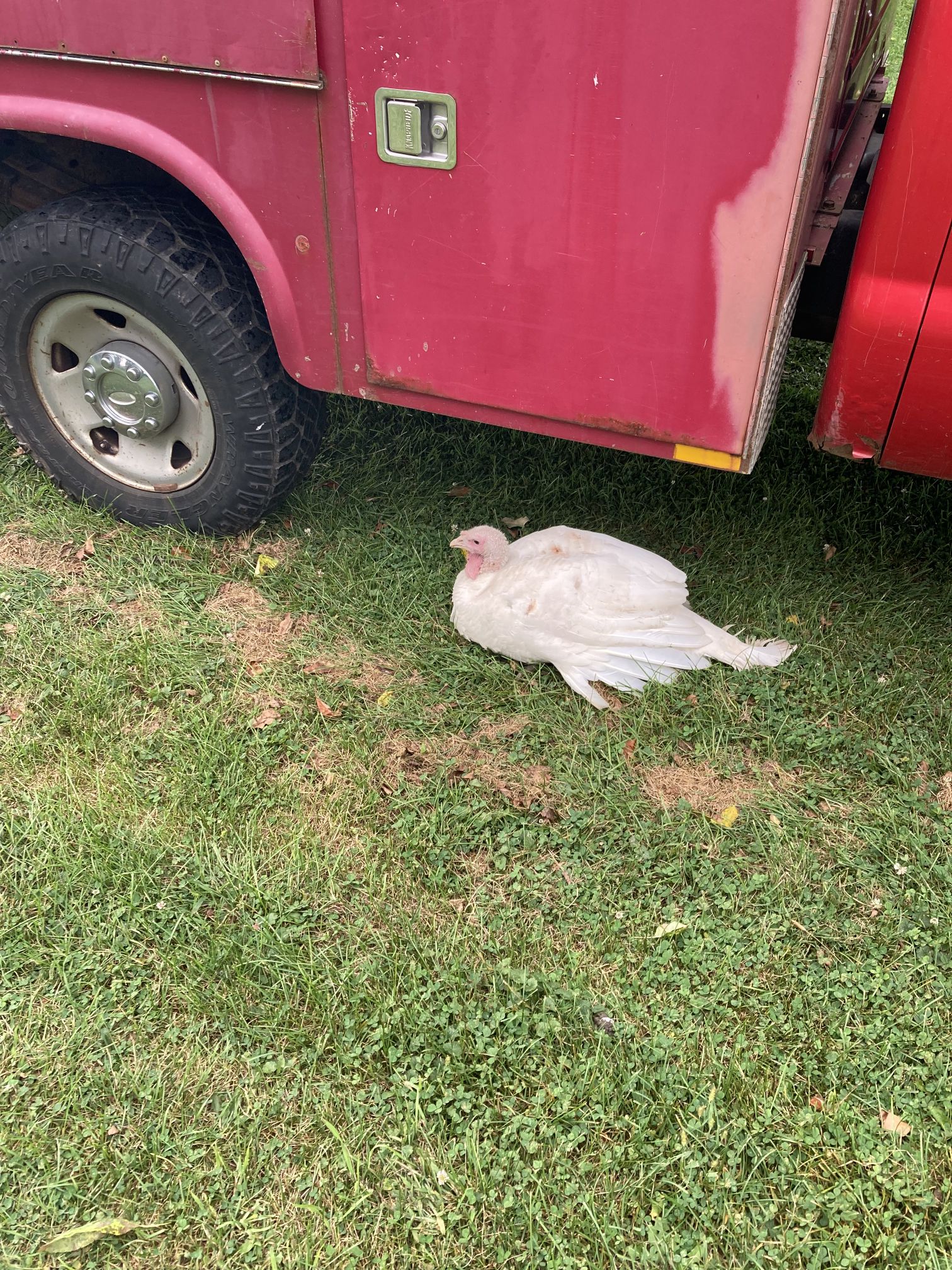
    Gobbles, our forty‑pound turkey, once refused to move for the lawnmower. My husband drove closer, then closer still, waiting for the bird to do the sensible thing. Gobbles didn’t budge, and that’s how we ended up with a turkey‑shaped patch of unmowed lawn—a small, stubborn monument to the wild experiment we’d started in our backyard.

    A New Chapter in Backyard Farming

    Chickens had already shown me that birds can be both hilarious and mean. Ducks had proven that cuteness and filth can happily coexist. A few years ago, after reading about a woman who raised her own Thanksgiving turkeys, I realized I wanted to go further. When our local hatchery couldn’t source ducklings one spring, it was a minor inconvenience. This became the excuse to bring home three turkey poults instead.

    From Basement Brooder to Outdoor Coop

    This time, my husband handled pickup duty. He arrived with a box of peeping chicks and poults. Their arrival turned the whole house electric with anticipation. The brooder—a repurposed water tank in our basement—waited with a heat lamp, water, feed, and a lid to contain the chaos. At first, the turkeys were only slightly larger than the chicks, all of them fluffy and awkward. Within days, though, the turkeys started to pull away. They doubled in size, then doubled again. It seemed their entire job was to eat, drink, and poop as efficiently as possible.

    We lost one poult early on for reasons we never understood, and the sudden shift from three to two landed harder than I expected. It was a quiet, early lesson in how fragile life on a small farm can be. Of the survivors, one always had his feathers sticking out at odd angles, so we named him Gobbles, a little wink to anyone who’d seen South Park. The smaller bird became Jennie, after the frozen turkey brand that had defined “Thanksgiving” for us before we raised our own.

    Gobbles

    By early May, the brooder was bursting, and everyone was ready for fresh air. We tried separating the turkeys from the chickens that first night outside, but the noise they made made it clear we were fighting a losing battle. After one loud, sleepless experiment, we moved everyone into our mobile chicken coop and let them sort it out. During the day, they roamed the yard as a mismatched flock, and each evening they filed back into the coop like feathered commuters, jostling for their preferred spots.

    Jennie

    Personality Plus: Turkeys vs. Chickens

    Living with both species at once made their differences obvious. The chickens were efficient, slightly tyrannical little dinosaurs. The turkeys seemed to have missed out on common sense entirely. On Memorial Day weekend, a big storm rolled in; the chickens headed straight for shelter, while the turkeys stood in the downpour, soaked and squawking as if the rain were a personal insult.

    My husband and I slogged around in the storm, alternating between laughing and swearing as we scooped them up and shoved them under cover. We were half convinced they might drown standing there or draw an eagle with all that frantic noise. By summer, their physical transformation matched their larger‑than‑life behavior. If the chickens were little dinosaurs, the turkeys were the T‑rex cousins. After about four months, Gobbles weighed around forty pounds and Jennie about twenty‑five, and both strutted like they owned the place.

    Rising Stakes: Growth and Pecking Order

    Gobbles clearly saw himself at the top of the pecking order, inserting his bulk into whatever drama unfolded among the hens. Jennie, despite her smaller size, regularly put the roosters in their place and even bloodied one during a particularly heated round of dominance negotiations. The same birds that made us laugh with their antics were always moving toward the date we’d circled on the calendar. Around the five‑month mark, butcher day arrived—never something we looked forward to, but the reason we’d brought them home.

    Butcher Day: The Hardest Part of the Journey

    My husband handled the hardest part. Once it was done, I thanked the turkeys out loud before joining the work of plucking, stepping away now and then to check on the kids. Our five‑year‑old surprised me by wanting to help, his small fingers well suited to grabbing stubborn feathers, and I felt a brief tug between pride and discomfort as I let him join in. My husband’s father arrived and the day settled into a rhythm: music playing, adults talking, drinks in hand, hands busy. The work was still heavy, but it felt shared, almost like a ritual we were inventing as we went.

    By the end, we had one dressed turkey at about thirty pounds and another around twenty, lined up for the freezer like oversized, deeply personal trophies of our effort.

    Preparing the Turkey for the Table

    I hauled Gobbles from the freezer about a week before Thanksgiving. I set him to defrost in our unheated upstairs. He loomed silently every time I walked past. Each glance reminded me of the fluffy, clumsy poult he had been. It also brought back the long, messy chain of chores that had brought him there.

    Two days before Thanksgiving, I mixed a simple brine with salt, sugar, Worcestershire, garlic, and pepper. I discovered that the only vessel big enough was our turkey fryer, minus the basket. It was a ridiculous fit, but it worked. On Thanksgiving morning, we got up early, drained the brine, patted Gobbles dry, rubbed him with salt and oil, and wedged him into a large Nesco roaster so tightly we had to shove his legs down to close the lid. Then we poured in four cans of Miller Lite and turned our attention to the rest of the meal.

    Waiting for that turkey to cook felt tense and nerve-wracking. It was like waiting for an exam grade posted in front of the entire extended family. Fifteen people, one bird, no backup plan if it turned out dry or oversalted. As the scent of beer, garlic, and roasting fat filled the house, my anxiety loosened its grip. It shifted into something closer to anticipation. Even if it wasn’t perfect, it was already unforgettable.

    Thanksgiving Dinner: More Than Just a Meal

    When we finally gathered around the table, Gobbles was as much story as food. As everyone carved off pieces, we traded memories of his lawnmower standoff. We recalled his attempts at intimidation. We laughed at the way he used to lumber after the flock like a confused bodyguard. Conversation took on the tone of a slightly irreverent eulogy as we honored his life in the most direct way possible. We ate the bird who had once stood his ground against a mower and won. It was the best turkey I’d ever tasted, not because it was flawless, but because we knew every step that had led to that plate.

    Lessons Learned and Lasting Memories

    Looking back, those turkeys demanded patience when they outgrew every space we gave them. They taught us humility when plans went sideways. We needed a sense of humor. We found ourselves sprinting through rainstorms to rescue birds that were too bewildered to seek shelter. They pulled Thanksgiving out of the grocery store freezer and dropped it squarely into our own backyard. I don’t know if I’ll raise turkeys again. Every November, when I see a frozen Jennie in the supermarket, I remember Gobbles and Jennie. I think about the stubborn patch of lawn out back. I recall the season when our holiday centerpiece had a personality—and a history—all his own.

    If you’ve raised turkeys or other backyard poultry, share your stories, challenges, or favorite moments in the comments below! What surprises did your birds bring? What tips would you pass on to someone thinking about raising their own turkeys?

    If you enjoyed this story, please like it. Share with your fellow backyard farmers. Subscribe for more honest, practical tales and tips from life on a small farm. Your support helps us keep these stories—and the learning—coming!

    #backyardfarm #homestead #farmtotable #growyourown #homegrown #backyardchickens #homesteading #farmfresh #urbanfarming #sustainablefarming #chickensofinstagram #turkeyraising #familyfarm #smallfarm #countrylife #gardeninglife #organicgardening #plantlover #animalhusbandry

  • A Short Drive to Heaven: Why Lake Michigan Wins for Us

    A Short Drive to Heaven: Why Lake Michigan Wins for Us

    Beach or mountains? Which do you prefer? Why?

    The crunch of gravel echoes under the car tires as I set out for what has become a cherished ritual: a short drive to the nearest beach. It’s funny. When people ask me if I prefer the beach or the mountains, the answer isn’t as simple as it seems. It’s never really been about the stunning landscapes or sweeping views for me. It’s about how these places fit into the messy, beautiful chaos of my life right now.

    Living in Southeastern Wisconsin, the mountains feel like a faraway dream—the closest being nearly 800 miles away. That distance means days of careful planning and long hours on the road. Add to that a husband who prefers the comfort of home, a lively 6-year-old bursting with questions, and a fearless 2-year-old who demands constant attention. The mountains—with their towering peaks and crisp, cool air—are breathtaking. But for us, they exist more as a distant escape than a feasible weekend plan.

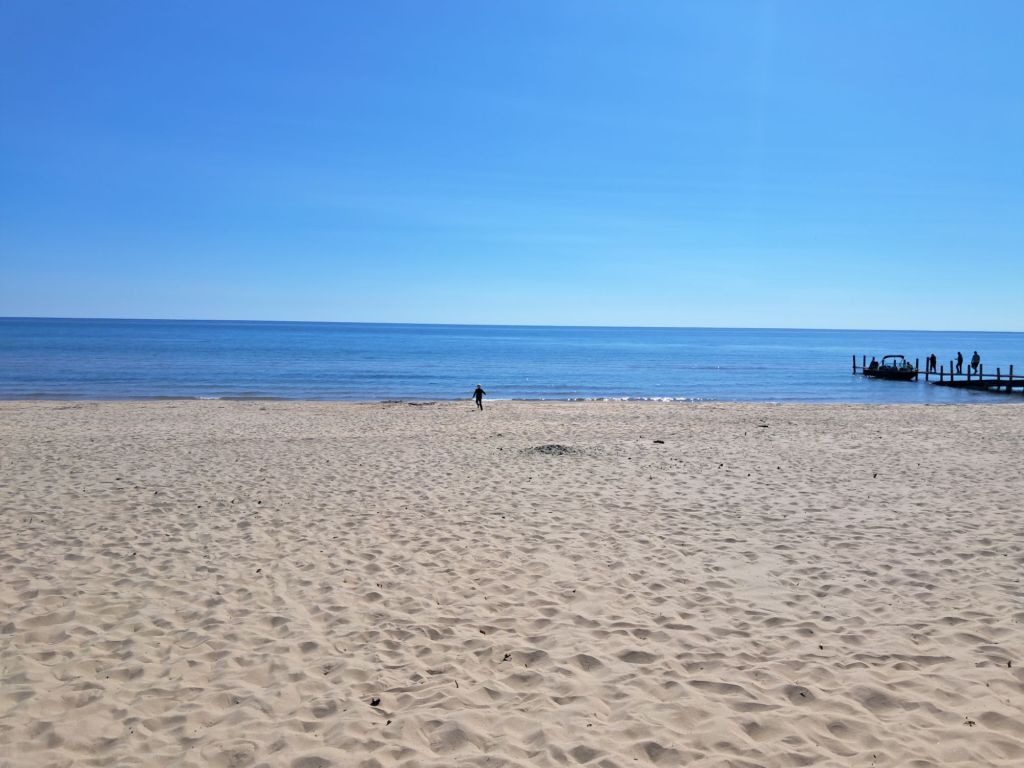
    On the other hand, Lake Michigan beckons like a constant friend. Its vast stretches of blue only a short forty-five-minute drive away. Sometimes, I even go on my own with just the kids—escaping into that familiar comfort whenever I need it most.

    Pulling into the parking lot, I inhale deeply: the fresh tang of lake water mingling with sunscreen and the earthy aroma of pine trees bordering the beach parks. The warm sand cushions my feet as the kids sprint ahead, their laughter weaving through the calls of distant seagulls. I spread our picnic blanket on the sand near the shore. Then I watch my husband lean back, eyes closed, a rare and peaceful smile crossing his face. In that moment, I see what this place really means to us—it’s not about grandeur, but about ease and presence.

    No elaborate packing lists, no complaints about long drives or restless children. We dive into the spontaneous joy of splashing in waters that are crisp but inviting. We build sandcastles topped with shells, and simply soaking in uninterrupted family time.

    Choosing between beach and mountains might sound like deciding between two types of beauty. For me, it’s about the heartbeat of everyday life. The shore is tangible and near—a source of small adventures and lasting memories without the stress of far-flung travel. The mountains will always be there, a majestic possibility for the future. But for now, the beach is where we belong: close enough to visit often, yet vast enough to still feel like a treasured getaway.

    What’s your favorite escape — beach or mountains? And how does that choice fit into your life and family? I’d love to hear your thoughts and stories in the comments below!

    If you enjoyed this story, please hit like. Share it with someone who loves the outdoors. Subscribe for more personal essays about family, nature, and finding joy close to home.

    Related Posts

  • October’s Echo: A Season of Memory and Magic

    October’s Echo: A Season of Memory and Magic

    Some months pass quietly—but October lingers, glowing with memory, magic, and the warmth of home.


    The Quiet Gift of Autumn’s Return

    I love October. There’s something about this month that feels like coming home. The leaves shift from summer’s green to a fiery mosaic of gold, amber, and crimson. They swirl down streets and crunch softly beneath every step. Porches glow with pumpkins and corn stalks, windows flicker with candlelight, and neighborhoods seem to hum with gentle anticipation.

    I love the comfort of pulling on a warm sweater as the evenings grow cooler. I enjoy wrapping up in a thick blanket. The air carries the first faint scent of wood smoke and fallen leaves. The gardens slow their rhythm. The soil rests after months of tireless giving. The earth itself seems to exhale—a sigh of contentment before winter’s long sleep. There’s peace in harvesting the last tomatoes. There’s tranquility in gathering the last handfuls of herbs. We savor one final taste of summer before the frost settles in.

    A Childhood Revisited Through Pumpkin Light

    But October’s beauty runs deeper than the colors and the cold. It reminds me of past celebrations, those experienced and those I simply wished to experience.

    I think back to the St. Andrew’s costume party I attended once as a child. I can still picture the warm, crowded gym. The scent of caramel and popcorn filled the air. Laughter echoed between the walls. Though the old school is gone now, torn down years ago, the spirit of that place still lingers.

    The party lives on in a new building, but when I returned last year for the first time in three decades—with my own children by my side—it felt as if time hadn’t passed at all. The candy walk, the costume contest, the same spirited laughter—it was all there. Even some of the faces were familiar, now softened by age and framed by parenthood. We smiled at each other knowingly, as if to say, we made it back.

    That night reminded me how October can blur the line between past and present, turning nostalgia into something alive again.

    The Magic of Living the Dreams We Once Imagined

    And of course, there’s Halloween and the magic of trick-or-treating. It is a tradition I always longed for as a child but never had the chance to experience. I used to wonder what it felt like. I imagined the excitement of dressing up. I thought about the sound of other children’s laughter carried on the wind. I dreamt of the thrill of walking house to house, bag full of sweet treasures, under a canopy of stars. For years, it was a wish left unfulfilled, a tiny missing piece of wonder.

    Now, through my children, I can finally live that dream. I watch their anticipation as they choose their costumes—a pirate and Tigger—and plan their routes with careful excitement.

    The afternoon itself feels electric: porch lights glowing like beacons, leaves scattering under quick footsteps, the calls of “thank you!” trailing off into crisp air. I listen to their candy buckets clink, watch their laughter spill into the darkness, and think of all the years I imagined what this would feel like. In their joy, I see both who I was and who I’ve become: a child rediscovering wonder and a parent guiding it forward.

    October, for me, has grown into something sacred—a bridge linking memory and experience, longing and fulfillment. It’s a season that teaches me about cycles, about how endings carry new beginnings quietly within them. Through my children, I relive the magic I once missed, while creating bright new memories all our own.

    When the last porch lights flicker out and my children’s footsteps fade into the cool evening, I feel the month settle gently in my heart. October has a way of staying—with its color, its warmth, its echoes of laughter. It lingers like the glow of a jack-o’-lantern long after the candle inside has gone out.

    Your turn

    What’s your favorite October memory—the one that still feels alive no matter how many years have passed?

    Keep the Story Going

    If this story wraps you in that cozy fall feeling, give it a like. Then share it with someone who loves autumn too and subscribe for more stories that celebrate memory and meaning.

    #OctoberMagic #AutumnVibes #FallMemories #NostalgiaSeason #Storytelling #ParenthoodMoments #PumpkinGlow #HalloweenNights #CozySeason #ThroughTheYears

  • The Heart of Knowles: Fourth of July Traditions

    The Fourth of July has always been my favorite holiday, no contest. There’s something magical about sun-drenched parades, the smoky drift of cookouts on the breeze, and fireworks crackling against a velvet sky. I’ve always cherished tradition, and for me, nothing says “summer” quite like the annual Fireman’s Picnic in Knowles.

    The Knowles Volunteer Fire Department is legendary: a group of unpaid neighbors who protect our patch of the world from fires and emergencies. The picnic isn’t just fun; it’s a lifeline, funding the equipment and training that keep us safe.

    One summer, the fire department saved our family’s barn. My dad had stored hay that was too wet; days later, it started to smolder. The firemen arrived in force, helping us haul out the hay before disaster struck. I still remember his voice, rough with relief, as he shook each fireman’s hand. After that, our family threw ourselves even more into supporting the picnic and the department.

    Ma always baked chocolate cake with white frosting for the dessert sale. She’d hum as the kitchen filled with the scent of cocoa and sugar, while my sisters and I licked the beaters and squabbled over who’d get the coveted corner piece. My dad, after morning chores, headed to the hamburger stand, donning his money belt and frying up brats and burgers, his face flushed from both heat and pride. When she came of age, my oldest sister joined the fire department.

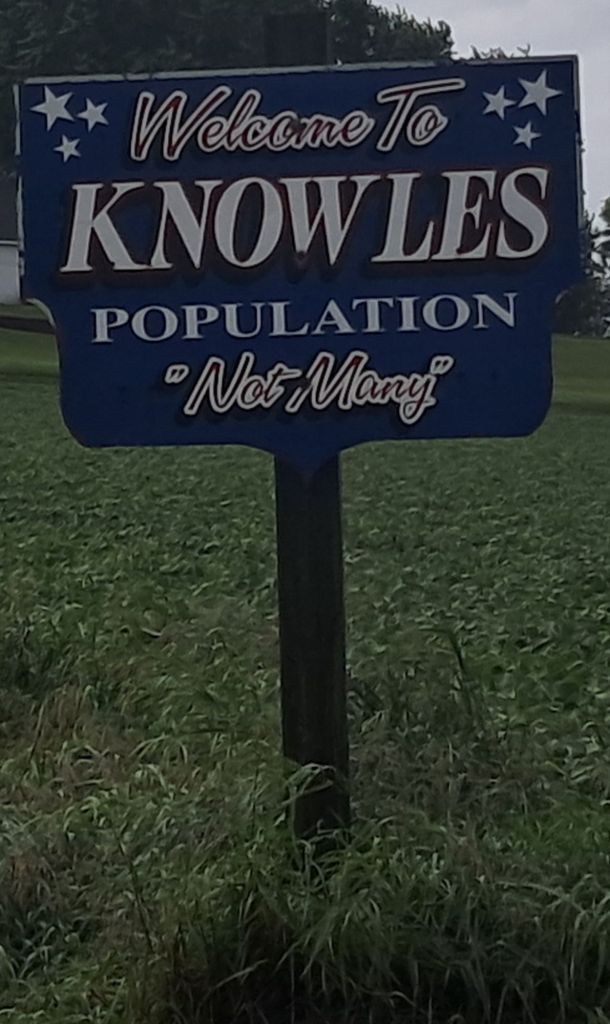
    Knowles is the kind of tiny town that jokes about its size. “Not many,” the sign reads, and they mean it. The main attractions: a farm equipment dealer, a single church, and two bars that double as gathering spots for miles around. But on the Fourth, Knowles transforms. The population swells as people from neighboring towns descend, armed with lawn chairs, faded blankets, coolers, and sticky popsicles for the kids.

    Knowles is honest about its population.

    Usually, the streets are so quiet you can hear the wind in the cornfields and birds in the trees. But on this day, laughter and music fill the air. Familiar faces blend with distant relatives, old classmates, and newcomers, all drawn together by the promise of celebration.

    The parade route is simple:  a single road, maybe half a mile, sloping downhill in two gentle steps. But for that hour, it feels like the center of the universe.

    The parade kicks off with a bang: the fire department leading in crisp uniforms, the American flag held high. The crowd falls silent; hats come off, hands press over hearts. A volley of blanks cracks through the air, firemen’s cheers bouncing down the street, shaking off the summer’s lull. My heart jumps as the fire trucks rumble past, horns blaring like thunder.

    High school bands follow, their music weaving through the warm air: “America the Beautiful,” then “Sweet Caroline.” I sing along quietly, amazed the band kids don’t melt in those wool uniforms. The color guard spins flags skyward, sequins flashing like tiny fireworks.

    Candy flies next: Tootsie Rolls, root beer barrels, and, if you’re lucky, a “Cow” candy—my favorite, caramel and chocolate (gone now, sadly). Plastic bags in hand, we dart into the street, laughing and dodging tractors and floats, our bags filling with sugary treasure.

    “Got your eye on the ‘Cow’?” my sister whispers, grinning as she snags one. I nod, already plotting my next move.

    Confetti toss during 2024 parade. Photo by Angie H.

    Donnie Feucht (may he rest in peace) pilots his father’s ancient stock truck, honking an extra time just for me. Restored antique tractors chug along, their paint gleaming in the sun as neighbors toss candy. Bigger tractors follow:  massive and modern, though quaint compared to today’s behemoths.

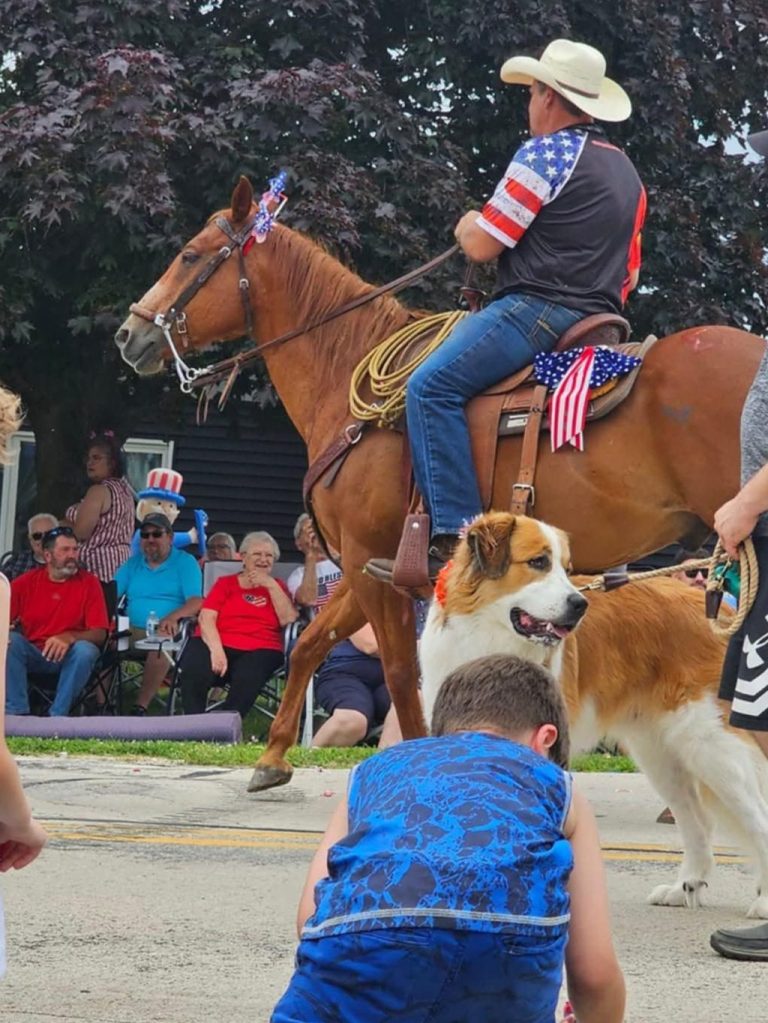
    Horse and rider, and gathering candy during 2024 parade. Photo by Kayla M.

    Horses and farm animals make an appearance. Line dancers perform on a moving hay wagon, their feet steady from many summers stacking bales. State senators stroll by, passing out frisbees and flyers, hoping for votes in the fall. A four-wheeler signals the end, with a “The End” sign tacked to the back, just in case.

    After the parade, we drag our overflowing bags and lawn chairs to the hamburger stand. I watch my dad serve lunch, pride swelling every time he hands a burger to a neighbor. The smell of grilled meat is irresistible; nothing tastes better than a brat with mustard and caramelized onions, washed down with ice-cold soda. Adventurous souls wander to the beer tent, where laughter and music spill onto the grass.

    The picnic has something for everyone: carnival rides for the kids, a toy tractor pull, the ever-popular dunk tank where you can try to soak your favorite fireman. Ring tosses and raffles offer prizes from frozen meat to cash. By the time we trudge back to the car, sunburned and sticky, our hearts are full. The sugar rush fades, but the memories linger.

    As I grew older, life got busier. The Fourth became an excuse for road trips and new adventures. But last year, my husband and I returned to Knowles, this time with our own children in tow. We joined his extended family, feeling again like we had an “in.” Their tradition started years ago with his grandparents, who sat on the same lawn and befriended the homeowner over time. Every year, we sit on that same lawn in their honor.

    Though the parade didn’t start until 11, we arrived late—10:30—and forgot the golden rule: get there by 10. Our punishment was a long trek from the highway, kids in tow, weaving through the crowd. I scanned faces for old friends, hoping for a spark of reconnection. As I set up, my brother-in-law handed me a cold beer with a grin. “It’s five o’clock somewhere,” he said, and everyone laughed, the ice broken instantly.

    Watching the parade through my children’s eyes, beer in hand, I felt the old magic return. The experiences I’d loved as a child were now theirs to discover. I knew we’d be back. As the parade wound down, my son clutched his bag of Tootsie Rolls and root beer barrels, cheeks flushed from darting after candy in the street. My daughter, face sticky with popsicles, clutched a frisbee given to her by a state representative. I glanced at my husband, lawn chair tipped back, and watched my children’s eyes widen as the fire truck’s horn echoed through the town. The “The End” four-wheeler passed by, and my son’s sticky hand found mine. For a moment, the world was just laughter, music, and the shimmer of sequined flags:  a perfect day, passed from one generation to the next.

    What is your favorite Fourth of July tradition? Share your thoughts below, and subscribe to join a group of like-minded people.