I didn’t expect my hardest lesson about trusting instincts to come during childbirth.
As my water broke, my body began shaking uncontrollably. Fear surged through me. Few experiences test someone’s connection to their body like giving birth. Yet at that moment, I felt detached during a process that should have felt natural. Panic and doubt quickly took over.
That wave of fear changed me. It became a wake-up call. Over the last six years, I’ve worked hard at tuning into my body through relaxation, meditation, and breath work. When I gave birth again four years later, the difference was striking: things moved quickly, peacefully, and with far fewer interventions.
Looking back, I realize it wasn’t just culture urging me to ignore discomfort. A trusted adult in my life was often swept up by stress and overwhelm. In their presence, I learned to mute my own signals and silence myself to keep the peace. My world equated strength with suppressing vulnerability. I silenced my body’s warnings—hunger, exhaustion, emotional pain—hoping to avoid conflict or disappointment.
I vividly remember one afternoon when I was a child. My body begged for rest, but fear of this person’s anger forced me to push through. Through the years, I learned to swallow discomfort and hide my feelings until they would inevitably erupt. Only later did I understand how both external pressures and witnessing this person lost in overwhelm taught me to silence my own instincts.
Motherhood transformed this learned behavior. I wanted to show my son and daughter something better: a model of recognizing emotions and meeting my needs before they escalated. I let my inner voice soften. Strength gained a new meaning—one tied to vulnerability and presence. Slowly, my approach to my children’s emotions shifted. I now sit quietly beside my frustrated son, breathing calmly while his storm slowly fades. I practice this daily: mindfulness through challenge, for their feelings and mine.
Today, I’m more attuned to myself, though this work is ongoing. Emotional waves still come, sometimes fierce. Recently, during a tense day at work, I paused before reacting. I closed my eyes and let my body feel the tension, watching the discomfort roll in and drift away. Breath and awareness anchor me. Trusting myself isn’t about perfection—it’s about persistence. Each mindful moment deepens my instincts. They’re quiet, but always there, guiding me through calm and chaos.
This journey has taught me that self-trust is more complex than just “following your gut.” It calls for vulnerability, breaking old patterns, and challenging the notion that ignoring your own needs is strength. Now, I’m learning to nurture a kinder relationship with myself—body, mind, and heart.
That’s the legacy I strive to leave for my children: the confidence to listen deeply and kindly to their own voices.
Have you ever silenced your instincts to meet others’ expectations?
If this story resonated with you or made you reflect on your own journey, please like, share, and subscribe—your support helps others find these reflections who might need them
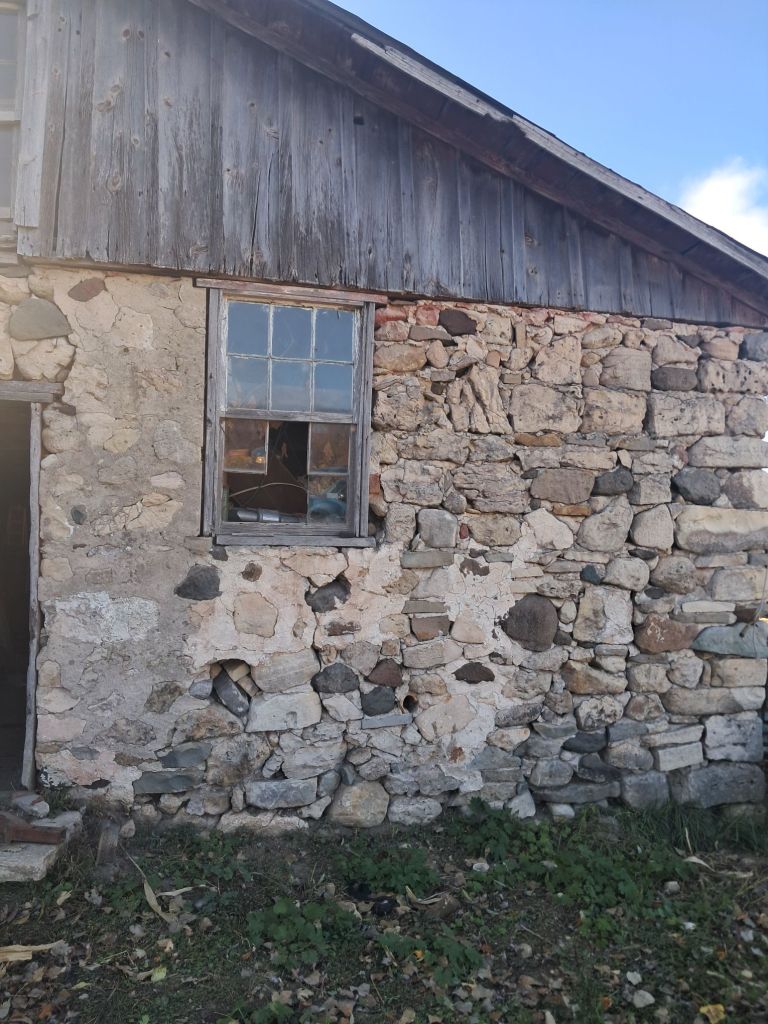
A century ago, the farmer walked his fields each spring, eyes tracing the thawing earth for the perfect stones.
He moved slowly, letting his hand rest on each one, feeling its shape, its weight, the way it might settle among the others.
This was not hurried work. Endurance, he knew, would make the wall stronger than haste ever could.
When he found a stone that fit his vision, he lifted it onto his horse-drawn wagon. The steady rhythm of hooves and iron wheels carried his labor back to the barn, where rows of stone rose patiently from the dirt floor.
As time allowed, he placed each piece with care, sweeping away soil, testing every joint, sealing the gaps with mortar and quiet pride.
Now, more than a hundred years later, the wall still stands. Its mortar is softening, its edges worn, yet its shape endures.
Each stone remains a record of patience laid by hand—a testament to steady work, lasting purpose, and the quiet will to build something meant to weather time itself.
Stone by stone, this wall was built.
What’s something in your life that was built to endure? Share below in the comments. If this story resonates with you, take a moment to like, share, and subscribe for more reflections on craftmanship, time, and the quiet art of enduring work.
What’s the first impression you want to give people?
When I think about the first impression I want to give people now, it connects closely to how much I’ve learned about myself.
In my 30-something years, I’ve spent a lot of time shrinking into the background—speaking softly, standing at the edges of rooms, and convincing myself that others didn’t really want to notice me. Somewhere along the way, I mistook invisibility for safety. That belief likely began in childhood, when being quiet felt like the right way to belong.
But with time, I began to see what that silence cost me. By keeping myself small, I limited the depth of my connections. People knew me only in fragments because I wasn’t showing them a complete person. What I thought was self-protection often turned into isolation.
Now, I want my first impression to reflect who I’m becoming rather than who I used to be. When someone meets me, I hope they sense warmth and calm, a presence that feels both grounded and engaged. I want my voice to carry confidence without volume—a kind of steadiness that says, “I see you, and I’m here.” Maybe it shows in the way I smile when greeting someone or in how I pause to listen before responding.
More than anything, I hope to make people feel comfortable being themselves, just as I’m learning to be comfortable being myself. If my presence leaves others feeling seen, valued, and at ease, then that’s the impression I want to give. It’s the one I’ve always been reaching for, quietly, without realizing it.
Have you ever realized that the way you present yourself isn’t who you truly are inside? Share your story in the comments. What first impression do you want to give people now, and how has that changed over time?
If this reflection resonated with you, take a second to like the video. Share it with someone who might need to hear it. Subscribe for more conversations about self-growth, confidence, and showing up as your authentic self. Your engagement helps build a community where everyone feels seen and heard.
Some of my earliest memories are of getting lost in a book. I read on the school bus until the motion made me queasy but I never quite wanted to stop. Books have always been my favorite escape into bigger worlds. That love of stories has shaped much of who I am today.
Now, as a parent of two—my curious six-year-old son and my energetic two-year-old daughter—reading has taken on new meaning. It’s no longer just a solitary escape; it’s a shared experience, a daily rhythm that brings us back together. Whether it’s a quiet bedtime story or an impromptu library trip on a rainy afternoon, I want them to see reading not as a chore, but as something joyful and full of possibility.
During one of our library visits, we found Great Lakes Ghost Stories perched on top of a shelf. It felt like it had been placed there, waiting for us to grab it. Living near Lake Michigan, my son has a fascination with shipwrecks and ghost stories, so the book was an instant hit. We’ve been working our way through it a little each night. We imagine the waves, the fog, and the echoes of the past as we read. It’s a story that captures us both, which makes that time feel even more special.
Of course, there’s still plenty of toddler-friendly reading mixed in. My daughter adores Dragons Love Tacos—especially the part where the dragons accidentally burn down the house. She throws her arms in the air and pretends to breathe fire every time, her giggles filling the room. Those moments remind me that the love of reading isn’t just about the stories themselves but about how they bring laughter, wonder, and connection into our home.
Reading has also become my own kind of reset. After long days, there’s comfort in sitting beside my children with a book in hand, letting the day fade as we turn the pages. Books remind me that curiosity is ageless and that stories have the power to grow with us. Watching my children surrounded by them feels like passing down a quiet kind of magic—one that never loses its spark.
What book are you reading right now? Tell me about it in the comments!
And if reflections like this resonate with you, subscribe for more moments of intentional parenting.
If you could live anywhere in the world, where would it be?
Before dawn, I awoke to toddler kisses on my cheeks and the faint crow of a rooster calling the day to begin.
The scent of coffee drifted through the kitchen as my husband and I eased into the morning. Our six-year-old son stirred under his blanket, still half-dreaming, and soon began retelling the Great Lakes ghost ship story we’d read the night before. Our two-year-old daughter tugged at my sleeve, eager to gather eggs from the chicken coop. Outside, the sky hung pale gray, the world quiet except for the rustle of animals waking.
In that stillness, surrounded by the people I love, I felt an unshakable peace—the kind that reminds me I could never imagine living anywhere else.
If I could live anywhere in the world, I would choose to be right here—with my family and our small but lively homestead. Together, we’ve shaped a life that’s rooted in rhythm and purpose, surrounded by gardens that feed us and animals that fill our days with energy and laughter.
Pigs snuffle in the mud, turkeys strut proudly in their corn crib enclosure, and chickens announce each new egg as if it were an accomplishment worth celebrating. Our home isn’t grand, but it hums with life.
Our community, too, has become an extension of that home. When we start a renovation project, chase a runaway chicken, or need an extra hand keeping the kids busy, help is never far away. Friends arrive with tools, spare time, and easy smiles. That kind of closeness doesn’t come from a picture-perfect place. It grows from shared effort, trust, and the understanding that we rise and thrive together.
I could wake up to a mountain sunrise or fall asleep to the lull of the ocean, but it wouldn’t compare to mornings like this one. The warmth of my daughter’s tiny hands, the echo of my son’s laughter, and the smell of coffee mingling with fresh earth from the garden. For us, home isn’t measured by scenery or luxury; it lives in the laughter, labor, and love that fill each day.
And as the first light spills across our field, I feel her tiny kiss still warm on my cheek. In this moment, I know this truly is the most beautiful place in the world.
If reflections like this resonate with you, subscribe for more small moments of gratitude and intentional living.
What’s the coolest thing you’ve ever found (and kept)?
The first time I saw the map, I was nauseated and overwhelmed.
It was March 2023, and my husband and I were touring the house that might soon become our home. At nine weeks pregnant, I’d skipped breakfast, and the wave of queasiness matched the swirl of emotions inside me—a baby on the way, a new house, a new life I wasn’t sure I was ready for. The place overflowed with decades of forgotten possessions, each room crowded with remnants of someone else’s story.
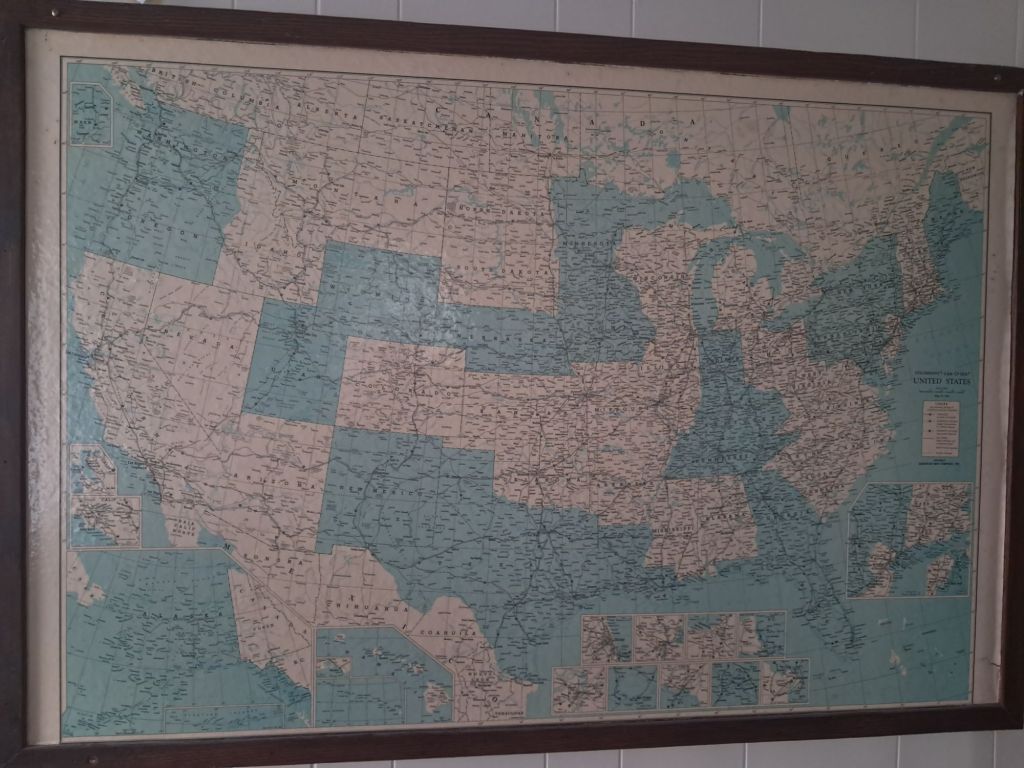
Upstairs, something leaning against the wall caught my attention. It was a large vintage map of the United States, the kind once used in classrooms to chart railroads and planned highways. The paper was yellowed and curled at the edges, faint marker lines tracing routes that never came to be. Despite my dizziness, I knelt to study it, drawn in by the faded colors and the quiet sense of history. Even in its worn state, I saw potential—a story still waiting to be told.
Two months later, after closing on the house, we returned to begin the long process of cleaning. Much of the clutter remained, but the map was still there, patient and waiting in the same spot, as if it belonged to me. My husband and in-laws spent weeks scrubbing, painting, and repairing walls. Amid the chaos, they carefully cleaned the map, framed it, and hung it in my future home office—a space I would soon inhabit every day. It was a small gesture, but one of the kindest and most meaningful I’ve experienced.
Now, two years later, that map still hangs on the wall of my office. Its faded lines have become a steady companion to my workdays, a window to imagined landscapes beyond the screen. When someone on a call mentions a city or a road trip, I glance over, tracing their route and picturing their corner of the country. It reminds me not just of place, but of the path we’ve taken—from that cluttered, dizzy morning to the life we’ve carefully mapped within these walls.
If reflections like this resonate with you, subscribe for more small moments of gratitude and intentional living.
What part of your routine do you always try to skip if you can?
Most mornings start with a quiet choice—whether to honor my intentions or give in to my excuses.
My routine isn’t rigid; it shifts with the rhythm of life at home. But on the best days, I carve out a few minutes for movement. Ten or twenty minutes of exercise to clear my head and reconnect with myself.
Still, it’s the part I’m most likely to skip. When sleep is scarce, when the kids need me, or when the day feels heavy before it even begins, it’s too easy to let it go. The promise of “later” becomes a gentle lie I tell myself, one that always fades as the hours slip by.
But when I do keep that promise, even briefly, the reward is unmistakable. My breath deepens, my pulse steadies into rhythm, and a thin sheen of sweat gathers on my forehead. In that moment of effort, I feel a quiet awareness settle in—a reminder that I’m capable, present, and alive. The energy lingers, carrying me into the rest of the day with a small spark of pride that I showed up for myself.
My kids see it too—that persistence matters more than perfection. It’s an ordinary act, but one that steadies me, a reminder that discipline often begins in the smallest, most unremarkable moments.
If reflections like this resonate with you, subscribe for more small moments of honesty and intentional living.
Six years. A lifetime and a blink all at once. It’s hard to imagine my tall, curious six‑year‑old as the little baby who once fit perfectly in my arms. Yet some days, it feels like only yesterday. As his birthday approaches, I find myself reflecting—not just on how much he’s grown, but on how much I’ve changed too.
Before motherhood, I was an adventurer. I loved travel, new experiences, and the freedom of not knowing what came next. My job and life took me across the country, and I chased opportunity with excitement. But as thirty approached, another kind of calling began to whisper. Parenthood. I knew that if I waited too long, it might be harder to step into that new identity. With my husband’s encouragement, we leapt into the unknown together.
The Lessons of Change
Pregnancy came easily. A touch of morning sickness, a few sleepless nights, but otherwise, it was smooth. I exercised right up until my water broke. I don’t share that to boast—only to show how everything shifted the moment he arrived. Nothing prepared me for the intensity of that change.
When labor began, I shook uncontrollably—terrified of the pain, the sleepless nights ahead, the loss of freedom I’d always cherished. That fear slowed everything down. Twenty‑one long hours passed before he was born. Later, I learned that anxiety floods the body with adrenaline, making labor harder. But in hindsight, that physical slowing mirrored something deeper: my fear of what it meant to become someone’s mother.
I was afraid of failing him, of not knowing enough, of being unequal to the task. That fear didn’t just tighten my muscles—it tightened my sense of self. It made every decision feel heavier, every moment charged with doubt. I thought “harder” meant only the literal—long labor, sleepless nights, feeding struggles—but parenting revealed its metaphorical weight too. Fear made everything take longer: the acceptance, the confidence, even the joy.
In time, I learned that fear wasn’t an enemy. It was a mirror. It showed me what mattered most, where I still needed to grow, and what I was willing to face for love. The same fear that once froze me taught me grace, patience, and surrender.
Finding Strength
Returning to work after parental leave was another reckoning. I cried every day that first week, missing him in a way that words can’t fully capture. The ache didn’t disappear—it only softened with time.
And then, just as I was finding my footing, the world changed again. Six weeks after returning to work, COVID arrived. Suddenly, I was balancing deadlines with diaper changes, spreadsheets with nap schedules. The days felt endless, looping between exhaustion and small, quiet triumphs. Yet amid the chaos, we found a rhythm—working during naps, finishing tasks after my husband got home, creating pockets of peace wherever we could.
Through it all, I discovered something unexpected: strength in letting go. Parenting isn’t meant to be done alone. It takes a village—not just helping hands, but willing hearts. When family, friends, and neighbors dropped off meals, shared advice, or simply listened, I experienced the power of community. That kind of support transforms everything. But living far from family meant we only had so much of it, and that ache for connection stayed with us.
Building Community
Perhaps that season of isolation made our next decision clear—it was time to move closer to family. We wanted the support we’d missed, not only for ourselves but for our children. It wasn’t an easy decision, and it took a couple of years, but it was the right one. By the time his little sister arrived, we were settled, and our son was starting preschool. Watching him become a big brother—gentle, silly, protective—has been one of the greatest joys of my life.
What I didn’t anticipate was how deeply our sense of belonging would bloom. For the first time, people weren’t just offering help—they were eager to be part of our world. Family members plan afternoons filled with backyard discoveries, storytelling, and unhurried laughter. Cousins race through the house, inventing games, sharing snacks, and building the kind of bonds that belong entirely to childhood. Our son now has the freedom to spend time with people who love him independently of us. He’s learned that family extends far beyond the walls of home.
For my husband and me, that has been a blessing beyond measure. We now have people we can count on—family who arrives without being asked, friends who show up simply to share time, a network that steadies us. Parenting no longer feels like a fragile balancing act. It feels shared, supported, deeply rooted. There is peace in knowing our children are surrounded by people who delight in them and find joy in being part of their story.
A New Kind of Adventure
Adventure still has a place in my life, but it looks different now. It’s not plane tickets and new cities—it’s beach trips, museum visits, and long walks through the park. It’s watching my children encounter the world: splashing in waves, chasing balls, collecting shells. The wonder on their faces brings more joy than I ever could have anticipated.
My adventures have changed, but I’ve learned this, too, is a season. The world will still be waiting, and when the time comes, new journeys will find their way to me. For now, I’m grateful to be here—growing, learning, loving, and finding beauty in this quieter kind of voyage.
My son shares my love of history and stories. He’s a curious little traveler at heart, always ready to laugh and explore. As he steps into middle childhood, I can’t wait to see where his curiosity leads him next. And maybe, if I’m lucky, he’ll still want me along for part of the ride.
Perhaps that’s what motherhood truly is—learning that the greatest adventures begin not in faraway places, but in the heartbeat of home.
Closing Note
Writing this reminded me that every stage of life carries its own kind of adventure. The early years of motherhood can feel all‑consuming, but they’re also fleeting and filled with meaning. This season—messy, joyful, exhausting, extraordinary—is one I can’t hold onto forever, and one I’ll always treasure. To any parent reading this: wherever you are in your story, remember that adventure doesn’t disappear—it simply changes shape.
Your Turn
What season of life are you in right now, and how has your idea of adventure changed along the way? I’d love to hear your thoughts and stories in the comments.
Keep the Story Going
If this story resonated with you, please take a moment to like it. Share this story as well. Subscribe for more reflections on parenthood, change, and the beauty of everyday life. Your support helps this space grow and reach others walking a similar path.
Two years. It feels like a lifetime and a blink all at once. My little girl is turning two, and as I light the candles, I can’t help but look back: at her first cry, her first laugh, and how these two years have reshaped not just her, but all of us.
The Leap That Changed Us
Before she arrived, my son was my world—my library companion, my errand buddy, the spark that turned ordinary afternoons into memory. I loved that time, just the two of us. Yet some days, a quiet ache pressed at the edges of my joy. I missed the weight of a baby in my arms, the soft curl of a hand grasping mine, the half-light of early mornings spent humming in the dark. More than anything, I wanted him to have someone to share his childhood with: a co-conspirator for life’s small adventures.
So we leapt. We decided to grow our family, and in the same season, moved closer to our extended family. When we learned she was coming, there were tears of joy and tears of concern, wondering if we could make it all work. That year was full: for sale signs, cardboard boxes, and long drives, hellos layered over goodbyes. Change stretched us but bound us tighter.
When She Arrived
The day she was born, I felt an unexpected calm, not at all like my first birth when fear and adrenaline carried me through. I trusted my body this time. I trusted her timing. A contractor was downstairs installing a furnace, and I was mid-yoga when my water broke. I finished my workout then quietly told my husband it was time. Our almost-four-year-old, practically bursting with pride, announced to the furnace crew that he was about to become a big brother. They laughed, unprepared for that kind of excitement mid-workday.
She arrived small and fierce, eyes wide open to the world. From the first moment, she seemed to recognize it—as if she’d been waiting to join in. Exhaustion blurred days together: the sleepless nights, the fragile rhythm of new routines, the tears and sweetness of breastfeeding. Yet when she curled perfectly into me, peace returned.
Her first smile was shy but sure. Her first laugh—bright and sudden—broke through the fog of fatigue. Then came the cascade of firsts: first food, first steps, first words. Her bond with her brother blossomed early. She adores him, mirrors him, claims his favorites as her own. To her, every color is green, because his is. In turn, he protects her, helps care for her, and takes his role of role model very seriously.
Now she barrels through toddlerhood—curious, bold, astonishingly sweet. The library aisles and backyard corners that once belonged solely to him now pulse with both their laughter. I used to worry my heart would have to split between them, but it didn’t. It multiplied.
What Two Years Have Taught Me
Two years of her have taught me that motherhood isn’t only about raising my children; it’s about becoming someone new myself. I am calmer now, steadier. I don’t rush to fix the chaos; I live within it. There’s space now for laughter in the mess, for quiet in the noise. And as she leans over her cake, cheeks puffed and eyes shining, I feel time’s gentle push again, reminding me to catch this moment, hold it close, and let it glow, long after the candles burn out.
How has motherhood surprised or changed you? Do you remember the moment your family grew and love felt like it multiplied? I’d love to hear your story—share it in the comments below!
If this story resonated with you, please like, share, and subscribe for more reflections on motherhood, family life, and finding beauty in everyday moments.
The first sound I remember from that trip wasn’t birdsong or the crackle of firewood—it was my professor’s baritone voice drifting through a soft Michigan mist. Waking to that unlikely serenade, I understood for the first time that geology wasn’t only about rocks. It was about connection.
I was a sophomore then, half-frozen in an April campsite among classmates who still felt like strangers. We shivered through fog, stumbled through tent poles, and passed trail mix in squeaky vans that smelled of sunscreen and coffee. By the time we gathered around cast-iron pots of jambalaya that evening, laughter had cracked the surface. Those strangers were already turning into companions.
That weekend held a dozen firsts—my first field notes, my first tent pitched incorrectly, my first realization that landscapes told stories. Stratigraphy became a language: layers pressed with memory, stone turned to archive. We spent days trudging through mud, tracing formations in notebooks, learning to see the earth as something alive. Nights filled with smoke and banjo chords, the kind of tiredness that makes everything simple, everything good.
Fifteen years later, the same circle still gathers—different campsite, different season, same warmth. We no longer ride in university vans. Now we drive in caravans of minivans and hybrids, dogs panting in the back seats, children singing off-key. Some arrive with spouses, children, and dogs, others with partners who share different rhythms of life. Each presence matters. The ones without kids often become the fresh energy in the group—playing with children, keeping traditions, reminding us that life is not only about caretaking but also about curiosity, independence, and joy on one’s own terms.
The jambalaya has been replaced by pudgie pies browned over coals, each stuffed with cheese, vegetables, and pepperoni. Mornings rise with a tangle of sounds—an infant crying, kids chasing dogs, coffee sputtering in a percolator. The hikes are shorter, the pace slower, but the laughter feels unchanged. We talk about work, gardening, art, and aging parents. Between stories of milestones and mishaps, the old tales surface too—professors coaxing us to read the earth, tents blown loose in South Dakota, the mud and sand that never washed out of our journals.
Geology taught me that layers never vanish; they shift and hold. Those early days formed the base layer of my life: dusty trails, notes stained with wonder, campfires burning into friendship. Above them, new layers rise—my child tugging tent cords, friends trading stories across the fire, dogs circling the light.
Sometimes I still hear my professor’s voice through the morning hush, calling across time. It echoes now in the laughter of friends, the shouts of children, the quiet gratitude of belonging. Like the rocks I once studied, I carry every layer within me. Together, they form not just a good life—but a whole one.
What places or experiences have left layers in your life—ones you still carry years later? I’d love to hear your story in the comments.
If reflections like this speak to you, subscribe below to join a circle of readers who believe in the quiet beauty of memory, connection, and time—one layer at a time.





 Practical Homesteading