Category: Personal Growth

  • Roots Uprooted: Choosing Family Over Home

    Roots Uprooted: Choosing Family Over Home

    What’s the hardest decision you’ve ever had to make? Why?

    I walked the yard one last time, tracing fences and trees like scars on a lover’s skin. It’s crazy how something that once felt so familiar can suddenly feel worlds away.

    The Drive That Broke Me
    That two-hour drive home from Christmas just dragged on. My husband kept saying, “Our son needs cousins nearby, grandparents around the corner. Your parents aren’t getting any younger. And that family diagnosis… it’s time we really thought about what matters most.”

    His words kept piling up, like snow drifting over all those years we’d spent here. I was holding tight to this quiet rural life. Meanwhile, he quietly pulled away, and the distance between us grew every year.

    Roots I Couldn’t Uproot
    I loved this land—finally had friends, a house that felt like mine after all that searching.


    He never really settled. For him, this place felt more like a cage than a home.

    The Moment Everything Changed
    That family diagnosis had been hanging over us, but what really broke me was Christmas at his parents’ house. Everything felt tight, forced—smiles stretched thin, pauses filled with unspoken tension. Our son didn’t know quite what to make of it all.

    On top of that, my parents’ health kept slipping. The spaces in our family were widening. Staying meant risking losing them all.

    The Yes That Broke Me
    We didn’t say much that night. The silence carried everything we couldn’t put into words. Finally, I just whispered, “Okay.”

    No more tears left—just that stunned quiet as I wandered the yard, trying to soak in every curve, knowing I was letting go.


    How It Changed Me
    Leaving meant giving up on solitude and peace for family and chaos—but honestly, no regrets.


    Now, I watch our son laugh and play in his grandparents’ arms. I’ve held my parents through their darker days and welcomed our daughter into this tight-knit fold.


    Sometimes love means stepping back to grow deeper roots—roots that grew stronger because I chose family over place. And yeah, I still miss the quiet sometimes. But this? This is home.

    If this story hits close to home or sparked something for you, like, share it with someone facing a tough choice, and subscribe for more real-talk reflections on life’s big turns.

    Related Posts

  • Pet Peeves Can Teach Us More Than We Think

    Name your top three pet peeves.

    Everyone has pet peeves—those small irritations that can silently gnaw at our patience. For me, they reveal more than just frustration; they mark my journey toward empathy and self-awareness. I try hard not to complain because I know I am truly fortunate. I have a life filled with comfort and people who support me. When I’m asked about my top three pet peeves, I realize they reflect who I am beneath the surface. They also show how far I’ve come. My three top pet peeves are based on how we treat each other: moral superiority, selfishness, and condescension.

    The Weight of Judgmental, Morally Superior People
    I learned a painful lesson about judgment from a friend. She rightfully withdrew after I reacted to her with criticism rather than compassion. That moment still lingers—when they vulnerably shared their struggles, and I judged their choices instead of hearing their heart. The sting of that loss taught me how easy it is to judge without walking in someone else’s shoes. Now, when I face moral superiority, from others or myself, I pause to remember. We all live complex lives shaped by experiences others can’t fully grasp. Judgment is a quick and lonely reaction; empathy takes more courage but builds connection.

    The Sting of Selfishness and Isolation
    Selfishness frustrates me deeply. I am especially frustrated by the refusal to embrace community in parenting and care giving. I once believed I could handle everything alone, armed with sheer will and rigid routines. Yet endless sleepless nights and isolation soon shattered that illusion. I still recall the raw exhaustion and quiet desperation before I accepted help and found strength in community. Watching others withdraw or show impatience with children stings because it undermines what I now know. We thrive in villages, not in solo isolation. People can also act selfishly without fully understanding how their choices ripple outward and affect those around them. This makes compassion and honest conversation even more important.

    The Quiet Poison of Condescension from a Loved One
    Condescension is unlike judgment in a profound way. It is steeped in strong feelings and visible actions: the raised eyebrow, the patronizing tone, the dismissive glance. These actions communicate contempt and make you feel small. I unfortunately became intimately familiar with those feelings from a trusted loved one during my childhood. Back then, I believed shrinking myself might somehow earn their approval. The sting of those subtle rejections echoed for years. Building my confidence has been a slow, ongoing process that still unfolds. Recognizing condescension as thought, behavior, and emotion has helped me protect my worth today. It has also marked a crucial part of healing.

    From Peeves to Perspective
    These pet peeves are more than annoyances; they are milestones on my path of growth. They lay bare the familiar traps of judgment, selfishness, and contempt. They remind me of how far I have come in responding with compassion toward others and myself. Complaining only raises my heart rate and drags me into a negative head space. Instead, I lean into these moments of discomfort as invitations to think and learn. After all, life is a messy, beautiful journey, and we are all works in progress navigating it together.

    If this essay resonated with you, please like, share, and subscribe to stay connected. Your support helps spread these reflections on growth and empathy to others who need them. Join the conversation and let’s learn and grow together.

    Related Posts

  • Rooted in September, November, and October

    Who are your current most favorite people?

    Have you ever noticed how some people quietly root themselves into your life’s story, shaping you in ways you only recognize years later?

    I have three such people. Each arrived in my life in a different month, under different skies. Yet all have become my most favorite—and every morning, her kisses remind me how deeply entwined we are.

    The first person came into my life when I was twelve. It was on a crisp September morning on a creaky school bus. I remember deliberately slipping into his favorite seat, hoping for a moment of attention. He was the boy with the quick grin and sly humor, so different from my preppy, studious self. At first, he barely noticed, but gradually, our laughter bridged our worlds. We briefly drifted apart in high school. By college, weekends bloomed with him driving an hour to visit me, our shared adventures stitching us closer. Eight years later, we married—two lives grown together in love and understanding.

    Two Novembers later—two years after marrying him—I awaited another arrival with nervous wonder. Six months earlier, I had learned I would become a mother. As he grew, I spoke often to him, calling him “little one.” I dreamt of the gardens we’d tend and the trips we’d take. He arrived on a blustery Saturday night, bearing a name passed down through generations. Our first year together was a storm, marked by sleepless nights, fears, and growth. But with each challenge, I found a deeper love while planting seeds both in soil and in his heart.

    Four Octobers after that, our family welcomed a second burst of joy. She came into the world on a rainy October evening, her laughter a bright pulse in our new home. We had just moved closer to family, seeking the roots we needed. Now my mornings start with her tender toddler kisses—small reminders of the light and love she brings to every day. Watching her discover the world has taught me to find wonder in the small moments, and open my arms wide to life’s beautiful unpredictability.

    These three—the boy from the school bus seat in September, the “little one” I awaited in November, and the joyful October child with kisses at dawn—are my heart’s home. My husband and two children, each planting roots, helping me grow, and teaching me what it truly means to love.

    If this story touched your heart, please like, share, and subscribe to stay connected. Your support helps me continue to share meaningful moments and stories that inspire growth and love.

    Related Posts

  • Listening to My Inner Voice: A Story of Vulnerability and Resilience

    Do you trust your instincts?

    I didn’t expect my hardest lesson about trusting instincts to come during childbirth.

    As my water broke, my body began shaking uncontrollably. Fear surged through me. Few experiences test someone’s connection to their body like giving birth. Yet at that moment, I felt detached during a process that should have felt natural. Panic and doubt quickly took over.

    That wave of fear changed me. It became a wake-up call. Over the last six years, I’ve worked hard at tuning into my body through relaxation, meditation, and breath work. When I gave birth again four years later, the difference was striking: things moved quickly, peacefully, and with far fewer interventions.

    Looking back, I realize it wasn’t just culture urging me to ignore discomfort. A trusted adult in my life was often swept up by stress and overwhelm. In their presence, I learned to mute my own signals and silence myself to keep the peace. My world equated strength with suppressing vulnerability. I silenced my body’s warnings—hunger, exhaustion, emotional pain—hoping to avoid conflict or disappointment.

    I vividly remember one afternoon when I was a child. My body begged for rest, but fear of this person’s anger forced me to push through. Through the years, I learned to swallow discomfort and hide my feelings until they would inevitably erupt. Only later did I understand how both external pressures and witnessing this person lost in overwhelm taught me to silence my own instincts.

    Motherhood transformed this learned behavior. I wanted to show my son and daughter something better: a model of recognizing emotions and meeting my needs before they escalated. I let my inner voice soften. Strength gained a new meaning—one tied to vulnerability and presence. Slowly, my approach to my children’s emotions shifted. I now sit quietly beside my frustrated son, breathing calmly while his storm slowly fades. I practice this daily: mindfulness through challenge, for their feelings and mine.

    Today, I’m more attuned to myself, though this work is ongoing. Emotional waves still come, sometimes fierce. Recently, during a tense day at work, I paused before reacting. I closed my eyes and let my body feel the tension, watching the discomfort roll in and drift away. Breath and awareness anchor me. Trusting myself isn’t about perfection—it’s about persistence. Each mindful moment deepens my instincts. They’re quiet, but always there, guiding me through calm and chaos.

    This journey has taught me that self-trust is more complex than just “following your gut.” It calls for vulnerability, breaking old patterns, and challenging the notion that ignoring your own needs is strength. Now, I’m learning to nurture a kinder relationship with myself—body, mind, and heart.

    That’s the legacy I strive to leave for my children: the confidence to listen deeply and kindly to their own voices.

    Have you ever silenced your instincts to meet others’ expectations?

    If this story resonated with you or made you reflect on your own journey, please like, share, and subscribe—your support helps others find these reflections who might need them

    Related Posts

  • Stone by Stone

    Stone by Stone

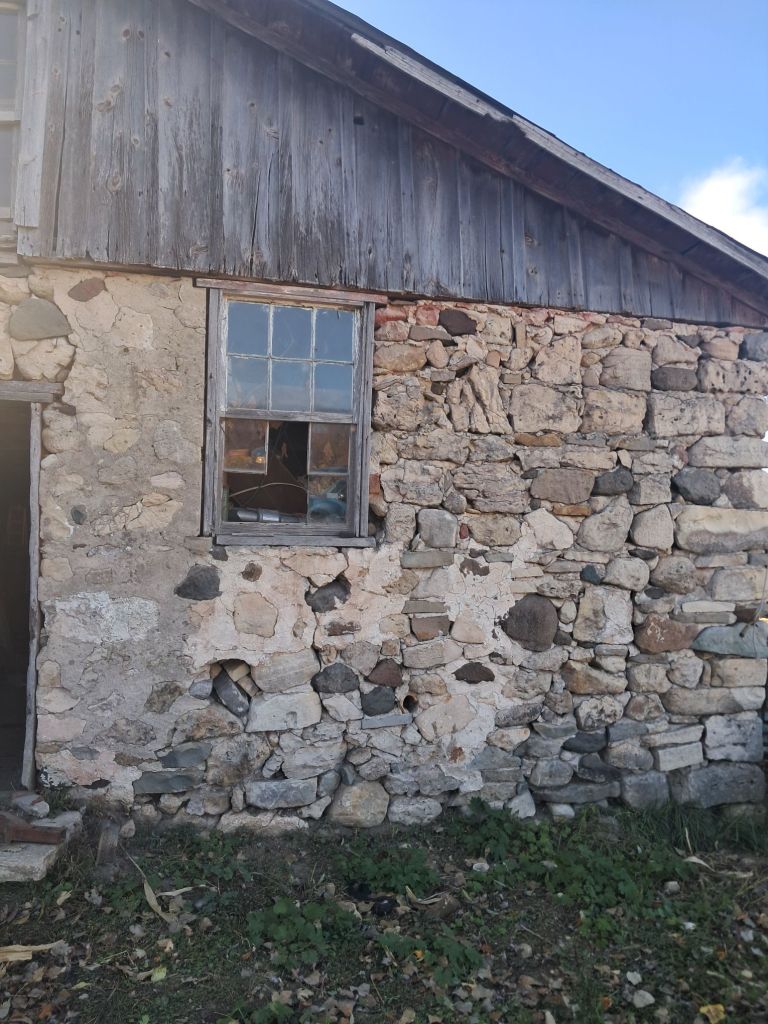
    Stone by stone, this wall was built.

    A century ago, the farmer walked his fields each spring, eyes tracing the thawing earth for the perfect stones.

    He moved slowly, letting his hand rest on each one, feeling its shape, its weight, the way it might settle among the others.

    This was not hurried work. Endurance, he knew, would make the wall stronger than haste ever could.

    When he found a stone that fit his vision, he lifted it onto his horse-drawn wagon. The steady rhythm of hooves and iron wheels carried his labor back to the barn, where rows of stone rose patiently from the dirt floor.

    As time allowed, he placed each piece with care, sweeping away soil, testing every joint, sealing the gaps with mortar and quiet pride.

    Now, more than a hundred years later, the wall still stands. Its mortar is softening, its edges worn, yet its shape endures.

    Each stone remains a record of patience laid by hand—a testament to steady work, lasting purpose, and the quiet will to build something meant to weather time itself.

    Stone by stone, this wall was built.

    What’s something in your life that was built to endure? Share below in the comments.
    If this story resonates with you, take a moment to like, share, and subscribe for more reflections on craftmanship, time, and the quiet art of enduring work.

    #storytelling#visualstorytelling#theartofstorytelling
    #farminghistory#craftsmanship#heritage#everydaystorytelling

  • Learning to Be Seen: Redefining My First Impression

    What’s the first impression you want to give people?

    When I think about the first impression I want to give people now, it connects closely to how much I’ve learned about myself.

    In my 30-something years, I’ve spent a lot of time shrinking into the background—speaking softly, standing at the edges of rooms, and convincing myself that others didn’t really want to notice me. Somewhere along the way, I mistook invisibility for safety. That belief likely began in childhood, when being quiet felt like the right way to belong.

    But with time, I began to see what that silence cost me. By keeping myself small, I limited the depth of my connections. People knew me only in fragments because I wasn’t showing them a complete person. What I thought was self-protection often turned into isolation.

    Now, I want my first impression to reflect who I’m becoming rather than who I used to be. When someone meets me, I hope they sense warmth and calm, a presence that feels both grounded and engaged. I want my voice to carry confidence without volume—a kind of steadiness that says, “I see you, and I’m here.” Maybe it shows in the way I smile when greeting someone or in how I pause to listen before responding.

    More than anything, I hope to make people feel comfortable being themselves, just as I’m learning to be comfortable being myself. If my presence leaves others feeling seen, valued, and at ease, then that’s the impression I want to give. It’s the one I’ve always been reaching for, quietly, without realizing it.

    Have you ever realized that the way you present yourself isn’t who you truly are inside? Share your story in the comments. What first impression do you want to give people now, and how has that changed over time?

    If this reflection resonated with you, take a second to like the video. Share it with someone who might need to hear it. Subscribe for more conversations about self-growth, confidence, and showing up as your authentic self. Your engagement helps build a community where everyone feels seen and heard.

    Related Posts

  • From Ghost Ships to Dragons: Growing a Family of Readers

    From Ghost Ships to Dragons: Growing a Family of Readers

    What book are you reading right now?

    Some of my earliest memories are of getting lost in a book. I read on the school bus until the motion made me queasy but I never quite wanted to stop. Books have always been my favorite escape into bigger worlds. That love of stories has shaped much of who I am today.

    Now, as a parent of two—my curious six-year-old son and my energetic two-year-old daughter—reading has taken on new meaning. It’s no longer just a solitary escape; it’s a shared experience, a daily rhythm that brings us back together. Whether it’s a quiet bedtime story or an impromptu library trip on a rainy afternoon, I want them to see reading not as a chore, but as something joyful and full of possibility.

    During one of our library visits, we found Great Lakes Ghost Stories perched on top of a shelf. It felt like it had been placed there, waiting for us to grab it. Living near Lake Michigan, my son has a fascination with shipwrecks and ghost stories, so the book was an instant hit. We’ve been working our way through it a little each night. We imagine the waves, the fog, and the echoes of the past as we read. It’s a story that captures us both, which makes that time feel even more special.


    Of course, there’s still plenty of toddler-friendly reading mixed in. My daughter adores Dragons Love Tacos—especially the part where the dragons accidentally burn down the house. She throws her arms in the air and pretends to breathe fire every time, her giggles filling the room. Those moments remind me that the love of reading isn’t just about the stories themselves but about how they bring laughter, wonder, and connection into our home.

    Reading has also become my own kind of reset. After long days, there’s comfort in sitting beside my children with a book in hand, letting the day fade as we turn the pages. Books remind me that curiosity is ageless and that stories have the power to grow with us. Watching my children surrounded by them feels like passing down a quiet kind of magic—one that never loses its spark.

    What book are you reading right now? Tell me about it in the comments!

    And if reflections like this resonate with you, subscribe for more moments of intentional parenting.

  • My Most Beautiful Place in the World

    If you could live anywhere in the world, where would it be?

    Before dawn, I awoke to toddler kisses on my cheeks and the faint crow of a rooster calling the day to begin.

    The scent of coffee drifted through the kitchen as my husband and I eased into the morning. Our six-year-old son stirred under his blanket, still half-dreaming, and soon began retelling the Great Lakes ghost ship story we’d read the night before. Our two-year-old daughter tugged at my sleeve, eager to gather eggs from the chicken coop. Outside, the sky hung pale gray, the world quiet except for the rustle of animals waking.

    In that stillness, surrounded by the people I love, I felt an unshakable peace—the kind that reminds me I could never imagine living anywhere else.

    If I could live anywhere in the world, I would choose to be right here—with my family and our small but lively homestead. Together, we’ve shaped a life that’s rooted in rhythm and purpose, surrounded by gardens that feed us and animals that fill our days with energy and laughter.

    Pigs snuffle in the mud, turkeys strut proudly in their corn crib enclosure, and chickens announce each new egg as if it were an accomplishment worth celebrating. Our home isn’t grand, but it hums with life.

    Our community, too, has become an extension of that home. When we start a renovation project, chase a runaway chicken, or need an extra hand keeping the kids busy, help is never far away. Friends arrive with tools, spare time, and easy smiles. That kind of closeness doesn’t come from a picture-perfect place. It grows from shared effort, trust, and the understanding that we rise and thrive together.

    I could wake up to a mountain sunrise or fall asleep to the lull of the ocean, but it wouldn’t compare to mornings like this one. The warmth of my daughter’s tiny hands, the echo of my son’s laughter, and the smell of coffee mingling with fresh earth from the garden. For us, home isn’t measured by scenery or luxury; it lives in the laughter, labor, and love that fill each day.

    And as the first light spills across our field, I feel her tiny kiss still warm on my cheek. In this moment, I know this truly is the most beautiful place in the world.

    If reflections like this resonate with you, subscribe for more small moments of gratitude and intentional living.

  • Mapping Home

    Mapping Home

    What’s the coolest thing you’ve ever found (and kept)?

    The first time I saw the map, I was nauseated and overwhelmed.

    It was March 2023, and my husband and I were touring the house that might soon become our home. At nine weeks pregnant, I’d skipped breakfast, and the wave of queasiness matched the swirl of emotions inside me—a baby on the way, a new house, a new life I wasn’t sure I was ready for. The place overflowed with decades of forgotten possessions, each room crowded with remnants of someone else’s story.

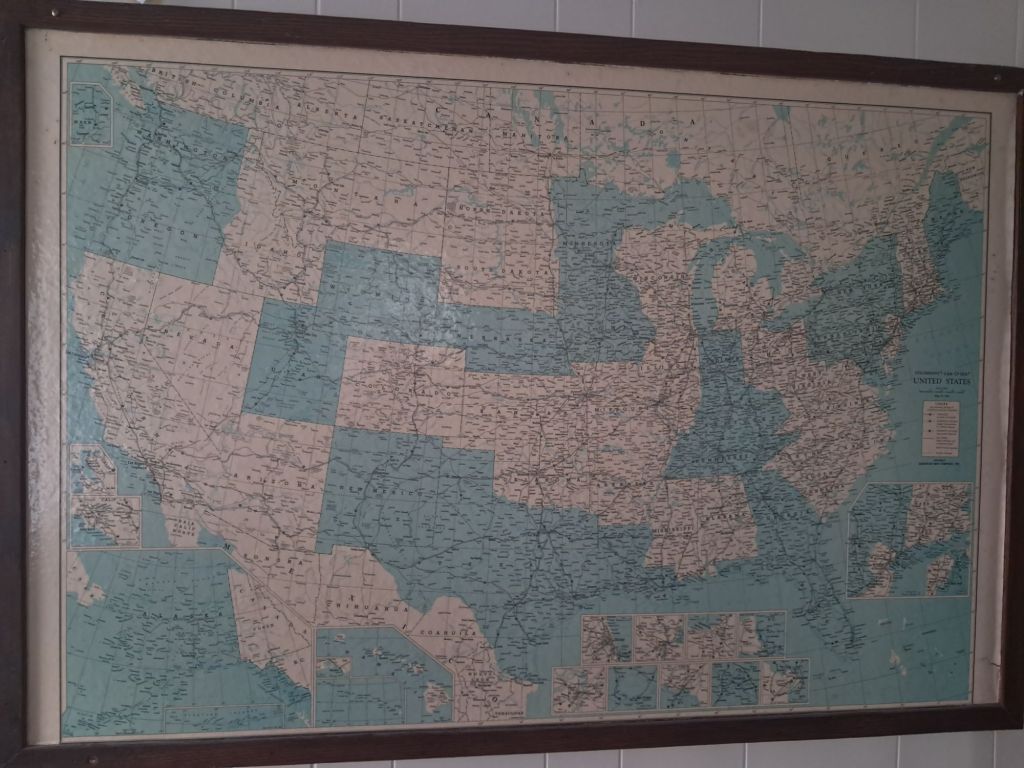
    Upstairs, something leaning against the wall caught my attention. It was a large vintage map of the United States, the kind once used in classrooms to chart railroads and planned highways. The paper was yellowed and curled at the edges, faint marker lines tracing routes that never came to be. Despite my dizziness, I knelt to study it, drawn in by the faded colors and the quiet sense of history. Even in its worn state, I saw potential—a story still waiting to be told.

    Two months later, after closing on the house, we returned to begin the long process of cleaning. Much of the clutter remained, but the map was still there, patient and waiting in the same spot, as if it belonged to me. My husband and in-laws spent weeks scrubbing, painting, and repairing walls. Amid the chaos, they carefully cleaned the map, framed it, and hung it in my future home office—a space I would soon inhabit every day. It was a small gesture, but one of the kindest and most meaningful I’ve experienced.

    Now, two years later, that map still hangs on the wall of my office. Its faded lines have become a steady companion to my workdays, a window to imagined landscapes beyond the screen. When someone on a call mentions a city or a road trip, I glance over, tracing their route and picturing their corner of the country. It reminds me not just of place, but of the path we’ve taken—from that cluttered, dizzy morning to the life we’ve carefully mapped within these walls.

    If reflections like this resonate with you, subscribe for more small moments of gratitude and intentional living.

  • The Part I Always Want to Skip

    The Part I Always Want to Skip

    What part of your routine do you always try to skip if you can?

    Most mornings start with a quiet choice—whether to honor my intentions or give in to my excuses.

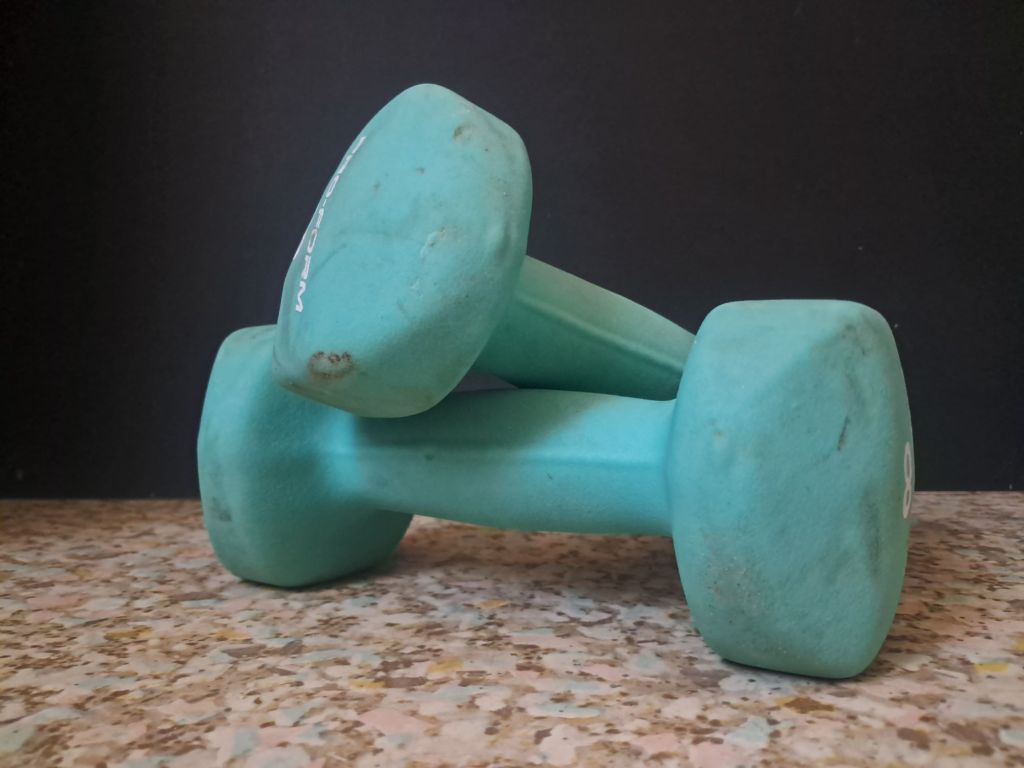
    My routine isn’t rigid; it shifts with the rhythm of life at home. But on the best days, I carve out a few minutes for movement. Ten or twenty minutes of exercise to clear my head and reconnect with myself.

    Still, it’s the part I’m most likely to skip. When sleep is scarce, when the kids need me, or when the day feels heavy before it even begins, it’s too easy to let it go. The promise of “later” becomes a gentle lie I tell myself, one that always fades as the hours slip by.

    But when I do keep that promise, even briefly, the reward is unmistakable. My breath deepens, my pulse steadies into rhythm, and a thin sheen of sweat gathers on my forehead. In that moment of effort, I feel a quiet awareness settle in—a reminder that I’m capable, present, and alive. The energy lingers, carrying me into the rest of the day with a small spark of pride that I showed up for myself.

    My kids see it too—that persistence matters more than perfection. It’s an ordinary act, but one that steadies me, a reminder that discipline often begins in the smallest, most unremarkable moments.

    If reflections like this resonate with you, subscribe for more small moments of honesty and intentional living.