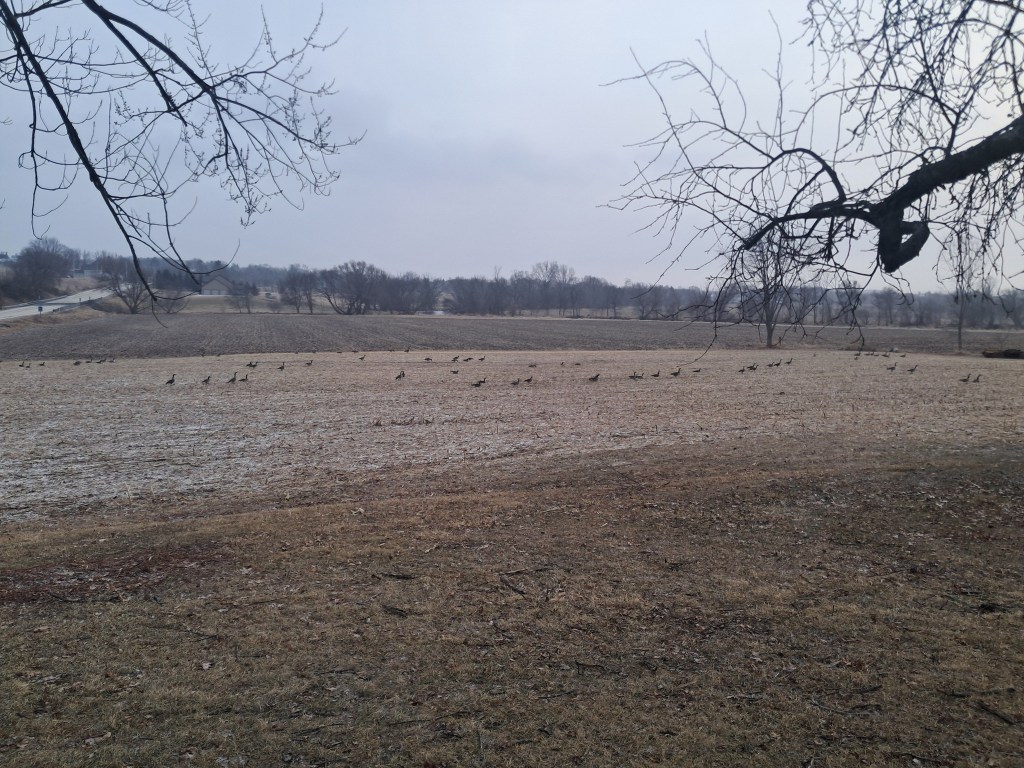
Spring is on the move! The geese are back in our corn field, snacking on the kernels we missed last fall as they make their way north. During the day they feast here, and at night they head back to the Horicon Marsh—just two miles west of us. It’s a rhythm we’ve come to count on, almost like the turning of a calendar page that only nature can read.
Early Spring Signs: From Geese to Goslings
Soon the quiet honks in the distance will give way to a full chorus overhead. As their numbers grow, they become our entertainment—chasing each other away from the best spots, flapping their wings and honking aggressively. Then they will begin to form pairs.
It won’t be long before we’re seeing those fuzzy little goslings wobbling around on unsure legs. I always smile at how they’re both awkward and perfectly at home in the world at the same time. They don’t rush their growing, they just…are. There’s a lesson in that for the rest of us, I think.
Subtle Signs of Spring You Might Miss
Around here, early signs of spring start small if you’re paying attention:
The snow melts back from the south-facing sides of buildings first, leaving little ribbons of bare ground.
Puddles form in the ruts of the driveway, full of reflected sky.
The air still has a bite to it, but every now and then, in the afternoon, there’s a softness you can feel on your cheeks. The kind of air that makes you stop and think, “Oh. It’s changing.” It’s when you know it’s time to tap the trees for maple syrup. Sap flows best at days above freezing, and nights below freezing.
The soil starts to loosen its grip, too. Boots sink a little deeper, and you can smell that rich, damp scent of earth waking up. The barn cats linger longer in patches of sun. The chickens get a bit braver, scratching farther from the coop, as if they also sense that winter’s hold is slipping.
The Magic of Longer Days
I always notice the light first. The sun sets 2 minutes later each day now, stretching out the day bit by bit. Supper dishes are ready to serve while there’s still a faint glow in the west.
That extra light brings with it a quiet invitation: to dream about the garden, to flip through seed packets, to imagine rows of green where right now there’s only brown and grey.
First Signs of Spring in Everyday Life
Spring on the homestead, in this in-between time, is easy to miss if you’re only looking for flowers and green grass. But if you look closer, it’s there in the geese in the field, the drip of melting snow, the mud on the boots piled by the door.
It shows up in the way we start talking about “when it warms up” instead of “if it ever warms up.”
What Are Your Early Signs of Spring?
What early signs of spring are showing up where you are? Maybe it’s a certain bird call you only hear this time of year, or the first brave shoots pushing up through the cold ground.
Maybe it’s kids trading snow pants for lighter jackets, or the way your houseplants suddenly seem a little happier near the windows.
What’s your first sign of spring? Drop it in the comments—we’re all watching for those first hints together! 🌱
Early signs of spring are HERE! Geese honking, sap flowing, sun lingering longer. Which first sign of spring did you notice today? LIKE + SHARE if you’re feeling that seasonal shift! 🌿
I lived in my dream home once. Five perfect years on eighteen acres that felt more like a nature preserve than a homestead.
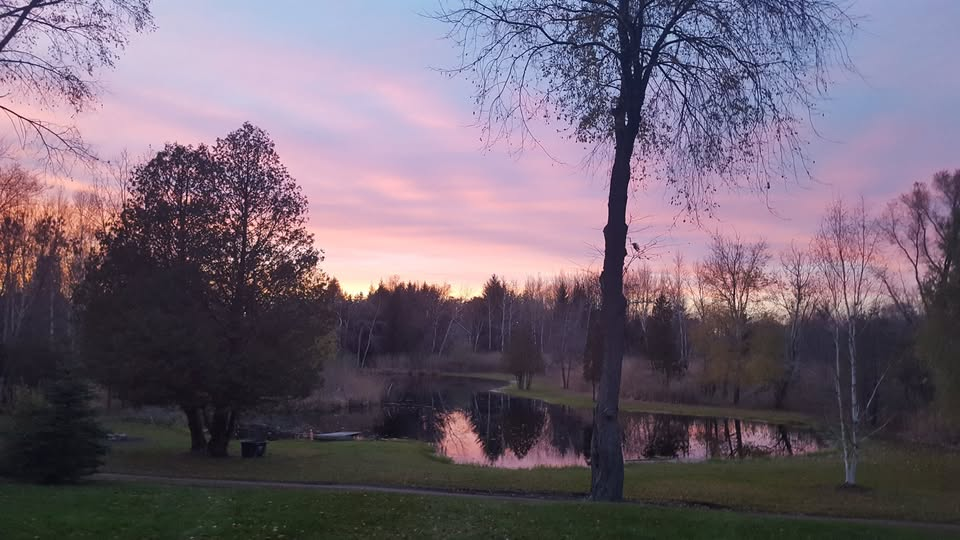
The property sat so far back from a quiet road you could barely hear traffic. Wetlands hugged the front entrance, a half-acre pond sparkled right outside my kitchen window, and open fields rolled out behind the house. My husband and I would wander at dusk, holding hands, and catch our breath watching deer bound through the brush or minks slip through the water. Early spring mornings, we’d sip coffee at that kitchen window watching territorial geese squabble fiercely over pond space, then just weeks later cheer as fluffy goslings bobbed behind their parents. Our three-year-old thought he’d discovered paradise—he’d spend hours crouched in mud, catching frogs and running them up to the house like Olympic gold medals, muddy hands and all.
View of our pond outside the kitchen window.
Inside felt just as special. The split-level house sat partially underground, which kept temperatures steady through brutal summers and icy winters. Downstairs, a stone fireplace became our winter sanctuary. We’d lose entire evenings to its crackle and glow, or turn Sunday afternoons into smoky feasts—grilling chicken right there over a makeshift setup, eating straight off paper plates while the fire warmed our backs.
Upstairs opened into something magical. Reclaimed board ceilings gave it soul. A balcony hung right over the pond view, helping me transition to work from home as I took phone calls while watching hummingbirds dart past. And the south wall? Pure windows. We called that space the plant room. On the grayest February days, I’d stand barefoot in that flood of sunlight and swear spring had snuck in early. That light. I still miss that light.
But even dream homes come with strings attached.
Spring rains turned our long driveway into a lake because of those front wetlands. The previous owners built it themselves, and you could tell—endless quirks and half-finished details everywhere. I called it our “teenage house.” Thirty years old. Just old enough for all the newer systems to start failing, but not old enough to have the solid bones of those century farmhouses I love.
We stretched our budget to buy it, paying more than we planned. The shed out back could barely fit my husband’s equipment, and there wasn’t realistic room to expand. Slowly but surely, our days shrank down to just three things: parenting, working, fixing. We were running on a treadmill to justify living in paradise, too exhausted for the actual living part.
After five unforgettable years, we made the hard call. Sold it all. Downsized to a fixer-upper we could actually afford and breathe in. Do I miss that house? Every single day. The pond at sunset. The plant room light. Our son’s frog-hunting grin.
But here’s what we gained: homestead life with breathing room. This smaller homestead now keeps more animals than those 18 acres ever dreamed of. Our homestead garden produces more than double what we grew back then. Now, we’re outside together—hands in the dirt, teaching kids to plant, actually enjoying the slow rhythm we moved here for.
My definition of dream homestead changed. It used to be postcard-perfect acreage and a house that bathed you in light. Now? It’s a place that fits how we actually live—room for animals, kids, projects, rest, and each other. Sometimes you walk away from your first dream home to build the homestead life that lets you actually live the dream.
Have you ever left a “dream” situation for something better? What’s YOUR dream homestead?
Like + share if this resonates—I’d love to hear your story below!
Loved this? Subscribe for weekly homesteading tips:
By evening, the noise of the day hums in my head — messages blinking, dinner half‑done, kids calling, and tomorrow’s to‑do list lingering in the back of my mind. It’s a good life, full of motion and purpose. But even within this homestead rhythm, I sometimes forget to pause and simply breathe. Between work deadlines and the steady beat of feeding, teaching, and tending, it’s easy to lose sight of how beautiful this busy season really is.
The Craving for Quiet
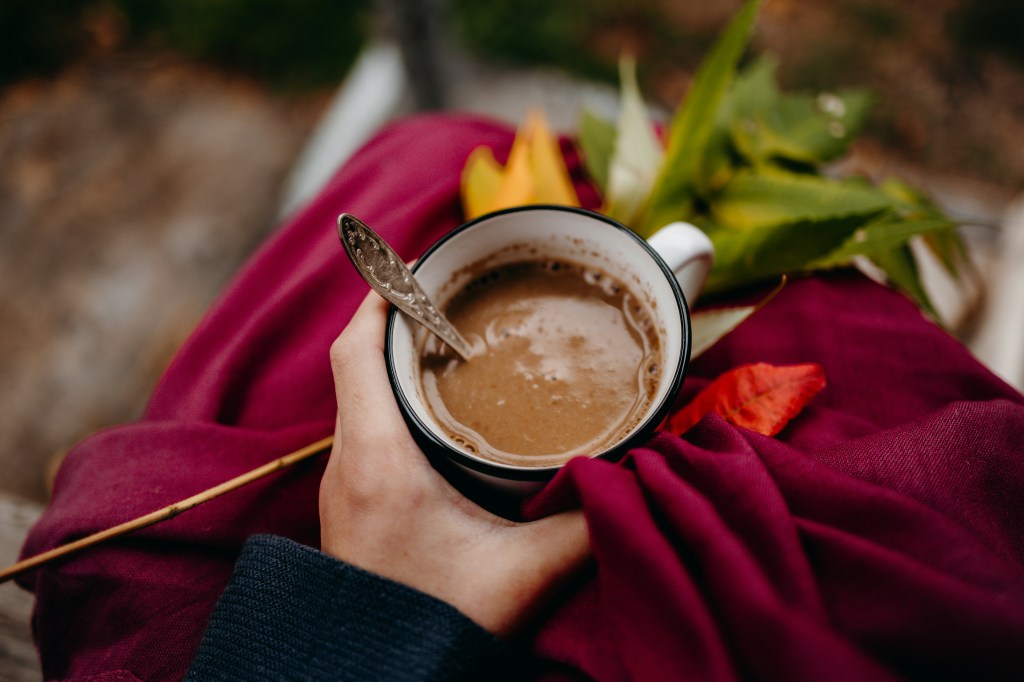
And when that fullness finally catches up with me, this is what I long for: thirty quiet minutes under the stars, cocoa in hand, snow crunching softly under my boots. No phone. No decisions. No “what’s next?”—just breath and stillness.
That kind of homestead self‑care isn’t an escape; it’s a reset. One restful hour a week—phone down, chores paused—restores me far more than any screen time ever could. Sometimes it happens after puzzle night with the kids or a cozy movie evening. Other times, I slip outside once the house quiets and the moonlight hits the frost just right.
These small, sacred moments remind me why I chose a slow-living, family-centered life: growing our own food, raising our kids close to nature, and building community grounded in simplicity and care. Starting seeds for spring, gathering eggs in the cold, kneading bread for the week ahead—each task becomes a gift when I remember to slow down and notice it.
Gratitude in the Pause
When I take that pause, I notice things otherwise overlooked: the rhythm of my breath, the faint scent of woodsmoke, the gratitude warming my chest. This is the balance I crave as a working mom—not perfection, but presence. Simple living teaches me that rest and gratitude feed each other.
It’s not really a break from my life that I need; it’s a breath within it. I don’t want to wish the busy days away. I want to celebrate them—the laughter around the puzzle table, the smell of soup simmering, the promise that the seeds I plant now will nourish us months from now.
Make Space for Your Own Pause
If you’re walking a similar path, try setting aside just 30 minutes this week for yourself—a short walk, a deep breath, or a quiet cup of tea. See how the noise fades when you let the earth steady you.
What the seasons can teach us about slowing down, finding balance, and belonging A version of this essay appears in the January 8, 2026 edition of the Dodge County Pionier.
Ask most people how they measure time today, and the answers sound familiar: alarms, deadlines, color‑coded calendars, the endless scroll of days on a glowing screen. Phone notifications cut across dinner, school schedules slice afternoons into drop‑offs and pickups, and the next bill due date is never far from mind.
Where I live, time follows a different rhythm—guided not by screens but by the soil itself.
My family keeps time by the signals nature gives: sap rising in March, turtles crossing the road in May, fireflies at dusk in June, corn drying into gold by October. A cold north wind can say “November” more clearly than any app. These cycles remind us that time isn’t a race toward exhaustion; it’s a loop—a pattern of effort, rest, and return.
In a world obsessed with productivity, the land offers a quiet lesson: slowing down isn’t falling behind. It’s catching up to what matters.
Winter: the radical act of rest
When the holidays end and snow hushes the fields, stillness takes hold. The world outside the window turns soft and muted, as if someone turned down the volume. Days stretch long. Nights invite reading, conversation, and quiet.
In modern life, that slowness often gets labeled “unproductive.” Inbox counters climb even as the sun sets before dinner. But in the rural calendar, winter is preparation—the season the earth itself uses to heal. Under the frozen top layer, roots are resting, waiting for their cue.
Inside, a different kind of work takes over: soup on the stove, a deck of cards on the table, a cat snoring near the heat register. There’s no badge for this kind of work, but the house feels fuller for it.
Winter offers permission to pause. Even without a farm or a woodstove, anyone can claim a bit of that wisdom: choose a few evenings when nothing is scheduled, let the phone stay in another room, and let the quiet do its work.
Spring: a rehearsal for renewal
Spring announces itself quietly at first—a drip of meltwater from the eaves, the smell of mud, the first bird that sings before sunrise. One morning the snow looks tired; the next, you notice a thin green line where the lawn meets the sidewalk.
We tap trees and plant seeds, acts that serve no instant gratification. The sap runs clear and cold, one slow drop after another into plastic jugs. Seed trays sit under lights, all dirt and hope, for weeks before anything green appears. Yet when syrup warms pancakes or sprouts unfurl in a window box, you can taste reward drawn from patience.
Spring teaches urgency without panic. Ramps, asparagus, morels, and rhubarb arrive in a rush, then slip away as if they were never there. The season reminds us that beginnings are not one-time events but recurring invitations. The world doesn’t ask, “Did you start perfectly?” It asks, “Are you willing to start again?”
You don’t need a sugar bush or a greenhouse to feel this. A single pot of herbs on a balcony, or a commitment to walk the same city block once a week and notice what’s blooming, can turn spring into a ritual rather than a blur.
And after that first rush of green, the land hardly pauses—by July, it’s in full voice.
Summer: where work and joy meet
By midsummer, everything hums. In the afternoon heat, insects buzz like a low electric current in the fields. Lawnmowers start and stop up and down the street. Windows are open, and someone, somewhere, is grilling.
Gardens overflow. Tomatoes split if you don’t pick them in time. Zucchini multiplies on the counter and quietly appears on neighbors’ doorsteps. Kids shriek through sprinklers, leaving wet footprints on hot pavement. Even the air smells different: cut grass, sunscreen, diesel from a tractor on a distant road.
Like the growing season, our best days often mix effort with enjoyment. Summer’s lesson is simple: work and joy are not enemies. They often belong in the same hour. There is satisfaction in going to bed with dirt under your fingernails and the memory of a late sunset still bright in your mind.
The reward for effort can be as close as a ripe berry, a shared picnic in a city park, or a tired, happy body at the end of a long, light-filled day.
Autumn: gratitude and gathering
Autumn softens the light and sharpens the air. Mornings carry that first hint of frost, and you can see your breath if you step outside before the sun gets serious. Leaves turn from green to gold and red, then crunch underfoot in the driveway.
The season’s abundance—pumpkins on porches, apples piled in crates, shelves lined with jars and loaves—reminds us how much depends on cooperation: between people, earth, and time. No one person makes a harvest alone. There are seed savers, farm workers, truck drivers, grocers, and cooks all woven into the meal.
Gratitude, in this season, isn’t just a word reserved for a single holiday. It’s the habit of looking at an ordinary table—soup, bread, a piece of fruit—and seeing the many hands and seasons that brought it there.
Even in an apartment, autumn can become a practice of gathering: inviting friends over for a simple pot of chili, walking through a park under changing trees, or taking five extra minutes to watch the early dark settle in instead of rushing past it.
What circles can teach a linear world
When winter returns, it’s easy to see it as a setback: dark, cold, the end of something. But the more closely the seasons are watched, the clearer it becomes that time does not move in a straight line. It hums in a circle.
Each season brings another chance to begin again—not by doing more, but by noticing more. The calendar on the wall may march from one square to the next, but the world outside repeats its old, trustworthy patterns: thaw, bloom, heat, harvest, rest.
Wherever you live—city or countryside—you can keep time with the land in your own way. Let January be a little slower. Let spring mean at least one meal built around what is fresh where you are. Let summer include a night spent outdoors until it’s fully dark. Let autumn carry a moment of thanks, even if it’s just whispered over a sink full of dishes.
The land has never hurried. It always arrives where it should. Maybe we can too, if we’re willing to step out of the race now and then and walk in circles for a while instead.
How could you bring a bit of seasonal balance into your daily routine? Please let me know below in the comments.
If this reflection on seasonal living resonated with you, please take a moment to like and share it with someone who might need a gentler rhythm right now.
To receive future essays on slow, seasonal living straight to your inbox, subscribe to the blog and join this little community of people learning to keep time with the land.
Welcome to the rural economy—where value isn’t counted in cash but in connections. Beneath the wide-open sky, where grain silos and fence posts stitch the land into neat parcels, the real currency is not minted or printed. It’s grown and built, raised and traded. Trust, hard work, the barter of honest services and handmade goods.…
Happiness doesn’t come from perfect days—it grows in balance, family, friendship, and the quiet rhythm of everyday life. Here’s how I find joy in being present.
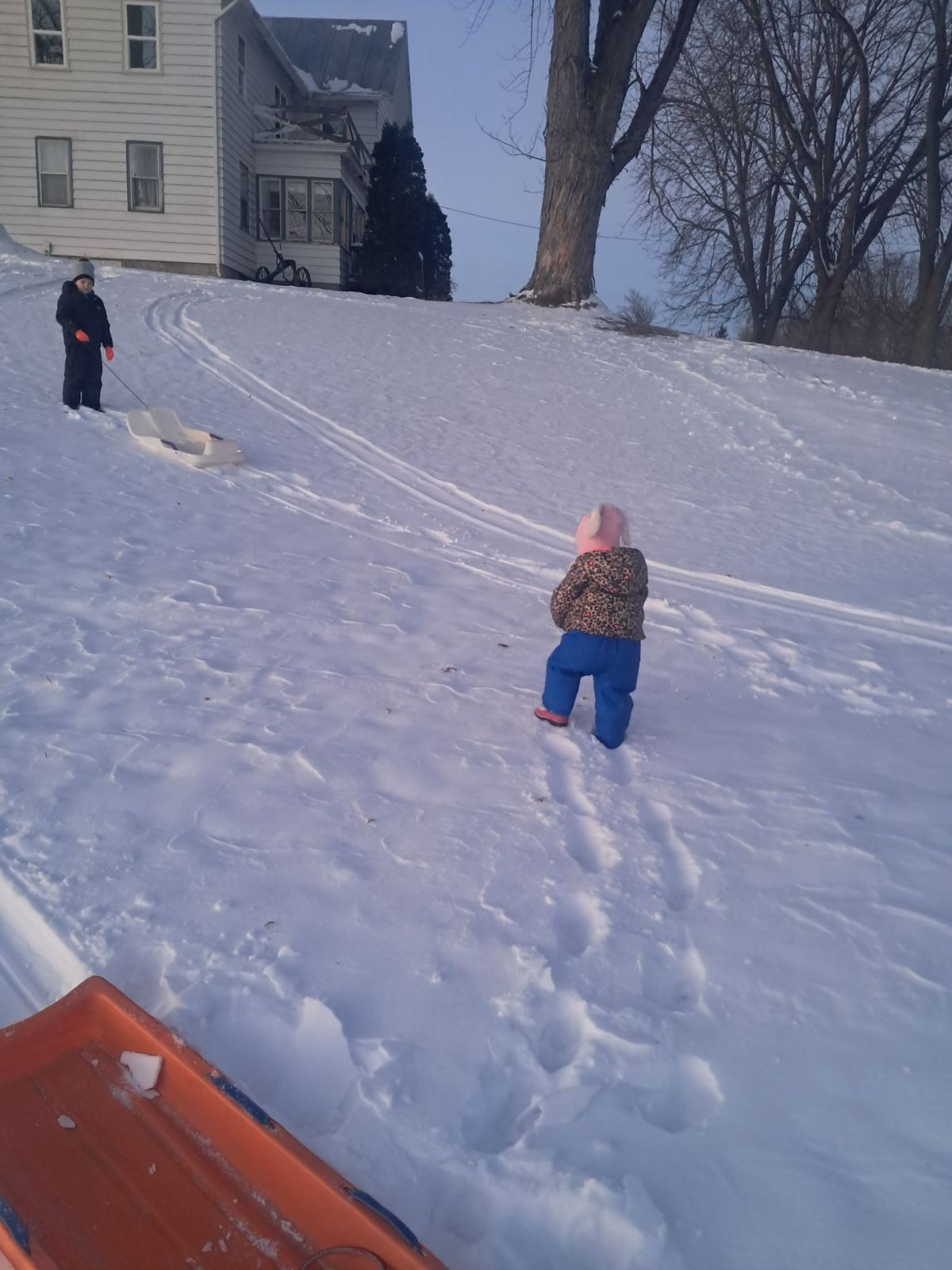
When my son asked to go sledding after a long week, my instinct was to say no. Dinner had to be made, and I was tired. But one small “yes” led to laughter, connection, and a moment that reminded me why slowing down matters most.
Disclosure: This post contains affiliate links. As an Amazon Associate, I earn from qualifying purchases. Thanks for supporting Practical Homesteading!
There’s something special about meals that tell a story. The kind of food that’s more than a recipe — but part of life. For us, that story came together in one simple dish: a homemade venison stir fry. It started months ago in the garden, wound through a winter greenhouse, and ended at a table surrounded by six hungry, happy faces. This wasn’t only food, but it a reminder of why we homestead in the first place.
A Stir Fry That Tells a Story
We had venison stir fry for dinner recently, a meal that smells like effort and tastes like reward. Stir fry always means chopping, sizzling, and a little chaos in the kitchen, but every bite feels like celebration. The dish is never quite the same for us. It shifts with the seasons and whatever our garden and freezer produce. That’s part of its beauty — it’s a living reflection of our homestead.
From Seed to Skillet
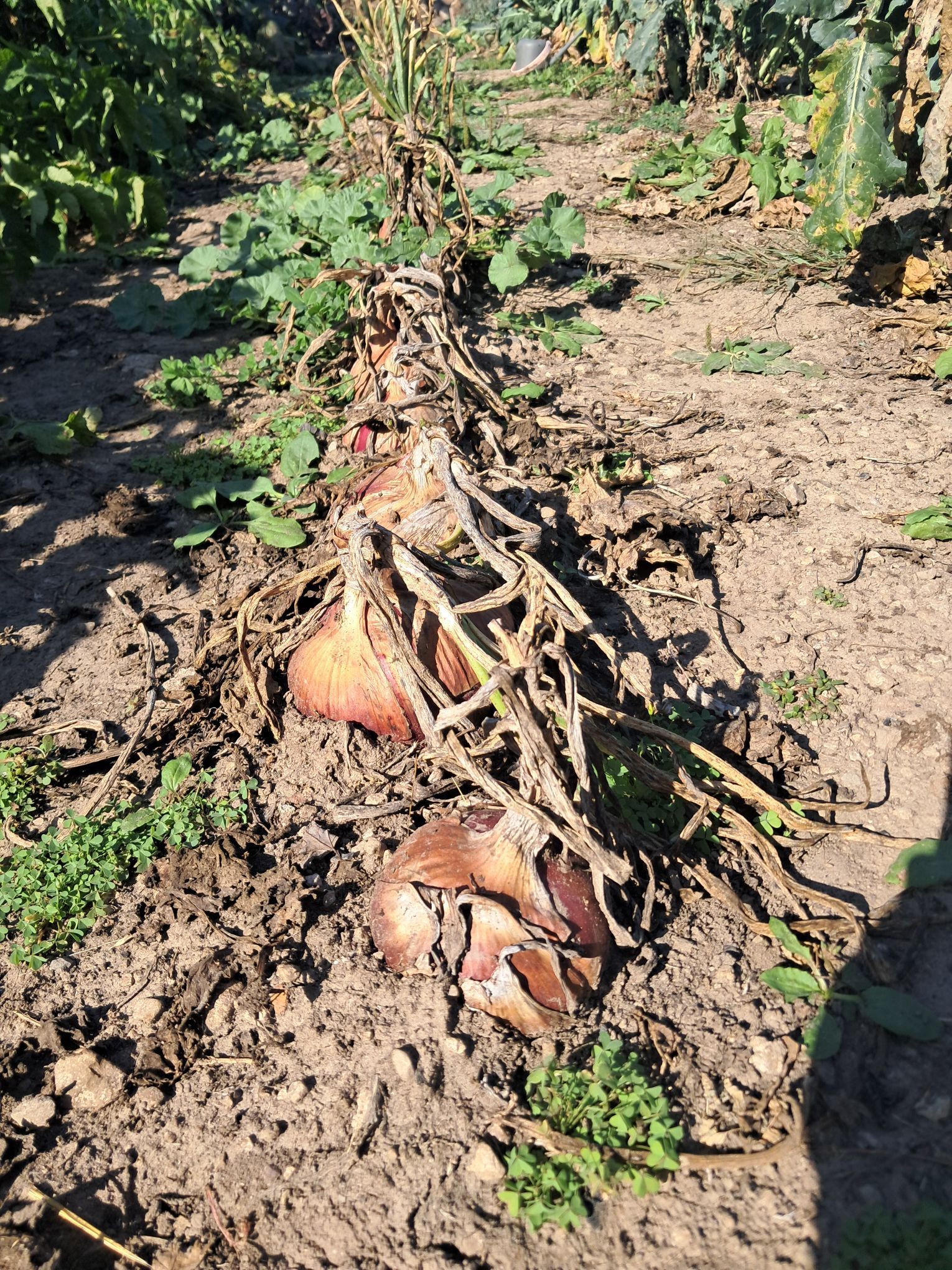
The story of this particular stir fry starts late last winter when we started onion and pepper seeds inside. We watched them grow, and my son delighted in trimming the onion shoots to give more life to the roots. Come spring, we pressed carrot seeds into the earth and transplanted our onions and bell peppers. By summer, our days smelled sweet and green. My kids loved pulling up carrots, brushing off dirt, and biting in right there in the garden. Their juice was sweeter than candy. The onions swelled to the size of softballs. When their stalks dried, we cured them in the basement. Then we set them inside old fruit crates beside jars of last year’s preserves. Peppers overflowed in waves of green, so I bagged and froze them for colder days.
Onions as they first sprouted from the ground.Mature onion, ready for harvestPeppers galore!
Homesteading tip: Frozen bell peppers don’t need blanching. To preserve, just slice, seed, and freeze them raw for perfect stir fry texture later. Onions can be cured and placed in a cool dark place to keep over winter.
By November, we tucked our last carrots under straw, the soil still holding its warmth like a secret.
Winter’s Sweetest Harvest
In December, I scraped away snow and straw with my bare hands to dig some carrots. (A mistake I won’t repeat — frostbite nearly earned an invitation to dinner.) My son peeled them eagerly, and when we tasted the first one raw, its sweetness floored us. Cold turns carrots into sugar. They’re winter candy disguised as vegetables.
Homesteading note: A thick straw mulch keeps carrots from freezing and lets you harvest them into early winter.
Winter carrots
Greenhouse Gold
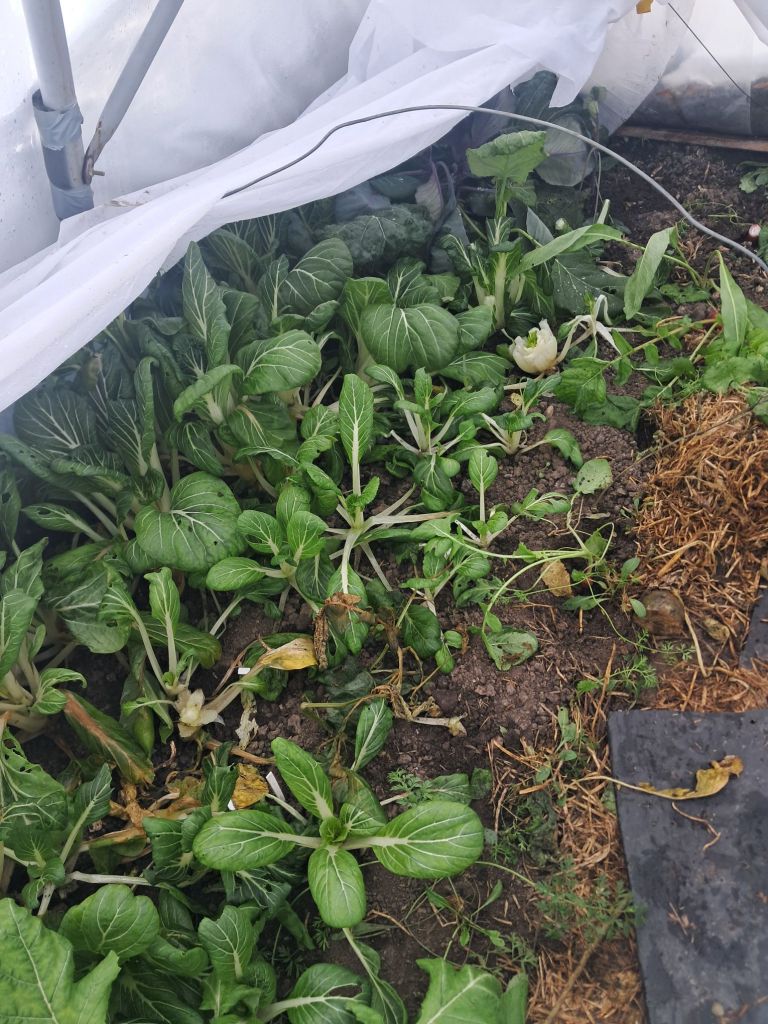
The bok choy came from a new experiment. I helped my experienced friend start a winter garden. I still remember stepping into her small greenhouse surrounded by snow. The chill outside vanished into crisp air that smelled of soil and life. Beneath soft covers, green leaves glowed faintly in the filtered light. Harvesting bok choy in December felt like a small miracle.
Winter gardening tip: A simple plastic-covered hoop house and landscape fabric over each row can extend your growing season by months. The flavor difference in fresh winter greens is unbelievable.
Bok choy harvested in December
Family in the Kitchen
Cooking became a family affair. My daughter stood at my side, eyes watering over the cutting board, proudly dropping onion slices into the container as I sliced them with this knife (affiliate link). My six-year-old son learned how to make rice that night — a big responsibility. We’d bought the rice from our local scratch-and-dent store for much less than retail. It wasn’t something we grew ourselves, but it was another way to live intentionally, supporting local businesses and stretching our budget.
He measured the rice, water, and bouillon with quiet focus, stirring carefully to break up every clump in the pressure cooker (affiliate link). Watching his concentration, I realized that learning to cook simple staples might be one of the best skills a homesteader’s child can develop.
Parenting philosophy: Give your children small but meaningful jobs in the kitchen as you cook. It takes the burden from you to endlessly entertain them, and they learn real life skills.
Wild Meat, Real Gratitude
The venison came from the road. This deer was recently hit by a car, and my husband found it on his way to town one chilly fall day. He hauled it home, and that night he and his dad processed every usable piece. We made jerky from some and froze the rest for meals like this. There’s a quiet satisfaction in knowing exactly where your food came from, in salvaging instead of wasting.
Homesteading philosophy: Nothing should go to waste. This includes an animal, harvest, and opportunity to teach your children how to create value from what’s available.
From Skillet to Supper Table
When it was time to cook, I sliced the venison thin while half-frozen and marinated it overnight. The next day, the meat hit the hot skillet (affiliate link)— hissing, sizzling — browning into tender, caramelized pieces. My kids stole bites faster than I could cook them.
Cooking tip: Slice meat against the grain while it’s half-frozen for cleaner cuts and more tender results. This small trick makes all the difference with lean game meat like venison.
The vegetables followed: frozen peppers releasing water that deglazed the pan. The onions soaked up the sauce until they were golden brown. The carrots softened just a bit. The bok choy folded gently into the mix. The whole kitchen filled with the earthy perfume of garlic, soy, and family.
Six Around the Table
By dinner, the six of us — our little family and my husband’s parents — gathered around a steaming pot of rice and a glossy pot of stir fry. It wasn’t just delicious; it was ours — every part grown, harvested, found, or crafted by hand. That’s the heart of homesteading for me. It’s not simply saving money or knowing what’s in your food. It’s seeing how the garden dirt beneath your nails, a salvaged deer, and a child’s curiosity can all end up in the same bowl. It’s nourishment that carries the story of your family’s seasons.
Homestead Notes
Preserve what you grow: Freeze peppers raw and store onions in breathable boxes.
Extend your harvest: Straw-mulched carrots and cold-frame greens can provide fresh food even in winter.
Use what you have: Venison, garden vegetables, and discounted pantry staples can turn a simple meal into a story.
Teach through involvement: Kids remember the meals they helped make far more than the food they simply ate.
If our venison stir fry story stirred something in you — a memory, a craving, or just a bit of inspiration to slow down and cook what you grow — we’d love for you to join our little homestead circle.
Click like if you enjoyed this story. Share it with someone who’d appreciate the journey from seed to supper. Subscribe to follow along as we grow, cook, and live season by season.
If you love making your own food from scratch, this homemade venison jerky recipe is a must-try. Whether you’re a hunter processing your latest deer or simply someone looking for a leaner, high-protein alternative to beef jerky, this step-by-step guide walks you through every stage: from processing and seasoning to smoking and dehydrating. We even…
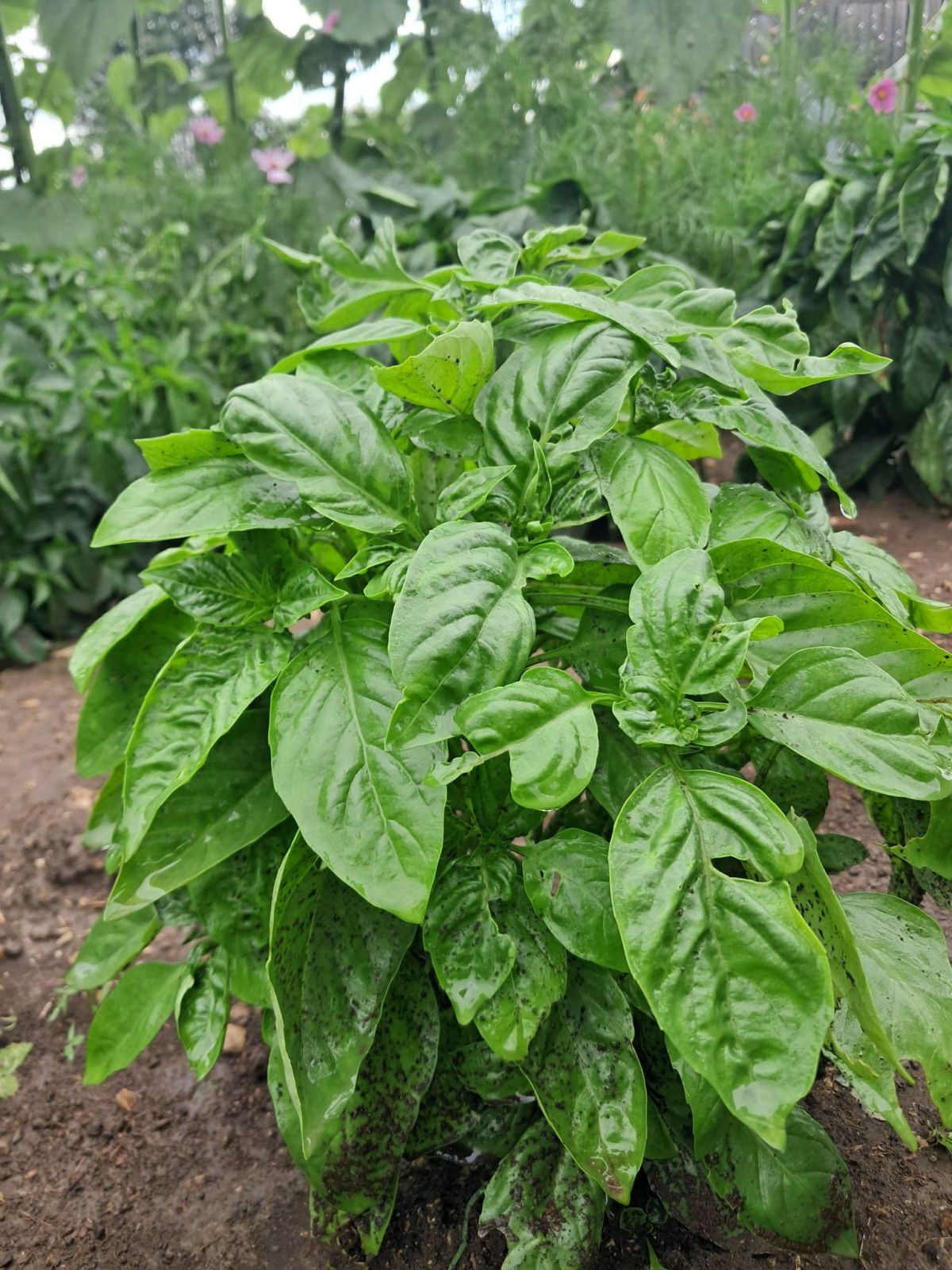
A 2025 garden reflection full of lessons, surprises, and laughter—one-pound onions, overflowing basil, hybrid watermelon mishaps, and happy pigs. Discover the stories and takeaways from our most rewarding gardening season yet.
The soil was cooler than I expected when I slipped a broccoli seedling into the ground. September isn’t when I usually think about planting—it’s when I imagine gardens winding down, not continuing. For me, gardening has always belonged to summer: long days of pulling weeds at dusk, arms full of cucumbers, nights spent rushing to…
How Local and Handmade Traditions Make the Season Truly Meaningful
What if the best holiday gift wasn’t something you ordered in seconds, but something made by a neighbor, a local shop, or your own two hands?
Gifts That Actually Stick
Think about it: what was the last gift you really remembered a year later? Chances are, it wasn’t the priciest thing on your list. More often, it’s the homemade jam from a friend’s kitchen. It could be the mug thrown by a local potter. Perhaps it’s the scarf someone knitted while thinking about you. Those kinds of gifts carry a story and quietly say, “You’re worth my time.”
The Smoked Cream Cheese Surprise
One of my favorite examples came from a retired farmer who gifted us smoked cream cheese. It was infused with cherry and oak from his backyard smoker. Shared around the table on simple crackers, it tasted like patience and pride. It sparked a whole conversation about how he learned to smoke cheese—something no anonymous online order could ever deliver.
Family Recipes That Last Generations
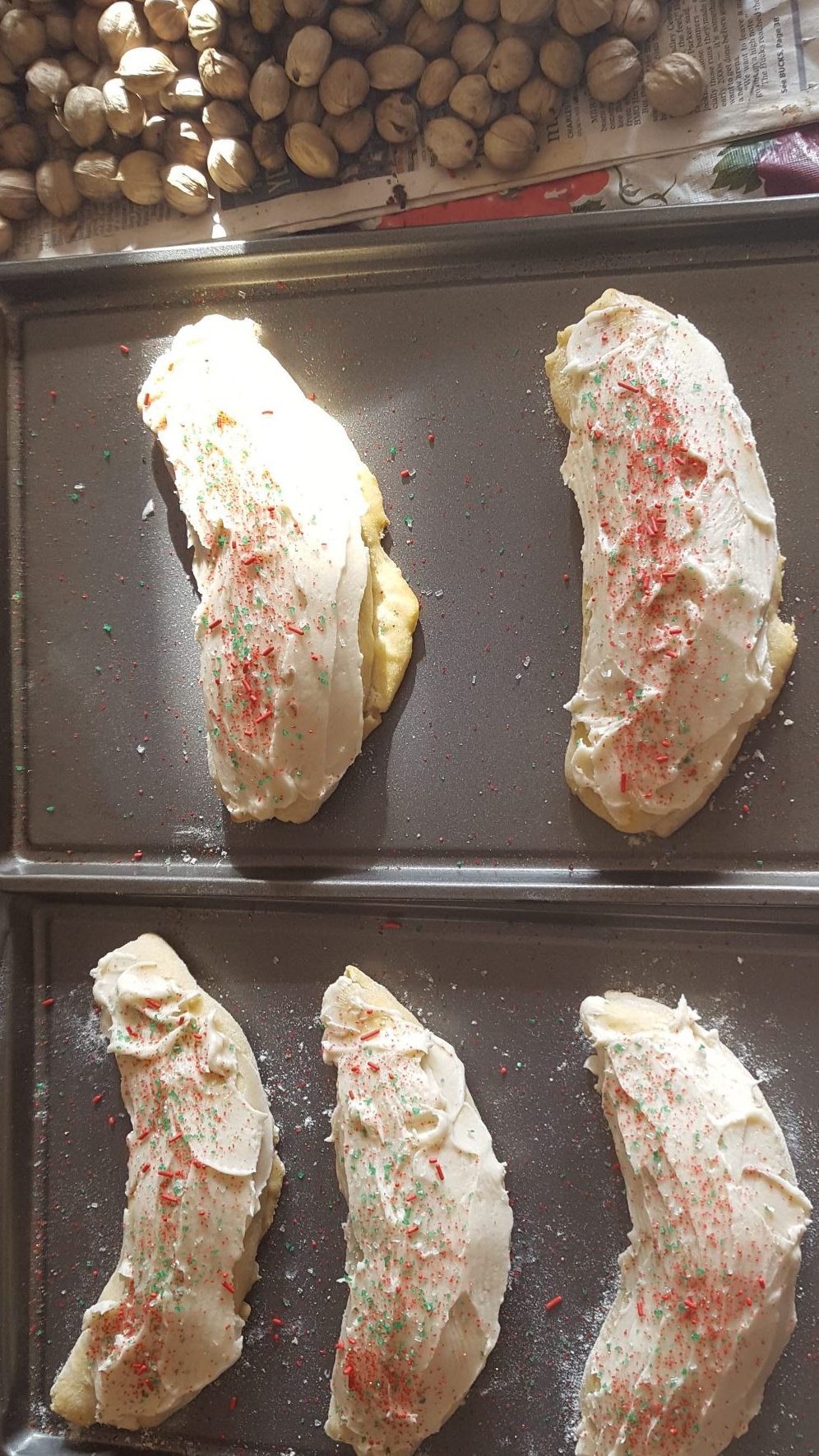
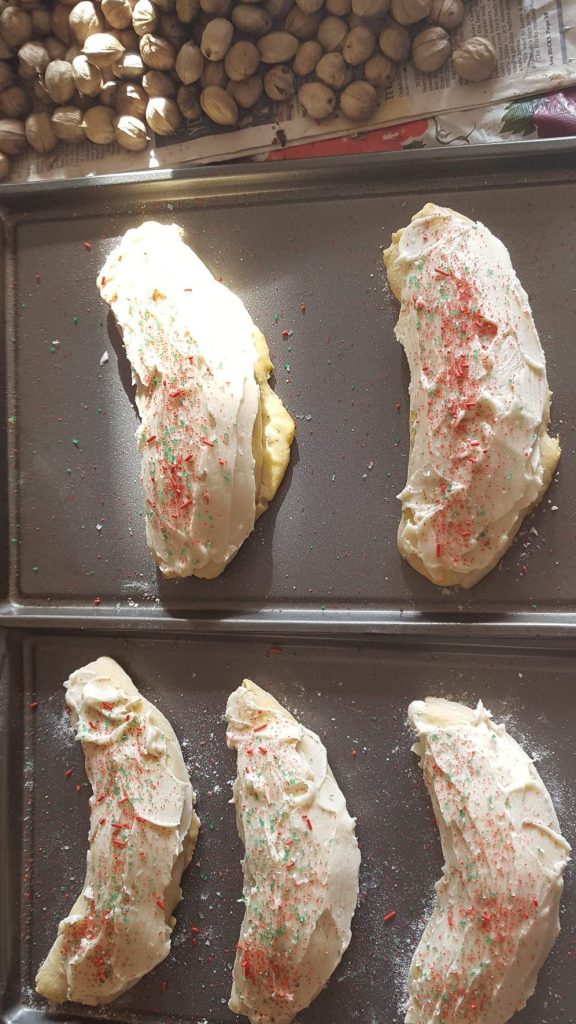
That same spirit shows up in family traditions. In my family, my mom’s kranz kuchen—a crescent-shaped bread layered with dates, brown sugar, and hand-foraged hickory nuts—has been on the holiday table for four generations. It’s not just dessert; it’s a lineage of hands and stories. When someone slices into it, they’re tasting time, memory, and love as much as sugar and spice.
Local Shops, Real Connections
Local shops can hold that kind of magic, too. They’re often packed with small-batch cheeses, handmade ornaments, candles, and art that reflect the character of your town. A couple of years ago at a tiny cheese factory, I got chatting with the woman behind the counter. We swapped recipes and laughs. I walked out not just with cheese. She had tucked a quirky chocolate-pairing poster into my bag. No algorithm could have predicted how much that silly poster would delight me. I think of her now and then when I find it among my things.
Start Small This Holiday
You don’t have to overhaul your whole holiday routine to lean into this. Start small. Maybe this year you bake a batch of cookies. You could write a poem. Paint a simple ornament. Or put together a little basket featuring a couple of local favorites. Even if you don’t have many nearby shops, you can still support small makers online. Alternatively, share something only you can offer. This could be a playlist, a letter, a framed photo, or a recipe.
Over time, those small choices can grow into traditions: an annual baking day, a visit to a favorite market, a handmade gift exchange among friends. Years from now, when people look back on “the good holidays,” they probably won’t reminisce about two-day shipping. They’ll remember the smoked cream cheese, the kranz kuchen, the unexpected poster, and the feeling of being truly seen.
Your Turn to Share
What’s one handmade or local gift you’ve received (or given) that you still think about? Why did it stick with you?
If this resonated with you, tap like. Share it with someone who loves local makers. Subscribe so you don’t miss future posts on intentional, community-rooted living.
The hum of diesel engines and the scent of dusty corn fill the air every fall, signaling harvest season and long days ahead. For the local farmers, this time of year brings both relief and pressure—hundreds of acres to harvest before rain or early snow set in.
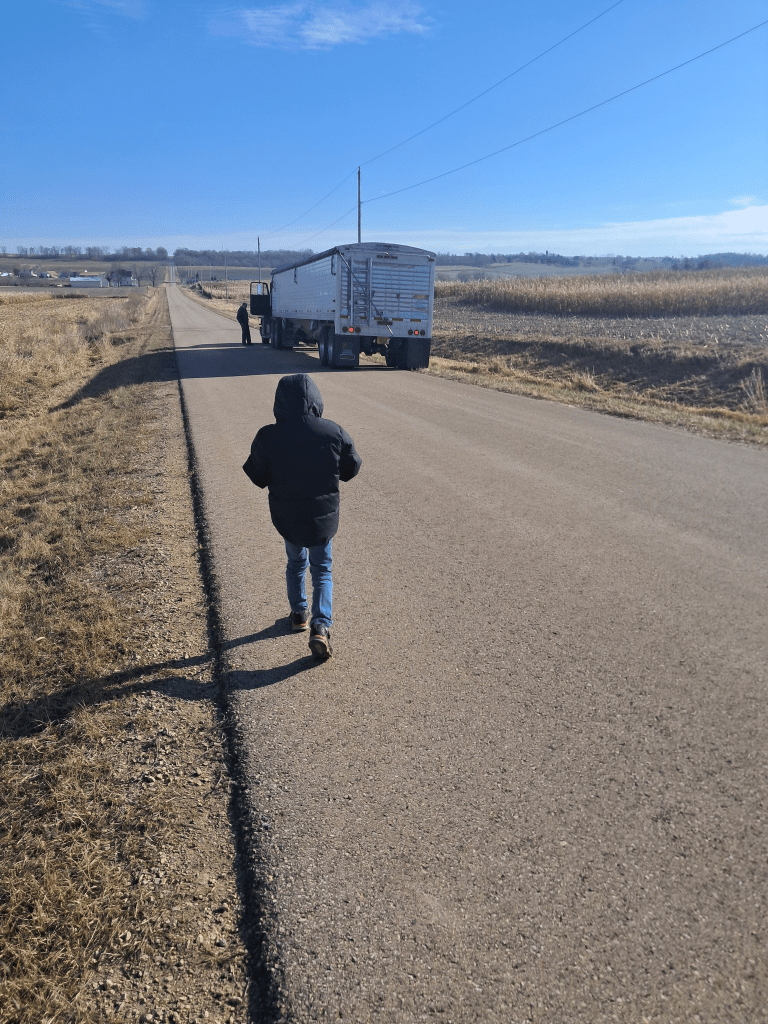
My dad is always there to help, his steady hands and decades of experience behind the wheel making all the difference. With his CDL and a lifetime spent operating heavy equipment, he’s the kind of person neighbors know they can count on when the fields demand every ounce of daylight and sometimes half the night.
This morning, he asked my six-year-old son to ride along as the corn was hauled from the field to the grain elevator to be processed. Before climbing into the truck, my son spotted a single kernel of corn lying by the road. He picked it up, studied it for a moment, and declared it his “lucky corn.” My dad just smiled, and together they climbed into the cab, a small tradition beginning in that instant.
As the truck pulled away, I realized that what my dad is teaching goes beyond driving or hard work. He’s showing the next generation what community looks like—the kind built not by grand gestures, but by showing up, season after season, when it matters most.
What traditions or small moments in your family remind you of where you come from?
Do you or your family make any special dishes for the holidays?
Flour-dusted hands trembled over a bowl at 3 a.m., measuring cups snapping in the silent kitchen. Everything was a desperate attempt to summon my mother from the hospital. An undiagnosed intestinal blockage had her rejecting even water.
The family lineage traces to heavy German roots. My father’s ancestors came from Austria in the 1870s, my mother’s from northern Germany in the 1850s. Her kranz kuchen recipe endures from her grandmother’s penciled cards. Yeasted dough rolled thin, layered with my dad’s foraged hickory nuts, chopped dates, cinnamon, and brown sugar. Twisted into crescents, baked golden, and glazed, dozens emerge each year for us six daughters, neighbors, and church friends, embodying a quiet hospitality.
Last Christmas, that rhythm fractured. Hospitalized, she could not retain food; us sisters started a text string, asking one question. “What if they never pinpoint the cause?” No flour clouds rose, no yeasty warmth filled the air—only silence amplifying the dread of a holiday without her.
Insomnia seized the nights. Each fragmented update jolted awake any fragile rest. Kneading became refuge: egg yolks merging into warm, proofed milk and yeast, the dough yielding beneath palms like hope taking form. As it rose under a towel, yeast’s scent enveloped the darkness. Folding in the nuts, dates, and spice, then rolling and shaping crescents, the hands of generations guided mine.
The oven’s glow dispelled shadows; caramelized sugar perfumed the halls. Frosting traced uneven paths, mirroring hers. Those crescents transformed rupture into resilience.
A single bite of spice-laced crumb now evokes my dad’s meticulous toil, my mother’s assured fold, my midnight vigil—a resilient pastry proving adversity does not sever us but reshapes us, crescent intact. She recovered. The tradition persists. We endure.
If this story of family tradition and quiet strength resonates with you, like this post. Share it with someone who needs a reminder that resilience often starts in the kitchen. Subscribe for more heartfelt essays on heritage and hope.
Have you ever noticed how some people quietly root themselves into your life’s story, shaping you in ways you only recognize years later?
I have three such people. Each arrived in my life in a different month, under different skies. Yet all have become my most favorite—and every morning, her kisses remind me how deeply entwined we are.
The first person came into my life when I was twelve. It was on a crisp September morning on a creaky school bus. I remember deliberately slipping into his favorite seat, hoping for a moment of attention. He was the boy with the quick grin and sly humor, so different from my preppy, studious self. At first, he barely noticed, but gradually, our laughter bridged our worlds. We briefly drifted apart in high school. By college, weekends bloomed with him driving an hour to visit me, our shared adventures stitching us closer. Eight years later, we married—two lives grown together in love and understanding.
Two Novembers later—two years after marrying him—I awaited another arrival with nervous wonder. Six months earlier, I had learned I would become a mother. As he grew, I spoke often to him, calling him “little one.” I dreamt of the gardens we’d tend and the trips we’d take. He arrived on a blustery Saturday night, bearing a name passed down through generations. Our first year together was a storm, marked by sleepless nights, fears, and growth. But with each challenge, I found a deeper love while planting seeds both in soil and in his heart.
Four Octobers after that, our family welcomed a second burst of joy. She came into the world on a rainy October evening, her laughter a bright pulse in our new home. We had just moved closer to family, seeking the roots we needed. Now my mornings start with her tender toddler kisses—small reminders of the light and love she brings to every day. Watching her discover the world has taught me to find wonder in the small moments, and open my arms wide to life’s beautiful unpredictability.
These three—the boy from the school bus seat in September, the “little one” I awaited in November, and the joyful October child with kisses at dawn—are my heart’s home. My husband and two children, each planting roots, helping me grow, and teaching me what it truly means to love.
If this story touched your heart, please like, share, and subscribe to stay connected. Your support helps me continue to share meaningful moments and stories that inspire growth and love.
Disclosure: This post contains affiliate links. As an Amazon Associate, I earn from qualifying purchases. Thanks for supporting Practical Homesteading!
Imagine standing in your kitchen after a long day, staring into the fridge and pantry. Hungry family members are standing by waiting not-so-patiently. You juggle not only what tastes good but also what’s nutritious, budget-friendly, and available—all in one mental balancing act. As the main cook in our household, this daily challenge has encouraged me to develop a simple system. I choose meals based not just on flavor but also on their flexibility, ease, and heart.
At the core is a meal framework built around three essentials: protein, vegetables, and starch. This adaptable formula shifts with the seasons and what’s on hand. Proteins can be chicken, pork, beef, fish, or even plant-based, depending on our mood. Vegetables reflect the harvest—right now, that means home-preserved summer bounty or crisp fall favorites like cabbage, Brussels sprouts, and carrots. Starches might be boiled potatoes, rice (affiliate link), bread, or pasta.
Take Swedish meatballs simmered in savory sauce, paired with boiled potatoes and roasted Brussels sprouts. The meatballs release a comforting spiced aroma, while the tender potatoes soak up the sauce’s richness. The Brussels sprouts, caramelized and slightly crisp, add a satisfying texture. Sometimes, I swap the potatoes for egg noodles or rice. Other times, I substitute veggies with whatever is fresh or frozen—perhaps roasted cabbage or steamed broccoli. That’s what makes this dish endlessly flexible and flavorful.
Another deeply comforting meal we savor is our pork roast with baking powder dumplings and homemade sauerkraut. This dish carries the warmth of tradition—raised from hogs on our farm and fermented sauerkraut preserved each year. The dumplings, pillowy and light, take about 20 minutes to make, but their soft texture is worth the wait. On busier nights, a crusty loaf of bread stands in just fine. The tangy sauerkraut and savory pork meld beautifully. It’s a combination that our 6-year-old son eagerly requests, making it more than dinner—but a family ritual.
When I have more time to savor cooking, I prepare roasted lemon garlic salmon with rice and roasted broccoli. The salmon, infused with bright lemon and savory garlic flavors, roasts to tender perfection with a slightly crisp edge. The roasted broccoli brings a bit of earthiness and crunch, balancing the richness of the fish. Fluffy rice accompanies the dish, soaking up any juices and tying the meal together harmoniously. This combination can easily adjust. You can swap the rice for potatoes or pasta. Or you can switch up the veggies depending on what’s fresh or frozen. As a result, this meal is both versatile and inviting.
What unites these meals is more than just ingredients or technique. It’s the love poured into making them work for everyday life. These dishes mirror the seasons, our kitchen’s rhythm, and the joy of feeding family with less stress and fuss. They invite us to gather around the table, share stories, and create memories. Cooking, for me, is not just about sustenance; it’s an act of care and connection.
In the end, cooking for family is a dance of practicality and pleasure, tradition and innovation. Our favorite meals teach me that the best dinners aren’t about perfection—they’re about presence: being there, nourishing those you love, and turning the ordinary into something extraordinary.
Now it’s your turn! What are your family’s three favorite meals? Do you use a simple framework like protein-veggie-starch, or do you have a unique approach in your kitchen? Share your go-to dishes or meal hacks in the comments below. I love hearing how others bring their families together through food.
And for more easy, adaptable recipes and home-cooking tips, please like this post. Share it with friends who might find this inspiring. Don’t forget to subscribe or follow for regular updates—you won’t want to miss what’s cooking next!











 Practical Homesteading