Favorite Shoes: My Alaska-to-Homestead Life Journey
I’d have to say my favorite pair of shoes was a pair of really comfortable sandals. They weren’t fancy, but they were perfect. They were waterproof enough for wet grass and surprise puddles (though they’d get slippery when truly soaked), durable, and so comfortable they practically disappeared on my feet. I bought them the year we got married. As soon as weather warmed, they became my summer uniform—tucked away only when socks and sandals crossed the line.
Alaska Honeymoon Adventure Shoes
Those sandals carried me through epic travel adventures. I wore them hiking on our road trip honeymoon to Alaska, when endless roads met impossibly big skies. They took me down trails in Denali National Park and Kenai Fjords National Park, where crisp air made me feel gloriously small.
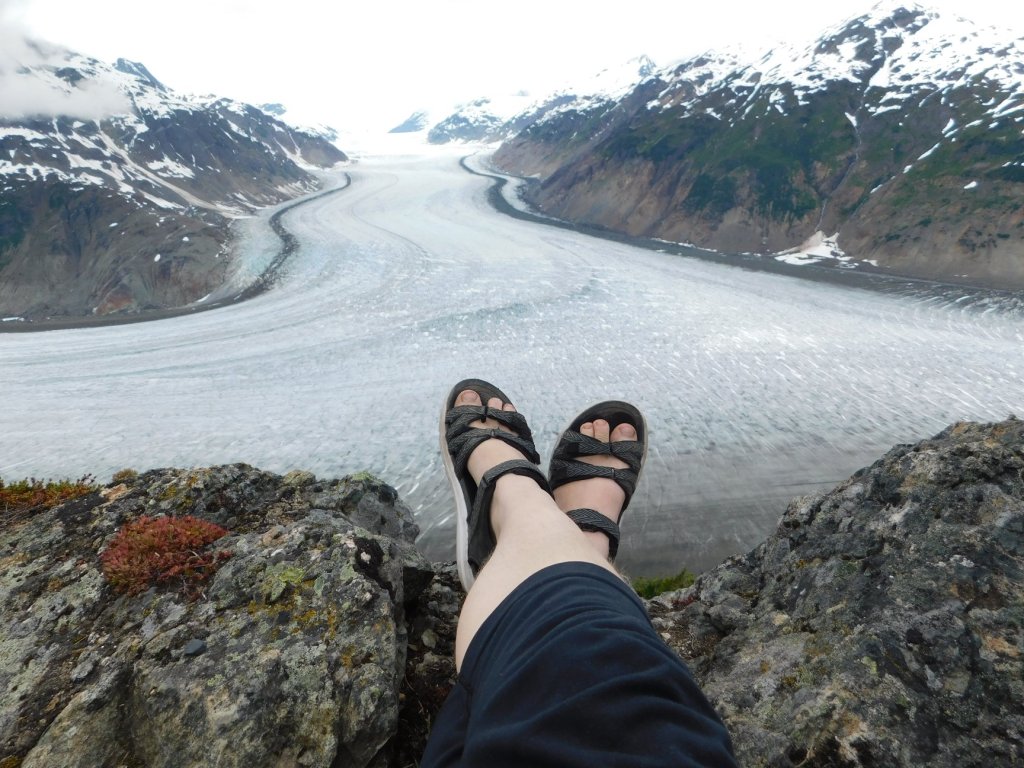
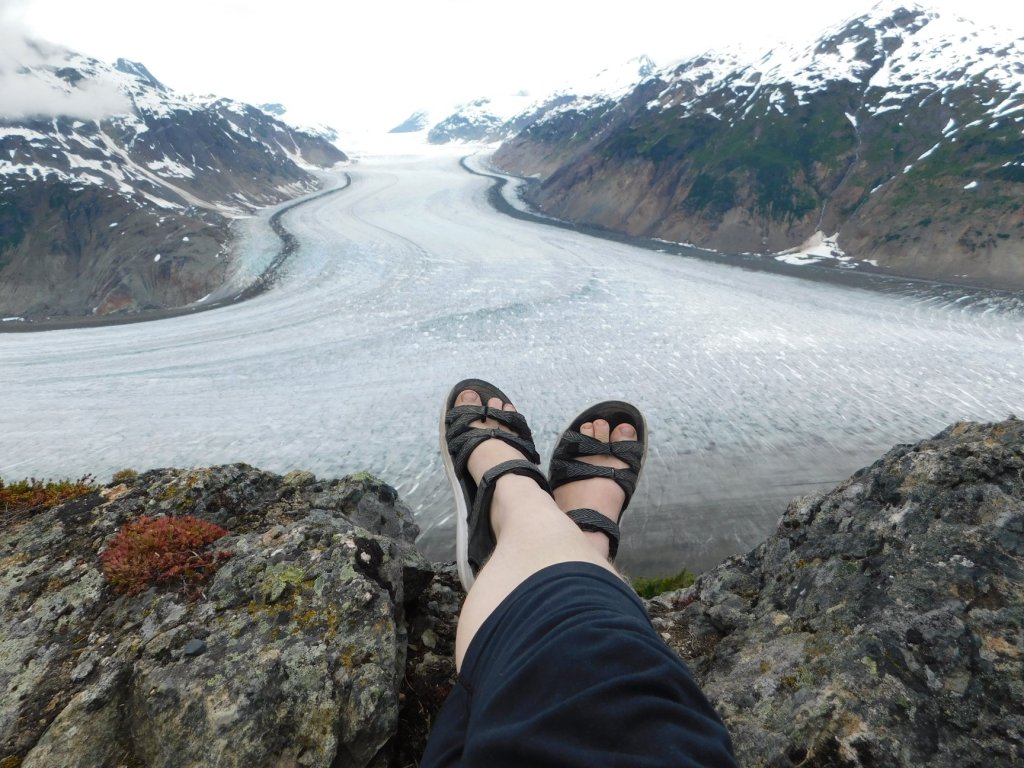
I had them on gold panning outside Anchorage (real prospecting is unglamorous!), watching the sun barely dip at 3 a.m. in that surreal twilight, and waiting for grizzlies at Fish Creek Wildlife Observation Site near Hyder. They climbed me to Salmon Glacier’s overlook, where I captured a magical shot—the straps already molded perfectly to my feet by then.
Homestead Life + Pregnancy Companion
Then life shifted from road maps to roots. Several months post-honeymoon, those same sandals walked our first homestead property. I squished through soft ground, stepped over pasture patches, and imagined gardens and animal pens. Soon after, pregnant with our son, they carried my slight waddle across that future home—trading Alaskan rivers for tall grass and fence lines.
Shoes That Lived My Story
They lasted several more seasons through new-mom routines—feedings, chores, sunset walks on our land. When frayed straps finally gave out, letting go felt like closing a chapter: newlywed adventures, homestead dreams, pregnancy possibility.
Replacements looked similar but lasted one season, not four. They didn’t live the same story.
When I think of my favorite travel shoes, they’re about transformation—from glacier overlooks to growing our family and homestead. They carried newly married me toward the life I’d only dreamed of.
Do your favorite shoes have a story? Let me know in the comments!
What’s YOUR favorite shoes story? ❤️ Like if sandals = life chapters 👶 Share with someone who loves Alaska travel stories 💬 Drop below: Hiking boots? Wedding shoes? Pregnancy sneakers?
Loved this? Subscribe for weekly homesteading tips:
I lived in my dream home once. Five perfect years on eighteen acres that felt more like a nature preserve than a homestead.
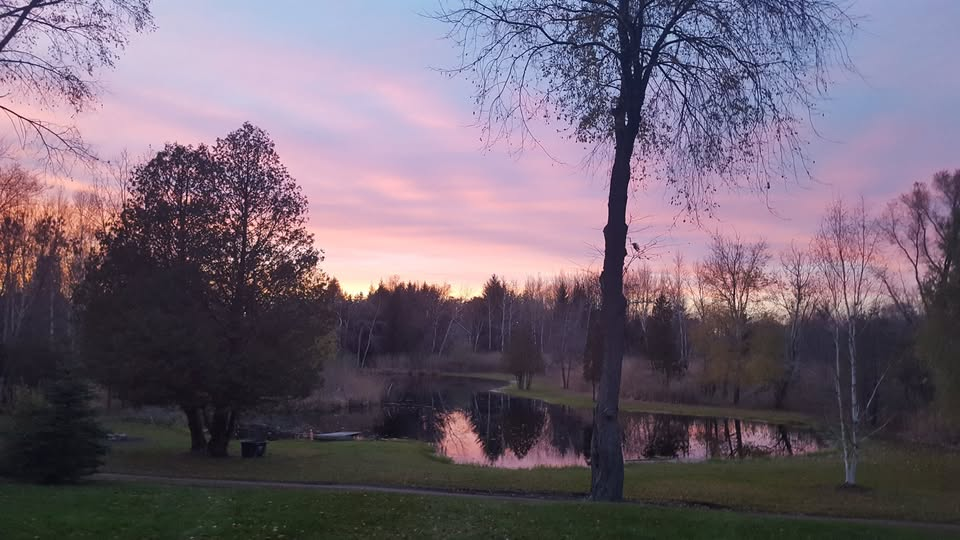
The property sat so far back from a quiet road you could barely hear traffic. Wetlands hugged the front entrance, a half-acre pond sparkled right outside my kitchen window, and open fields rolled out behind the house. My husband and I would wander at dusk, holding hands, and catch our breath watching deer bound through the brush or minks slip through the water. Early spring mornings, we’d sip coffee at that kitchen window watching territorial geese squabble fiercely over pond space, then just weeks later cheer as fluffy goslings bobbed behind their parents. Our three-year-old thought he’d discovered paradise—he’d spend hours crouched in mud, catching frogs and running them up to the house like Olympic gold medals, muddy hands and all.
View of our pond outside the kitchen window.
Inside felt just as special. The split-level house sat partially underground, which kept temperatures steady through brutal summers and icy winters. Downstairs, a stone fireplace became our winter sanctuary. We’d lose entire evenings to its crackle and glow, or turn Sunday afternoons into smoky feasts—grilling chicken right there over a makeshift setup, eating straight off paper plates while the fire warmed our backs.
Upstairs opened into something magical. Reclaimed board ceilings gave it soul. A balcony hung right over the pond view, helping me transition to work from home as I took phone calls while watching hummingbirds dart past. And the south wall? Pure windows. We called that space the plant room. On the grayest February days, I’d stand barefoot in that flood of sunlight and swear spring had snuck in early. That light. I still miss that light.
But even dream homes come with strings attached.
Spring rains turned our long driveway into a lake because of those front wetlands. The previous owners built it themselves, and you could tell—endless quirks and half-finished details everywhere. I called it our “teenage house.” Thirty years old. Just old enough for all the newer systems to start failing, but not old enough to have the solid bones of those century farmhouses I love.
We stretched our budget to buy it, paying more than we planned. The shed out back could barely fit my husband’s equipment, and there wasn’t realistic room to expand. Slowly but surely, our days shrank down to just three things: parenting, working, fixing. We were running on a treadmill to justify living in paradise, too exhausted for the actual living part.
After five unforgettable years, we made the hard call. Sold it all. Downsized to a fixer-upper we could actually afford and breathe in. Do I miss that house? Every single day. The pond at sunset. The plant room light. Our son’s frog-hunting grin.
But here’s what we gained: homestead life with breathing room. This smaller homestead now keeps more animals than those 18 acres ever dreamed of. Our homestead garden produces more than double what we grew back then. Now, we’re outside together—hands in the dirt, teaching kids to plant, actually enjoying the slow rhythm we moved here for.
My definition of dream homestead changed. It used to be postcard-perfect acreage and a house that bathed you in light. Now? It’s a place that fits how we actually live—room for animals, kids, projects, rest, and each other. Sometimes you walk away from your first dream home to build the homestead life that lets you actually live the dream.
Have you ever left a “dream” situation for something better? What’s YOUR dream homestead?
Like + share if this resonates—I’d love to hear your story below!
Loved this? Subscribe for weekly homesteading tips:
Simplicity isn’t about doing less — it’s about noticing more. My ideal day on our little homestead is built around that truth. It’s a day where time stretches wide, full of laughter, sunshine, and slow, simple living.
Morning Calm and Connection
The day begins the way I love best — with toddler kisses, a sleepy hug from my six-year-old, and my husband beside me. Before the world fully wakes, we take a quiet moment to breathe together. There are no alarms, no emails, no errands pulling us away. The only plan is to move through the day at a gentle rhythm, enjoying each other’s company and the sweetness of home.
Breakfast and the Beauty of Routine
Breakfast is a family affair. My husband gathers eggs while I grind coffee beans and brew a fresh pot. The kids take their favorite jobs — cracking eggs (usually with some shell), preparing pancake batter, and frying bacon. We cook with the windows open, sunlight pouring in and the sound of birds joining our morning conversation.
The meal is simple and colorful: fresh eggs, pancakes, and bacon from last year’s pigs. It takes longer, but it’s richer in every way because we do it together.
Hands in the Dirt, Hearts at Ease
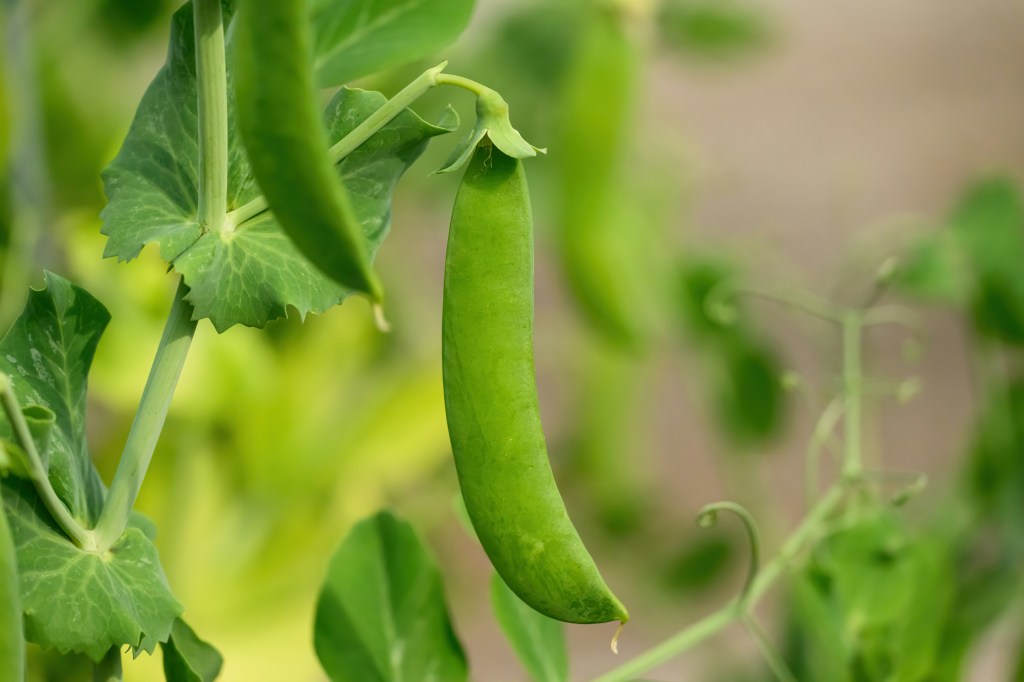
After breakfast, my husband heads out to refill the animals’ water tanks and check the garden fences. Meanwhile, the kids and I harvest what’s ready — sun-warmed tomatoes, crisp cucumbers, and snap peas that rarely make it to the kitchen. We feed the chickens, pick up toys outside, and pause often to feel the warmth of the day settling in.
The work hums softly in the background; it’s grounding, steady, and quietly joyful — the soundtrack of homestead life.
Raising Kids on a Homestead
By late morning, the chores shift to play. We might pack up for an outing — a trip to the library or a shady walk by the Horicon Marsh — or stay close to home and make our own adventure. My husband and son might build something simple, like a birdhouse or garden trellis, while my daughter and I mix water, flower petals, and herbs in the “mud kitchen.”
These are the moments where raising kids on a homestead feels magical — learning through exploration, imagination, and plenty of sunshine.
Building Homestead Community
Around noon, our neighbor stops by with a bag of fresh Amish bakery treats. He stays for a half hour just to chat at the kitchen table while the kids dart in and out. We sip lemonade and trade stories about gardens, weather, and local goings-on.
These spontaneous visits are at the heart of homestead community — the easy, come-as-you-are friendships that summer invites. When he heads out, we make a quick lunch of garden sandwiches and homemade pickles, laughing over whose plate is the messiest.
The Rhythm of Slow Living
The afternoon drifts by in that perfect blend of rest and play. My toddler naps, the older one curls up with a book or joins my husband hoeing the garden, and I steal a few quiet minutes with a book on the bench outside our door. Later, we cool off in the sprinkler, make homemade popsicles, or pick raspberries from the patch.
The hours stretch unhurried — each one filled with that golden kind of peace slow living on a homestead offers.
Simple Suppers and Summer Evenings
As evening settles, supper becomes another shared project. My husband fires up the grill while I toss a big garden salad and slice the first broccoli of the season. The kids set the picnic table beneath the maple tree. We eat outside, barefoot and happy, surrounded by the hum of summer — crickets chirping, bees buzzing, and the sky fading into soft pink.
After dinner, we linger. Sometimes it’s s’mores over the firepit, other nights it’s catching fireflies or telling stories under the stars.
The Gift of Enough
When the kids are asleep, my husband and I share a quiet moment on the park bench — two cold beers, warm night air, and a shared silence that says, “This is exactly where we’re meant to be.”
These days remind me that simplicity isn’t a destination; it’s a daily choice — a rhythm we return to when life feels too loud. Most of us don’t get many days like this, but even small pieces of them are enough to steady the heart.
This is my ideal summer day: no deadlines, no projects, no rush. Just the four of us growing food, raising kids, building community, and living a simple homestead life that teaches us how beautiful “enough” really is.
💬 Tell me about your ideal summer day! What does simple living look like in your home or community? Share your thoughts or your favorite summer traditions in the comments — I love hearing how other families find joy in the everyday.
💚 If this post resonates with you, please like and share this post to spread the message of simple, grounded living.
Loved this? Subscribe for weekly homesteading tips:
Disclosure: This post contains affiliate links. As an Amazon Associate, I earn from qualifying purchases. Thanks for supporting Practical Homesteading!
There’s something special about meals that tell a story. The kind of food that’s more than a recipe — but part of life. For us, that story came together in one simple dish: a homemade venison stir fry. It started months ago in the garden, wound through a winter greenhouse, and ended at a table surrounded by six hungry, happy faces. This wasn’t only food, but it a reminder of why we homestead in the first place.
A Stir Fry That Tells a Story
We had venison stir fry for dinner recently, a meal that smells like effort and tastes like reward. Stir fry always means chopping, sizzling, and a little chaos in the kitchen, but every bite feels like celebration. The dish is never quite the same for us. It shifts with the seasons and whatever our garden and freezer produce. That’s part of its beauty — it’s a living reflection of our homestead.
From Seed to Skillet
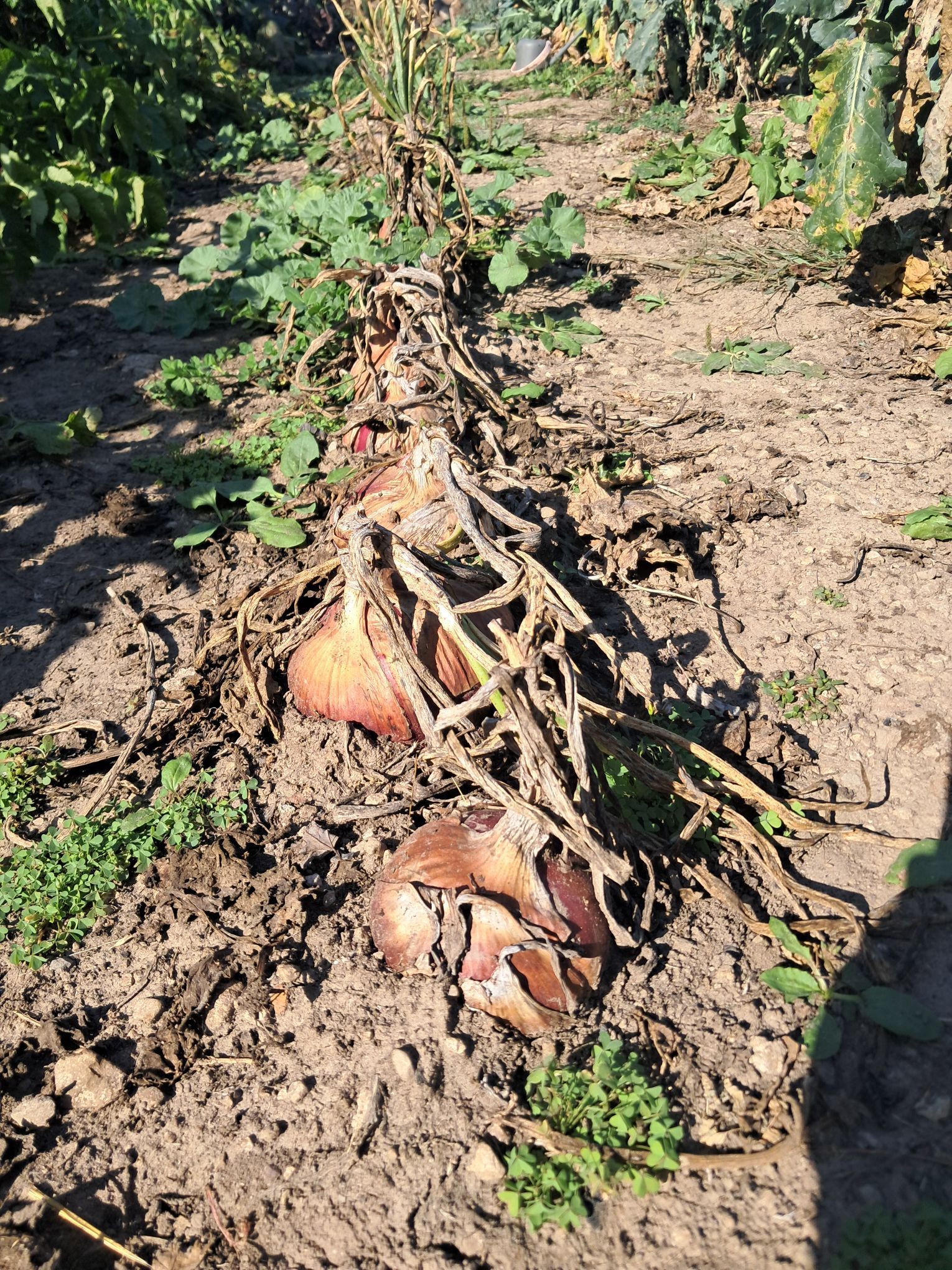
The story of this particular stir fry starts late last winter when we started onion and pepper seeds inside. We watched them grow, and my son delighted in trimming the onion shoots to give more life to the roots. Come spring, we pressed carrot seeds into the earth and transplanted our onions and bell peppers. By summer, our days smelled sweet and green. My kids loved pulling up carrots, brushing off dirt, and biting in right there in the garden. Their juice was sweeter than candy. The onions swelled to the size of softballs. When their stalks dried, we cured them in the basement. Then we set them inside old fruit crates beside jars of last year’s preserves. Peppers overflowed in waves of green, so I bagged and froze them for colder days.
Onions as they first sprouted from the ground.Mature onion, ready for harvestPeppers galore!
Homesteading tip: Frozen bell peppers don’t need blanching. To preserve, just slice, seed, and freeze them raw for perfect stir fry texture later. Onions can be cured and placed in a cool dark place to keep over winter.
By November, we tucked our last carrots under straw, the soil still holding its warmth like a secret.
Winter’s Sweetest Harvest
In December, I scraped away snow and straw with my bare hands to dig some carrots. (A mistake I won’t repeat — frostbite nearly earned an invitation to dinner.) My son peeled them eagerly, and when we tasted the first one raw, its sweetness floored us. Cold turns carrots into sugar. They’re winter candy disguised as vegetables.
Homesteading note: A thick straw mulch keeps carrots from freezing and lets you harvest them into early winter.
Winter carrots
Greenhouse Gold
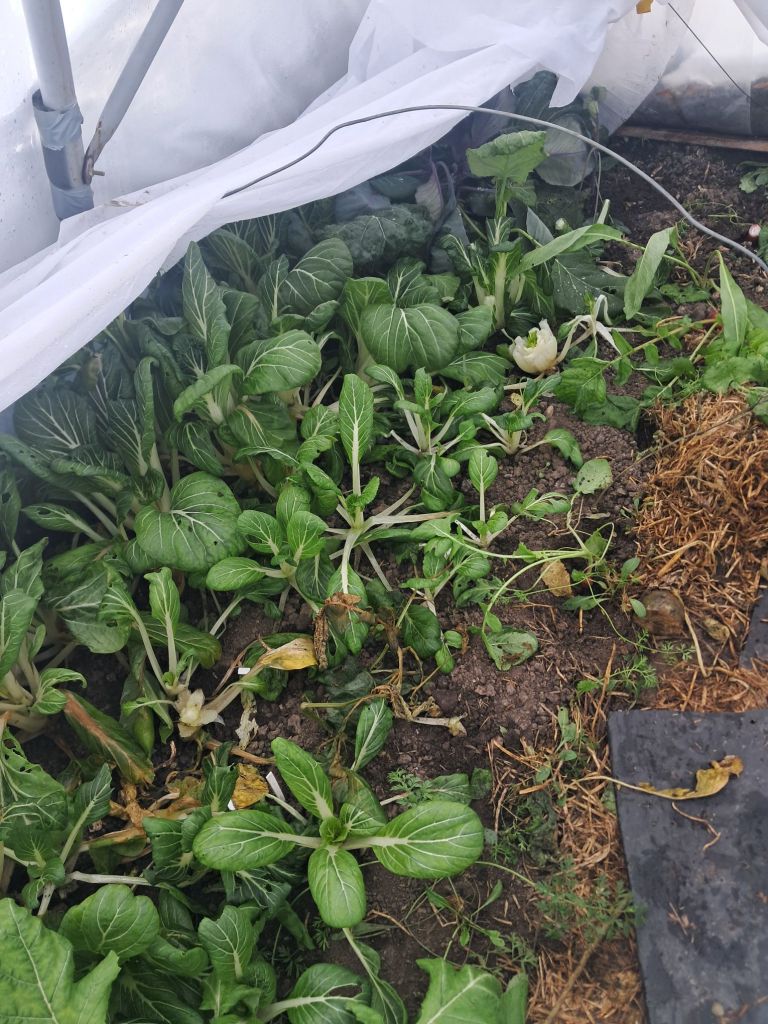
The bok choy came from a new experiment. I helped my experienced friend start a winter garden. I still remember stepping into her small greenhouse surrounded by snow. The chill outside vanished into crisp air that smelled of soil and life. Beneath soft covers, green leaves glowed faintly in the filtered light. Harvesting bok choy in December felt like a small miracle.
Winter gardening tip: A simple plastic-covered hoop house and landscape fabric over each row can extend your growing season by months. The flavor difference in fresh winter greens is unbelievable.
Bok choy harvested in December
Family in the Kitchen
Cooking became a family affair. My daughter stood at my side, eyes watering over the cutting board, proudly dropping onion slices into the container as I sliced them with this knife (affiliate link). My six-year-old son learned how to make rice that night — a big responsibility. We’d bought the rice from our local scratch-and-dent store for much less than retail. It wasn’t something we grew ourselves, but it was another way to live intentionally, supporting local businesses and stretching our budget.
He measured the rice, water, and bouillon with quiet focus, stirring carefully to break up every clump in the pressure cooker (affiliate link). Watching his concentration, I realized that learning to cook simple staples might be one of the best skills a homesteader’s child can develop.
Parenting philosophy: Give your children small but meaningful jobs in the kitchen as you cook. It takes the burden from you to endlessly entertain them, and they learn real life skills.
Wild Meat, Real Gratitude
The venison came from the road. This deer was recently hit by a car, and my husband found it on his way to town one chilly fall day. He hauled it home, and that night he and his dad processed every usable piece. We made jerky from some and froze the rest for meals like this. There’s a quiet satisfaction in knowing exactly where your food came from, in salvaging instead of wasting.
Homesteading philosophy: Nothing should go to waste. This includes an animal, harvest, and opportunity to teach your children how to create value from what’s available.
From Skillet to Supper Table
When it was time to cook, I sliced the venison thin while half-frozen and marinated it overnight. The next day, the meat hit the hot skillet (affiliate link)— hissing, sizzling — browning into tender, caramelized pieces. My kids stole bites faster than I could cook them.
Cooking tip: Slice meat against the grain while it’s half-frozen for cleaner cuts and more tender results. This small trick makes all the difference with lean game meat like venison.
The vegetables followed: frozen peppers releasing water that deglazed the pan. The onions soaked up the sauce until they were golden brown. The carrots softened just a bit. The bok choy folded gently into the mix. The whole kitchen filled with the earthy perfume of garlic, soy, and family.
Six Around the Table
By dinner, the six of us — our little family and my husband’s parents — gathered around a steaming pot of rice and a glossy pot of stir fry. It wasn’t just delicious; it was ours — every part grown, harvested, found, or crafted by hand. That’s the heart of homesteading for me. It’s not simply saving money or knowing what’s in your food. It’s seeing how the garden dirt beneath your nails, a salvaged deer, and a child’s curiosity can all end up in the same bowl. It’s nourishment that carries the story of your family’s seasons.
Homestead Notes
Preserve what you grow: Freeze peppers raw and store onions in breathable boxes.
Extend your harvest: Straw-mulched carrots and cold-frame greens can provide fresh food even in winter.
Use what you have: Venison, garden vegetables, and discounted pantry staples can turn a simple meal into a story.
Teach through involvement: Kids remember the meals they helped make far more than the food they simply ate.
If our venison stir fry story stirred something in you — a memory, a craving, or just a bit of inspiration to slow down and cook what you grow — we’d love for you to join our little homestead circle.
Click like if you enjoyed this story. Share it with someone who’d appreciate the journey from seed to supper. Subscribe to follow along as we grow, cook, and live season by season.
If you love making your own food from scratch, this homemade venison jerky recipe is a must-try. Whether you’re a hunter processing your latest deer or simply someone looking for a leaner, high-protein alternative to beef jerky, this step-by-step guide walks you through every stage: from processing and seasoning to smoking and dehydrating. We even…
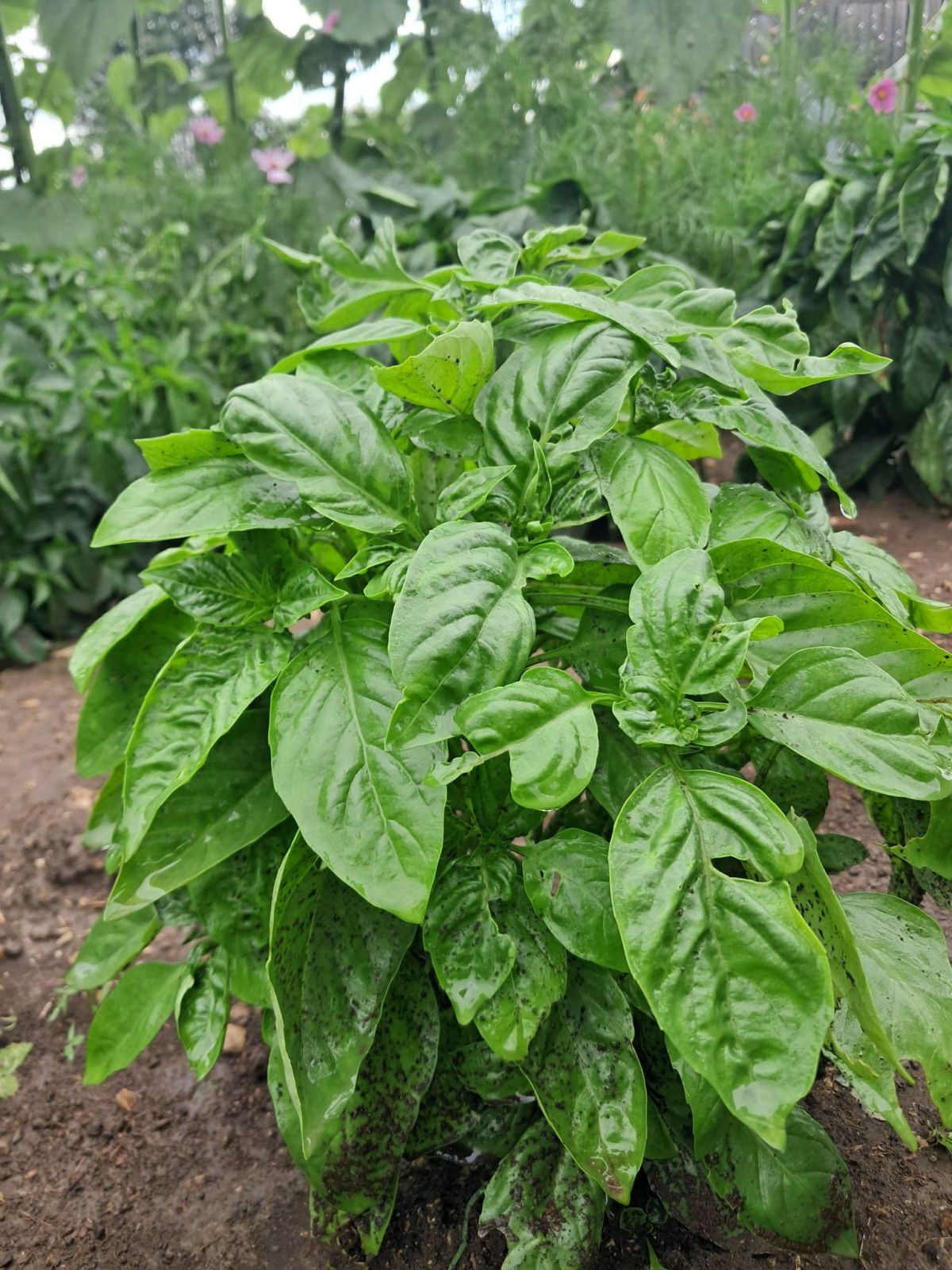
A 2025 garden reflection full of lessons, surprises, and laughter—one-pound onions, overflowing basil, hybrid watermelon mishaps, and happy pigs. Discover the stories and takeaways from our most rewarding gardening season yet.
The soil was cooler than I expected when I slipped a broccoli seedling into the ground. September isn’t when I usually think about planting—it’s when I imagine gardens winding down, not continuing. For me, gardening has always belonged to summer: long days of pulling weeds at dusk, arms full of cucumbers, nights spent rushing to…
The crunch of gravel echoes under the car tires as I set out for what has become a cherished ritual: a short drive to the nearest beach. It’s funny. When people ask me if I prefer the beach or the mountains, the answer isn’t as simple as it seems. It’s never really been about the stunning landscapes or sweeping views for me. It’s about how these places fit into the messy, beautiful chaos of my life right now.
Living in Southeastern Wisconsin, the mountains feel like a faraway dream—the closest being nearly 800 miles away. That distance means days of careful planning and long hours on the road. Add to that a husband who prefers the comfort of home, a lively 6-year-old bursting with questions, and a fearless 2-year-old who demands constant attention. The mountains—with their towering peaks and crisp, cool air—are breathtaking. But for us, they exist more as a distant escape than a feasible weekend plan.
On the other hand, Lake Michigan beckons like a constant friend. Its vast stretches of blue only a short forty-five-minute drive away. Sometimes, I even go on my own with just the kids—escaping into that familiar comfort whenever I need it most.
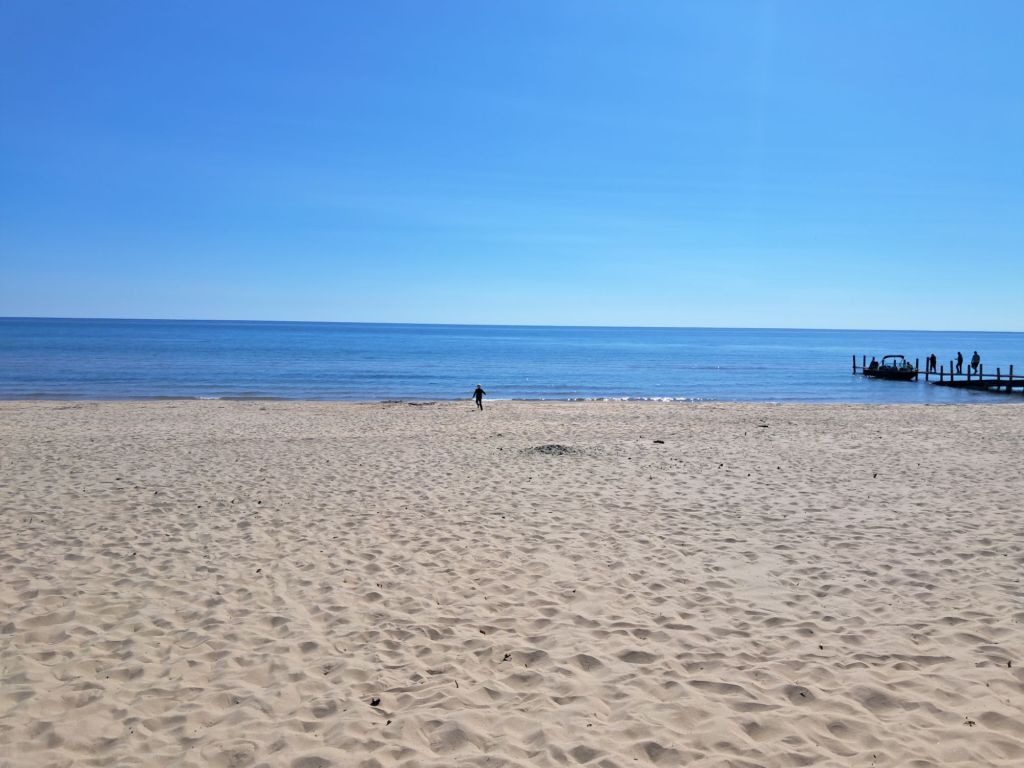
Pulling into the parking lot, I inhale deeply: the fresh tang of lake water mingling with sunscreen and the earthy aroma of pine trees bordering the beach parks. The warm sand cushions my feet as the kids sprint ahead, their laughter weaving through the calls of distant seagulls. I spread our picnic blanket on the sand near the shore. Then I watch my husband lean back, eyes closed, a rare and peaceful smile crossing his face. In that moment, I see what this place really means to us—it’s not about grandeur, but about ease and presence.
No elaborate packing lists, no complaints about long drives or restless children. We dive into the spontaneous joy of splashing in waters that are crisp but inviting. We build sandcastles topped with shells, and simply soaking in uninterrupted family time.
Choosing between beach and mountains might sound like deciding between two types of beauty. For me, it’s about the heartbeat of everyday life. The shore is tangible and near—a source of small adventures and lasting memories without the stress of far-flung travel. The mountains will always be there, a majestic possibility for the future. But for now, the beach is where we belong: close enough to visit often, yet vast enough to still feel like a treasured getaway.
What’s your favorite escape — beach or mountains? And how does that choice fit into your life and family? I’d love to hear your thoughts and stories in the comments below!
If you enjoyed this story, please hit like. Share it with someone who loves the outdoors. Subscribe for more personal essays about family, nature, and finding joy close to home.
There’s a month each year that feels like an awakening. It’s the bridge between the quiet of winter and the warmth of summer. Mornings still hold a trace of chill, but the afternoons fill with soft sunlight and the scent of growing things. Lawns turn lush almost overnight, trees leaf out in a rush, and every breeze carries life.
It’s the season when the world feels generous. The lilacs bloom and perfume the air. The smell of freshly tilled earth lingers after rain, rich and full of promise. At local markets, the first asparagus appears, bright and green, and on weekend mornings, I wander through the woods searching for morel mushrooms hidden in the damp leaves. Each small find feels like a sign that the year is turning toward abundance.
This is also when I start to dream about summer—camping trips, evenings outside with friends, the first meals eaten under open sky. The days grow longer, and with them, my sense of possibility swells. Even something as simple as walking outside in a T-shirt after months of layers feels like freedom.
This month, alive with growth and memory, also carries personal meaning—it’s when I got married, surrounded by blossoms and soft light. The world seems to celebrate right alongside me each year as it blooms again.
My favorite month is May.
Thanks for taking a walk through my favorite time of year with me. If this story brought to mind your own favorite month or ritual of renewal, share it in the comments—I’d love to hear it.
And if you enjoy reflections on nature, food, and the changing seasons, don’t forget to like, share, and subscribe for more.
Out in the pasture, instinct moves faster than thought. The herd already knew what I hadn’t yet seen: today was a day of renewal.
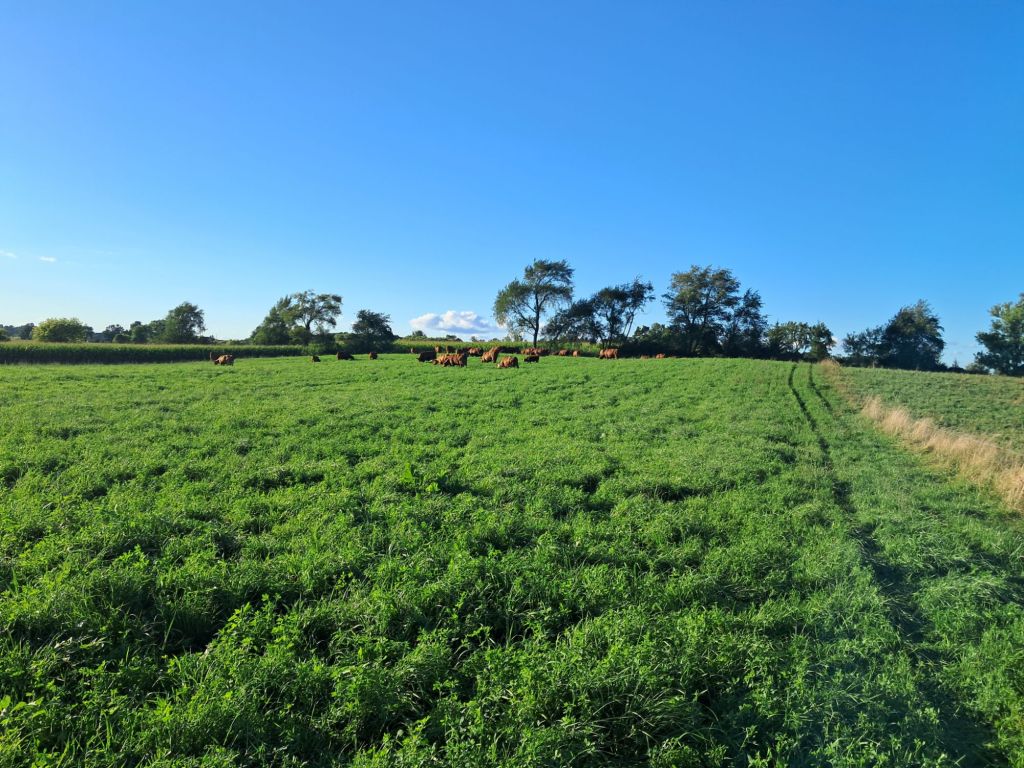
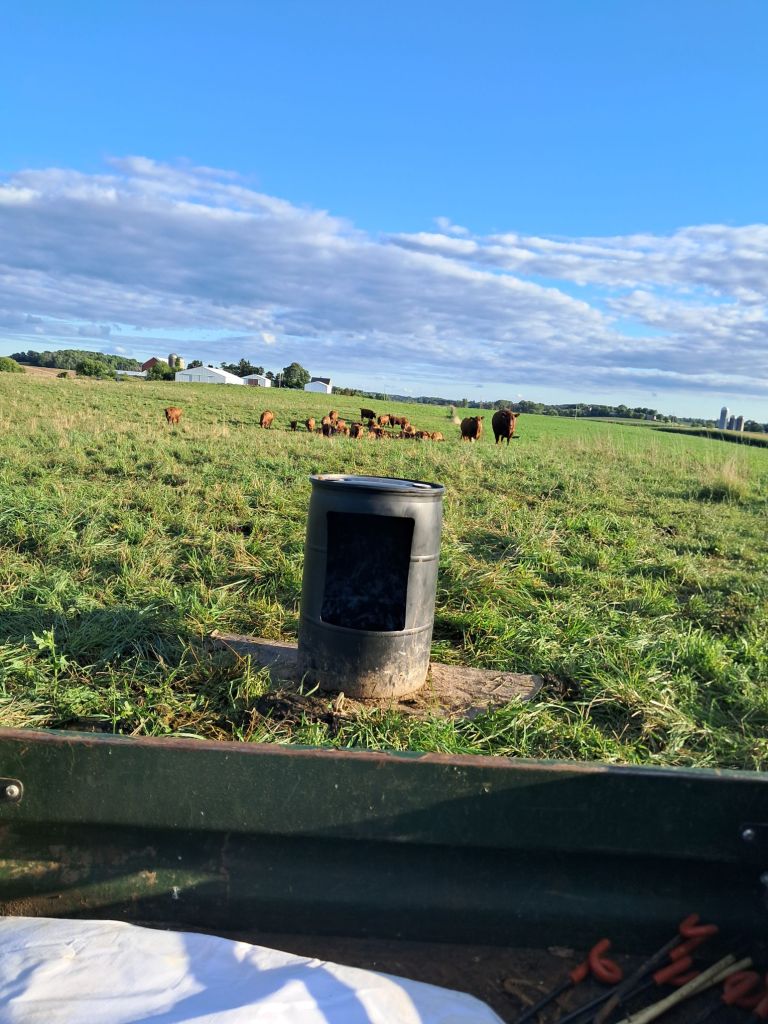
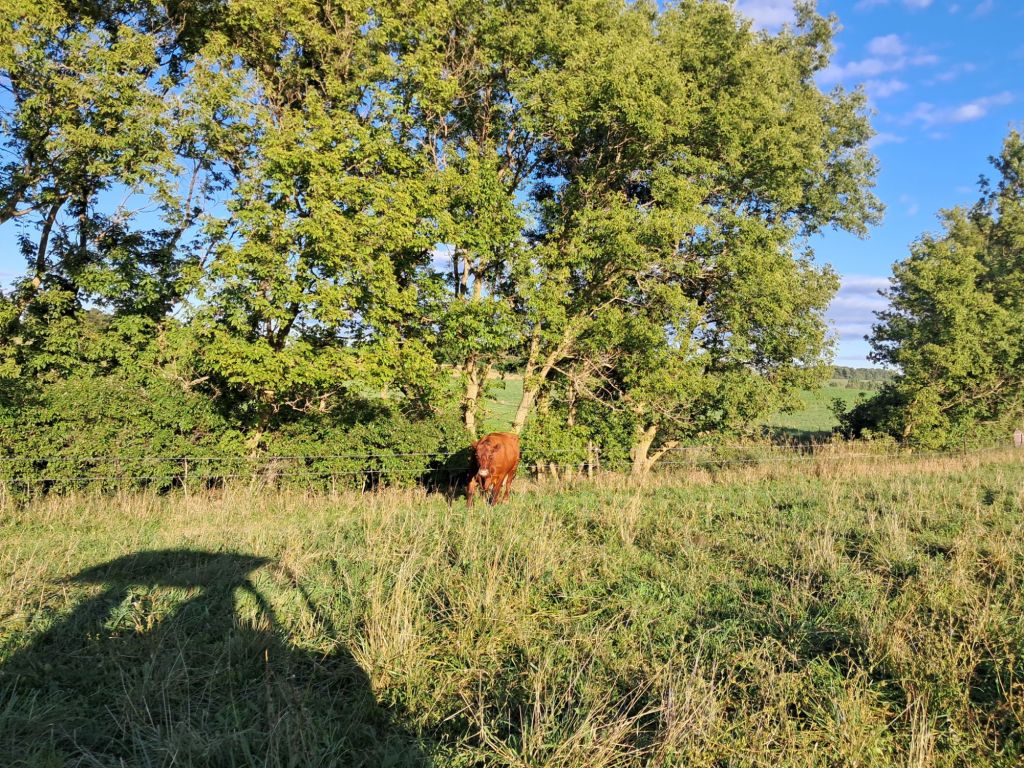
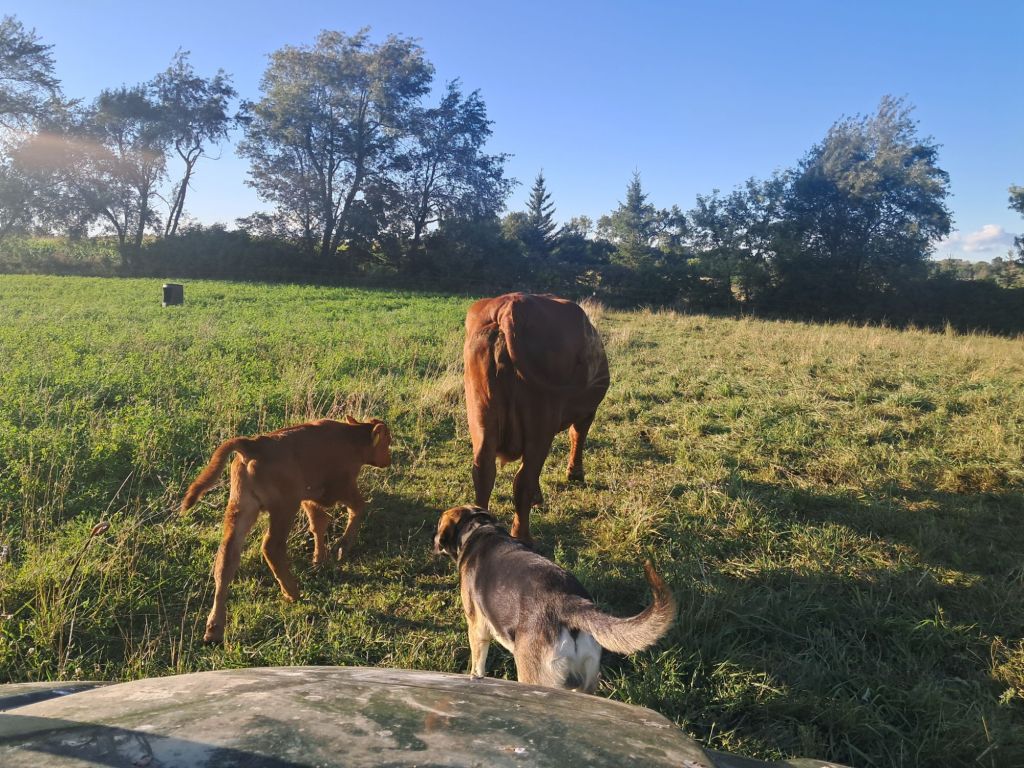
The moment our UTV rolled across the pasture, forty Red Angus beef cattle lifted their heads in unison. Mothers stood shoulder to shoulder, calves pressed between them, and the lone bull kept watch a few steps behind. They had gathered tight against the slender electric wire that marked the edge of their world, eyes wide and ears twitching—already waiting. They sensed what I had yet to see: fresh pasture was coming.
A Dance Between Herd, Land, and Hand
My sister didn’t waste time with explanations. She tipped the empty water tank, wrestled it into the adjoining paddock, and clipped on the hose. With a metallic clink, she fastened the UTV to the mineral feeder and dragged it through the open gate like a sled over grass. Over the hum of the engine, her practiced voice carried, bright and firm: “Here, bahsy!”
For a heartbeat, the herd froze. Then one bold cow stepped forward. In an instant, the rest followed like a living tide. All except one.
The new mother lingered. A week ago she had calved, and her baby—small enough to slip beneath the wire—now stood stranded on the wrong side. The cow lowered her head and called, a deep-throated sound stitched with both command and worry. We had just started toward the calf when his spindly legs carried him scrambling back under on his own. The tension melted. She met him with a fierce gentleness, nosing his flank until he steadied beside her. My sister laughed, remembering a calf that roamed for three days before finally wandering home. “Guess they all want adventure,” she said, amused, half exasperated.
The dog launched next, circling fast and sharp to tuck mother and baby back into the surge. Together they flowed through the gate, spreading across the new paddock where muzzles dropped at once into the alfalfa. They tore off lush green mouthfuls while a few calves sprang into stiff-legged kicks, joy breaking loose through their bodies as they danced across their “salad bar.”
Roots, Renewal, and the Rhythm of Stewardship
What looked like routine was closer to choreography—people, animals, and land moving in time with one another. The cattle grazed, and with each mouthful they scattered fertility. The brief stress of grazing forced the plants to drive roots deeper, bringing resilience and storing carbon. Each careful rotation became a small act of renewal, stitched into a larger cycle of grass, growth, and gratitude.
In winter, the family feeds them hay—baled and wrapped, fermenting sweet and sour until the animals nose into it gladly. Another verse in the same song. But that afternoon, under sun and grass, what struck me most was satisfaction made visible: forty animals, content and humming with life, heads bowed as if in prayer.
The calf pressed against his mother then, reaching to nurse. And as I watched, it dawned on me—this wasn’t just work or habit. It was stewardship, connection, and gratitude rooted in motion.
Your Turn
What everyday work have you seen or done that revealed something deeper than ‘just a chore’? Share your stories in the comments below!
Read, Reflect, and Share
If this story brought you into the pasture for a moment, tap Like. Follow for more stories of land and livestock in harmony. Share it with someone who understands the quiet art of caring for what grows. Your support helps this space grow and reach others with similar interests.
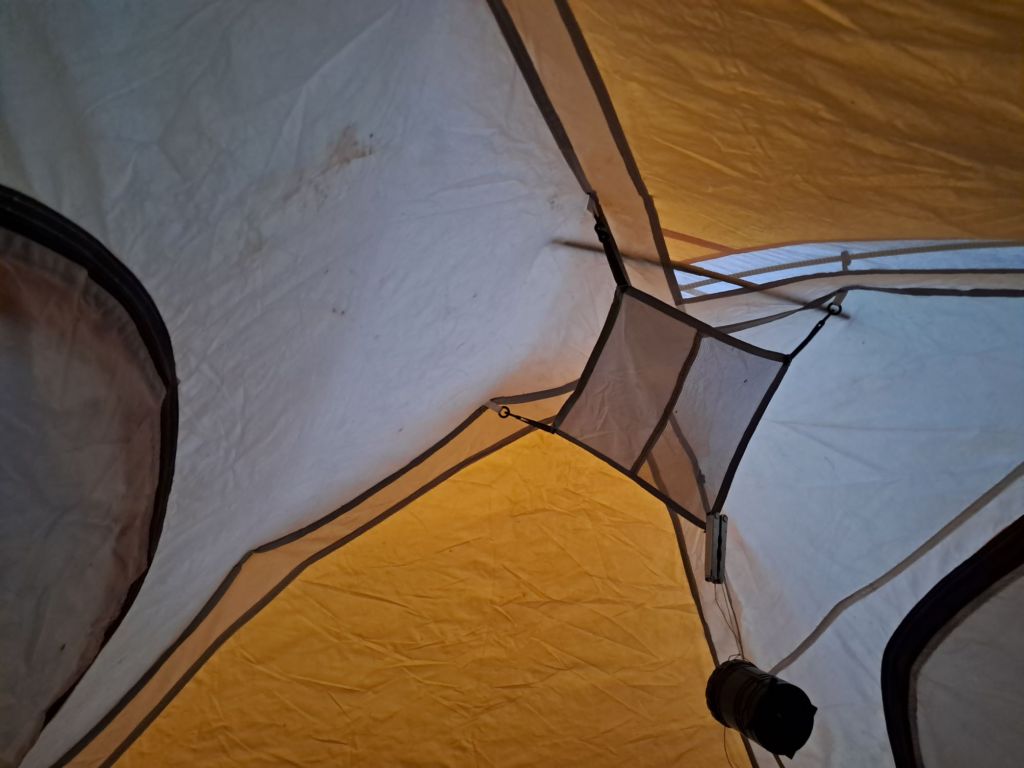
The first sound I remember from that trip wasn’t birdsong or the crackle of firewood—it was my professor’s baritone voice drifting through a soft Michigan mist. Waking to that unlikely serenade, I understood for the first time that geology wasn’t only about rocks. It was about connection.
I was a sophomore then, half-frozen in an April campsite among classmates who still felt like strangers. We shivered through fog, stumbled through tent poles, and passed trail mix in squeaky vans that smelled of sunscreen and coffee. By the time we gathered around cast-iron pots of jambalaya that evening, laughter had cracked the surface. Those strangers were already turning into companions.
That weekend held a dozen firsts—my first field notes, my first tent pitched incorrectly, my first realization that landscapes told stories. Stratigraphy became a language: layers pressed with memory, stone turned to archive. We spent days trudging through mud, tracing formations in notebooks, learning to see the earth as something alive. Nights filled with smoke and banjo chords, the kind of tiredness that makes everything simple, everything good.
Fifteen years later, the same circle still gathers—different campsite, different season, same warmth. We no longer ride in university vans. Now we drive in caravans of minivans and hybrids, dogs panting in the back seats, children singing off-key. Some arrive with spouses, children, and dogs, others with partners who share different rhythms of life. Each presence matters. The ones without kids often become the fresh energy in the group—playing with children, keeping traditions, reminding us that life is not only about caretaking but also about curiosity, independence, and joy on one’s own terms.
The jambalaya has been replaced by pudgie pies browned over coals, each stuffed with cheese, vegetables, and pepperoni. Mornings rise with a tangle of sounds—an infant crying, kids chasing dogs, coffee sputtering in a percolator. The hikes are shorter, the pace slower, but the laughter feels unchanged. We talk about work, gardening, art, and aging parents. Between stories of milestones and mishaps, the old tales surface too—professors coaxing us to read the earth, tents blown loose in South Dakota, the mud and sand that never washed out of our journals.
Geology taught me that layers never vanish; they shift and hold. Those early days formed the base layer of my life: dusty trails, notes stained with wonder, campfires burning into friendship. Above them, new layers rise—my child tugging tent cords, friends trading stories across the fire, dogs circling the light.
Sometimes I still hear my professor’s voice through the morning hush, calling across time. It echoes now in the laughter of friends, the shouts of children, the quiet gratitude of belonging. Like the rocks I once studied, I carry every layer within me. Together, they form not just a good life—but a whole one.
What places or experiences have left layers in your life—ones you still carry years later? I’d love to hear your story in the comments.
If reflections like this speak to you, subscribe below to join a circle of readers who believe in the quiet beauty of memory, connection, and time—one layer at a time.
I didn’t pack bathing suits, beach toys, or even chairs. Just me, two kids—almost six and almost two—and enough curiosity to see what might happen. Some might call it unwise to bring children to the beach without all the usual gear. I half expected chaos myself. But what unfolded that day at Lake Michigan wasn’t stressful at all. It was simple, joyful, and quietly unforgettable.
The night before, on a whim, I decided we’d spend the next morning at a quiet county park along the lake. No boardwalk, no crowds—just open sand and water. To dodge the holiday crush, I aimed for a mid-morning arrival and an early-afternoon departure, the kind of window that still gave us sun but also let my daughter keep her nap.
Even the drive became part of the adventure. Late summer light spilled across the Wisconsin hills, glancing off barns that leaned like tired elbows and threading silver into the rivers. My son sat at the window firing off questions as quickly as the scenery changed: “Why do hills rise like that? Why does the river bend? How do boats float if they’re heavy?” I answered as best I could—part science, part wonder—hoping not for perfect explanations but for him to feel that his questions mattered.
When we finally pulled into the near-empty lot, my daughter was close to dozing off. But one glimpse of sand and water jolted her awake. She squealed, pointing first at the playground, then the waves, kicking her legs until I set her free. Her brother didn’t wait for permission; he sprinted toward the lake, shoes already tumbling behind him like breadcrumbs.
The first steps in were cautious—the water cooler than we expected, toes retreating from the foamy edge. Within minutes, though, hesitation gave way to shrieks of laughter. We sprayed arcs of water, dug down until the sand swallowed our ankles, and filled pockets with chipped shells. My daughter crouched at the edge, giggling as the water tickled her toes while her brother shouted whenever he spotted glints in the sand that might be treasure.
By noon, hunger caught up with us. On a car blanket, we unpacked leftovers—chicken strips and potato wedges—now lightly dusted with grit. A bite crunched the wrong way, and my toddler burst out laughing, calling it “crunchy chicken.” Her brother joined in, and somehow the sand didn’t matter anymore; giggles carried the meal.
Our day settled into small turns and trade-offs. My son itched to dig holes while my daughter tugged toward the swings. I only wanted the luxury of watching them both without rushing. Even at two, she seemed to understand that we couldn’t each get everything at once. But her delighted squeals when the waves nudged her knees softened her disappointment at leaving the playground sooner than she wished.
By early afternoon the trickle of families had turned into an incoming tide—umbrellas, coolers, floaties piled high. We had timed our escape just right. After one last climb, swing, and sandy slide, we gathered our belongings—lighter than most, heavier with tiredness—and headed back to the car.
On the way home, we stopped at cheese store that doubled as an ice cream shop. By the time the highway unspooled beneath us, my daughter had slumped into sleep, cheeks sticky and sun-warmed. My son, eyes bright in the rearview mirror, recounted his favorites—the boats, the splashing, the shells—already asking when we could come back.
That’s when it struck me: we hadn’t missed the beach toys, the swimsuits, or all the elaborate preparation. What we had was enough. More than enough, really—an unbroken stretch of laughter and sunlight stitched together by their curiosity. Parenting rarely feels simple, but that day it did. And that simplicity—the kind that travels home in sandy shoes and chocolate-stained cheeks—is the treasure I’ll keep long after they’ve outgrown my arms.
Have you ever skipped the gear, the planning, or the ‘rules’—only to discover the best family day came from keeping it simple? Share your thoughts below, and subscribe to the link below to join a group of like-minded people.
We stepped through the county fair gates with twenty ride tickets to last the whole day.
To my five-year-old son, they were a golden key to unlimited fun. To me, they were a limited resource — and a math lesson waiting to happen.
The August sun pressed down, bouncing off the metal siding of food carts, warming the air thick with sugar and frying oil. My daughter rode pressed against me in her carrier, legs dangling. My son’s grip on my hand was insistent, his eyes wide at the swirl of lights, music, and cotton candy threaded like clouds on sticks.
Food first. He inhaled a slice of pizza that bent under its own cheese. My daughter and I nibbled golden little corn dogs, dipping them into mustard between chilly, sweet spoonfuls of chocolate malt. Around us, the whole fair smelled like carnival excess — fried dough and roasted corn braided with the faint, earthy whisper of hay from the barns.
In the barns, we slowed. Cool sawdust underfoot. Pigs sprawled, twitching in their sleep. Cows blinked at us, slow and old as if they carried time in their eyelids. Ducks moved like a marching band, utterly synchronized. My daughter pressed her palm against the fence, giggling at the goats’ wiry coats, until my son tugged again: “Can we go see the rides now?” He could hardly hold still long enough to notice the animals.
And so, to the midway. Even in daylight, the rides blazed with flashing reds, blues, and yellows. The Tilt‑a‑Whirl roared and spun as somewhere behind us a game vendor promised, “Everyone’s a winner!”
At the ticket booth, the glossy sign read: $1.50 per ticket, or 20 tickets for $25.
I slipped the bills across and felt the tickets fall into my palm, brittle and new. Twenty was both so many and so few. I crouched beside my son and set the rule: “This is all we have for rides. Once they’re gone—we’re done.”
He looked so serious, nodding in a way almost too mature for him — and then, in the same breath, he pointed at the Ferris wheel, towering and slow, irresistible.
“That costs twelve just to get us all on,” I reminded him. More than half, for one spin.
He thought hard. I swear I could see the weight of the numbers pressing through his forehead. After a pause: “Hmm… maybe the train?”
And so we boarded the little track, faces shining as we looped past hand‑painted scenery and strangers who waved like old friends. Each ride became a miniature act of accounting. Nine tickets for all three of us. Three if it was something just for him. By the next stop, he was calculating first before I could prompt, as if the tickets themselves had aged him in the space of an afternoon.
We skipped bumper cars (he didn’t meet the height requirement), found delight in a giant slide, and ended at a kiddie racetrack where his laughter spun circles larger than the ride itself. The tickets thinned until only five were left, curling soft in my pocket.
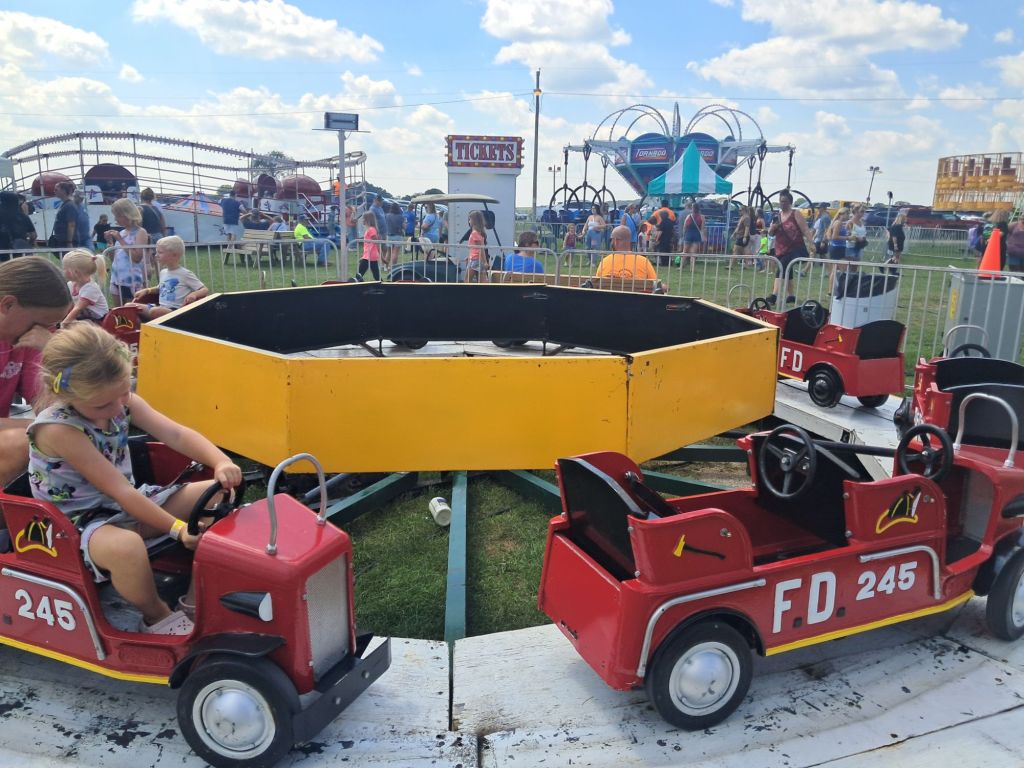
That’s when the firetrucks gleamed at us: bright red, silver bells clanging steadily. My son clutched three tickets with steady hands, climbing in like a child stepping into destiny. My daughter tugged me, wide‑eyed: “Mama, me too?”
The operator leaned on the lever with a grin. “She can ride her own for two.”
Perfect symmetry.
I buckled her in, and when the trucks began to roll, her voice rang out: “Whee! Whee! Whee!” — not polite squeals, but unabashed joy so pure it turned heads. Parents around us laughed in recognition. My son dismounted, flushed and victorious, announcing, “We used them just right, huh, Mom?”
And he was right. The Ferris wheel still turned in the distance, massive and romantic, but I didn’t regret skipping it. Twenty tickets had carried us farther than I’d expected. They had bought laughter, choice, restraint, and — maybe what moved me most — a glimpse of my son practicing something like grown‑up wisdom, while still small enough to believe everything around him was magic.
We left with empty pockets, sticky fingers, tired children. But the memory lingers still — golden as the tickets themselves, and spent exactly right.
Do you have experience with teaching children about money? Share your experiences below, and subscribe to join a group of like-minded people.













 Practical Homesteading