Category: Uncategorized

  • My Mission: Growing Food, Raising Kids, and Building Community — A Path Back to Connection

    My Mission: Growing Food, Raising Kids, and Building Community — A Path Back to Connection

    Daily writing prompt
    What is your mission?

    “We’re stronger together.”
    — A lesson from the land, the past, and the heart.

    Some days, I find myself wondering why I share so much of my messy, joyful, back-to-the-land life. Then I remember—it’s not just a blog; it’s a declaration of purpose. I’m not just learning to grow food or raise livestock. I’m learning to build a life rooted in connection, resilience, and love—the kind of life that feels increasingly rare in our modern world.


    Growing Food

    My mission comes back to the words that guide everything I do: “Growing food, raising kids, building community.”

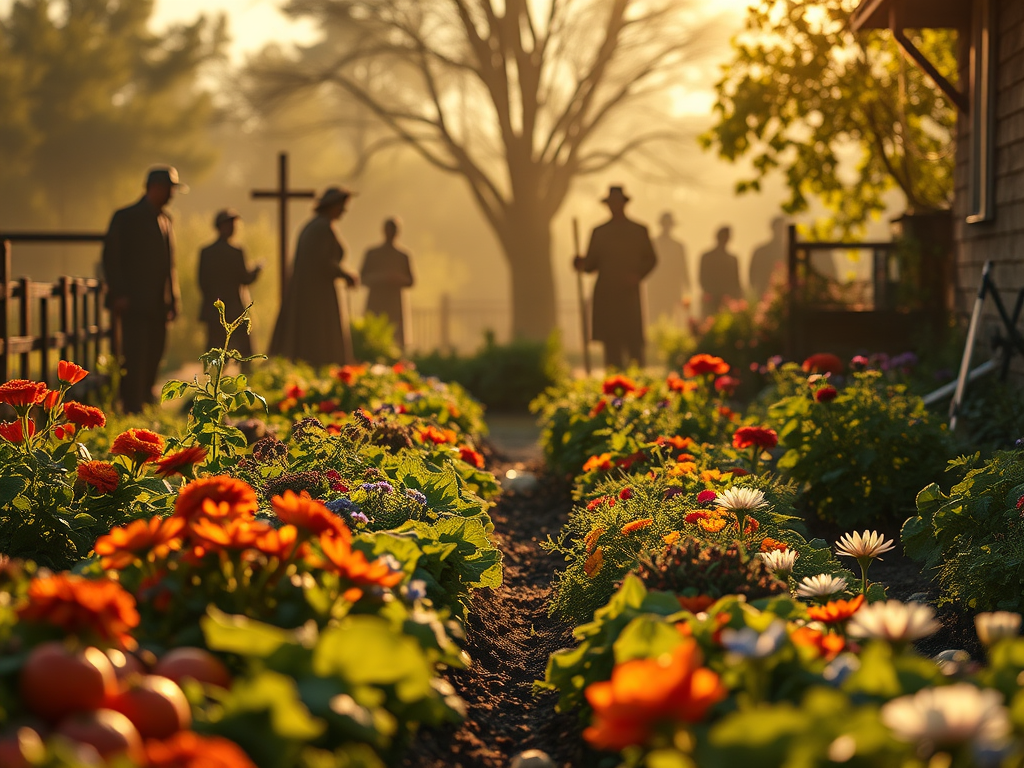
    Growing food isn’t just about self-sufficiency; it’s about slowing down and remembering that life takes time. Whether it’s a full garden, a few backyard hens, or a pot of herbs on a sunny windowsill, each act connects us to the earth and to the generations who worked it before us.

    You don’t need acres to begin—just a seed, a container, and a little sunlight.

    Even one small step can be the beginning of a more grounded life. Each seed planted is a reminder that we can create abundance with our own hands.


    Raising Kids

    Just as tending the garden teaches patience, so does parenting. Homesteading is a classroom like no other—muddy, humbling, and full of wonder.

    It teaches our children what no textbook can: that hard work matters, that life is cyclical, and that family is their safe harbor in a sometimes harsh world.

    My hope is that my kids grow up knowing home isn’t merely a place—it’s a legacy we build with care and intention. Whether they keep chickens, plant tomatoes, or simply carry these values forward, I want them to understand where they come from and who they are.


    Building Community

    And then there’s community—the heartbeat of homesteading and, I believe, our survival as humans.

    American society often tells us that strength comes from independence—that we should manage everything ourselves, and outsource what we can’t, because we’re too exhausted to do it all. But that version of “strength” leaves us burned out and disconnected.

    True strength doesn’t grow in isolation—it blossoms in interdependence.

    Sometimes that means swapping seeds or recipes; other times, it’s checking on a neighbor or being brave enough to ask for help. We were never meant to do this alone.


    Lessons from the Past

    When I think about how far we’ve drifted from those roots, I can’t help but look back with respect. Our great-grandparents understood community in ways we’ve forgotten.

    Their lives weren’t easy—many faced relentless hardship. I once read about children in rural Wisconsin in the 1930s who walked miles to town barefoot, carrying their shoes so they wouldn’t wear them out. They’d put them on only once they reached town, because those shoes had to last—and often be passed down to the next child.

    Those stories remind me that while the past wasn’t perfect, it carried wisdom worth keeping. People ate real food, raised resilient children, and looked out for their neighbors. They knew that survival wasn’t just about grit—it was about connection and care.


    Planting Hope

    In the end, that’s what I want my life—and this blog—to reflect. I want to inspire others to live intentionally, grow their own food, raise their families with love, and reconnect with the people around them.

    Because when we nurture the soil, our children, and each other, we’re planting more than gardens—we’re planting hope. And in that hope, we rediscover a simple truth our ancestors never forgot:

    We are always stronger together.


    Now it’s your turn. How do you balance modern life’s demands with a desire to live more simply? Tell me about it in the comments. Let’s start a conversation!

    If this post spoke to you, I’d love for you to help the message spread:

    💬 Share your thoughts in the comments — I truly enjoy hearing your stories.

    💚 Share this post with a friend who believes we’re stronger together.

    🌾 Subscribe to the blog for more reflections on growing food, raising kids, and building community—one season at a time.

    Related Posts

  • Homestead Longevity Habits: Growing Food, Raising Kids, Real Life

    What are your thoughts on the concept of living a very long life?

    Do you want to live to 100—or just live well until 98, still gathering eggs with grandkids?

    I don’t know if I’ll get there, but my great-grandfather did, according to my Dad. He was lucid and mobile nearly to the end. In my mid-30s, I’m stacking practical habits on our homestead to increase those odds: growing food, raising kids, building community.

    My Daily Longevity Playbook
    Stress reduction starts by cuddling with my kids—reading to them works better than any app.

    I aim for a half-hour outside daily, walking our land or talking to friends on the phone. Friendships faded for years after college, but now I’m rebuilding. I pursue projects with neighbors, a monthly book club I love (the reading! the conversations!), and a local women’s business group. These are the bonds that science says add years to your life.

    Food comes mostly from our backyard or my hands. Kneading bread with kids’ sticky fingers. Simmering soups from last week’s harvest. My toddler daughter prefers kitchen chaos—stirring, measuring—over outdoor chores (though she squeals for eggs). These moments teach more than nutrition.

    Movement stays simple. Fifteen minutes most mornings. Hauling feed sacks, chasing little legs—it builds bones that last.

    We’re saving more than 15% now—no desks at 90. Self-reliance cuts costs. Growing our own feeds the plan.

    Parenting builds the deepest roots. Our six-year-old folds laundry (grumbling). Toddler “helps” everywhere. These shared chores create memories stronger than birthday cards decades from now.

    Marriage anchors everything. My husband and I have cultivated collaboration—shared goals, complementary strengths. He lifts heavy, builds systems. I tend garden rhythms, kid routines. This divides loads, multiplies joy, limits resentment. Longevity for two definitely beats going it alone.

    Sleep: The Hardest Reset
    Pre-kids, unbroken sleep was default. Now? Night wakings, early risers, worry-spinning mind. Relearning happens slowly: early dinners, screen-free evenings, herbal tea. One solid night compounds.

    What 98 Years Taught Me
    My dad remembers Great-Grandpa’s callused hands still driving around at 95, pipe smoke clinging to his flannel. No protocols—just simple food, steady movement, people who mattered. That’s my blueprint.

    I see myself at 90 on our porch: grandkids gathering eggs, husband rocking nearby, son and daughter helping us, friends sharing harvest soup. That picture fuels every dirt-caked morning.

    The Homestead Longevity Formula
    Growing food, raising kids, building community—these practices stack together, increasing the odds of a long life according to science. Whole foods fight inflammation, movement builds resilience, relationships protect telomeres. I don’t know if I’ll reach 98, but I’m doing what I can to tilt the scales. Truth hits hardest when flour dusts my daughter’s nose or my husband and I split evening chores by instinct.


    Your turn: What’s your one non-negotiable longevity habit amid real life? Drop it below—I might steal it for our place.

    If this hit home, help it reach someone else:
    ❤️ Like if you’re building for the long haul
    📤 Share with a friend fighting sleep battles 
    📧 Subscribe for more Practical Homesteading

    **Growing food, raising kids, building community**—straight to your inbox.

    Related Posts


  • What Could I Do Differently?  Homesteading, Kids Chores, and Friend Connections

    What Could I Do Differently? Homesteading, Kids Chores, and Friend Connections

    What could you do differently?

    I catch myself asking this while scrubbing potatoes at the sink, weeding garden rows, or picking up blocks for the tenth time.

    On our homestead, the work never stops. But lately, I’ve seen a few clear ways to shift — not for perfection, but for more peace, presence, and real connection with the people who matter most.

    Slow My Yes. Guard My Rest.
    Here’s one big change: I’d say yes more slowly. And treat rest like a non-negotiable chore.

    Extra commitments sneak in easily — kid activities, one more property project, favors for friends. They’re good things. Until they blur our days into exhaustion.

    Rest isn’t optional. It’s fuel.

    What that looks like for us:
    – One protected family evening weekly. No plans. No screens.
    – A slower morning after big days, even if dishes wait.
    – Sometimes my best “yes” is actually no — leaving margin for what refills us.

    Pull the Kids Closer (Mess and All)
    When I’m tired, my instinct is “just do it myself.” That’s changing.

    We’ve asked our six-year-old to help clean and put clothes away. He sighs. Drags his feet through the laundry pile. Grumbles. But he does it. And when he does, my load lightens. We talk about his day while he folds socks and I straighten up the living room. We laugh when a shirt lands inside-out.

    Kids helping isn’t efficient. It’s essential.

    Those small chores build something bigger: his sense of belonging, our family rhythm, moments to actually connect instead of just managing the house around him.

    Make Space for Neighbors
    Right now, we’re looking for more neighbor friends — the kind who stop by with garden produce or help with a project. Lately, I’ve been carving out time for one friend, helping her keep up with a winter garden. We talk animals, plot cold frames, and hope for a game night soon under blankets with hot cocoa.

    That’s the kind of margin I want more of. Not just for projects, but people. The garden beds matter. But so do late talks about goats versus chickens, shared labor on a neighbor’s shed, or laughter over cards with new friends nearby.

    Real community doesn’t form on a schedule. It grows.

    What I could do differently: protect one flexible afternoon weekly for whoever shows up — the neighbor with a question about crop rotation, or someone new walking up the drive. Our homestead thrives when the people around it do, too.

    The Change That Stays
    These shifts aren’t a checklist to conquer. They’re small turns toward what matters:

    – Saying yes slower.
    – Resting on purpose.
    – Inviting kids into real chores like cleaning and clothes.
    – Making room for neighbors, not just garden rows.

    The weeds won’t stop growing. The laundry won’t vanish. But with these changes, our home could become what I picture most:

    A place where garden beds,
    kids folding tiny clothes,
    and neighbors’ boots on the porch
    all thrive side by side.


    What’s one thing you could do differently this week? Share your thoughts in the comments!

    If this post sparked a moment of thought or connection for you, please take a moment to like, share, or subscribe. Your support helps this little space of reflection and growth keep blossoming.

    Love real-life stories from the homestead? Practical Homesteading: growing food, raising kids, building community. Get honest reflections like this in your inbox.

    Related Posts

  • We’re Stronger Together:  Homesteading, Family, and the Power of a Village

    We’re Stronger Together: Homesteading, Family, and the Power of a Village

    If you had a freeway billboard, what would it say?

    “Real life — the good kind — isn’t a solo project. It’s meant to be shared.”

    If I Had a Freeway Billboard, It Would Say:
    “We’re Stronger Together.”
    Simple. Short. True.

    That phrase might only take a second to read, but it’s something I’ve come to believe deeply over time. Homesteading, parenting, and everyday life keep reminding me that none of us truly thrive in isolation. We can’t — and we’re not meant to.

    The Myth of “Doing It All”
    I’ve tried to “do it all” before. Maybe you have, too.

    I remember one quiet afternoon watching our toddler play alone in the wide stretch of our backyard. Sunlight shone on his light blonde hair. Chickens were clucking somewhere behind him. The smell of wet grass lingered after the rain. My husband and I had been talking about having another child, but the thought brought a flood of questions. Could we manage it all — raising little ones, keeping the homestead going, working — without losing our minds or each other?

    That moment planted a seed. I didn’t know it then, but it would change how we lived. Even though we were proud of our self-sufficiency, trying to do everything alone left us stretched thin and quietly disconnected.

    Real life — the good kind — isn’t a solo project. It’s meant to be shared.

    In the four years since that afternoon, so much has changed. We moved closer to family and, not long after, welcomed our daughter — another beautiful whirlwind of toddler energy. Now we have more of a village to help raise her. And in turn, we can show up for others.

    That web of giving and receiving has made all the difference. It’s turned our days into something more sustainable, more joyful, and far more connected.

    Why “Together” Matters
    It’s easy to imagine strength as something proven alone. But real strength is interwoven — built through connection, trust, and shared effort.

    It’s the kind that shows up when neighbors help fix our house, when friends drop off soup unasked, or when laughter spills out during chores that would otherwise feel endless.

    On the homestead, togetherness looks like shared harvests and muddy boots side by side. The garden gets weeded faster when more than one person is pulling. The work lightens, and the smiles come easier.

    That’s the kind of strength that fills the spaces where frustration or loneliness might otherwise take root.

    And that same truth guides the way we’re raising our kids.

    Building “Together” at Home
    In our family, we talk a lot about contributing to the household — because this home’s success belongs to all of us.

    Since I started giving our six-year-old a daily job, he’s made it clear he doesn’t always love it. He sighs, he drags his feet, and he grumbles his way through — but he does it.

    And afterward, something shifts. My load feels lighter, our days run smoother, and I have more time to simply be with him — to laugh, to listen, to connect.

    The lesson is simple but powerful: we build strength, resilience, and belonging not by doing everything ourselves, but by doing our part together.

    What That Billboard Really Means
    So if someone sped past my billboard and read the words “We’re stronger together,” I’d hope it would land right when they needed it most — in a moment of overwhelm, or when they’re trying to carry too much alone.

    Because strength doesn’t have to mean solitude. Sometimes the bravest thing we can do is reach out a hand — or take one that’s being offered.

    After all, the strongest gardens — like families — grow best when many hands tend them.

    And that truth keeps my feet steady, season after season.

    We’re stronger. Together.


    What’s one way someone has shown up for you recently? Please share your stories in the comments.

    If this post sparked a moment of thought or connection for you, please take a moment to like, share, or subscribe. Your support helps this little space of reflection and growth keep blossoming.

    Love real-life stories from the homestead? Join the Practical Homesteading email list for new posts on growing food, raising kids, and building community, plus seasonal updates and simple, practical ideas for home.

    Related Posts

    The Booyah Curling Club: Finding Community in Unexpected Places

    If you started a sports team, what would the colors and mascot be? Some people dream of owning a football franchise or a professional basketball team. Me? I’d rather build something smaller—something you can actually show up for without needing a corporate sponsor or a teleprompter. Mainstream sports have their own kind of magic, sure,…

    Keep reading
  • Past Lessons and Future Dreams: Learning, Growing, and Moving Forward

    Past Lessons and Future Dreams: Learning, Growing, and Moving Forward

    Do you spend more time thinking about the future or the past? Why?

    They say hindsight is 20/20, but I think it’s more like a mirror — one that reflects both who we were and who we’re becoming. And the future? That’s the canvas we’re still painting, brush in hand, deciding what colors come next.

    I spend time with both — the past and the future — but if I had to choose, I’d say I think about the future more. Still, the two aren’t separate for me. The past is where the learning happens, and the future is where I try to put that learning into action.

    Learning from the Past
    When I think about the past, it’s rarely about nostalgia. More often, it’s replaying moments that didn’t go quite right — conversations I wish I’d handled with more patience or insight. I tend to notice small things, especially how the other person responded.

    Did they look away halfway through? Did their shoulders drop, or did their voice tighten? Did they frown — or cross their arms, or become defensive? Those reactions stay with me long after the conversation ends. They’re like clues that help me understand the power of tone, timing, and empathy.

    It’s not that I’m trying to critique every interaction — I’m trying to learn from them. Reflection, for me, has become a quiet sort of self-check. I don’t want to get stuck regretting old exchanges, but I do want to notice patterns: when I get defensive, when I rush my words, when I stop truly listening.

    Sometimes, it feels like flipping through a small mental scrapbook of lessons — not to linger on the pictures, but to trace the edges and think, How can I handle this better next time?

    Dreaming Toward the Future
    When my mind turns toward the future, everything feels brighter, warmer, and more open. I think about my family — how our children might grow, who they’ll become, and what kinds of people they’ll bring into their own lives. I think about my husband, and how I hope we’ll still laugh together, still spend weekends side by side, still find joy in the simple rhythm of our days.

    I imagine our home, our garden, the hum of a peaceful homestead alive with everyday sounds: wind in the trees, chickens clucking, maybe the buzz of bees on summer afternoons. Sometimes I picture our future selves sitting on the porch after a long day’s work, hands tired but hearts full, reflecting on the life we built together.

    Those dreams give me motivation. They remind me that the choices I make now — how I spend my time, how I treat people, how I speak and respond — are shaping the world I’m headed toward. Thinking about the future helps me see daily life not as a checklist, but as a foundation. Every habit or conversation plants a seed for what’s still to come.

    Using the Past to Benefit the Future
    Even my backward glances at the past carry a forward focus. When I catch myself remembering a tense moment or an awkward pause, I use it as a reminder: next time, pause longer. Listen more carefully. Stay soft even when the other person isn’t.

    Learning from the past gives me tools; imagining the future gives me energy. The two often work hand in hand — one guiding, the other driving.

    Balancing Reflection and Hope
    If I had to choose between thinking about the past or the future, I’d still say the future wins. But really, they’re part of the same equation. The past reminds me where I’ve been; the future invites me to grow beyond it.

    To me, this process is a lot like gardening. Each season leaves its mark — the crops that thrived, the ones that failed, the weeds you didn’t pull soon enough. But when you plant again, you do it with all that knowledge quietly tucked into your hands. You trust that what you’ve learned will make next season stronger.

    That’s how I try to live — learning gently, dreaming boldly, and remembering that both reflection and hope have their place in growth.


    Do you find yourself thinking more about the past or the future these days?

    When you look back, do your reflections inspire you to move forward differently? I’d love to hear how you balance the two — share your thoughts in the comments below.

    If this post sparked a moment of thought or connection for you, please take a moment to like, share, or subscribe. Your support helps this little space of reflection and growth keep blossoming.

    Each week, I share new reflections about learning, living intentionally, and finding joy in both the lessons and dreams that shape us. Subscribe below to grow along with me.

    Related Posts

  • One Frame at a Time: Finding Meaning in the Year’s Photos

    One Frame at a Time: Finding Meaning in the Year’s Photos

    Last month, I found myself facing a familiar December ritual—the annual photo clean‑up and print order. Every year, it lands on my to‑do list like clockwork and never fails to make me sigh a little. There’s nothing particularly glamorous about deleting duplicates or deciding which version of a smile looks most natural. But with Christmas approaching and the card deadline drawing near, I brewed a cup of coffee, opened my laptop, and decided to dig in.

    At first, it felt like pure busywork. I clicked through folders, compared nearly identical shots, and tried to remember whether that outing happened in March or May. But somewhere between impatience and nostalgia, something shifted. What began as a tedious task slowly turned into something slower and gentler. It became a quiet reflection on the year that had passed.

    There were, of course, the big moments everyone expects—birthdays, vacations, holidays, and planned outings that already stood tall in memory. But scattered between them were hundreds of smaller, truer glimpses of life on our little homestead.

    Photos of muddy boots lined up by the door after a long day in the garden. A hen settled on her egg, then later, the proud little chick being ushered around the yard. The mushroom experiment. Seedlings stretching toward the pale light of spring. Even the half‑finished projects we began with big dreams and messy hands. Each one was a reminder of work well started, if not yet finished.

    And beyond the garden and pasture, there were the everyday family scenes that tug at me most: Saturday pancake stacks, messy kitchen art experiments, quick smiles caught between chores. Those unpolished moments quietly told the real story of our year. It was the blend of effort, joy, and ordinary living that defines our days.

    By the time I’d sorted the folders and placed my print order, the task no longer felt like a chore. The work hadn’t changed—it was still sorting, clicking, and deciding—but my perspective had. What started as something to simply check off became an unexpected moment of gratitude for a year fully lived, in all its imperfect beauty.

    I may never love the technical side of organizing photos, but I’m grateful for the way it makes me pause. In a season so often defined by rushing, this small ritual reminds me to notice what’s already here: the work of our hands, the life we’re building, the days that fill the spaces between holidays.

    When those Christmas cards finally made their way into mailboxes near and far, they carried more than a single image. They held a year’s worth of laughter, hard work, and grace—one frame at a time.


    What are the little year‑end rituals that help you slow down and look back on your year with gratitude? Share in the comments—I love hearing how others mark the close of each season!

    If this reflection speaks to your heart, please give it a like. Share it with a friend who treasures the small moments. Subscribe for more stories on family, homesteading, and simple living. Your support helps this community grow with warmth and intention. 🌿

    Related Posts

  • The Greatest Gift: Time, Attention, and an Open Mind

    The Greatest Gift: Time, Attention, and an Open Mind

    What is the greatest gift someone could give you?

    We live in a world overflowing with stuff but starving for presence. The older I get, the more I realize that the greatest gifts don’t come wrapped, purchased, or planned — they come through connection.
    For me, the greatest gift someone could give isn’t a thing at all. It’s their time, their attention, and an open mind. Those three might sound simple, but they carry more weight than anything that can be bought.

    The Gift of Time and Attention
    Time is quietly the most valuable thing any of us have. None of us can make more of it — only choose how to spend it. So when someone offers their time freely, I see it as an act of generosity.

    The same goes for attention. In an age of constant distractions, uninterrupted focus feels like luxury. A conversation without checking a phone or glancing at the clock is rare — and meaningful.

    I’ve had moments when a friend listened without trying to fix anything, simply nodding and holding space while I talked through something heavy. No advice, no interruptions, just presence. That kind of attention lasts long after the words fade. It says, you matter to me right now.

    Time and attention are really about presence — about showing up fully instead of halfway. And if we can do something together, like tending a garden on a warm afternoon or cooking something fragrant on the stove, all the better. Shared experiences turn time into memory and memory into meaning.

    The Power of an Open Mind
    An open mind is just as important. Conversation stops feeling like connection the moment it turns into correction. I appreciate people who listen to understand rather than to win. When someone truly listens, it feels safe to share — to disagree, even — without fear of being shut down. That safety is what real trust feels like.

    But when a person constantly inserts their opinions or tries to prove a point, I quietly withdraw. It stops being dialogue — it becomes a contest, and connection disappears.

    Maybe that’s what ties all three gifts together — time, attention, and open-mindedness are all forms of presence. They ask us to slow down, listen, and approach each other with curiosity instead of control.

    Presence as the Greatest Gift
    The best gifts don’t usually arrive on birthdays or holidays. They show up in the small, ordinary moments when someone sets aside distractions and simply shows up.

    In the end, the greatest gift isn’t something someone gives to me — it’s how they show up with me. Showing up wholeheartedly — with kindness, curiosity, and no agenda — might just be the greatest gift we can offer each other.


    What’s the greatest gift someone has ever given you? Was it a thing, a moment, or simply their presence? Share your story in the comments. It’s always a joy to hear how others experience connection.

    If this piece resonated with you, please take a moment to like, share, or subscribe. Your support helps this space grow—a place for stories, reflection, and the quiet beauty of everyday life.

    Join me each week for reflections on connection, mindful living, and the small joys that make everyday life meaningful. Subscribe below to bring presence and perspective to your inbox.

    Related Posts

    Photo by Annie Spratt on Unsplash

  • Rediscovering Play: Finding Joy in Everyday Moments

    Rediscovering Play: Finding Joy in Everyday Moments

    Do you play in your daily life? What says “playtime” to you?

    They say age makes you wiser, but I think it also tempts you to forget how to play. Somewhere between deadlines, grocery lists, and laundry piles, the carefree joy of play starts to slip away—unless someone, or something, reminds you to find it again.

    When I think about play now, I think about movement, laughter, and not worrying too much about the outcome. These days, play often looks like sledding down the hill with my kids—rolling off at the bottom, snow-covered and breathless with laughter. It looks like raking leaves together, watching them pile up, then jumping straight in—laughing as the leaves fly higher than our expectations.

    When the seasons turn, play moves outside in new ways. In summer, it means packing up for a day at the beach—building sandcastles that never quite survive the waves or racing along the water’s edge until our feet ache from the heat and joy.

    On the days we stay home, it’s setting up the sprinkler in the yard, running through it again and again until our shirts cling and the air smells like wet grass and sunshine. My kids remind me daily to keep playing—to stay connected to that easy laughter that hides too easily beneath daily responsibility. They make sure I don’t take life so seriously all the time.


    But play doesn’t only happen outdoors or with my children. On my own, I love to play with words and music. Words are my favorite playground. Writing lets me toss thoughts and stories around like pebbles into a stream—watching the ripples spread and change shape as they go.

    Music, too, turns ordinary days into something brighter. Whether I’m singing in the car or humming through chores, it shakes loose the to-do list sitting heavy in my mind and makes room for possibility.
    Then there’s the kitchen—my most flavorful form of play.

    Cooking, for me, is equal parts creativity, science, and surrender. I love experimenting with textures, spices, and colors until they finally mesh just right. Of course, “just right” often takes a few tries. Some experiments end in triumph, others in takeout.

    Stir fry is my best teacher; I spent years perfecting the balance between crisp vegetables, tender meat, and a sauce that clings instead of puddles. I’ve made more leathery dinners than I’d like to admit, but somewhere between burnt edges and breakthroughs, I found joy in the process.

    Play, for me, is exploration for its own sake—the laughter, the learning, and the freedom to fail without fear. The older I get, the more I realize play isn’t confined to childhood; it’s what keeps us curious, forgiving, and fully alive. Whether I’m chasing my kids through waves, sprinting through sprinklers, scribbling a sentence, or perfecting a stir fry, play reminds me that joy can live inside any moment—if only I let it.

    Building a castle in the sand

    What does play look like for you? Is it laughter with your kids, a creative hobby, or something entirely your own? I’d love to hear how you keep play and curiosity alive in your daily life—share your thoughts in the comments below!

    If this post made you smile or reminded you of something you love to do, please take a moment to like, share, or subscribe. Your support helps this little community of slow living, reflection, and real joy keep growing.

    Get weekly reflections on family, creativity, and slowing down to enjoy the simple joys. Subscribe below to bring a bit of wonder back into your week.

    Related Posts

  • Relationships That Shape Growth: Lessons from Family, Friends, and Challenges

    What relationships have a positive impact on you?

    Relationships are like mirrors and anchors at the same time—some show who you are, others steady who you’re becoming. In this season of reflection, I realize how the “ordinary” people in my daily life quietly shape my growth. They influence my mental health and even my dreams. These bonds aren’t dramatic or headline-worthy; they’re the steady threads weaving a stronger me.

    The Foundation: My Partner
    My relationship with my husband forms the bedrock. He doesn’t just agree with me; he gently challenges my assumptions and expands how I see the world. When life feels heavy, he brings calm, humor, and problem-solving that reminds me I’m not carrying everything alone.

    Everyday Teachers: My Children
    My children root me in the present, pulling me from overthinking. They spark curiosity—asking endless questions, noticing tiny details, finding joy in the ordinary. Parenting stretches my patience and teaches me to slow down, breathe, and model emotional regulation they can carry forward.

    Roots and Reflection: Parents and Sisters
    My parents embody quiet generosity and long-term commitment. They show up, help, and give without keeping score—a living lesson in love in action. My sisters bring laughter and insight. We revisit our childhood, name its lasting imprints, and still share honest, silly, vulnerable moments safely.

    Steadiness and Encouragement: In-Laws and Friends
    My in-laws reveal family’s deeper layers—loving children wholeheartedly and offering dependable presence. That reliability steadies chaotic seasons. Friends urge me forward, saying, “Share that passion.” They cheer as I shape writing, parenting insights, and homesteading into gifts for others.

    Even the Hard Ones: Lessons from Tension
    Even draining dynamics now serve growth. They highlight where boundaries must firm up and remind me not everyone merits deep access to my inner world. The shift: observe and learn without repeated hurt, protecting energy with compassion for all involved.

    These relationships—supportive, challenging, or tough—collectively sculpt who I’m becoming. I nurture love, honesty, and respect while curbing harm. In doing so, my life mirrors the connections I hope to pass to my children.


    Now it’s your turn. What’s one relationship shaping your growth right now?

    If this resonates, like, share, and subscribe for more on personal growth, parenting, homesteading, and real-life wisdom. Your support keeps this community thriving!

    Join our newsletter for weekly reflections on family, growth, and finding wisdom in everyday life. Subscribe below to receive thoughtful stories straight to your inbox.

    Related Posts

  • The Booyah Curling Club: Finding Community in Unexpected Places

    The Booyah Curling Club: Finding Community in Unexpected Places

    If you started a sports team, what would the colors and mascot be?

    Some people dream of owning a football franchise or a professional basketball team. Me? I’d rather build something smaller—something you can actually show up for without needing a corporate sponsor or a teleprompter.


    Mainstream sports have their own kind of magic, sure, especially when you’re in the stadium. But on TV, the spectacle loses me. I like it when the cheers sound human, when the players still smile between plays, and when half the fans know each other by name.


    So if I ever started a sports team, it’d be for a smaller, beautifully odd sport—something like curling. There’s something endearing about it: people sliding polished stones across ice while others sweep furiously in front of them, shouting like they’re casting spells. It’s strategy and silliness in perfect balance—a humble sport that celebrates precision, patience, and teamwork.


    And, of course, every team needs a mascot. Mine would honor my own past. I’d call the team The Booyahs, after the hearty chicken-and-vegetable stew I first encountered while living in Green Bay.

    To be clear, I’m not talking about the Green Bay Booyah baseball team that existed for a while—my inspiration comes from the local dish itself, a slow-cooked celebration of community. Booyah isn’t just soup; it’s a small-town event unto itself, cooked in huge pots at church picnics and county fundraisers, filling the air with the scent of onions, broth, and belonging.


    The mascot? A cheerful, steaming soup pot named Brothy, wearing a wool scarf and holding a curling broom. It’s a little goofy, a little heartwarming—honestly, perfectly Midwestern.


    The colors would come straight from the soup bowl: bright orange like carrots, deep green like cabbage, and warm golden yellow like the broth. Those are colors that feel alive and approachable—like warmth on a cold day.


    What would make The Booyahs special isn’t the sport itself, but what it represents. It’s a reminder that community doesn’t have to be loud to matter. The best teams aren’t always the ones with the biggest stands or flashiest jerseys—they’re the ones that bring people together to laugh, cheer, and share stories over a hot bowl of something good.


    Because in the end, whether it’s curling stones or life itself, we all just want the same thing—to belong somewhere that feels genuine, where joy bubbles slowly, shared and savored.
    And if that happens to involve a pot of soup and a broom on ice? Even better.


    If you could start your own team—sports or otherwise—what would it be called? What would your colors, mascot, or mission be? Share your creative ideas in the comments below! I’d love to see what you’d dream up.

    If this story made you smile or sparked an idea, please take a moment to like, share, or subscribe. Every bit of support helps grow our little community of readers who celebrate humor, connection, and life’s wonderfully ordinary joys.

    Get weekly reflections on finding happiness in the simple and the small—whether it’s a day on the homestead, a drive down memory lane, or, in this case, a curling team that lives in your heart

    Related Posts