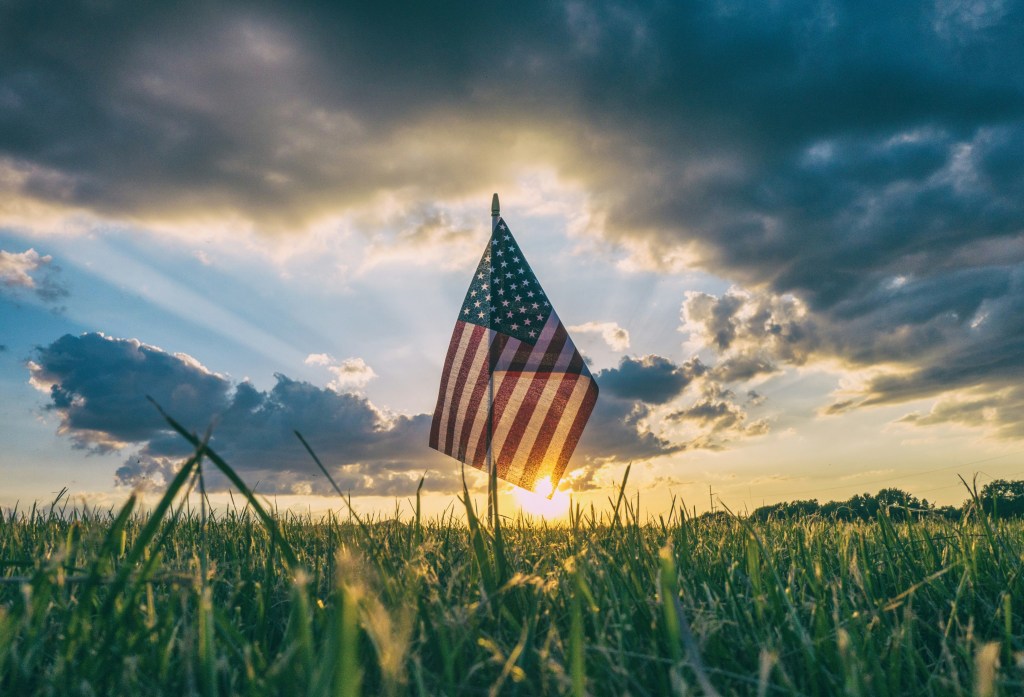
Every Fourth of July, there’s a lot of noise—fireworks, parades, red‑white‑and‑blue everything. I don’t begrudge any of it. In fact, I embrace all of it, and these events are some of my favorite of the summer. But my own patriotism tends to show up in quieter ways, especially as we head toward America’s 250th birthday in 2026.
This season isn’t just about looking up at the sky. It’s about looking back with gratitude, looking around with clear eyes, and asking how we can love this place well in the small, ordinary days we’ve been given.
Remembering the People Who Got Us Here
When I think about America 250, my mind goes first to gratitude—for the people who made it possible for me to be here at all.
My own ancestors left Germany in the mid‑1800s, walking away from upheaval and uncertainty. They traded familiar villages and language for the unknowns of an ocean crossing and a new country. I think about what it must have taken for them to move entire families and villages to a new country. I picture them on crowded docks, clutching children and trunks. In their arms they carried everything they owned in the world, placing a fragile hope in a place they had never seen.
They came because they believed there might be room here to build a life, raise families, worship freely, work hard, and build a legacy. That courage—and the opportunities they found—is a gift I didn’t earn but get to receive. Remembering that fills me with humility and gratitude, not guilt.
Learning Our History as an Act of Love
When we love a person, we usually want to know their whole story—the good, the hard, the in‑between. I think loving a country can be similar.
Quiet patriotism, for me, means:
- Celebrating the ideals that shaped this place—liberty, self‑government, freedom of speech and assembly.
- Learning more about the people who helped build those ideals into reality: farmers and factory workers, teachers and soldiers, abolitionists and suffragists, civil rights leaders and small‑town organizers.
- Making room in my understanding for stories that aren’t just like mine, so I can better appreciate how wide and complicated “we the people” really is.
For me, learning the harder parts of our history doesn’t lessen my love for this country; it deepens it. This isn’t about dwelling on what’s wrong. It’s about loving our country enough to know it deeply, the way you’d want to really know a friend or a spouse. The more I learn, the more amazed I am by the resilience, creativity, and everyday goodness woven through our history.
Noticing the “Good” Right Where We Live
It’s easy to talk about “America” in big, abstract terms. But most of the reasons I love this country show up in small, local ways:
- The freedom to plant a garden on a little patch of ground and teach my child our core values.
- The mix of people in even a small town—different backgrounds, different stories—finding ways to live side by side.
- The libraries, parks, and back roads that quietly serve as the backdrop of our lives.
- The ability to speak, write, and vote without asking permission, even when we disagree with our leaders.
These are not small things. They’re daily gifts my ancestors hoped for and that many people in the world still long for. Part of being patriotic, to me, is pausing long enough to notice and appreciate them.
Everyday Acts That Feel Patriotic
Fireworks last only a few minutes. The rest of the year, love of country looks much more ordinary.
In my own life, quiet patriotism shows up when I:
- Tend our little homestead with care—paying attention to soil and water, making efficient use of everything we have, remembering that stewardship is part of gratitude.
- Try to be a steady wife, mom, daughter, and friend—keeping promises, apologizing when I’m wrong, showing up as my whole self even when no one is watching.
- Raise a child who understands both the gifts and responsibilities of living here: that others fought, marched, worked, and invented so we could enjoy things we now call “normal.”
- Show up for neighbors—bringing casseroles, clearing brush, watching kids—because strong communities are one of the best defenses against despair and division.
Those things may never be described as patriotic in a speech. But they are my way of saying, “I’m grateful to be here, and I want to leave this place a little better than I found it.”
Civic Habits That Keep Hope Alive
Beyond our own homes and neighborhoods, there are also quiet ways to care for the wider country we share.
Love of country isn’t only a feeling; it’s also a set of habits that keep a free society going. That can sound intimidating, but it often looks quite simple:
- Voting, even in the “small” elections (because that’s where the decisions that most affect our lives are anyway), and explaining to our kids why it matters.
- Paying attention to what’s happening in our town, not just on national headlines.
- Writing or calling leaders respectfully when something matters deeply to us.
- Practicing kindness and curiosity toward people who see things differently, remembering we share more than we think.
These habits aren’t a burden; they’re privileges. They are some of the ways we get to participate in the experiment our founders started and that many generations in between have since tried to improve.
Letting the Fourth Be Joyful and Honest
I don’t want a Fourth of July that’s only serious and heavy. I want room for joy too:
- For kids waving flags at small‑town parades.
- For families gathering around grills and picnic tables.
- For fireworks reflected in ponds and rivers and wide‑open fields.
At the same time, I don’t want a Fourth that’s only sentimental. I want a celebration that honors the good, acknowledges the hard, and leans toward hope.
It’s possible to be deeply grateful for America’s gifts and still honest about its flaws. In fact, I think that combination—gratitude plus honesty—is one of the most patriotic stances we can take.
A Gentle Invitation for America 250
As we move toward America’s 250th birthday, you don’t have to overhaul your life to “be patriotic.” You might simply:
- Learn one new story from America’s past that you didn’t know before—maybe from a perspective different from your own.
- Take a moment on the Fourth to name out loud a few things you genuinely love about this country.
- Thank someone in your life who quietly embodies the best of what you hope America can be.
- Choose one small civic habit—registering to vote, attending a local meeting, supporting a local farm or business—and commit to it as an act of gratitude.
My ancestors crossed an ocean so I could live here. My way of honoring that isn’t loud or flashy. It’s to keep learning, keep noticing the good, keep tending my little corner, and keep believing that our shared story can keep bending toward something truer and kinder.
Feature Photo by Aaron Burden on Unsplash
If you’re willing to share, I’d love to hear: what’s one thing you’re genuinely grateful for about this country—and one small way you’d like to pass that gift on to the next generation?
If this resonated with you, would you pass it along to a friend or family member who loves this country in a quieter way too? Your shares and comments help these reflections find the people who might need them.
 Practical Homesteading