Tag: backyard-chickens

  • Spring Homestead Projects: Fruit Trees, Piglets, and Property Improvements

    Spring Homestead Projects: Fruit Trees, Piglets, and Property Improvements

    This spring on our homestead has been both chaotic and full of life. Between new animals, fresh plantings, and long-awaited property upgrades, it feels like everything is waking up at once. If you’re curious what real-life spring homestead projects look like for us—or looking for ideas for your own place—here’s what we’ve been up to.

    Spring Planting: Fruit Trees, Strawberries, and Garden Beds

    This spring, we’ve focused heavily on long-term food production. We planted new fruit trees, added strawberries, and finally started planting the garden.

    Fruit Trees

    We put in three apple trees to start planning ahead for the day when our older orchard slows down. Our established apple trees are slowly starting to die off, so these new trees are our way of making sure future us still has apples to harvest. In addition, we’ve planted two pear trees (because my 6-year-old son absolutely loves pears, and we love them too). All the fruit trees should start producing a small amount of fruit in about three years, with bigger harvests in the years after that. The kids are already talking about how they “can’t wait” to pick our own apples and pears someday.

    Strawberries

    We also planted 75 strawberry plants in three different varieties. About two-thirds are everbearing strawberries, which produce fruit throughout the growing season. The remaining third are June-bearing strawberries, the kind that give you that big flush of berries in June—what most people know from U-pick strawberry farms.

    Hard to see, but the strawberries are there!

    We’ll pinch the blossoms off the everbearing strawberries for the first couple of months while their root systems establish, then we’ll start letting them fruit. For the June-bearing strawberries, we’ll pinch all the blossoms this year so they can focus on roots, and we should start seeing fruit next summer. The kids are already excited, asking when they’ll get to pick strawberries and dreaming aloud about “strawberry snacks” straight from the garden.

    Field and Garden

    Out in the field, my husband planted our two-acre plot of oats, then tilled up a 120-foot by 30-foot field behind our barn (I know, cute) where we planted high population corn (planted more closely than typical field corn). These crops are intended to become feed for our pigs, chickens, and turkeys, which feels like a big step toward growing more of our own animal feed.

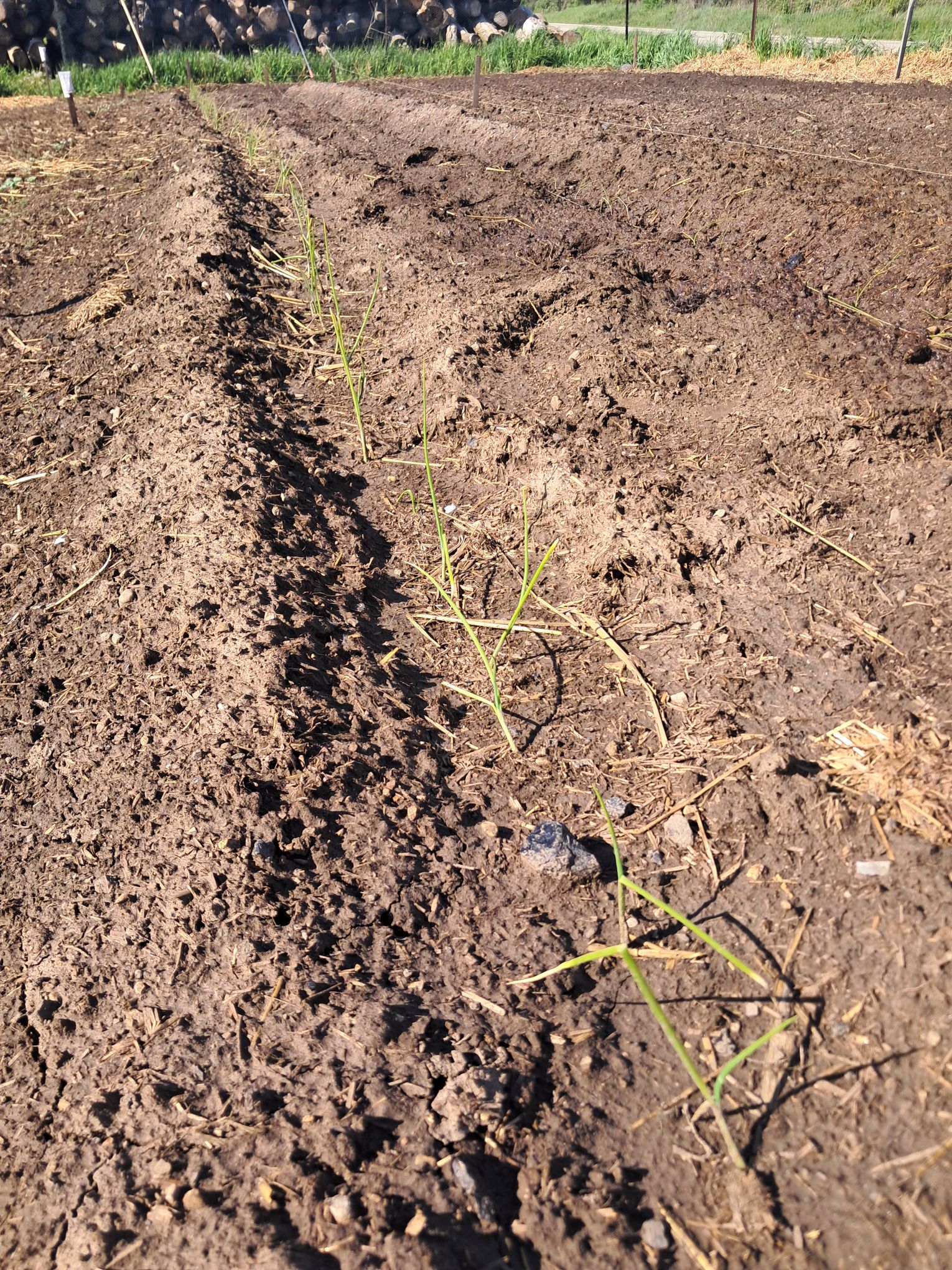
    Once the April flooding finally receded, we started planting the main garden. So far we’ve gotten radishes (the perfect cool-weather crop), rutabagas, parsnips, and transplanted onions in the ground. There’s still plenty more to do, but it feels good to see those first rows planted.

    Don’t judge my not-too-straight row of onions too harshly please!

    Spring Animal Projects: Piglets, Chicks, and Turkeys

    Anyone with animals knows that adding more livestock takes planning, patience, and a little bit of risk.

    Piglets

    Last year, we added two gilts to our pig herd and decided—almost on a whim—that we wanted to try farrowing piglets. Of course, biology says you can’t have piglets without a boar, so my brother-in-law graciously lent us his boar for two weeks in mid-January. In return, we helped him by cutting down a tree. Homestead barter at its finest.

    Mr. Eligible Bachelor (pink) as he wooed his lady.

    Next, we needed a safe space for piglets to be born and grow for the first several weeks. My husband converted an old dilapidated shed into functional farrowing quarters. He shored up rotten sections, set used silo staves in cement to make a makeshift floor, and built a farrowing crate from reclaimed wood. He even added lights, knowing we’d be checking on her at all hours until she finally gave birth.

    All ready for some babies!

    So far, one gilt has farrowed 10 piglets, and the second is due any day. We love having little babies around the homestead—it’s noisy, busy, and pretty wonderful.

    Our plan is to either sell some of the piglets as feeder pigs or raise them for pork that’s grown outside on pasture. If you’re local (SE WI) and interested in either, feel free to reach out.

    Chicks

    About a month ago, we also added to our poultry flock. We purchased 15 straight-run Wyandotte chicks and set them up in our basement. At the same time, I set up my incubator with 22 eggs.

    My first attempt at incubating eggs was a complete failure—I didn’t hatch a single chick from 47 eggs. Lesson learned: the orientation of the eggs in the incubator matters. They can’t be placed upright in egg cartons; they need to lie horizontally or they simply won’t develop.

    This time, with the eggs properly positioned, 10 chicks hatched and 9 survived. That gives us 24 new chicks total. In theory, about half will be roosters and half hens. We plan to keep one rooster as our new stud, and the rest of the roosters will eventually head to “freezer camp” and become shredded chicken for soups, broth, and casseroles (yes, I’m from Wisconsin, and we call it casserole). The kids love checking on the chicks in the brooder, counting them, and reporting back on who’s sleeping, who’s eating, and which one is “their” favorite.

    Turkeys

    Our turkeys have their own spring plans. Both turkey hens found separate hidden spots around the property to sit on nests—despite the small detail that there are no toms currently on the homestead. My husband decided to do a little switcheroo and swapped one turkey’s eggs for fertile chicken eggs. We’ll see if any of those end up hatching. There’s never a dull moment with birds.

    Property Improvements: Upstairs Progress and Cleanup

    Spring hasn’t been all about plants and animals; we’ve made progress on the house and property, too.

    Upstairs Progress

    For those who don’t know, we bought our house in 2023 with an unfinished upstairs. Earlier this month, carpet was finally installed in most of that space, and now we’re down to finishing touches like closet doors and furniture. The last third of the upstairs still needs to be completed, and we’re planning to add a bathroom upstairs so we don’t have to navigate steep stairs in the middle of the night.

    Outside Cleanup

    Outside, my husband has been on a mission to clean up the property again, hauling away loads of scrap metal. The plan for this summer is to shore up one of the existing buildings so we can use it as temporary cover for our equipment while we demolish old structures and replace them with something more functional.


    It’s a lot—but it’s the good kind of work.

    Spring on a homestead is always busy, but seeing these projects come together—fruit trees in the ground, piglets in the barn, chicks in the brooder, and an upstairs that finally feels like it’s becoming livable—makes all the mud, mess, and chaos feel worth it.

    It’s one more season of growing food, raising kids alongside all this work, and slowly building the kind of place we want to call home.


    What spring projects are you working on around your home or homestead right now—plants, animals, or house upgrades?


    If this gave you ideas—or just made you feel less alone in the spring chaos—tap like and share it with a friend who’s also growing, raising, or rebuilding something this season.

    Subscribe for weekly homesteading tips:

    Read Next: Mid-Season Maple Syrup: 5 Gallons from 200 Gallons Sap
  • What I’d Tell My Homestead Turkeys: You’re Safe Here

    What I’d Tell My Homestead Turkeys: You’re Safe Here

    If you could make your pet understand one thing, what would it be?

    Disclosure: This post contains affiliate links. As an Amazon Associate, I earn from qualifying purchases. Thanks for supporting Practical Homesteading!


    Every morning, our little homestead stirs to life—snorts, clucks, rustles, and all. The pigs grunt impatiently for breakfast, the chickens dart around my boots like gossipy toddlers, and the black cat takes her morning post on the fence, tail flicking in quiet judgment.

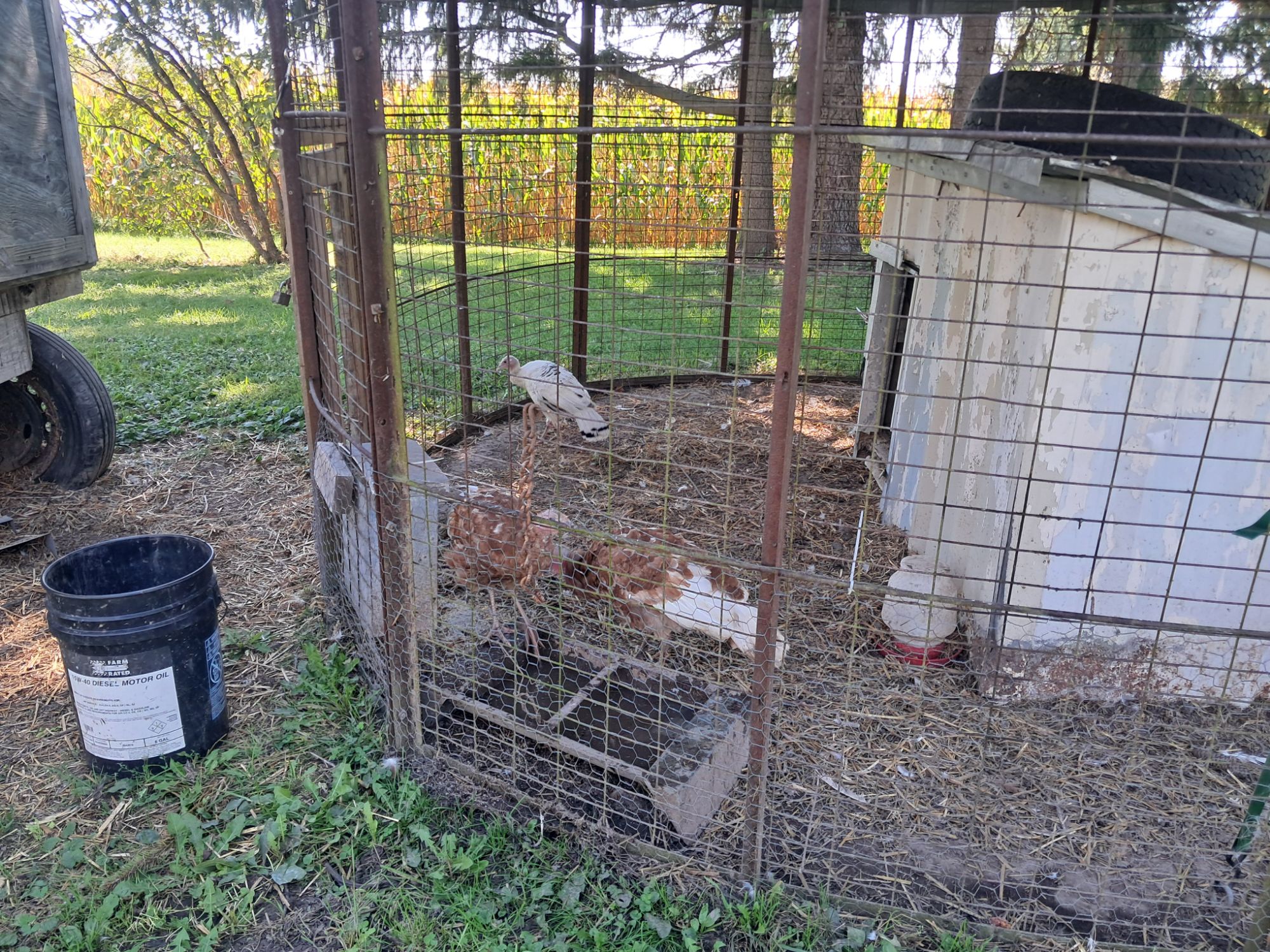
    And then there are the turkeys—watching from their enclosure, eyes wide, feathers puffed, too afraid to venture near the very hands that feed and bed them.

    If I could make my animals understand just one thing, I’d tell them, “You are safe and valued, every single day you’re here.”

    The truth is, one day we will butcher the turkeys. That’s part of the rhythm of the homestead life—raising animals with respect, giving them good days filled with deep bedding, and ensuring they’re never hungry or afraid. But that doesn’t make their time here any less meaningful. It actually makes the responsibility deeper. If they could understand one thing, I’d want them to know that their days matter. That their comfort matters. That I’m grateful for the life they live and the life they’ll one day give .

    The pigs already seem to get it. They’ll eat, play, and then flop into straw with satisfied sighs, blissfully unbothered by anything beyond their next meal. The chickens scurry and squawk, confident in the routine they’ve built around their 25 lb self-feeder (affiliate link) and DIY 5-gallon bucket waterer (affiliate link). Even Black Cat, aloof as he pretends to be, knows he belongs to this rhythm—this gently imperfect, beautifully grounded life we share .

    That’s what sustainability really means to me—caring deeply, even when the hard parts come. I can’t explain to my animals that I love them, that I worry about them on cold nights, or that I always want their lives to be good ones. But I can show it. Through full buckets, soft hay, and calm voices. Through care that doesn’t need translation.

    Because this life, this work, is built on gratitude—on giving more than we take, and honoring every part of the cycle that feeds us. And if my animals could understand that, even for a moment, it would be enough.


    If your animals could understand one truth, what would you tell them? Comment below 👇

    Did this post resonate with you? Like if you farm with heart, share with your homesteading crew, subscribe for real farm wisdom!

    Related Posts

    More Than a Meal: Raising Our Own Thanksgiving Turkeys

    Discover the joys and challenges of raising backyard turkeys in this heartfelt story about patience, humor, and the journey from fluffy poults to Thanksgiving centerpiece. Learn personal lessons and practical insights from a family’s wild turkey-raising adventure.

    Keep reading

    Feathers, Frogs, and Family: Lessons from Our Chickens

    What are your favorite animals? I remember he day our delivery person lingered just to pet a chicken. It marked a quiet but unforgettable connection between humans and animals in our lives. That black hen with golden feathers wasn’t just beautiful. She was a symbol of the surprising personalities and stories hidden in every farm…

    Keep reading
  • Feathers, Frogs, and Family: Lessons from Our Chickens

    Feathers, Frogs, and Family: Lessons from Our Chickens

    What are your favorite animals?

    I remember he day our delivery person lingered just to pet a chicken. It marked a quiet but unforgettable connection between humans and animals in our lives. That black hen with golden feathers wasn’t just beautiful. She was a symbol of the surprising personalities and stories hidden in every farm animal. These stories have shaped my family and me in ways I never expected.

    Farm animals have always felt special to me. More than simple creatures in a barnyard, they each hold distinct characters and life lessons. Chickens, in particular, embody a fascinating mix of contradictions: small yet bold, practical yet full of surprises. Take the first time I saw one catch and eat a frog, for example. I was both fascinated and startled. There she was, darting through the grass with sharp precision, capturing a hopping frog with a triumphant snap. This wild side of chickens revealed itself suddenly but clearly—showing me they are more than gentle garden pets. They are resourceful, lively members of the natural world.

    Equally meaningful to me has been watching my son grow alongside these animals. From tentative first touches to bursts of laughter as he ran alongside the flock, his connection with the chickens deepened steadily over time. This growing bond reached a milestone when we gathered our first pullet egg together. It was a small, warm marvel that tasted like patience and hope. Sharing that fresh egg was a celebration of both life and the quiet rituals that come from care and attentiveness.

    Beyond their intriguing personalities and practical benefits like eating food scraps and producing fertilizer, these animals have woven themselves into our daily rhythms and affections. It’s no wonder our delivery person was so drawn to that golden-feathered hen. Her presence brought him brief moments of comfort and joy. When she passed away, it marked a quiet loss that reminded me how deeply animals can touch human lives and how these bonds leave lasting marks on our hearts.

    Farm animals are, in truth, companions who teach us to slow down, observe, and connect with the cycle of life. Chickens, with their surprising mix of wildness and gentleness, stand out as providers with vibrant personalities and teachers. In their company, I have found moments of laughter, reflection, and an enduring appreciation for the simple, rich realities of living closely with nature.

    What’s your favorite farm animal or memorable moment with animals that has touched your heart? Share your stories in the comments below—I’d love to hear about the special connections you’ve had with animals!


    If you enjoyed this essay and found these stories meaningful, please like this post. Share it with fellow animal lovers. Subscribe for more heartfelt reflections and stories about life with animals. Your support means the world!

    Related Posts