Tag: dailyprompt

  • Why I’d Ban “Should” From Everyday Life (Should Statements)

    Why I’d Ban “Should” From Everyday Life (Should Statements)

    Daily writing prompt
    If you could permanently ban a word from general usage, which one would it be? Why?

    If I could permanently ban a word from general usage, I’d choose “should.” Not for every use, because grammar would fall apart. However, the way we weaponize it in self-talk and conversations: as judgment, measuring stick, and source of quiet shame.

    The Heavy Weight of “Should” Statements

    “Should” rarely arrives alone. It brings judgment riding shotgun:

    • “I should be farther along by now.”
    • “You should really be feeding your kids __.”
    • “We should have known better.”

    In these moments, “should” statements aren’t neutral verbs; they’re verdicts. They imply one right way to live, parent, work, or heal—and we’ve missed it. Overcoming should thinking means recognizing they leave no room for context, growth, or simple humanness.

    How “Should” Poisons Self-Talk

    Most of us don’t need help being hard on ourselves. Yet should statements psychology slips into our inner dialogue, turning observations into accusations:

    “I’m tired and scrolling” becomes “I should be more productive.”
    “We had frozen pizza” becomes “I should be the perfect homesteading mom.”

    Instead of asking what we need, should thinking demands performance. It narrows life to two outcomes: success or failure. Replacing should statements reveals something tender underneath: “I wish” or “I feel insecure about…”

    3 Better Phrases to Replace “Should”

    Banning “should” from casual speech would soften our conversations. Try these replacements:

    Instead of: “I should be farther along”
    Try:I wish I were farther along” or “I expected different progress”

    Instead of: “You should do it this way”
    Try:I’ve found this helpful” or “Have you considered…”

    Instead of: “We should have known better”
    Try: “We didn’t know then what we know now”

    These alternatives to should statements open curiosity instead of guilt.

    Why Banning “Should” Frees Us

    Should statements carry cultural expectations—from family, social media, perfectionism. They turn life into a constant trial where we’re always on trial. Overcoming should thinking creates space to say:

    • “Here’s where I am.”
    • “Here’s what I wish for.”
    • “Here’s what I’m trying next.”

    Without that heavy word whispering, we could treat ourselves—and each other—with kindness we actually need. Should-free living trades judgment for honest desire, fear, and hope.

    Feature Photo by Darius Bashar on Unsplash


    What’s your most toxic “should” statement? Share below—let’s replace it together!

    Caught in should thinking? LIKE if you’re ready to ban “should” + SHARE with someone who needs self-compassion today!

    Loved this? Subscribe for more self-love tips:

    Read Next: Advice I’d Give My Teenage Self After Burn Trauma (You’re Loved)
  • Our Biggest Homesteading Challenge: First-Time Pig Farrowing

    Our Biggest Homesteading Challenge: First-Time Pig Farrowing

    Daily writing prompt
    What is the biggest challenge you will face in the next six months?

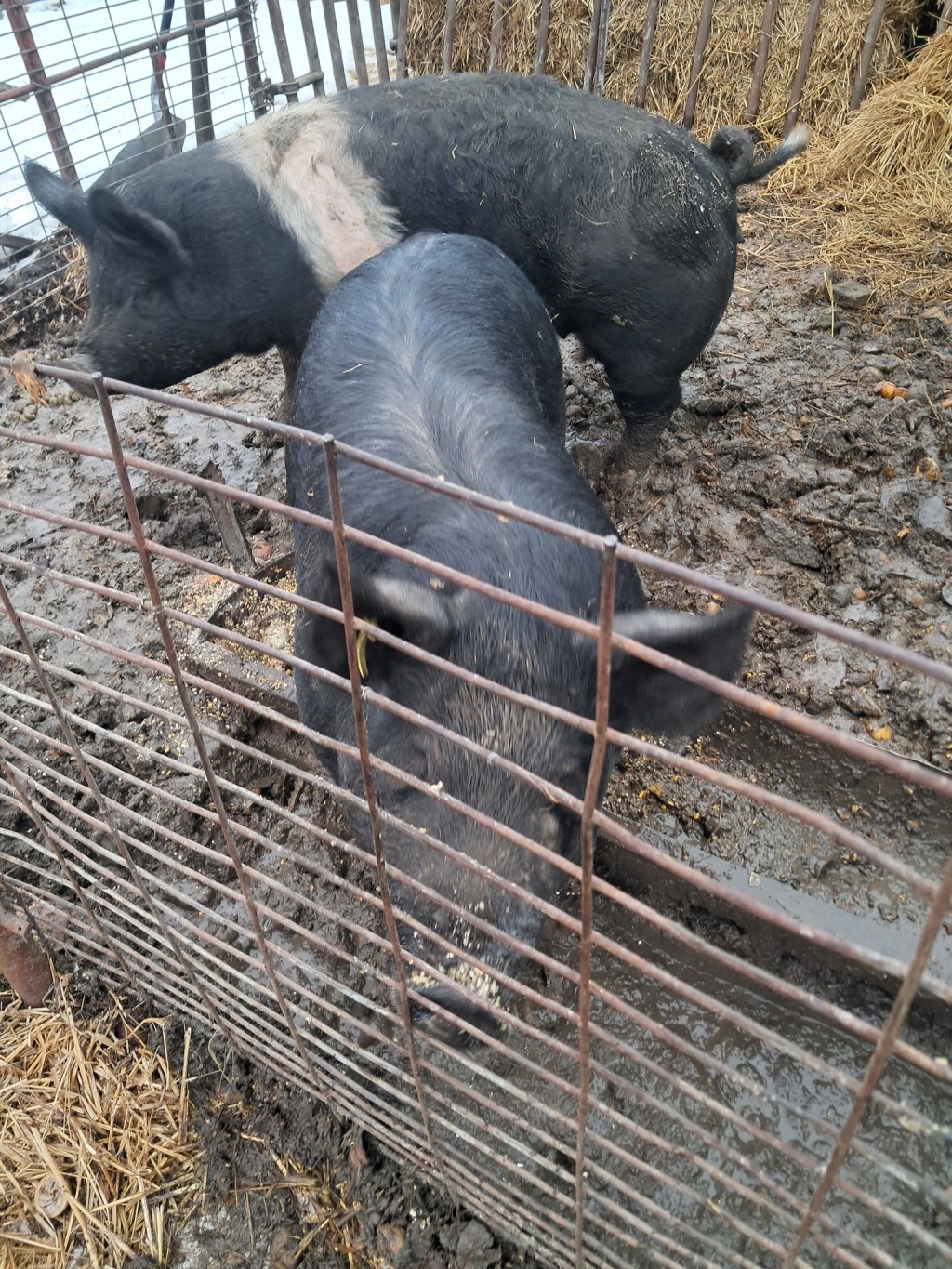
    Over the next six months, our biggest homesteading challenge will be learning how to nurture new life on our homestead. Specifically, helping two first-time pig moms safely deliver and raise their piglets around Mother’s Day.

    From Meat Pigs to Breeding Gilts

    My husband and I have raised pigs on our homestead for two years, mostly for meat. Last year we ended up with two young gilts originally intended for processing. But as we watched their personalities emerge and realized we had enough pigs for last year’s orders, we made a different choice.

    These two became our first step into pig breeding territory, which meant learning winter pig care for full-size gilts. We’ve learned cold weather management, water access, mud containment, and the general chaos of long-term livestock keeping.

    Pig Breeding: No Swipe-Right App Required

    Pig breeding doesn’t come with modern dating apps. Artificial insemination is possible but tricky for homesteaders like us without the required training and equipment. So we borrowed a boar from family for two weeks instead. The boar settled immediately, smacking his lips (apparently a pig mating technique we’ve never heard of before).

    The eligible bachelorettes couldn’t get enough of him. They went from wary strangers, sniffing and posturing through social hierarchy, to “getting lucky” overnight. It was equal parts farm practicality and genuine wonder about new life coming to our land.

    The Farrowing Timeline

    Pig gestation follows the classic 3 months, 3 weeks, 3 days timeline. If our calculations hold, Gilt #1 farrows around Mother’s Day 2026, with Gilt #2 following about a week later. It’s perfect timing for our first experience with pig birth coinciding with a holiday celebrating mothers.

    What Makes First-Time Farrowing Challenging

    First-time farrowing intimidates me most. New sows face surging hormones, labor pain, and instincts they don’t yet understand. They sometimes pace frantically or accidentally step on newborns while nesting.

    My grandfather, a lifelong pig man, stayed up all night in farrowing barns watching over nervous moms. He would even give them small amounts of whiskey to mellow them out—an old-school remedy I’m definitely not trying.

    Our Farrowing Preparations

    We’re preparing by seeking advice from local old timers with experience. We’re also acquiring and staging farrowing crates and deep straw bedding for their comfort.

    Success to us means 8-12 healthy piglets per litter with thriving moms and minimal intervention.

    Why Piglets Are Worth Every Challenge

    Homestead piglets represent more than cute photos—they’re future meat pigs, potential breeders, or weaned piglets for local sale. But truly, watching new life stumble into the world with tiny hooves, squeaky snouts, and wobbly legs racing their mama captures pure homestead magic worth every sleepless night.


    What’s your next big homesteading challenge? Pig farrowing, goat kidding, chick hatching? Share below—someone needs your wisdom.

    If you’re facing pig farrowinggoat kidding, or any livestock birth for the first time, LIKE + SHARE this with your homestead crew!

    Loved this? Subscribe for more homesteading stories and tips:

    Read Next: I Never Wanted Pigs Until They Changed My Homesteading Life

  • Advice I’d Give My Teenage Self After Burn Trauma (You’re Loved)

    Advice I’d Give My Teenage Self After Burn Trauma (You’re Loved)

    Daily writing prompt
    What advice would you give to your teenage self?

    Content note: Brief mention of burn injuries and trauma recovery


    That is an excellent question. I’ve made many, many mistakes throughout my adulthood, and some of the most painful ones trace back to my teenage years.

    For those who are not aware, I sustained serious burn injuries on my arms and chest at age 17 that led to an 18-day hospital stay and a long recovery. I have not yet told this story online, but I plan to at some point, if only to reach those who may feel alone in their pain.

    At my lowest, I thought that I was unlovable. The accident happened due to my own shortsightedness, and I couldn’t stop blaming myself. If I wear a high-neck shirt and long sleeves, you would never know what happened to me. But the scars—both physical and emotional—run deep.

    Advice to My Teenage Self: You Are Loved

    If I could go back and talk to my teenage self, I would start by telling her the following:

    That you are loved—no matter what.

    Love isn’t something you have to earn by being perfect, pretty, or put-together. Even on days you feel broken, ashamed, or “too much,” you’re still worthy of kindness and care. The people who truly love you aren’t keeping a tally of your mistakes.

    There will be mornings when you wake up thinking about coffee first—not the accident. Laughter will come back without guilt chasing it.

    Overcoming Trauma: Pain Won’t Define You

    Your pain will not be the end of your story.

    Right now, all you can see is this moment: the hospital room, the bandages, the mirrors you avoid. You’ll discover seasons where your life isn’t defined by what happened to you at 17. Overcoming trauma doesn’t erase the scars, but it makes space for new chapters.

    Building Resilience Through Lasting Friendships

    You’ll find lasting friendships even after pain—perhaps because of the pain you endured.

    Those friendships will show you you’re not alone. Some of your dearest friends will be the ones who see your scars and don’t flinch. They won’t treat you like you’re fragile or broken. They also won’t pretend nothing happened. They’ll simply sit with you in it—and that will teach you how to do the same for others.

    Turning Pain Into Empathy and Purpose

    One day you’ll turn all this tenderness into quiet strength.

    You won’t just feel deeply—you’ll learn what to do with those feelings. You’ll walk into a room and sense who else is hurting. You’ll notice the person shrinking into the corner, or laughing too loud to hide their pain. Because you know what it feels like to want to disappear, you’ll make sure others feel seen. You’ll hone your empathy into a skill that helps people feel loved and less alone.

    Finding Meaning After Suffering

    Meaning can be found in suffering, even if it takes time to see it.

    The accident will never become “good.” You’ll always wish it never happened. But goodness will grow out of the mess: deeper compassion, a softer heart, a clearer sense of what matters. Healing from trauma often looks like this—the places where you feel most broken become the places where you can sit with others and say, “Me too. I’ve been there. You’re not beyond hope.”

    Final Words of Self-Compassion

    And finally, I’d tell you this:

    You are not the sum of your worst moments.
    You are not your scars.
    You are not the accident.

    You are loved, held, and still becoming.


    If you’re carrying scars—seen or unseen—what would you tell your teenage self? Share one line in the comments. Someone else may need to hear it today.

    If this touched something in you, please hit LIKE and share with one person who needs to hear they’re loved—no matter what.

    Loved this? Subscribe for my perspective on personal growth and homesteading:

    Read Next: Why I Read Survivor Stories about Strength and Hope

  • How Curiosity Keeps Me From Feeling Bored (Even on Long Car Rides With Kids)

    How Curiosity Keeps Me From Feeling Bored (Even on Long Car Rides With Kids)

    Daily writing prompt
    What bores you?

    I honestly can’t think of much that really bores me. Honestly, it’s not because my life is wildly exciting, but because I’ve learned to stay curious. I try to see the beauty or thought behind most things and find them interesting in some fashion.

    Everyday Curiosity and Boredom

    If I’m in a conversation that might seem dull on the surface, I pay attention to the other person’s body language. Do their eyes light up when they mention one topic but dull when they shift to another? Do their shoulders tighten when they talk about work, even if their words sound cheerful? It becomes less about the subject itself and more about the story their body is telling alongside their voice.

    Finding Beauty in the Ordinary

    Even something like watching television is layered for me. I love noticing the sets and imagining the work that went into them. Someone spent time choosing the wallpaper, the way a bookshelf is styled, the mug a character always uses. None of these choices are accidental. Someone cared enough to place every object, choose every color, and make the scene feel lived in. When I think of it that way, I’m not just consuming content; I’m admiring a moving piece of art.

    Screen-Free Parenting on Long Car Rides

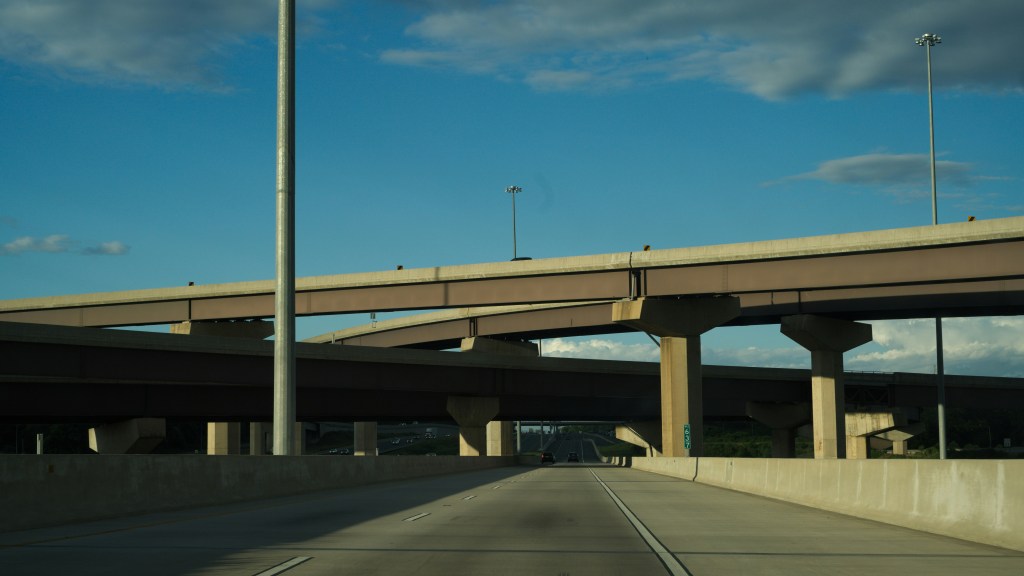
    That same habit of looking deeper has carried into how I approach screen-free parenting, especially in the slow or “boring” moments. When on long car rides with my kids, I largely refuse to rely on screens. I instead point out the “boring” things outside and turn them into something to notice. Some examples are bridges, city water towers, transmission lines, and the way the landscape changes from town to town. When long car rides were more frequent with my two-year-old son, I would keep ordinary containers up front. They could be old spice jars, boxes, and lids. I’d hand them back so he could stack, sort, and explore. Now that he’s six, he loves looking out the window and telling his now two-year-old sister about water towers and power lines. He’s now doing my work for me, passing on this little habit of paying attention. Those drives used to feel endless; now they feel like slow, moving classrooms and one of my favorite forms of simple, screen-free entertainment for kids on long drives.

    If you’re stuck in traffic or in a waiting room, you might try this too. Turn the “background” into something worth noticing instead of reaching for a screen.

    Noticing Design in Everyday Objects

    I even find myself thinking about the engineering and design in everyday objects, like a door handle. Someone had to decide how it should feel in your hand, how much pressure it should take to turn, how it would work for small fingers or tired ones. There’s a whole quiet layer of thought behind things we touch without ever really seeing.

    How Curiosity Keeps Life from Feeling Boring

    So when I ask myself what bores me, I still come up blank. Life is full of tiny details, hidden stories, and quiet bits of creativity. A mindset of everyday curiosity and mindful attention keeps even the most ordinary moments—waiting rooms, car rides, reruns on TV—from feeling dull. When I stay curious, I honestly still can’t think of much that really bores me.

    Feature Photo by Aaron Munoz on Unsplash


    How do you stay curious in the “boring” moments? I’d love to hear your tips!

    If you know another parent who’s trying to cut down on screens or feel less bored in the everyday, please share this post with them or save it for your next road trip.

    Loved this? Subscribe for weekly homesteading tips:

    Read Next: Playing for Keeps: Cozy Winter Game Nights for Family and Friends

  • Daily writing prompt
    Who are your favorite people to be around?

    My favorite people to spend time with are of course my husband and two children.  But I also love to be around others who are willing to learn, grow, and have fun.

  • Favorite Shoes Took Me to Alaska and First Homestead

    Favorite Shoes Took Me to Alaska and First Homestead

    Daily writing prompt
    Tell us about your favorite pair of shoes, and where they’ve taken you.

    Favorite Shoes: My Alaska-to-Homestead Life Journey

    I’d have to say my favorite pair of shoes was a pair of really comfortable sandals. They weren’t fancy, but they were perfect. They were waterproof enough for wet grass and surprise puddles (though they’d get slippery when truly soaked), durable, and so comfortable they practically disappeared on my feet. I bought them the year we got married. As soon as weather warmed, they became my summer uniform—tucked away only when socks and sandals crossed the line.

    Alaska Honeymoon Adventure Shoes

    Those sandals carried me through epic travel adventures. I wore them hiking on our road trip honeymoon to Alaska, when endless roads met impossibly big skies. They took me down trails in Denali National Park and Kenai Fjords National Park, where crisp air made me feel gloriously small.

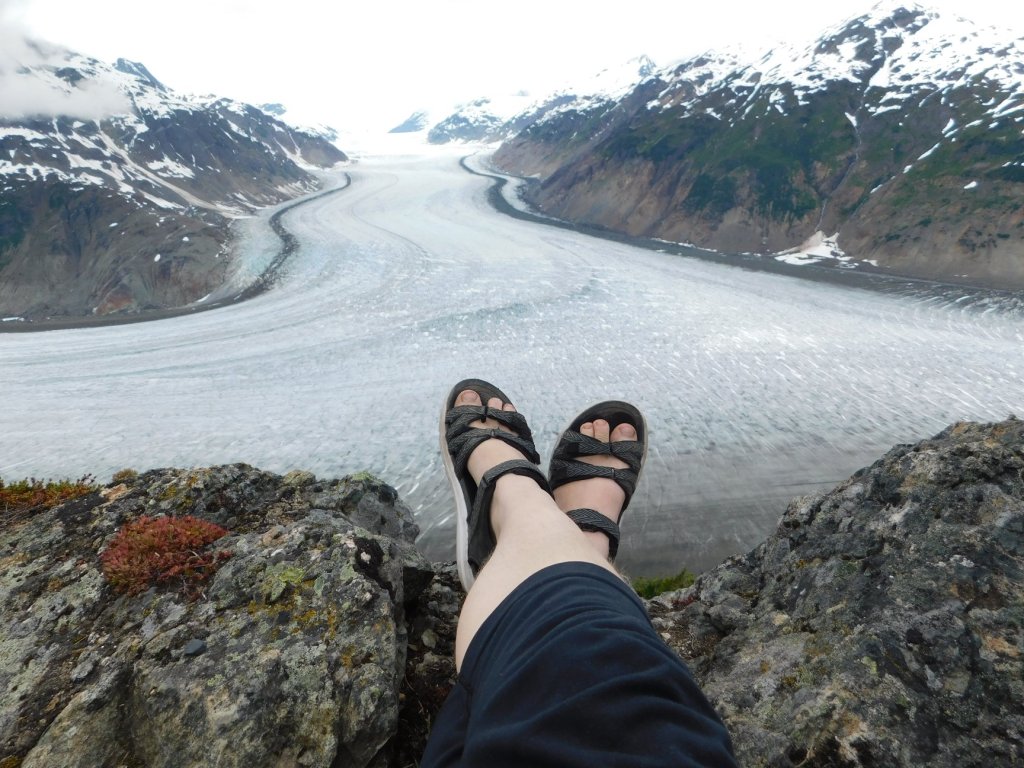
    I had them on gold panning outside Anchorage (real prospecting is unglamorous!), watching the sun barely dip at 3 a.m. in that surreal twilight, and waiting for grizzlies at Fish Creek Wildlife Observation Site near Hyder. They climbed me to Salmon Glacier’s overlook, where I captured a magical shot—the straps already molded perfectly to my feet by then.

    Homestead Life + Pregnancy Companion

    Then life shifted from road maps to roots. Several months post-honeymoon, those same sandals walked our first homestead property. I squished through soft ground, stepped over pasture patches, and imagined gardens and animal pens. Soon after, pregnant with our son, they carried my slight waddle across that future home—trading Alaskan rivers for tall grass and fence lines.

    Shoes That Lived My Story

    They lasted several more seasons through new-mom routines—feedings, chores, sunset walks on our land. When frayed straps finally gave out, letting go felt like closing a chapter: newlywed adventures, homestead dreams, pregnancy possibility.

    Replacements looked similar but lasted one season, not four. They didn’t live the same story.

    When I think of my favorite travel shoes, they’re about transformation—from glacier overlooks to growing our family and homestead. They carried newly married me toward the life I’d only dreamed of.


    Do your favorite shoes have a story? Let me know in the comments!

    What’s YOUR favorite shoes story?
    ❤️ Like if sandals = life chapters
    👶 Share with someone who loves Alaska travel stories
    💬 Drop below: Hiking boots? Wedding shoes? Pregnancy sneakers?

    Loved this? Subscribe for weekly homesteading tips:

    Read Next: Signed House Contract at Used Car Lot-On our Honeymoon Trip to Alaska

  • Homestead Budgeting: Annual Lens vs Monthly Stress

    Homestead Budgeting: Annual Lens vs Monthly Stress

    Daily writing prompt
    Write about your approach to budgeting.

    Homestead Budgeting: Annual Lens Beats Monthly Stress

    Traditional homestead budgeting looks different than the usual “every dollar has a job” system. Our income and expenses ebb and flow with the natural rhythm of homesteading life. This makes strict monthly budgets feel forced and anxiety-inducing.

    Why Monthly Budgets Don’t Work for Us

    Instead of rigid categories, we track every expense carefully—receipts, bills, all of it—then zoom out to see the annual picture. This reveals what monthly snapshots hide: we’re consistently saving money, even when some months feel financially wild with bulk meat buys, equipment repairs, or seasonal garden investments.

    Our cash flow is naturally lumpy. Big expenses hit irregularly while income varies too—extra side work one month might vanish the next. Trying to force this homestead reality into identical monthly boxes doesn’t reflect how self-sufficient living actually works.

    Our Annual Rhythm Approach

    So we embrace annual lens budgeting, measuring success by three simple questions:

    • Are we slowly padding savings even through lumpy months?
    • Are we staying debt-free while investing in our homestead?
    • Are we building sustainability through tools, animals, and systems that pay off long-term?

    Peaceful Money Management

    This big-picture budgeting approach gives us honesty without the stress of monthly perfection. Homestead financial planning isn’t about color-coded spreadsheets—it’s about working with the natural cycles of land, seasons, and family life.

    Annual lens budgeting: More honest than rigid templates, more peaceful than monthly panic. Perfect for the unpredictable beauty of homestead living.


    What’s your money approach when income/expenses vary? Drop it below! ❤️ Like if annual thinking resonates. 📲 Share with your freelancer/homestead friends!

    Loved this? Subscribe for weekly homesteading tips:

    Read Next: I Sold My Dream Homestead: Why Smaller is Better Now

  • Quiet Patriotism: Honoring German Ancestors Through Homestead Living

    Quiet Patriotism: Honoring German Ancestors Through Homestead Living

    Daily writing prompt
    Are you patriotic? What does being patriotic mean to you?

    What Quiet Patriotism Means to Me

    You know how some people wear their patriotism loudly? I’m the opposite—patriotic in the quiet, everyday way. For me, being patriotic isn’t about flags or fireworks. It’s gratitude for the huge risks my family took to get here, and trying to live responsibly because of it.

    My Ancestors’ Brave Choice

    My folks came from Germany in the mid-1800s—right when Europe was in chaos. Monarchies were falling, borders were shifting, everything was consolidating. They left everything familiar—villages, language, safety nets—for a dangerous ocean crossing.

    I picture them clutching kids and trunks on crowded docks, betting everything on freedom and opportunity they couldn’t even see yet. Not just for them—for all the generations that would come after. That’s the kind of courage that humbles me every time.

    How I Honor That Sacrifice

    So true patriotism to me means stewardship. Living like their gamble was worth it. That looks like:

    • Tending my homestead garden well—working with the land
    • Being the best wife, mom, daughter, and friend I can be
    • Raising kids who get both America’s gifts and responsibilities

    Patriotism in the Everyday

    It’s not abstract for me. Quiet patriotism shows up when I:

    • Pull weeds instead of spraying chemicals
    • Teach my kid why voting matters
    • Show up for neighbors with casseroles or snow shovels

    My ancestors bet their future on this country. My thank-you is living intentionally—rooted in land, connected to family, aware of history. They crossed oceans so I could have this life. The least I can do is make it count.


    What’s YOUR quiet patriotism look like? Drop it below! ❤️ Like if ancestors’ stories resonate. 📲 Share with family who gets this.

    Loved this? Subscribe for weekly homesteading tips:

    Read Next: Bridging Time: Meeting the Courage of My Ancestors

  • Still Becoming: My Resilience Journey to Everyday Joy

    Still Becoming: My Resilience Journey to Everyday Joy

    Daily writing prompt
    If there were a biography about you, what would the title be?

    If someone ever wrote a biography about me, its title would have something to do with resilience. Maybe “Still Standing” or “The Soft Power of Survival.” Something that captures the quiet strength of getting up one more time than life has managed to knock you down.

    Learning What Strength Really Means

    I’ve walked through my share of valleys—some emotional, some physical, all life‑shaping. There were seasons when “strong” felt like a word meant for other people. Healing wasn’t graceful—it was messy and slow, but it taught me how to create light again.

    Somewhere along the way, I learned to rebuild piece by piece—to keep what still fit, to release what didn’t, and to see that growth can happen even in the cracks.

    Choosing Happiness in Ordinary Moments

    At some point, I decided despair wouldn’t be the final chapter of my story. I started choosing happiness—not the big, cinematic kind, but the quiet, everyday version. The kind that lives in my child’s small hand tucked in mine on a walk to the garden. The kind that tastes like fresh‑baked bread on a cold morning. The kind that hums through the kitchen when a favorite song plays and I can’t help but dance while stirring supper.

    Happiness, I’ve learned, isn’t about pretending everything is fine. It’s about noticing what still is.

    Finding Joy in the Process of Becoming

    If I ever saw that biography sitting on a shelf, I’d want someone to pick it up and feel hope—not because my story is extraordinary, but because it’s beautifully ordinary. Most of us are walking around carrying something heavy, and yet we still find reasons to laugh, build, nurture, and sing.

    That’s resilience to me—not perfection or endless positivity, but participation. It’s the courage to keep showing up for life, to find beauty hiding under the dust of hard days.

    So maybe the title isn’t Resilience. Maybe it’s “Still Becoming.” Because even now, I’m still learning how to turn pain into presence and ordinary days into small celebrations of joy.

    Feature Photo by Sara Bach on Unsplash


    Which ordinary moment makes you choose happiness?
    ❤️ Like if this resonated
    📲 Share with someone who needs hope today
    💬 Drop your joy anchor below—child’s hand? Fresh bread? Favorite song?

    Loved this? Subscribe for weekly homesteading tips:

    Read Next: Wooden Cross Necklace Survived Fire, Lost at Super 8

  • Why I’d Change Food Safety Laws: The Homestead Pork Processing Cost Crisis

    Why I’d Change Food Safety Laws: The Homestead Pork Processing Cost Crisis

    Daily writing prompt
    If you had the power to change one law, what would it be and why?

    Why I Would Change Food Safety Laws for Homesteaders and Small Farms

    I would change food safety laws—not to make food less safe, but to make them more personal, local, and community-centered for homesteaders and small farms who want to sell direct to their neighbors.

    Current food safety regulations overwhelmingly favor industrial giants over small-scale farmers. They’re built around the assumption that all our food comes from nameless corporations and massive processing plants located hundreds of miles away, placing all trust and responsibility out there with distant regulators. The practical result? It’s dramatically easier for a huge company to manufacture and distribute shelf-stable, ultra-processed food across the entire nation than it is for the family down the road to legally sell you homegrown pork or a backyard chicken they raised themselves with care.

    The Homestead Processing Cost Barrier

    Here’s our homestead reality: My family raises our own pigs right here on our land, pouring love and quality feed into every animal. But when it comes time to process them, the USDA processing costs make our homestead pork 3x more expensive per pound than the stuff at the grocery store. Those mandatory, government-inspected facilities charge small-batch farmers like us up to 3x higher per pound because we can’t meet their high-volume minimums. Cross one state line or trigger one additional regulation, and suddenly small farms like ours simply can’t compete with factory-farmed bacon that’s been shipped cross-country. The current system prioritizes industrial food safety over practical direct-to-consumer meat options that build real relationships.

    Why Food Safety Regulations Exist

    I completely understand why these food safety regulations exist in the first place—I read The Jungle by Upton Sinclair. The book exposed absolutely horrifying conditions in early 20th-century meatpacking plants: rats running through meat, workers falling into rendering tanks, sawdust and chemicals covering everything. Those food safety laws that followed genuinely saved countless lives and cleaned up a dangerous industry. But in the century since, ordinary people have gradually offloaded personal food safety responsibility onto those same labels, USDA stamps, and distant inspectors. We’ve largely forgotten the common-sense skills our grandparents used to judge food quality ourselves—smell, sight, source.

    Modern Food Safety Failures

    Even with all these regulations, industrial food safety still fails spectacularly and regularly. Meat recalls, produce outbreaks, and contamination in shelf-stable items make headlines every single year—the CDC tracks 128,000 salmonella cases annually, with the vast majority tied to conventional industrial sources, not local farms. This proves knowing your food source matters more than ever, especially when “regulated” supply chains break down. Plus, fresher local food simply tastes better—don’t believe me? Crack open a factory-raised egg next to one from pasture-raised chickens allowed outside to eat grass and bugs. The deep orange yolk color, richer flavor, and firmer texture in the local egg will convince anyone on the spot.

    My Food Law Change for Small Farms

    If I could change one law, I’d create tiered food safety regulations: light-touch rules for small-scale direct sales (under 1,000 lbs/year, strictly on-farm or direct-to-consumer only) paired with mandatory honest labeling and full transparency, while keeping strict oversight for anything headed to commercial scale. This isn’t either/or—keep industrial options for convenience, unlock local for those ready. This would finally enable practical local meat processing, community butchering days where neighbors share skills and tools, and simple backyard chicken sales—without the slippery slope of scale creep into larger operations.

    Not reckless at allconsumer choice plus farm transparency (visit anytime, ask questions, see living conditions firsthand) beats blind trust in a logo every time. Custom-exempt processors already work extremely safely for personal use; we just need to thoughtfully extend that proven model.

    Reclaim Food Freedom and Community

    With smarter food safety laws, homesteaders could finally save real money by skipping expensive middlemen and mandatory big-facility processing. Families would reclaim food sovereignty through hands-on knowledge, kids would actually see where food comes from instead of just trusting packaging, and entire communities would grow stronger around this shared, meaningful work—swapping time-tested recipes, teaching traditional skills, and caring for the land in hands-on ways our great-grandparents took for granted.

    Safety comes from knowing your farmer personally, combined with those great-grandparents’ practical skills and smart, tiered rules. Better food regulations would deliver healthier eating, stronger communities, and the local food freedom we’ve quietly lost over generations.

    Feature Photo by engin akyurt on Unsplash


    Want to dive deeper? Read The Omnivore’s Dilemma by Michael Pollan—it brilliantly unpacks exactly these tensions in modern food systems.

    If this resonates with your homesteading journey, like + share to help other families reclaim their food freedom! What food law would YOU change? Drop it in the comments! 👇

    Loved this? Subscribe for weekly homesteading tips:

    Read Next: What I’d Uninvent: Addictive Convenience Foods Working Moms Hate