Tag: dailyprompt

  • Past Lessons and Future Dreams: Learning, Growing, and Moving Forward

    Past Lessons and Future Dreams: Learning, Growing, and Moving Forward

    Do you spend more time thinking about the future or the past? Why?

    They say hindsight is 20/20, but I think it’s more like a mirror — one that reflects both who we were and who we’re becoming. And the future? That’s the canvas we’re still painting, brush in hand, deciding what colors come next.

    I spend time with both — the past and the future — but if I had to choose, I’d say I think about the future more. Still, the two aren’t separate for me. The past is where the learning happens, and the future is where I try to put that learning into action.

    Learning from the Past
    When I think about the past, it’s rarely about nostalgia. More often, it’s replaying moments that didn’t go quite right — conversations I wish I’d handled with more patience or insight. I tend to notice small things, especially how the other person responded.

    Did they look away halfway through? Did their shoulders drop, or did their voice tighten? Did they frown — or cross their arms, or become defensive? Those reactions stay with me long after the conversation ends. They’re like clues that help me understand the power of tone, timing, and empathy.

    It’s not that I’m trying to critique every interaction — I’m trying to learn from them. Reflection, for me, has become a quiet sort of self-check. I don’t want to get stuck regretting old exchanges, but I do want to notice patterns: when I get defensive, when I rush my words, when I stop truly listening.

    Sometimes, it feels like flipping through a small mental scrapbook of lessons — not to linger on the pictures, but to trace the edges and think, How can I handle this better next time?

    Dreaming Toward the Future
    When my mind turns toward the future, everything feels brighter, warmer, and more open. I think about my family — how our children might grow, who they’ll become, and what kinds of people they’ll bring into their own lives. I think about my husband, and how I hope we’ll still laugh together, still spend weekends side by side, still find joy in the simple rhythm of our days.

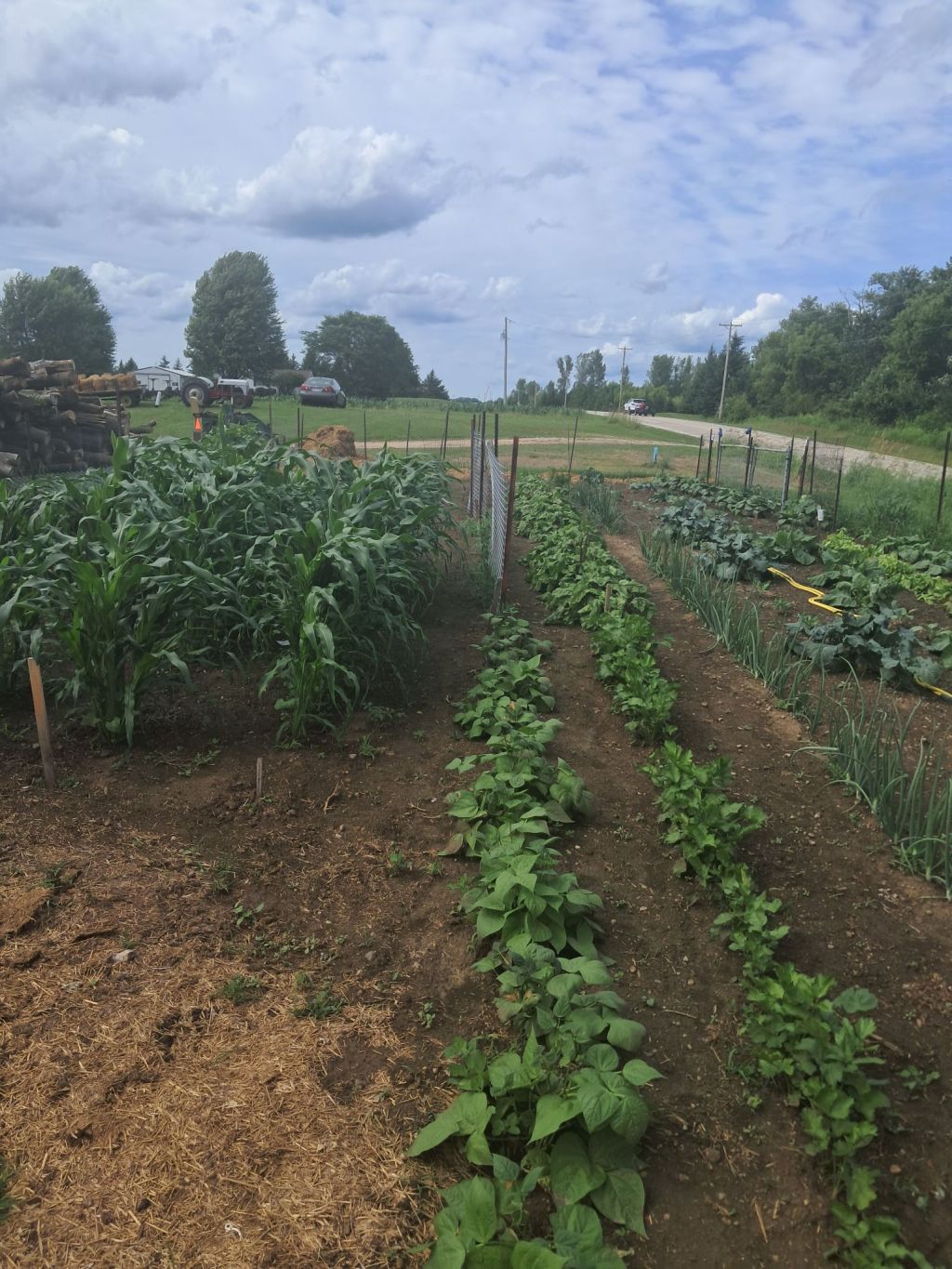
    I imagine our home, our garden, the hum of a peaceful homestead alive with everyday sounds: wind in the trees, chickens clucking, maybe the buzz of bees on summer afternoons. Sometimes I picture our future selves sitting on the porch after a long day’s work, hands tired but hearts full, reflecting on the life we built together.

    Those dreams give me motivation. They remind me that the choices I make now — how I spend my time, how I treat people, how I speak and respond — are shaping the world I’m headed toward. Thinking about the future helps me see daily life not as a checklist, but as a foundation. Every habit or conversation plants a seed for what’s still to come.

    Using the Past to Benefit the Future
    Even my backward glances at the past carry a forward focus. When I catch myself remembering a tense moment or an awkward pause, I use it as a reminder: next time, pause longer. Listen more carefully. Stay soft even when the other person isn’t.

    Learning from the past gives me tools; imagining the future gives me energy. The two often work hand in hand — one guiding, the other driving.

    Balancing Reflection and Hope
    If I had to choose between thinking about the past or the future, I’d still say the future wins. But really, they’re part of the same equation. The past reminds me where I’ve been; the future invites me to grow beyond it.

    To me, this process is a lot like gardening. Each season leaves its mark — the crops that thrived, the ones that failed, the weeds you didn’t pull soon enough. But when you plant again, you do it with all that knowledge quietly tucked into your hands. You trust that what you’ve learned will make next season stronger.

    That’s how I try to live — learning gently, dreaming boldly, and remembering that both reflection and hope have their place in growth.


    Do you find yourself thinking more about the past or the future these days?

    When you look back, do your reflections inspire you to move forward differently? I’d love to hear how you balance the two — share your thoughts in the comments below.

    If this post sparked a moment of thought or connection for you, please take a moment to like, share, or subscribe. Your support helps this little space of reflection and growth keep blossoming.

    Each week, I share new reflections about learning, living intentionally, and finding joy in both the lessons and dreams that shape us. Subscribe below to grow along with me.

    Related Posts

  • The Greatest Gift: Time, Attention, and an Open Mind

    The Greatest Gift: Time, Attention, and an Open Mind

    What is the greatest gift someone could give you?

    We live in a world overflowing with stuff but starving for presence. The older I get, the more I realize that the greatest gifts don’t come wrapped, purchased, or planned — they come through connection.
    For me, the greatest gift someone could give isn’t a thing at all. It’s their time, their attention, and an open mind. Those three might sound simple, but they carry more weight than anything that can be bought.

    The Gift of Time and Attention
    Time is quietly the most valuable thing any of us have. None of us can make more of it — only choose how to spend it. So when someone offers their time freely, I see it as an act of generosity.

    The same goes for attention. In an age of constant distractions, uninterrupted focus feels like luxury. A conversation without checking a phone or glancing at the clock is rare — and meaningful.

    I’ve had moments when a friend listened without trying to fix anything, simply nodding and holding space while I talked through something heavy. No advice, no interruptions, just presence. That kind of attention lasts long after the words fade. It says, you matter to me right now.

    Time and attention are really about presence — about showing up fully instead of halfway. And if we can do something together, like tending a garden on a warm afternoon or cooking something fragrant on the stove, all the better. Shared experiences turn time into memory and memory into meaning.

    The Power of an Open Mind
    An open mind is just as important. Conversation stops feeling like connection the moment it turns into correction. I appreciate people who listen to understand rather than to win. When someone truly listens, it feels safe to share — to disagree, even — without fear of being shut down. That safety is what real trust feels like.

    But when a person constantly inserts their opinions or tries to prove a point, I quietly withdraw. It stops being dialogue — it becomes a contest, and connection disappears.

    Maybe that’s what ties all three gifts together — time, attention, and open-mindedness are all forms of presence. They ask us to slow down, listen, and approach each other with curiosity instead of control.

    Presence as the Greatest Gift
    The best gifts don’t usually arrive on birthdays or holidays. They show up in the small, ordinary moments when someone sets aside distractions and simply shows up.

    In the end, the greatest gift isn’t something someone gives to me — it’s how they show up with me. Showing up wholeheartedly — with kindness, curiosity, and no agenda — might just be the greatest gift we can offer each other.


    What’s the greatest gift someone has ever given you? Was it a thing, a moment, or simply their presence? Share your story in the comments. It’s always a joy to hear how others experience connection.

    If this piece resonated with you, please take a moment to like, share, or subscribe. Your support helps this space grow—a place for stories, reflection, and the quiet beauty of everyday life.

    Join me each week for reflections on connection, mindful living, and the small joys that make everyday life meaningful. Subscribe below to bring presence and perspective to your inbox.

    Related Posts

    Photo by Annie Spratt on Unsplash

  • A Proud Badger Journey: Lessons, Friendships, and Lifelong Connections at UW–Madison

    A Proud Badger Journey: Lessons, Friendships, and Lifelong Connections at UW–Madison

    What colleges have you attended?

    A Proud Badger Journey
    They say you never forget where you came from—especially if where you came from taught you who you are. For me, that place is the University of Wisconsin–Madison. I’m a proud Badger through and through, and UW–Madison shaped my future in ways I never expected.
    It took me about four and a half years to earn my undergraduate degree. I didn’t take the straightest path, but somewhere between long nights in the library, crowded buses, and the first hints of autumn around Lake Mendota, I found my footing. The campus pulsed with life—students weaving through lecture halls, the buzz of State Street on game days, and the sound of “On, Wisconsin!” echoing across the stadium. UW–Madison wasn’t just where I studied; it was where I started to become myself.
    From Research to Teaching
    When graduation rolled around, the job market was rough. At the time, I was working as an undergraduate researcher for a graduate student, helping with data collection and analysis. What started as a temporary position quickly became a turning point. My mentor didn’t just hand out assignments—he encouraged curiosity. He taught me to think critically, to ask better questions, and to explore the “why” behind what we were testing.
    With his guidance, I learned to build my own hypotheses, test them, and interpret my results. Eventually, I put together my first research poster and presented it at a conference of around 400 people. Standing there, explaining my work and answering questions, I realized I truly enjoyed translating complicated ideas into something approachable. That experience changed how I saw myself—I wasn’t just completing assignments; I was discovering my own potential.
    By the time I finished my undergraduate studies, my curiosity had outgrown the classroom. I wanted to keep asking questions. So when the department offered me funding for a full research project, tuition coverage, health insurance, and a modest stipend, it felt like the universe was giving me a nudge forward. I said yes, and graduate school became my next step.
    Graduate school came with a new kind of challenge. I served as a teaching assistant for soil mechanics, which pushed me far outside my comfort zone. Standing in front of a classroom for the first time, trying to explain shear strength and compaction testing, I learned quickly that teaching requires more than technical knowledge—it takes patience, clarity, and a calm voice when questions come faster than answers.
    That experience reshaped me. I discovered that true understanding isn’t about what you know—it’s about what you can help others learn. It also taught me time management, humility, and confidence under pressure. By the end of my program, I felt ready for what came next, both professionally and personally.
    Shortly before graduation, I received a job offer in my field from a nearby city. It was the perfect next step and proof that all those late nights and lessons had paid off.
    The Friendships That Last
    Even now, years later, that connection to Madison hasn’t faded. Some of my closest friendships were born there, forged through shared deadlines, football games, and spontaneous coffee breaks. A few of us still make time each year for a camping trip at a local state park—a weekend to slow down, unplug, and remember who we were when we met.
    Many of us are married now, raising families and chasing careers, but that same camaraderie still lives strong. And true to Badger tradition, every alumni wedding includes one sure thing: “Jump Around.” The moment those opening notes hit, every Badger in the room is on their feet, laughing and bouncing as if we’re back in the student section again. That song has become our unspoken promise—we may have grown up, but we haven’t grown apart.
    Looking back, my UW–Madison years were about much more than degrees or professional milestones. They were about growth—learning how to ask better questions, finding mentors who believed in me, and building friendships that stand the test of time.
    The University gave me an education, yes—but also perspective, gratitude, and a lasting sense of belonging.
    Once a Badger, always a Badger.


    If you’re a fellow UW–Madison alum (or college grad with fond memories), I’d love to hear your story. What lesson, tradition, or friendship from your college days has stayed with you the longest? Share below — let’s celebrate the memories that never fade.

    If this story brought back memories or made you smile, please take a moment to like, share, or subscribe. Your support helps build this community of reflection, growth, and genuine connection — one story at a time.

    Join me each week for reflections on life lessons, family, and the experiences that stay with us. Subscribe below to bring a little inspiration and gratitude into your inbox.


  • Rediscovering Play: Finding Joy in Everyday Moments

    Rediscovering Play: Finding Joy in Everyday Moments

    Do you play in your daily life? What says “playtime” to you?

    They say age makes you wiser, but I think it also tempts you to forget how to play. Somewhere between deadlines, grocery lists, and laundry piles, the carefree joy of play starts to slip away—unless someone, or something, reminds you to find it again.

    When I think about play now, I think about movement, laughter, and not worrying too much about the outcome. These days, play often looks like sledding down the hill with my kids—rolling off at the bottom, snow-covered and breathless with laughter. It looks like raking leaves together, watching them pile up, then jumping straight in—laughing as the leaves fly higher than our expectations.

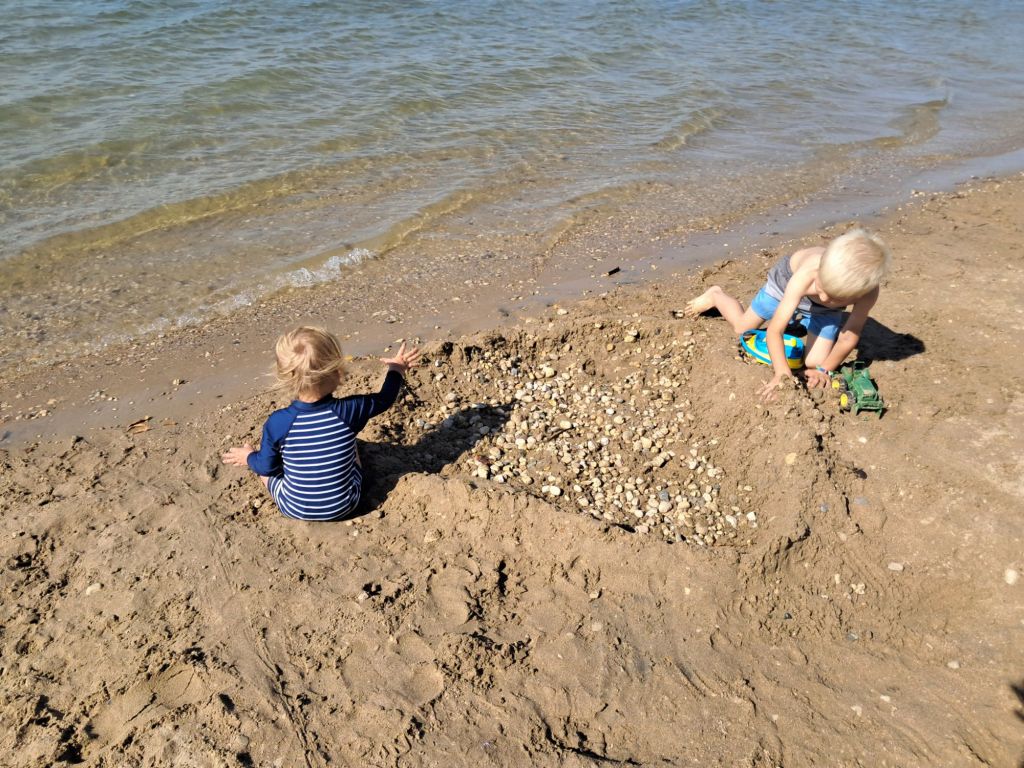
    When the seasons turn, play moves outside in new ways. In summer, it means packing up for a day at the beach—building sandcastles that never quite survive the waves or racing along the water’s edge until our feet ache from the heat and joy.

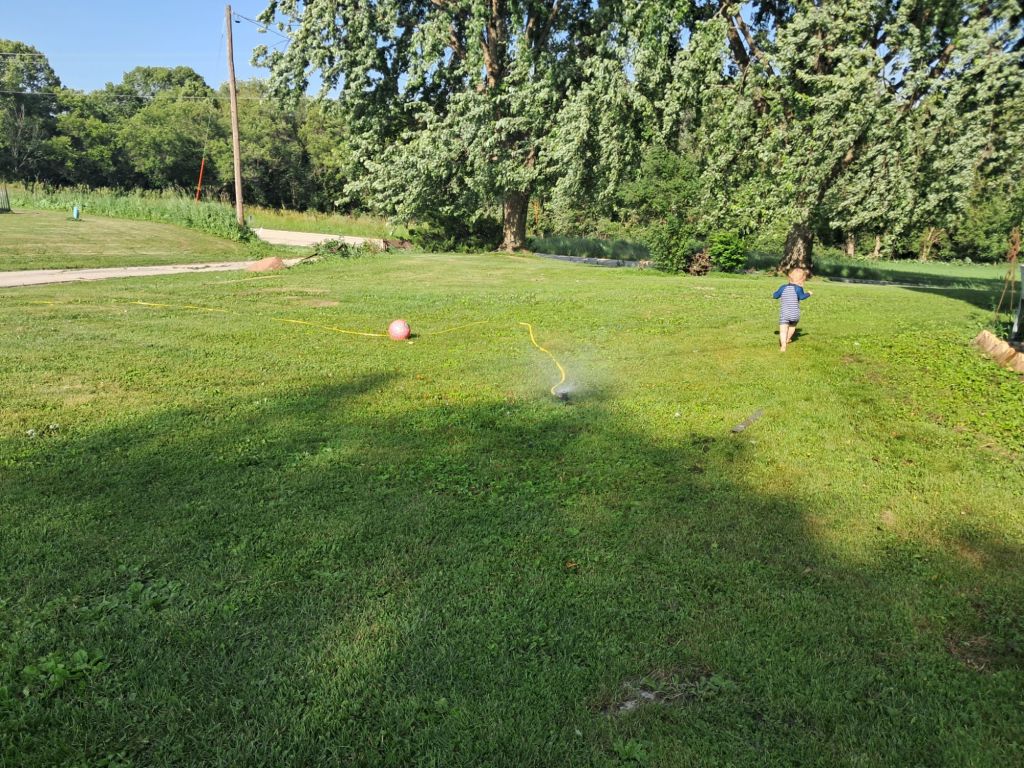
    On the days we stay home, it’s setting up the sprinkler in the yard, running through it again and again until our shirts cling and the air smells like wet grass and sunshine. My kids remind me daily to keep playing—to stay connected to that easy laughter that hides too easily beneath daily responsibility. They make sure I don’t take life so seriously all the time.


    But play doesn’t only happen outdoors or with my children. On my own, I love to play with words and music. Words are my favorite playground. Writing lets me toss thoughts and stories around like pebbles into a stream—watching the ripples spread and change shape as they go.

    Music, too, turns ordinary days into something brighter. Whether I’m singing in the car or humming through chores, it shakes loose the to-do list sitting heavy in my mind and makes room for possibility.
    Then there’s the kitchen—my most flavorful form of play.

    Cooking, for me, is equal parts creativity, science, and surrender. I love experimenting with textures, spices, and colors until they finally mesh just right. Of course, “just right” often takes a few tries. Some experiments end in triumph, others in takeout.

    Stir fry is my best teacher; I spent years perfecting the balance between crisp vegetables, tender meat, and a sauce that clings instead of puddles. I’ve made more leathery dinners than I’d like to admit, but somewhere between burnt edges and breakthroughs, I found joy in the process.

    Play, for me, is exploration for its own sake—the laughter, the learning, and the freedom to fail without fear. The older I get, the more I realize play isn’t confined to childhood; it’s what keeps us curious, forgiving, and fully alive. Whether I’m chasing my kids through waves, sprinting through sprinklers, scribbling a sentence, or perfecting a stir fry, play reminds me that joy can live inside any moment—if only I let it.

    Building a castle in the sand

    What does play look like for you? Is it laughter with your kids, a creative hobby, or something entirely your own? I’d love to hear how you keep play and curiosity alive in your daily life—share your thoughts in the comments below!

    If this post made you smile or reminded you of something you love to do, please take a moment to like, share, or subscribe. Your support helps this little community of slow living, reflection, and real joy keep growing.

    Get weekly reflections on family, creativity, and slowing down to enjoy the simple joys. Subscribe below to bring a bit of wonder back into your week.

    Related Posts

  • Finding Balance and Patience: My Biggest Everyday Challenges

    Finding Balance and Patience: My Biggest Everyday Challenges

    What are your biggest challenges?

    You’d think after all this time, I’d have learned how to juggle it all—but balance always seems to slip through my fingers. The truth is, my biggest challenges aren’t bold or dramatic. They’re quiet, persistent companions that live in the corners of everyday life.

    One of my greatest challenges is balance—finding a rhythm between work, motherhood, and the slower life I want to live. I work outside the home as well as inside it, which means my days are often split between spreadsheets and snack times, meetings and meals. Some mornings, I leave a work call only to find myself wiping peanut butter off the counter or rescuing a half-folded load of laundry. In those moments, I’m reminded that both roles matter—and that balance isn’t about perfection, but about presence.

    A close cousin to balance is learning to give myself grace in the in-between. As a parent and partner, I want to show up patient and calm. As a person, I still fall short plenty of days. Some nights, after the kids are asleep, I replay all the times I snapped or hurried through a moment that deserved more. But I’m learning that gentle doesn’t mean flawless—it means pausing, forgiving, and trying again the next morning.

    Patience is something I’ve been working on my whole life, and it remains one of my biggest ongoing challenges. It’s also one of my main focuses for this new year—learning not just to wait, but to wait well. Whether it’s slowing down enough to listen to my kids tell the same story for the third time or giving myself permission to move at my own pace, patience feels like both a discipline and a kindness I keep coming back to.

    Perhaps the hardest to shake is mental clutter—that constant background hum of to-do lists, choices, and invisible labor. On my best days, homesteading helps quiet it all. There’s something steadying about digging my hands into the soil, hanging laundry in the sun, or collecting eggs in the stillness of early morning. Those small tasks return me to the present. They whisper that the work of life isn’t about getting everything done, but about doing the next loving thing.

    My biggest challenges don’t come in waves—they come in moments. They live in ordinary pauses between rushing and resting, striving and savoring, criticizing and forgiving. And that’s where I’ve learned the most growth hides: not in conquering big mountains, but in walking the same quiet hills again and again until they no longer feel so steep.


    What are your biggest challenges these days? Are they loud and obvious or quiet and persistent, like mine? Share your thoughts in the comments — I’d love to hear what you’re learning to balance or let go of this year.

    If this post resonated with you, please take a moment to like, share, or subscribe. Your support helps this little corner of the internet keep growing—a space for real conversations about family, grace, and the beauty of everyday life.

    Join me for weekly reflections on family, patience, and the slow work of becoming. Subscribe below to start each week with calm inspiration and honest stories from everyday life.

  • When Nostalgia Sneaks In: A Journey Through Music, Memories, and Meaning

    When Nostalgia Sneaks In: A Journey Through Music, Memories, and Meaning

    What makes you feel nostalgic?

    You never expect it—the way a few chords of a song or the smell of something sizzling in the kitchen can throw open a door straight into your past. Nostalgia sneaks in quietly like that. One moment, I’m focused on the day in front of me, and the next, I’m somewhere else entirely—caught between who I was and who I’ve become.

    The Sound of Self-Discovery
    For me, music is the quickest time machine. Just a few seconds of a song, and I’m back in the place where it first meant something.

    When “Fix You” by Coldplay plays, I’m no longer folding laundry or driving home—I’m back in my college dorm room, freshman year. The lights were harsh, the walls thin, and life felt uncertain in that way it only does when you’re eighteen and still finding your place in the world. I’d wait for my roommate to leave, turn up the volume, and sing at the top of my lungs—no audience, no expectations, just a girl trying to make peace with herself, one verse at a time.

    A Taste of Freedom
    A few years later, life expanded far beyond that dorm room. When I taste pupusas, I’m taken back to my first time traveling internationally—a trip to San Salvador where I turned twenty-one. That birthday was wrapped in humidity, adventure, and the quiet thrill of doing something new and a little bit scary.

    I remember sitting in a small open-air restaurant, watching the cook press pupusas by hand—pinto beans and cheese sealed inside dough, sizzling on the griddle. The first bite was simple but unforgettable: chewy, salty, rich, and alive with flavor. Maybe it tasted like freedom.

    Or maybe it just marked the moment I realized how big the world really was.

    Even now, I still try to recreate them at home. My husband doesn’t quite share the same fascination. They never taste exactly like they did that day. For me, they carry the rush of youth and discovery and the quiet joy of realizing how travel can stretch your sense of home.

    A Song for the Road Ahead
    Years later, nostalgia found me again. It was during a bittersweet season of change. It was wrapped in the opening chords of “Helplessness Blues” by Fleet Foxes. I can still see it clearly. Our Subaru Crosstrek was packed with the last of our things as we left what I used to call our “dream home”.

    My husband drove ahead in another vehicle. I followed behind, six months pregnant with our daughter. Our three-year-old son was strapped into his car seat. He watched out the window, humming softly. The sky was that early-summer color somewhere between gray and blue. It was the kind that feels like an ellipsis instead of a period.

    As we drove, I sang along for my son, voice steady, heart full. We’d listened to Fleet Foxes so often that summer. He had chosen his own favorite song, “Quiet Houses.” He adorably called it “the Meh-me-gah song.” That tiny mispronunciation still makes me smile. It’s one of those details you don’t realize will someday become its own memory.

    If “Fix You” reminds me who I was becoming, “Helplessness Blues” reminds me how far I’d come and how much life can change when you’re not looking.

    Laughter That Lasts
    And then there’s “Jump Around.” That one doesn’t carry reflection—it’s pure, unfiltered joy. It takes me straight back to Camp Randall Stadium, surrounded by thousands of college students in a sea of red and white. We jumped in unison until the stands shook beneath our feet. Later, it made its way into every wedding of my college friends—ties loosened, heels kicked off, laughter spilling loud and unrestrained.

    Every time that song comes on, I catch a glimpse of all those versions of me—young, hopeful, tired, happy—and somehow, they all still belong to each other.

    Memory You Can Taste and Hear
    Music and food both have that power—to transport, to remind, to reawaken. Each song and flavor brings back a different version of who I’ve been, like pages from a well-loved journal I never meant to write but somehow did through living.

    Nostalgia reminds me that our lives are stitched together by these small, unforgettable moments—songs, tastes, and places that once felt ordinary but now glow quietly in memory. It isn’t just remembering; it’s re-feeling. Every sensory spark reveals how much of us we carry forward, even without realizing it.

    Maybe that’s what nostalgia really is—not a longing for the past, but a gentle reminder that who we were still lives within who we are. And when it sneaks up on me, I don’t resist it. I just pause, smile, and let the moment wash over me—one note, one flavor, one heartbeat at a time.


    What sparks nostalgia for you? A song, a recipe, a smell you can’t forget? I’d love to hear what brings your favorite memories rushing back—share your story in the comments below.

    If this story stirred a memory or made you smile, please take a moment to like, share, or subscribe. Your support helps this small corner of the internet grow into a space for family, reflection, and life’s beautifully ordinary moments.

    Join me each week for reflections on family, simplicity, and the small sparks that make life meaningful. Subscribe below to bring a little calm nostalgia into your inbox.

    Related Posts

  • Relationships That Shape Growth: Lessons from Family, Friends, and Challenges

    What relationships have a positive impact on you?

    Relationships are like mirrors and anchors at the same time—some show who you are, others steady who you’re becoming. In this season of reflection, I realize how the “ordinary” people in my daily life quietly shape my growth. They influence my mental health and even my dreams. These bonds aren’t dramatic or headline-worthy; they’re the steady threads weaving a stronger me.

    The Foundation: My Partner
    My relationship with my husband forms the bedrock. He doesn’t just agree with me; he gently challenges my assumptions and expands how I see the world. When life feels heavy, he brings calm, humor, and problem-solving that reminds me I’m not carrying everything alone.

    Everyday Teachers: My Children
    My children root me in the present, pulling me from overthinking. They spark curiosity—asking endless questions, noticing tiny details, finding joy in the ordinary. Parenting stretches my patience and teaches me to slow down, breathe, and model emotional regulation they can carry forward.

    Roots and Reflection: Parents and Sisters
    My parents embody quiet generosity and long-term commitment. They show up, help, and give without keeping score—a living lesson in love in action. My sisters bring laughter and insight. We revisit our childhood, name its lasting imprints, and still share honest, silly, vulnerable moments safely.

    Steadiness and Encouragement: In-Laws and Friends
    My in-laws reveal family’s deeper layers—loving children wholeheartedly and offering dependable presence. That reliability steadies chaotic seasons. Friends urge me forward, saying, “Share that passion.” They cheer as I shape writing, parenting insights, and homesteading into gifts for others.

    Even the Hard Ones: Lessons from Tension
    Even draining dynamics now serve growth. They highlight where boundaries must firm up and remind me not everyone merits deep access to my inner world. The shift: observe and learn without repeated hurt, protecting energy with compassion for all involved.

    These relationships—supportive, challenging, or tough—collectively sculpt who I’m becoming. I nurture love, honesty, and respect while curbing harm. In doing so, my life mirrors the connections I hope to pass to my children.


    Now it’s your turn. What’s one relationship shaping your growth right now?

    If this resonates, like, share, and subscribe for more on personal growth, parenting, homesteading, and real-life wisdom. Your support keeps this community thriving!

    Join our newsletter for weekly reflections on family, growth, and finding wisdom in everyday life. Subscribe below to receive thoughtful stories straight to your inbox.

    Related Posts

    My favorite people to spend time with are of course my husband and two children.  But I also love to be around others who are willing to learn, grow, and have fun.

    Keep reading
  • The Booyah Curling Club: Finding Community in Unexpected Places

    The Booyah Curling Club: Finding Community in Unexpected Places

    If you started a sports team, what would the colors and mascot be?

    Some people dream of owning a football franchise or a professional basketball team. Me? I’d rather build something smaller—something you can actually show up for without needing a corporate sponsor or a teleprompter.


    Mainstream sports have their own kind of magic, sure, especially when you’re in the stadium. But on TV, the spectacle loses me. I like it when the cheers sound human, when the players still smile between plays, and when half the fans know each other by name.


    So if I ever started a sports team, it’d be for a smaller, beautifully odd sport—something like curling. There’s something endearing about it: people sliding polished stones across ice while others sweep furiously in front of them, shouting like they’re casting spells. It’s strategy and silliness in perfect balance—a humble sport that celebrates precision, patience, and teamwork.


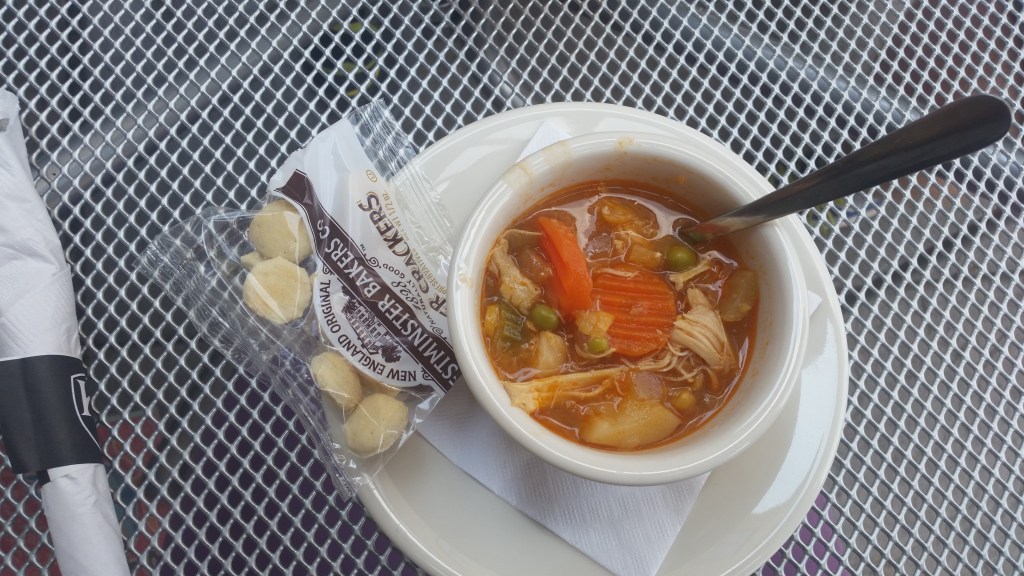
    And, of course, every team needs a mascot. Mine would honor my own past. I’d call the team The Booyahs, after the hearty chicken-and-vegetable stew I first encountered while living in Green Bay.

    To be clear, I’m not talking about the Green Bay Booyah baseball team that existed for a while—my inspiration comes from the local dish itself, a slow-cooked celebration of community. Booyah isn’t just soup; it’s a small-town event unto itself, cooked in huge pots at church picnics and county fundraisers, filling the air with the scent of onions, broth, and belonging.


    The mascot? A cheerful, steaming soup pot named Brothy, wearing a wool scarf and holding a curling broom. It’s a little goofy, a little heartwarming—honestly, perfectly Midwestern.


    The colors would come straight from the soup bowl: bright orange like carrots, deep green like cabbage, and warm golden yellow like the broth. Those are colors that feel alive and approachable—like warmth on a cold day.


    What would make The Booyahs special isn’t the sport itself, but what it represents. It’s a reminder that community doesn’t have to be loud to matter. The best teams aren’t always the ones with the biggest stands or flashiest jerseys—they’re the ones that bring people together to laugh, cheer, and share stories over a hot bowl of something good.


    Because in the end, whether it’s curling stones or life itself, we all just want the same thing—to belong somewhere that feels genuine, where joy bubbles slowly, shared and savored.
    And if that happens to involve a pot of soup and a broom on ice? Even better.


    If you could start your own team—sports or otherwise—what would it be called? What would your colors, mascot, or mission be? Share your creative ideas in the comments below! I’d love to see what you’d dream up.

    If this story made you smile or sparked an idea, please take a moment to like, share, or subscribe. Every bit of support helps grow our little community of readers who celebrate humor, connection, and life’s wonderfully ordinary joys.

    Get weekly reflections on finding happiness in the simple and the small—whether it’s a day on the homestead, a drive down memory lane, or, in this case, a curling team that lives in your heart

    Related Posts

  • Bridging Ideals and Reality: How Life and Family Shaped My Politics

    Bridging Ideals and Reality: How Life and Family Shaped My Politics

    How have your political views changed over time?

    When I was twenty, I believed passion could fix anything. If you worked hard enough, cared deeply enough, and convinced enough people, the world would tilt a little closer to justice. I was young, idealistic, and certain that effort and energy alone could transform almost any problem.

    I went to school for a field I loved and launched into my career like it was a calling. In those early years, purpose burned bright—I was determined to make a difference through big ideas and bigger effort. But life has a way of softening sharp edges, reminding you that true change often begins quietly and takes time.


    Around that same season of life, I started dating—and later married—a man who didn’t always see the world the way I did. His political views challenged mine in ways that were frustrating, fascinating, and, eventually, formative. Our conversations were lively, sometimes stubborn, but always respectful. He listened. I listened. We debated over dinners and long drives, occasionally landing on “agree to disagree,” but never on bitterness.

    Over time, those talks shaped more than our opinions—they deepened our empathy. Our love grew as our perspectives softened. We learned to look beyond slogans and to the stories that shaped each other’s beliefs. Somewhere along the way, we began to meet in the middle, not out of compromise, but understanding. We still don’t agree on everything, but the distance between us has become a bridge—worn smooth by time, laughter, and trust.

    My career changed in a similar way. Early on, I rushed forward, certain that enthusiasm alone could shift systems. Experience humbled me. Real progress, I discovered, is often slow and steady, built through patience, persistence, and relationships rather than grand gestures. I’m still passionate about my work, but now with a steadier kind of faith—a softer optimism that recognizes change as a lifelong conversation, not a single triumphant moment.

    Just as my outlook softened at work and in marriage, it shifted again when I became a mother. Having children refocused my energy in ways I didn’t expect. The drive I once poured into trying to fix the world now finds new meaning in shaping the smaller world within our home. Teaching kindness, empathy, and curiosity to my children feels just as powerful as any public cause. Family hasn’t narrowed my worldview—it has deepened it. I’ve learned that the most lasting change often begins right where we live.

    If my younger self saw the world as a canvas waiting for bold, sweeping strokes, my present self sees it as a tapestry—woven from countless threads of experience, perspective, and love. My politics have matured the same way: less about being right, more about being real. Less about winning debates, more about listening with curiosity and grace.

    What’s changed most isn’t my beliefs—it’s how I hold them. More gently now, with humility and hope—and a quiet awareness that wisdom often lives somewhere between conviction and compassion.


    Have your views changed as you’ve grown older? What experiences, relationships, or family moments have shifted how you see the world? I’d love to hear your reflections in the comments below.

    If this post resonated with you, please take a moment to like, share, or subscribe. Every story shared helps grow this community built on understanding, empathy, and connection.

    Join our newsletter for weekly reflections on family, growth, and finding wisdom in everyday life. Subscribe below to receive thoughtful stories straight to your inbox.

    Related Posts

  • Where Imagination Finds Its Roots: My Perfect Reading and Writing Space

    Where Imagination Finds Its Roots: My Perfect Reading and Writing Space

    You get to build your perfect space for reading and writing. What’s it like?

    Every writer dreams of a space that feels like home to their thoughts—a corner of the world where imagination stretches its legs and the noise of life takes a softer tone. Mine isn’t glamorous or high-tech, but it’s built for calm, comfort, and curiosity. A place where peace and creativity meet in the same breath.

    I see it tucked just far enough from the heart of the house to allow quiet focus, yet still close enough that I can hear the gentle rhythm of family life in the background. The walls glow in soft, natural tones—sage, cream, or pale gold—and the space feels welcoming from the first step inside. Bookshelves line the walls, heavy with well-loved novels, gardening books, and journals. Each spine tells a piece of my story, each page holding the warmth of past inspirations.

    Sunlight spills through wide windows overlooking something living—maybe the garden, trees beyond the fence, or a meadow flickering with movement. In winter, a small fireplace adds its steady crackle and a hint of wood smoke to the air.

    At the center sits my workspace: an ergonomic, spacious desk with drawers neat enough to keep the chaos contained but close enough for notebooks, colorful pens, and coffee within reach. My laptop and dual monitors stand ready for writing or deep-diving into research. And, of course, high-speed internet—because a writer’s curiosity shouldn’t have to wait for a page to load.

    On one wall hang a couple of maps—one of Wisconsin, another of the United States, and a third of the world. They’re conversation companions during phone calls, or quiet invitations to study how places became what they are. Sometimes, I trace borders and coastlines with my finger, thinking about history’s slow hands shaping landscapes.

    Next to them, shelves hold little collections from our life together—curiosities and keepsakes, handmade pottery, carved wood, painted stones, and things our children have crafted with care and imagination. Each object holds a small story and reminds me that creativity lives in every season of life.

    For reading, a deep chair near the window offers comfort for quiet afternoons. A small side table waits for tea or a candle, while a corkboard above gathers quotes, sketches, and reminders of future dreams. The air feels alive with green things: trailing pothos, small herbs by the sill, and a fiddle-leaf fig soaking in golden light. The whole space breathes, warm and alive.

    What I love most about this imagined room is its balance—it’s peaceful but not sealed off, still enough for thought but close enough to feel the pulse of family. The soft overlap of connection and solitude makes it feel whole.

    This is where ideas grow roots and take flight—a sanctuary that mirrors the life I’m building: curious, creative, and connected.

    In the end, it’s not just a room for reading and writing; it’s a reminder of why I create at all—to notice, to cherish, and to keep learning about the world and the people who make it home.
    Sunlight, comfort, connection, and wonder—the timeless ingredients of a life well-lived.


    Now it’s your turn. Would your ideal space look like? A window view, a favorite chair, or maybe something that inspires you every day? Let me know below in the comments, and let’s inspire each other!

    If this post brought a little inspiration to your day, please take a moment to like, share, or subscribe. Every bit of support helps grow this mindful space for stories, creativity, and connection.

    Get gentle reflections on creativity, homestead life, and personal growth delivered straight to your inbox. Subscribe below and join our growing circle of readers who find beauty in slow, intentional living.

    Related Posts