I always knew about chamomile tea. I’d heard people talk about winding down with a mug before bed and mention the health benefits—things like calming the nervous system, easing digestion, and supporting better sleep.
What I didn’t know was that you could forage your own chamomile blossoms…until I watched my husband’s grandmother do it.
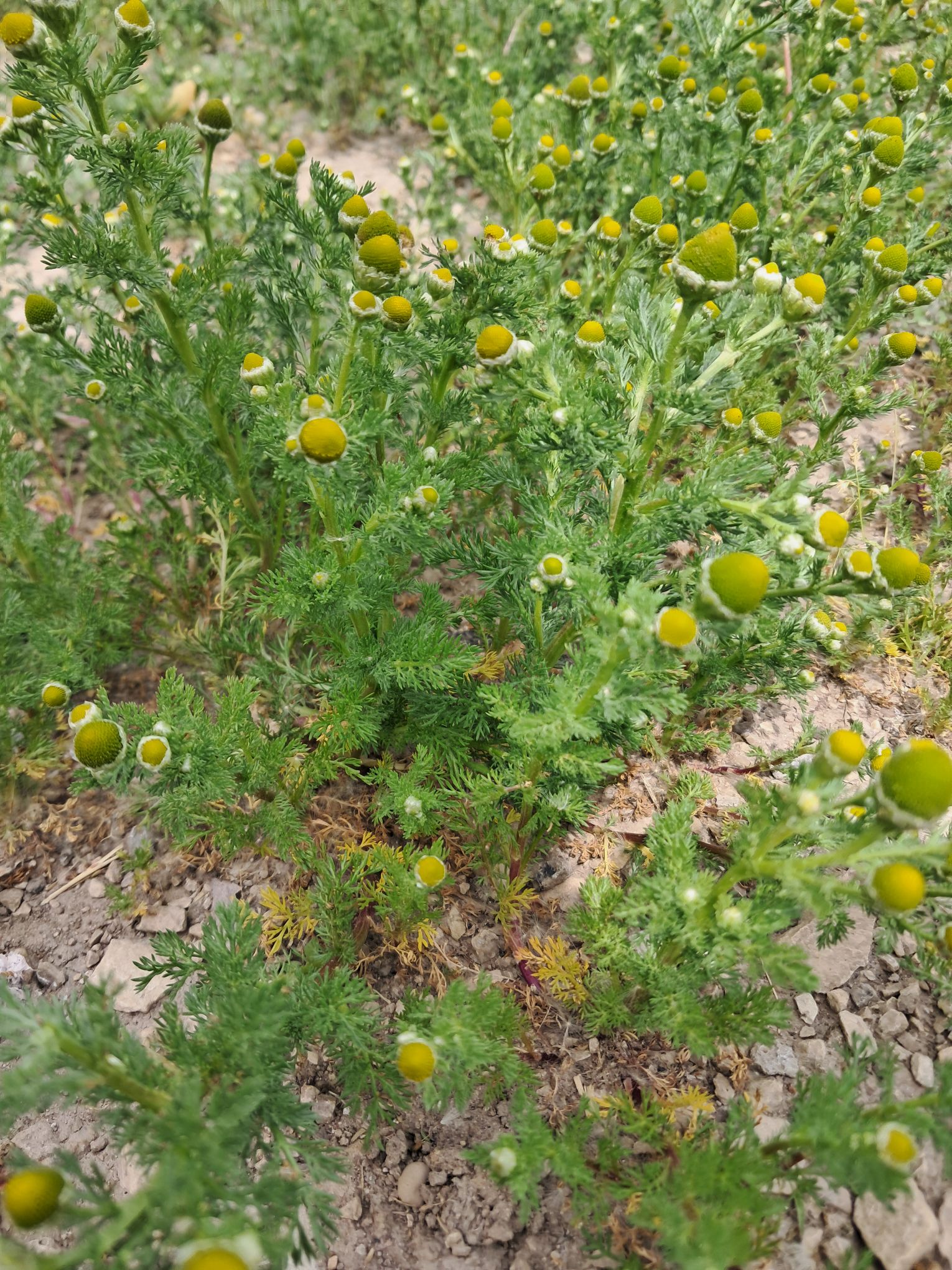
She walked right out into the driveway and started picking what I had always thought were just little white-and-yellow weeds. It was like a lightbulb went off in my head. These “weeds” I’d seen growing all over the driveway actually produce a delicious tea? Mind officially blown.
If you’re not familiar with foraging your own chamomile, this is a simple guide to help you:
- Recognize chamomile in the wild
- Harvest it (bonus points if you involve kids)
- Dry and store it
- Brew your own homemade chamomile tea whenever you want—without the grocery store bill
As always, I’m sharing our experience for informational purposes; it’s not medical advice.
Where Chamomile Likes to Grow
One of the most surprising things about chamomile is where it chooses to grow. It doesn’t always show up in neat garden rows or carefully tended herb beds.
You’ll often find it in:
- Gravel driveways and along the edges of paths
- Road ditches and disturbed soil
- Around barnyards, fence lines, and well-traveled areas
- Sometimes in garden beds if it’s self-seeded or naturalized
It seems to have a soft spot for tough, compacted, “nobody wants to grow here” spots—which is part of its charm. Once you know what you’re looking for, you may start seeing it everywhere.

Chamomile typically blooms through much of the warmer season, often late spring into summer depending on your climate. That’s the time of year you’ll want to start scanning those driveways and ditches for blossoms.
If you’re foraging near roads, be mindful of:
- Spraying (avoid areas that may have been treated with herbicides)
- Pet or livestock traffic (look for cleaner patches)
- Traffic dust and grime (driveways and paths on your own property are usually a safer bet)
What Chamomile Looks Like (and Smells Like)
Before you start picking anything, it’s important to be confident in what you’re harvesting.
Chamomile generally has:
- Small daisy-like flowers
- White petals
- Yellow, dome-shaped center
- Fine, feathery leaves
- Light, airy, almost carrot-top-like foliage
- A sweet, apple-like scent when you crush the flower heads between your fingers
A few simple tips:
- Look for patches of low-growing plants with lots of little white-and-yellow flowers rather than single, tall stems here and there.
- Rub a flower gently between your fingers and smell it. That sweet, apple-y scent is a good sign you’re in the right place.
There are a few different chamomile and chamomile-lookalike species out there, and some “daisy” weeds can be mistaken for chamomile at first glance. If you’re unsure, start in a spot where you know chamomile has already been identified correctly (a family member’s patch, a friend’s garden, or your own yard from purchased seed), and cross-check with a field guide or trusted resource before branching out into roadside foraging.
How to Harvest Chamomile Blossoms
When you’re ready to harvest, focus on the flower heads rather than the stems and leaves.
Basic harvesting steps:
- Choose a dry day.
Harvest when the flowers are dry (late morning or afternoon is usually best, after the dew has evaporated). - Look for open flowers.
Pick blossoms that are fully open and cheerful-looking—not browned or fading. - Pinch or snip.
Gently pinch the flower head between your fingers and thumb and pop it off the stem, or use small scissors if you prefer.
You don’t need the whole stem for tea—just the flower heads. Stems and leaves can be a bit more bitter and aren’t necessary for a nice cup of chamomile.
In a short picking session, you can easily gather enough blossoms to fill a small bowl or two, which will translate into several jars’ worth of tea once they’re dried.
Make It a Family Foraging Activity
Chamomile harvesting is a perfect kid job.
Why it works so well with children:
- The flowers are low to the ground and easy to reach.
- The “popping” motion of picking the flower heads is actually fun.
- There’s a clear, satisfying end product: “We’re picking these to make tea we’ll drink later.”
Give each child:
- A small basket, bowl, or container
- A simple instruction: “We’re picking the little white flowers with yellow centers—no leaves, no grass.”
It’s a gentle way to:
- Teach plant identification
- Talk about where our food and herbs come from
- Connect everyday “weeds” to real, useful things in your kitchen
How to Dry Chamomile for Tea
After you’ve picked a bowl of blossoms, it’s time to dry them so they don’t mold and will keep well through the year.
Option 1: Using a Dehydrator

If you have a dehydrator, this is the most controlled method.
- Spread the blossoms in a single layer on your dehydrator trays.
- Set the temperature to around 95°F (a low, gentle setting to preserve flavor and color).
- Dry for about 24 hours, or until the flowers are completely dry and papery to the touch.
- Test a few by crushing them between your fingers—there should be no softness, just a dry crumble.
Option 2: Air-Drying or Sun-Drying
If you don’t have a dehydrator, you can still dry chamomile.
- Spread the blossoms in a single layer on a clean screen, rack, or baking sheet.
- Place them in a warm, dry place out of direct rain and heavy dew.
- Make sure there is good airflow—near a sunny window or in a protected, breezy spot outside works well.
- Gently stir or turn them once a day so they dry evenly.
Depending on humidity, it may take several days. Again, you want the blossoms fully dry and crisp before storing.
How to Store Dried Chamomile
Once your flowers are fully dry, you can store them for months.
Simple storage options:
- Glass jars with lids (mason jars work great)
- Clean, food-safe containers with tight-fitting lids
- Or, going old-school: something like a washed and dried Cool Whip container, just like my husband’s grandmother used
Whichever container you choose, keep it:
- In a cool, dry place
- Out of direct sunlight
- Labeled with the contents and date
Properly dried and stored, your chamomile should keep its flavor and gentle fragrance for a year or more.
Brewing Your Own Foraged Chamomile Tea
Now for the best part: turning those foraged blossoms into a cozy mug of tea.

On a cool winter night (or whenever you need a moment to relax), you can:
- Take a tea ball, reusable tea bag, or small infuser.
- Add about 1 tablespoon of dried chamomile flowers per cup of water.
- Pour boiling water over the tea.
- Let it steep for about 5 minutes (longer if you like a stronger flavor).
- Remove the infuser, let the tea cool slightly, and enjoy.
You can drink it:
- Plain
- With a drizzle of honey
- With a splash of milk or cream, if you like it a little softer
For us, it’s become a go-to when someone needs to unwind or has a slightly unsettled stomach, and there’s something extra special about knowing you picked those flowers yourself.
A Few Gentle Reminders
As with any foraged herb:
- Make sure you’ve correctly identified the plant before consuming.
- Avoid areas that may have been sprayed or heavily contaminated.
- If you’re pregnant, nursing, or on medications, it’s always wise to double-check with a trusted healthcare provider before adding new herbal teas regularly.
From “Weed” to Teacup
Watching my husband’s grandmother bend down in the driveway and start picking “weeds” for tea completely changed how I look at what grows around us.
Chamomile went from being a box on a grocery shelf to a living, growing plant that shows up in the unlikeliest places—and now, to something our family can gather, dry, and sip together.
If you’ve ever wondered whether you could forage your own tea, chamomile is a gentle, beginner-friendly place to start.
Have you ever foraged something you used to buy at the store?
If this chamomile guide gave you some ideas (or a little confidence to try foraging), would you share it with a friend or save it for later?
You can also join my email list for more simple, from-scratch homestead projects—from wild teas to what we’re growing in the garden.
Read Next: Foraging Stinging Nettles – A Wild, Nutritious Spring Green