Tag: healing

  • Learning to Pause: How Doing Less Reacting Creates More Peace (for You and Your Kids)

    What could you do less of?

    Reacting.

    For much of my life, I treated every perceived slight as a call to arms — as if every misunderstanding demanded an immediate defense. But I’m learning that not everything needs my reaction. Some moments only ask for my attention.

    When I feel wronged, my body responds before my mind catches up. My heart races, my jaw tightens, my breath shortens. The instinct to protect myself flares fast and fierce.

    Lately, I’ve been practicing the pause — noticing the sensations instead of obeying them, letting the surge of emotion roll through before deciding what to do next. That pause has become sacred space — small, but expansive enough for clarity to enter.

    I ask myself: Did they mean to hurt me? Do I really need to defend myself here? Will reacting make anything better?

    Most often, the answer is no. And honestly, reacting rarely makes me feel better anyway. It usually leaves me drained, guilty, or frustrated — the kind of heaviness that lingers long after the heat of the situation fades.

    Still, this is very much a work in progress. I can — and do — get swept up sometimes, especially when my basic needs aren’t met. When I’m tired, hungry, or stretched too thin, that low, buzzy restlessness takes over and patience slips away faster than I’d like. In those moments, old instincts roar back to life. The difference now is that I notice sooner. I recover faster.

    Recognizing my own patterns — especially when I’m depleted — has made me more compassionate with my kids when they’re overwhelmed too.

    When they hit their own emotional storms — those tearful, trembling tempests that feel larger than life — I try to steady myself first. I hold them close, breathe with them, and search for what might help: a hug, a quiet corner, a change in tone.

    Sometimes I get it right. Sometimes I don’t. But every time, the goal is the same — to model calm before correction, connection before control.

    So I breathe. I soften. I let the first wave of reaction pass, both theirs and mine. What remains feels powerful — not because it conquers emotion, but because it transforms it.

    Doing less reacting isn’t passivity. It’s a practice — a daily choice to protect peace over pride, to pause long enough to hear what really matters.

    Day by day, breath by breath.

    If this resonates with you, take a moment today to notice your next emotional wave — big or small — and give yourself the gift of a pause. Observe before reacting. Then share your experience in the comments or pass this piece along to someone who’s also learning to slow down, breathe, and choose peace over impulse. And subscribe for more personal reflections and self-improvement.

    Related Posts

    The Morning I Chose Connection Over Correction

    My mom was in the hospital, I wasn’t sleeping, and the stress had nowhere to go. So I poured it onto my five-year-old son. Every morning before preschool, I’d launch into lectures from the driver’s seat—how he should control his feelings, how he should handle surprises better, how he needed to “do better today.” He…

    Keep reading

    Breaking the Yell: Mastering My Temper

    What is one thing you would change about yourself? I used to think changing my looks—maybe my hair or my nose—would fix everything and make me happier. But life taught me otherwise. The one thing I’d truly change is how quickly stress hijacks my emotions. Overwhelm turns into impulsive anger when my perfectionism meets chaos.…

    Keep reading

    Growing Together in Small Moments

    It had already been a week that stretched me thin. One of those weeks where fatigue doesn’t just live in your body—it seeps into your spirit. Each day stacked heavier than the last. Even small inconveniences pressed harder than they should have, like tiny weights layered until my shoulders ached. By Thursday, I was frayed…

    Keep reading
  • Breaking the Yell: Mastering My Temper

    What is one thing you would change about yourself?

    I used to think changing my looks—maybe my hair or my nose—would fix everything and make me happier. But life taught me otherwise. The one thing I’d truly change is how quickly stress hijacks my emotions. Overwhelm turns into impulsive anger when my perfectionism meets chaos. That’s when I feel out of control.

    Growing up, I watched a loved one explode over little things like a misplaced tool, a late dinner. He would yell until the air felt thick with tension. I remember my stomach twisting in knots, so tight that I couldn’t eat. I swore I’d never damage my own kids that way, but without tools, I repeated the pattern.

    One evening after a brutal workday, my husband mentioned the dishes in the sink. My pulse hammered, chest tightened, and my voice sliced through the quiet kitchen with unfair frustrations. Silence fell heavy; his hurt eyes met mine, regret burning like acid in my throat. We talked it through later, but the sting lingered, echoing that childhood fear of becoming the yeller.

    Having children gave me endless chances—both challenges and opportunities—to practice controlling that fire. Their small mistakes and big emotions test my patience constantly. Each time I slip up, I try harder the next day. I use tools like deep breathing to catch my rising anger. Exercising keeps stress in check. I also maintain healthy habits to keep my resilience strong. More than anything, I am learning to stay curious about my own flaws. I keep open, listening carefully to feedback. I try not to shut down or get defensive. It’s slow work, but progress is real.

    Yesterday, my 6-year-old came home crabby, slamming his backpack down; I felt my own irritation rising, matching his sharp tone. But I paused—chest rising and falling with deep breaths—while my 2-year-old daughter watched wide-eyed. Kneeling down, I asked what he needed, validating his grouchiness but setting a calm boundary: no yelling. Knowing he craves sensory squeezes, we launched the “burrito game”. I took turns rolling them tight in blanket burritos on the couch, “baked” them with goofy warmth, then “ate” them with tickles. For 15 minutes, their giggles echoed as growls turned to belly laughs, stress melting into connection. The warmth of their laughter filled the room, a vivid contrast to the tension that once dominated these moments. This is what modeling patience looks like—turning tension into play, teaching them emotions don’t have to erupt.

    What I’ve realized—and it’s changing everything—is that emotional regulation isn’t about never feeling mad. It’s catching those perfectionist triggers early, breathing through the old patterns instead of exploding. Now, instead of that youthful belief in superficial fixes, I’m building control from within. That shift mends my relationships, breaks my family’s cycle of outbursts, and lets me like the steady parent—and partner—I’m becoming. It’s a gift to my children, showing them that even strong feelings can be met with calm and love, not yelling.

    If this story of breaking anger cycles resonates with you, like it. Share it with someone who needs emotional tools. Subscribe for more real-talk on personal growth!

    Related Posts

    Pet Peeves Can Teach Us More Than We Think

    Name your top three pet peeves. Everyone has pet peeves—those small irritations that can silently gnaw at our patience. For me, they reveal more than just frustration; they mark my journey toward empathy and self-awareness. I try hard not to complain because I know I am truly fortunate. I have a life filled with comfort…

    Keep reading

    Growing Together in Small Moments

    It had already been a week that stretched me thin. One of those weeks where fatigue doesn’t just live in your body—it seeps into your spirit. Each day stacked heavier than the last. Even small inconveniences pressed harder than they should have, like tiny weights layered until my shoulders ached. By Thursday, I was frayed…

    Keep reading

    The Morning I Chose Connection Over Correction

    My mom was in the hospital, I wasn’t sleeping, and the stress had nowhere to go. So I poured it onto my five-year-old son. Every morning before preschool, I’d launch into lectures from the driver’s seat—how he should control his feelings, how he should handle surprises better, how he needed to “do better today.” He…

    Keep reading
  • Crescents of Resilience

    Crescents of Resilience

    Do you or your family make any special dishes for the holidays?

    Flour-dusted hands trembled over a bowl at 3 a.m., measuring cups snapping in the silent kitchen. Everything was a desperate attempt to summon my mother from the hospital. An undiagnosed intestinal blockage had her rejecting even water.

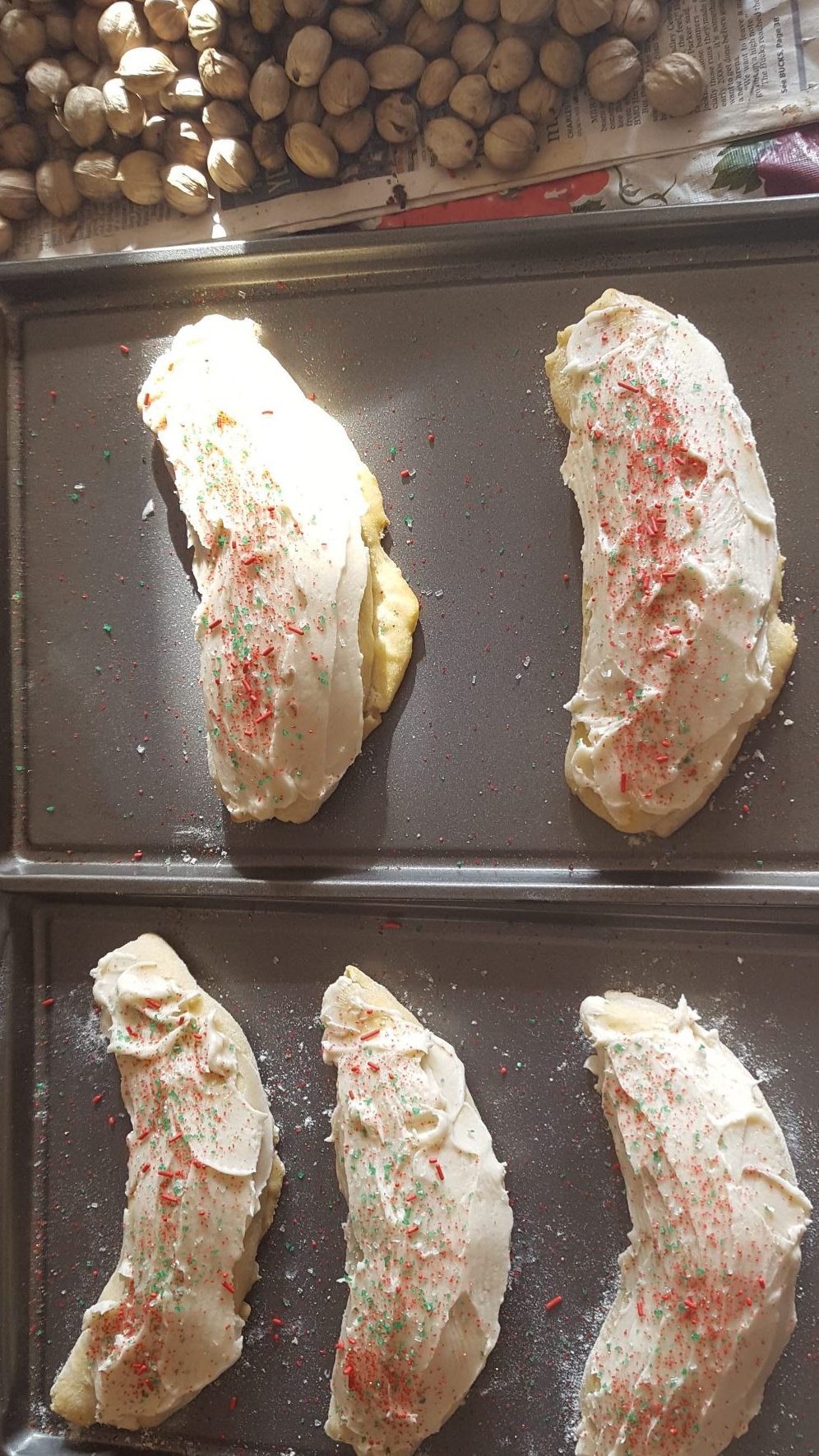
    The family lineage traces to heavy German roots. My father’s ancestors came from Austria in the 1870s, my mother’s from northern Germany in the 1850s. Her kranz kuchen recipe endures from her grandmother’s penciled cards. Yeasted dough rolled thin, layered with my dad’s foraged hickory nuts, chopped dates, cinnamon, and brown sugar. Twisted into crescents, baked golden, and glazed, dozens emerge each year for us six daughters, neighbors, and church friends, embodying a quiet hospitality.

    Last Christmas, that rhythm fractured. Hospitalized, she could not retain food; us sisters started a text string, asking one question. “What if they never pinpoint the cause?” No flour clouds rose, no yeasty warmth filled the air—only silence amplifying the dread of a holiday without her.


    Insomnia seized the nights. Each fragmented update jolted awake any fragile rest. Kneading became refuge: egg yolks merging into warm, proofed milk and yeast, the dough yielding beneath palms like hope taking form. As it rose under a towel, yeast’s scent enveloped the darkness. Folding in the nuts, dates, and spice, then rolling and shaping crescents, the hands of generations guided mine.


    The oven’s glow dispelled shadows; caramelized sugar perfumed the halls. Frosting traced uneven paths, mirroring hers. Those crescents transformed rupture into resilience.


    A single bite of spice-laced crumb now evokes my dad’s meticulous toil, my mother’s assured fold, my midnight vigil—a resilient pastry proving adversity does not sever us but reshapes us, crescent intact. She recovered. The tradition persists. We endure.

    If this story of family tradition and quiet strength resonates with you, like this post. Share it with someone who needs a reminder that resilience often starts in the kitchen. Subscribe for more heartfelt essays on heritage and hope.

    Related Posts

  • Pet Peeves Can Teach Us More Than We Think

    Name your top three pet peeves.

    Everyone has pet peeves—those small irritations that can silently gnaw at our patience. For me, they reveal more than just frustration; they mark my journey toward empathy and self-awareness. I try hard not to complain because I know I am truly fortunate. I have a life filled with comfort and people who support me. When I’m asked about my top three pet peeves, I realize they reflect who I am beneath the surface. They also show how far I’ve come. My three top pet peeves are based on how we treat each other: moral superiority, selfishness, and condescension.

    The Weight of Judgmental, Morally Superior People
    I learned a painful lesson about judgment from a friend. She rightfully withdrew after I reacted to her with criticism rather than compassion. That moment still lingers—when they vulnerably shared their struggles, and I judged their choices instead of hearing their heart. The sting of that loss taught me how easy it is to judge without walking in someone else’s shoes. Now, when I face moral superiority, from others or myself, I pause to remember. We all live complex lives shaped by experiences others can’t fully grasp. Judgment is a quick and lonely reaction; empathy takes more courage but builds connection.

    The Sting of Selfishness and Isolation
    Selfishness frustrates me deeply. I am especially frustrated by the refusal to embrace community in parenting and care giving. I once believed I could handle everything alone, armed with sheer will and rigid routines. Yet endless sleepless nights and isolation soon shattered that illusion. I still recall the raw exhaustion and quiet desperation before I accepted help and found strength in community. Watching others withdraw or show impatience with children stings because it undermines what I now know. We thrive in villages, not in solo isolation. People can also act selfishly without fully understanding how their choices ripple outward and affect those around them. This makes compassion and honest conversation even more important.

    The Quiet Poison of Condescension from a Loved One
    Condescension is unlike judgment in a profound way. It is steeped in strong feelings and visible actions: the raised eyebrow, the patronizing tone, the dismissive glance. These actions communicate contempt and make you feel small. I unfortunately became intimately familiar with those feelings from a trusted loved one during my childhood. Back then, I believed shrinking myself might somehow earn their approval. The sting of those subtle rejections echoed for years. Building my confidence has been a slow, ongoing process that still unfolds. Recognizing condescension as thought, behavior, and emotion has helped me protect my worth today. It has also marked a crucial part of healing.

    From Peeves to Perspective
    These pet peeves are more than annoyances; they are milestones on my path of growth. They lay bare the familiar traps of judgment, selfishness, and contempt. They remind me of how far I have come in responding with compassion toward others and myself. Complaining only raises my heart rate and drags me into a negative head space. Instead, I lean into these moments of discomfort as invitations to think and learn. After all, life is a messy, beautiful journey, and we are all works in progress navigating it together.

    If this essay resonated with you, please like, share, and subscribe to stay connected. Your support helps spread these reflections on growth and empathy to others who need them. Join the conversation and let’s learn and grow together.

    Related Posts

  • Learning to Be Seen: Redefining My First Impression

    What’s the first impression you want to give people?

    When I think about the first impression I want to give people now, it connects closely to how much I’ve learned about myself.

    In my 30-something years, I’ve spent a lot of time shrinking into the background—speaking softly, standing at the edges of rooms, and convincing myself that others didn’t really want to notice me. Somewhere along the way, I mistook invisibility for safety. That belief likely began in childhood, when being quiet felt like the right way to belong.

    But with time, I began to see what that silence cost me. By keeping myself small, I limited the depth of my connections. People knew me only in fragments because I wasn’t showing them a complete person. What I thought was self-protection often turned into isolation.

    Now, I want my first impression to reflect who I’m becoming rather than who I used to be. When someone meets me, I hope they sense warmth and calm, a presence that feels both grounded and engaged. I want my voice to carry confidence without volume—a kind of steadiness that says, “I see you, and I’m here.” Maybe it shows in the way I smile when greeting someone or in how I pause to listen before responding.

    More than anything, I hope to make people feel comfortable being themselves, just as I’m learning to be comfortable being myself. If my presence leaves others feeling seen, valued, and at ease, then that’s the impression I want to give. It’s the one I’ve always been reaching for, quietly, without realizing it.

    Have you ever realized that the way you present yourself isn’t who you truly are inside? Share your story in the comments. What first impression do you want to give people now, and how has that changed over time?

    If this reflection resonated with you, take a second to like the video. Share it with someone who might need to hear it. Subscribe for more conversations about self-growth, confidence, and showing up as your authentic self. Your engagement helps build a community where everyone feels seen and heard.

    Related Posts

  • Seasons of Adventure: Reflections as My Son Turns Six

    Seasons of Adventure: Reflections as My Son Turns Six

    The Early Adventure

    Six years. A lifetime and a blink all at once. It’s hard to imagine my tall, curious six‑year‑old as the little baby who once fit perfectly in my arms. Yet some days, it feels like only yesterday. As his birthday approaches, I find myself reflecting—not just on how much he’s grown, but on how much I’ve changed too.

    Before motherhood, I was an adventurer. I loved travel, new experiences, and the freedom of not knowing what came next. My job and life took me across the country, and I chased opportunity with excitement. But as thirty approached, another kind of calling began to whisper. Parenthood. I knew that if I waited too long, it might be harder to step into that new identity. With my husband’s encouragement, we leapt into the unknown together.

    The Lessons of Change

    Pregnancy came easily. A touch of morning sickness, a few sleepless nights, but otherwise, it was smooth. I exercised right up until my water broke. I don’t share that to boast—only to show how everything shifted the moment he arrived. Nothing prepared me for the intensity of that change.

    When labor began, I shook uncontrollably—terrified of the pain, the sleepless nights ahead, the loss of freedom I’d always cherished. That fear slowed everything down. Twenty‑one long hours passed before he was born. Later, I learned that anxiety floods the body with adrenaline, making labor harder. But in hindsight, that physical slowing mirrored something deeper: my fear of what it meant to become someone’s mother.

    I was afraid of failing him, of not knowing enough, of being unequal to the task. That fear didn’t just tighten my muscles—it tightened my sense of self. It made every decision feel heavier, every moment charged with doubt. I thought “harder” meant only the literal—long labor, sleepless nights, feeding struggles—but parenting revealed its metaphorical weight too. Fear made everything take longer: the acceptance, the confidence, even the joy.

    In time, I learned that fear wasn’t an enemy. It was a mirror. It showed me what mattered most, where I still needed to grow, and what I was willing to face for love. The same fear that once froze me taught me grace, patience, and surrender.

    Finding Strength

    Returning to work after parental leave was another reckoning. I cried every day that first week, missing him in a way that words can’t fully capture. The ache didn’t disappear—it only softened with time.

    And then, just as I was finding my footing, the world changed again. Six weeks after returning to work, COVID arrived. Suddenly, I was balancing deadlines with diaper changes, spreadsheets with nap schedules. The days felt endless, looping between exhaustion and small, quiet triumphs. Yet amid the chaos, we found a rhythm—working during naps, finishing tasks after my husband got home, creating pockets of peace wherever we could.

    Through it all, I discovered something unexpected: strength in letting go. Parenting isn’t meant to be done alone. It takes a village—not just helping hands, but willing hearts. When family, friends, and neighbors dropped off meals, shared advice, or simply listened, I experienced the power of community. That kind of support transforms everything. But living far from family meant we only had so much of it, and that ache for connection stayed with us.

    Building Community

    Perhaps that season of isolation made our next decision clear—it was time to move closer to family. We wanted the support we’d missed, not only for ourselves but for our children. It wasn’t an easy decision, and it took a couple of years, but it was the right one. By the time his little sister arrived, we were settled, and our son was starting preschool. Watching him become a big brother—gentle, silly, protective—has been one of the greatest joys of my life.

    What I didn’t anticipate was how deeply our sense of belonging would bloom. For the first time, people weren’t just offering help—they were eager to be part of our world. Family members plan afternoons filled with backyard discoveries, storytelling, and unhurried laughter. Cousins race through the house, inventing games, sharing snacks, and building the kind of bonds that belong entirely to childhood. Our son now has the freedom to spend time with people who love him independently of us. He’s learned that family extends far beyond the walls of home.

    For my husband and me, that has been a blessing beyond measure. We now have people we can count on—family who arrives without being asked, friends who show up simply to share time, a network that steadies us. Parenting no longer feels like a fragile balancing act. It feels shared, supported, deeply rooted. There is peace in knowing our children are surrounded by people who delight in them and find joy in being part of their story.

    A New Kind of Adventure

    Adventure still has a place in my life, but it looks different now. It’s not plane tickets and new cities—it’s beach trips, museum visits, and long walks through the park. It’s watching my children encounter the world: splashing in waves, chasing balls, collecting shells. The wonder on their faces brings more joy than I ever could have anticipated.

    My adventures have changed, but I’ve learned this, too, is a season. The world will still be waiting, and when the time comes, new journeys will find their way to me. For now, I’m grateful to be here—growing, learning, loving, and finding beauty in this quieter kind of voyage.

    My son shares my love of history and stories. He’s a curious little traveler at heart, always ready to laugh and explore. As he steps into middle childhood, I can’t wait to see where his curiosity leads him next. And maybe, if I’m lucky, he’ll still want me along for part of the ride.

    Perhaps that’s what motherhood truly is—learning that the greatest adventures begin not in faraway places, but in the heartbeat of home.

    Closing Note

    Writing this reminded me that every stage of life carries its own kind of adventure. The early years of motherhood can feel all‑consuming, but they’re also fleeting and filled with meaning. This season—messy, joyful, exhausting, extraordinary—is one I can’t hold onto forever, and one I’ll always treasure. To any parent reading this: wherever you are in your story, remember that adventure doesn’t disappear—it simply changes shape.


    Your Turn

    What season of life are you in right now, and how has your idea of adventure changed along the way? I’d love to hear your thoughts and stories in the comments.


    Keep the Story Going

    If this story resonated with you, please take a moment to like it. Share this story as well. Subscribe for more reflections on parenthood, change, and the beauty of everyday life. Your support helps this space grow and reach others walking a similar path.

    #ParentingJourney #MotherhoodMoments #FamilyLife #SeasonsOfLife #ParentReflection #MomBlog #EverydayAdventure

  • Reclaiming My Voice: The Path from Isolation to Connection

    Throughout my adulthood, I’ve transformed self-expression into a high-stakes gamble, where the cost of judgment feels like a referendum on my very right to exist.  The terror of having my innermost thoughts laid bare is akin to standing emotionally naked before a crowd, every flaw and contradiction exposed to scrutiny.  Alarm bells sound in my head before I say anything meaningful, telling me that my words could be dissected, dismissed, or even weaponized against me.  If I expose myself, my inner world will become subject to forces beyond my control only to be deemed unworthy, irrational, or even contemptible by those who hear my truth.

    I’ve diluted my opinions, laughed at jokes that have unsettled me, nodded along to ideologies with which I disagree, and remained stoic to avoid the searing humiliation of rejection.  Every withheld thought has become a self-imposed gag order.  As inauthenticity and silence have become my armor, my inner voice has grown louder and sharper.  Before I speak, I have replayed past rejections like a cursed film reel: the raised eyebrow that dismissed my idea, the nervous chuckle that hollowed my confession, the silence that followed my boldest statement.  In this way, the act of withholding has become a protective ritual, a way to shield the fragile parts of myself that felt too tender to survive criticism.  The high cost of this silence has been an increasing sense of isolation, trapping me behind glass with a desperate desire.  See me.  Understand me.  In these moments, I ache to press my palm against the existential glass wall to find another warm and steady hand meeting mine.  But the glass remains cold, while I wonder if the fault lines are mine alone. 

    To be known is to risk devastation, yet to remain unknown is a slower kind of death, with strained relationships, isolation, and a fractured sense of self.  Over the years, I’ve watched my relationships become transactional rather than transformative.  Trust has been replaced by calculation, authenticity has been replaced by performance, and dialogue has devolved into echo chambers of mutual reassurance.  The unspoken dread of judgment fosters isolation because I only feel truly myself with select groups of people or alone.  Meanwhile, I grow increasingly alienated from the community that could affirm or challenge my thoughts in healthy ways.  This isolation reinforces fear, creating a feedback loop where vulnerability feels ever more dangerous.  As I’ve habitually silenced my inner voice, my sense of self has become fragmented, a patchwork of half-truths and omissions.  Relationships have become anchored in politeness rather than depth.  The world has gotten colder, less trustworthy, a place where authenticity is a liability.  The emotional weight manifests itself as a quiet grief for the unlived life, with unspoken ideas and unmade connections.

    Yet, within this grief lies the potential for liberation, which lies not in abolishing fear, but in recalibrating its power.  Small acts of courage, such as sharing an unpopular opinion, tolerating the discomfort of disagreement, and embracing the messy reality that no one is universally understood, can slowly rebuild the trust I should have in my own resilience.  In those moments, I will remind myself that rejection of an idea does not mean the person wholly rejects my company.

    The act of sharing openly becomes not a plea for validation but an assertion of my irreducible presence in the world.  In the end, the fear of scrutiny is a battle for sovereignty over my own mind. To speak anyway is to reclaim my own narrative, one that is flawed, evolving, and unapologetically human.

    Do you have similar experiences with fitting in? Share your experiences below, and subscribe to the link below to join a group of like-minded people.