Tag: homestead cooking

  • Perfect Pan-Fried Fish Recipe | Ice Fishing Family Time

    Ice Fishing Brothers and Perfect Pan-Fried Fish

    My husband’s been ice fishing more with his brother lately — and I love it.

    He gets fresh air, laughter, and some friendly competition. And him coming home refreshed with rosy cheeks and a bucket of perch or bluegills (he always brags about outfishing his brother, but I never know what’s true).

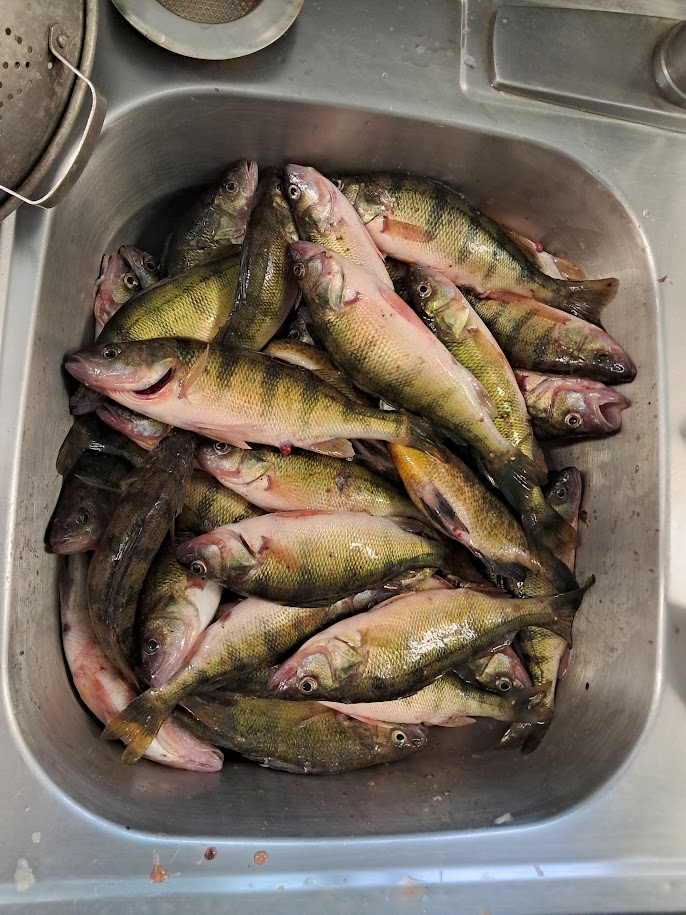
    Some of the perch we cook

    Here’s the recipe that makes it all worthwhile — simple homestead cooking at its best:

    Perfect Pan-Fried Fish Recipe (Serves 4)

    Prep time: 10 minutes | Cook time: 10 minutes | Total: 20 minutes

    Ingredients

    • 1–1½ lbs fish fillets (perch, walleye, tilapia, or catfish)
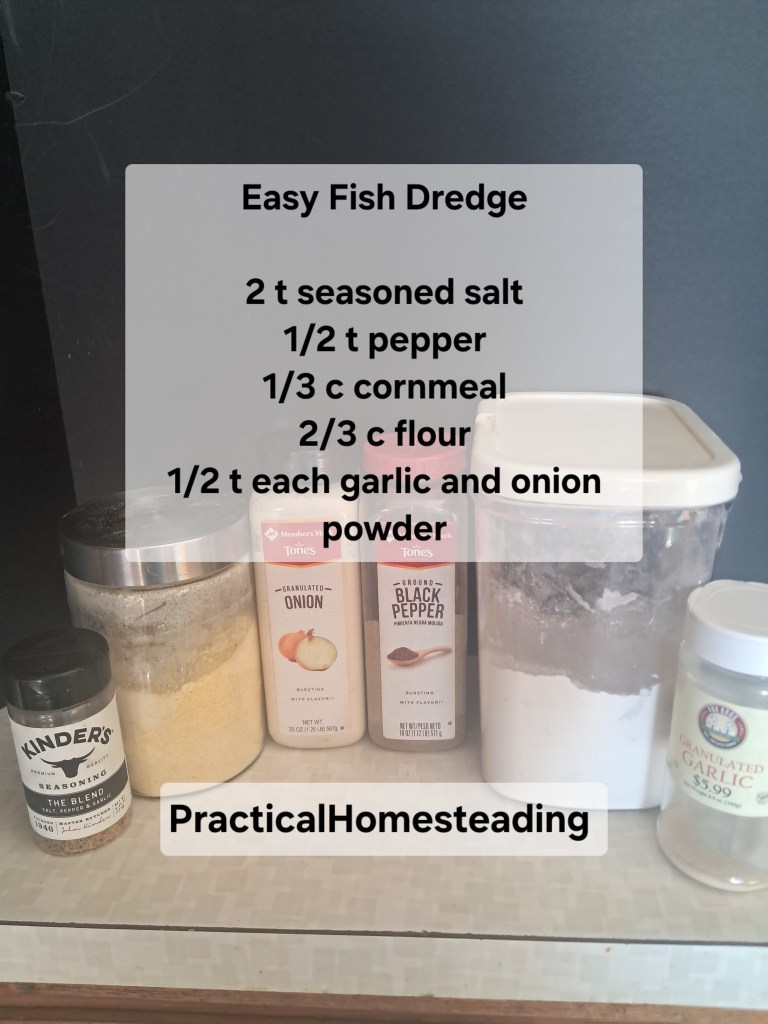
    • Dredge: ⅔ cup flour, ⅓ cup cornmeal, 2 tsp seasoned salt, ½ tsp pepper, ½ tsp garlic powder, ½ tsp onion powder
    • ¼–⅓ inch lard, tallow, or coconut oil (we use lard from our pigs)
    • Lemon wedges + tartar sauce for serving

    Instructions

    1. Prep fish: Cut into ⅛ inch (3mm) pieces. Drain but don’t pat dry.
    2. Mix dredge: Whisk dry ingredients. (My years of tweaking: more cornmeal = better crunch.)
    3. Heat skillet: Cast iron over medium-high until fat shimmers (350°F).
    4. Fry: Dredge fish, fry 3–4 min per side until golden.
    5. Finish: Drain on paper towels, salt while hot. Serve immediately.

    Pro Tips for Crispy Fish

    • Thickness: 3mm pieces cook evenly, never dry.
    • Cornmeal magic: Creates perfect crunch.
    • Hot oil: Sizzles immediately = crisp exterior.

    Serve with: Coleslaw + potatoes, homemade fries, or simple greens.

    Why This Works for Real Families

    Forgiving, fast, uses pantry staples. Whether ice fishing haul or store fillets, it delivers crispy, golden fish kids devour. Using our pig lard makes it true homestead cooking.


    Your Turn to Share

    Pan-fried fish in cast iron? Your dredge secrets? Ice fishing stories? Drop them in comments — and subscribe for more homestead recipes!

    ⭐ **Loved this recipe or ice fishing story?** Tap ❤️, drop a comment with your fish-fry tips, and share with your outdoorsy friends! Your support helps this little homestead kitchen grow. Thank you! 🐟🔥

    Loved this? Subscribe for more reflections on life:

    Read More: Mixtapes, Meltdowns, and Magic: A Family Road Trip to Remember

  • An Ideal Summer Day of Simple Homestead Living With Family

    An Ideal Summer Day of Simple Homestead Living With Family

    Daily writing prompt
    Describe your most ideal day from beginning to end.

    Simplicity isn’t about doing less — it’s about noticing more. My ideal day on our little homestead is built around that truth. It’s a day where time stretches wide, full of laughter, sunshine, and slow, simple living.


    Morning Calm and Connection

    The day begins the way I love best — with toddler kisses, a sleepy hug from my six-year-old, and my husband beside me. Before the world fully wakes, we take a quiet moment to breathe together. There are no alarms, no emails, no errands pulling us away. The only plan is to move through the day at a gentle rhythm, enjoying each other’s company and the sweetness of home.


    Breakfast and the Beauty of Routine

    Breakfast is a family affair. My husband gathers eggs while I grind coffee beans and brew a fresh pot. The kids take their favorite jobs — cracking eggs (usually with some shell), preparing pancake batter, and frying bacon. We cook with the windows open, sunlight pouring in and the sound of birds joining our morning conversation.

    The meal is simple and colorful: fresh eggs, pancakes, and bacon from last year’s pigs. It takes longer, but it’s richer in every way because we do it together.


    Hands in the Dirt, Hearts at Ease

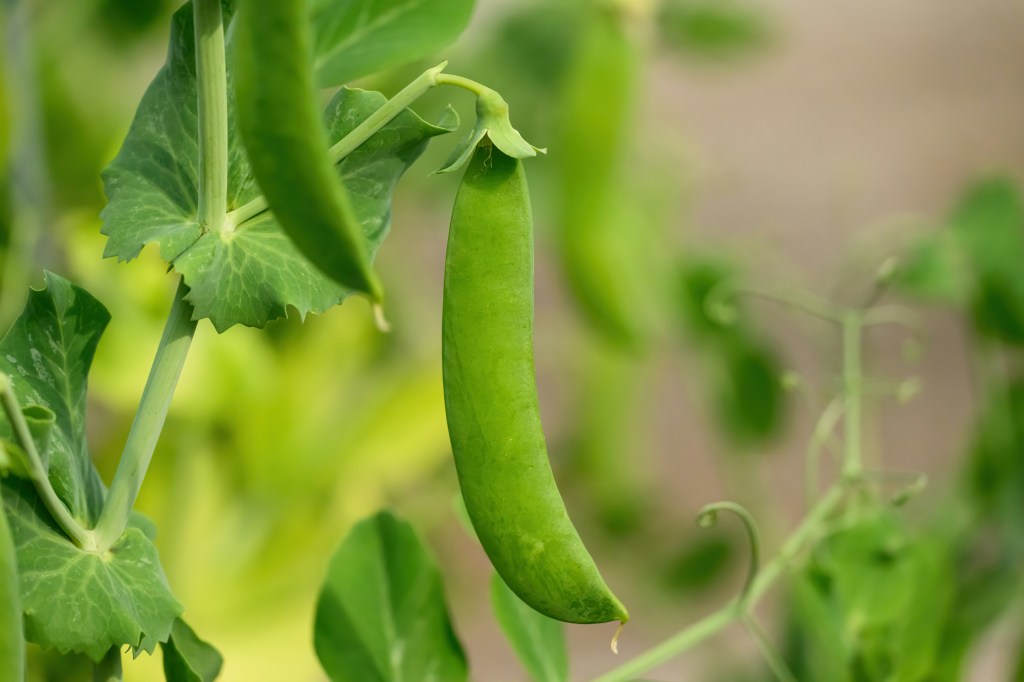
    After breakfast, my husband heads out to refill the animals’ water tanks and check the garden fences. Meanwhile, the kids and I harvest what’s ready — sun-warmed tomatoes, crisp cucumbers, and snap peas that rarely make it to the kitchen. We feed the chickens, pick up toys outside, and pause often to feel the warmth of the day settling in.

    The work hums softly in the background; it’s grounding, steady, and quietly joyful — the soundtrack of homestead life.


    Raising Kids on a Homestead

    By late morning, the chores shift to play. We might pack up for an outing — a trip to the library or a shady walk by the Horicon Marsh — or stay close to home and make our own adventure. My husband and son might build something simple, like a birdhouse or garden trellis, while my daughter and I mix water, flower petals, and herbs in the “mud kitchen.”

    These are the moments where raising kids on a homestead feels magical — learning through exploration, imagination, and plenty of sunshine.


    Building Homestead Community

    Around noon, our neighbor stops by with a bag of fresh Amish bakery treats. He stays for a half hour just to chat at the kitchen table while the kids dart in and out. We sip lemonade and trade stories about gardens, weather, and local goings-on.

    These spontaneous visits are at the heart of homestead community — the easy, come-as-you-are friendships that summer invites. When he heads out, we make a quick lunch of garden sandwiches and homemade pickles, laughing over whose plate is the messiest.


    The Rhythm of Slow Living

    The afternoon drifts by in that perfect blend of rest and play. My toddler naps, the older one curls up with a book or joins my husband hoeing the garden, and I steal a few quiet minutes with a book on the bench outside our door. Later, we cool off in the sprinkler, make homemade popsicles, or pick raspberries from the patch.

    The hours stretch unhurried — each one filled with that golden kind of peace slow living on a homestead offers.


    Simple Suppers and Summer Evenings

    As evening settles, supper becomes another shared project. My husband fires up the grill while I toss a big garden salad and slice the first broccoli of the season. The kids set the picnic table beneath the maple tree. We eat outside, barefoot and happy, surrounded by the hum of summer — crickets chirping, bees buzzing, and the sky fading into soft pink.

    After dinner, we linger. Sometimes it’s s’mores over the firepit, other nights it’s catching fireflies or telling stories under the stars.


    The Gift of Enough

    When the kids are asleep, my husband and I share a quiet moment on the park bench — two cold beers, warm night air, and a shared silence that says, “This is exactly where we’re meant to be.”

    These days remind me that simplicity isn’t a destination; it’s a daily choice — a rhythm we return to when life feels too loud. Most of us don’t get many days like this, but even small pieces of them are enough to steady the heart.

    This is my ideal summer day: no deadlines, no projects, no rush. Just the four of us growing food, raising kids, building community, and living a simple homestead life that teaches us how beautiful “enough” really is.

    Feature Photo by Michelle Tresemer on Unsplash


    💬 Tell me about your ideal summer day! What does simple living look like in your home or community? Share your thoughts or your favorite summer traditions in the comments — I love hearing how other families find joy in the everyday.

    💚 If this post resonates with you, please like and share this post to spread the message of simple, grounded living.

    Loved this? Subscribe for weekly homesteading tips:

    Next Read: Saturday Morning Family Breakfast: A Recipe for Togetherness
  • From Field to Skillet: How I Learned to Make Venison Tender and Delicious

    From Field to Skillet: How I Learned to Make Venison Tender and Delicious

    Disclosure: This post contains affiliate links. As an Amazon Associate, I earn from qualifying purchases. Thanks for supporting Practical Homesteading!


    Venison gets an unfair reputation — people call it tough, gamey, or finicky. But after more than six years of learning, tinkering, and a few overcooked inedible mistakes, I’ve found the secret to turning this beautiful wild game into something melt-in-your-mouth tender. It’s not magic — just good technique, a mindful marinade, and a skillet hot enough to make Hank Shaw proud.

    1. Start with quality
    Good venison starts long before it hits the pan. Pick a clean, lean cut — the kind that shows care in field dressing and storage. If you’ve stocked your freezer after a hunt (or a gift from a friend), make sure it’s well-wrapped and free from freezer burn. The better your meat, the better your final dish.

    2. Slice it right
    Here’s the part most people overlook: how you cut the meat changes everything. Slice thin (less than 1/8 inch [3 mm]), against the grain, and while it’s still half-frozen. That half-frozen state gives you control. If it’s too frozen, you’ll be sawing through it. If it’s too thawed, you’ll end up mashing it. I use this knife (affiliate link) this honing steel (affiliate link) to sharpen the blade. I probably learned this trick while watching America’s Test Kitchen one winter, and it’s been my quiet edge ever since.

    3. Marinade that magic
    This is where you build the flavor. Mix fish sauce, soy sauce, sesame oil, and a splash of dry wine. Then let it rest overnight in the refrigerator. The marinade seeps into the thin slices, giving your stir fry that rich, layered flavor that tastes like it came from a seasoned wok.

    Here’s my marinade recipe. Feel free to use or modify it as needed! This marinade works well with any protein, and even tofu if you prefer vegetarian dishes!

    • 3/8 cup (90 mL) oyster sauce
    • 1/4 cup (60 mL) soy sauce
    • 1.5 T (22.5 mL) sesame oil
    • 1.5 T (22.5 mL) Shaoxing wine (I substitute in a dry white wine when I don’t have this on hand)

    4. Hot skillet, quick cook
    Here’s a move straight out of Hank Shaw’s (the Hunter Angler Gardener Cook) playbook. Get your skillet (affiliate link) rip-roaring hot. Cover the bottom with about one-eighth inch (or 3 mm) of high-heat oil, and work in small batches. Lay the meat out in a single layer — no overcrowding.

    Each side needs just a quick sear. When it’s this thin, the edges brown beautifully, and the center stays tender. This is where patience pays off — resist the urge to stir too early. This technique is called velveting, and will elevate your stir fry from merely good, to great.

    5. Bring it all together
    Once the venison’s seared, set it aside and toss your vegetables in that same pan. The oil and browned bits from the meat give your veggies an instant flavor boost. Toss in a high water vegetable such as frozen bell pepper to deglaze the pan. Combine everything, toss until the sauce clings, and serve it steaming over a bed of rice (affiliate link). I prepare it using a pressure cooker (affiliate link) to get the perfect texture every time.

    6. The reward
    This dish represents six years of cooking smarter — not just harder. It’s the payoff from learning where texture meets timing and how to balance heat and patience. Add in homegrown vegetables from the garden, and you’ve got a true farm-to-table moment.

    Venison doesn’t have to be tough. With the right prep, it’s tender, juicy, and just a little bit wild — in the best way.

    And if you want to read the full story of this stir fry, read this post.

    If this recipe helped you fall a little more in love with cooking wild game, I’d love to know! Hit that like button. Share this with a fellow homesteader or hunter. Subscribe to the blog for more down-to-earth stories and recipes from our kitchen to yours.

    Related Posts

    More Than a Meal: Raising Our Own Thanksgiving Turkeys

    Discover the joys and challenges of raising backyard turkeys in this heartfelt story about patience, humor, and the journey from fluffy poults to Thanksgiving centerpiece. Learn personal lessons and practical insights from a family’s wild turkey-raising adventure.

    Keep reading

    How to Make Homemade Venison Jerky: Smoked vs Dehydrated

    If you love making your own food from scratch, this homemade venison jerky recipe is a must-try. Whether you’re a hunter processing your latest deer or simply someone looking for a leaner, high-protein alternative to beef jerky, this step-by-step guide walks you through every stage: from processing and seasoning to smoking and dehydrating. We even…

    Keep reading

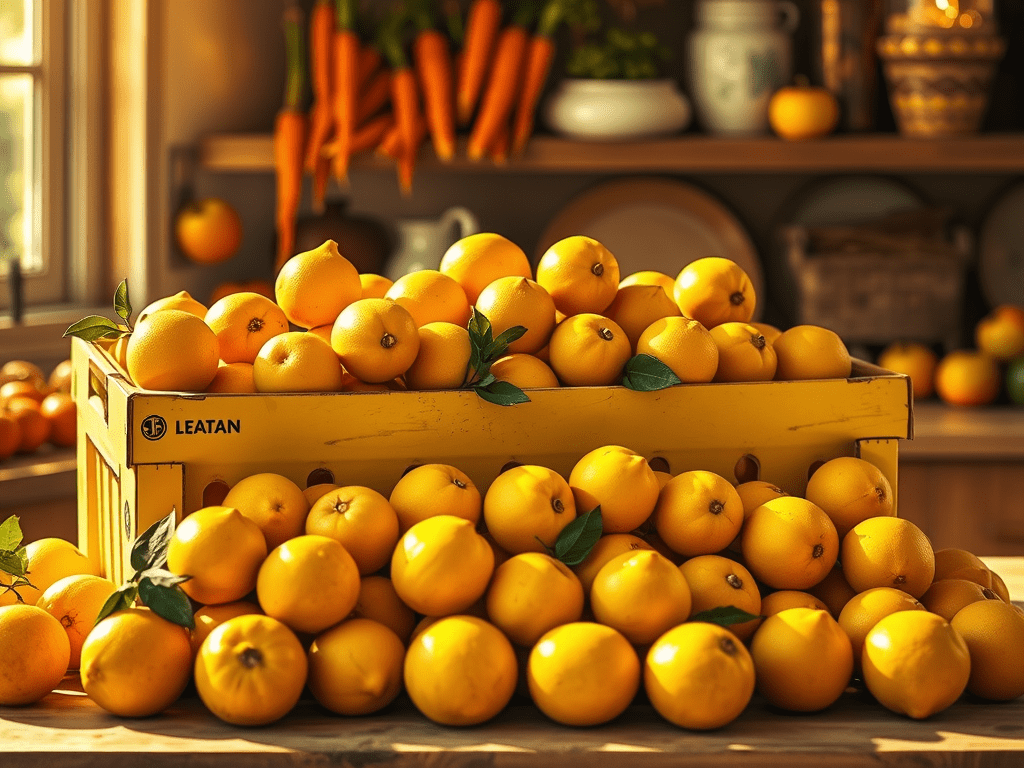
    Fifty Lemons and a Lesson in Waste

    A reflective homesteading essay about turning fifty rescued lemons into food and connection. Learn how small choices and mindful reuse can reduce the 40% of food wasted in America every year.

    Keep reading


    #VenisonStirFry #WildGameCooking #FarmToTable #HomegrownEats #HankShawInspired #CookingTips #AmericasTestKitchen #LocalCooking #KitchenJourney