Tag: homesteading with kids

  • Kitchen Counter Clutter: Working Mom’s Real Homesteading Fix

    Kitchen Counter Clutter: Working Mom’s Real Homesteading Fix

    Where can you reduce clutter in your life?

    My kitchen counter is a disaster. You know the one—the magnet for mail, kid artwork, and random tools that multiplies like gremlins when you’re racing to set the table for supper. Here’s how I tame mine.


    Disclosure: This post contains affiliate links. As an Amazon Associate, I earn from qualifying purchases. Thanks for supporting Practical Homesteading!


    As the mom of two kids, this could be an easy prompt to answer by just pointing at the toy bins and calling it a day. They get a lot of toys and clutter, and my older one brings home a staggering amount of paperwork from school. Some weeks it feels like the trees of Wisconsin are being felled one worksheet at a time. We’ve invested in a Montessori-style bookshelf (affiliate link) and toy shelves (like this one and this one, affiliate links), rotating toys so only a small number are out at any one time. The rest live in bins in the closet, ready to reappear when boredom hits.

    But today, I’m talking about my clutter.

    Specifically, this counter.
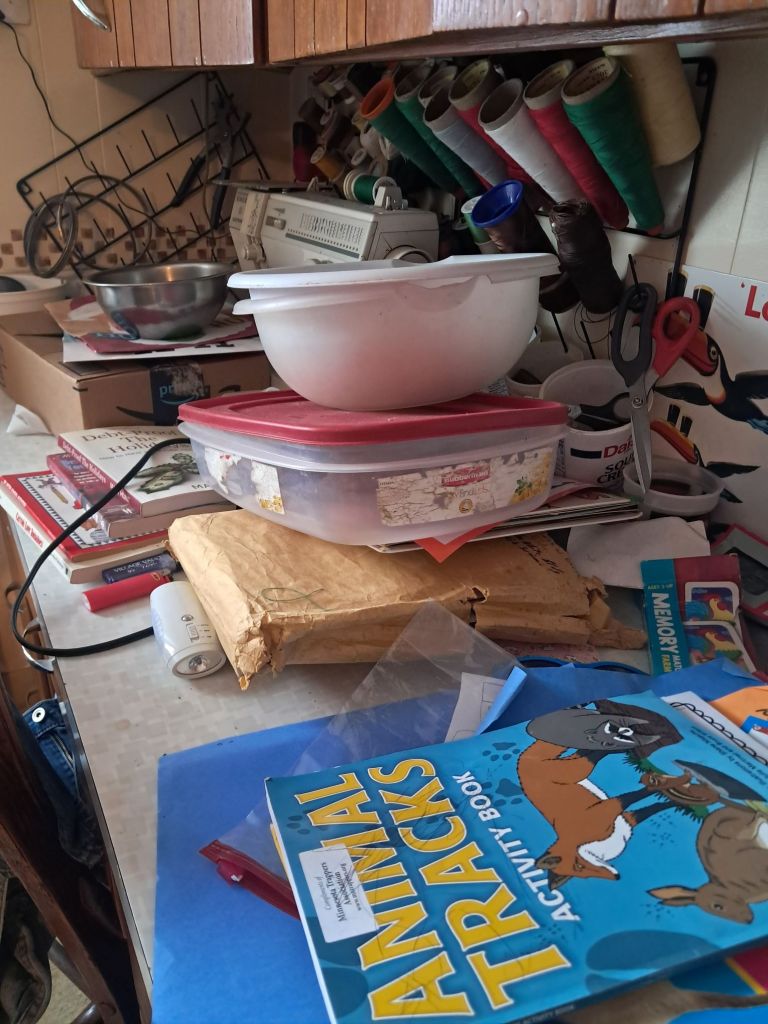
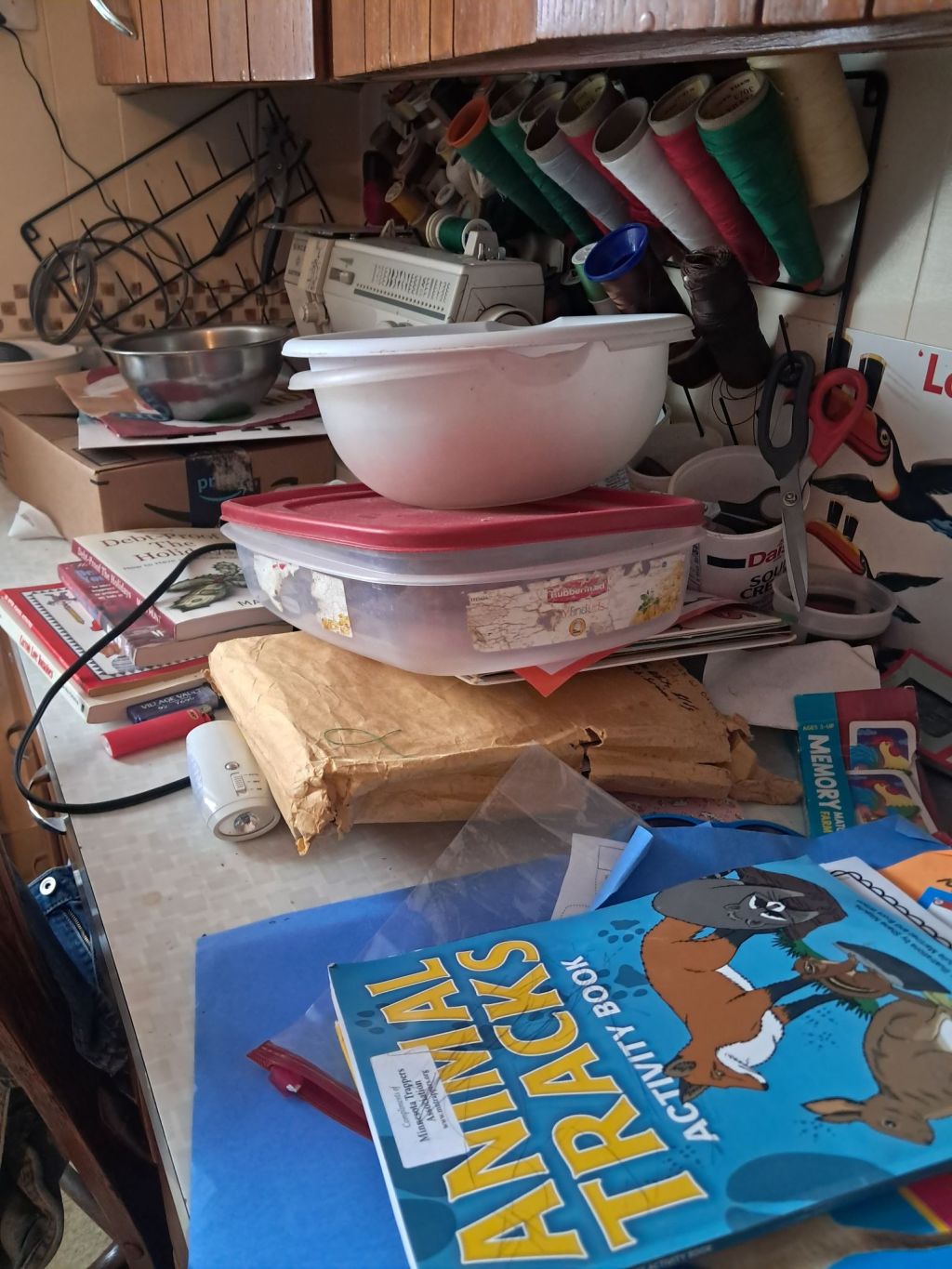
    This counter is where all our kitchen table collectings come to die. It’s the landing pad for everything that doesn’t have a place—or that does, but we’re too rushed to walk those extra twenty steps. Art projects, mail, library books, notes from work, random tools, torn pants, a stray sock, half-finished crafts—they all land here.

    The ritual is always the same: supper’s approaching, someone spots the chaos on the table, and everything gets scooped onto the counter. Table looks perfect. Counter silently absorbs the mess. Out of sight, out of mind—until we need that space again.

    That next thing is often my husband’s sewing projects. He bucks the stereotype by loving to sew and fix clothing. When seams rip or buttons pop, he grabs the machine—his grandmother’s cherished heirloom, used at least twice a month. There’s poetry in mending happening where our clutter gathers: one space holding what’s broken and what’s fixable.

    My approach isn’t glamorous. About once a month, I get fed up and drag a garbage can over. No big project, no speeches. Just relentless culling.

    Books return to shelves. Important mail hits my office. Kids’ art gets sorted—some displayed or binned, most released. Junk, expired coupons, ripped envelopes: trash. I ask: “Do we need this? Does it have a home?”

    In a Pinterest world, I’d have labeled baskets and a command center. In my world, it’s monthly irritation-fueled blitzes. And that’s enough for now.

    What this teaches me about homesteading: Progress isn’t pretty systems or spotless counters. It’s clearing space for what matters—family suppers on a cleared table, a sewing machine keeping clothes alive, kids’ art earning its keep. My home stays lived-in, not staged. That counter reminds me daily: make room for real life, even if piles return tomorrow. Clutter reduction isn’t elimination—it’s choosing what earns its place.


    👉 **Tried the garbage can method? Tell me below!** 
    Like if this is your counter too. Share with your messiest mom friend. 
    **Subscribe for weekly real-talk homesteading** (recipes + mess management).

    Related Posts
  • Why I Chose Homesteading

    Why I Chose Homesteading

    Disclosure: This post contains affiliate links. As an Amazon Associate, I earn from qualifying purchases. Thanks for supporting Practical Homesteading!


    I turn 36 this week, and it feels like as good a time as any to tell you who I am.

    I am

    • a wife
    • a working mother of 2 beautiful children
    • an environmental professional
    • a homesteader
    • a gardener
    • a reader
    • an animal caretaker
    • an aspiring writer (the blog you’re reading is me practicing)
    • an amateur historian
    • a perfectionist
    • a ruminator
    • a friend
    • a daughter
    • a sister

    Growing Up on a Wisconsin Dairy Farm
    I grew up on a dairy farm in Southeastern Wisconsin during the 1990s. It was a tumultuous time in farming—small family-run dairy farms were rapidly disappearing into larger, consolidated operations.

    My dad secretly never wanted to be a farmer. Born an only child into a multigenerational operation, he inherited the responsibility anyway. Despite that, he managed to hold onto his land and his 60-cow herd through years of stress and hardship. All the while, there was this undercurrent—he’d tell us kids, “Don’t farm. There’s no money in it.” That story deserves its own post someday.

    In 2001, my dad sold the herd and rented the land to a nearby large farm. By that point, my five older sisters had mostly graduated high school and left to make their own way. My parents took “city jobs”—Ma at the local grocery store, my dad first as a farmhand, then for a local horizontal drilling company. They bought beef cattle for me to care for during my teenage years.

    The Teenage Rebel Who Wanted Out
    Before my dad took over from his father, farmers traveled no more than a mile to access all their land. By the time he changed careers 25 years later, some had to drive an hour or more to reach the farthest corners of their acreage. The world I grew up in was already shifting fast beneath my feet.

    But as a teenager, I couldn’t have cared less about the cattle I was entrusted with. Farming felt pointless. I was determined to “get out of Dodge County” and go to college in nearby Madison. Books came easily to me, and I wore that like armor. I had a chip on my shoulder—I thought I was smarter than the farm life, better than staying put, that I had everything figured out.

    Pride, Pain, and Coming Back to Earth
    Pride comes before a fall, as they say. I never had one dramatic crash, but I had low moments that humbled me.

    When I was 17, I sustained serious burn injuries on my arms and chest. I received skin grafts on my arms. I spent a long season wrestling with shame and the fact that I was marked by scars. When I finally reached Madison—the dream I’d chased—I felt small next to high achievers who hadn’t come from farms and had flawless skin.

    Even after landing a job as an environmental professional, I stood in rooms feeling inadequate beside people who seemed to know so much more. It took years to accept I wasn’t the smartest person in the room—but I still had something valuable to offer.

    Love, Long Courtship, and Hotel-Hopping 20s
    I started dating my now-husband at 19. We’d known each other longer, but that’s when our story began. He didn’t grow up on a farm but found agriculture fascinating. He thought it was neat that I’d spent my childhood around cows, even as I ran away from that identity.

    After a long courtship, we married when I was 27. We loved each other deeply, but finding our rhythm took time. Through trial and error, we landed on shared ground: children, homesteading, and country living.

    All along, I’d quietly loved making things from scratch, even if I didn’t call it homesteading. Freshman year of college, I made pizza entirely from scratch (except the cheese). It took three times longer than it should have. I ruined zucchini bread by confusing tablespoons for teaspoons of salt. Junior year, I bought a crockpot (affiliate link) that made my dorm floor jealous of the dinner smells wafting from my room.

    Motherhood Opened My Eyes
    I graduated grad school at 24 and we moved near Green Bay for my job. For the next six years—my freewheeling late 20s—we traveled heavily—for work and fun—with each other, family, and friends. Hotels became our second home. It was a wonderful season of freedom I hated to see end.

    Then I had my son just before turning 30. Motherhood was like someone handing me color television after a lifetime of black-and-white. The challenges were endless—physical, emotional, exhausting. But when he smiled and grabbed my finger with his tiny, chunky hand, everything faded. I wanted to be better for him.

    That first year coincided with Covid. No village. Husband working a lot. Our beautiful house on 18 acres of “dream land” suddenly felt hollow. Land doesn’t raise children. Pride in property lines doesn’t fill the gaps. As we talked about baby number two, we made a deliberate choice: we moved back to our hometown near Mayville, Wisconsin.

    Photo by Markus Spiske on Unsplash

    Dad Endured. I’m Choosing.
    Dad held onto that farm through brutal years—not because he loved it, but because he was born into it as the only child carrying a multigenerational legacy. He’d tell us, “Don’t farm—there’s no money in it.” Now I’m choosing this life freely—not out of obligation, but because it fits who I’m becoming. We’re gardening, raising chickens, baking bread, and raising two children. The girl who couldn’t wait to escape Dodge County came back on her own terms.

    At 36, I’m still a perfectionist and a ruminator. Still learning that I don’t need to be the smartest to serve well—I just need to show up, learn, and share what I find.

    This blog is me doing that. Someone standing in the middle of her story. Rooted, growing, still in progress.

    Practical Homesteading: growing food, raising kids, building community.


    If you enjoyed reading this post, please like it. Share with an interested friend. And subscribe for more reflections on the messiness of life (and a couple recipes too). Thank you for reading.

    Related Posts

  • Home Popcorn: Farm-to-Bowl Story

    Home Popcorn: Farm-to-Bowl Story

    What snack would you eat right now?

    Disclosure: This post contains affiliate links. As an Amazon Associate, I earn from qualifying purchases. Thanks for supporting Practical Homesteading!

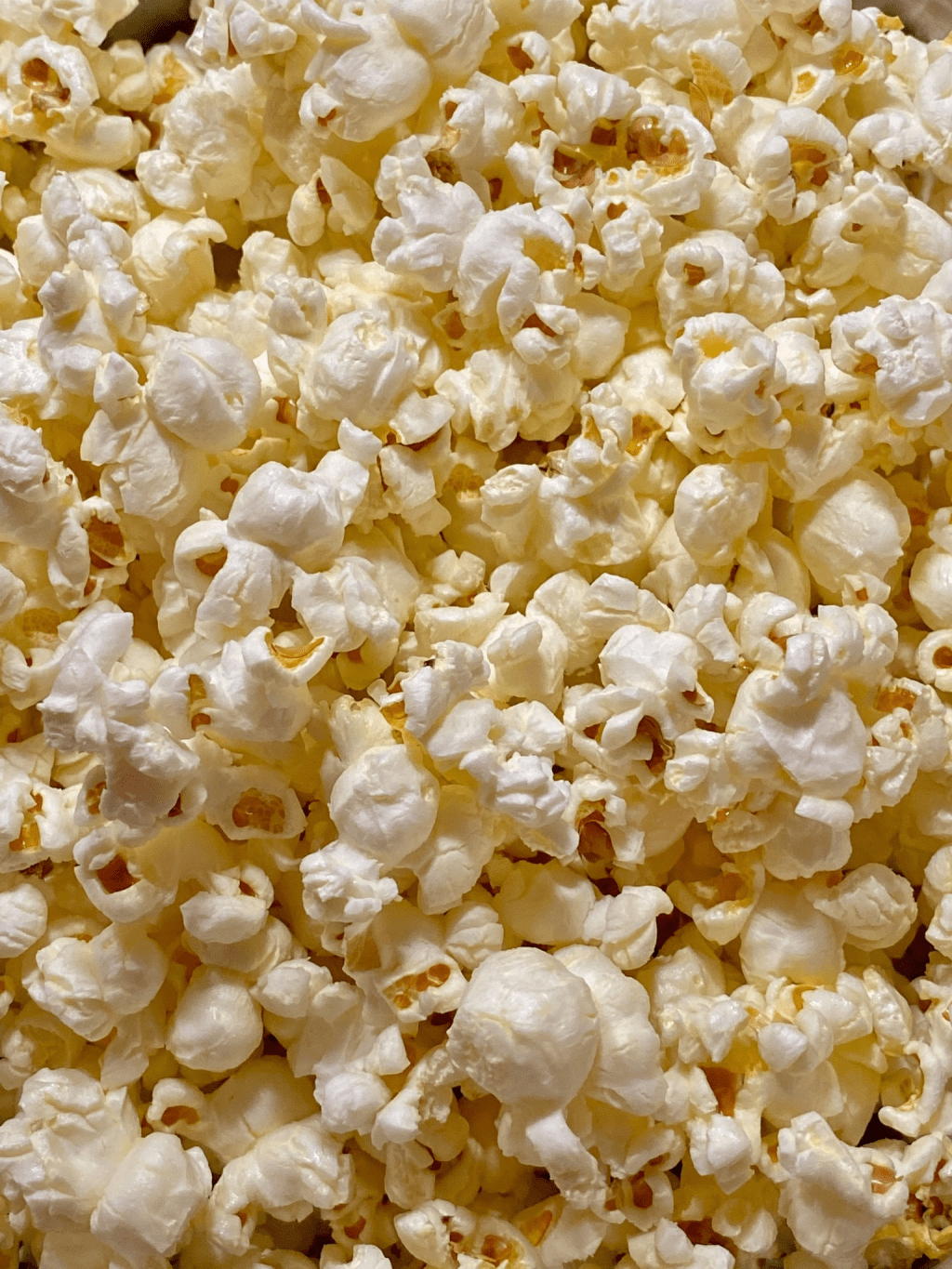
    My snack of choice would be a humble bowl of popcorn. Not the store-bought microwave bags full of PFAS. (I know they say they now have “PFAS-free” options—I just don’t believe them. And as an environmental professional, I’ve seen enough contamination data to stay skeptical). But good home-popped popcorn. Popped with coconut oil (affiliate link).

    (affiliate link) or lard, seasoned with nutritional yeast (affiliate link)and popcorn salt (affiliate link). Five minutes from counter to bowl.

    Around here, that bowl carries a whole chain of ordinary work through many hands. Last year we tackled several rows of garden popcorn. My son and I started with a couple rows—his little boots shuffling between stalks, tugging ears bigger than his hands. He lived for using the corn knife while I held stalks steady with gloved hands. The next day my dad, sister, and family friend finished the other couple rows. Ma shucked them at the kitchen table while watching TV—a perfect calming activity. The shucked cobs dried in an out-of-the-way spot, turning quietly perfect over weeks. Once dry, my sister shelled kernels loose until they clattered into bowls. Finally, my dad and I used the air compressor to blast out every bit of chaff so only good kernels remained. Those gallon bags fill our pantry.

    I scoop kernels into the hot oily stovetop popcorn pot (affiliate link)and kids drag chairs close to watch oil shimmer, then the first pop, then the storm. We eat by the gallon over months—post-dinner fuel, “movie night” chaos where kernels scatter everywhere from eager child hands. We all pitch in to clean the floor mess—all of us giggling as we chase escapees across the carpet, turning spilled popcorn into a game.

    Although we’re starting to teach our son the work behind the bowl, they don’t fully know the drying racks or chaff under fingernails. Just “our popcorn.” That’s growing food, raising kids, building community—not Instagram projects. Hands passing cobs, kernels bouncing on the floor, small faces waiting for magic.


    **Love real food stories?**
    ❤️ Like if you’ve chased popcorn across your floor 
    📲 Share with your homesteading friend 
    📧 Subscribe for weekly farm-to-table stories + recipes

    Related Posts

    The Joy of Popcorn: From Solo Snack to Family Treat

    The very first pop — that’s when the magic began. As a kid, I’d hover over the pot, captivated by the rattling kernels. Moments later, I’d have a mountain of buttery, salty popcorn, all mine. I’d curl up on the couch and eat it greedily, one crunchy handful after another, lost in the simple joy…

    Keep reading