Tag: life

  • Breaking the Yell: Mastering My Temper

    What is one thing you would change about yourself?

    I used to think changing my looks—maybe my hair or my nose—would fix everything and make me happier. But life taught me otherwise. The one thing I’d truly change is how quickly stress hijacks my emotions. Overwhelm turns into impulsive anger when my perfectionism meets chaos. That’s when I feel out of control.

    Growing up, I watched a loved one explode over little things like a misplaced tool, a late dinner. He would yell until the air felt thick with tension. I remember my stomach twisting in knots, so tight that I couldn’t eat. I swore I’d never damage my own kids that way, but without tools, I repeated the pattern.

    One evening after a brutal workday, my husband mentioned the dishes in the sink. My pulse hammered, chest tightened, and my voice sliced through the quiet kitchen with unfair frustrations. Silence fell heavy; his hurt eyes met mine, regret burning like acid in my throat. We talked it through later, but the sting lingered, echoing that childhood fear of becoming the yeller.

    Having children gave me endless chances—both challenges and opportunities—to practice controlling that fire. Their small mistakes and big emotions test my patience constantly. Each time I slip up, I try harder the next day. I use tools like deep breathing to catch my rising anger. Exercising keeps stress in check. I also maintain healthy habits to keep my resilience strong. More than anything, I am learning to stay curious about my own flaws. I keep open, listening carefully to feedback. I try not to shut down or get defensive. It’s slow work, but progress is real.

    Yesterday, my 6-year-old came home crabby, slamming his backpack down; I felt my own irritation rising, matching his sharp tone. But I paused—chest rising and falling with deep breaths—while my 2-year-old daughter watched wide-eyed. Kneeling down, I asked what he needed, validating his grouchiness but setting a calm boundary: no yelling. Knowing he craves sensory squeezes, we launched the “burrito game”. I took turns rolling them tight in blanket burritos on the couch, “baked” them with goofy warmth, then “ate” them with tickles. For 15 minutes, their giggles echoed as growls turned to belly laughs, stress melting into connection. The warmth of their laughter filled the room, a vivid contrast to the tension that once dominated these moments. This is what modeling patience looks like—turning tension into play, teaching them emotions don’t have to erupt.

    What I’ve realized—and it’s changing everything—is that emotional regulation isn’t about never feeling mad. It’s catching those perfectionist triggers early, breathing through the old patterns instead of exploding. Now, instead of that youthful belief in superficial fixes, I’m building control from within. That shift mends my relationships, breaks my family’s cycle of outbursts, and lets me like the steady parent—and partner—I’m becoming. It’s a gift to my children, showing them that even strong feelings can be met with calm and love, not yelling.

    If this story of breaking anger cycles resonates with you, like it. Share it with someone who needs emotional tools. Subscribe for more real-talk on personal growth!

    Related Posts

    Pet Peeves Can Teach Us More Than We Think

    Name your top three pet peeves. Everyone has pet peeves—those small irritations that can silently gnaw at our patience. For me, they reveal more than just frustration; they mark my journey toward empathy and self-awareness. I try hard not to complain because I know I am truly fortunate. I have a life filled with comfort…

    Keep reading

    Growing Together in Small Moments

    It had already been a week that stretched me thin. One of those weeks where fatigue doesn’t just live in your body—it seeps into your spirit. Each day stacked heavier than the last. Even small inconveniences pressed harder than they should have, like tiny weights layered until my shoulders ached. By Thursday, I was frayed…

    Keep reading

    The Morning I Chose Connection Over Correction

    My mom was in the hospital, I wasn’t sleeping, and the stress had nowhere to go. So I poured it onto my five-year-old son. Every morning before preschool, I’d launch into lectures from the driver’s seat—how he should control his feelings, how he should handle surprises better, how he needed to “do better today.” He…

    Keep reading
  • Harvesting Traditions

    Harvesting Traditions

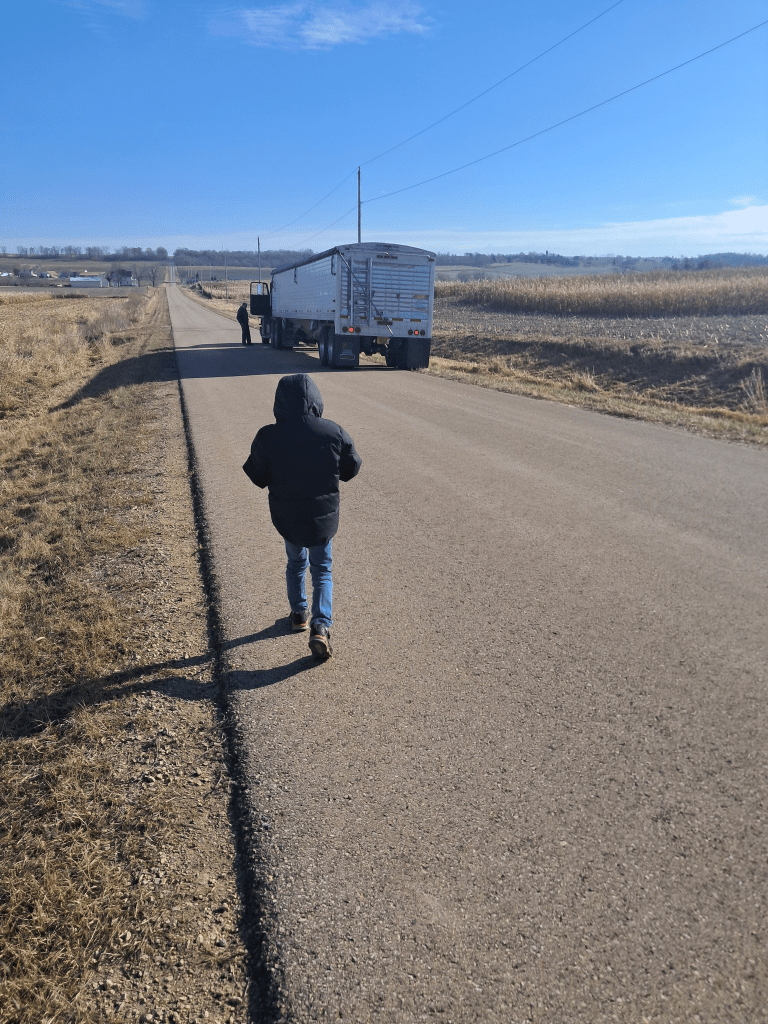
    The hum of diesel engines and the scent of dusty corn fill the air every fall, signaling harvest season and long days ahead. For the local farmers, this time of year brings both relief and pressure—hundreds of acres to harvest before rain or early snow set in.

    My dad is always there to help, his steady hands and decades of experience behind the wheel making all the difference. With his CDL and a lifetime spent operating heavy equipment, he’s the kind of person neighbors know they can count on when the fields demand every ounce of daylight and sometimes half the night.

    This morning, he asked my six-year-old son to ride along as the corn was hauled from the field to the grain elevator to be processed. Before climbing into the truck, my son spotted a single kernel of corn lying by the road. He picked it up, studied it for a moment, and declared it his “lucky corn.” My dad just smiled, and together they climbed into the cab, a small tradition beginning in that instant.

    As the truck pulled away, I realized that what my dad is teaching goes beyond driving or hard work. He’s showing the next generation what community looks like—the kind built not by grand gestures, but by showing up, season after season, when it matters most.

    What traditions or small moments in your family remind you of where you come from?

    #HarvestSeason#FarmLife#FamilyTradition#Generations#HeartlandStrong#SmallTownPride

  • Snow Boots and Soul: Loving the Real You

    What are your two favorite things to wear?

    If clothes could talk, mine would whisper, “Keep it simple, keep it real.” I’ve never dressed to dazzle; I’d like to think my wit and thoughtfulness handle that. My two favorites—leggings and slip-on shoes—form my daily uniform, a quiet stand against pretense that champions ease and presence.

    Leggings are my unshakable foundation. No zippers pinching, no seams chafing—they stretch through curled-up reading marathons or frantic errand dashes. Years ago on a snowy first date, my breath fogging the crisp air, I pulled on jeggings to meet the man who’d someday become my husband. Snow boots crunched softly as I crossed the driveway to his truck. We’d known each other for years, but this felt electric. He laughed with me, saw the real me, and fell harder. While others chased one-shoulder dresses that year, my practicality carved space for unfiltered connection.

    My slip-on shoes share this no-nonsense vibe. One slide, and I’m out the door: ready for park strolls, meetings, or walking outside during that snowy date, no lace-tying delays. Their worn soles have hugged my steps through decades—unflappable, like the reliability that let our spark endure.

    I’ve learned the hard way sometimes that style does have its place. At my bridal shower, I underdressed in leggings and slip-ons. What had felt “nice enough” to me upset a loved one important to the bridal party, who saw rebellion where I saw comfort. That clash reaffirmed why these pieces endure: true style balances self with sensitivity, letting mind and heart lead without alienating.

    In the end, these favorites aren’t mere picks; they’re my vote for authenticity. They strip distractions, letting me show up kind, thoughtful, wholly myself. They also prove, as my husband’s grin confirmed back then, the right person always loves the real you, snow boots and all.

    What’s your go-to outfit for showing up as your authentic self?

    Like if this resonates, share this with others who can relate, and subscribe for more on living unfiltered.

    Related Posts

    Learning to Be Seen: Redefining My First Impression

    What’s the first impression you want to give people? When I think about the first impression I want to give people now, it connects closely to how much I’ve learned about myself. In my 30-something years, I’ve spent a lot of time shrinking into the background—speaking softly, standing at the edges of rooms, and convincing…

    Keep reading

    Missed Opportunities

    Who is the most famous or infamous person you have ever met? It’s funny how one small moment can stick with you for years—the conversation you didn’t have, the voice you didn’t use. Some might say I live a quiet, even isolated life. The most well-known person I’ve met—depending on your politics—is Representative Glenn Grothman,…

    Keep reading

    Unfolding the Woman Within

    When I pulled open the long-forgotten box of clothes, I expected nothing more than sweaters and dresses that hadn’t seen daylight since before we moved. Instead, I uncovered an archive of myself—fabric woven with memory and identity, versions of me I thought I’d misplaced in the blur of motherhood, upheaval, and quiet reinvention. Threads I…

    Keep reading
  • The Farmstead Paradox: How Technology Frees Us and Challenges Us

    What technology would you be better off without, why?

    What if I unplugged everything—just one day—and watched my farmstead world grind back to its raw roots?


    Sun crests the barn at 5:45 am. No alarm jolts me; instinct pulls me up. We feed the animals, hauling water, grinding feed. We dress kids by fading lantern glow. Husband carries our daughter down the grassy footworn path to Grandma’s. I hitch the old wagon, walking our son two miles to school through dust and dawn chatter—no 10-minute car hum.


    Home, I’d scrub laundry in the tub, no machine whirl. Meals bubble over wood fire, not Crock-Pot ease. Bread dough yields to muscle on the oak table, sans Kitchen Aid. No working outside the home for me. Husband swings scythe and shovel where tractors rule now; breakdowns mean hammer, anvil, firelight fixes. We could do it all—generations did. But tasks balloon from minutes to hours, bones aching, daylight devoured.


    Reality snaps back: technology saves my soul. Remote work keeps me here for first words, bus arrivals, story hours no commute steals. Farm machines turn brutality into rhythm, sustaining us without wrecking backs. Humans thrived millennia hauling water, grinding grain by hand. Yet why suffer when tools free us for laughter, learning, presence?


    Smartphones, though—these pocket tyrants I’d temper first. Last week, a ping ripped me from our son’s magnatile tower mid-build. “Just one email,” I thought. Half an hour vanished, his glee stolen.

    Notifications shred focus; feeds erode dinner talk; blue light robs sleep. We’d survive without them, grit conquering all. But boundaries—silent family hours, apps locked post-8—restore what tech should amplify.

    No full unplugging for us. We’ve glimpsed the raw possible, but embracing tools with fierce reins honors ingenuity and roots. Here on the farmstead, kids’ laughter rises under starlit skies: progress, bounded, yields the richest harvest.

    Like this glimpse into farm life? Hit subscribe for more raw stories on tech, family, and finding balance—never miss the next harvest of thoughts. Share with a friend wrestling their own screen habits, and drop a comment: What’s your pocket tyrant?

    Related Posts

    Bridging Time: Meeting the Courage of My Ancestors

    If you could meet a historical figure, who would it be and why? If given the chance to meet any historical figure, I would choose not a famous leader or thinker. I’d choose to meet my own ancestors in both Germany and Austria between the 1850s and 1870s. These were ordinary people facing an extraordinary…

    Keep reading

    Stone by Stone

    Stone by stone, a farmer’s patient craft built more than a wall – it built a legacy. Discover a story of endurance, purpose, and quiet strength that still stands a century later.

    Keep reading
  • Roots Uprooted: Choosing Family Over Home

    Roots Uprooted: Choosing Family Over Home

    What’s the hardest decision you’ve ever had to make? Why?

    I walked the yard one last time, tracing fences and trees like scars on a lover’s skin. It’s crazy how something that once felt so familiar can suddenly feel worlds away.

    The Drive That Broke Me
    That two-hour drive home from Christmas just dragged on. My husband kept saying, “Our son needs cousins nearby, grandparents around the corner. Your parents aren’t getting any younger. And that family diagnosis… it’s time we really thought about what matters most.”

    His words kept piling up, like snow drifting over all those years we’d spent here. I was holding tight to this quiet rural life. Meanwhile, he quietly pulled away, and the distance between us grew every year.

    Roots I Couldn’t Uproot
    I loved this land—finally had friends, a house that felt like mine after all that searching.


    He never really settled. For him, this place felt more like a cage than a home.

    The Moment Everything Changed
    That family diagnosis had been hanging over us, but what really broke me was Christmas at his parents’ house. Everything felt tight, forced—smiles stretched thin, pauses filled with unspoken tension. Our son didn’t know quite what to make of it all.

    On top of that, my parents’ health kept slipping. The spaces in our family were widening. Staying meant risking losing them all.

    The Yes That Broke Me
    We didn’t say much that night. The silence carried everything we couldn’t put into words. Finally, I just whispered, “Okay.”

    No more tears left—just that stunned quiet as I wandered the yard, trying to soak in every curve, knowing I was letting go.


    How It Changed Me
    Leaving meant giving up on solitude and peace for family and chaos—but honestly, no regrets.


    Now, I watch our son laugh and play in his grandparents’ arms. I’ve held my parents through their darker days and welcomed our daughter into this tight-knit fold.


    Sometimes love means stepping back to grow deeper roots—roots that grew stronger because I chose family over place. And yeah, I still miss the quiet sometimes. But this? This is home.

    If this story hits close to home or sparked something for you, like, share it with someone facing a tough choice, and subscribe for more real-talk reflections on life’s big turns.

    Related Posts

  • Waking Dreams: The Life I’d Live Without Sleep

    If you didn’t need sleep, what would you do with all the extra time?

    What if the hours I spend asleep were suddenly mine to reclaim? Imagine the possibilities unfolding when the need for sleep disappears—every extra minute a doorway to creativity, connection, and joy.

    With that precious gift of time, I would dive headfirst into my passions. Writing, for me, is more than words on a page; it’s a lifeline to my inner world. I would spend hours crafting stories and reflections, letting my thoughts roam freely without the constraints of a ticking clock. The soft scratch of pen on paper or the steady clack of keyboard keys would become a comforting rhythm in the long, uninterrupted nights.

    Reading, too, would become a daily adventure rather than a stolen moment. I envision curling up with books that whisk me away to new worlds, expanding my understanding one page at a time. Each story would fuel my imagination and feed my mind, creating a vibrant tapestry of inspiration.

    In the kitchen, the act of cooking and baking would transform into a joyful exploration of flavors and textures. I long to try new recipes, experiment with spices, and share the fruits of my labor with those I love. The warm scent of fresh bread or the sweet aroma of baked goods would fill the air, turning mundane meals into celebrations.

    But above all, the moments spent playing with my children would be my treasure. Without the rush of everyday responsibilities, I would lose myself in their laughter and wonder. Whether building forts, telling stories, or simply running wild in the backyard, this time would deepen our bond and create memories that last a lifetime.

    Even though I don’t have endless hours without sleep, that very limitation makes every creative moment more precious. Knowing time is finite encourages me to savor each burst of inspiration, every shared smile, and the warmth of home-cooked meals. The boundaries imposed by sleep sharpen my appreciation for these passions, reminding me that it’s not the quantity, but the depth of experience that truly matters. So, if I couldn’t sleep, I’d embrace the gift of extra time—and if I must, I will cherish the time I do have all the more.

    If this reflection on savoring time and creativity resonated with you, please like, share, and subscribe for more thoughtful stories and inspirations. Your support helps keep the conversation going and builds a community that values meaningful moments and passion. Don’t miss out on future insights—join us and be part of the journey!

    Related Posts

  • Pet Peeves Can Teach Us More Than We Think

    Name your top three pet peeves.

    Everyone has pet peeves—those small irritations that can silently gnaw at our patience. For me, they reveal more than just frustration; they mark my journey toward empathy and self-awareness. I try hard not to complain because I know I am truly fortunate. I have a life filled with comfort and people who support me. When I’m asked about my top three pet peeves, I realize they reflect who I am beneath the surface. They also show how far I’ve come. My three top pet peeves are based on how we treat each other: moral superiority, selfishness, and condescension.

    The Weight of Judgmental, Morally Superior People
    I learned a painful lesson about judgment from a friend. She rightfully withdrew after I reacted to her with criticism rather than compassion. That moment still lingers—when they vulnerably shared their struggles, and I judged their choices instead of hearing their heart. The sting of that loss taught me how easy it is to judge without walking in someone else’s shoes. Now, when I face moral superiority, from others or myself, I pause to remember. We all live complex lives shaped by experiences others can’t fully grasp. Judgment is a quick and lonely reaction; empathy takes more courage but builds connection.

    The Sting of Selfishness and Isolation
    Selfishness frustrates me deeply. I am especially frustrated by the refusal to embrace community in parenting and care giving. I once believed I could handle everything alone, armed with sheer will and rigid routines. Yet endless sleepless nights and isolation soon shattered that illusion. I still recall the raw exhaustion and quiet desperation before I accepted help and found strength in community. Watching others withdraw or show impatience with children stings because it undermines what I now know. We thrive in villages, not in solo isolation. People can also act selfishly without fully understanding how their choices ripple outward and affect those around them. This makes compassion and honest conversation even more important.

    The Quiet Poison of Condescension from a Loved One
    Condescension is unlike judgment in a profound way. It is steeped in strong feelings and visible actions: the raised eyebrow, the patronizing tone, the dismissive glance. These actions communicate contempt and make you feel small. I unfortunately became intimately familiar with those feelings from a trusted loved one during my childhood. Back then, I believed shrinking myself might somehow earn their approval. The sting of those subtle rejections echoed for years. Building my confidence has been a slow, ongoing process that still unfolds. Recognizing condescension as thought, behavior, and emotion has helped me protect my worth today. It has also marked a crucial part of healing.

    From Peeves to Perspective
    These pet peeves are more than annoyances; they are milestones on my path of growth. They lay bare the familiar traps of judgment, selfishness, and contempt. They remind me of how far I have come in responding with compassion toward others and myself. Complaining only raises my heart rate and drags me into a negative head space. Instead, I lean into these moments of discomfort as invitations to think and learn. After all, life is a messy, beautiful journey, and we are all works in progress navigating it together.

    If this essay resonated with you, please like, share, and subscribe to stay connected. Your support helps spread these reflections on growth and empathy to others who need them. Join the conversation and let’s learn and grow together.

    Related Posts

  • Rooted in September, November, and October

    Who are your current most favorite people?

    Have you ever noticed how some people quietly root themselves into your life’s story, shaping you in ways you only recognize years later?

    I have three such people. Each arrived in my life in a different month, under different skies. Yet all have become my most favorite—and every morning, her kisses remind me how deeply entwined we are.

    The first person came into my life when I was twelve. It was on a crisp September morning on a creaky school bus. I remember deliberately slipping into his favorite seat, hoping for a moment of attention. He was the boy with the quick grin and sly humor, so different from my preppy, studious self. At first, he barely noticed, but gradually, our laughter bridged our worlds. We briefly drifted apart in high school. By college, weekends bloomed with him driving an hour to visit me, our shared adventures stitching us closer. Eight years later, we married—two lives grown together in love and understanding.

    Two Novembers later—two years after marrying him—I awaited another arrival with nervous wonder. Six months earlier, I had learned I would become a mother. As he grew, I spoke often to him, calling him “little one.” I dreamt of the gardens we’d tend and the trips we’d take. He arrived on a blustery Saturday night, bearing a name passed down through generations. Our first year together was a storm, marked by sleepless nights, fears, and growth. But with each challenge, I found a deeper love while planting seeds both in soil and in his heart.

    Four Octobers after that, our family welcomed a second burst of joy. She came into the world on a rainy October evening, her laughter a bright pulse in our new home. We had just moved closer to family, seeking the roots we needed. Now my mornings start with her tender toddler kisses—small reminders of the light and love she brings to every day. Watching her discover the world has taught me to find wonder in the small moments, and open my arms wide to life’s beautiful unpredictability.

    These three—the boy from the school bus seat in September, the “little one” I awaited in November, and the joyful October child with kisses at dawn—are my heart’s home. My husband and two children, each planting roots, helping me grow, and teaching me what it truly means to love.

    If this story touched your heart, please like, share, and subscribe to stay connected. Your support helps me continue to share meaningful moments and stories that inspire growth and love.

    Related Posts

  • Bridging Time: Meeting the Courage of My Ancestors

    Bridging Time: Meeting the Courage of My Ancestors

    If you could meet a historical figure, who would it be and why?

    If given the chance to meet any historical figure, I would choose not a famous leader or thinker.

    I’d choose to meet my own ancestors in both Germany and Austria between the 1850s and 1870s. These were ordinary people facing an extraordinary choice-to leave everything familiar behind and journey into the unknown by migrating to the United States.

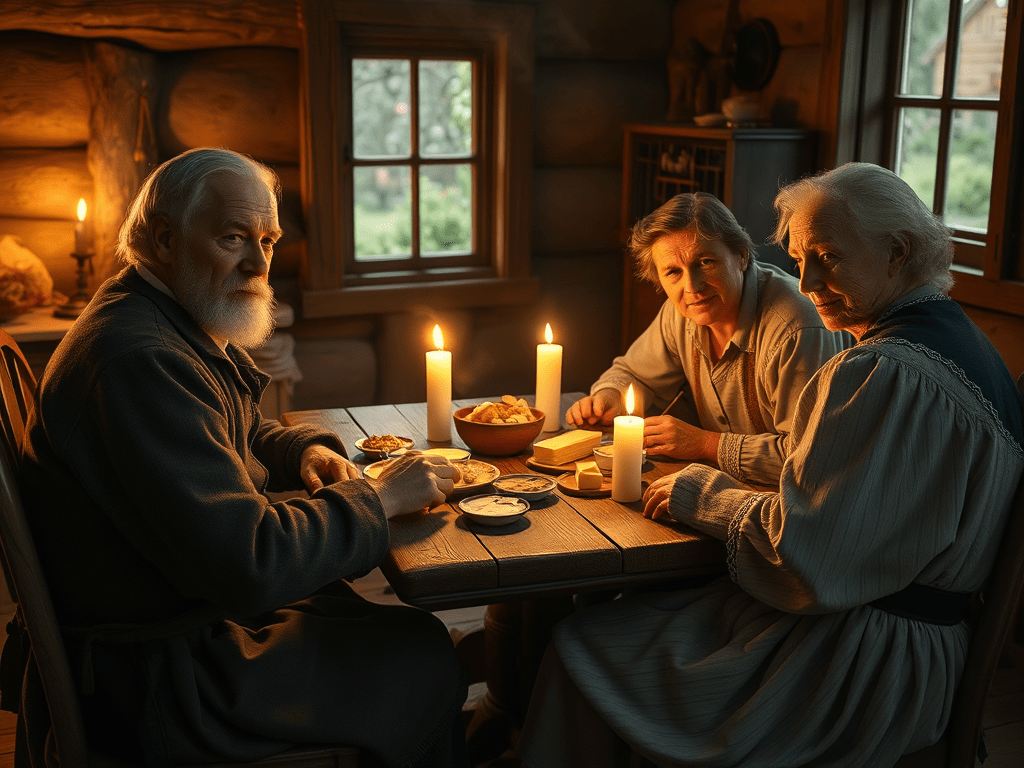
    I imagine sitting with them around a simple wooden table lit by flickering candlelight. We’d share a modest meal of bread, butter, and cheese. The scent of wood smoke would fill the room as we would gaze out at the garden beyond. In that humble setting, I would listen intently to their stories, carried across time with quiet strength.

    Their decision was not made lightly, fueled by hope yet shadowed by uncertainty. I see cold, harsh winters; backbreaking labor; and political unrest shaping their daily lives. They were bound by tradition and faced limited opportunity. They risked everything—their homes, their communities, their ways of life. They crossed a vast ocean in search of freedom and a new beginning.

    What fears kept them awake at night? What sacrifices did they endure silently? Hearing their firsthand accounts would reveal the resilience and courage that anchored their journey.

    This connection would deepen my gratitude for the life I live today. Their sacrifices laid the foundation for my family’s present and inspire me to face my own challenges with courage. Knowing they braved the unknown encourages me to take risks of my own. I dare to put my words to the page. I push forward even in moments of fear and uncertainty. My ancestors did not seek to change history; they aimed to build a future. Their journey teaches me that true growth often requires stepping boldly into the unknown.

    Meeting my ancestors would mean more than satisfying curiosity—it would strengthen my roots and nourish my spirit. Their legacy reminds me who I am and empowers me to write my own story. Hope, resilience, and gratitude will flow through every word.

    If you could meet an ancestor or historical figure from your own family history, who would it be? What would you most want to ask or learn from them? Share your thoughts and stories in the comments below.  I’d love to hear about the journeys and courage that inspire you!

    And if this story of courage, sacrifice, and connection resonated with you, please like and share it with others who appreciate the power of family history. Don’t forget to subscribe for more reflections that honor our roots and inspire us to face our own journeys with hope and resilience.

    Related Posts

  • Listening to My Inner Voice: A Story of Vulnerability and Resilience

    Do you trust your instincts?

    I didn’t expect my hardest lesson about trusting instincts to come during childbirth.

    As my water broke, my body began shaking uncontrollably. Fear surged through me. Few experiences test someone’s connection to their body like giving birth. Yet at that moment, I felt detached during a process that should have felt natural. Panic and doubt quickly took over.

    That wave of fear changed me. It became a wake-up call. Over the last six years, I’ve worked hard at tuning into my body through relaxation, meditation, and breath work. When I gave birth again four years later, the difference was striking: things moved quickly, peacefully, and with far fewer interventions.

    Looking back, I realize it wasn’t just culture urging me to ignore discomfort. A trusted adult in my life was often swept up by stress and overwhelm. In their presence, I learned to mute my own signals and silence myself to keep the peace. My world equated strength with suppressing vulnerability. I silenced my body’s warnings—hunger, exhaustion, emotional pain—hoping to avoid conflict or disappointment.

    I vividly remember one afternoon when I was a child. My body begged for rest, but fear of this person’s anger forced me to push through. Through the years, I learned to swallow discomfort and hide my feelings until they would inevitably erupt. Only later did I understand how both external pressures and witnessing this person lost in overwhelm taught me to silence my own instincts.

    Motherhood transformed this learned behavior. I wanted to show my son and daughter something better: a model of recognizing emotions and meeting my needs before they escalated. I let my inner voice soften. Strength gained a new meaning—one tied to vulnerability and presence. Slowly, my approach to my children’s emotions shifted. I now sit quietly beside my frustrated son, breathing calmly while his storm slowly fades. I practice this daily: mindfulness through challenge, for their feelings and mine.

    Today, I’m more attuned to myself, though this work is ongoing. Emotional waves still come, sometimes fierce. Recently, during a tense day at work, I paused before reacting. I closed my eyes and let my body feel the tension, watching the discomfort roll in and drift away. Breath and awareness anchor me. Trusting myself isn’t about perfection—it’s about persistence. Each mindful moment deepens my instincts. They’re quiet, but always there, guiding me through calm and chaos.

    This journey has taught me that self-trust is more complex than just “following your gut.” It calls for vulnerability, breaking old patterns, and challenging the notion that ignoring your own needs is strength. Now, I’m learning to nurture a kinder relationship with myself—body, mind, and heart.

    That’s the legacy I strive to leave for my children: the confidence to listen deeply and kindly to their own voices.

    Have you ever silenced your instincts to meet others’ expectations?

    If this story resonated with you or made you reflect on your own journey, please like, share, and subscribe—your support helps others find these reflections who might need them

    Related Posts