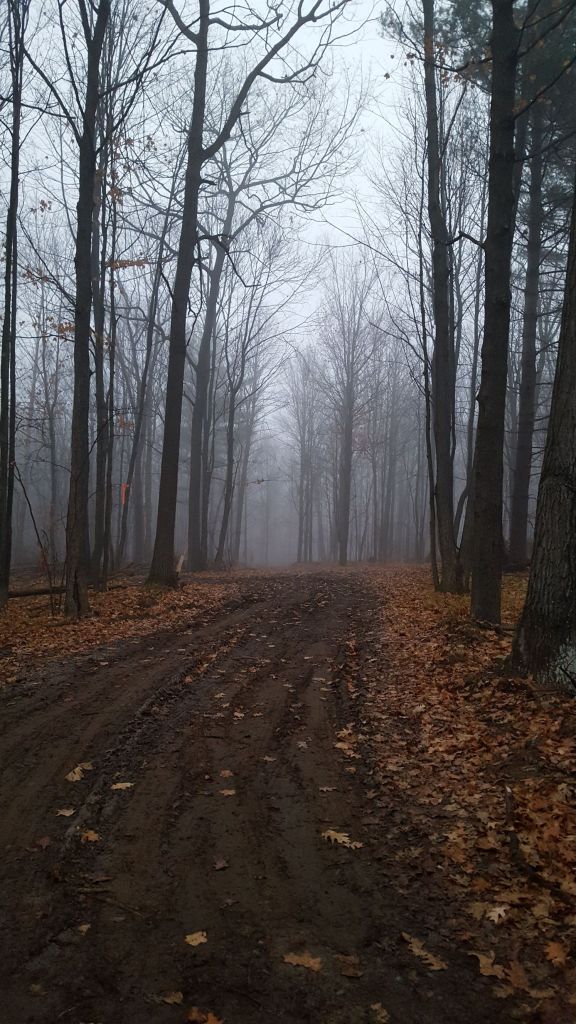
There’s a park by the river on the edge of my city—and it’s my favorite place to go. I visit as often as possible, drawn by the winding trails that twist through the woods, trace the water’s edge, and climb the hills overlooking the quiet horizon beyond town. On most days, I pass families walking dogs, runners lost in thought, or neighbors pausing to greet one another. No matter the weather, the park always feels alive.
Each season transforms it completely. In fall, the air carries the sweet, earthy scent of freshly fallen leaves, and the trails shimmer in gold and crimson.
Winter hushes everything under a glittering blanket of snow, the trees turned to delicate sculptures of frost. Spring bursts with sound and energy—the maple trees drip with sap, the river swells with melting snow, and the rush of water fills the air. By summer, the forest hums with life. Sunlight filters through thick green leaves, and sometimes, if I look closely, I’ll spot clusters of wild mushrooms on a rotting tree stump.
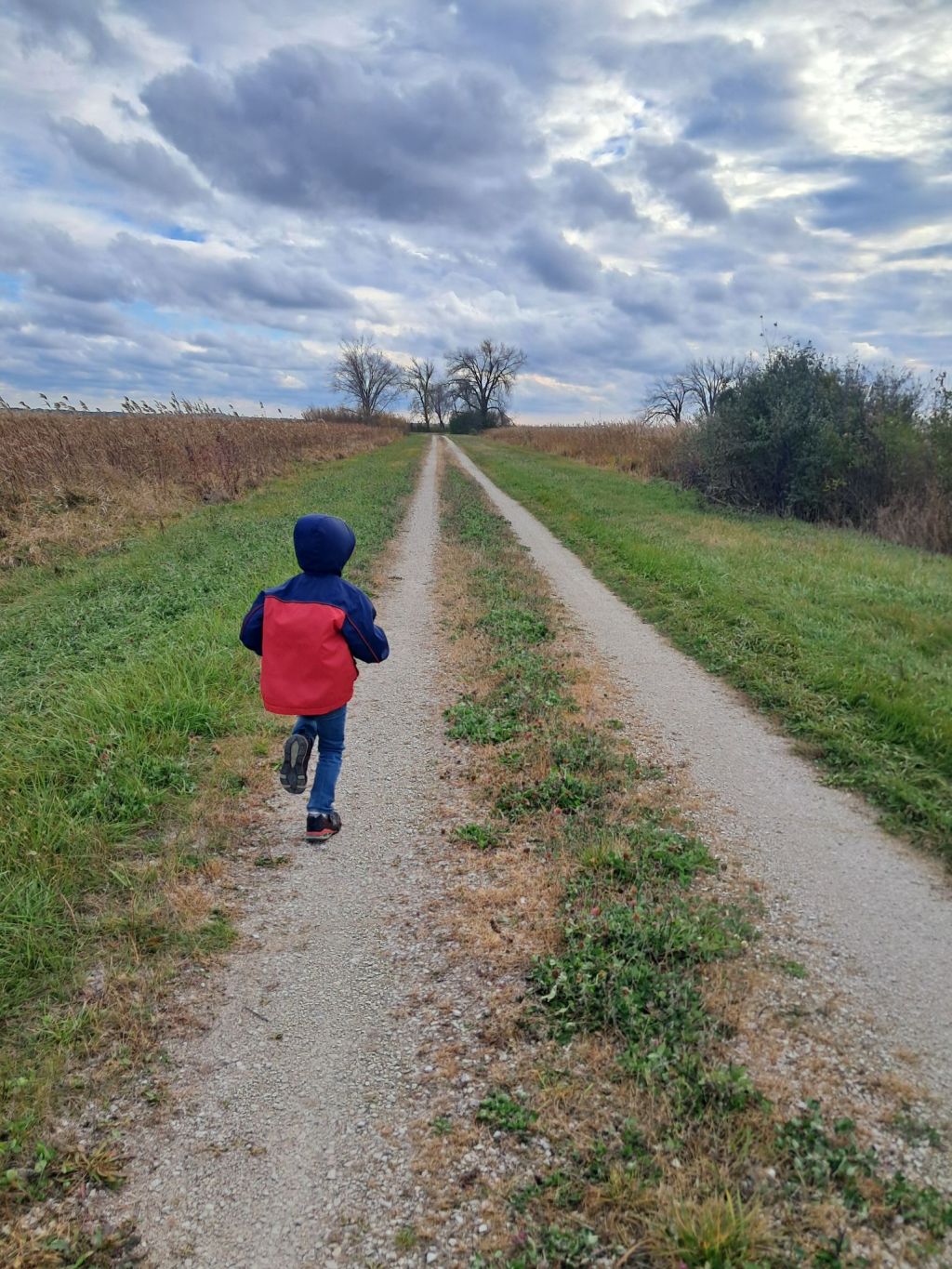
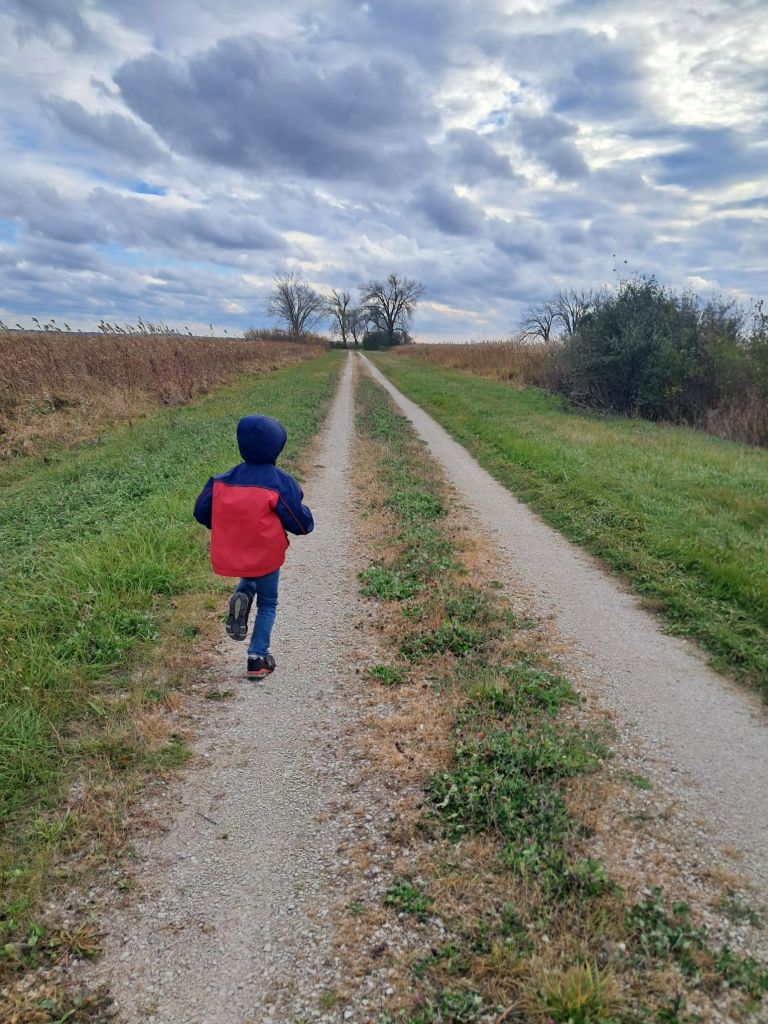
My kids love coming here too. There’s a short, steep hill along one of the trails that my son never tires of climbing. Every time, he races to the top, then barrels down laughing, only to turn around and do it again. Watching him, I’m reminded that this place holds something for all of us—peace for me, adventure for them, and a connection that ties us together through every season.
The park is more than a patch of nature on the city’s edge. It’s where our family slows down, breathes together, and remembers what matters most: simple joy, shared laughter, and the quiet beauty of being present.
Everyone has that one special place that brings them peace. Maybe it’s a park, a trail, or even your backyard. Where do you go to reconnect with yourself or your loved ones? Share your favorite spot in the comments—I’d love to hear about it.
To see more stories about finding beauty in everyday places, don’t forget to like, share, and subscribe. It helps others discover these quiet moments of joy—and keeps this community growing.
What’s the first impression you want to give people?
When I think about the first impression I want to give people now, it connects closely to how much I’ve learned about myself.
In my 30-something years, I’ve spent a lot of time shrinking into the background—speaking softly, standing at the edges of rooms, and convincing myself that others didn’t really want to notice me. Somewhere along the way, I mistook invisibility for safety. That belief likely began in childhood, when being quiet felt like the right way to belong.
But with time, I began to see what that silence cost me. By keeping myself small, I limited the depth of my connections. People knew me only in fragments because I wasn’t showing them a complete person. What I thought was self-protection often turned into isolation.
Now, I want my first impression to reflect who I’m becoming rather than who I used to be. When someone meets me, I hope they sense warmth and calm, a presence that feels both grounded and engaged. I want my voice to carry confidence without volume—a kind of steadiness that says, “I see you, and I’m here.” Maybe it shows in the way I smile when greeting someone or in how I pause to listen before responding.
More than anything, I hope to make people feel comfortable being themselves, just as I’m learning to be comfortable being myself. If my presence leaves others feeling seen, valued, and at ease, then that’s the impression I want to give. It’s the one I’ve always been reaching for, quietly, without realizing it.
Have you ever realized that the way you present yourself isn’t who you truly are inside? Share your story in the comments. What first impression do you want to give people now, and how has that changed over time?
If this reflection resonated with you, take a second to like the video. Share it with someone who might need to hear it. Subscribe for more conversations about self-growth, confidence, and showing up as your authentic self. Your engagement helps build a community where everyone feels seen and heard.
If you could live anywhere in the world, where would it be?
Before dawn, I awoke to toddler kisses on my cheeks and the faint crow of a rooster calling the day to begin.
The scent of coffee drifted through the kitchen as my husband and I eased into the morning. Our six-year-old son stirred under his blanket, still half-dreaming, and soon began retelling the Great Lakes ghost ship story we’d read the night before. Our two-year-old daughter tugged at my sleeve, eager to gather eggs from the chicken coop. Outside, the sky hung pale gray, the world quiet except for the rustle of animals waking.
In that stillness, surrounded by the people I love, I felt an unshakable peace—the kind that reminds me I could never imagine living anywhere else.
If I could live anywhere in the world, I would choose to be right here—with my family and our small but lively homestead. Together, we’ve shaped a life that’s rooted in rhythm and purpose, surrounded by gardens that feed us and animals that fill our days with energy and laughter.
Pigs snuffle in the mud, turkeys strut proudly in their corn crib enclosure, and chickens announce each new egg as if it were an accomplishment worth celebrating. Our home isn’t grand, but it hums with life.
Our community, too, has become an extension of that home. When we start a renovation project, chase a runaway chicken, or need an extra hand keeping the kids busy, help is never far away. Friends arrive with tools, spare time, and easy smiles. That kind of closeness doesn’t come from a picture-perfect place. It grows from shared effort, trust, and the understanding that we rise and thrive together.
I could wake up to a mountain sunrise or fall asleep to the lull of the ocean, but it wouldn’t compare to mornings like this one. The warmth of my daughter’s tiny hands, the echo of my son’s laughter, and the smell of coffee mingling with fresh earth from the garden. For us, home isn’t measured by scenery or luxury; it lives in the laughter, labor, and love that fill each day.
And as the first light spills across our field, I feel her tiny kiss still warm on my cheek. In this moment, I know this truly is the most beautiful place in the world.
If reflections like this resonate with you, subscribe for more small moments of gratitude and intentional living.
What’s the coolest thing you’ve ever found (and kept)?
The first time I saw the map, I was nauseated and overwhelmed.
It was March 2023, and my husband and I were touring the house that might soon become our home. At nine weeks pregnant, I’d skipped breakfast, and the wave of queasiness matched the swirl of emotions inside me—a baby on the way, a new house, a new life I wasn’t sure I was ready for. The place overflowed with decades of forgotten possessions, each room crowded with remnants of someone else’s story.
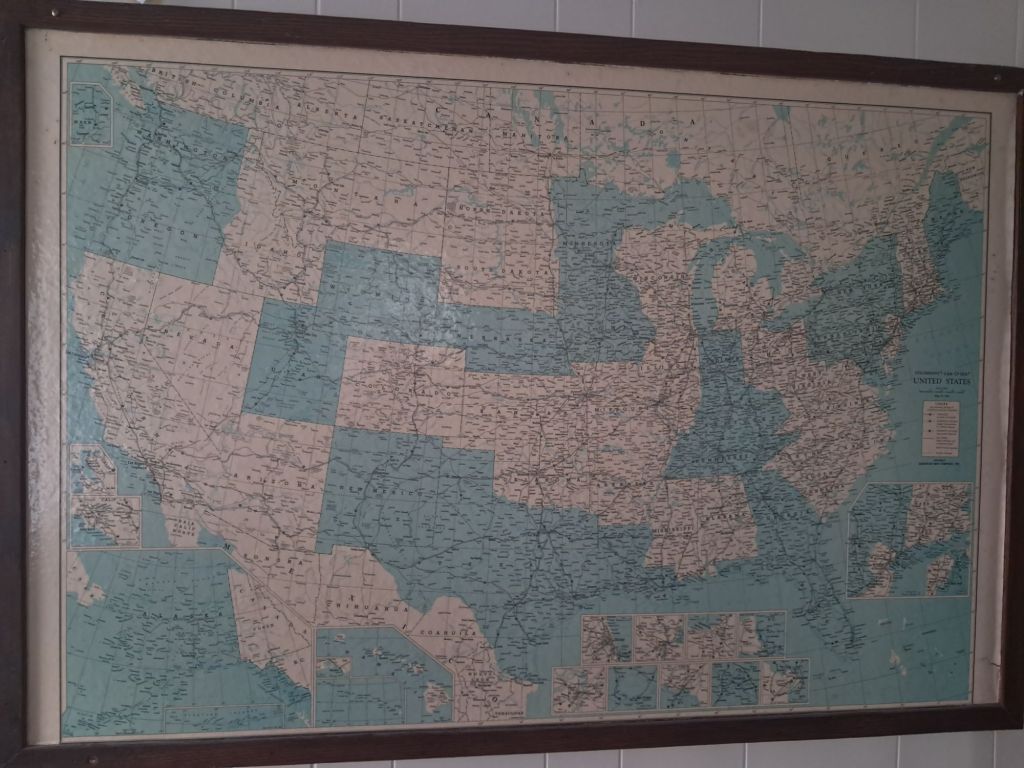
Upstairs, something leaning against the wall caught my attention. It was a large vintage map of the United States, the kind once used in classrooms to chart railroads and planned highways. The paper was yellowed and curled at the edges, faint marker lines tracing routes that never came to be. Despite my dizziness, I knelt to study it, drawn in by the faded colors and the quiet sense of history. Even in its worn state, I saw potential—a story still waiting to be told.
Two months later, after closing on the house, we returned to begin the long process of cleaning. Much of the clutter remained, but the map was still there, patient and waiting in the same spot, as if it belonged to me. My husband and in-laws spent weeks scrubbing, painting, and repairing walls. Amid the chaos, they carefully cleaned the map, framed it, and hung it in my future home office—a space I would soon inhabit every day. It was a small gesture, but one of the kindest and most meaningful I’ve experienced.
Now, two years later, that map still hangs on the wall of my office. Its faded lines have become a steady companion to my workdays, a window to imagined landscapes beyond the screen. When someone on a call mentions a city or a road trip, I glance over, tracing their route and picturing their corner of the country. It reminds me not just of place, but of the path we’ve taken—from that cluttered, dizzy morning to the life we’ve carefully mapped within these walls.
If reflections like this resonate with you, subscribe for more small moments of gratitude and intentional living.
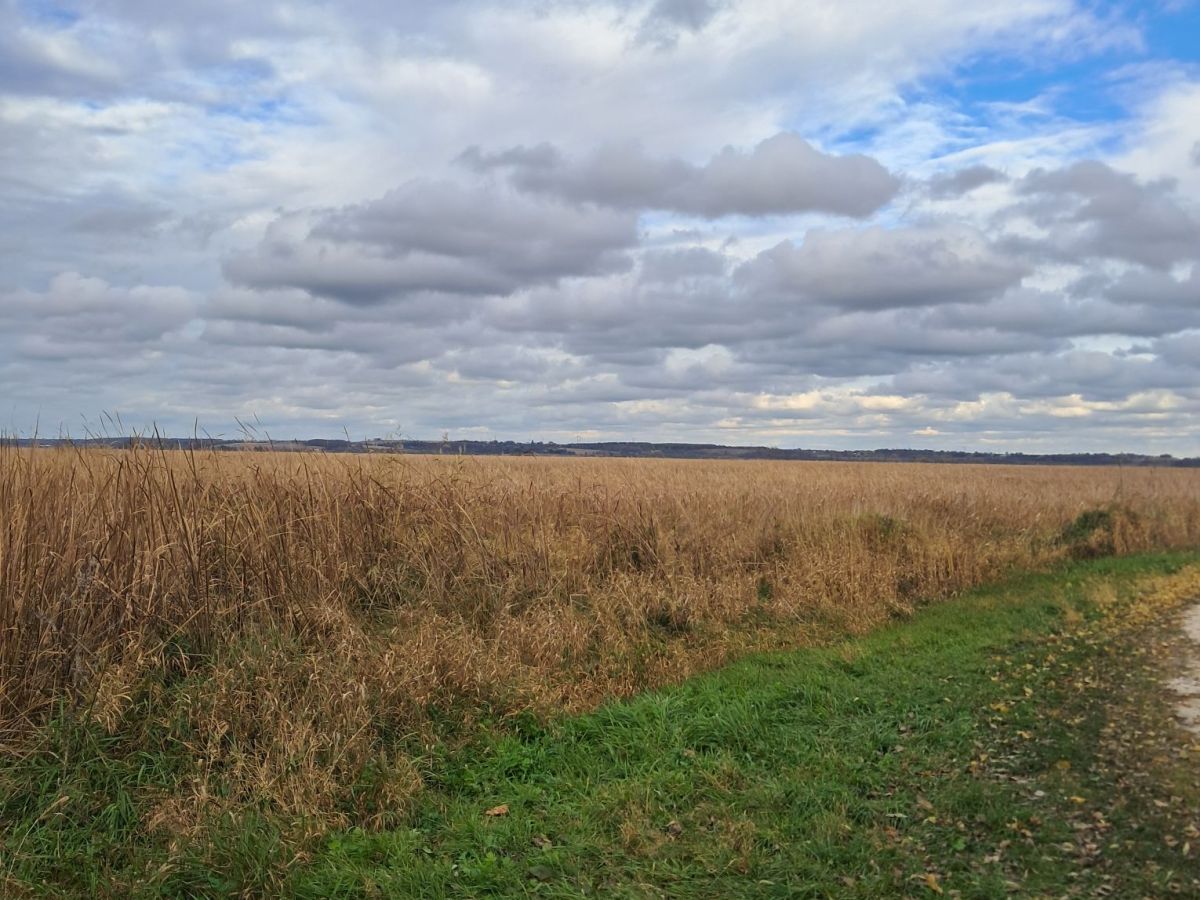
I live just a couple of miles from the largest freshwater cattail marsh in the United States. It’s a vast expanse that shifts with the weather, the seasons, and sometimes, by design. In the mornings and evenings, I hear the call of geese and cranes as they migrate to and from the marsh.
A Living Landscape Shaped by Water and Time
Those voices mark the edge of a world shaped as much by intention as by instinct. This wetland lives by the rhythm of weather and season, and at times, by the gentle design of those who tend it. The water level here is not entirely left to nature. State and federal agencies jointly oversee its management, adjusting the flow through a network of old dikes and channels that date back more than a century.
Those structures, once built to drain and reclaim the land for farmland, are now used to preserve it. By opening or closing sluice gates and culverts, managers can mimic the natural rhythm of flooding and retreat. Those small adjustments shape everything from fish spawning to the growth of cattails along the shallows.
The result is a dynamic landscape, alive with movement and sound. In spring, meltwater floods the pools, drawing thousands of migrating waterfowl. Terns, teal, and cranes return to the shallow stretches that glimmer in the sunlight.
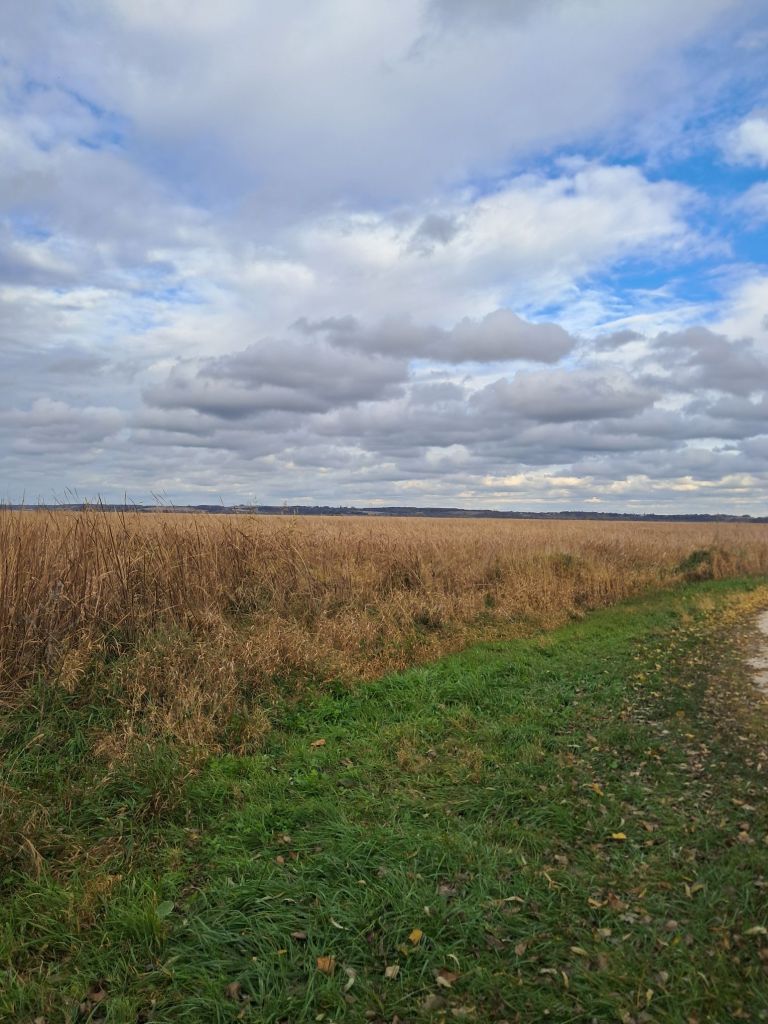
By midsummer, the cattails thicken into dense green walls, sheltering red-winged blackbirds, marsh wrens, and bitterns. Autumn brings a shift to rust and ochre. The drying stalks rattle in the wind and the air smells faintly of peat and decay.
When winter comes, ice seals the pools and the marsh rests under a crust of snow, waiting to breathe again when the thaw returns.
When Marshland Was “Wasted Land”
More than a hundred years ago, settlers and local developers viewed these wetlands through a different lens—as wasted land that could be reclaimed. During the early 1900s, drainage projects swept across Wisconsin, promising to turn marshland into productive farmland. They labored through the muck with horse-drawn dredges. Gravel and timbers followed, forming thin roads and channels raised above the water. Their intent was to tame the water—to make way for crops, pasture, and easier travel. But the marsh resisted. Water seeped back through the cracks in their work, reclaiming what it could. Over time, as floods persisted and wildlife declined, attitudes shifted. People began to see that the marsh’s value lay not in what it could yield, but in what it preserved—water, soil, and life.
The Quiet Return of Balance
Today, those old dike roads form the spine of the refuge. They still divide the cattail stands. They also serve as passageways for biologists, birdwatchers, and anyone curious enough to walk into the heart of the wetlands. Driving slowly along them, you can see decades of restoration at work. This is where human effort meets natural rhythm, each shaping the other in quiet negotiation. Each culvert, each measured release of water, is part of a broader effort to keep the ecosystem healthy amid pressures beyond its borders.
Walking the Edge of Intention and Instinct
When I walk those trails, the marsh feels both engineered and wild. The red-winged blackbirds still call from the reeds as they have for generations. Their songs rise over the damp, earthy scent of mud and decaying stems. The cranes drift across the horizon, their calls echoing over the water that now moves by both gravity and intent. It’s a place shaped by design but ruled by natural law—a reminder that stewardship is participation, not control. Living beside this marsh means keeping pace with its rhythm, in a landscape that remembers and endures.
Your Turn
Have you ever visited a place that felt both wild and human-shaped? I’d love to hear about your experiences in the comments.
Keep the Story Going
If places like this move you, please click the like button. Share your own story of restoration. Subscribe for more reflections on the ways nature and people shape each other. Your support helps this space grow and reach others with similar interests.
Six years. A lifetime and a blink all at once. It’s hard to imagine my tall, curious six‑year‑old as the little baby who once fit perfectly in my arms. Yet some days, it feels like only yesterday. As his birthday approaches, I find myself reflecting—not just on how much he’s grown, but on how much I’ve changed too.
Before motherhood, I was an adventurer. I loved travel, new experiences, and the freedom of not knowing what came next. My job and life took me across the country, and I chased opportunity with excitement. But as thirty approached, another kind of calling began to whisper. Parenthood. I knew that if I waited too long, it might be harder to step into that new identity. With my husband’s encouragement, we leapt into the unknown together.
The Lessons of Change
Pregnancy came easily. A touch of morning sickness, a few sleepless nights, but otherwise, it was smooth. I exercised right up until my water broke. I don’t share that to boast—only to show how everything shifted the moment he arrived. Nothing prepared me for the intensity of that change.
When labor began, I shook uncontrollably—terrified of the pain, the sleepless nights ahead, the loss of freedom I’d always cherished. That fear slowed everything down. Twenty‑one long hours passed before he was born. Later, I learned that anxiety floods the body with adrenaline, making labor harder. But in hindsight, that physical slowing mirrored something deeper: my fear of what it meant to become someone’s mother.
I was afraid of failing him, of not knowing enough, of being unequal to the task. That fear didn’t just tighten my muscles—it tightened my sense of self. It made every decision feel heavier, every moment charged with doubt. I thought “harder” meant only the literal—long labor, sleepless nights, feeding struggles—but parenting revealed its metaphorical weight too. Fear made everything take longer: the acceptance, the confidence, even the joy.
In time, I learned that fear wasn’t an enemy. It was a mirror. It showed me what mattered most, where I still needed to grow, and what I was willing to face for love. The same fear that once froze me taught me grace, patience, and surrender.
Finding Strength
Returning to work after parental leave was another reckoning. I cried every day that first week, missing him in a way that words can’t fully capture. The ache didn’t disappear—it only softened with time.
And then, just as I was finding my footing, the world changed again. Six weeks after returning to work, COVID arrived. Suddenly, I was balancing deadlines with diaper changes, spreadsheets with nap schedules. The days felt endless, looping between exhaustion and small, quiet triumphs. Yet amid the chaos, we found a rhythm—working during naps, finishing tasks after my husband got home, creating pockets of peace wherever we could.
Through it all, I discovered something unexpected: strength in letting go. Parenting isn’t meant to be done alone. It takes a village—not just helping hands, but willing hearts. When family, friends, and neighbors dropped off meals, shared advice, or simply listened, I experienced the power of community. That kind of support transforms everything. But living far from family meant we only had so much of it, and that ache for connection stayed with us.
Building Community
Perhaps that season of isolation made our next decision clear—it was time to move closer to family. We wanted the support we’d missed, not only for ourselves but for our children. It wasn’t an easy decision, and it took a couple of years, but it was the right one. By the time his little sister arrived, we were settled, and our son was starting preschool. Watching him become a big brother—gentle, silly, protective—has been one of the greatest joys of my life.
What I didn’t anticipate was how deeply our sense of belonging would bloom. For the first time, people weren’t just offering help—they were eager to be part of our world. Family members plan afternoons filled with backyard discoveries, storytelling, and unhurried laughter. Cousins race through the house, inventing games, sharing snacks, and building the kind of bonds that belong entirely to childhood. Our son now has the freedom to spend time with people who love him independently of us. He’s learned that family extends far beyond the walls of home.
For my husband and me, that has been a blessing beyond measure. We now have people we can count on—family who arrives without being asked, friends who show up simply to share time, a network that steadies us. Parenting no longer feels like a fragile balancing act. It feels shared, supported, deeply rooted. There is peace in knowing our children are surrounded by people who delight in them and find joy in being part of their story.
A New Kind of Adventure
Adventure still has a place in my life, but it looks different now. It’s not plane tickets and new cities—it’s beach trips, museum visits, and long walks through the park. It’s watching my children encounter the world: splashing in waves, chasing balls, collecting shells. The wonder on their faces brings more joy than I ever could have anticipated.
My adventures have changed, but I’ve learned this, too, is a season. The world will still be waiting, and when the time comes, new journeys will find their way to me. For now, I’m grateful to be here—growing, learning, loving, and finding beauty in this quieter kind of voyage.
My son shares my love of history and stories. He’s a curious little traveler at heart, always ready to laugh and explore. As he steps into middle childhood, I can’t wait to see where his curiosity leads him next. And maybe, if I’m lucky, he’ll still want me along for part of the ride.
Perhaps that’s what motherhood truly is—learning that the greatest adventures begin not in faraway places, but in the heartbeat of home.
Closing Note
Writing this reminded me that every stage of life carries its own kind of adventure. The early years of motherhood can feel all‑consuming, but they’re also fleeting and filled with meaning. This season—messy, joyful, exhausting, extraordinary—is one I can’t hold onto forever, and one I’ll always treasure. To any parent reading this: wherever you are in your story, remember that adventure doesn’t disappear—it simply changes shape.
Your Turn
What season of life are you in right now, and how has your idea of adventure changed along the way? I’d love to hear your thoughts and stories in the comments.
Keep the Story Going
If this story resonated with you, please take a moment to like it. Share this story as well. Subscribe for more reflections on parenthood, change, and the beauty of everyday life. Your support helps this space grow and reach others walking a similar path.
If you’ve ever driven through the Midwest, you’ve seen silos. They rise from the fields like punctuation marks in the long, flat sentences of corn and beans—periods, exclamation points, sometimes ellipses trailing off into the distance. Most people don’t think twice about them. But on my childhood farm, they weren’t just part of the scenery. They were the story.
Our landmark was unmistakable: two midnight‑blue Harvestore silos standing side by side at the edge of the barnyard, a glacial drumlin lifting in the west behind them. You could see them from miles away, shining like church steeples in the sun. Whenever someone asked for directions, the answer was simple: the place with the two blue silos. No map required—just look for the cobalt towers breaking the horizon. That was home.
As a child, they seemed impossibly tall, almost otherworldly. I’d tilt my head back until my eyes watered and my neck ached, trying to catch the curve of their domes. Birds wheeled around their crowns, dust curled at their bases, and summer storms lit their sides with a brilliance that made them glow as if lightning paused there on purpose. They weren’t just farm equipment; they were guardians, keeping watch over our days.
With time, though, I learned they carried a complicated legacy. For my parents’ generation, a Harvestore wasn’t just storage—it was a pledge to the future. The glossy blue walls promised fresher feed, healthier herds, easier labor. To build one was to take a stand for progress, to believe that farming could evolve and endure.
But by my childhood, that faith had thinned. Repairs were costly. Lawsuits and disappointment trailed the company’s once‑gleaming reputation. Neighbors grumbled about cracked panels and complicated unloaders; some tore their silos down, hauling away the dream they once anchored. Ours, though, remained. Not because they worked flawlessly, but because they had become more than machinery. They held memory as much as silage—hope, pride, stubbornness, and the refusal to let go.
The longer I live away from that farm, the more I realize those silos were never only about feed. They were about identity—the way families pin themselves to symbols long after the shine has dulled. They remind me of the uneasy truth that progress is both promise and burden, that we measure ourselves by what rises from our yards: a new tractor, a bigger shed, two blue towers that said we belonged to an era of ambition.
Even today, when I drive through farm country, my eyes scan the horizon for Harvestores. Some still gleam, others lean into rust, many stand abandoned. Each one is its own monument: to the optimism of a certain time, and to the hard reckoning that followed. When I spot one, I don’t just see steel and glass. I see the soft evenings of my childhood—when the setting sun stained our silos deep indigo and anchored me to a place I’ll always claim as home.
That farm doesn’t need to be drawn on any map. For anyone driving those roads, the directions are still enough: look for the two blue silos.
Have you ever had a landmark—on a farm, in a town, or in your neighborhood—that became more than just scenery, something that carried your family’s history or identity? Share your thoughts below, and subscribe to join a group of like-minded people.
Letting go of our homestead and moving back to our hometown taught me deep lessons about change, motherhood, and the beauty of transient moments.
A Summer Afternoon by the Pond
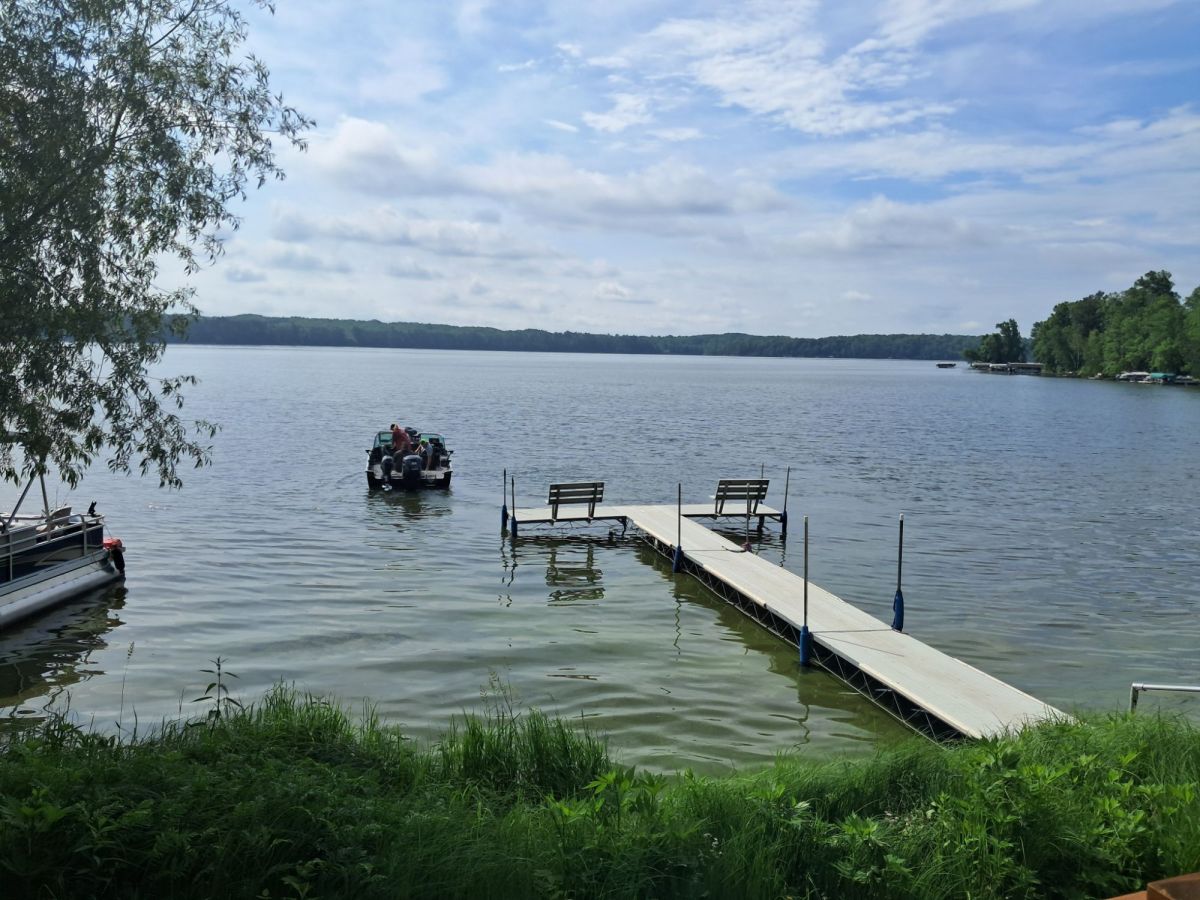
The warm afternoon sun casts a golden glow over our quiet half-acre pond, its surface shimmering gently with ripples that appear to dance in the light breeze. The air is filled with the soft chorus of birds, humming of cicadas, and croaking of frogs. Sunbeams softly illuminate the water, mirroring the expansive blue sky and fluffy white clouds above. The air is fragrant with the crisp scent of freshly mown grass and wildflowers. Around the pond, nature seems to pause, inviting a deep sense of relaxation and contentment. This perfect, peaceful afternoon seems to contain the very essence of summer itself.
A Little Boy, a Frog, and a Memory
Near the water’s edge, a barefoot blonde-haired three-year-old boy crouches low, completely absorbed in the world before him.
His blue jeans are rolled to the knees as he steps into the lukewarm murky water, feet brushing against the soft mud and slippery algae. His tiny hands reach eagerly toward his feet and a cloud of sediment disturbs the surrounding water. His determined eyes reflect the pond surface as he tries to catch the elusive frogs that leap and splash just out of reach. Every time a frog slips away, Andrew’s face scrunches in concentration, his golden brow furrowing as he plots his next move.
Watching from the porch, I feel the urge to study the shape of him, with dirty knees, hair wild, and cheeks flushed with summer. I smile, waving encouragement, but my chest aches with the weight of what is coming. In a few short weeks, this pond, this homestead, our home of five years, will belong to someone else. The frogs will leap for other children, and the sun will set on different faces. I try to root myself in the moment, to let the warmth of the day and the joy in his eyes completely fill my heart. But the knowledge of our impending move threads through my happiness, tightening into something poignant and precious.
Motherhood, Growth, and Letting Go
This pond bore witness to my own personal growth as I learned to become a mother, deepened my relationship with my husband, and had moments of intense joy and agonizing struggle while living on our homestead. Here is where we hosted countless cookouts, campfires, and nature walks with family and friends. Leaving feels like closing a chapter of my own story as a young mother learning to let go.
With a sudden splash, he emerges from the water with a frog, holding it a little too tightly in his hands as it attempts to wriggle away. My son’s delighted laughter carries a joyful, pure, infectious energy as he calls me over to admire his trophy, pants completely soaked. I walk toward my son as he clutches his frog, eyes squinting against the sunlight. I kneel in the grass beside him and observe both the frog’s slick skin and legs tensing to spring. I reach out to steady his hand and for a heartbeat, the world narrows to just the four of us: my son, the frog, me, and his unborn sibling kicking in my womb.
His wonder-filled eyes and rudimentary language work hard to persuade me to keep this frog as a pet as he prepares a makeshift house comprised of a plastic coffee can full of water and a couple sticks. As he looks at me, I try to memorize the sound of the breeze in the cattails, the way the pond smells of earth and water, the exact shade of green on the frog’s back. Every detail feels urgent, as if I can hold onto this place by sheer force of will to preserve it for both my children. I cannot escape the fact that this memory is being made even as it slips away, colored by the bittersweet certainty that some joys can only be borrowed, never kept.
Learning to Let Go of a Place
The meaning of this moment is not lost on me. My child wants to keep this frog as much as I want to make this moment stretch forever. He has connected with a wild, living creature and felt its energy. But the frog cannot be kept forever, and holding on for too long will only hurt it. In the same way, me clinging to life’s transient joys and sorrows will only lead to disappointment and loss.
With watery eyes and a softer tone than I intend, I urge him to release the frog back to the pond. I encourage him to appreciate his brief time with the frog, but the frog’s nature is to leap, move, and be free. He looks blankly at me, oblivious to the undercurrent in my words or my tear-streaked face. For a moment, I envy him his innocence. After some thought, he reluctantly liberates the frog, and we watch as it vanishes below the pond surface with a flash. I commend Andrew for his empathy for all living things.
As I watch him immediately crouch down to try catching another frog, I reflect on the parallels of this moment to my own current struggles. He honored the frog’s nature and the flow of life. Similarly, I need to embrace change for me to grow, adapt, and appreciate the beauty of each moment.
Just as I have encouraged my son to cherish his brief encounter with the frog, my impending move urges me to be fully present and savor this moment by the pond, knowing that this may be my last memory here. Embracing the fact that each moment is transient is what makes our experiences richer, our relationships deeper, and our gratitude more profound.
Saying Goodbye to Our Homestead
We are moving back to our childhood hometown to make space for new and strengthened connections, revisited childhood memories, and renewed growth. I must trust that the next chapter will bring its own unforgettable moments as we welcome another child into the world while continuing to provide my son with rich experiences. I allow myself to feel both grief and optimism and remind myself that there is a unique beauty in the ephemeral impermanence of life.
I carry the most meaningful gifts—the memories, lessons, and love—from this place no matter where life takes me. I pause to honor this space for its teachings and guidance over the past five years and prepare to say a heartfelt goodbye.
Watching my son catch and release frogs has reminded me that I cannot hold on to anything forever, but I can cherish each memory, embrace change, and find beauty in the dance of constant transformation. In letting go, I invite myself to truly live.
Join the Conversation
Have you ever had trouble letting go of a place, a season, or a chapter of your life? Share your story in the comments below, and subscribe to join a community of like-minded people learning to embrace change together.
How to Overcome Fear of Judgment and Find Authentic Connection
Throughout adulthood, I’ve turned self-expression into a high-stakes gamble where the fear of judgment feels like a referendum on my right to exist. Here’s how overcoming fear of judgment became my path to authentic living.
The Emotional Cost of Fear of Judgment
The terror of exposing my innermost thoughts is like standing emotionally naked before a crowd. Every flaw and contradiction feels exposed to scrutiny. Alarm bells ring before I share anything meaningful, warning that my words could be dissected, dismissed, or weaponized against me.
If I bare my inner world, it becomes subject to forces beyond my control—deemed unworthy, irrational, or contemptible. This fear of being judged has led me to dilute opinions, laugh at unsettling jokes, nod along to disagreed ideologies, and stay stoic to avoid rejection anxiety.
How Withholding Creates Isolation
Every withheld thought became a self-imposed gag order. As inauthenticity became armor, my inner voice grew louder. Before speaking, I’d replay rejections: raised eyebrows dismissing ideas, nervous chuckles hollowing confessions, silence following bold statements.
This withholding ritual protected tender parts but cost me deeply—increasing emotional isolation. Trapped behind glass, I ached for connection: See me. Understand me. Yet the glass stayed cold, leaving me wondering if the fault lines were mine alone.
The Consequences of Staying Silent
To be known risks devastation, but remaining unknown is a slower death. Relationships turned transactional—trust replaced by calculation, authenticity by performance, dialogue into echo chambers.
Fear of judgment fostered social isolation. I felt truly myself only with select people or alone, alienated from communities that could affirm or challenge me healthily. This created a feedback loop where vulnerability anxiety felt ever more dangerous.
My sense of self fragmented into half-truths and omissions. Relationships anchored in politeness, not depth. The world grew colder; authenticity became liability. A quiet grief emerged for the unlived life—unspoken ideas, unmade connections.
Breaking Free: Overcoming Fear of Judgment
Yet within this grief lies liberation—not in abolishing fear, but recalibrating its power. Small acts of courage rebuild trust in my resilience:
Sharing unpopular opinions
Tolerating disagreement discomfort
Embracing that no one is universally understood
Rejection of an idea doesn’t mean total rejection of me. Authentic self-expression becomes assertion of presence, not plea for validation.
Reclaiming Your Narrative Through Vulnerability
The fear of scrutiny battles for sovereignty over my mind. To speak anyway reclaims my narrative—flawed, evolving, unapologetically human.
Overcoming fear of judgment doesn’t erase social anxiety. It transforms vulnerability from threat to strength. Emotional authenticity connects us across the glass walls we all build.







 Practical Homesteading