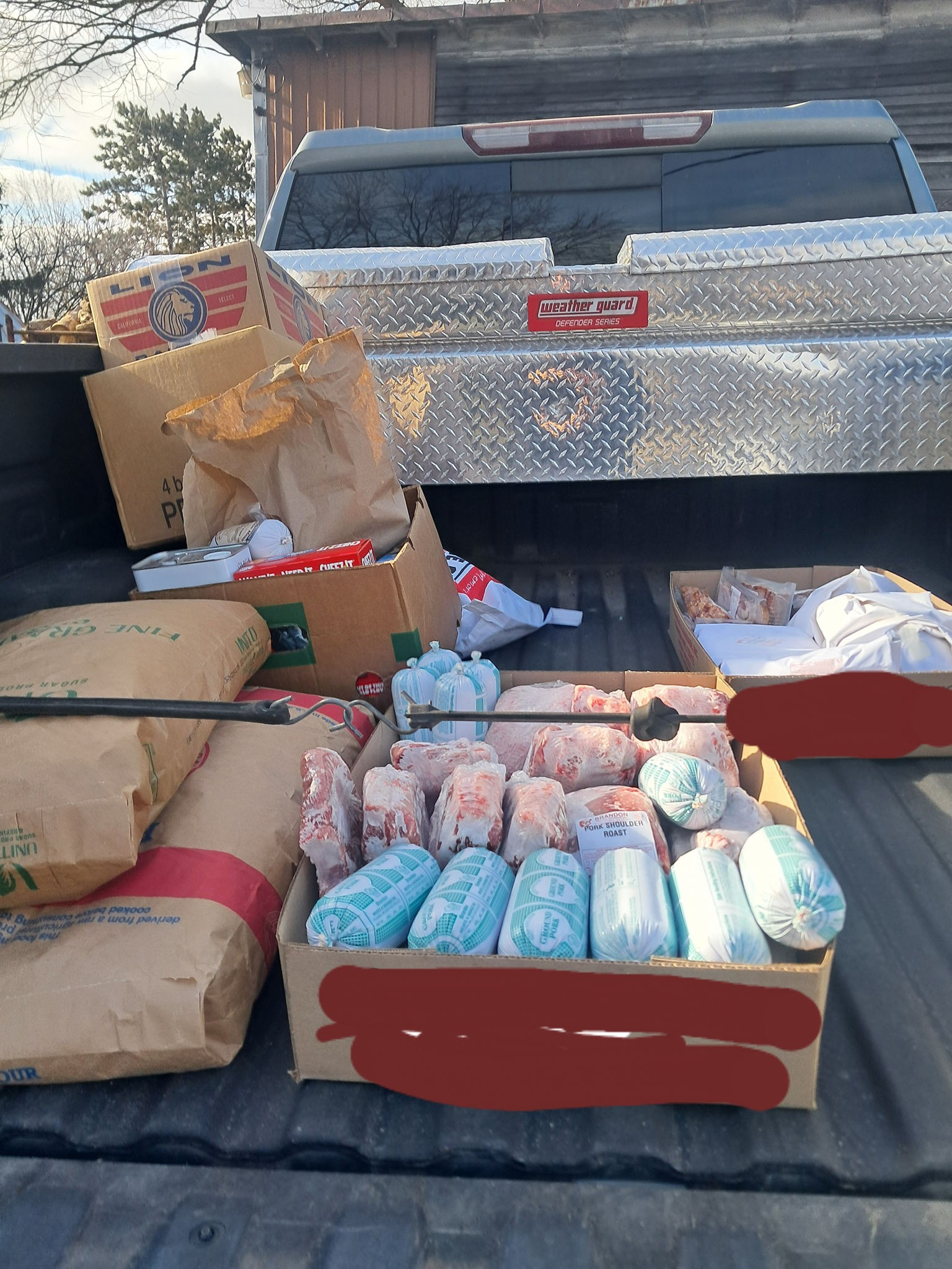
Why Buying Meat from a Farmer Is Different
The process of purchasing meat directly from a farmer is a little different than grabbing a package from the grocery store. It takes more planning, dependable freezer space, and a willingness to think about your food in a new way.
But in return, you get so much more than just meat.
If you’ve ever wondered how to buy a quarter beef or half pig from a local farmer, this guide walks you through the whole process.
Knowing How Your Meat Was Raised
There’s something powerful about being able to visit the animal that will eventually feed your family.
When you have a good relationship with a farmer, you can:
- See where the animals live
- Watch what they eat
- Notice how they’re handled and treated
To be a good farmer is to be empathetic. You’re working with living beings that deserve dignity. They don’t deserve to live in filth, inside all the time, never able to root, scratch, or roam according to their instincts.
On our homestead, for example, our pigs are raised outside all the time. They can root, eat grass, make mud puddles, and scratch. We don’t dock piglets’ tails because we let them nurse from mom long enough that they don’t get frustrated and chew on each other. In winter, we help them stay warm in a few ways: we feed them extra so they can build up fat reserves, and we add plenty of straw and insulation around their pig hut (which, for us, is an old calf crate). Think of it like the house of straw from the three little pigs—but this one is reinforced with solid supports and a lot more intention.

When you buy meat from a farmer whose practices you know and trust, you’re not just buying a product. You’re choosing a story you feel good feeding your family.
Bulk Meat, Full Freezer, and Creative Cooking
Buying meat in bulk pushes you to think beyond just bacon, sausage, and ham.
Pigs, for example, are so much more than the “usual” cuts. Have you ever had:
- A well-cooked pork steak or pork chops
- Homemade uncased breakfast or Italian sausage (not at all difficult to make)
- Marinated side pork (uncured bacon) cooked over a grill or campfire (this one is a total game changer)
There’s a whole world of flavor and texture in a single animal, and learning to cook those different cuts can actually be fun. I plan to share more recipes and cooking ideas in future posts if you’re interested in exploring beyond the basics.
There’s also the very practical side: having a full freezer of meat means:
- Fewer last-minute grocery runs
- Less impulse spending on convenience food
- One less thing to juggle when life is busy
With a little forward planning, you’re essentially building your own little “store” at home that you can shop from all year. When you’re tired, sick, or snowed in, knowing you have meat on hand for soups, roasts, tacos, casseroles, and quick meals is a huge relief.
Planning to Fill Your Freezer?
Get the free Grow What You’ll Use planner to think through what your household actually uses, how you want to store or preserve food, and what will make the most of your freezer space.
Supporting Local Farmers and Your Community
When you purchase meat directly from a farmer, you’re helping someone keep their livelihood—not padding a middleman’s profit.
Your money:
- Goes directly to the person raising the animals
- Stays in your local community
- Helps a neighbor maintain their land, care for animals, and keep going another season
Ideally, this relationship grows beyond a simple transaction. Over time, you get to know each other. You learn their rhythms and challenges; they learn about your family and your needs. Maybe they text you pictures of new piglets, or you bring your kids out to see the calves.
You’re not just “a customer”—you’re part of the farm’s story too.
In other words, you’re trading a little extra planning upfront for better meat, deeper connection, and a more secure pantry.
How Buying Meat in Bulk from a Farmer Works
Now that we’ve talked through the benefits, let’s look at how this actually works in practice.
When you purchase meat directly from a farmer, you typically buy a portion of an animal, not just an individual package. You’ll usually be offered:
- A quarter
- A half
- A whole
The exact options depend on the type of animal and the farmer.
Buying a Quarter or Half Beef
A beef animal (steer) is large, so it’s commonly broken into quarters.
- One quarter of beef usually equals around 200 pounds of freezer meat (this can vary based on size and breed).
- A half or whole animal would, of course, be proportionally more.
This sounds like a lot—and it is—but once you break it down into ground beef, roasts, steaks, stew meat, and soup bones, most families are surprised how quickly they use it over the course of a year. For many four-person families, a quarter beef can comfortably supply most of their beef for many months, if not close to a full year, depending on their eating habits.
You’ll sometimes hear people call this a “quarter cow,” but “quarter beef” is the more accurate term.
Buying a Half or Whole Pig
Pigs are smaller, so they’re often sold as halves or wholes.
- A half pig usually yields around 100 pounds of freezer meat.
- A whole pig is roughly 200 pounds, give or take.

The pork is split between bacon, ham, ground pork or sausage, and various cuts. For our four-person family, a whole hog is enough pork to last us about one year. Your experience may vary based on your family’s eating habits.
Again, these are ballpark numbers, but they’re helpful for planning. You can always split a half or a whole with another family if that feels more manageable.
Freezer Space for Bulk Meat Orders
Buying a quarter of beef or a half pig means one very practical thing: you need somewhere to store it.
A few things to consider:
Freezer Type
We use both a chest freezer and an upright freezer between our beef, pork, frozen garden vegetables, and other grocery store finds (yes, I do still grocery shop, but more like monthly). Either style works; it often comes down to space and personal preference.
- Chest freezers tend to be more energy-efficient and stay cold longer if the power goes out.
- Upright freezers are easier to organize and access because everything isn’t stacked on top of everything else.

Finding a Freezer
You can often find secondhand freezers at a bargain on places like Facebook Marketplace or local buy/sell groups if you’re willing to watch for deals and clean them. Just make sure you can test that it gets and stays cold before you bring it home.
Electric Considerations
Ideally, your freezer should be on a dedicated electrical circuit to reduce the risk of tripping a breaker and silently losing everything. If you’re unsure, it’s worth asking someone handy or an electrician to check.
Power Outages
If there is a power outage, resist the urge to open the freezer “just to check.” A closed, full freezer will stay cold much longer than you’d think. If your area loses power frequently, having a small generator on hand for your freezer might be worth considering.
Think of your freezer as a savings account: that meat is your hard-earned money in frozen form. You want to protect it.
Planning Ahead with Your Farmer
Farmers can’t just create finished animals overnight. It takes time to raise them to a good butcher weight, and many farms book processing dates months in advance.
As a rough guide:
- A beef animal takes about 2 years to raise.
- A pig takes about 6 months.
Most farmers plan their processing schedule well ahead of time. If you’re thinking of buying meat in bulk:
- Reach out to a farmer several months (or even a season) in advance.
- Ask when they typically send animals to the processor.
- Get on their list early, especially if they’re a smaller operation.
You can also ask about breed and feeding practices (grass-fed, grain-finished, pasture-raised), so you know exactly what you’re getting.
Building a Relationship While You Wait
During that time, you can do more than just wait for a phone call.
- Visit the farm if that’s an option.
- Ask questions about how they feed and house animals.
- Let your kids (if you have them) see where their food comes from and ask their own questions.
Every farmer I know—and I know quite a few, thanks to my agricultural background—loves to talk about their animals. They’ll tell you about personalities, quirks, and challenges. For most of them, farming is a vocation, not just a job. They’re in it because they care.
Understanding the Two Bills: Animal and Processing
When the processing date gets closer, your farmer will reach out with more details, such as:
- Which butcher/processing facility they’re using
- The approximate hanging weight of the animal, and the price per pound for their part
- The approximate date you can expect to pick up your meat
This is also when you’ll want to understand how payment works. When you purchase directly from a farmer, you’re usually paying two separate bills:
- The animal itself – paid directly to the farmer
- The processing/butchering – paid directly to the butcher or processing facility
The farmer can tell you their rate structure (per pound, flat rate, etc.), and the processor will have their own fee schedule based on your preferences—cutting, wrapping, curing, sausage-making, smoking, and so on.
Working with the Butcher on Cut Choices
Once the farmer takes the animal to the butcher shop, their part in the story is essentially done. Next, the butcher shop (to whom the farmer has passed along your contact information) will reach out with questions about how you want your meat processed.
A good butcher will walk even the least experienced person through the process. Some examples of decisions include:
- More roasts or more ground?
- How thick do you want steaks or chops cut?
- What kinds of sausage would you like, and in what size packages?
- Do you want soup bones, organ meats, or extras like lard or fat?
The possibilities are truly endless, and you can customize it in the way that works best for your cooking. One year, you might prefer 1‑pound packages of ground beef or pork; the next year, you might decide you’d rather have 1.5‑pound packages to better fit your favorite recipes. You can adjust as you learn what your family actually uses.
Picking Up Your Bulk Meat Order
The last part is picking up your meat from the butcher.
- The processor will contact you when everything is cut, wrapped, and frozen, and they’ll share the total cost due to them.
- It’s important to ask whether you need to bring coolers or boxes to store the meat on the way home. Some butchers provide boxes; others do not.
There’s nothing worse than showing up unprepared and having 200 pounds of meat rolling around loose in your vehicle. Don’t ask me how I know.
A few final tips:
- Bring sturdy boxes or coolers so you can stack and carry the meat easily.
- Bring a pair of gloves—the meat is cold and pre-frozen, and you don’t want frozen fingers by the time you’re done loading and unloading.
- Make sure you have your freezer space ready and cleared before pickup day, so you’re not rearranging everything with a car full of thawing meat.
It can feel more complicated than grabbing a package at the store, but once you’ve done it, it starts to make sense. And the reward is a freezer full of meat you feel good about, with a story you actually know—and a farmer you can call by name.
Common Questions About Buying Meat from a Farmer
Is it cheaper than grocery store meat?
It depends on what you’re comparing it to.
- If you usually buy the cheapest grocery store meat and the bargain cuts, buying from a farmer may cost a bit more per pound.
- If you usually buy higher-quality or “natural” meat, buying in bulk from a farmer is often the same price or cheaper—and you’re getting better quality and supporting a local family.
One important consideration is that you pay one price per pound of processed meat. This includes the more expensive cuts like pork belly or tenderloin, and the “lesser” cuts like spare ribs and pork hocks. The more expensive cuts come down in price compared to the grocery store, and the “lesser” cuts are typically at or slightly higher than grocery store prices.
The biggest difference is that you’re paying for a large amount at once instead of spreading it out over many small trips—and all the tempting last-minute impulse purchases grocery stores are so good at encouraging.
Do I have to take cuts I don’t know how to cook?
No—and also, not forever.
- You can customize your order a lot. For example, if you don’t like roasts, you can ask for more ground.
- You can skip certain things (like organ meats) if you know you won’t use them.
- Over time, you might decide to try one or two “new” cuts each year as your confidence grows.
You’re not locked into one way of cutting forever; you can adjust each time you order.
What if I don’t have enough freezer space for a whole or half animal?
You have options:
- Split a quarter or half with a friend or family member.
- Ask your farmer if they know anyone looking to “share” an animal—many do.
- Start smaller (for example, a quarter beef instead of a half, or half a pig instead of a whole).
You don’t have to jump straight into a full animal on your first try.You have options:
- Split a quarter or half with a friend or family member.
- Ask your farmer if they know anyone looking to “share” an animal—many do.
- Start smaller (for example, a quarter beef instead of a half, or half a pig instead of a whole).
You don’t have to jump straight into a full animal on your first try.
How long will the meat last in the freezer?
If it’s wrapped well and kept consistently frozen:
- Most cuts are best within 12–18 months, though many will last longer and still be safe to eat.
- Ground meat is typically best within 6–12 months for peak quality.
Labeling packages with the date and type of cut makes it much easier to rotate and use things in a good timeframe. A good butcher will do that for you.
What if I’m nervous about making the wrong choices?
You’re not alone—almost everyone feels that way the first time.
A few reassurances:
- Farmers and butchers are used to first-timers. They expect questions.
- A good butcher will walk you through the options and explain what’s common for families like yours.
- You can keep things simple your first time (basic steaks/chops, roasts, and ground), then get more adventurous with sausage, specialty cuts, and smoking on your next order.
Think of your first bulk order as a learning experience. You’ll quickly figure out what your family uses most.
If You’re Local and Want to Buy from Us
If you’re local (Southeastern Wisconsin) and interested in buying pork from our homestead, we’d love to connect.
Because raising and processing animals is a big investment, we use a simple reservation and deposit system so everyone knows what to expect:
- You reserve a portion (half or whole) with a small non-refundable deposit.
- We raise and deliver the animal to the butcher on the scheduled date.
- Once we know the hanging weight and processing cost, we send you a clear invoice.
- After payment, you pick up your meat at the butcher.
If that sounds like something you’d like to explore—or if you just have questions—feel free to reach out. We’re happy to talk through the process and see whether it’s a good fit for your family.
Have you ever bought a quarter beef, half pig, or other bulk meat from a farmer—or is it something you’ve been curious (or nervous) to try?
If this helped answer some questions—or made buying meat from a farmer feel a little less intimidating—please like and share it with a friend who’s been talking about “finding a local farmer.” It makes a bigger difference than you think.
Subscribe for weekly homesteading tips:
Read Next: Why I’d Change Food Safety Laws: The Homestead Pork Processing Cost Crisis