Tag: writing

  • Rooted in September, November, and October

    Who are your current most favorite people?

    Have you ever noticed how some people quietly root themselves into your life’s story, shaping you in ways you only recognize years later?

    I have three such people. Each arrived in my life in a different month, under different skies. Yet all have become my most favorite—and every morning, her kisses remind me how deeply entwined we are.

    The first person came into my life when I was twelve. It was on a crisp September morning on a creaky school bus. I remember deliberately slipping into his favorite seat, hoping for a moment of attention. He was the boy with the quick grin and sly humor, so different from my preppy, studious self. At first, he barely noticed, but gradually, our laughter bridged our worlds. We briefly drifted apart in high school. By college, weekends bloomed with him driving an hour to visit me, our shared adventures stitching us closer. Eight years later, we married—two lives grown together in love and understanding.

    Two Novembers later—two years after marrying him—I awaited another arrival with nervous wonder. Six months earlier, I had learned I would become a mother. As he grew, I spoke often to him, calling him “little one.” I dreamt of the gardens we’d tend and the trips we’d take. He arrived on a blustery Saturday night, bearing a name passed down through generations. Our first year together was a storm, marked by sleepless nights, fears, and growth. But with each challenge, I found a deeper love while planting seeds both in soil and in his heart.

    Four Octobers after that, our family welcomed a second burst of joy. She came into the world on a rainy October evening, her laughter a bright pulse in our new home. We had just moved closer to family, seeking the roots we needed. Now my mornings start with her tender toddler kisses—small reminders of the light and love she brings to every day. Watching her discover the world has taught me to find wonder in the small moments, and open my arms wide to life’s beautiful unpredictability.

    These three—the boy from the school bus seat in September, the “little one” I awaited in November, and the joyful October child with kisses at dawn—are my heart’s home. My husband and two children, each planting roots, helping me grow, and teaching me what it truly means to love.

    If this story touched your heart, please like, share, and subscribe to stay connected. Your support helps me continue to share meaningful moments and stories that inspire growth and love.

    Related Posts

  • Learning to Be Seen: Redefining My First Impression

    What’s the first impression you want to give people?

    When I think about the first impression I want to give people now, it connects closely to how much I’ve learned about myself.

    In my 30-something years, I’ve spent a lot of time shrinking into the background—speaking softly, standing at the edges of rooms, and convincing myself that others didn’t really want to notice me. Somewhere along the way, I mistook invisibility for safety. That belief likely began in childhood, when being quiet felt like the right way to belong.

    But with time, I began to see what that silence cost me. By keeping myself small, I limited the depth of my connections. People knew me only in fragments because I wasn’t showing them a complete person. What I thought was self-protection often turned into isolation.

    Now, I want my first impression to reflect who I’m becoming rather than who I used to be. When someone meets me, I hope they sense warmth and calm, a presence that feels both grounded and engaged. I want my voice to carry confidence without volume—a kind of steadiness that says, “I see you, and I’m here.” Maybe it shows in the way I smile when greeting someone or in how I pause to listen before responding.

    More than anything, I hope to make people feel comfortable being themselves, just as I’m learning to be comfortable being myself. If my presence leaves others feeling seen, valued, and at ease, then that’s the impression I want to give. It’s the one I’ve always been reaching for, quietly, without realizing it.

    Have you ever realized that the way you present yourself isn’t who you truly are inside? Share your story in the comments. What first impression do you want to give people now, and how has that changed over time?

    If this reflection resonated with you, take a second to like the video. Share it with someone who might need to hear it. Subscribe for more conversations about self-growth, confidence, and showing up as your authentic self. Your engagement helps build a community where everyone feels seen and heard.

    Related Posts

  • Mapping Home

    Mapping Home

    What’s the coolest thing you’ve ever found (and kept)?

    The first time I saw the map, I was nauseated and overwhelmed.

    It was March 2023, and my husband and I were touring the house that might soon become our home. At nine weeks pregnant, I’d skipped breakfast, and the wave of queasiness matched the swirl of emotions inside me—a baby on the way, a new house, a new life I wasn’t sure I was ready for. The place overflowed with decades of forgotten possessions, each room crowded with remnants of someone else’s story.

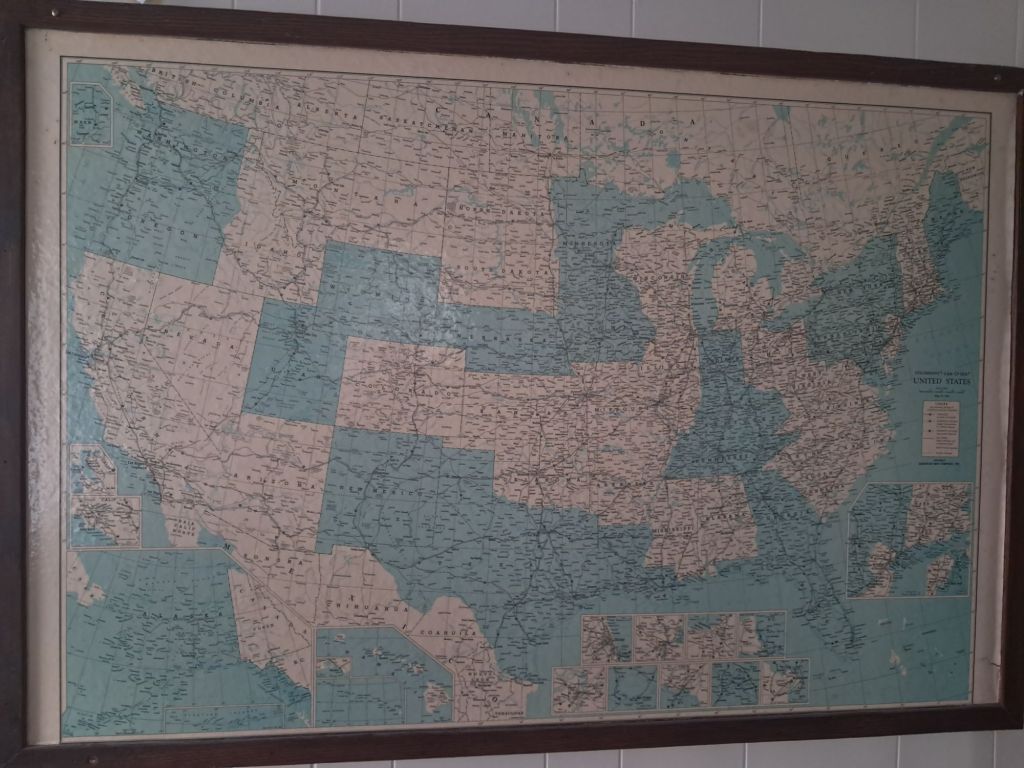
    Upstairs, something leaning against the wall caught my attention. It was a large vintage map of the United States, the kind once used in classrooms to chart railroads and planned highways. The paper was yellowed and curled at the edges, faint marker lines tracing routes that never came to be. Despite my dizziness, I knelt to study it, drawn in by the faded colors and the quiet sense of history. Even in its worn state, I saw potential—a story still waiting to be told.

    Two months later, after closing on the house, we returned to begin the long process of cleaning. Much of the clutter remained, but the map was still there, patient and waiting in the same spot, as if it belonged to me. My husband and in-laws spent weeks scrubbing, painting, and repairing walls. Amid the chaos, they carefully cleaned the map, framed it, and hung it in my future home office—a space I would soon inhabit every day. It was a small gesture, but one of the kindest and most meaningful I’ve experienced.

    Now, two years later, that map still hangs on the wall of my office. Its faded lines have become a steady companion to my workdays, a window to imagined landscapes beyond the screen. When someone on a call mentions a city or a road trip, I glance over, tracing their route and picturing their corner of the country. It reminds me not just of place, but of the path we’ve taken—from that cluttered, dizzy morning to the life we’ve carefully mapped within these walls.

    If reflections like this resonate with you, subscribe for more small moments of gratitude and intentional living.

  • Learning to Let Go: Saying Goodbye to Our Homestead and Pond

    Letting go of our homestead and moving back to our hometown taught me deep lessons about change, motherhood, and the beauty of transient moments.

    A Summer Afternoon by the Pond

    The warm afternoon sun casts a golden glow over our quiet half-acre pond, its surface shimmering gently with ripples that appear to dance in the light breeze. The air is filled with the soft chorus of birds, humming of cicadas, and croaking of frogs. Sunbeams softly illuminate the water, mirroring the expansive blue sky and fluffy white clouds above. The air is fragrant with the crisp scent of freshly mown grass and wildflowers. Around the pond, nature seems to pause, inviting a deep sense of relaxation and contentment. This perfect, peaceful afternoon seems to contain the very essence of summer itself.

    A Little Boy, a Frog, and a Memory

    Near the water’s edge, a barefoot blonde-haired three-year-old boy crouches low, completely absorbed in the world before him.

    His blue jeans are rolled to the knees as he steps into the lukewarm murky water, feet brushing against the soft mud and slippery algae. His tiny hands reach eagerly toward his feet and a cloud of sediment disturbs the surrounding water. His determined eyes reflect the pond surface as he tries to catch the elusive frogs that leap and splash just out of reach. Every time a frog slips away, Andrew’s face scrunches in concentration, his golden brow furrowing as he plots his next move.

    Watching from the porch, I feel the urge to study the shape of him, with dirty knees, hair wild, and cheeks flushed with summer. I smile, waving encouragement, but my chest aches with the weight of what is coming. In a few short weeks, this pond, this homestead, our home of five years, will belong to someone else. The frogs will leap for other children, and the sun will set on different faces. I try to root myself in the moment, to let the warmth of the day and the joy in his eyes completely fill my heart. But the knowledge of our impending move threads through my happiness, tightening into something poignant and precious.

    Motherhood, Growth, and Letting Go

    This pond bore witness to my own personal growth as I learned to become a mother, deepened my relationship with my husband, and had moments of intense joy and agonizing struggle while living on our homestead. Here is where we hosted countless cookouts, campfires, and nature walks with family and friends. Leaving feels like closing a chapter of my own story as a young mother learning to let go.

    With a sudden splash, he emerges from the water with a frog, holding it a little too tightly in his hands as it attempts to wriggle away. My son’s delighted laughter carries a joyful, pure, infectious energy as he calls me over to admire his trophy, pants completely soaked. I walk toward my son as he clutches his frog, eyes squinting against the sunlight. I kneel in the grass beside him and observe both the frog’s slick skin and legs tensing to spring. I reach out to steady his hand and for a heartbeat, the world narrows to just the four of us: my son, the frog, me, and his unborn sibling kicking in my womb.

    His wonder-filled eyes and rudimentary language work hard to persuade me to keep this frog as a pet as he prepares a makeshift house comprised of a plastic coffee can full of water and a couple sticks. As he looks at me, I try to memorize the sound of the breeze in the cattails, the way the pond smells of earth and water, the exact shade of green on the frog’s back. Every detail feels urgent, as if I can hold onto this place by sheer force of will to preserve it for both my children. I cannot escape the fact that this memory is being made even as it slips away, colored by the bittersweet certainty that some joys can only be borrowed, never kept.

    Learning to Let Go of a Place

    The meaning of this moment is not lost on me. My child wants to keep this frog as much as I want to make this moment stretch forever. He has connected with a wild, living creature and felt its energy. But the frog cannot be kept forever, and holding on for too long will only hurt it. In the same way, me clinging to life’s transient joys and sorrows will only lead to disappointment and loss.

    With watery eyes and a softer tone than I intend, I urge him to release the frog back to the pond. I encourage him to appreciate his brief time with the frog, but the frog’s nature is to leap, move, and be free. He looks blankly at me, oblivious to the undercurrent in my words or my tear-streaked face. For a moment, I envy him his innocence. After some thought, he reluctantly liberates the frog, and we watch as it vanishes below the pond surface with a flash. I commend Andrew for his empathy for all living things.

    As I watch him immediately crouch down to try catching another frog, I reflect on the parallels of this moment to my own current struggles. He honored the frog’s nature and the flow of life. Similarly, I need to embrace change for me to grow, adapt, and appreciate the beauty of each moment.

    Just as I have encouraged my son to cherish his brief encounter with the frog, my impending move urges me to be fully present and savor this moment by the pond, knowing that this may be my last memory here. Embracing the fact that each moment is transient is what makes our experiences richer, our relationships deeper, and our gratitude more profound.

    Saying Goodbye to Our Homestead

    We are moving back to our childhood hometown to make space for new and strengthened connections, revisited childhood memories, and renewed growth. I must trust that the next chapter will bring its own unforgettable moments as we welcome another child into the world while continuing to provide my son with rich experiences. I allow myself to feel both grief and optimism and remind myself that there is a unique beauty in the ephemeral impermanence of life.

    I carry the most meaningful gifts—the memories, lessons, and love—from this place no matter where life takes me. I pause to honor this space for its teachings and guidance over the past five years and prepare to say a heartfelt goodbye.

    Watching my son catch and release frogs has reminded me that I cannot hold on to anything forever, but I can cherish each memory, embrace change, and find beauty in the dance of constant transformation. In letting go, I invite myself to truly live.

    Join the Conversation

    Have you ever had trouble letting go of a place, a season, or a chapter of your life? Share your story in the comments below, and subscribe to join a community of like-minded people learning to embrace change together.

  • How to Overcome Fear of Judgment and Find Authentic Connection

    How to Overcome Fear of Judgment and Find Authentic Connection

    How to Overcome Fear of Judgment and Find Authentic Connection

    Throughout adulthood, I’ve turned self-expression into a high-stakes gamble where the fear of judgment feels like a referendum on my right to exist. Here’s how overcoming fear of judgment became my path to authentic living.

    The Emotional Cost of Fear of Judgment

    The terror of exposing my innermost thoughts is like standing emotionally naked before a crowd. Every flaw and contradiction feels exposed to scrutiny. Alarm bells ring before I share anything meaningful, warning that my words could be dissected, dismissed, or weaponized against me.

    If I bare my inner world, it becomes subject to forces beyond my control—deemed unworthy, irrational, or contemptible. This fear of being judged has led me to dilute opinions, laugh at unsettling jokes, nod along to disagreed ideologies, and stay stoic to avoid rejection anxiety.

    How Withholding Creates Isolation

    Every withheld thought became a self-imposed gag order. As inauthenticity became armor, my inner voice grew louder. Before speaking, I’d replay rejections: raised eyebrows dismissing ideas, nervous chuckles hollowing confessions, silence following bold statements.

    This withholding ritual protected tender parts but cost me deeply—increasing emotional isolation. Trapped behind glass, I ached for connection: See me. Understand me. Yet the glass stayed cold, leaving me wondering if the fault lines were mine alone.

    The Consequences of Staying Silent

    To be known risks devastation, but remaining unknown is a slower death. Relationships turned transactional—trust replaced by calculation, authenticity by performance, dialogue into echo chambers.

    Fear of judgment fostered social isolation. I felt truly myself only with select people or alone, alienated from communities that could affirm or challenge me healthily. This created a feedback loop where vulnerability anxiety felt ever more dangerous.

    My sense of self fragmented into half-truths and omissions. Relationships anchored in politeness, not depth. The world grew colder; authenticity became liability. A quiet grief emerged for the unlived life—unspoken ideas, unmade connections.

    Breaking Free: Overcoming Fear of Judgment

    Yet within this grief lies liberation—not in abolishing fear, but recalibrating its power. Small acts of courage rebuild trust in my resilience:

    • Sharing unpopular opinions
    • Tolerating disagreement discomfort
    • Embracing that no one is universally understood

    Rejection of an idea doesn’t mean total rejection of me. Authentic self-expression becomes assertion of presence, not plea for validation.

    Reclaiming Your Narrative Through Vulnerability

    The fear of scrutiny battles for sovereignty over my mind. To speak anyway reclaims my narrative—flawed, evolving, unapologetically human.

    Overcoming fear of judgment doesn’t erase social anxiety. It transforms vulnerability from threat to strength. Emotional authenticity connects us across the glass walls we all build.

    Feature Photo by mohamed Bouboul on Unsplash


    What small act of self-expression will you try this week? Share in comments—your courage might shatter someone else’s glass.

    Share your experiences below, and subscribe to the link below to join a group of like-minded people.