Steam hissed, and coal smoke curled into the crisp morning air. My dad, my son, and I stepped onto the sunbaked grounds of the antique power show: a patchwork of shade tents and hulking old machines. Instantly, history swallowed us whole. This wasn’t a museum behind glass; it was alive, rumbling and chugging all around. The air, thick with the sharp scent of oil and coal, clung to our clothes and tugged me back toward a time I’d only glimpsed in faded family photographs and my dad’s stories.
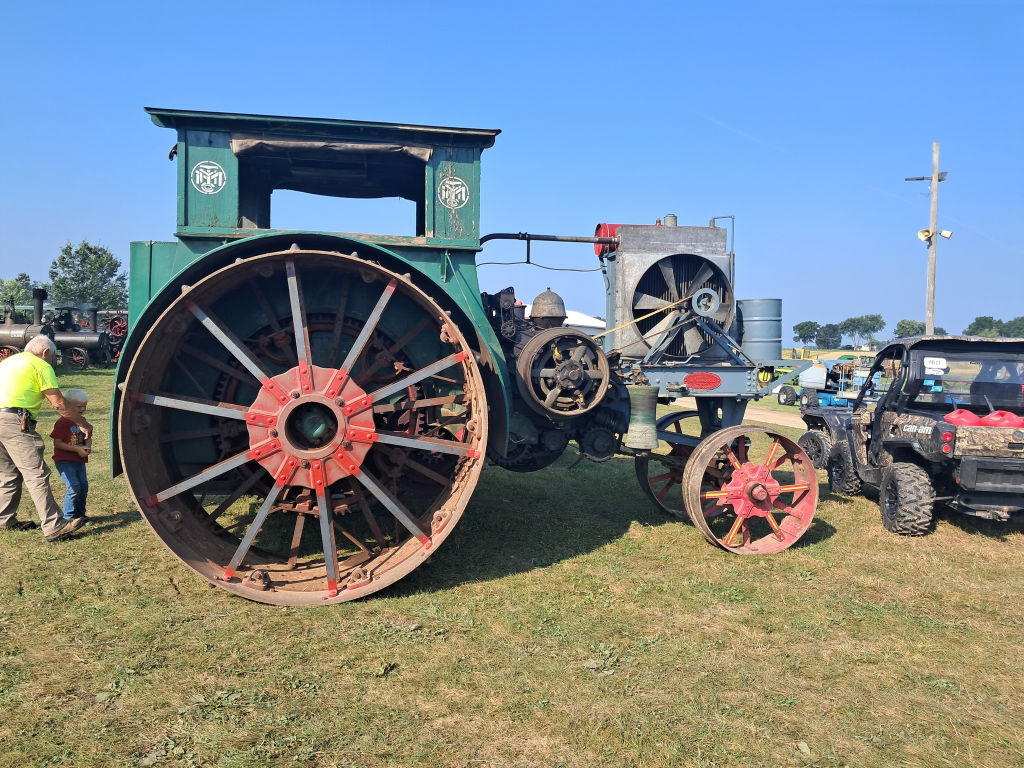
We wandered between rows of iron giants: rusted tractors, battered plows, steam-belching behemoths. My dad moved deliberately, his steps steady, as if each relic deserved a moment of reverence. He stopped at a faded emblem, fingers tracing the nearly worn-away name. “My dad had a John Deere B just like this. It wasn’t the strongest, had trouble getting enough power out of it. So he traded it for a better one when I was a boy.” His voice carried a note of fond remembrance. My son’s eyes widened, and he reached out to touch the cold, rough iron.
A volunteer nearby coaxed a 100-year-old crawler tractor to life. The engine’s low hum rolled through the ground beneath our feet. My dad simply watched, remarking “I’ve never seen that before.” Meanwhile, my son tilted his head, imagining the power beneath the metal skin.
A wiry old machinist beckoned us over, his hands smeared with grease and his smile unmistakable. “Restoring this Allis-Chalmers took patience,” he said, pride warm in his voice. My son fired off questions: “What does this part do? How did you fix that?” The machinist answered each one with a twinkle in his eye. I smiled, watching the curiosity leap between them like a spark. Around us, laughter and storytelling filled the air, a genuine gathering of craftsmen and caretakers celebrating skill honed over decades.
Later, standing beside my son near the sawmill, the belt slapped and squealed as two weathered men fed logs into the spinning blade. Sawdust danced upward, shimmering in the sun. The noisy teamwork, shouts, quick adjustments, shared glances, felt as much an orchestra as a machine at work.
I thought about these tools and the demands they made: time, patience, stubborn respect. How easy it is now to flip a switch and expect magic. Watching my dad explain a mechanism to his grandson, gratitude and responsibility swelled in me, tightly intertwined.
As our visit ended, a crop duster buzzed overhead, its engine humming a modern counterpoint to the hiss of steam and dust from the threshing machine. I realized then that this inheritance wasn’t just nostalgia but a living chain of effort, ingenuity, and curiosity, passed down and waiting to be renewed.
I left carrying more than memories of machines and coal smoke. I carried a promise-to honor the legacy beneath our everyday ease, and to ask myself: What will I build, tend, and pass down for those who follow?
What traditions or skills from your family or community do you feel called to preserve or pass on, and how do you envision doing that in today’s world? Share your thoughts below, and subscribe to join a group of like-minded people.
 Practical Homesteading
Leave a comment