It started with a cardboard box and a quiet meow: small, unassuming things that would, somehow, fill a quiet space in our lives we hadn’t realized was empty. On a golden September afternoon, as sunlight spilled across our 18-acre property and lemon cleaner hung in the air, a little black kitten arrived unannounced, yet was absolutely meant to be.
We were caught in the cheerful chaos of preparing for a weekend with five of my college friends. My two-year-old son and I moved from room to room in tandem, dusting, cooking, laughing, energized by anticipation. The house thrummed with warmth, noise, and purpose.
Then my husband came home early, the corners of his mouth tugged into a mischievous grin.
“Come to the garage. I have something to show you,” he said.
Curious, I followed him, stepping into the quieter, cooler shadows of the garage. That’s when I heard it: a soft, persistent mewing from a cardboard box tucked near the chest freezer. Kneeling, I carefully lifted a corner, and there he was. Two bright, curious yellow eyes peeked out from a wiggling bundle of midnight fur. The little black kitten looked up at me with a gaze so steady and familiar it stopped me in my tracks.
In that moment, memories stirred. I had grown up on a farm, surrounded by cats: fierce and affectionate, free-roaming and loyal. They were our companions, confidants, and mouse patrol. When my husband and I bought our first home, we’d inherited a regal calico named Lucy along with the property. She ruled the garage with quiet authority, greeted me each day with dignified tolerance, and left the occasional mouse on the doorstep, a silent offering.
Lucy died suddenly several months later. Since her passing, the garage had felt hollow, her watchful presence sorely missed. And we weren’t the only ones who noticed: so had the mice.
Not long after, another cat wandered into our lives: an orange kitten, cross-eyed and endlessly sweet. We called him Kitty. He clung to me during my pregnancy like a second shadow, his thunderous purr seemingly crafted to heal. Kitty even comforted my mother-in-law during a particularly cold November day when she accidentally locked herself in the unheated garage as she helped prepare our home to welcome our newborn son. He curled into her lap, a purring heater, and stayed until we arrived home with our bundle of joy.
But Kitty was a wanderer. He would disappear for days, sometimes weeks, only to return as if nothing had changed. Until one day, he didn’t.
That was six months before this September afternoon. The mice, re-emboldened by his absence, had reclaimed the garage. I had mentioned several times that we needed another mouser. Still, I wasn’t prepared for the wave of emotion that surged when I looked down into that box and saw two trusting eyes staring back at me.
He leapt up without hesitation, all gangly limbs and curiosity, as if he’d been waiting for this meeting.
“Can we keep him?” I asked, my grin already giving me away.
My husband shrugged with mock conviction. “I thought you’d say that.”
The timing, of course, wasn’t ideal. A house full of guests, a toddler with unpredictable energy, but the kitten didn’t seem to mind. He took it all in stride, padding confidently through our lives like someone arriving not just for a visit, but for good.
My friends made regular pilgrimages to the garage for their “kitten fix.” My son, in his toddler logic, bestowed the most literal of names: “Black Cat.” And just like that, it stuck.
Black Cat quickly became everyone’s favorite. He tolerated attempted rides in the baby swing, endured smothering toddler hugs, and played audience to endless games. Even our neighbors fell under his spell. One evening, a neighbor returned him reluctantly, his daughter near tears at having to let go. My in-laws insisted he could come inside, as long as he stayed on their laps.
And best of all? He got straight to work on the mice.
A year passed, and life changed. We decided to sell our 18-acre homestead and move closer to family, settling into a smaller five-acre property near our hometown. Moving day was chaos, but Black Cat took it in stride, riding in a cardboard box labeled “Black Cat”, just in case we forgot what was inside. He tried to escape only once, and after the two-hour ride, he emerged unfazed.
Still, I worried. Our new house sat along a county highway. I braced myself every time he stepped near the road. But Black Cat seemed to possess an uncanny sense of self-preservation. I’ve seen him pause at the edge of the pavement, glance both ways, then bolt across with as much caution as a cat can muster.
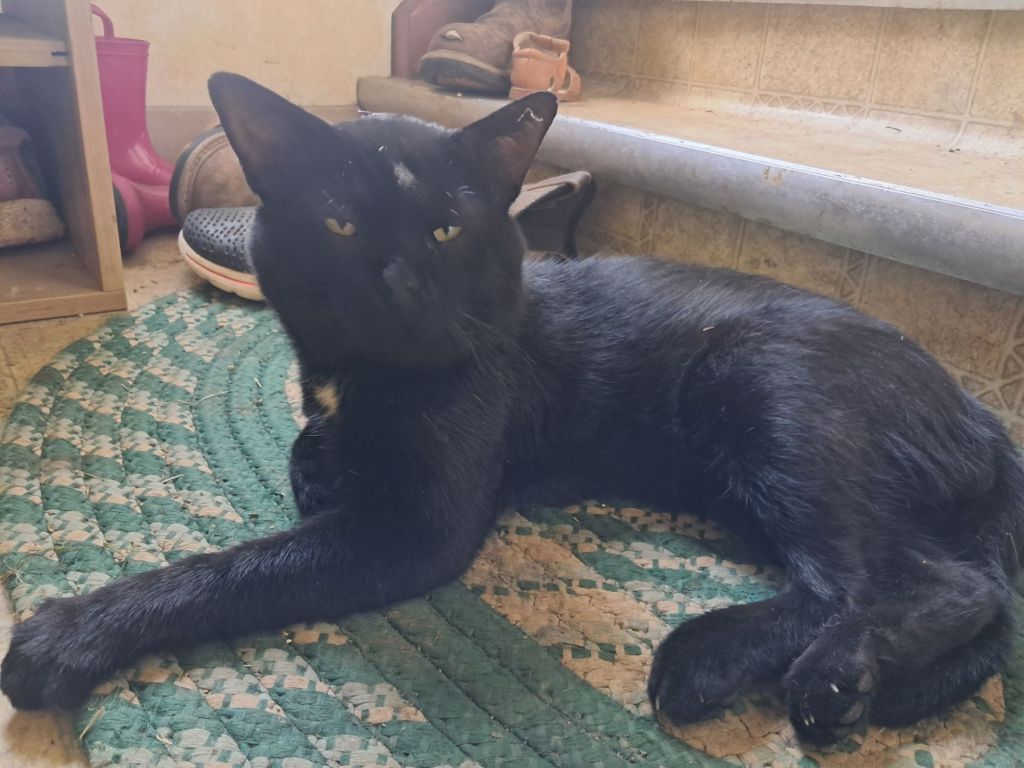
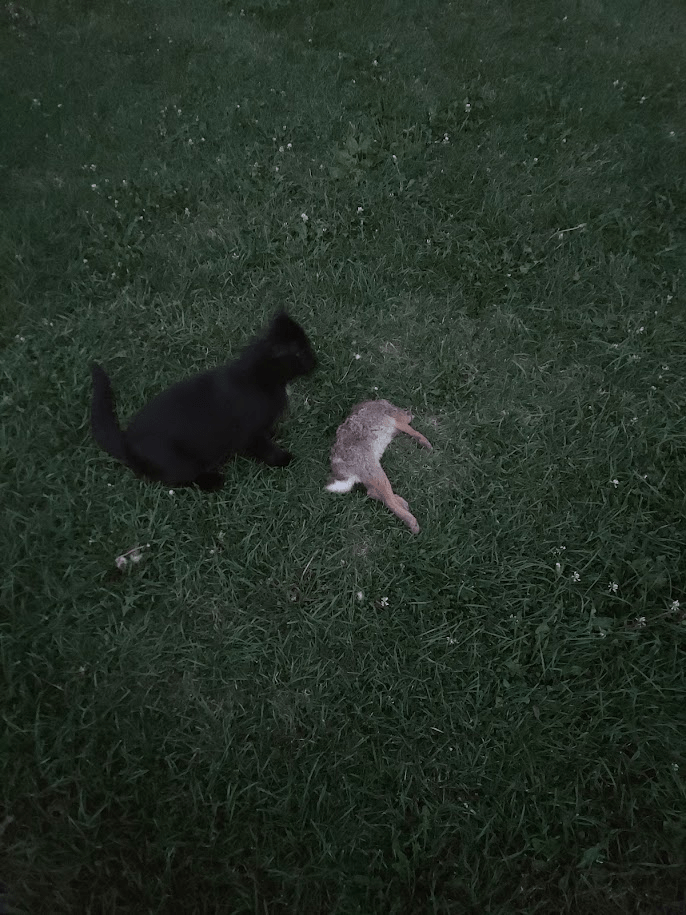
He adjusted quickly. The mice had new things to worry about. Occasionally, he brought home rabbits too. And like his predecessor, he ranged far and wide, a black blur of fur and friendliness. Once, he came home wearing a neon-yellow collar, probably the handiwork of another household he had charmed, only to discard it by his next visit. Somehow, everyone learns the same lesson: Black Cat doesn’t care for collars, but he does care for people.
Now, when I watch him bask in the sun or thread effortlessly between my son or daughter’s legs, I realize what a gift he’s been: not just as a mouser or a companion, but as a marker in the timeline of our lives. He links the animals we’ve loved and lost, the property we left behind, and the home we’re shaping now. His arrival was quiet, but his presence has grown into something deeply woven into the fabric of our family. Some family members arrive in cardboard boxes, with bright eyes and midnight fur, ready to write the next chapter before we’ve even turned the page.
Do you have a beloved pet? Share your experiences below, and subscribe to join a group of like-minded people.
 Practical Homesteading
Leave a comment