Just months ago, the price of eggs soared past $7 a dozen—triple what most people were used to paying. A food so ordinary it’s almost invisible suddenly looked like a luxury. Prices have since eased, but the memory lingers: how did something so basic get so expensive? And why did the shock land so unevenly—upending some farms while leaving others steady?
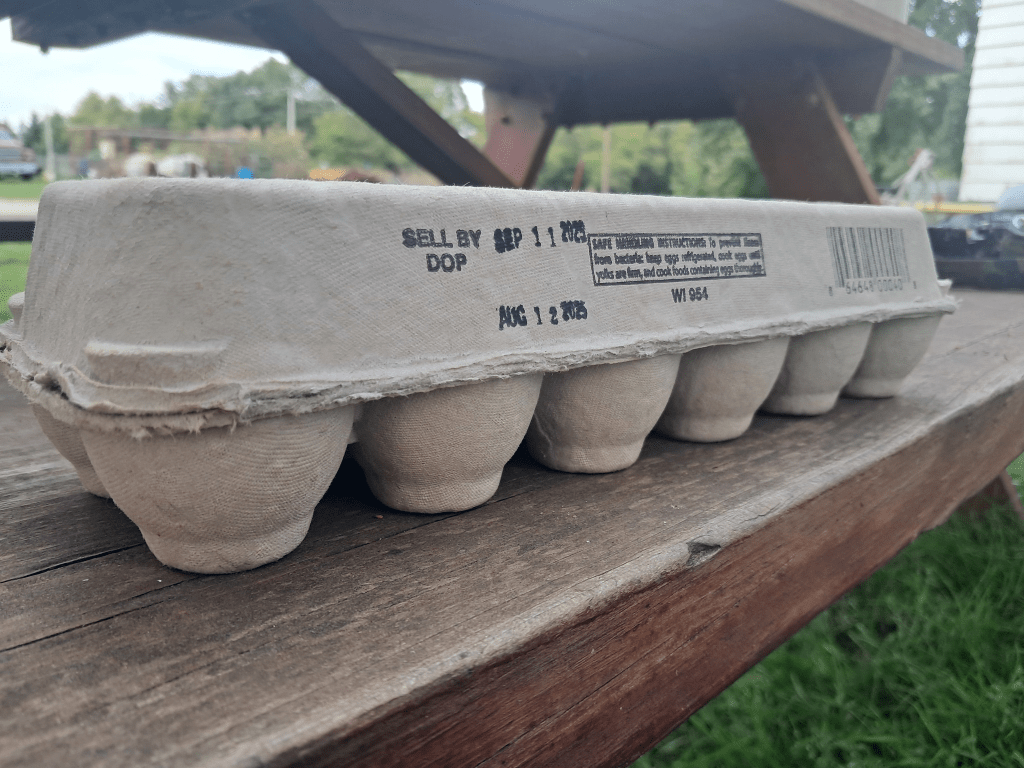
On our farm, a dozen eggs still sells for $4. That number has barely budged in years. While supermarket prices swung wildly, ours held firm. The contrast is more than a curiosity. It hints at how food really travels from barnyard to breakfast table.
The spike began with avian influenza. In 2022 and 2023, the virus swept through major poultry operations, wiping out more than 43 million egg-laying hens nationwide. When a third of the national flock disappears, supply collapses and prices shoot up. Industrial farmers also faced surging costs for feed, fuel, and transport. A production system designed for tight efficiency became brittle: when disease struck, the whole country felt it at the checkout line.
Small farms like ours face the same threats, but the impact lands differently. Three features matter most:
- Flock diversity. We keep mixed-breed, free-range hens. Losing a handful to illness is painful, but a single disease rarely jumps across breeds with equal force. Uniform flocks in industrial barns don’t have that buffer.
- Local sourcing. Most of our feed comes from what we can grow or source locally. Last winter, when global grain costs spiked, our stockpile of grain grown during the previous year was still there, and the cost to produce it did not change. That insulation saved us from the roller coaster.
- Short supply chains. Our eggs travel from our house to their house, a distance of less than ten miles, not five hundred to a distribution hub. Fuel hikes and cold-storage fees barely touch us.
That structure explains why our price holds steady. $4 a dozen looks high when the grocery store is running specials at $2. But when shelves empty or sticker shock sets in, suddenly our carton looks like the bargain. What customers are buying isn’t just eggs—they’re buying reliability.
Of course, small farms can’t replace industrial ones. We don’t feed cities by the million, and local food generally costs more up front. Volume and convenience still matter. But the lesson of the egg crisis isn’t that one system must win. It’s that balance matters. Industrial agriculture delivers abundance when conditions are smooth. Small farms deliver stability when they’re not. Together they form a more resilient food web than either system could alone.
And “smooth” is becoming rare. Disease, war, fuel shocks, and extreme weather tug constantly at a tightly wound system. When that system cracks, as we saw with eggs, the cost gets passed to the consumer.
There’s another way to measure value. It’s not the absolute lowest price when times are calm—it’s the carton that’s still there, at the same price, when times are not. In food, resilience isn’t a luxury. It may be the most essential ingredient of all.
Next time you crack an egg into the pan, think about how far it traveled to get there. If you want your breakfast to come with stability as well as protein, consider keeping part of your food dollar close to home. The steadiness might taste better than you expect.
What is the true cost of cheap food—and what values should guide us when something as everyday as eggs suddenly becomes a luxury? Share your thoughts below, and subscribe to join a group of like-minded people.
#FoodSystem #LocalFood #FarmFresh #FoodResilience #EggPrices #KnowYourFarmer
 Practical Homesteading
Leave a comment