Month: March 2026

  • Short Break for Family & Syrup Season

    Hey friends, quick update from the homestead—I’m taking a short break from blogging to focus on family right now. Life with kids, maple syruping season in full swing, and all the usual chaos needs my full attention. I’d rather share quality stories and insights when I’m back, so I’ll be here soon.

    Thanks for understanding!

  • Letter to My 100-Year-Old Self: Homestead + Kids Dreams

    Letter to My 100-Year-Old Self: Homestead + Kids Dreams

    Daily writing prompt
    Write a letter to your 100-year-old self.

    Dear 100-year-old self,

    Right now, our days overflow with three big works. I’m writing this when I’m 36 years old. I hope you’re looking back on this time fondly, with a loving husband, two beautiful young children, and a growing homestead and writing hobby that is starting to bear some fruit.

    Raising Emotionally Intelligent Kids

    I’m working hard to help my children grow into emotionally intelligent, successful people who can easily integrate into society. I’m working internally on myself before I radiate love out to them. All while making sure they pick up their socks and eat their dinner. Will my work be worth it, and will they look back on their childhood fondly?

    Building Our Homestead

    My husband and I are also working on building our homestead. Last year, I learned how to grow mushrooms (the logs are colonized!), and this year we’re learning how to farrow pigs (first litter due Mother’s Day). Things don’t always go smoothly, but every homestead lesson learned is one that we can apply to the next set of skills. Will we continue to build and expand our homestead?

    Growing My Writing Community

    I’m also working hard on a writing hobby. Ever since I was a little girl, I loved to write. My first short story was about a herd of cows that escaped and exacted revenge on their owner (I was 8, and I grew up on a farm). And now I’m sharing homestead stories about my family and my hobbies. And people are listening and writing back! It is amazing to find kindred spirits out in the world. I hope we meet in person someday. Will I become a successful writer and continue building this community?

    Only you can tell me.


    Feature Photo by Saif Taee on Unsplash


    Which of these three works feels hardest right now—kids, homestead, or writing community? Be honest below!

    Loved this letter to my future self? Like + share if you’re wondering about your own 100-year-old dreams! 💌 Tag your homestead bestie below.

    Loved this? Subscribe for weekly homesteading thoughts:

    Read Next: Signed House Contract at Used Car Lot-On our Honeymoon Trip to Alaska

  • Mid-Season Maple Syrup: 5 Gallons from 200 Gallons Sap

    Mid-Season Maple Syrup: 5 Gallons from 200 Gallons Sap

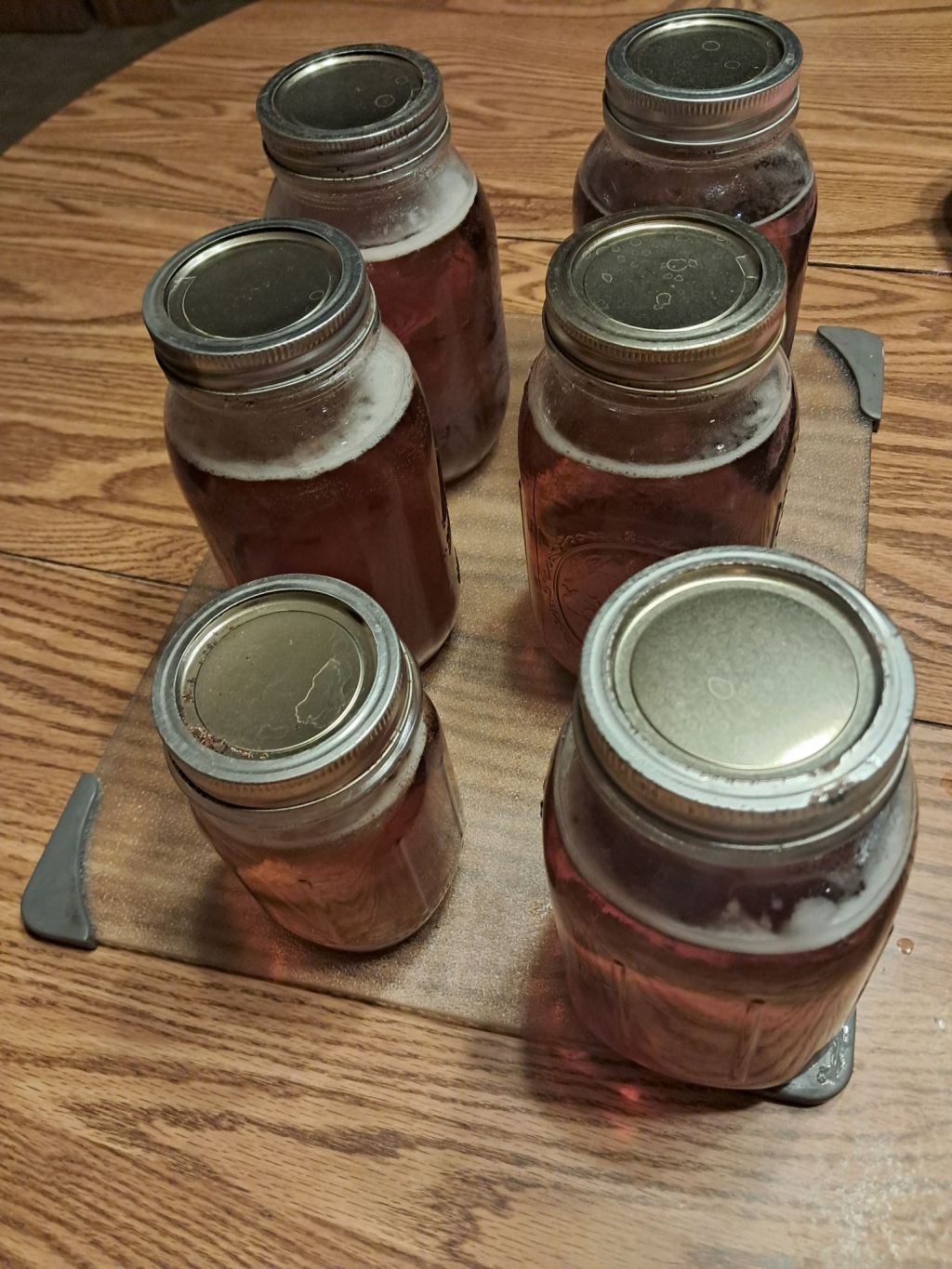
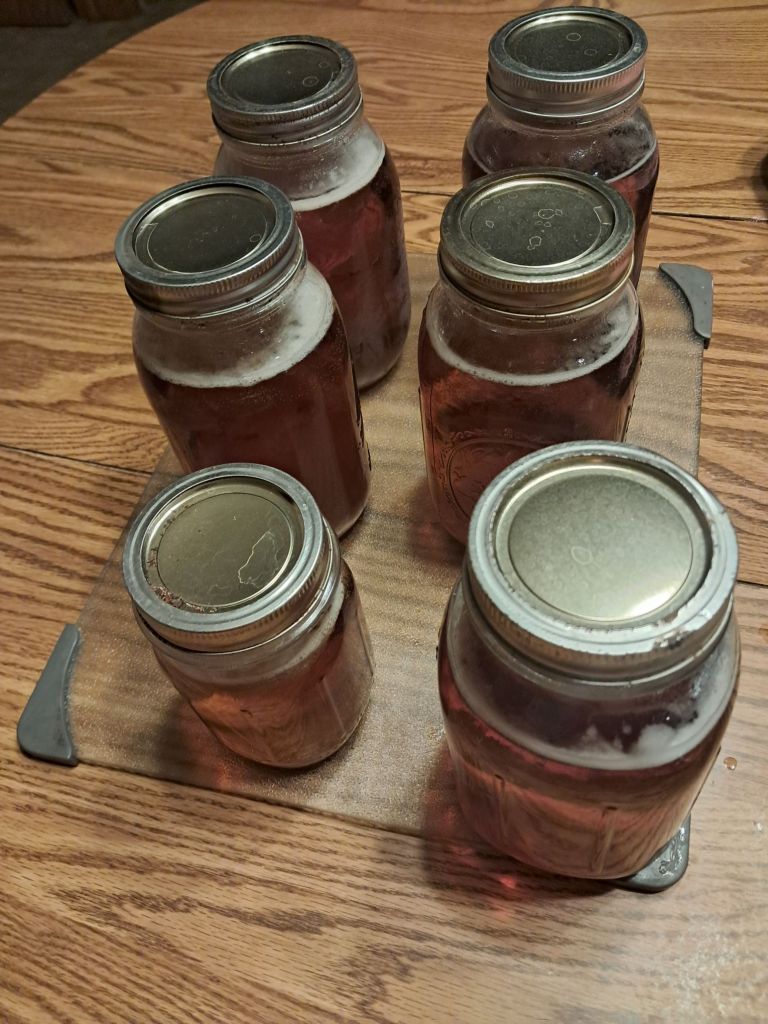
    Hey friends—three weeks into sugaring season and we’ve already pulled 5 gallons of homemade maple syrup from about 200 gallons of sap boiled down slow over endless oak, ash, and maple fires.

    We’re smack in the middle of the season, with more sap flowing and wood to burn. 5 gallons now, 10-15 more expected. $18/quart jars. Some of this golden 66° Brix goodness is headed for pancake-fueled weekends, some for gifting to neighbors, and some we’ll sell to the surrounding community. Comment below (or DM) if local and interested (SE Wisconsin)!

    Sap Keeps Coming, Fire Keeps Burning

    Our 10-year tubing setup is still humming—healthy maples dripping steadily into jugs thanks to these perfect freeze/thaw cycles we’ve been getting. My husband and I take turns tending the evaporator around the clock. Meanwhile, our 6-year-old chops firewood like a little lumberjack (he’s getting scary good with that axe). And our 2-year-old daughter is absorbing the entire process.

    That ~40:1 sap-to-syrup ratio means we’ve gone through a mountain of wood already. The air stays thick with that woodsmoke-sweet steam that chases away every bit of March chill—honestly, it’s my favorite part.

    Those Quiet Evenings by the Flames

    These firelit nights are pure magic. We watch the flames shifting from orange to fiery red as they devour log after log. That primal mix of crackling wood and caramelizing sap beats anything from a store bottle by a mile.

    And when we filter and finish the syrup in the house, our entire house smells like a diner. I’ve commented about this during virtual meetings to my colleagues, who always get a chuckle, then ask me more about our syruping setup.

    Kitchen Mishaps (Learning the Hard Way)

    • Spigot fail: Husband cleaned it but didn’t reinstall properly—bumped the bucket and concentrated sap flooded our kitchen floor (sticky nightmare cleanup).
    • Double boil-over: Syrup bubbled over twice, turning the stove into a sugar tar pit (vigilance lesson learned). Here’s hoping that doesn’t happen again.

    What’s Next in the Sugar Shack

    We’re hoping to finish strong with another 5-10 gallons total (fingers crossed the weather holds). Soon it’ll be time to filter everything through cheesecloth, bottle it up pretty, and label jars for neighbors, future sales, and of course our own pancake feasts. Can’t wait to taste test the first batch with that homemade rye bread from our recent Reuben quest.

    Maple season = sauerkraut’s woodsmoke cousin—clear sap to liquid gold through fire, time, one pot at a time.

    Any of you making syrup this season? What’s your boil ratio been like? Favorite tree to tap? Tell me everything below—I love swapping sugaring stories!

    Practical Homesteading: growing food, raising kids, building community.

    Loved this maple magic? Like + share so sugaring families find us! 💛 Tag your syrup-making crew below.

    Loved this? Subscribe for weekly homesteading tips:

    Read Next: Signed House Contract at Used Car Lot-On our Honeymoon Trip to Alaska

  • My Middle Name: Marjorie

    My Middle Name: Marjorie

    Daily writing prompt
    What is your middle name? Does it carry any special meaning/significance?

    My middle name is Marjorie, sharing a birthday with The Simpsons premiere (handy icebreaker, though nobody calls me Marge).

    Marjorie honors my late grandmother. We lived 30 miles apart, seeing her at Christmas where I’d play their electric piano while she and her jovial second husband laughed together.

    She brought knick-knacks from trips for us six granddaughters—a Florida seashell globe stands out. At their Wisconsin cabin, we shared dive-bar battered mushrooms before her health declined.

    The name carries her quiet presence through those visits and our last October Christmas photo, still framed in my hall.

    Featured Photo by Annie Spratt on Unsplash

    What’s YOUR middle name story? Share below!

    Loved this? Subscribe for more reflections:

    Read Next: Why I Hate “What Do You Do?” – Homesteader’s Answer

  • Homemade Reuben from Scratch: Sauerkraut to Success

    Homemade Reuben from Scratch: Sauerkraut to Success

    Daily writing prompt
    What is the last thing you learned?

    Mastering a homemade Reuben sandwich from scratch taught me that real learning comes through patient layers—sauerkraut, rye bread, corned beef. Each step built skills I didn’t know I needed.

    From Garden to Ferment

    It started last fall with Megaton hybrid cabbages from our garden. Shredded fine, salted at 2% by weight, packed into our antique Red Wing crock with a water-filled garbage bag seal. Three and a half months later in the basement, it emerged tangy, crisp, golden—pure magic. This homemade sauerkraut became the tangy heart of every bite.

    Curing Corned Beef at Home

    Winter freed up freezer space for a 4-lb sirloin tip roast from Gruenberger Farms. Brined 5-7 days in kosher salt, pink curing salt, brown sugar, and pickling spices (ground + whole), flipped daily at first. Slow-cooked 6 hours low in the crock pot, finished high for tenderness at 195-205°F. Sliced thin against the grain, it was pink, flavorful—worked as well as a brisket for this homestead experiment.

    Rye Bread Reality Check

    Rye dough is sticky and stubborn—no big lift like wheat. Mixed bread flour, rye flour, honey, yeast, olive oil; proofed twice, baked in a steam-trapped roasting pan setup at 425°F. Flatter than ideal, but the hearty tang paired perfectly with no caraway on hand. Homemade rye bread held up under melty Swiss and Thousand Island (store-bought, no shame).

    Reuben Night Triumph

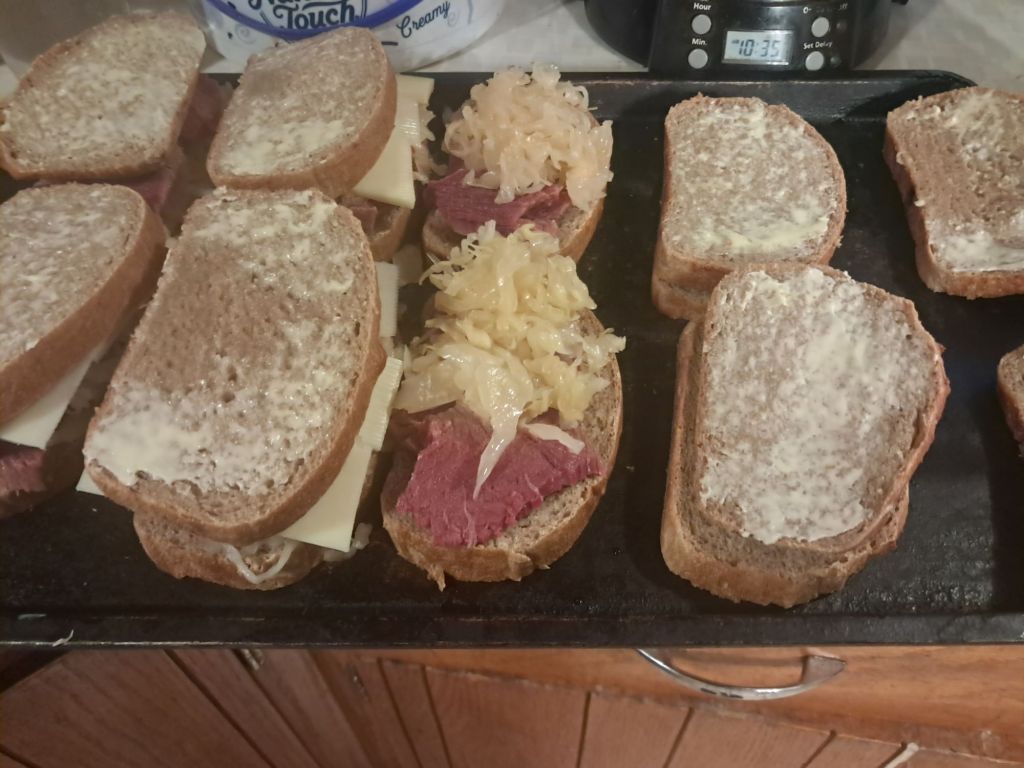
    Twelve sandwiches baked golden on sheet trays: rye, corned beef, sauerkraut, cheese, dressing. Family devoured 10 immediately—only two leftovers by lunch. The kitchen smelled like a deli dream.

    The Real Lesson Learned

    This homemade Reuben quest showed me iteration through failure—soggy ferments avoided, lean cuts perfected, stubborn dough humbled. Homesteading scratches teach that last lesson sticks deepest when you taste the payoff. Garden to plate, one sandwich at a time.


    What’s the last thing you learned making food from scratch? Share below!

    Loved this Reuben quest? Like + share so fellow homesteaders can taste the scratch-made magic! 💚 What’s your latest kitchen win?

    Loved this? Subscribe for more homestead reflections:

    Read Next: Our Biggest Homesteading Challenge: First-Time Pig Farrowing

  • Why I Hate “What Do You Do?” – Homesteader’s Answer

    Why I Hate “What Do You Do?” – Homesteader’s Answer

    Daily writing prompt
    What is one question you hate to be asked? Explain.

    I hate the question “What do you do for a living?” because it shrinks a whole person into one job title. A single answer can’t capture the messy, beautiful layers of real life.

    Why It Feels Reducing

    People ask it as small talk icebreaker—easy, automatic. But I’ve learned the hard way that life isn’t defined by work. Take me: yes, I’m an environmental professional by trade. That’s just my 9-to-5, and I’m very passionate about what I do.

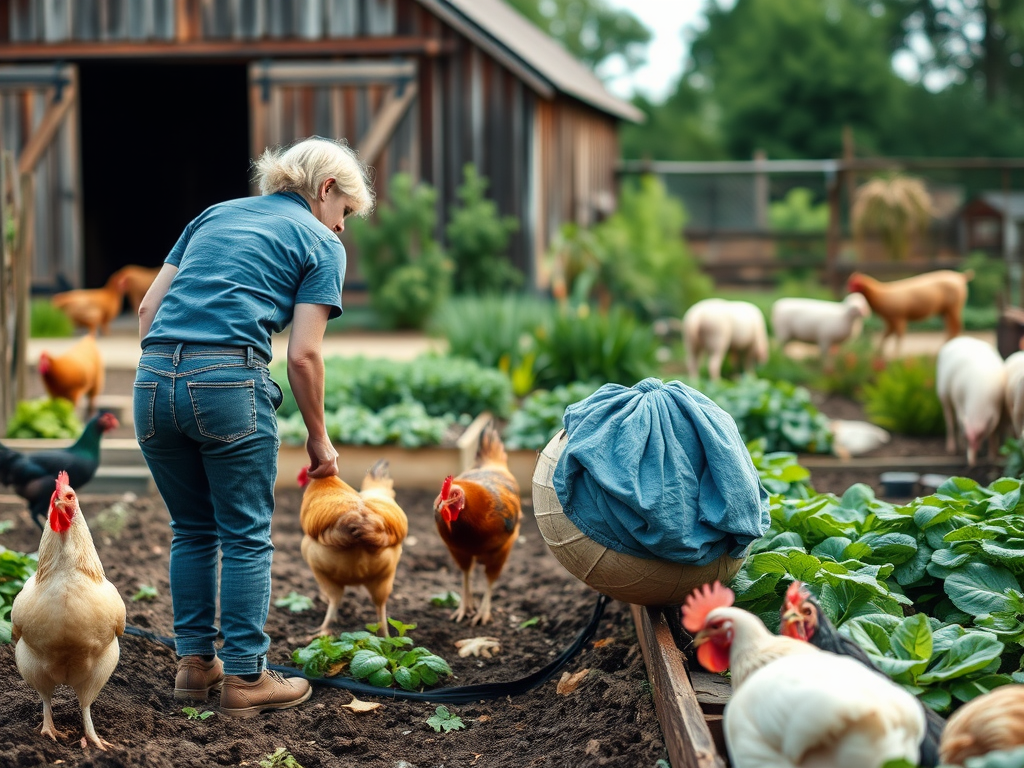
    The rest of me lives as a writer spinning homestead stories, a homesteader pulling winter carrots from frozen soil, a mom wrangling morning meltdowns, and a caretaker tending clucking chickens, strutting turkeys, and pigs rooting through the mud (who will hopefully farrow for the first time around Mother’s Day).

    These homesteading roles shape me equally—maybe more. The question pretends otherwise.

    Who It Leaves Out

    Worse, it sidelines anyone without “traditional employment.” Stay-at-home parents, caregivers, homesteaders, creators between gigs—they get frozen out. Conversation stalls: “Oh, nothing?” as if their days lack value.

    I’ve watched friends flush, stammer, or deflect. Motherhood is full-time labor. Homesteading demands innovation daily. Caretaking livestock like pigs and chickens builds worlds from scratch. Why does a paystub trump that?

    Better Questions Exist

    When cornered, I say: “I protect land by day, grow food and stories by life.” But I’d rather flip it: “What lights you up outside work?” That uncovers the human underneath.

    People are mosaics, not labels. Next time you’re tempted, ask about passions instead.

    Practical Homesteading: growing food, raising kids, building community.


    What’s YOUR most-hated question? Share below! 🔥 I bet we can rewrite the script together!

    If this resonates, like + share so other multi-role makers feel seen! 💕 Tag someone stuck in job-box conversations.

    Loved this? Subscribe for more homestead/mom reflections:

    Read Next: Our Biggest Homesteading Challenge: First-Time Pig Farrowing

  • 10 Unexpected Things I Love About Homesteading Life

    10 Unexpected Things I Love About Homesteading Life

    Before I started, I thought homesteading would mean endless chores and calloused hands. Instead, I’ve discovered these quiet joys that keep me hooked on this life.

    1. Dry toast mornings that actually work
    Recently, I started my 6-year-old son’s day by hugging him for two minutes (and telling him how great it was to see him) instead of rushing him. He ate his plain toast (despite us asking three times if he wanted butter or peanut butter—little monster), and we got to school early enough for playground time. Who knew starting slow could make us faster?

    2. Winter carrots tasting like candy
    Pulled bright orange carrots from frozen ground under snow and straw this past February. The deep cold turns their starches to sugars—they’re sweeter than anything from the store. I’m eating them in a pot roast dinner tonight. Proof that nature knows best.

    3. The taste of fresh mushrooms is incomparable
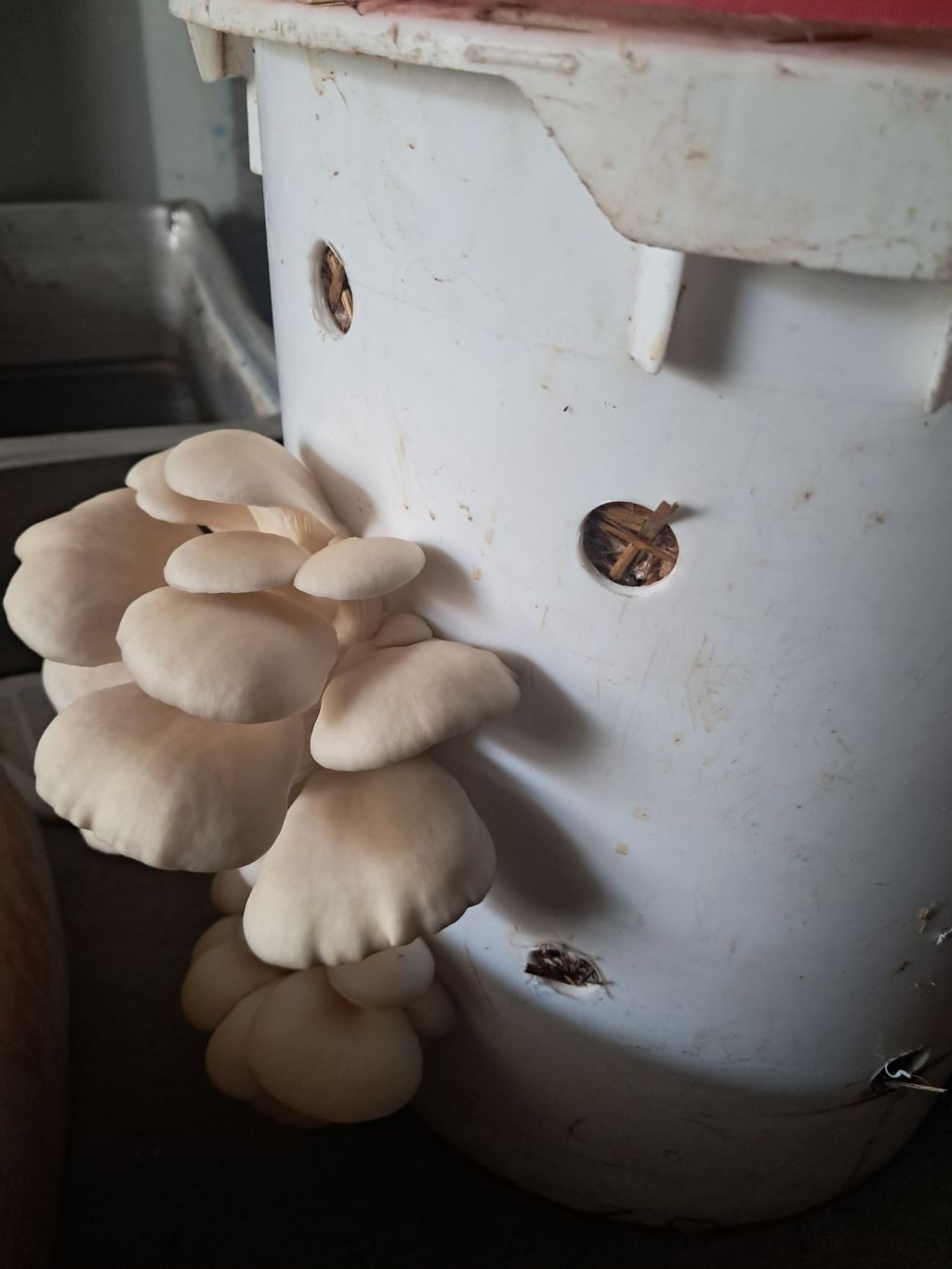
    I’ve successfully grown oyster mushrooms in a straw substrate, and they are delicious—so much tastier than the button mushrooms you get at the store (and those are good). I started shiitakes last year too, but they haven’t fruited yet (hoping they will this spring).

    4. Kids eating garden “weeds” they hate from stores
    My children turn up their noses at store kale but devour it fresh from our beds. They pull radishes straight from soil and munch like apples. Familiar dirt makes everything taste better.

    5. Fresh air fixing my mood instantly
    Ten minutes outside—picking beans, checking chickens, or just sitting—resets my whole nervous system. No therapy session beats weeding when anxiety creeps in. It’s free medicine growing right in my yard.

    6. Writing turning chaos into clarity
    Hospital stays, morning meltdowns, scar shame—scribbling it all down transforms tangle into meaning. What starts as venting becomes connection when I hit “publish.” This blog is my compost pile for hard emotions.

    7. Self-care mornings making me patient
    A quick workout and solid sleep before the kids wake up changes everything. Instead of snapping at heavy feelings, I can breathe through dysregulation and model it for my kids. The mom who shows up calm handles chaos ten times better.

    8. Crockpot smells everyone loves
    Even in my college dorm, that slow cooker made my floor smell like home. Now it draws my family to the kitchen hours before dinner’s ready. Simple food, big magic.

    9. Small wins building big confidence
    One perfect carrot harvest, one peaceful school drop-off, one good paragraph—they stack up. Each success whispers, “You can do hard things.” Homesteading proves I’m tougher than I think.

    10. Coming home to my roots wiser
    The girl who couldn’t wait to escape Dodge County returned at 33—not out of failure, but choice. I’ve circled back to gardening, animals, community with new eyes. Leaving helped me love it more.

    Practical Homesteading: growing food, raising kids, building community.


    What’s your unexpected love in this lifestyle? Share below—I’d love to hear!


    Loved these homesteading surprises? ❤️ Tap the heart, share with your farm friend, or tell me your unexpected joy below. Your support grows this community!

    Loved this? Subscribe for more homestead reflections:

    Read Next: Century Farm Renovation: Most Ambitious Homestead DIY (2026)

  • How My Pizza Fail Built Homesteading Confidence

    How My Pizza Fail Built Homesteading Confidence

    Daily writing prompt
    How has a failure, or apparent failure, set you up for later success?

    A cooking disaster in my freshman dorm set me up for homesteading success I never expected. One apparent failure became the foundation for kitchen confidence.

    Freshman Year Pizza Disaster

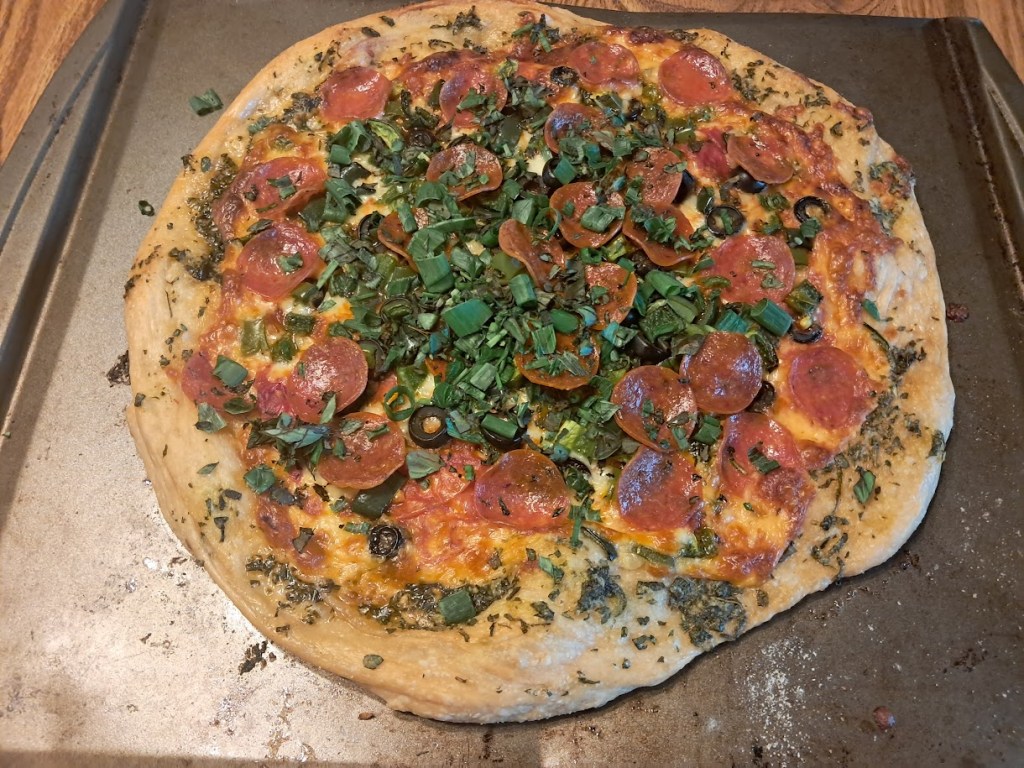
    My first “from-scratch” pizza took three times longer than delivery. The crust was a brick, sauce too acidic, toppings slid everywhere. My future husband politely choked it down. Mortifying.

    That flop taught me two things: failure stings less when shared, and every kitchen mistake teaches something concrete. I started measuring flour properly, tasting as I went. Zucchini bread followed (once ruined by tablespoons of salt instead of teaspoons—inedible).

    Homesteading Kitchen Payoff

    Fast forward to our rural homestead. Now I confidently make:

    • Pizza dough my kids beg for weekly
    • Sourdough from wild yeast I captured
    • Crockpot meals filling our home with irresistible smells
    • Garden sauces from our own tomatoes

    A couple of weeks ago, I pulled winter carrots (candy-sweet from the freeze) for pot roast. No one would guess this calm came from serving weaponized pizza.

    Failure’s Gift: Iteration Over Perfection

    Cooking disasters built my homesteading confidence through kitchen iteration:

    • Mushroom logs fruited after many soggy failures
    • Morning routines work after dozens of meltdowns
    • Patience grew through dysregulation disasters

    Apparent failure = practice reps for real skills. That freshman flop was my first composting lesson: even burnt crust feeds future growth.


    What’s a failure that set YOU up for success? Share below!

    If this pizza-to-homestead arc resonates, like + share so other makers see failure’s power!

    Loved this? Subscribe for more homestead reflections:

    Read Next: Our Biggest Homesteading Challenge: First-Time Pig Farrowing

  • 3 Everyday Essentials This Working Mom Can’t Live Without

    3 Everyday Essentials This Working Mom Can’t Live Without

    Daily writing prompt
    What are three objects you couldn’t live without?

    Honestly, the three objects I couldn’t live without are surprisingly ordinary: my cell phone, my wallet, and my keys. As a working mother in a rural area, they’re not glamorous. But they quietly hold my daily life together, from parenting to work to community.

    My Cell Phone: Brain in My Pocket

    My cell phone is how I stay organized and connected as a working mom. It holds my calendar, reminders, notes, and grocery lists—the invisible scaffolding keeping family life and work from falling apart. It’s how I juggle meetings from home, text my husband about pickup times, message teachers, and look up last-minute recipes when dinner planning slips my mind.

    Living rural, it’s also my lifeline. If the car breaks down, a kid gets sick, or something unexpected happens, that little rectangle becomes my map, flashlight, and emergency contact list all in one.

    My Wallet: Quiet Security for Daily Life

    My wallet isn’t exciting, but it represents security and flexibility for a busy mom. It holds my ID, bank card, maybe a little cash, insurance cards, and a few too many crumpled receipts—the boring but essential pieces of adulthood.

    I always keep my Kwik Rewards card tucked inside for that 15th visit reward. When someone suddenly needs snacks, school supplies, or a quick pharmacy run, my wallet means I can handle it without hesitation. It’s the difference between feeling stuck and responding smoothly to whatever the day throws at us.

    My Keys: Rural Freedom and Independence

    Because we live in a rural area, my keys are completely non-negotiable. They’re my way to get everywhere: school drop-offs, work meetings, grocery runs, appointments, visits with family and friends. No corner store walk or public transit here—if I don’t have my keys, I’m not going anywhere.

    They also symbolize independence as a working mother. Being able to load everyone in the car and just go—to town, the park, a friend’s house—makes rural life workable, even wonderful.

    Everyday Objects That Make Rural Parenting Possible

    There are plenty of sentimental objects I love, but these three form the quiet backbone of my days. Without them, the logistics of working motherhood, parenting, and building community in a rural area would get complicated fast.

    Feature Photo by Blake Wisz on Unsplash


    What’s on your can’t-live-without list? Share in the comments!


    If this rang true for you, please tap the heart ❤️ or share with a friend juggling it all. Your support keeps this community growing!

    Loved this? Subscribe for more homestead reflections:

    Read Next: How Teams + Chickens Power My Work-from-Home Mom Life

  • How Motherhood Taught Me Patience & Emotional Regulation

    How Motherhood Taught Me Patience & Emotional Regulation

    Daily writing prompt
    What experiences in life helped you grow the most?

    Becoming a mother has been the single biggest catalyst for my personal growth.

    Before kids, I was incredibly reactive—if things didn’t go exactly my way, I’d turn into a total grump and let it derail my whole day. Motherhood quickly showed me that life rarely follows a perfect schedule, and that’s been my greatest teacher.

    Why Kids Test Every Limit

    Kids have this amazing knack for upending even the best-laid plans. They’ll dawdle on shoes when you’re already late, take forever to eat (or skip it entirely), spill milk right after you’ve cleaned up, or melt down in the grocery store for reasons that make no sense in the moment.

    It’s just kids being kids—no malice, just the beautiful chaos of childhood. Those situations used to trigger frustration in me. I’d snap or rush through, only to feel completely drained afterward.

    Over time, I realized my reactions weren’t really about the spilled milk or dawdling. They came from my own exhaustion, unmet needs, and unrealistic expectations of myself and my family.

    My Self-Care Mornings Changed Everything

    Mornings have always been tough for my 6-year-old, who really struggles to wake up. This turns what should be a simple routine into a battle to get to school on time. But I’ve noticed a huge difference when I take care of myself first. When I prioritize a decent morning workout, solid sleep, and a general sense of calm, I allow myself to show up much more effectively for him.

    This morning was a perfect example. Instead of rushing, I sat with him for a couple of minutes, just hugging him and saying hello. I told him how wonderful it is to see him first thing. From there, he headed to the kitchen, ate his dry toast (even though we asked three times what he wanted on it and he insisted on nothing… little monster, haha), and we were out the door with enough time for him to play with his friends in the classroom before the day really started.

    We went from 25-minute morning battles to peaceful 15-minute exits, and it all starts with me feeling steady inside.

    Tools That Actually Work for Emotional Regulation

    Now, I make it a habit to tune into my body first. When I feel dysregulation creeping in—my chest tightening, voice getting sharp, jaw clenching—I pause instead of powering through. Sometimes that’s a few deep breaths at the kitchen sink, sometimes stepping into another room for a moment, or just saying out loud, “I’m feeling overwhelmed right now.”

    Journaling has become another lifeline. After a tough moment, I write out what triggered me, the worries bubbling under the surface, or the guilt I’m carrying quietly. It helps me sort through it all and parent myself a little, not just my kids. And when I mess up, which I still do plenty, growth shows up in the repair—apologizing to my son, noticing what works next time, and choosing breath over snapping.

    The Real Growth Isn’t Perfect—It’s Daily Practice

    Motherhood grew me most because it gave me daily practice at my weakest spots: patience, self-awareness, and repair. I’m still a work in progress—there are days when I’m more grump than grace. But our mornings feel noticeably lighter now, and he sees me trying.

    Growth doesn’t look dramatic or perfect; it’s in those small choices—to hug instead of hustle, listen instead of lecture, apologize instead of pretending I had it together.

    Feature Photo by STONES and BONES on Unsplash


    What experience grew you the most? I’d love to hear your story in the comments below!

    Loved this? ❤️ Tap the heart, leave a comment with your growth story, or share with a mom friend who needs this today. Your support helps this community grow!

    Loved this? Subscribe for more parenting reflections:

    Read Next: First Time Mom Nerves + Joy: Life Before Kids Trade-Offs