Author: fzangl1

  • The Maps that Found Me

    Every object in a home tells a story—but maps? They tell a thousand. They’re not just decoration; they’re conversations, daydreams, and journeys folded into paper. Whenever I stumble upon one, I can’t help but lose myself tracing routes, wondering about the people who once relied on them, and imagining the lives hinted at in their lines.

    Over the years, maps have quietly found their way into my home, each with its own backstory—unexpected discoveries, hidden treasures, heartfelt gifts. I never really sought them out online; instead, they arrived on their own terms, carrying a history I could never have written myself.
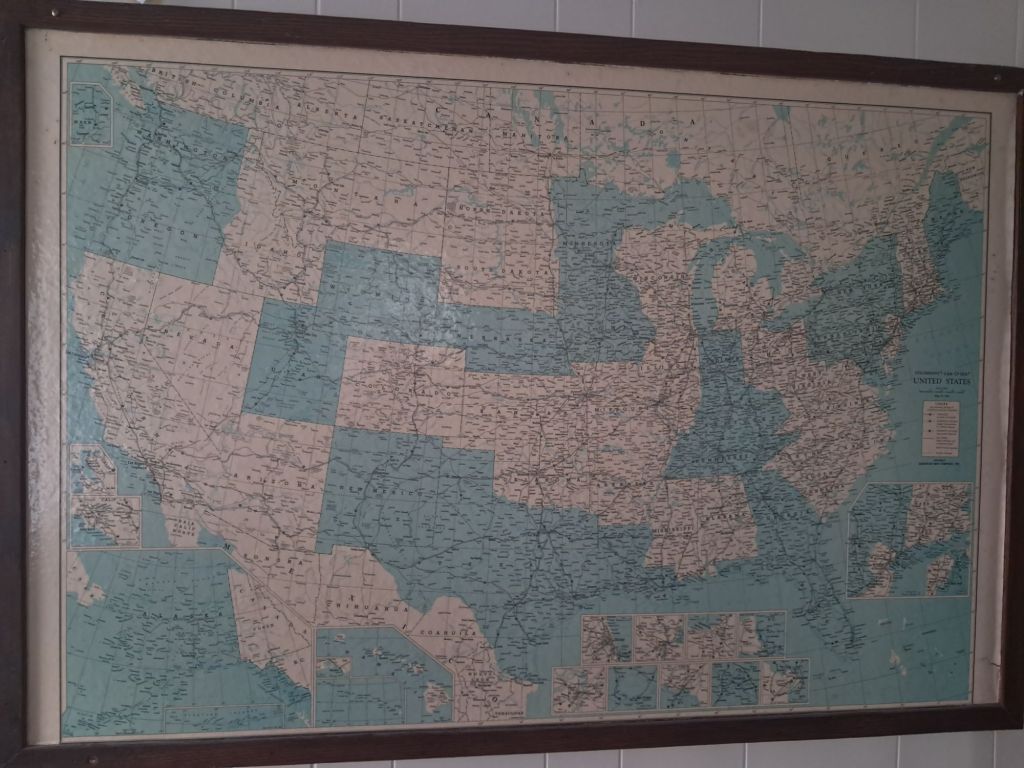
    The Railroad Classroom Map

    We first saw it when touring this house in 2023—an old classroom teaching map, tucked upstairs and forgotten. I noticed the pinholes right away, like fragile fingerprints from long-ago students marking where they had traveled or dreamed of going. Unlike modern maps filled with highways, this one highlights railroads, anchoring it firmly in the 1950s.

    My husband and his parents spent weeks transforming the house, painting, and scrubbing every corner. Quietly, they went one step further. They unframed that map, restored it, and hung it in my office as a surprise. I’ll never forget walking in and seeing it mounted on the wall, transformed into something permanent.

    Now it’s more than art. In between client calls, I catch myself following its routes, imagining trips, or even tracing the towns people mention in conversation. It’s a map I live with daily, and one that still sparks curiosity every time I look at it.
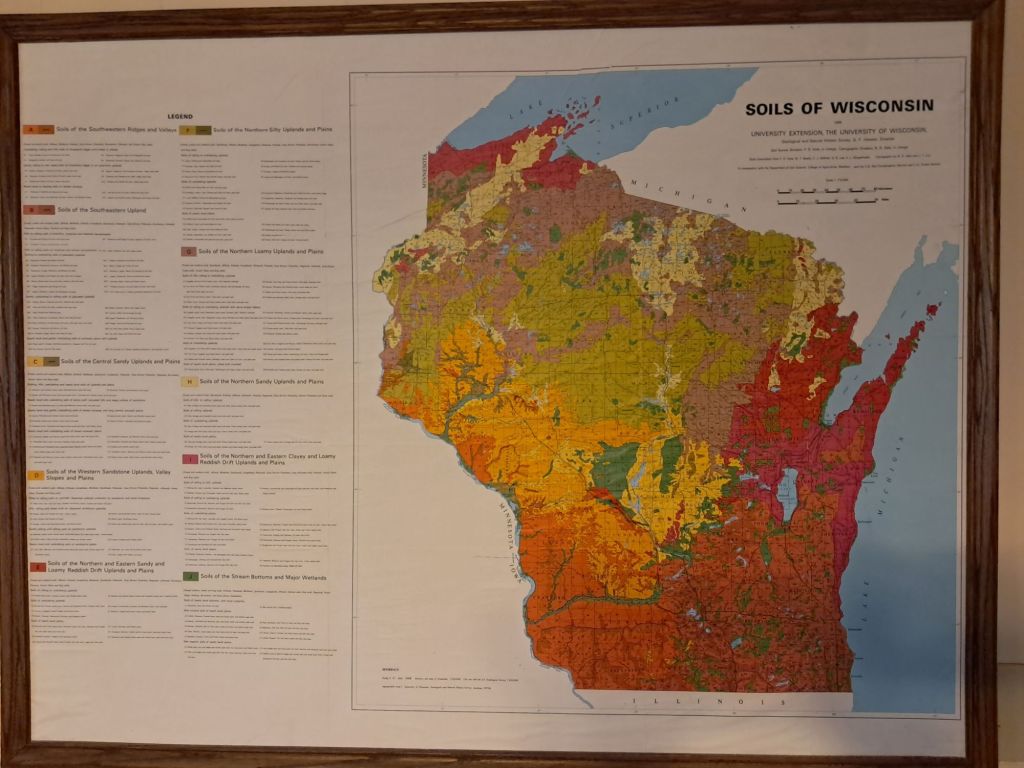
    The Soil Map

    The second map stayed hidden for years, folded inside the back of an old soils textbook a friend had given me. I always knew it was special, but it was too fragile to display. Last year, I finally asked my father-in-law, who’s a master woodworker, to help me bring it to life.

    He went above and beyond. With patient hands, he flattened it, smoothed out the creases, and built a frame from scratch. On my birthday, he gave it back—transformed, dignified, ready to be seen.

    It hangs in our kitchen now. In my family, farming runs deep, so soil maps are more than color and lines. They remind us of roots, of the land that sustains us, and the quiet, overlooked stories beneath our feet. To visitors, it’s often a curiosity. To us, it’s a piece of home.
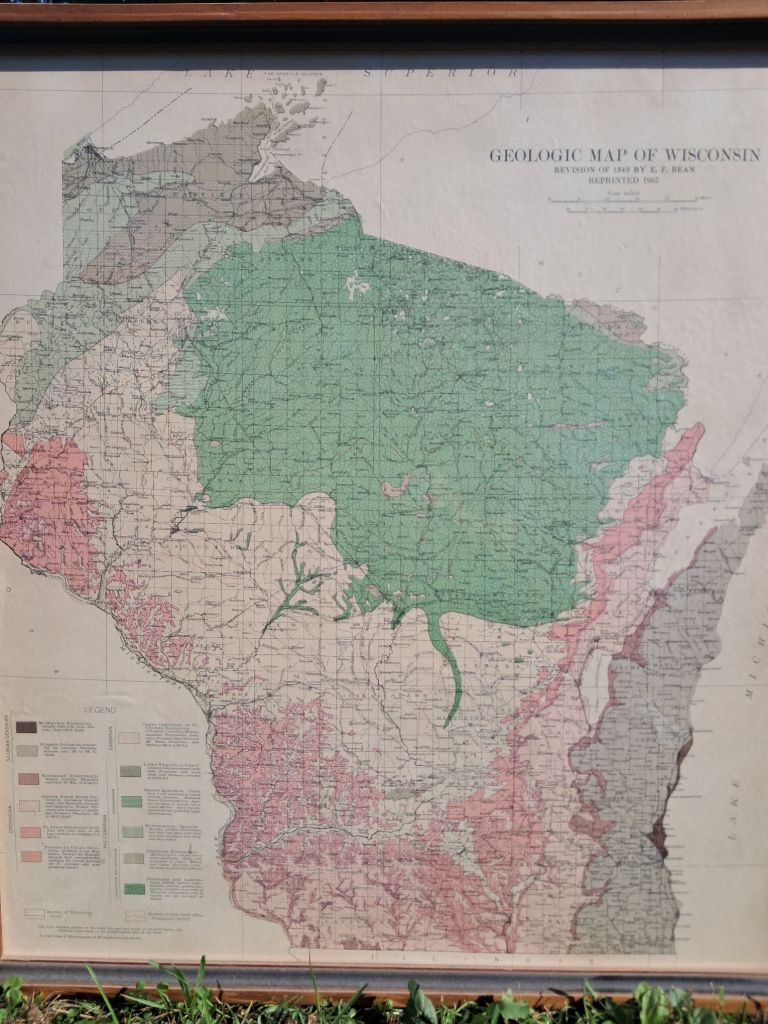
    The Geology Map

    The last one came as a gift. A close friend, downsizing his home, thought of me and my geology background. He didn’t want his vintage map to sit in storage, so he gave it to me instead—already framed and ready to hang.

    Now it lives above my desk, a quiet reminder of generosity, shared passions, and the beauty in breathing new life into old things.

    Why Maps Matter

    Each map arrived in my life by chance, not intention—and perhaps that’s why they mean so much. They’ve become companions during breaks, sources of curiosity during long days, and sparks for conversations with friends and family. Maps remind me daily that the world is wide, layered with history, and always waiting to be discovered.

    What about you? Do you have something in your home—a map, a book, an heirloom—that holds stories beyond its surface? Leave your story below, and subscribe to join a group of like-minded people.

    #MapsOfLife #VintageMaps #HomeStories #StorytellingDecor #FoundObjects #HomeWithHistory #GeologyLove #FamilyHeritage
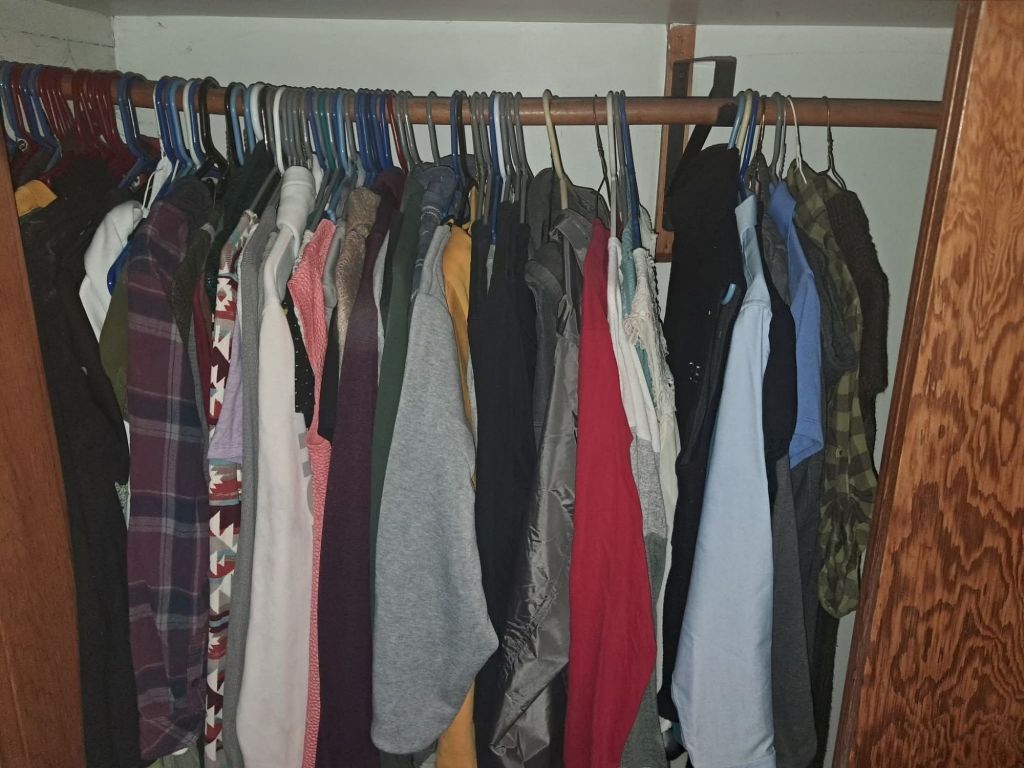
  • Unfolding the Woman Within

    When I pulled open the long-forgotten box of clothes, I expected nothing more than sweaters and dresses that hadn’t seen daylight since before we moved. Instead, I uncovered an archive of myself—fabric woven with memory and identity, versions of me I thought I’d misplaced in the blur of motherhood, upheaval, and quiet reinvention. Threads I once wrapped around my body had become threads of memory. Each garment insisted on something I’d forgotten: that the woman I was had not vanished. She had only been folded away, waiting to be rediscovered.

    The first piece I lifted was a blue tulle bridesmaid skirt from seven years ago. Its shimmer caught the light like water. I remembered laughing until my cheeks ached, that easy joy of moving through a night without responsibility pulling me home. The fabric felt almost weightless—so different from the heaviness of my current days, measured in renovations, schedules, and cycles of laundry. Yet the skirt reminded me that the woman who once poured herself into music and conversation, who dreamed without apology, still exists. She isn’t gone, only quieter. Motherhood didn’t erase her; it pressed her into the folds of my life.

    Beneath it lay a lime green sweatshirt, soft with age, cuffs frayed where my thumbs had worn them thin. I bought it on a trip thirteen years ago with my then-boyfriend—before marriage, before children. Back then, it warded off the chill of night air as we stayed awake discovering each other’s rhythms. Today our love feels heavier, bound up in duty and shared responsibility, but the sweatshirt breathes warmth from another kind of time—the reckless spark at the beginning. It reminds me that love does not only grow dense with duty. It also remembers its hunger, its boldness, its early lightness.

    Then came the white floral dress from my high school graduation. Even now it smells faintly of summer—grass, sunscreen, a trace of freedom. Touching it pulled me back to eighteen, stepping across the stage with life unspooling in every direction. But stitched into those seams was uncertainty as well—fear of whether I could survive the leap from promise into reality, fear the horizon would prove endless but unreachable. The girl in that dress was daring, but she was trembling too, resilient and unsure at once. That reminder matters: possibility never arrives pure; it comes braided with doubt. And even doubt, held up to the light, is proof of being alive.

    Piece by piece, the garments revealed forgotten selves: the carefree girl who danced until dawn, the partner who loved with abandon, the graduate who carried both hunger and hesitation. For years, buried beneath routines and responsibilities, I believed those selves had slipped away. They hadn’t. They had only been waiting in fabric, whispering who I was and who I still am.

    Unpacking that box became more than sorting clothes. It became a kind of restoration. Each garment stitched something back together, reminding me I am not a role diminished but a self layered. Change hasn’t stripped me of past lives; it has braided them into the woman standing here now, stronger for her threads.

    When I smoothed the seams and hung the clothes in my closet, I realized they don’t just belong to the past. The skirt dares me to dance now. The sweatshirt urges me to keep tending the spark of love. The floral dress, stitched with possibility and doubt, still points me toward horizons waiting in front of me—creative ones among them—that dare me forward.

    As I closed the closet, the blue tulle hem slipped out, catching the light. I left it that way on purpose—a reminder trailing behind me, whispering that the story isn’t finished.

    What item of clothing holds the strongest memory for you, and what version of yourself does it bring back? Leave your story below, and subscribe to join a group of like-minded people.

    #MotherhoodAndIdentity #LifeLayers #MemoryInFabric #CreativeHealing #PersonalGrowth #SelfRediscovery #WritingThroughChange

  • What Diane Left Behind

    When we first moved into this house, we thought we had simply found a place to live. Instead, we stepped into the unfinished story of someone who came before us—a woman named Diane—who revealed herself in the most unexpected and beautiful ways.

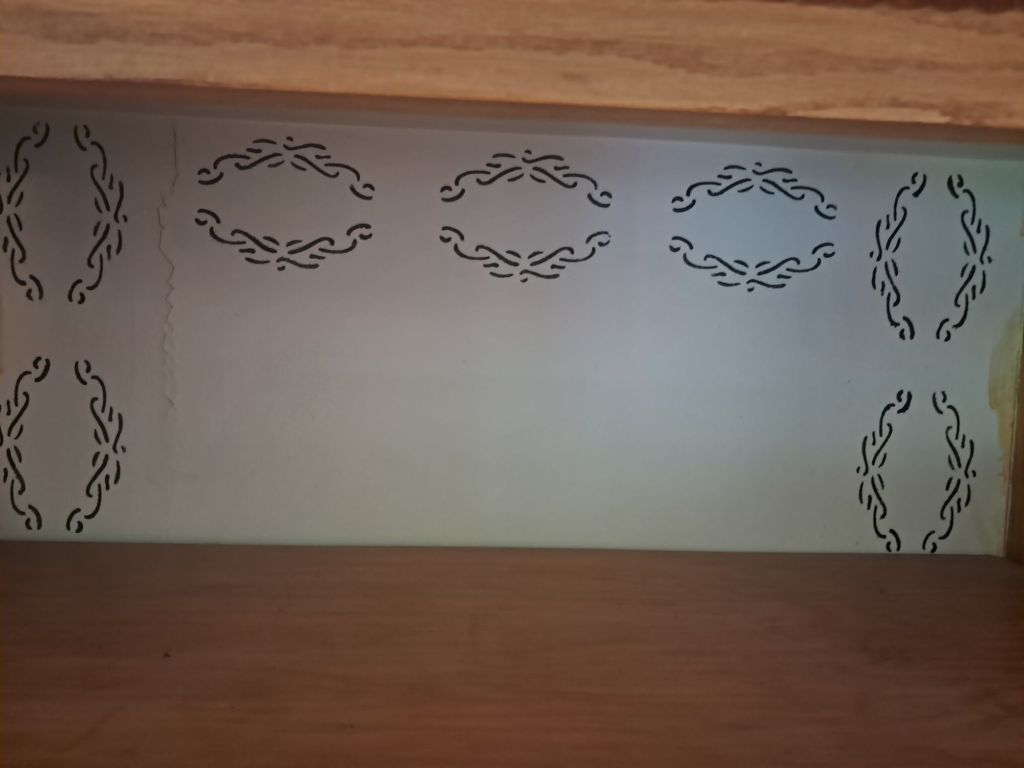
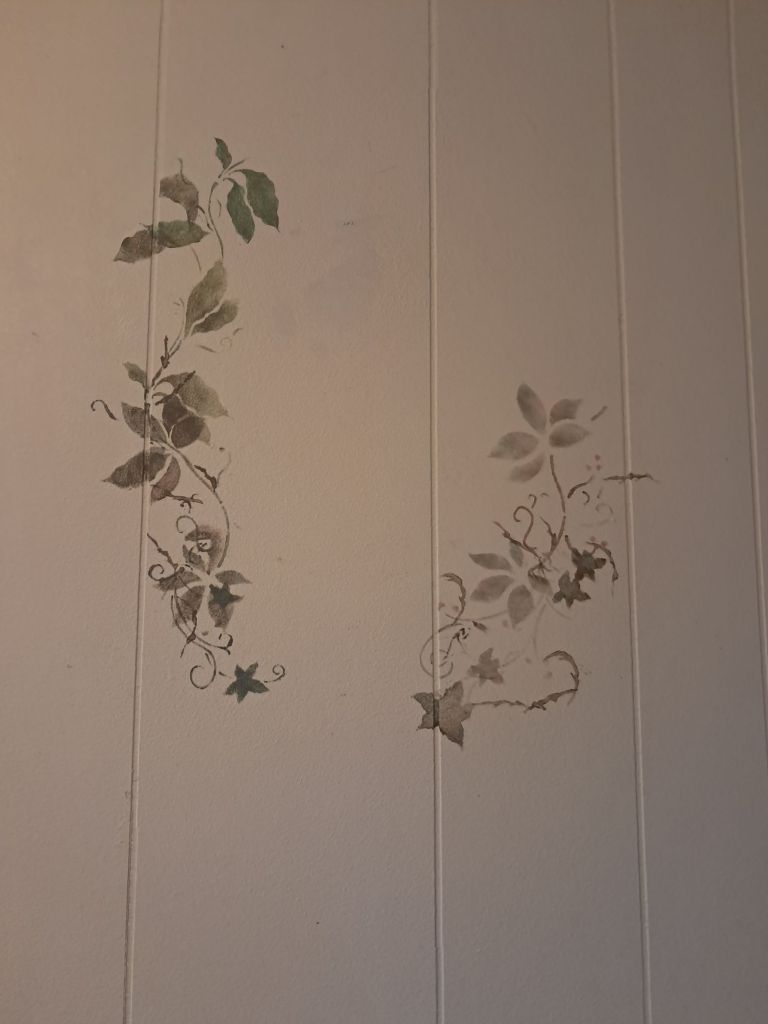
    Every room still carries her touch. Vines climb the walls through careful stenciling, flowers line the middle of the room, and delicate leaves trace their way across blank space like quiet signatures. Some stenciling was even hidden inside a kitchen cabinet, a private flourish meant only for her. These weren’t just decorations. They were conversations, left behind for whoever might notice. In the kitchen, I found her paints and brushes, waiting as if for the next curious hand to take them up.

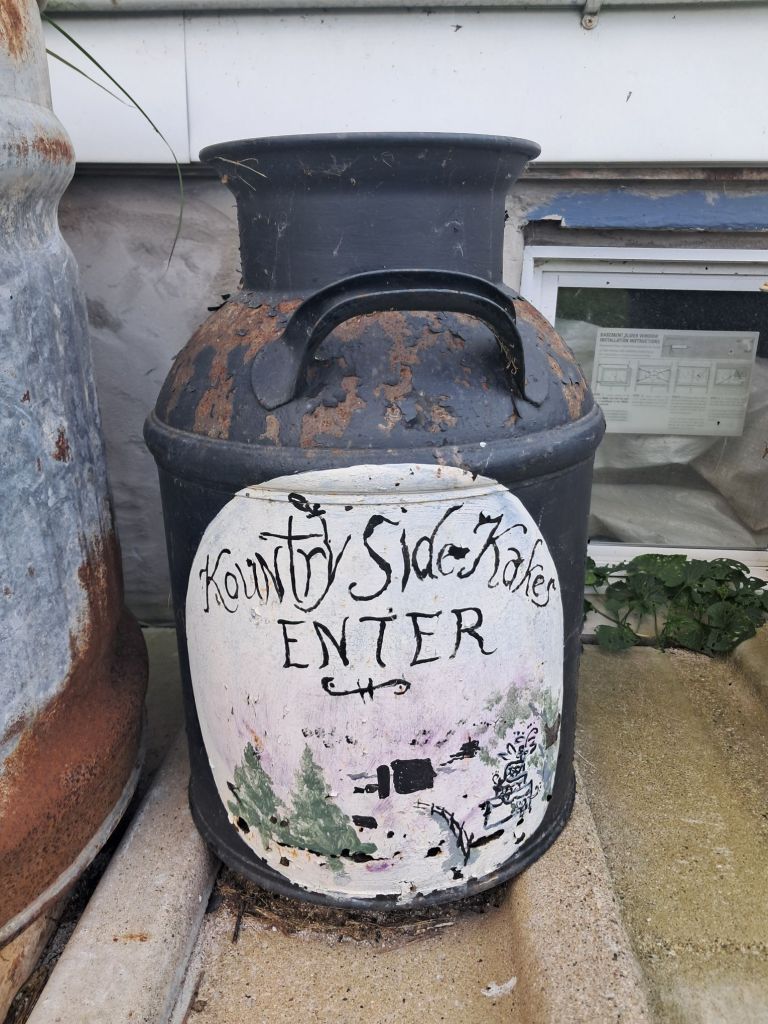
    Outside, tucked among the outbuildings, I stumbled on an old black milk can splashed with color. At first, it looked like a relic of farm life—but it wasn’t just a milk can. It was Diane’s. She had turned it into something vibrant and alive. Later, we learned it once carried an even greater role: it was part of her cake-baking business.

    And here’s what astonishes me most—Diane didn’t have a working oven upstairs. She baked entirely in the basement, a decade before home kitchens were seen as legitimate places of business. She bought what she needed, gathered ingredients, decorated cakes, and kept going when every practical reason might have told her to stop. I don’t know how many cakes she sold, but the numbers don’t matter. What matters is that she created anyway. With persistence. With imagination. With faith in her own vision.

    Though Diane left this house long ago, she is still here. She lingers in painted borders that catch the morning light, in the milk can that holds stories of sustenance and grit, in brushstrokes across walls that prove someone once dared to dream. Her presence offers a lasting truth: the smallest acts of care can outlast us.

    Diane never knew we would walk these rooms, yet her creativity greets us daily with a quiet challenge: begin anyway. With a basement oven. Without applause. Even when conditions are imperfect.

    Her story reminds me to make with what I have, to tend dreams even when they feel fragile, and to trust they may ripple outward in ways I cannot yet imagine. Diane lived this truth. Now I carry it forward—one word, one sentence at a time.

    Rest in peace, Diane (1948–2018).

    What’s something small you’ve created that might outlast you? Share your story below, and subscribe to join a group of like-minded people.

    #Creativity #Legacy #BeginAnyway #InspirationDaily #OrdinaryToExtraordinary #ResilientDreams #ArtInEveryday

  • Between Joy and Heartbreak: Lessons from Life with Animals

    If you care for animals, you soon learn that joy and heartbreak are neighbors—arriving together, sometimes within the span of a single sunrise. I didn’t set out to be a caretaker, but each creature has reshaped me, leaving lessons that linger long after the shed doors close.

    Learning Detachment

    My childhood on a dairy farm should have prepared me. At thirteen, my dad put me in charge of forty steers: mixing feed, cleaning manure, hauling hay, filling troughs before and after school. But my attention drifted to academic decathlons and late-night phone calls—not the hushed coughs that warned of pneumonia. When a steer faltered, a flicker of shame brushed me, but I turned away. I told myself I didn’t care. Only later did I understand that indifference can mask inexperience, and neglect leaves its own quiet scars.

    Striving for Connection

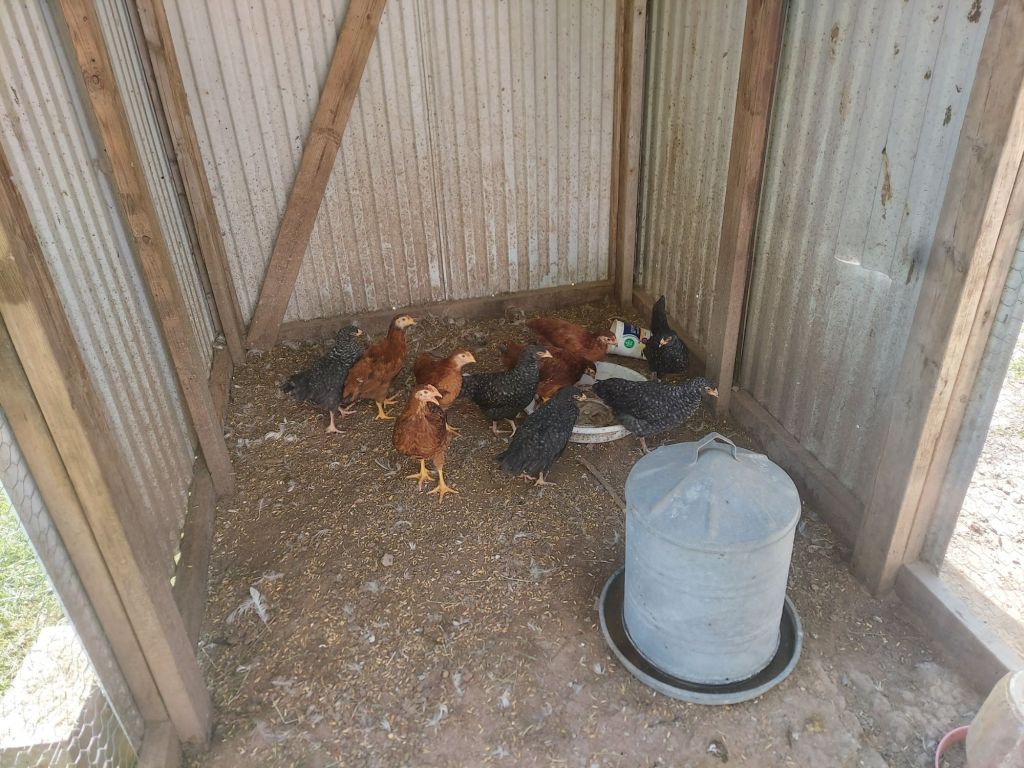
    Years later, with my own patch of land and a child tugging at my pant leg, I longed for a different kind of stewardship. We began with nine day-old chicks, their peeps filling our spare room like tiny bells. My toddler giggled at the flurry of wings; for the first time, joy in its most fragile form perched in my hands. When we moved them outdoors—my husband hammering an old wagon into a coop—the morning sun felt like a promise.

    Heartbreak Arrives

    One promise quickly broke. Eight chicks bounded out of the coop one morning; the ninth staggered on a bloody stump. A predator had found us. We patched the gap too late. I tried: sugar water, bandages, gentle vigil. She died three days later. This time, I grieved without defense. Care had asked much, but no effort could close the wound carved by nature’s merciless hand.

    Unintended Consequences

    Later, we raised ducks for meat. They foraged happily, splashing in a kiddie pool, while we admired their industry. But their feed in the garage invited rats. In panic, we set poison—quick, thoughtless. The rats vanished. Then the ducklings began to die: one by one, limp in the grass, until only half remained. It took a week before we understood the chain of blame. The poison had claimed what we had sworn to protect. The guilt pressed heavy, undeniable.

    Lessons in Vigilance

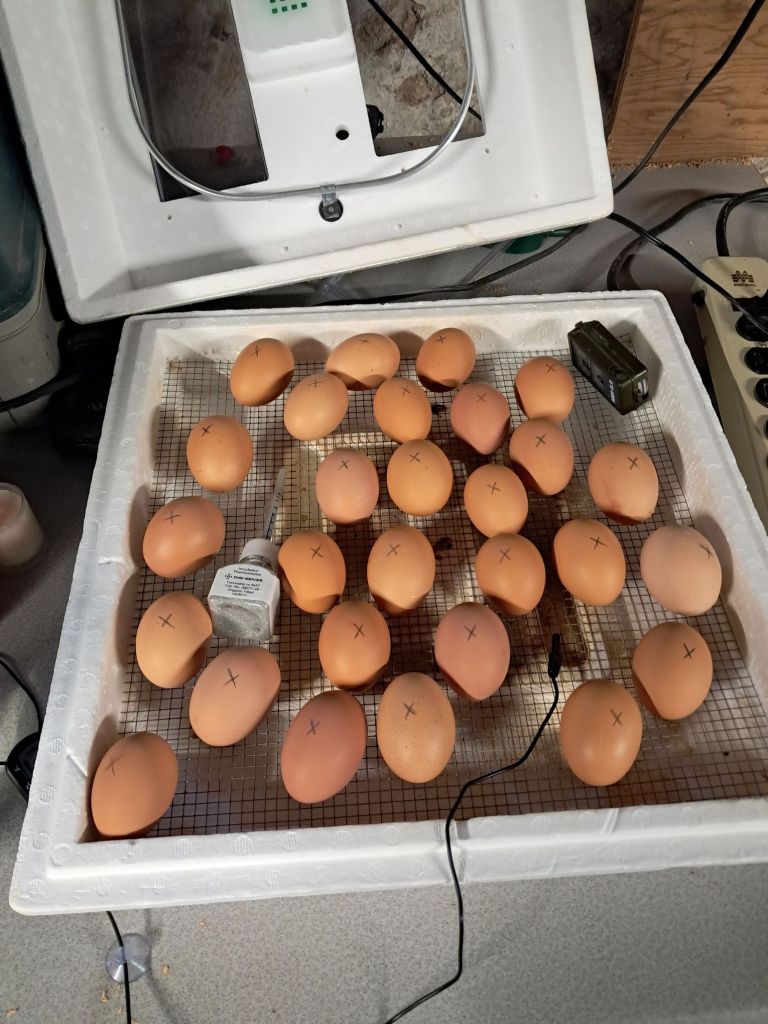
    Determined to do better, we tried hatching chicks ourselves. I turned eggs, monitored humidity, listened for those first faint peeps. Watching a shell give way to life felt astonishing. We raised ten. Hope rose again—but fell fast. When we introduced them to the older hens, the flock turned violent. Two chicks dead, others maimed. Predators stole more through the brooder’s too-wide gaps. In the end, only three remained. Each loss was a lesson etched sharper: the wrong introduction, an unchecked rooster, the overlooked design flaw, the midnight raccoon. Vigilance must live in the smallest details.

    Reflection and Resolve

    After each loss, I replayed choices like a failing reel. Yet the grief, sharp as it was, carved space for humility. I began to see that husbandry is not just routine—it is vigilance, patience, compassion measured against inevitability.

    To live with animals is to embrace risk, but also the hope pulsing in each fragile beginning. A chick’s determined cheep. My son’s laughter as wings brush his fingertips. The hush of dusk settling over a flock, the soft shuffle of life carried forward another day.

    In those everyday moments, resilience grows—not pristine, not perfect, but alive, despite it all.

    Have you ever cared for an animal and found yourself transformed by both the joy and the heartbreak that came with it? Share your story below, and subscribe to join a group of like-minded people.

    #AnimalCare #FarmLife #LessonsInResilience #LifeWithAnimals #HeartbreakAndHope #Stewardship #GrowthThroughLoss #RuralReflections

  • Growing Together in Small Moments

    It had already been a week that stretched me thin. One of those weeks where fatigue doesn’t just live in your body—it seeps into your spirit. Each day stacked heavier than the last. Even small inconveniences pressed harder than they should have, like tiny weights layered until my shoulders ached. By Thursday, I was frayed at every seam, moving on nothing but habit and the faint hope of rest.

    So that evening, when I finally shuffled into the kitchen after a day that left me wrung out, all I wanted was silence. A moment to unclench. To exhale. My body sagged, my mind buzzed, and I was counting the minutes until I could collapse onto the couch.

    That’s when it happened.

    My toddler stood at the table with her cup of water. One slip, one sudden clatter—and water skidded across the linoleum, racing under chair legs in glistening threads. The sharp crash jolted me, slicing through the fog of my fatigue.

    Frustration surged, hot and quick. Words crowded behind my teeth, sharp enough to sting us both.

    I looked at her. Wide eyes. Startled. Searching. Not defiant, not careless—just small. Just learning.

    I stopped. Breathed. The anger loosened its grip.

    Instead of scolding, I bent and wrapped her soggy little frame in my arms. Relief softened her face as she leaned against me. I handed her a towel, and together we chased the puddle across the floor. Her laughter bubbled, bright and contagious. With each giggle, the cleanup turned from chore to game, our hands colliding in playful pursuit of running droplets.

    That sound stayed with me. She wasn’t only learning balance and cause and effect. I was learning too—how to pause before impatience, how to choose connection even when I am worn thin.

    When we finished, she lugged the damp towel to the basket with pride, dropping it like treasure. I kissed her damp hair and made a quiet vow: to keep trying. Even when I am tired. Even when the water runs wild again.

    That week had felt like a storm I couldn’t quite step out of. Yet in the middle of it, she reminded me of something I had forgotten. Growth doesn’t wait for the calm, polished moments. It slips in through the mess, through the spills, through the pauses where frustration almost overwhelms love.

    She is still learning how to hold her cup steady. And I am still learning how to hold my patience steady. Both of us fumbling, both of us growing—together.

    Have you ever caught yourself on the edge of snapping, only to realize that patience could change everything in that moment? Share your story below, and subscribe to join a group of like-minded people.

    #ParentingJourney #GentleParenting #PatiencePractice #EverydayLessons #ParentGrowth

  • One Jar at a Time:  A legacy in Brine

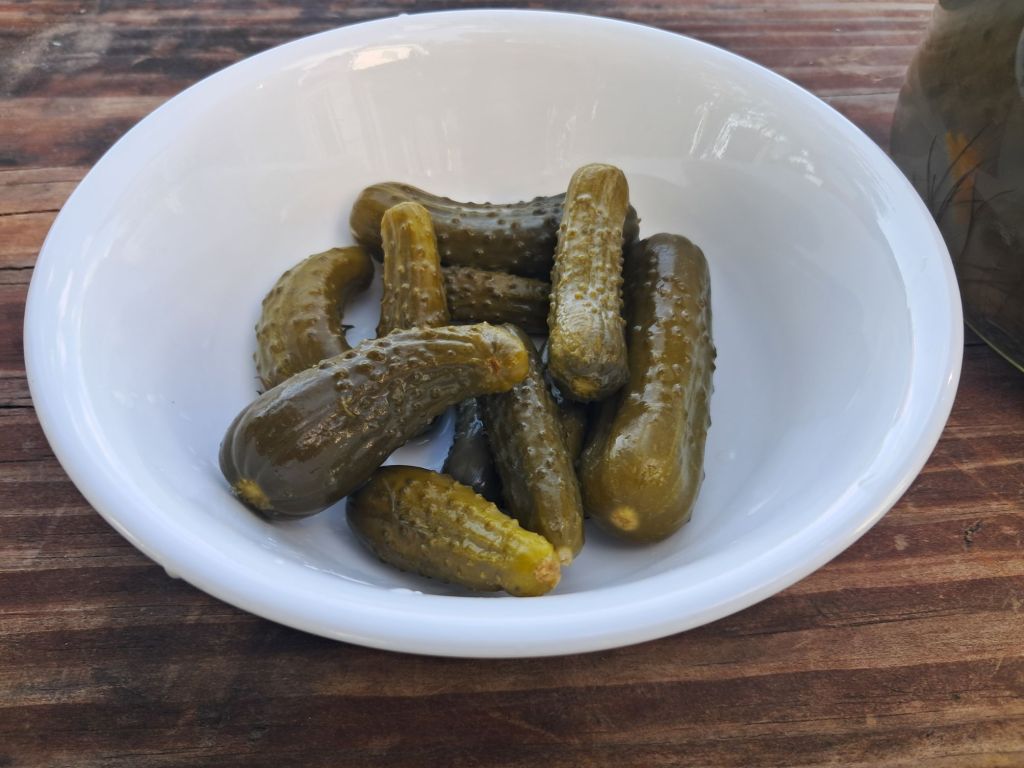
    Some foods are more than just something to eat—they are memory, history, and love preserved in a jar. For my husband, crock pickles are exactly that. They weren’t just a side dish. They were the rhythm of summer at his grandmother’s house, the heartbeat of her kitchen. He remembers the smell of dill and garlic, the rows of cloudy crocks lining the driveway like treasures waiting to be unearthed. Each jar was her welcome to neighbors, her comfort for family, her way of saying: you belong here.

    For years, my husband urged that we learn the craft from her. “We’ll spend an afternoon with Grandma—she’ll show us,” he’d insist, describing the heavy, timeless crock she used. But always, there was tomorrow. Always next week. And then, without warning, next time was gone.

    I remember the last jar of her pickles. It sat in our pantry for too long, a relic we hesitated to touch, as if opening it would make the final goodbye real. But pickles don’t last forever. Not even hers. One evening, we finally broke the seal. I swear we ate them more slowly than anything before or since. Each crunch was sharp, garlicky, tangy—and edged with grief. Every bite carried her. Every bite let her go.

    After that, crock pickles became a ghost in our house—remembered, unreachable. Until this summer. By luck, a friend mentioned she made them herself. My heart leapt. I asked for her recipe, and what she handed me wasn’t a recipe at all. It was instinct, an echo of an older tradition: “a handful of dill, enough garlic so you can smell it, grape leaves, warm salt water, then wait.” No exact measures. No guarantees. Just faith between steps.

    I decided to try. From the garden, I gathered cucumbers, dill, garlic, onions, grape leaves. I pulled out the old crock I’d been saving and filled it, layering carefully as though she might be watching. Each day, I checked the brine as it turned cloudy, listening for the fizz that meant life was happening inside. It felt like holding my breath for a week.

    Finally, the moment came. I set the finished jar on the table in front of his family—my judges, and hers. Pride and fear tangled in my chest as I waited for the first crunch. One by one, their faces lit up. Recognition. Memory. Joy. And then I looked at my husband. His expression softened in a way I had rarely seen, as though in that instant, time collapsed and he was back in his grandmother’s kitchen. He didn’t rush for words. He didn’t need to. He just reached for another pickle.

    In the quiet that followed, she seemed present again. Not gone, but here—her tradition alive, passed forward through brine and hands and time. Now, when I lift the lid of our own crock and breathe in dill and garlic, I know the jars hold more than cucumbers. They hold continuity, connection, memory renewed. They carry her legacy. One jar at a time.

    What food instantly brings you back to your childhood and makes you feel connected to the people who came before you? Share your story below, and subscribe to join a group of like-minded people.

    #FamilyTraditions #HomemadePickles #FoodAndMemory #GenerationalRecipes #FermentationLove #GrandmasKitchen

  • Planting Hope in September Soil

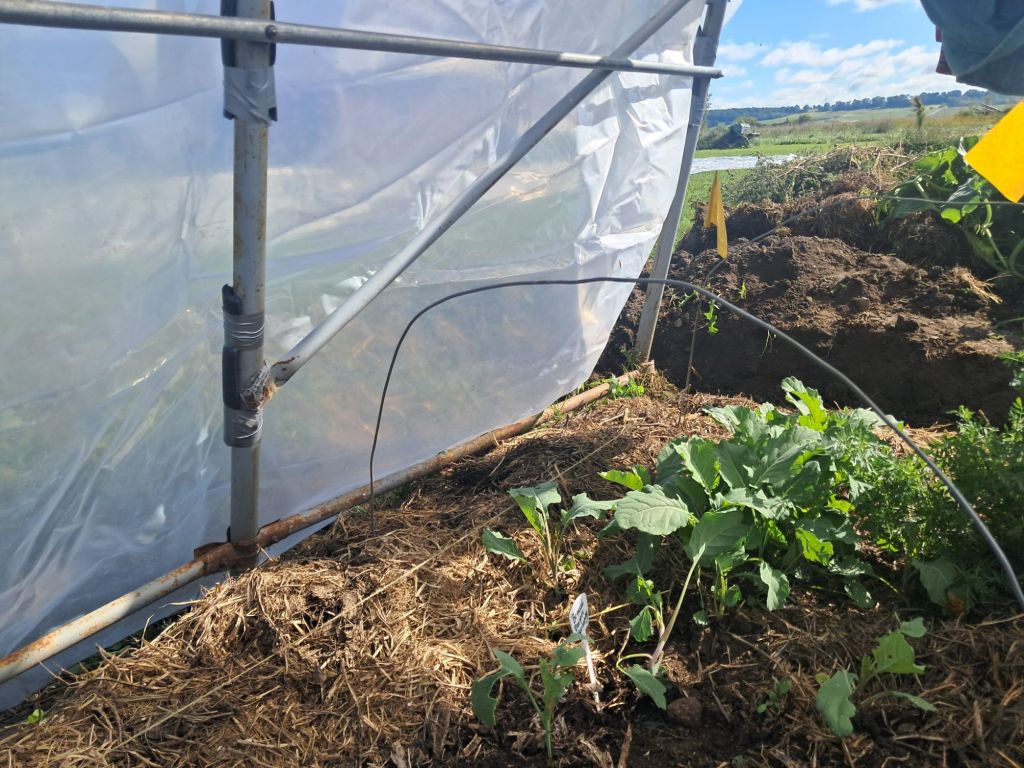
    The soil was cooler than I expected when I slipped a broccoli seedling into the ground. September isn’t when I usually think about planting—it’s when I imagine gardens winding down, not continuing. For me, gardening has always belonged to summer: long days of pulling weeds at dusk, arms full of cucumbers, nights spent rushing to preserve tomatoes before they spoiled. Autumn was the season of rest.

    So when a friend suggested I try a winter garden, I almost laughed. Planting in September felt backward, like trying to swim upstream. But then she handed me a book that shifted something in me. In its pages, I found a different vision—a garden not tied to warm sunshine, but to patience, persistence, and a new rhythm of growth. I couldn’t shake the image: trudging through February snow, easing open a greenhouse door, and being met by the earthy smell of soil. Lifting a weathered tarp to reveal lettuce, radishes, and onions waiting in the stillness of winter. Life where I least expected it.

    That’s why, today, kneeling in the cool dirt, I realized I wasn’t just planting broccoli. I was planting a small act of faith. A promise that when the days grow short and the world feels bare, there will still be something green, something alive, something reminding me that growth doesn’t stop just because the season changes.

    Trying something new can feel strange, even uncertain—but maybe that’s the point. Maybe growth isn’t about holding on to what we know, but about daring to believe in what we don’t yet see.

    So here’s to this September soil, to the broccoli tucked beneath it, and to the quiet hope that will carry me through the cold: the belief that life is still unfolding, even in winter.

    Have you ever tried planting something outside the “normal” season—what did it teach you about growth and patience? Share your experiences below, and subscribe to join a group of like-minded people.

    #WinterGarden #GardeningLife #SeasonOfGrowth #PlantingHope #FallGarden #BroccoliInSeptember #SlowLiving

  • Traveling Light, Remembering More

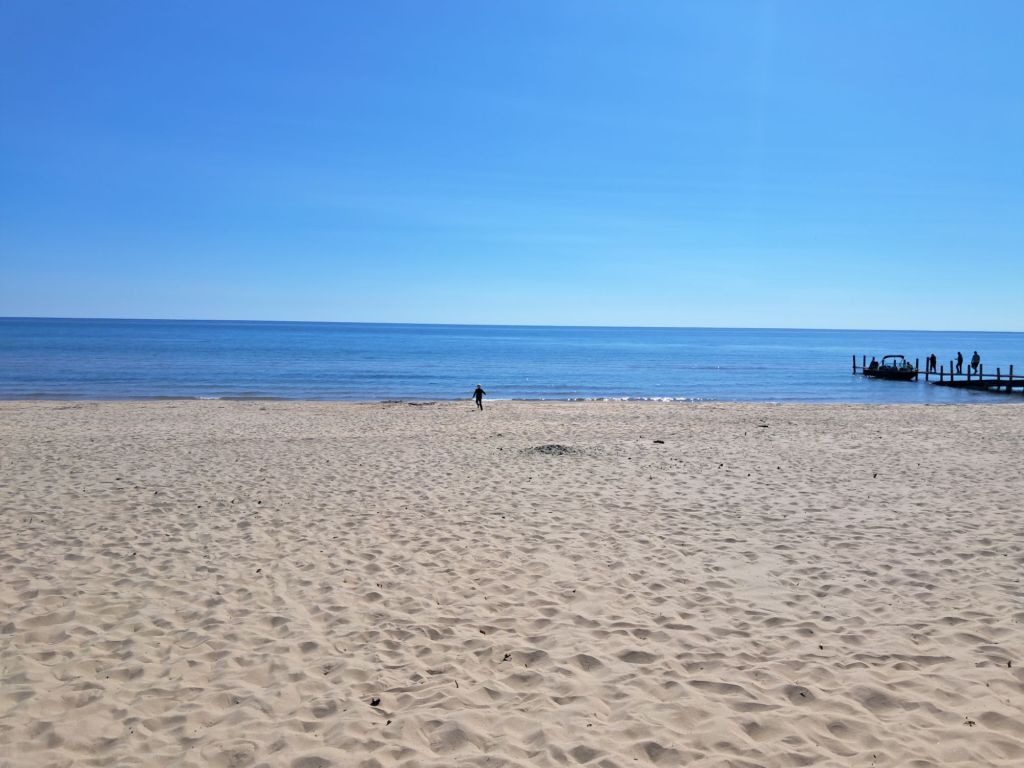
    I didn’t pack bathing suits, beach toys, or even chairs. Just me, two kids—almost six and almost two—and enough curiosity to see what might happen. Some might call it unwise to bring children to the beach without all the usual gear. I half expected chaos myself. But what unfolded that day at Lake Michigan wasn’t stressful at all. It was simple, joyful, and quietly unforgettable.

    The night before, on a whim, I decided we’d spend the next morning at a quiet county park along the lake. No boardwalk, no crowds—just open sand and water. To dodge the holiday crush, I aimed for a mid-morning arrival and an early-afternoon departure, the kind of window that still gave us sun but also let my daughter keep her nap.

    Even the drive became part of the adventure. Late summer light spilled across the Wisconsin hills, glancing off barns that leaned like tired elbows and threading silver into the rivers. My son sat at the window firing off questions as quickly as the scenery changed: “Why do hills rise like that? Why does the river bend? How do boats float if they’re heavy?” I answered as best I could—part science, part wonder—hoping not for perfect explanations but for him to feel that his questions mattered.

    When we finally pulled into the near-empty lot, my daughter was close to dozing off. But one glimpse of sand and water jolted her awake. She squealed, pointing first at the playground, then the waves, kicking her legs until I set her free. Her brother didn’t wait for permission; he sprinted toward the lake, shoes already tumbling behind him like breadcrumbs.

    The first steps in were cautious—the water cooler than we expected, toes retreating from the foamy edge. Within minutes, though, hesitation gave way to shrieks of laughter. We sprayed arcs of water, dug down until the sand swallowed our ankles, and filled pockets with chipped shells. My daughter crouched at the edge, giggling as the water tickled her toes while her brother shouted whenever he spotted glints in the sand that might be treasure.

    By noon, hunger caught up with us. On a car blanket, we unpacked leftovers—chicken strips and potato wedges—now lightly dusted with grit. A bite crunched the wrong way, and my toddler burst out laughing, calling it “crunchy chicken.” Her brother joined in, and somehow the sand didn’t matter anymore; giggles carried the meal.

    Our day settled into small turns and trade-offs. My son itched to dig holes while my daughter tugged toward the swings. I only wanted the luxury of watching them both without rushing. Even at two, she seemed to understand that we couldn’t each get everything at once. But her delighted squeals when the waves nudged her knees softened her disappointment at leaving the playground sooner than she wished.

    By early afternoon the trickle of families had turned into an incoming tide—umbrellas, coolers, floaties piled high. We had timed our escape just right. After one last climb, swing, and sandy slide, we gathered our belongings—lighter than most, heavier with tiredness—and headed back to the car.

    On the way home, we stopped at cheese store that doubled as an ice cream shop. By the time the highway unspooled beneath us, my daughter had slumped into sleep, cheeks sticky and sun-warmed. My son, eyes bright in the rearview mirror, recounted his favorites—the boats, the splashing, the shells—already asking when we could come back.

    That’s when it struck me: we hadn’t missed the beach toys, the swimsuits, or all the elaborate preparation. What we had was enough. More than enough, really—an unbroken stretch of laughter and sunlight stitched together by their curiosity. Parenting rarely feels simple, but that day it did. And that simplicity—the kind that travels home in sandy shoes and chocolate-stained cheeks—is the treasure I’ll keep long after they’ve outgrown my arms.

    Have you ever skipped the gear, the planning, or the ‘rules’—only to discover the best family day came from keeping it simple? Share your thoughts below, and subscribe to the link below to join a group of like-minded people.

  • When Egg Prices Crack, Local Farms Hold Steady

    Just months ago, the price of eggs soared past $7 a dozen—triple what most people were used to paying. A food so ordinary it’s almost invisible suddenly looked like a luxury. Prices have since eased, but the memory lingers: how did something so basic get so expensive? And why did the shock land so unevenly—upending some farms while leaving others steady?

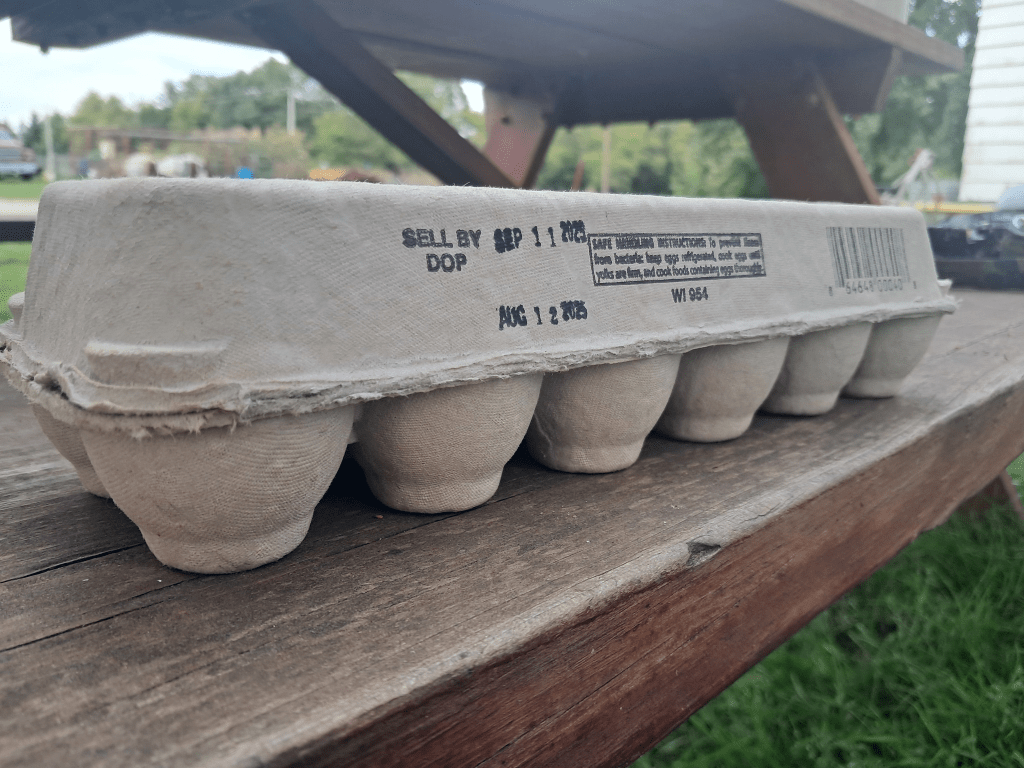
    On our farm, a dozen eggs still sells for $4. That number has barely budged in years. While supermarket prices swung wildly, ours held firm. The contrast is more than a curiosity. It hints at how food really travels from barnyard to breakfast table.

    The spike began with avian influenza. In 2022 and 2023, the virus swept through major poultry operations, wiping out more than 43 million egg-laying hens nationwide. When a third of the national flock disappears, supply collapses and prices shoot up. Industrial farmers also faced surging costs for feed, fuel, and transport. A production system designed for tight efficiency became brittle: when disease struck, the whole country felt it at the checkout line.

    Small farms like ours face the same threats, but the impact lands differently. Three features matter most:

    • Flock diversity. We keep mixed-breed, free-range hens. Losing a handful to illness is painful, but a single disease rarely jumps across breeds with equal force. Uniform flocks in industrial barns don’t have that buffer.
    • Local sourcing. Most of our feed comes from what we can grow or source locally. Last winter, when global grain costs spiked, our stockpile of grain grown during the previous year was still there, and the cost to produce it did not change. That insulation saved us from the roller coaster.
    • Short supply chains. Our eggs travel from our house to their house, a distance of less than ten miles, not five hundred to a distribution hub. Fuel hikes and cold-storage fees barely touch us.

    That structure explains why our price holds steady. $4 a dozen looks high when the grocery store is running specials at $2. But when shelves empty or sticker shock sets in, suddenly our carton looks like the bargain. What customers are buying isn’t just eggs—they’re buying reliability.

    Of course, small farms can’t replace industrial ones. We don’t feed cities by the million, and local food generally costs more up front. Volume and convenience still matter. But the lesson of the egg crisis isn’t that one system must win. It’s that balance matters. Industrial agriculture delivers abundance when conditions are smooth. Small farms deliver stability when they’re not. Together they form a more resilient food web than either system could alone.

    And “smooth” is becoming rare. Disease, war, fuel shocks, and extreme weather tug constantly at a tightly wound system. When that system cracks, as we saw with eggs, the cost gets passed to the consumer.

    There’s another way to measure value. It’s not the absolute lowest price when times are calm—it’s the carton that’s still there, at the same price, when times are not. In food, resilience isn’t a luxury. It may be the most essential ingredient of all.

    Next time you crack an egg into the pan, think about how far it traveled to get there. If you want your breakfast to come with stability as well as protein, consider keeping part of your food dollar close to home. The steadiness might taste better than you expect.

    What is the true cost of cheap food—and what values should guide us when something as everyday as eggs suddenly becomes a luxury? Share your thoughts below, and subscribe to join a group of like-minded people.

    #FoodSystem #LocalFood #FarmFresh #FoodResilience #EggPrices #KnowYourFarmer

  • The Morning I Chose Connection Over Correction

    My mom was in the hospital, I wasn’t sleeping, and the stress had nowhere to go. So I poured it onto my five-year-old son.

    Every morning before preschool, I’d launch into lectures from the driver’s seat—how he should control his feelings, how he should handle surprises better, how he needed to “do better today.” He sat quietly in the back, light up sneakers kicking against the seat, eyes fixed out the window. Sometimes he nodded, sometimes he didn’t react at all. The more I talked, the less he seemed to hear. And while I was busy trying to coach him into self-control, I didn’t notice my own unraveling. His teacher had told me he struggled with disappointment and unexpected changes, but the truth was, so did I.

    Stress made me brittle. With my mom in the hospital for weeks, I spent nights waiting for the phone to ring and mornings running on fumes. Exhaustion made me impatient; anxiety made me overbearing. Instead of softening for my son, I doubled down on discipline. His behavior improved slightly, but the tension between us never eased.

    This year, though, life looks different.

    My mom has mostly recovered and returned home. I’m finally sleeping again. And most importantly, I’ve come back to writing—an outlet I abandoned during the family crisis but now recognize I had been starving for. Writing allows me to pour out my tangled emotions in a healthier space, so I no longer flood my son with them. I’m lighter. Calmer. More myself.

    And my son? He’s started 5K. A new school year, a fresh chance. Part of me still worries the old patterns will follow us, but another part of me knows I don’t have to repeat the same mistakes.

    So, instead of lecturing him on the way to school this morning, I tried something new. “Want to hear a story?” I asked as we buckled in.

    His head lifted immediately. His eyes lit up. He was paying attention in a way I had never been able to force with warnings and correction. And so, I began.

    I told him about a clown who desperately wanted to make people laugh, but everything he did scared them instead. No matter what silly trick he tried, everyone screamed. But the clown refused to give up. Day after day, he reflected and made tiny changes. He adjusted his timing, brought out a joke book, experimented with new approaches. Slowly, he improved. Over ten years, he transformed from the “worst clown in the world” into one of the very best.

    When I finished, the car was quiet. For a moment, I worried I’d lost him. Then he smiled softly. “That was a nice story,” he said. Before we parted, he leaned forward for a hug before heading off with his backpack bouncing against his shoulders.

    And I just sat there.

    Last year, I believed I could lecture him into resilience. What I see now is that children don’t learn resilience through pressure; they learn it through connection, imagination, and seeing us model patience. The clown’s gradual improvement mirrored my own—incremental, imperfect, but real.

    I don’t know exactly how his kindergarten year will unfold—parenting never guarantees smooth roads. There will be meltdowns, and I’ll misstep plenty, too. But today, we entered the day differently: not with lectures, but with a story, a smile, and a hug.

    For now, that feels like enough. And for the first time in a long time, I believe this will be a good year.

    When you’re under stress, how do you stop it from spilling onto the people you love most? Share your experiences below, and subscribe to join a group of like-minded people.