Author: fzangl1

  • The Forgotten Resource

    Every homestead has secrets, but sometimes you uncover far more than you had expected.

    On the day we officially moved onto our new property, I thought I knew what sustainability looked like:  careful choices, eco-friendly habits, mindful living. Yet, as we settled into our new land, the barns and outbuildings became a sort of blind spot, lurking at the edge of my vision while I obsessed over leaky faucets and weathered walls in the house.

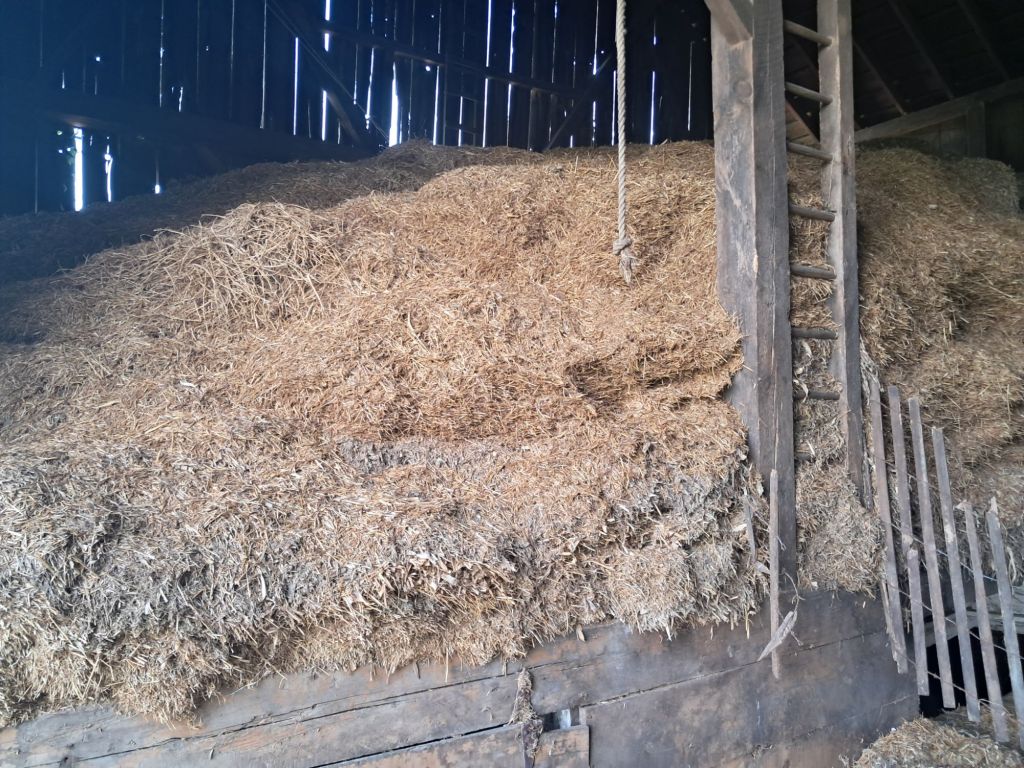
    It wasn’t until a heatwave afternoon, with cicadas buzzing and pollen swirling, that I finally asked my husband, “Can we walk through the outbuildings? I want to see what’s really here.” We made our way over the gravel drive, the old barn looming with its faded red paint and centuries-old aura. We ducked inside, stepping into the soft, golden mess of straw, which carpeted the floor in a layer measuring at least four feet thick.  The space was alive:  shadows flickered, a swallow darted overhead, and a mouse rustled just out of sight.

    Our barn straw

    At first glance, the mass of straw seemed like a nuisance, a fire hazard begging to be dealt with. “Should we just burn it?” my husband mused “At the moment, the additional floor space is more valuable to me than the straw”.

    Something in me balked at this thought:  burning felt wasteful, even wrong. Carting it away made no logistical sense either; what if there was a better way? After some discussion and research over several months, the straw, was an overlooked treasure.

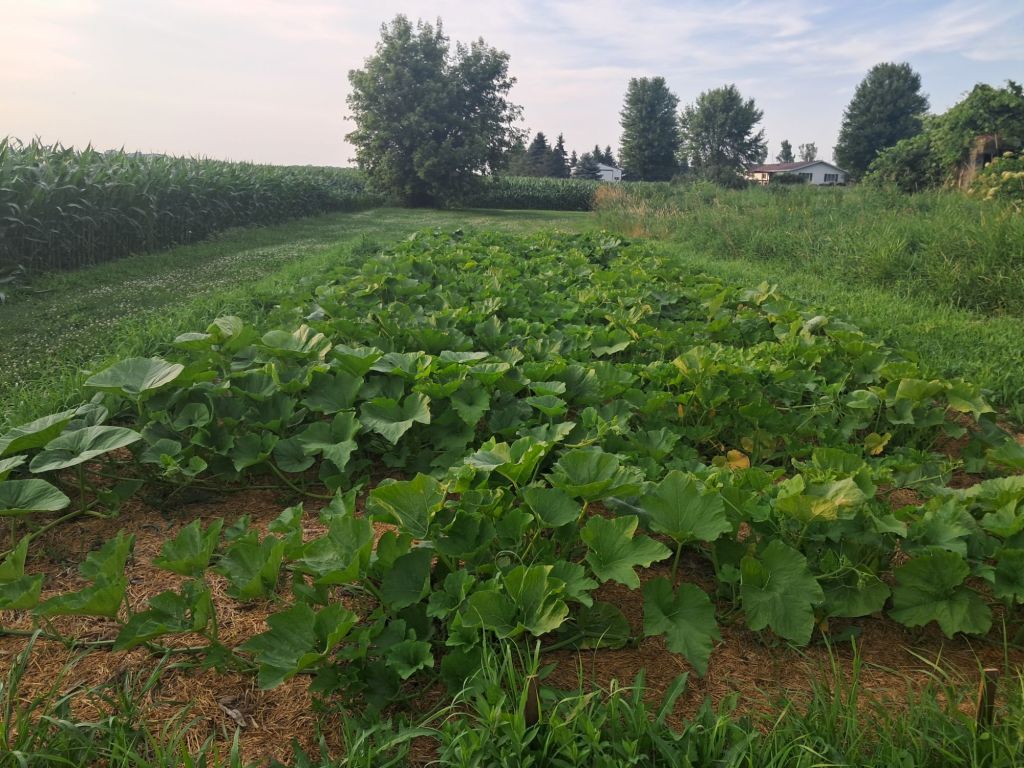
    Straw mulch added to the pumpkin garden

    We started experimenting. In the garden, a layer of straw became a natural mulch: suppressing weeds, maintaining moisture, protecting the soil from harsh sun, then gradually breaking down to enrich it. Over winter, it insulated our garlic against freeze and thaw. When we raised pigs and poultry, the straw made perfect bedding; combined with manure, it later transformed into dark, nutrient-rich compost for the next planting season.

    Straw is interbedded with pig waste to slowly create compost

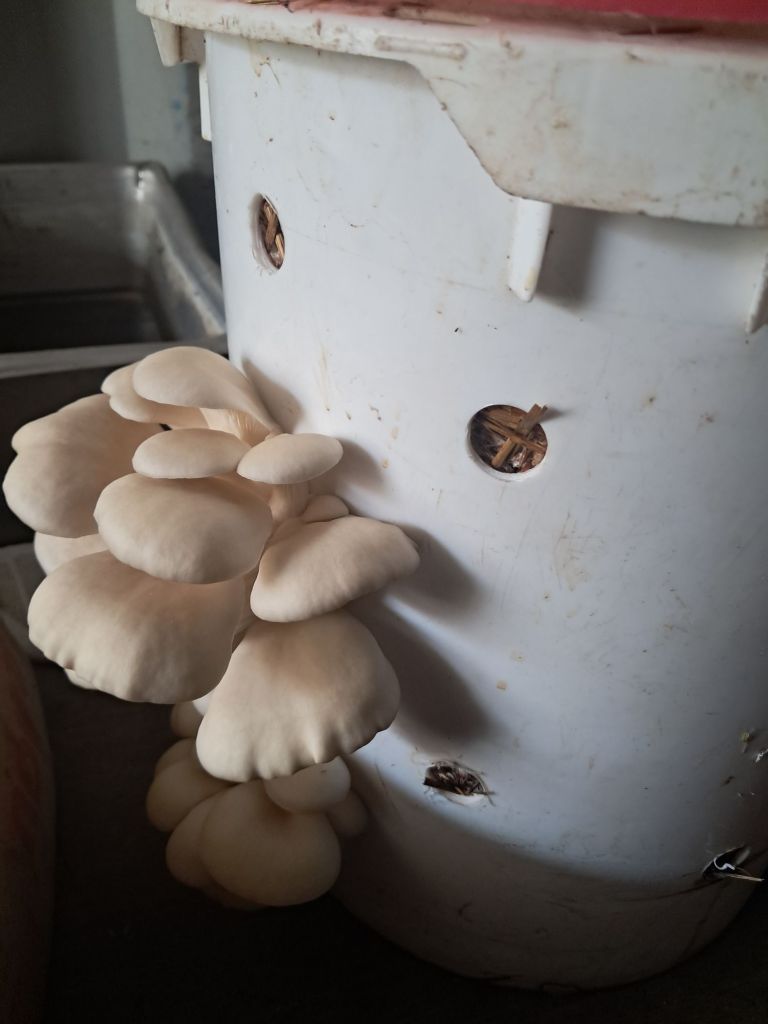
    about how far we could stretch this resource, I tried something new: mushroom cultivation. With a kit of oyster mushroom spawn and an afternoon of work, the neglected straw hosted an eruption of firm, delicious mushrooms for our table. Even after their flush, that straw went right back to the garden, completing yet another cycle.

    Oyster mushrooms grown on a straw substrate

    Through it all, my notion of sustainability shifted. It stopped being about strict rules or abstract ideals, and became something far more creative:  a willingness to look again at what’s in front of me, to find worth where others perceive waste, and to keep experimenting despite setbacks and occasional messes. Now, when we look at our barn, we no longer see just an old building or a cluttered responsibility. We see opportunities waiting quietly in the wings:  reminding us that the most valuable lessons are sometimes found in the places you almost forgot to look.

    Have you overlooked a resource, only to find it to be extremely valuable? Share your experiences below, and subscribe to join a group of like-minded people.

  • Guns, Smoke, and Summer Steel

    Guns, Smoke, and Summer Steel

    If you’ve spent any time in farm country, you know that summer is a season steeped in tradition: sweet corn roasting on the grill, fireworks bursting above open fields, and parades weaving through small-town streets. Another tradition that perfectly captures the spirit of summer for me is the roar of engines and the gritty spectacle of a tractor pull.

    This fascination goes back generations. Our grandparents told stories of the early days when tractors were just transforming American agriculture:  mechanical workhorses that symbolized grit, self-reliance, and progress. What began as casual farmyard boasts over who had the stronger machine has since evolved into something far more ceremonial: a celebration of horsepower, heritage, and the unbreakable threads that tie country communities together.

    That’s why, on a sun-drenched Sunday afternoon, I find myself heading to the local gun club, an unexpected but oddly fitting venue, to catch this year’s edition of the Farmersville pull, colorfully named the Guns, Smoke, and Beer Tractor and Truck Pull.

    I find a spot along the chain-link fence, close enough to feel the rumble. Behind the scenes, tractors line up like gladiators awaiting their turn:  some lovingly restored antiques with curved fenders and hand-lettered paint jobs, others futuristic behemoths fitted with exposed engine blocks, massive rear tires, and vertical stacks that shimmer like weapons under the noonday sun. Each machine has its own name, its own backstory, its own fan club.

    The PA system crackles and the announcer wastes no time bringing the crowd to life. The first competitor is already strapping on a helmet. There’s a hush. The green flag lifts.

    Then:  ignition.

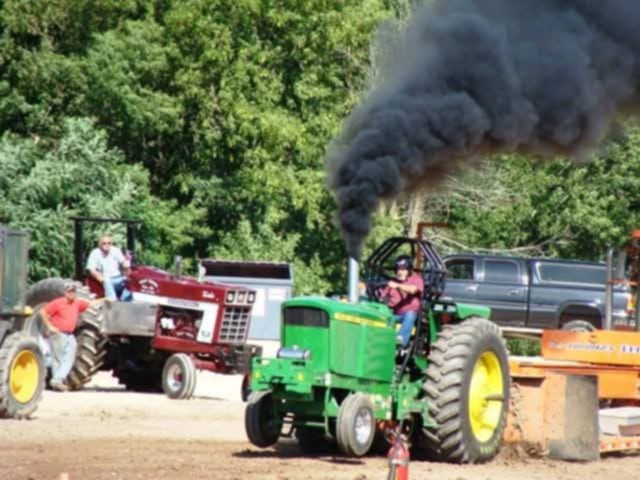
    A bellow of power splits the silence. The tractor lurches forward, chained to a sled ominously named The Eliminator. The front wheels lift clean off the clay. Dust flares as the driver leans in, holding the machine straight as the sled ratchets its weight forward, sinking deeper into the earth with every passing foot. The engine howls. My chest vibrates with it.

    That tractor is really working! Photo by Hillary S.

    Instinctively, my hands tighten on the fence. Cheers rise. For a few heartbeats, it feels less like a pastime and more like a proving ground:  man and machine battling inertia in unspoken defiance of gravity and time.

    When the tractor finally grinds to a halt and lets out a victorious hiss, the crowd roars approval. The driver remains still in the cab just long enough to savor it.

    Between runs, the rhythm slows but never stops. A blade-toting grader drags the track smooth again. Kids sprint along the fence pretending to drive their own invisible rigs, engines sputtering gleefully. Neighbors swap guesses on winners while sipping sweating cans of beer and soda. Raffle volunteers roam the crowd with plastic buckets and tickets. From the speakers, the announcer plays local DJ:  blending stats and wit with hometown shout-outs. All the while, the tension builds toward the next burst of combustion.

    And as the event rolls on, camaraderie deepens. Nostalgia mingles with anticipation. Every round adds to a growing patchwork of shared memory:  anecdotes of legendary pulls from years past and parents pointing out last year’s champion to wide-eyed children.

    By early evening, as the final competitors rumble down the track and the engines begin to cool, golden light falls across the dispersing crowd. A breeze kicks up, lifting grit into the sky like smoke from a burn pile. People linger, reluctant to let the day end. No one’s in a rush. Kids hang off the backs of UTVs. Parents gather chairs and grass-filled blankets. There’s laughter, hugs, and long goodbyes.

    Driving home, dust clinging to my shoes and the growl of engines still echoing in my ribs, I realize this wasn’t just a distraction or a show. It was a testament:  to tradition, to craftsmanship, to communities that still gather not just to watch, but to belong.

    And as the countryside stretches before me, each field burnished by the fading sun, I already know: I’ll be back next year, same track, same dust, same roar. Some rituals are worth waiting for.

    Have you ever been to a tractor pull? Comment below, and subscribe to join a community of like-minded people.

  • Where the Red Fern Grows and the Sprinkler Flows

    The moment I stepped outside in the morning, sweat prickled down my back:  a warning that today would be a scorcher. The thermometer already hovered above 90 degrees, and the rest of the day promised no relief. My husband would be gone this afternoon, off helping family with farm chores, leaving me alone with our two kids: my energetic five-year-old son and my curious one-and-a-half-year-old daughter.  What to do?!

    My husband left around noon, waving goodbye as he headed out the door, his shirt already sticking to his back. I watched him go, feeling a twinge of envy.  At least he’d be busy, distracted by the rhythm of farm chores. The house felt unusually quiet after the door shut, the kind of quiet that comes with thick, unmoving air. My son and I lingered in the kitchen, the hum of the fridge and the ticking of the wall clock louder than usual.  My daughter was napping at Grandma’s house across the road, giving me a rare moment of quiet with my son.

    The heat pressed in from all sides, making even the simplest tasks feel monumental. I suggested, “How about we lie down for a bit and watch a movie?” He grinned, already grabbing his favorite blue blanket with dog prints, a Christmas gift from a friend.

    He’s usually resistant to what he calls “adult movies” (a term I gently correct), but after a little coaxing, he agreed to watch “Where the Red Fern Grows.” I hadn’t thought of that story since grade school, and as the familiar scenes flickered across the screen, I found myself transported back to my own grade school days:  the smell of the school library, the scratch of pencil on lined paper, the way my heart ached for Old Dan and Little Ann. My son watched with wide eyes, occasionally asking me questions about the plot. By the end, I noticed his body relaxed into mine as we lay on the couch.

    After the credits rolled, I took a few quiet moments to write while my son, content and a little drowsy, watched cartoons. Then Grandma called: “Your little one is up and asking for you!” I slipped on my black Crocs, crossed the road, and scooped my daughter into my arms. Her hair was in pigtails and tousled from sleep. “Mama!” she squealed, wrapping her arms around my neck.

    Back home, I remembered the starter plants my husband had put in the ground the day before. They’d be wilting in this heat if we didn’t water them soon. So, with my daughter perched on my hip and my son trailing behind, we headed out to the garden. The air was thick and still. We watered the thirsty plants, the cool overspray a welcome relief to our legs, and then gathered a colander of fresh vegetables: spinach, oyster mushrooms, bok choy, celery, and green onions, their colors vibrant against the metal colander.

    “These will taste so good for dinner,” I told the kids, and my son nodded, already dreaming up ways to help.

    To make the evening special, I decided to order steamed dumplings and crab Rangoon that we would pick up from our favorite Chinese restaurant in town. “A feast!” my son declared, clapping his hands.  The promise of takeout seemed to lift everyone’s spirits, a small luxury on a day when everything felt sticky and slow.

    While we waited for the restaurant to open, I suggested hesitantly, “How about we run through the sprinkler?” I remembered a failed attempt during the early days of Covid. Back then, our son, just a baby, hadn’t been impressed. But this time, his eyes lit up. “Yes! Let’s do it!”

    He changed into a swimsuit and dashed outside to set up the sprinkler while I started dinner: washing and chopping the vegetables, measuring out rice, chicken bouillon, and water into the instant pot. The kitchen filled with the rich aroma of garlic sizzling in oil, followed by the earthy scent of mushrooms and the sharp tang of green onions. I added soy sauce, fish sauce, Sichuan peppercorns, ginger, sesame oil, and a splash of black vinegar in unmeasured amounts, letting the sauce bubble and thicken as the rice cooked.

    The instant pot beeped just as I finished tossing the veggies. I turned off the stove, set dinner aside to rest, and quickly changed both myself and my daughter into swimsuits.

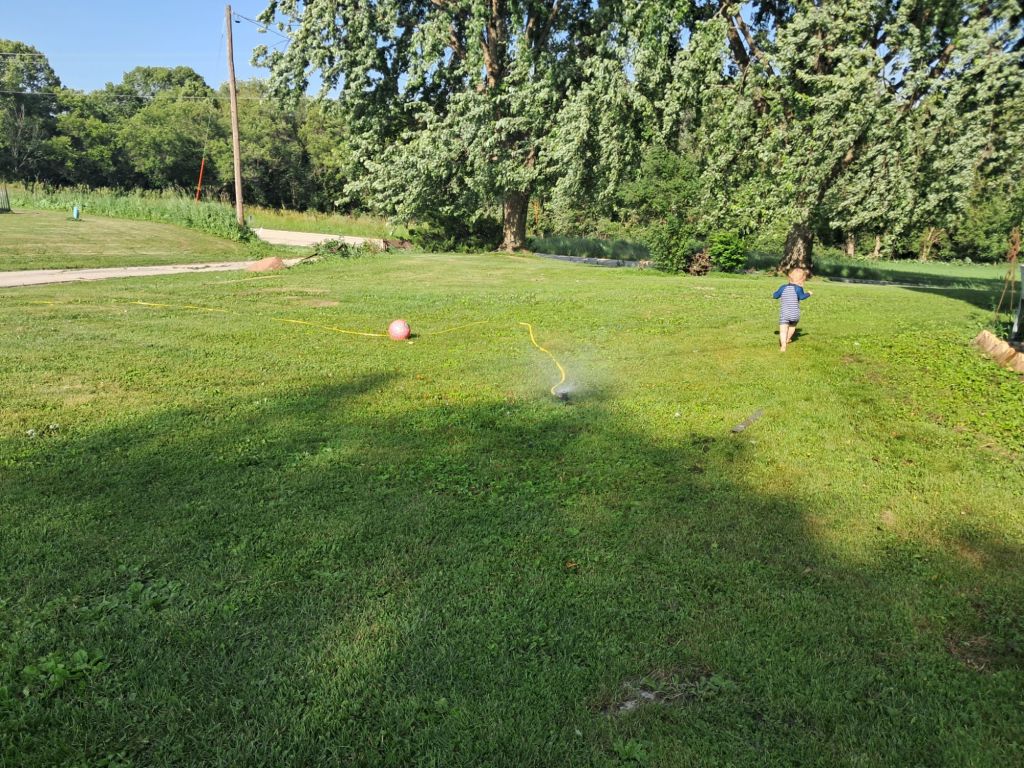
    Outside, the sprinkler arced across the lawn, droplets sparkling in the golden afternoon light. My son was already shrieking with laughter, darting through the spray. “Come on!” he called. My daughter clung to my leg, uncertain, but after a few gentle passes through the edge of the water, she started to giggle, too. Soon we were all running and laughing, the heat forgotten for a few blissful moments.

    We found our own cool on a sticky summer day.

    We ordered our food and went to town to retrieve it.  The air conditioning in the car was a welcome relief, and the kids pressed their faces to the windows, watching the world blur by. After we paid and were returning to the car with our food, a man ran out to give my son a bouncy ball. My son’s eyes lit up as he stretched out his hand to receive it. “Thank you!” he said, clutching the prize as if it were treasure.

    Dinner was a celebration:  steaming bowls of rice topped with our garden-fresh stir fry, dumplings, and crab Rangoon on the side. We ate together, sharing stories and savoring the simple joy of a summer evening well spent.  My daughter insisted on feeding herself, smearing rice and sauce across her cheeks, while my son asked questions about the plot of “Where the Red Fern Grows”.  “Why did Little Ann die?”  “How does a red fern grow between two dogs?”  There was plenty of food left over for Dad when he would return home later.

    We had so much fun with the sprinkler that we went back outside after dinner for a second round, all of us laughing and squealing with joy. As the sun dipped lower, we toweled off, spent a couple minutes swinging on the swing set, and headed inside, cheeks flushed and hearts light. The sky was streaked with pink and orange, and the air was finally beginning to cool.

    After showers, we settled in to watch another movie that my son had been asking me to watch with him, “Monster House”.  I prepared some popcorn, and we all cuddled together on the couch.  My daughter snuggled in the crook of my arm while my son watched with wide-eyed excitement, occasionally grabbing me during the scariest parts.

    Later, as I tucked the kids into bed, I realized that sometimes the best memories are made on the hottest days, when you find a way to make your own kind of cool. The house was quiet again, the only sound the soft whir of the fan and the even breathing of my children. I lay in bed, grateful for the small moments: the splash of water, the taste of fresh vegetables, the weight of a sleepy child in my arms. Summer, in all its sticky, sun-drenched glory, had given us a day to remember.

    Have you ever turned an ordinary day into an extraordinary day? Share your stories below, and subscribe to join a group of like-minded people.

  • The Heart of Knowles: Fourth of July Traditions

    The Fourth of July has always been my favorite holiday, no contest. There’s something magical about sun-drenched parades, the smoky drift of cookouts on the breeze, and fireworks crackling against a velvet sky. I’ve always cherished tradition, and for me, nothing says “summer” quite like the annual Fireman’s Picnic in Knowles.

    The Knowles Volunteer Fire Department is legendary: a group of unpaid neighbors who protect our patch of the world from fires and emergencies. The picnic isn’t just fun; it’s a lifeline, funding the equipment and training that keep us safe.

    One summer, the fire department saved our family’s barn. My dad had stored hay that was too wet; days later, it started to smolder. The firemen arrived in force, helping us haul out the hay before disaster struck. I still remember his voice, rough with relief, as he shook each fireman’s hand. After that, our family threw ourselves even more into supporting the picnic and the department.

    Ma always baked chocolate cake with white frosting for the dessert sale. She’d hum as the kitchen filled with the scent of cocoa and sugar, while my sisters and I licked the beaters and squabbled over who’d get the coveted corner piece. My dad, after morning chores, headed to the hamburger stand, donning his money belt and frying up brats and burgers, his face flushed from both heat and pride. When she came of age, my oldest sister joined the fire department.

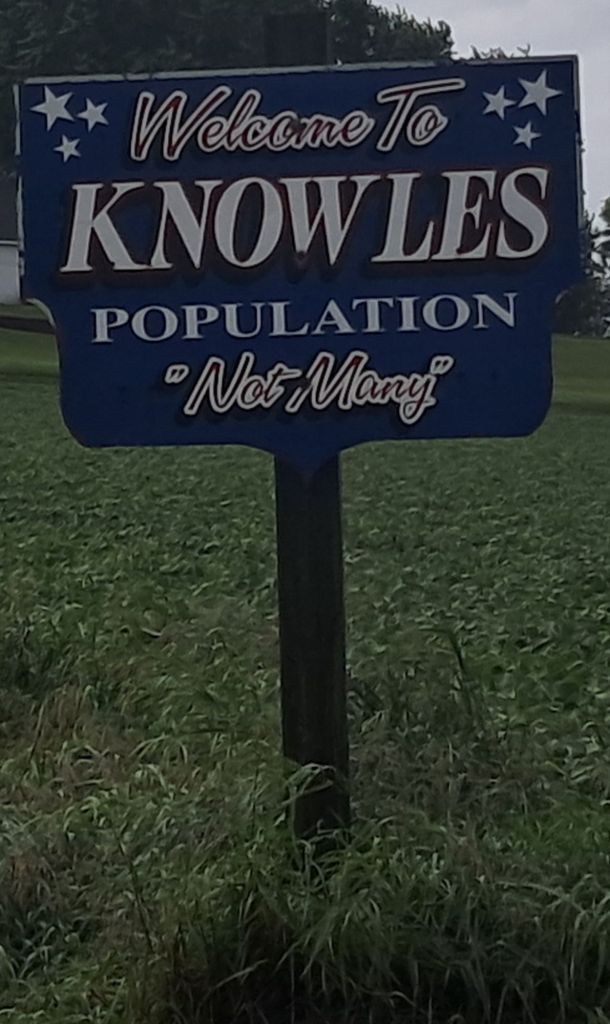
    Knowles is the kind of tiny town that jokes about its size. “Not many,” the sign reads, and they mean it. The main attractions: a farm equipment dealer, a single church, and two bars that double as gathering spots for miles around. But on the Fourth, Knowles transforms. The population swells as people from neighboring towns descend, armed with lawn chairs, faded blankets, coolers, and sticky popsicles for the kids.

    Knowles is honest about its population.

    Usually, the streets are so quiet you can hear the wind in the cornfields and birds in the trees. But on this day, laughter and music fill the air. Familiar faces blend with distant relatives, old classmates, and newcomers, all drawn together by the promise of celebration.

    The parade route is simple:  a single road, maybe half a mile, sloping downhill in two gentle steps. But for that hour, it feels like the center of the universe.

    The parade kicks off with a bang: the fire department leading in crisp uniforms, the American flag held high. The crowd falls silent; hats come off, hands press over hearts. A volley of blanks cracks through the air, firemen’s cheers bouncing down the street, shaking off the summer’s lull. My heart jumps as the fire trucks rumble past, horns blaring like thunder.

    High school bands follow, their music weaving through the warm air: “America the Beautiful,” then “Sweet Caroline.” I sing along quietly, amazed the band kids don’t melt in those wool uniforms. The color guard spins flags skyward, sequins flashing like tiny fireworks.

    Candy flies next: Tootsie Rolls, root beer barrels, and, if you’re lucky, a “Cow” candy—my favorite, caramel and chocolate (gone now, sadly). Plastic bags in hand, we dart into the street, laughing and dodging tractors and floats, our bags filling with sugary treasure.

    “Got your eye on the ‘Cow’?” my sister whispers, grinning as she snags one. I nod, already plotting my next move.

    Confetti toss during 2024 parade. Photo by Angie H.

    Donnie Feucht (may he rest in peace) pilots his father’s ancient stock truck, honking an extra time just for me. Restored antique tractors chug along, their paint gleaming in the sun as neighbors toss candy. Bigger tractors follow:  massive and modern, though quaint compared to today’s behemoths.

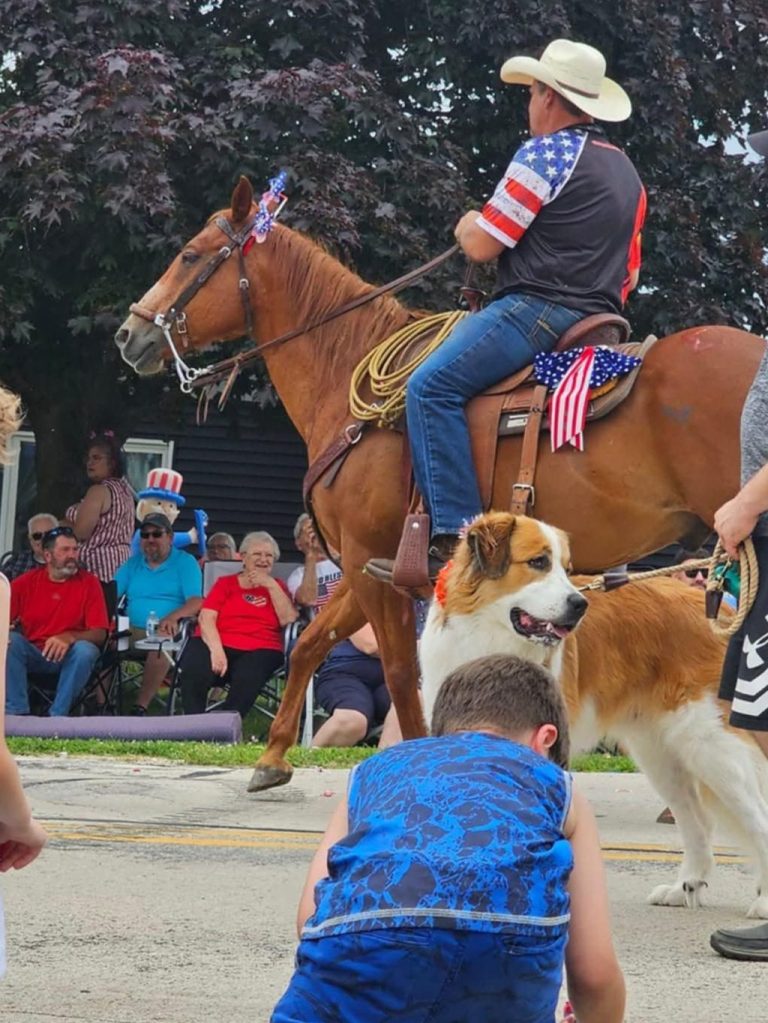
    Horse and rider, and gathering candy during 2024 parade. Photo by Kayla M.

    Horses and farm animals make an appearance. Line dancers perform on a moving hay wagon, their feet steady from many summers stacking bales. State senators stroll by, passing out frisbees and flyers, hoping for votes in the fall. A four-wheeler signals the end, with a “The End” sign tacked to the back, just in case.

    After the parade, we drag our overflowing bags and lawn chairs to the hamburger stand. I watch my dad serve lunch, pride swelling every time he hands a burger to a neighbor. The smell of grilled meat is irresistible; nothing tastes better than a brat with mustard and caramelized onions, washed down with ice-cold soda. Adventurous souls wander to the beer tent, where laughter and music spill onto the grass.

    The picnic has something for everyone: carnival rides for the kids, a toy tractor pull, the ever-popular dunk tank where you can try to soak your favorite fireman. Ring tosses and raffles offer prizes from frozen meat to cash. By the time we trudge back to the car, sunburned and sticky, our hearts are full. The sugar rush fades, but the memories linger.

    As I grew older, life got busier. The Fourth became an excuse for road trips and new adventures. But last year, my husband and I returned to Knowles, this time with our own children in tow. We joined his extended family, feeling again like we had an “in.” Their tradition started years ago with his grandparents, who sat on the same lawn and befriended the homeowner over time. Every year, we sit on that same lawn in their honor.

    Though the parade didn’t start until 11, we arrived late—10:30—and forgot the golden rule: get there by 10. Our punishment was a long trek from the highway, kids in tow, weaving through the crowd. I scanned faces for old friends, hoping for a spark of reconnection. As I set up, my brother-in-law handed me a cold beer with a grin. “It’s five o’clock somewhere,” he said, and everyone laughed, the ice broken instantly.

    Watching the parade through my children’s eyes, beer in hand, I felt the old magic return. The experiences I’d loved as a child were now theirs to discover. I knew we’d be back. As the parade wound down, my son clutched his bag of Tootsie Rolls and root beer barrels, cheeks flushed from darting after candy in the street. My daughter, face sticky with popsicles, clutched a frisbee given to her by a state representative. I glanced at my husband, lawn chair tipped back, and watched my children’s eyes widen as the fire truck’s horn echoed through the town. The “The End” four-wheeler passed by, and my son’s sticky hand found mine. For a moment, the world was just laughter, music, and the shimmer of sequined flags:  a perfect day, passed from one generation to the next.

    What is your favorite Fourth of July tradition? Share your thoughts below, and subscribe to join a group of like-minded people.

  • Mixtapes, Meltdowns, and Magic: A Family Road Trip to Remember

    Mixtapes, Meltdowns, and Magic: A Family Road Trip to Remember

    My family recently went on a road trip to a lake cabin in the northern part of the state for a fishing getaway.  Anyone who’s traveled with a five year old boy and a 1.5 year old girl knows the unique blend of excitement and chaos that comes with such an undertaking.  Our teal 1997 Ford F-150 was packed to the brim with bikes, a bike trailer, snacks, and an impressive array of Tinker Toys to entertain our toddler.

    The drive was an odyssey.  Our toddler, never a fan of the car seat, took a mercifully short nap before waking up wriggling and fussing with all the determination of a 1.5-year-old.  Our F-150 has a cassette player, and my husband had recently acquired a collection of 1980s rock mixtapes:  Guns N’ Roses, Bon Jovi, and Candlebox are among the bands featured on the tapes.  As soon as our toddler woke, my husband tried to placate her by playing his favorite mixtape.  This only resulted in a competition between her and Bon Jovi to see who could be loudest in the truck.

    Meanwhile, our five-year-old son, whose curiosity knows no bounds, peppered us with questions: “How did Candlebox get its name?” “How do volcanoes work?” “Who decides where the roads go?” My husband and I took turns answering, sometimes explaining things to the best of our ability, sometimes consulting our phones, and sometimes just admitting we didn’t know.

    By the time we finally pulled into the gravel driveway of the cabin, supposedly a 4.5-hour drive on the map, but in reality just over six hours, we felt as though we’d completed a marathon.  The collective 2.5 hours of crying from the back seat had left us frazzled, but as we unpacked and cracked open a cold beer on the porch, the stress of the drive began to melt away.

    The cabin itself was a dream: spacious enough, rustic yet comfortable, and perched right on the edge of a sparkling lake.  Our friends, the couple who had invited us, greeted us with warm hospitality and laughter.  The next few days were a blur of simple joys.  Mornings were spent fishing.  Sometimes, it felt like the fish were practically leaping into our boat, much to the kids’ delight.  Cleaning the fish became an undertaking that also attracted the kids’ attention.  Afternoons brought leisurely walks, games of Uno, and stories shared over sparkling water and homemade margaritas. My son made new friends and played with them on the playground and the beach.

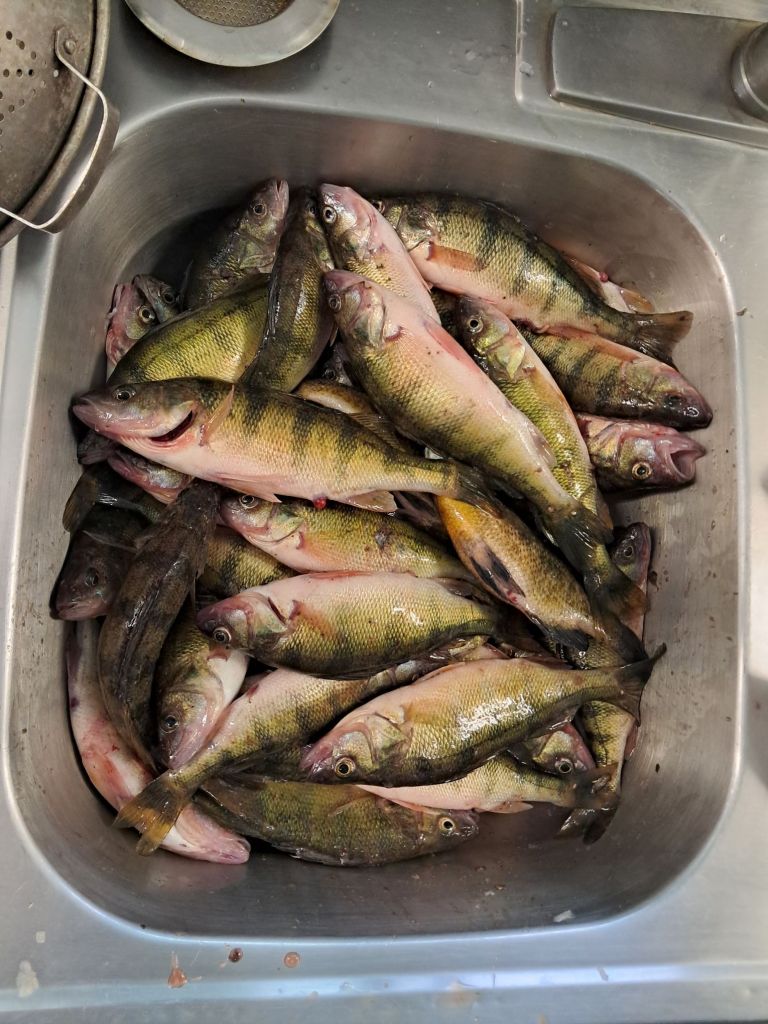
    The fish seemed to leap into the boat, these perch were caught during one excursion

    One afternoon, I brought the others on an adventure to a hidden waterfall deep in the woods.  The sound of rushing water and the cool mist on my face felt like a secret reward for those willing to walk and explore.  

    Beautiful waterfall found after a 3/4-mile hike along a railroad bed trail

    Back at the cabin, our hosts, avid foodies, introduced us to an array of specialty cheeses, and together we crafted homemade pizzas, each person adding their favorite toppings.  We contributed our own homemade bread and fresh garden salad, which met with enthusiastic approval.  One lunch, we had their specialty fish fry, complete with the best onion rings I’ve ever eaten.  Evenings were filled with laughter, good food, and the kind of conversations that only happen when you’re far from the distractions of daily life.

    As our friends wisely observed, “Three days together is perfect.  Any longer, and we’d start to drive each other crazy.”  By the third morning, my family was ready to return to our routines and check on our garden and animals back home.

    The drive home started off much smoother.  There’s something about the return leg of a trip that always feels faster.  Perhaps this is because the route is familiar and the promise of home is on the horizon.  Our son’s curiosity was undiminished, and we did our best to answer his questions about highway rules and road signs, grateful for the distraction.  Our toddler napped again but woke up grumpy and restless.  This time, her big brother did his best to entertain her, singing silly songs and passing a ball back and forth while I helped my husband navigate.

    We made it to our planned halfway stop for lunch, gas, and bathroom breaks, feeling triumphant.  But not long after we hit the road again, we noticed something odd.  The truck began to shake: subtly at first, but soon with increasing intensity.  At first, we tried to ignore it, distracted by a passing train and the donuts I’d picked up at the gas station.  But as the shaking worsened, concern grew.

    About an hour from home, we finally pulled over to investigate.  Sure enough, one of the tires had developed a bulge: a ticking time bomb if we had continued at highway speeds.  We found a nearby equipment yard with a large gravel lot and pulled in, grateful not to be stranded on the shoulder of a busy highway.

    My husband sprang into action.  He crawled under the truck to free the spare tire, which, to our dismay, was flat.  Undeterred, he grabbed our trusty air compressor and plugged it into the cigarette lighter, inflating the spare while our son watched with wide eyes.  Next, he retrieved the jack and tire iron from under the seat and began loosening the lug nuts.  The stubborn tire refused to budge, so he pulled out a sledgehammer from the cross bed truck toolbox:  a tool we’d always joked was “just in case.”  After one solid whack, the tire finally relented.

    Once the 12-volt air compressor had fully inflated the tire, it was fitted and secured in place.  We packed up our tools and climbed back into the truck, feeling a little more like a team of adventurers than a family on a road trip.  I complimented my husband for handling the hiccup with finesse.

    The rest of the drive was uneventful, and as we pulled into our driveway, we were greeted by the familiar sights and sounds of home.  Our garden had flourished in our absence, my mushrooms had begun to fruit again, and our animals were eager for attention. As we settled back into our daily routines, I found myself replaying moments from our journey:  both the laughter and the chaos, the peaceful mornings on the lake, the delicious shared meals, and the seemingly effortless tire change on the roadside.  It struck me that these are the stories that become family legend, the ones our children will recount with wide-eyed wonder years from now.  In the end, it wasn’t the perfect itinerary or the smooth ride that made our trip memorable, but the shared challenges, the teamwork, and the joy we found in simply being together and with friends. Our road trip reminded me that adventure can be found in the most unexpected places, and that sometimes, a little trial is exactly what you need to bring a family closer together.

    If you enjoy content like this, subscribe below to join a circle of readers who understand the adventure of traveling with small children.

  • Generations on the Land: Reflections for June Dairy Month

    Generations on the Land: Reflections for June Dairy Month

    Growing up on a dairy farm in Wisconsin, my days were shaped by the rhythm of the cows and the turning of the seasons.  Each morning began before sunrise, the air crisp with the scent of damp earth as my family and I made our way to the barn.  The gentle lowing of the cows was our alarm clock, their needs dictating every hour.  Summers meant long days baling hay and tending fields; winters brought the challenge of breaking ice in water troughs and cleaning icy yards.  Even now, years after leaving the farm, that heritage remains woven into who I am.  The values of hard work, responsibility, and respect for the land and animals continue to guide me, especially as June Dairy Month arrives each year.

    June Dairy Month always brings a sense of pride and community across Wisconsin.  As families gather for breakfasts on the farm and other celebrations, I’m reminded of the camaraderie that comes from being part of such a vital tradition.  It’s a time to reflect on my roots, appreciate the dedication of today’s dairy farmers, and feel connected to the land and lifestyle that shaped my upbringing.

    As a child, I didn’t fully grasp the significance of June Dairy Month. I simply felt the special energy it brought:  early mornings in the barn, the mingled scents of fresh hay and silage, the gentle clatter of milk pails, and the creamy taste of fresh milk.  My parents stressed that cows don’t wait, and chores don’t take vacations.  I learned this during many summer afternoons as I missed parties and other gatherings to clean the cow yard.  The cows needed tending, indifferent to my disappointment and frustration.  In those moments, responsibility became more than a lesson, but a way of life.

    Looking back, I see how my family’s story is part of a much larger one.  Wisconsin’s identity as “America’s Dairyland” began with a dramatic transformation in the late-19th century, when wheat fields gave way to pastures and dairy barns.  Innovations like the refrigerated rail car and the Babcock butterfat tester, along with the support of the University of Wisconsin, helped turn the state into a national leader in milk and cheese production.  June Dairy Month, which began in 1937, celebrates the contributions of dairy farmers to our nutrition, agriculture, and economy.

    What stands out most from those years is the sense of community.  Our work mattered, not just to us, but to neighbors and friends who relied on us for fresh dairy, and to the local businesses that depended financially on our success.  June Dairy Month specifically meant hearty breakfasts on the farm, farm tours, and the joy of sharing what we produced.  These traditions instilled in me a deep appreciation for collaboration and generosity.

    Though I no longer live on a dairy farm, those values guide how I raise my own family.  We keep a small garden and some poultry, and I make sure my kids know where their food is sourced.  Every June, we attend the local Breakfast on the Farm, reconnecting with my roots and supporting our neighbors.  We make homemade ice cream and talk about the farmers who make it possible.  These experiences help my family feel connected not only to our food, but to the people who produce it.

    Today’s dairy farmers face unprecedented challenges: rising costs, unpredictable weather, ever-evolving pests and diseases, emotional strain, and the pressures of a global market, among many other worries.  The long hours and physical demands deter many from continuing the legacy.  And yet, every day, farmers rise before dawn, meeting each obstacle with grit and creativity.  Their perseverance sustains not only their families, but our communities and traditions. Recently, I attended a June Dairy Breakfast with my parents and children. The aroma of fresh pancakes mingled nicely with the scent of blooming lilacs, and my kids’ eyes lit up at the sights and sounds.  Watching my kids and my parents interacting together on the farm, I felt the invisible threads of community and legacy binding us together, a living tapestry woven from shared labor and respect.  The future of farming depends on all of us: supporting local farms, honoring the land, and teaching the next generation about where food is sourced.  In every glass of milk, every slice of cheese, and every community breakfast, the story of perseverance and pride continues.  It’s up to us to ensure this heritage thrives for generations to come.

    Do you celebrate June Dairy Month? Share your thoughts below, and subscribe to join a group of like-minded people.

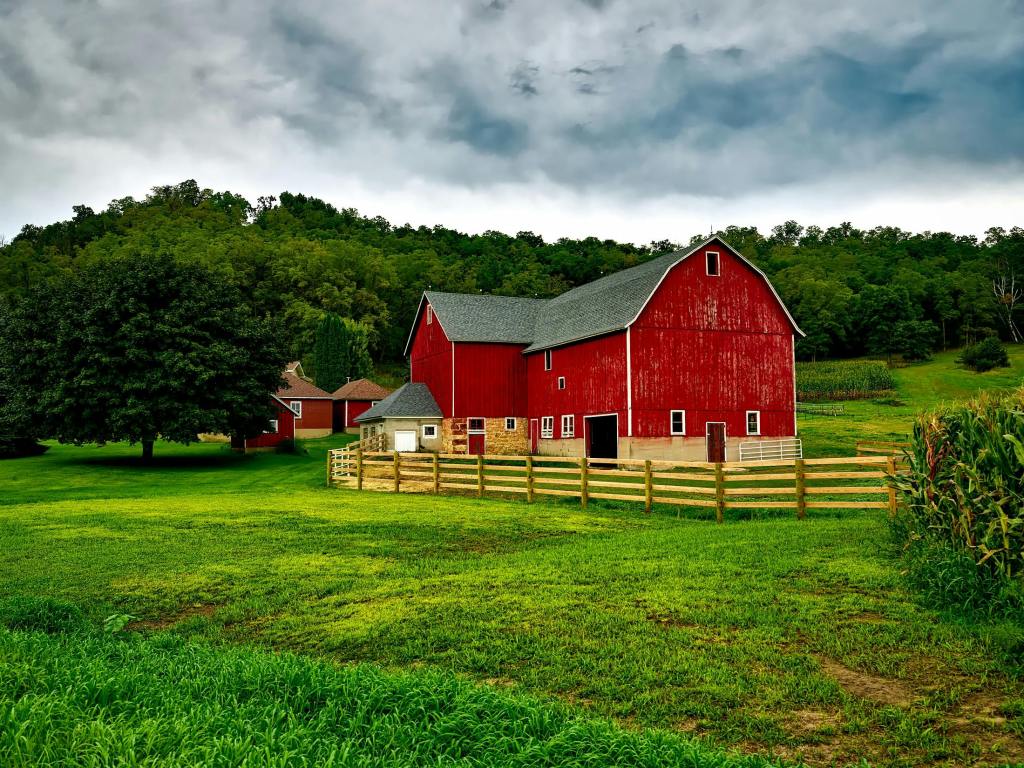
    Photo by Pixabay: https://www.pexels.com/photo/red-barn-235725/

    #JuneDairyMonth

  • The Endless Night

    The digital clock on my nightstand glows an accusatory 2:13 AM, its red numbers burning my retinas.  As I roll over for the thousandth time, the sheets tangle around my legs.  My bedroom, once a sanctuary, has become a prison cell.  The familiar outlines of furniture loom in the darkness, taking on sinister shapes in the shadows.  The green stars of a night light cast an eerie glow on the ceiling.  The curtains flutter slightly in the breeze from the fan.

    This is only my most recent visit to the space between consciousness and sleep.  Over the last year, my nightly dance with insomnia has left me both exhausted and wired.  My mind races, a carousel of worries and regrets that won’t stop spinning.  Will my mom ever feel better?  Are my kids going to grow up and be decent people?  Why did I say that silly thing earlier today?  Will anyone ever really want to be my friend?  I quickly calculate that if I fall asleep right now, I’d have exactly three hours of sleep.  Anxiety coils in my stomach, a physical presence that drives sleep even further away.

    I focus on my breathing.  In, and out.  In, and out.  My body starts to feel heavy, sinking into the mattress.  And yet there’s a restless energy thrumming through my veins, an incessant urge to move.  I throw off the covers and head to the bathroom, my bare feet padding silently on the faded teal carpet.  I focus on the floor pushing up on my feet, the smoothness of the water glass as I bring it to my lips, the car lights that shine through the picture window as they pass by.  The house creaks and settles around me.  I envy its ability to find peace in the night.

    Back in bed, I toss and turn.  My mind refuses to quiet; every position is uncomfortable.  My pillow is too flat, then too puffy.  The room is too warm, then too cold.  My hips hurt from lying in one position too long, and my arm falls asleep.  I can’t find that elusive perfect spot that will finally let me settle.

    As the night continues, my thoughts take a darker turn.  What if I never sleep again?  How does this affect my mood and stress tolerance during the day?  How can I be patient with my children or be productive at work if my physical needs are not being met? How is this shortening my lifespan?  The fear of sleeplessness becomes a self-fulfilling prophecy, anxiety feeding insomnia feeding anxiety in an endless loop.  I feel myself spiraling, falling into a pit of despair as black as the night around me.  In a short while, my alarm will sound.  The weight of the coming day presses in, squeezing my chest and shortening my breath.  The thought of navigating work, social interactions, childcare, and basic tasks on another empty tank fills me with an indescribable weariness.

    The first hints of dawn begin to creep around the edges of my curtains.  Birds taunt me with their cheerful and energetic morning chorus.  The world is awake, moving forward, while I’m stuck in this limbo between night and day.  My thoughts, so sharp and insistent earlier, begin to blur.  My limbs feel heavy, and I finally surrender to exhaustion.

    All too soon, my alarm clock sounds.  I linger between sleep and wakefulness for a little while longer before rising to start my day.  I clear the crust from my eyes and stretch.  As I stumble to the bathroom, catching sight of my haggard reflection, I make a silent promise to myself.  Tonight, I’ll try something different.  Mindfulness, writing my thoughts and feelings, no coffee past noon.  Anything to break this cycle of sleepless nights.

    In the meantime, I brace myself for the day ahead.  Coffee will be my crutch, and sheer determination my fuel.  I’ll do what I can to show up as my best self today, and then I’ll try again tonight.  Because one of these nights, I will find my way back to the land of dreams and peace.

    I take a deep breath, and begin my day.

    Have you ever dealt with a bout of insomnia? How did you work through it? Share your thoughts below, and subscribe to join a group of like-minded people.

    #insomnia

    Illustration by ands on Unsplash

  • Homemade Family Breakfast with Child Sous Chefs (Hashbrowns, Sausage, Eggs)

    Homemade Family Breakfast with Child Sous Chefs (Hashbrowns, Sausage, Eggs)

    Perfect Saturday Morning Bonding

    It’s a bright morning, the kind of day that feels full of promise and potential. My husband and I are sitting in the living room with our two children, a toddler girl and a 5-year-old boy. Sunlight casts a warm glow over the carpet where toys, books, and a blanket fort are staged.

    The television is broadcasting Saturday morning cartoons, and we discuss our dreams from the night before. The gurgling of the coffeepot can be heard from the kitchen and the smell of coffee wafts into the room.

    The day stretches ahead invitingly with no work or school obligations pressing—a perfect opportunity for family bonding and completing homestead tasks. The pace is unhurried and the mood is light as the cartoons end and I shepherd my family into the kitchen to prepare breakfast.

    Weekend Diner Breakfast from Homestead Ingredients

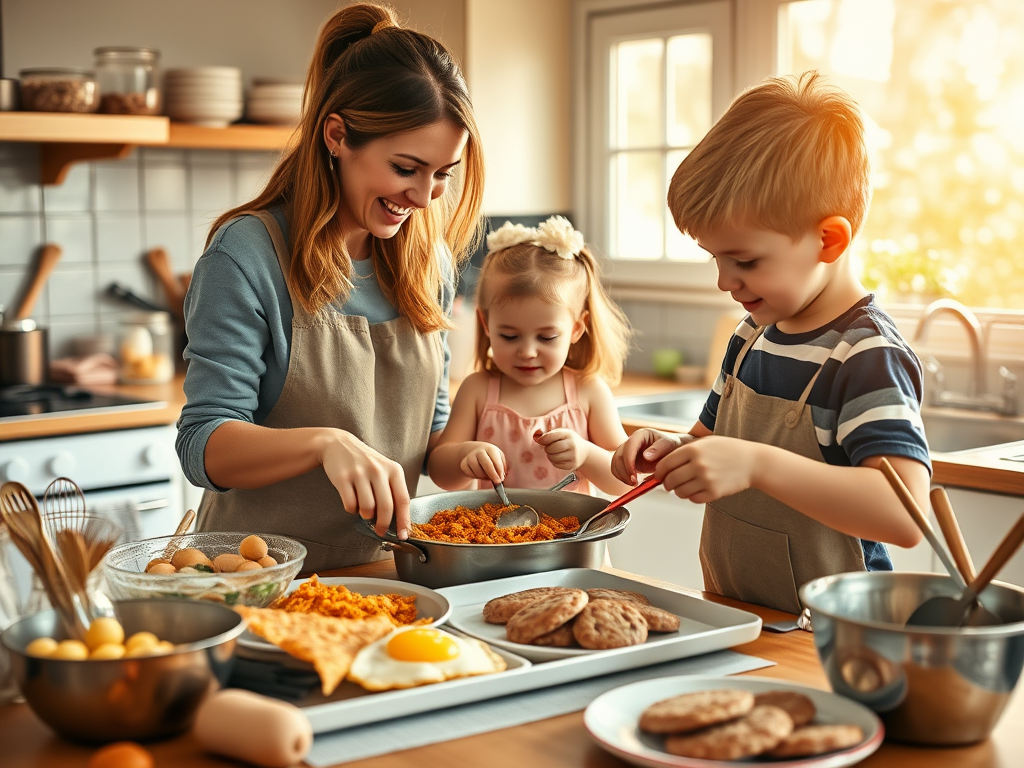
    Weekend breakfasts are a big deal in our household, and I pride myself in making a meal you could order in a greasy spoon diner. I open the refrigerator to discover leftover boiled potatoes, fresh eggs, and the pound of ground pork that defrosted from last night. Based on the contents of the refrigerator, I decide that we will prepare hashbrowns, eggs, and sausage—a classic family breakfast recipe.

    I have two sous chefs and an assistant who will help me prepare the food.

    Cooking with Children: Kitchen Chaos and Teamwork

    I locate the box grater and ask my son to help grate potatoes. He excitedly pushes a chair over to the counter where the potatoes, grater, and cutting board are staged. As he begins to grate potatoes, I hear my daughter screeching in protest as she toddles over to the chair, climbs up, and uses all her strength to push my son off the chair.

    My son grunts in frustration as he struggles to maintain his position, gripping both hands on the counter. Sensing a conflict, I push a second chair over to the counter and place my daughter there. My daughter then contents herself with eating cold potatoes while my son continues his task.

    Homemade Sausage Patties: Family-Sized Recipe

    I proceed to my next job, preparing the seasoning for the homemade pork sausage. I slide past my son and daughter to gain access to the spice cabinet. After spinning the lazy Susan a couple of times, I extract brown sugar, sage, paprika, salt, and pepper, then mix these spices in the proper ratio before adding the ground pork.

    I squeeze the pork/spice mixture, trying to ignore the discomfort from cold exposure. After the sausage is properly mixed, I divide it into 4 uneven balls: a small one for my daughter, a medium one for my son, a large one for me, and an extra-large one for my husband.

    My husband then stages two plates and two pieces of saran wrap, positioning the two plastic pieces between the plates. He places the pork balls one by one between the two plastic pieces, using his weight to flatten the balls into sausage patties.

    The Magic of Cast Iron Cooking

    While my husband is preparing the sausage patties, the cast iron skillet is preheating. As the patties are formed, I place them into the skillet and hear the characteristic sizzle. The kitchen begins to fill with the smell of rendering fat and toasting spices, blending well with the nutty coffee undertones. After the sausage bottoms are properly browned, they release easily from the pan as I flip them.

    Kitchen Helpers Make Hashbrowns

    By this time, my son has grated most of the potatoes, and I place them into a bowl. I also add dehydrated onion, celery, garlic, and green pepper, salt, and black pepper. The sausage patties are removed from the pan and placed on a plate. The rendered sausage fat is used to flavor and brown the grated potatoes. In this way, nothing is wasted.

    Teaching Kids Stainless Steel Pan Science

    As the hashbrowns cook in the pan, I remove the eggs from the refrigerator. I crack the eggs, and my daughter insists on crushing the eggs to release the yolk and white. Some eggshells inevitably find their way into the clear and marigold-colored mixture, but I do not mind expending extra effort to extract them. I add a splash of milk, a few shakes of salt, and freshly cracked pepper. I then pass the scrambling fork to my daughter. She beams with pride as she blends the ingredients. I am close by with a rag to wipe up spills.

    The smell of browned potatoes intermingles with the pork sausage, making my mouth water. I flip the potatoes, remove a stainless-steel pan from my kitchen drawer, place it on the stove, and turn the dial to high heat. The stove clicks to life, and blue flames emanate from the burner.

    I point out the hot stove, then show my daughter and my son how a stainless-steel pan can be made non-stick by heating the pan hot enough for the water to dance rather than instantly evaporate.

    Perfect Scrambled Eggs with Child Help

    Once the pan is ready, I add oil, then ask my son to add the scrambled egg mixture. Steam rises from the pan as the eggs rapidly cook. I trust my son to stir the eggs until they are mostly cooked while remaining close by in case I am needed. When the eggs are ready, they slide effortlessly from the pan onto a plate. I remove the hashbrown skillet from the stove and place it in the middle of the table.

    Family Breakfast: The Reward of Teamwork

    I thank my family for their help with preparing the meal. My daughter has already climbed onto her dining chair booster seat in anticipation. While I finish prepping, my husband places appropriate amounts of eggs, hashbrowns, and sausage on her plate, cuts the food, and allows her to eat. She squeals in approval as she dives into the sausage, then asks for a cup of milk. My son also starts with the sausage, then the eggs, then the hashbrowns.

    My husband and I discuss our plans for the day as we savor our meal and our time together. My son shares interesting facts about his newest fascination, the Titanic. The eggs are creamy and rich with a velvety texture. The pork imparts an earthy, well-rounded taste that pairs well with the crispy exterior and juicy interior. The hashbrowns offer a pleasant balance of saltiness and a satisfying crunch. The trio together makes for an excellent family breakfast recipe, and a great way for me to bond with my family.

    Lessons Beyond the Kitchen

    After breakfast, I collect the dishes to wash. My daughter and my son push chairs to the sink and play in the water while I wash the dishes. As I dip my hands in the warm soapy water, I feel a deep sense of pride in their burgeoning skills. Each small success, whether it’s a perfectly cracked egg or a well-seasoned hashbrown, sparks a gleam of confidence that I know will serve them far beyond the kitchen.

    The warmth of these moments lingers long after the plates are cleared and the dishes are washed. We share stories, swap jokes, and sometimes, simply enjoy the quiet comfort of working side by side.

    These are the moments when our bond grows stronger, forged in the gentle rhythm of morning routines and the shared satisfaction of a meal made together. I treasure these simple rituals, knowing they nourish more than just our bodies. They plant seeds of independence, resilience, and togetherness in my children and our family.

    Years from now, I hope they will remember not just the taste of homemade sausage, but the feeling of belonging, capability, and love that filled our kitchen these mornings. These memories, built one breakfast at a time, are the true sustenance of our family.


    What’s your favorite family breakfast recipe? Share your cooking with toddlers stories below!

    Do you have a beloved tradition in your family? Share your experiences below, and subscribe to join a group of like-minded people.
  • Learning to Let Go: Saying Goodbye to Our Homestead and Pond

    Letting go of our homestead and moving back to our hometown taught me deep lessons about change, motherhood, and the beauty of transient moments.

    A Summer Afternoon by the Pond

    The warm afternoon sun casts a golden glow over our quiet half-acre pond, its surface shimmering gently with ripples that appear to dance in the light breeze. The air is filled with the soft chorus of birds, humming of cicadas, and croaking of frogs. Sunbeams softly illuminate the water, mirroring the expansive blue sky and fluffy white clouds above. The air is fragrant with the crisp scent of freshly mown grass and wildflowers. Around the pond, nature seems to pause, inviting a deep sense of relaxation and contentment. This perfect, peaceful afternoon seems to contain the very essence of summer itself.

    A Little Boy, a Frog, and a Memory

    Near the water’s edge, a barefoot blonde-haired three-year-old boy crouches low, completely absorbed in the world before him.

    His blue jeans are rolled to the knees as he steps into the lukewarm murky water, feet brushing against the soft mud and slippery algae. His tiny hands reach eagerly toward his feet and a cloud of sediment disturbs the surrounding water. His determined eyes reflect the pond surface as he tries to catch the elusive frogs that leap and splash just out of reach. Every time a frog slips away, Andrew’s face scrunches in concentration, his golden brow furrowing as he plots his next move.

    Watching from the porch, I feel the urge to study the shape of him, with dirty knees, hair wild, and cheeks flushed with summer. I smile, waving encouragement, but my chest aches with the weight of what is coming. In a few short weeks, this pond, this homestead, our home of five years, will belong to someone else. The frogs will leap for other children, and the sun will set on different faces. I try to root myself in the moment, to let the warmth of the day and the joy in his eyes completely fill my heart. But the knowledge of our impending move threads through my happiness, tightening into something poignant and precious.

    Motherhood, Growth, and Letting Go

    This pond bore witness to my own personal growth as I learned to become a mother, deepened my relationship with my husband, and had moments of intense joy and agonizing struggle while living on our homestead. Here is where we hosted countless cookouts, campfires, and nature walks with family and friends. Leaving feels like closing a chapter of my own story as a young mother learning to let go.

    With a sudden splash, he emerges from the water with a frog, holding it a little too tightly in his hands as it attempts to wriggle away. My son’s delighted laughter carries a joyful, pure, infectious energy as he calls me over to admire his trophy, pants completely soaked. I walk toward my son as he clutches his frog, eyes squinting against the sunlight. I kneel in the grass beside him and observe both the frog’s slick skin and legs tensing to spring. I reach out to steady his hand and for a heartbeat, the world narrows to just the four of us: my son, the frog, me, and his unborn sibling kicking in my womb.

    His wonder-filled eyes and rudimentary language work hard to persuade me to keep this frog as a pet as he prepares a makeshift house comprised of a plastic coffee can full of water and a couple sticks. As he looks at me, I try to memorize the sound of the breeze in the cattails, the way the pond smells of earth and water, the exact shade of green on the frog’s back. Every detail feels urgent, as if I can hold onto this place by sheer force of will to preserve it for both my children. I cannot escape the fact that this memory is being made even as it slips away, colored by the bittersweet certainty that some joys can only be borrowed, never kept.

    Learning to Let Go of a Place

    The meaning of this moment is not lost on me. My child wants to keep this frog as much as I want to make this moment stretch forever. He has connected with a wild, living creature and felt its energy. But the frog cannot be kept forever, and holding on for too long will only hurt it. In the same way, me clinging to life’s transient joys and sorrows will only lead to disappointment and loss.

    With watery eyes and a softer tone than I intend, I urge him to release the frog back to the pond. I encourage him to appreciate his brief time with the frog, but the frog’s nature is to leap, move, and be free. He looks blankly at me, oblivious to the undercurrent in my words or my tear-streaked face. For a moment, I envy him his innocence. After some thought, he reluctantly liberates the frog, and we watch as it vanishes below the pond surface with a flash. I commend Andrew for his empathy for all living things.

    As I watch him immediately crouch down to try catching another frog, I reflect on the parallels of this moment to my own current struggles. He honored the frog’s nature and the flow of life. Similarly, I need to embrace change for me to grow, adapt, and appreciate the beauty of each moment.

    Just as I have encouraged my son to cherish his brief encounter with the frog, my impending move urges me to be fully present and savor this moment by the pond, knowing that this may be my last memory here. Embracing the fact that each moment is transient is what makes our experiences richer, our relationships deeper, and our gratitude more profound.

    Saying Goodbye to Our Homestead

    We are moving back to our childhood hometown to make space for new and strengthened connections, revisited childhood memories, and renewed growth. I must trust that the next chapter will bring its own unforgettable moments as we welcome another child into the world while continuing to provide my son with rich experiences. I allow myself to feel both grief and optimism and remind myself that there is a unique beauty in the ephemeral impermanence of life.

    I carry the most meaningful gifts—the memories, lessons, and love—from this place no matter where life takes me. I pause to honor this space for its teachings and guidance over the past five years and prepare to say a heartfelt goodbye.

    Watching my son catch and release frogs has reminded me that I cannot hold on to anything forever, but I can cherish each memory, embrace change, and find beauty in the dance of constant transformation. In letting go, I invite myself to truly live.

    Join the Conversation

    Have you ever had trouble letting go of a place, a season, or a chapter of your life? Share your story in the comments below, and subscribe to join a community of like-minded people learning to embrace change together.

  • The Power of Local Food: Lessons from Ethnic Cooking

    Until I attended college, I believed that cultural influences on food were largely a thing of the past.  I grew up in a part of small-town Wisconsin where the cultural influence of my German dairy farming heritage had diminished over the years.  Regional dishes, while still present, were largely nationalized.  Food was sourced from boxes at the grocery store in the wintertime.  Even in summer, the food from gardens supplemented our dishes, but were never the bulk source of our food.  Farmers’ markets were present, but we did not patronize them.  I thought this was how everyone lived.

    The first chance I had to learn about different culinary experiences was after I started college in Madison, a nearby city.  From childhood on, I had always wanted to learn how other people lived, and suddenly I was surrounded by many different cultures.  European, Asian, and African cultures all coexisted together on campus, practically begging for me to observe their customs.  During my 6-year undergrad and graduate school tenure, I made Asian dumplings, drank Turkish coffee, watched African dance, and had hot pot many times with such great company.

    Towards the end of undergrad, I began working in a soils lab, performing experiments to better understand the swelling properties of bentonite clay.  For a person who majored in geological engineering, it was a dream come true and my first real job in my chosen industry.  Although the work was tedious and painstaking, I felt like I was finally flourishing as a professional.  And it beat one of my previous jobs of counting corn kernels.

    During this time, I frequently ate lunch with my Chinese coworker, whose parents had recently immigrated to Madison from China. I was always fascinated with his lunches.  Every day, he ensured he ate every morsel of food on his plate, saying “Every grain of rice is a drop of sweat from a farmer’s brow.”  His sautéed wood ear mushrooms looked delicious every time he brought them, which was frequently.  In turn, he seemed fascinated with my own solo culinary exploits during “spaghetti week”, the time I inadvertently made a pot of spaghetti so large it lasted for a whole week’s worth of lunches and dinners.  I was only too happy to share some with him, as anyone who has made too much spaghetti knows.  We became such good friends that he gladly accommodated me at his parents’ house during “Homeless Night”, the one night every year when the apartments near campus are prepared for next year’s leasers, and I needed a place to stay.

    That night, I was excited to ask how I could help him prepare supper.  The rice cooker was already humming as he grabbed a knife and basket and gestured me to follow him to his back yard.  Just outside the door was a green grass carpet about 6 inches tall and the footprint of a child’s backyard swing set.  These were Chinese chives, also known as garlic chives.  The patch was (and still is) the largest I had ever seen.  Using the knife, he carefully severed handfuls of chives at the base, leaving an inch for the stubs to regrow.  He slowly filled his basket, then proceeded to lead me back to the house.

    I kept him company that night as he prepared the most delicious sauteed Chinese chives over a bed of rice.  The wok sizzled as he poured in the oil then added the chives.  A faint allium smell wafted over to me as he added salt and pepper to taste.  Dinner was on the table in short order.  The chives were garlicky, salty, and chewy.  The rice was fluffy and perfect.  He prepared another dish, but for the life of me I cannot remember what it was.

    Ethnic traditions and edible landscaping were not completely new concepts at the time.  My family grew asparagus, horseradish, and rhubarb, perennial plants that were beautiful as well as being edible.  But it always seemed that these foods augmented a grocery store-sourced meal, not the other way around.  That simple dinner that my friend prepared was the first time I truly observed the power of the “outdoor pantry” in action.  Fresh, local food that comprises much of your dinner can be as close as your backyard and eaten within an hour of harvesting.  That meal made an indelible mark on me, and I’ve strived to source the bulk of my meals from local sources ever since.

    I’ve lost contact with this friend in the intervening years.  I moved several times, got married, and had 2 wonderful children.  Last I heard from him, he was still in Madison and enjoying himself.  If he’s reading this, I wish him well as he’s moving through life.  Your humble meal inspired me to prepare many simple delicious meals from my backyard.

    My personal priorities have changed over time, but my feelings about food remain unchanged.  I have been successful in expanding my food preparation skills over the years, learning to bake bread, preserve vegetables, and ferment cabbage into sauerkraut, a practice in line with my cultural heritage.  I have even started growing mushrooms for our table.  I still remember my friend from time to time as I establish and expand my chives patch or harvest an especially large bounty of food to share with family and friends.

    Did you learn something valuable from another culture? Share your stories below, and subscribe to join a community of like-minded people.