Author: fzangl1

  • Planting Hope in September Soil

    The soil was cooler than I expected when I slipped a broccoli seedling into the ground. September isn’t when I usually think about planting—it’s when I imagine gardens winding down, not continuing. For me, gardening has always belonged to summer: long days of pulling weeds at dusk, arms full of cucumbers, nights spent rushing to preserve tomatoes before they spoiled. Autumn was the season of rest.

    So when a friend suggested I try a winter garden, I almost laughed. Planting in September felt backward, like trying to swim upstream. But then she handed me a book that shifted something in me. In its pages, I found a different vision—a garden not tied to warm sunshine, but to patience, persistence, and a new rhythm of growth. I couldn’t shake the image: trudging through February snow, easing open a greenhouse door, and being met by the earthy smell of soil. Lifting a weathered tarp to reveal lettuce, radishes, and onions waiting in the stillness of winter. Life where I least expected it.

    That’s why, today, kneeling in the cool dirt, I realized I wasn’t just planting broccoli. I was planting a small act of faith. A promise that when the days grow short and the world feels bare, there will still be something green, something alive, something reminding me that growth doesn’t stop just because the season changes.

    Trying something new can feel strange, even uncertain—but maybe that’s the point. Maybe growth isn’t about holding on to what we know, but about daring to believe in what we don’t yet see.

    So here’s to this September soil, to the broccoli tucked beneath it, and to the quiet hope that will carry me through the cold: the belief that life is still unfolding, even in winter.

    Have you ever tried planting something outside the “normal” season—what did it teach you about growth and patience? Share your experiences below, and subscribe to join a group of like-minded people.

    #WinterGarden #GardeningLife #SeasonOfGrowth #PlantingHope #FallGarden #BroccoliInSeptember #SlowLiving

  • Traveling Light, Remembering More

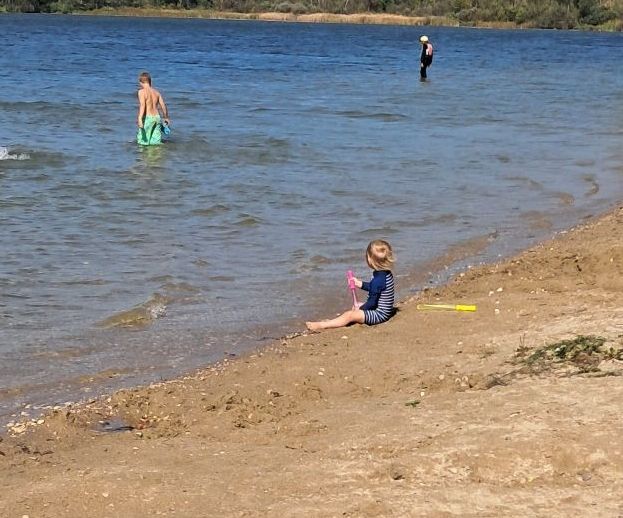
    I didn’t pack bathing suits, beach toys, or even chairs. Just me, two kids—almost six and almost two—and enough curiosity to see what might happen. Some might call it unwise to bring children to the beach without all the usual gear. I half expected chaos myself. But what unfolded that day at Lake Michigan wasn’t stressful at all. It was simple, joyful, and quietly unforgettable.

    The night before, on a whim, I decided we’d spend the next morning at a quiet county park along the lake. No boardwalk, no crowds—just open sand and water. To dodge the holiday crush, I aimed for a mid-morning arrival and an early-afternoon departure, the kind of window that still gave us sun but also let my daughter keep her nap.

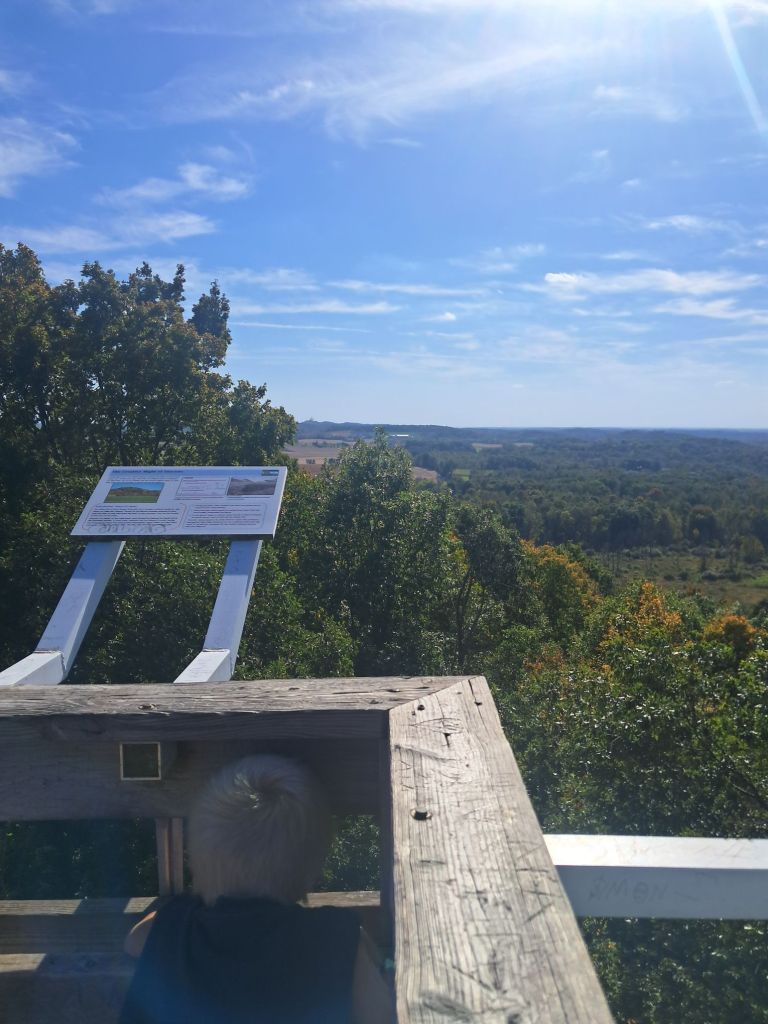
    Even the drive became part of the adventure. Late summer light spilled across the Wisconsin hills, glancing off barns that leaned like tired elbows and threading silver into the rivers. My son sat at the window firing off questions as quickly as the scenery changed: “Why do hills rise like that? Why does the river bend? How do boats float if they’re heavy?” I answered as best I could—part science, part wonder—hoping not for perfect explanations but for him to feel that his questions mattered.

    When we finally pulled into the near-empty lot, my daughter was close to dozing off. But one glimpse of sand and water jolted her awake. She squealed, pointing first at the playground, then the waves, kicking her legs until I set her free. Her brother didn’t wait for permission; he sprinted toward the lake, shoes already tumbling behind him like breadcrumbs.

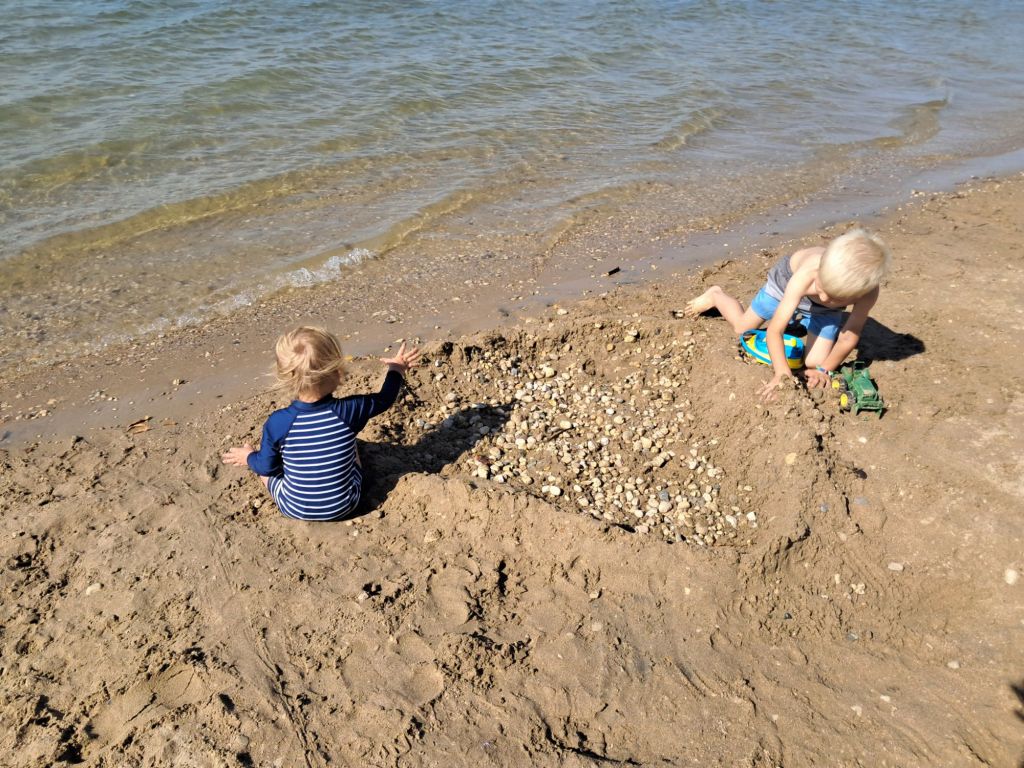
    The first steps in were cautious—the water cooler than we expected, toes retreating from the foamy edge. Within minutes, though, hesitation gave way to shrieks of laughter. We sprayed arcs of water, dug down until the sand swallowed our ankles, and filled pockets with chipped shells. My daughter crouched at the edge, giggling as the water tickled her toes while her brother shouted whenever he spotted glints in the sand that might be treasure.

    By noon, hunger caught up with us. On a car blanket, we unpacked leftovers—chicken strips and potato wedges—now lightly dusted with grit. A bite crunched the wrong way, and my toddler burst out laughing, calling it “crunchy chicken.” Her brother joined in, and somehow the sand didn’t matter anymore; giggles carried the meal.

    Our day settled into small turns and trade-offs. My son itched to dig holes while my daughter tugged toward the swings. I only wanted the luxury of watching them both without rushing. Even at two, she seemed to understand that we couldn’t each get everything at once. But her delighted squeals when the waves nudged her knees softened her disappointment at leaving the playground sooner than she wished.

    By early afternoon the trickle of families had turned into an incoming tide—umbrellas, coolers, floaties piled high. We had timed our escape just right. After one last climb, swing, and sandy slide, we gathered our belongings—lighter than most, heavier with tiredness—and headed back to the car.

    On the way home, we stopped at cheese store that doubled as an ice cream shop. By the time the highway unspooled beneath us, my daughter had slumped into sleep, cheeks sticky and sun-warmed. My son, eyes bright in the rearview mirror, recounted his favorites—the boats, the splashing, the shells—already asking when we could come back.

    That’s when it struck me: we hadn’t missed the beach toys, the swimsuits, or all the elaborate preparation. What we had was enough. More than enough, really—an unbroken stretch of laughter and sunlight stitched together by their curiosity. Parenting rarely feels simple, but that day it did. And that simplicity—the kind that travels home in sandy shoes and chocolate-stained cheeks—is the treasure I’ll keep long after they’ve outgrown my arms.

    Have you ever skipped the gear, the planning, or the ‘rules’—only to discover the best family day came from keeping it simple? Share your thoughts below, and subscribe to the link below to join a group of like-minded people.

  • When Egg Prices Crack, Local Farms Hold Steady

    Just months ago, the price of eggs soared past $7 a dozen—triple what most people were used to paying. A food so ordinary it’s almost invisible suddenly looked like a luxury. Prices have since eased, but the memory lingers: how did something so basic get so expensive? And why did the shock land so unevenly—upending some farms while leaving others steady?

    On our farm, a dozen eggs still sells for $4. That number has barely budged in years. While supermarket prices swung wildly, ours held firm. The contrast is more than a curiosity. It hints at how food really travels from barnyard to breakfast table.

    The spike began with avian influenza. In 2022 and 2023, the virus swept through major poultry operations, wiping out more than 43 million egg-laying hens nationwide. When a third of the national flock disappears, supply collapses and prices shoot up. Industrial farmers also faced surging costs for feed, fuel, and transport. A production system designed for tight efficiency became brittle: when disease struck, the whole country felt it at the checkout line.

    Small farms like ours face the same threats, but the impact lands differently. Three features matter most:

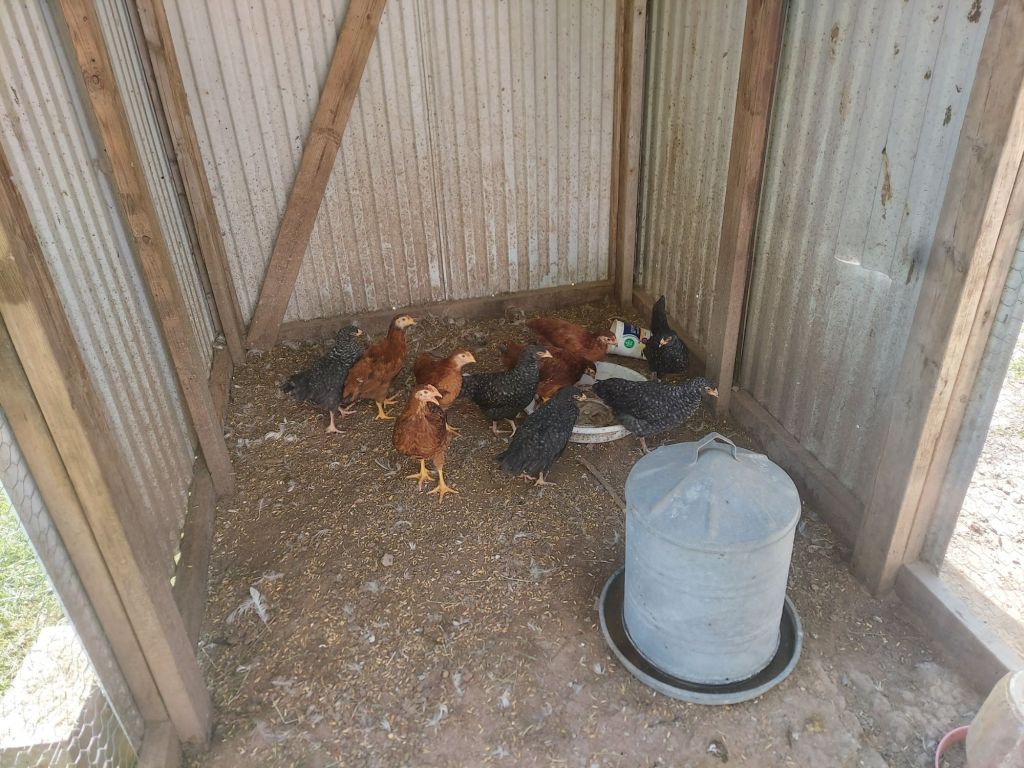
    • Flock diversity. We keep mixed-breed, free-range hens. Losing a handful to illness is painful, but a single disease rarely jumps across breeds with equal force. Uniform flocks in industrial barns don’t have that buffer.
    • Local sourcing. Most of our feed comes from what we can grow or source locally. Last winter, when global grain costs spiked, our stockpile of grain grown during the previous year was still there, and the cost to produce it did not change. That insulation saved us from the roller coaster.
    • Short supply chains. Our eggs travel from our house to their house, a distance of less than ten miles, not five hundred to a distribution hub. Fuel hikes and cold-storage fees barely touch us.

    That structure explains why our price holds steady. $4 a dozen looks high when the grocery store is running specials at $2. But when shelves empty or sticker shock sets in, suddenly our carton looks like the bargain. What customers are buying isn’t just eggs—they’re buying reliability.

    Of course, small farms can’t replace industrial ones. We don’t feed cities by the million, and local food generally costs more up front. Volume and convenience still matter. But the lesson of the egg crisis isn’t that one system must win. It’s that balance matters. Industrial agriculture delivers abundance when conditions are smooth. Small farms deliver stability when they’re not. Together they form a more resilient food web than either system could alone.

    And “smooth” is becoming rare. Disease, war, fuel shocks, and extreme weather tug constantly at a tightly wound system. When that system cracks, as we saw with eggs, the cost gets passed to the consumer.

    There’s another way to measure value. It’s not the absolute lowest price when times are calm—it’s the carton that’s still there, at the same price, when times are not. In food, resilience isn’t a luxury. It may be the most essential ingredient of all.

    Next time you crack an egg into the pan, think about how far it traveled to get there. If you want your breakfast to come with stability as well as protein, consider keeping part of your food dollar close to home. The steadiness might taste better than you expect.

    What is the true cost of cheap food—and what values should guide us when something as everyday as eggs suddenly becomes a luxury? Share your thoughts below, and subscribe to join a group of like-minded people.

    #FoodSystem #LocalFood #FarmFresh #FoodResilience #EggPrices #KnowYourFarmer

  • The Morning I Chose Connection Over Correction

    My mom was in the hospital, I wasn’t sleeping, and the stress had nowhere to go. So I poured it onto my five-year-old son.

    Every morning before preschool, I’d launch into lectures from the driver’s seat—how he should control his feelings, how he should handle surprises better, how he needed to “do better today.” He sat quietly in the back, light up sneakers kicking against the seat, eyes fixed out the window. Sometimes he nodded, sometimes he didn’t react at all. The more I talked, the less he seemed to hear. And while I was busy trying to coach him into self-control, I didn’t notice my own unraveling. His teacher had told me he struggled with disappointment and unexpected changes, but the truth was, so did I.

    Stress made me brittle. With my mom in the hospital for weeks, I spent nights waiting for the phone to ring and mornings running on fumes. Exhaustion made me impatient; anxiety made me overbearing. Instead of softening for my son, I doubled down on discipline. His behavior improved slightly, but the tension between us never eased.

    This year, though, life looks different.

    My mom has mostly recovered and returned home. I’m finally sleeping again. And most importantly, I’ve come back to writing—an outlet I abandoned during the family crisis but now recognize I had been starving for. Writing allows me to pour out my tangled emotions in a healthier space, so I no longer flood my son with them. I’m lighter. Calmer. More myself.

    And my son? He’s started 5K. A new school year, a fresh chance. Part of me still worries the old patterns will follow us, but another part of me knows I don’t have to repeat the same mistakes.

    So, instead of lecturing him on the way to school this morning, I tried something new. “Want to hear a story?” I asked as we buckled in.

    His head lifted immediately. His eyes lit up. He was paying attention in a way I had never been able to force with warnings and correction. And so, I began.

    I told him about a clown who desperately wanted to make people laugh, but everything he did scared them instead. No matter what silly trick he tried, everyone screamed. But the clown refused to give up. Day after day, he reflected and made tiny changes. He adjusted his timing, brought out a joke book, experimented with new approaches. Slowly, he improved. Over ten years, he transformed from the “worst clown in the world” into one of the very best.

    When I finished, the car was quiet. For a moment, I worried I’d lost him. Then he smiled softly. “That was a nice story,” he said. Before we parted, he leaned forward for a hug before heading off with his backpack bouncing against his shoulders.

    And I just sat there.

    Last year, I believed I could lecture him into resilience. What I see now is that children don’t learn resilience through pressure; they learn it through connection, imagination, and seeing us model patience. The clown’s gradual improvement mirrored my own—incremental, imperfect, but real.

    I don’t know exactly how his kindergarten year will unfold—parenting never guarantees smooth roads. There will be meltdowns, and I’ll misstep plenty, too. But today, we entered the day differently: not with lectures, but with a story, a smile, and a hug.

    For now, that feels like enough. And for the first time in a long time, I believe this will be a good year.

    When you’re under stress, how do you stop it from spilling onto the people you love most? Share your experiences below, and subscribe to join a group of like-minded people.

  • What I’d Tell My 18-Year-Old Self About College (and Life)

    If I could redo college today as a 35‑year‑old woman, I’d walk onto campus with an entirely different posture. At eighteen, I arrived dragging oversized duffel bags and underfed confidence, convinced everyone else had already cracked the code. Their confidence looked natural. Their social circles seemed impenetrable. Their futures felt mapped out while mine was a messy question mark.

    Back then, most of my energy went into comparison. I ranked myself on an invisible ladder—grades, clothes, friendships, social ease—and always landed near the bottom. I believed belonging had to be earned through achievement, so I shrank, keeping myself half‑invisible until I felt “good enough.” That mindset left me fragile: a casual comment, a professor’s red pen, even a raised eyebrow could rattle me for weeks.

    When stacks of unread textbooks loomed, I froze. Instead of tackling the work, I’d retreat: shutting myself in a dark dorm room, numbing the panic with boxed pizza and back‑to‑back episodes of Law & Order: SVU. What I didn’t understand was that avoidance doesn’t make fear smaller; it makes fear grow. I was too busy surviving to enjoy the very experience I had worked so hard to reach.

    It took years—and the perspective of adulthood—to see that nearly everyone was winging it. Even the confident ones had doubts, failures, lonely nights. People are usually too consumed by their own struggles to keep score of mine. Even when they do notice, it’s rarely as deeply as I feared.  Realizing that was liberating: I didn’t need to perform for an invisible panel of judges.

    I’m also less reactive now. In college, I let my emotions take the wheel—anger when ignored, shame when corrected, hurt when overlooked. I thought every slight needed defense. Life since—jobs, relationships, children—has taught me something quieter: not every battle calls for a rebuttal. Sometimes the strongest response is no response. Space gives perspective, and perspective softens storms. I can see how much peace my younger self might have found if she had just paused to breathe first.

    If I had the chance to do those years again, I would build them differently. I’d value connection over perfection: raising my hand, showing up at office hours, lingering at geology field‑trip campfires. I’d take risks—go on the trip, speak up even when my voice shook, walk into friendships with curiosity instead of fear. I would see grades as just a sliver of the picture. The real education hides in courage, in the people you meet, and in the person you slowly become.

    The past isn’t rewritable, but hindsight isn’t wasted—it translates forward. What I couldn’t practice at eighteen, I practice now: breaking work into steps instead of freezing, savoring learning for its own sake, pausing before reacting, asking questions without apology. The lessons I missed then return in other classrooms: my workplace, friendships, my failures, and the quiet recoveries after them.

    Sometimes I imagine sitting on that dorm floor again, beside my younger self. I’d hand her a slice of cold pizza and say, gently: You’re fine. You belong here. Stop trying to earn permission. Speak up, stumble a little, say yes. This is not about proving yourself; it’s about becoming yourself.

    What I know now is this: school never really ends. We keep learning—resilience, patience, love, and the shape of who we are becoming. That’s the lesson I wish I had known then: growth doesn’t wait for degrees. It happens every day, if you let it.

    If you could sit beside your younger self in their most vulnerable moment, what’s the one piece of advice you’d whisper to them? Share your thoughts below, and subscribe to join a group of people who love personal development.

    #LifeLessons #CollegeReflections #GrowthMindset #IfIKnewThen #WisdomInHindsight #BecomingYourself

    Photo by Christina Bozh on Unsplash

  • The Place with the Two Blue Silos

    If you’ve ever driven through the Midwest, you’ve seen silos. They rise from the fields like punctuation marks in the long, flat sentences of corn and beans—periods, exclamation points, sometimes ellipses trailing off into the distance. Most people don’t think twice about them. But on my childhood farm, they weren’t just part of the scenery. They were the story.

    Our landmark was unmistakable: two midnight‑blue Harvestore silos standing side by side at the edge of the barnyard, a glacial drumlin lifting in the west behind them. You could see them from miles away, shining like church steeples in the sun. Whenever someone asked for directions, the answer was simple: the place with the two blue silos. No map required—just look for the cobalt towers breaking the horizon. That was home.

    As a child, they seemed impossibly tall, almost otherworldly. I’d tilt my head back until my eyes watered and my neck ached, trying to catch the curve of their domes. Birds wheeled around their crowns, dust curled at their bases, and summer storms lit their sides with a brilliance that made them glow as if lightning paused there on purpose. They weren’t just farm equipment; they were guardians, keeping watch over our days.

    With time, though, I learned they carried a complicated legacy. For my parents’ generation, a Harvestore wasn’t just storage—it was a pledge to the future. The glossy blue walls promised fresher feed, healthier herds, easier labor. To build one was to take a stand for progress, to believe that farming could evolve and endure.

    But by my childhood, that faith had thinned. Repairs were costly. Lawsuits and disappointment trailed the company’s once‑gleaming reputation. Neighbors grumbled about cracked panels and complicated unloaders; some tore their silos down, hauling away the dream they once anchored. Ours, though, remained. Not because they worked flawlessly, but because they had become more than machinery. They held memory as much as silage—hope, pride, stubbornness, and the refusal to let go.

    The longer I live away from that farm, the more I realize those silos were never only about feed. They were about identity—the way families pin themselves to symbols long after the shine has dulled. They remind me of the uneasy truth that progress is both promise and burden, that we measure ourselves by what rises from our yards: a new tractor, a bigger shed, two blue towers that said we belonged to an era of ambition.

    Even today, when I drive through farm country, my eyes scan the horizon for Harvestores. Some still gleam, others lean into rust, many stand abandoned. Each one is its own monument: to the optimism of a certain time, and to the hard reckoning that followed. When I spot one, I don’t just see steel and glass. I see the soft evenings of my childhood—when the setting sun stained our silos deep indigo and anchored me to a place I’ll always claim as home.

    That farm doesn’t need to be drawn on any map. For anyone driving those roads, the directions are still enough: look for the two blue silos.

    Have you ever had a landmark—on a farm, in a town, or in your neighborhood—that became more than just scenery, something that carried your family’s history or identity? Share your thoughts below, and subscribe to join a group of like-minded people.

    #FarmHeritage#RuralRoots#HarvestoreHistory#SymbolsOfHome#MidwestStories#HeartlandMemory#FarmLegacy#LandmarksOfLife

  • Carrying Their Lessons: A Career Woven with Connection

    Carrying Their Lessons: A Career Woven with Connection

    The first time I heard, “Good morning, men!” echo off the beige cubicle walls, I felt invisible, a ghost in a room full of voices. Fresh out of grad school and just one of two professional women in the office, I was convinced someone would soon discover the imposter I believed myself to be: a farm girl, unversed in technical jargon, pretending at professionalism. I knew the morning greeting was a matter of habit, not malice. Each day, I replied, sometimes timidly, sometimes with a wry smile, wondering when I would truly feel I belonged.

    I remember my first lunch with the team, sitting quietly and listening to stories about the “old days,” still unsure of my place. But gradually, I learned the nicknames, the inside jokes, and the rhythm of conversation. Slowly, I began to feel less like an outsider and more like a thread in the fabric of the office.

    A decade later, it’s not only the projects or deadlines I remember, but the faces, the laughter, and above all, the lessons that shaped me.

    Mentors Who Made a Mark

    I’ve been fortunate to know incredible mentors and colleagues, each leaving an indelible mark on my life. While there are too many to count, a few stand out.

    One mentor had vibrant white hair, a tall, stocky frame, and a booming laugh that filled any room. He seemed to know something about everything, and a quick question could turn into a story about baling hay or bowhunting. Kind and generous, he once gave me a Christmas tree we still use and delivered a bucket of shucked hickory nuts to my parents’ house. He taught me the importance of being well-rounded and thoughtful.

    My next mentor was quieter and more athletic, sometimes inviting me on lunchtime runs. When I traveled somewhere for vacation, he would pull out a full atlas book to know where I went and how I got there.  Humble and never seeking credit, he gave me the freedom to shape my own career. When I had my first child, he sent me a book of Shel Silverstein poems:  a small gesture that meant a lot. From him, I learned the power of consideration and quiet strength, especially during difficult times.

    My current mentor is eclectic and curious, always ready for a conversation about travel, music, or food. He and his wife hosted annual casino nights for the team, opening their beautiful home for games and laughter. He supported me through my second parental leave, making sure I felt secure both at work and at home. Above all, he has shown me the value of technical expertise and the importance of asking questions until you truly understand.

    Remarkably, as each manager neared retirement, I was invited to help choose my next:  a gesture that showed trust and confidence in my growth. Now, at another crossroads, I reflect with gratitude on the lessons each mentor has given me and how their trust has shaped my path.

    Influences Beyond the Office

    Some of my most valuable mentors didn’t even work at my company. Early on, I admired an independent consultant whose work embodied the values I aspired to. Five years in, I finally had the chance to collaborate with him as he neared retirement and needed someone to take over his projects.

    He taught me not just technical expertise, but also patience, generosity, and professionalism. He trusted me with clients and never dismissed my questions, no matter how many I asked. Working alongside him, I learned that true expertise is as much about attitude as it is about knowledge.

    The Power of Female Friendship

    Among my colleagues, one woman became a touchstone in my career. A few years my senior, she joined two years after I did, bringing warmth, experience, and a collaborative spirit. I watched her build a specialty team, get married, and become a mother:  all while excelling at work. She proved it was possible to thrive both personally and professionally.

    She organized workshops and social events; “palette and pub” nights became some of my favorite workplace memories. She supported me through major life changes, introduced me to a line of work I love, and showed that kindness and competence can most certainly go hand in hand.

    Her recent departure left a void. Her going-away lunch was bittersweet:  filled with laughter, memories, and the kind of black humor that perfectly encapsulated our office spirit.

    Seasons of Change

    Each retirement and departure has been challenging in its own way, pushing me to grow. It would be easy to settle into routines and resist change, but my coworkers have shown me, through mentorship, friendship, and example, the importance of adaptability, resilience, and gratitude.

    I remember my first time leading a client call after one of my mentors retired. Pacing nervously, I could almost hear his voice reminding me that questions are good. Of course, I made mistakes, but I learned to recover, laugh at myself, and keep moving forward.

    The office itself has changed too:  weathering downturns, celebrating promotions, and rallying around coworkers in times of need. There are inside jokes that have lasted years, traditions like the annual chili, soup, and dessert cook-off, and spontaneous celebrations when someone passes a certification exam or secures a new client. New faces bring fresh perspectives, but the spirit endures:  a place where people care for each other, and coworkers’ new children are still celebrated with Kringle, one per kid.

    Looking Forward Looking back, my admiration and gratitude for my coworkers is immense. They have shaped not just my career but my character:  supporting me through milestones and helping me become a better version of myself. As the next chapter unfolds, I am ready to pay it forward, mentoring the next generation and sharing the gifts I’ve received.

    Who has been a mentor or colleague that left an indelible mark on your career, and what lesson from them do you carry with you today? Share your stories below, and subscribe to join a group of like-minded people.

    #MentorshipMatters #CareerGrowth #LeadershipLessons #WorkplaceCulture #GratitudeInLeadership #ProfessionalJourney #CareerReflections #PayItForward

    Photo by kate.sade on Unsplash

  • A First Day for Both of Us

    This morning I realized that for the first time in nearly six years, my son will spend more waking hours away from me than with me. Tomorrow, he starts Kindergarten—8 am to 3 pm, five days a week. That single fact tightens my chest with a swirl of emotions: pride at the boy he’s becoming, excitement for what lies ahead, and a quiet ache that childhood is already stretching outward, faster than I imagined.

    He has always been more than just my firstborn—he’s been my partner in the rhythms of our home. Long before anyone asked him to, he stepped into the role of big brother with gentle authority. When his sister cries, he’s often the first to soothe or share his snack. He transforms chores into “missions,” making up systems and games the way only a five-year-old burgeoning engineer could. Where some children run away from responsibility, he seems to run toward it.

    Creativity pulses through everything he touches. A pile of bolts and wood becomes an articulating loader. A mundane cleanup turns into an exuberant Rube Goldberg chain reaction, laughter ringing as he proves it can work. Even when his energy overwhelms me—or when my patience runs thinner than I’d like—those flashes of frustration fade quickly into the larger truth: this is a boy brimming with imagination, kindness, and light.

    And now, Kindergarten.
    The world is about to widen for him—and, if I’m honest, narrow a bit for me.

    Every parent knows this moment comes, and yet when it finally arrives, it feels both ordinary and monumental at once.

    For years, his presence has been stitched into nearly every corner of my days: the sound of him humming while building, the way he shadows me from room to room. Tomorrow, the house will hold a new kind of quiet.

    Of course, he’s ready. He’s capable, curious, resilient—more than prepared to make friends, face challenges, and discover new parts of himself beyond my orbit. But readiness doesn’t erase tenderness. Because it isn’t only his milestone—it’s mine too. Tomorrow, I’m not just watching him step into a classroom. I’m practicing the art of letting go.

    Still, I imagine the moment at 3 o’clock: the doors swinging open, his backpack bouncing behind him, his cheeks flushed from a day full of new stories. I’ll see him running toward me, and I’ll know—the bond between us hasn’t shrunk in the slightest. It’s only grown larger, stretched across the space between home and school, making room for him to flourish.

    And that is the quiet gift of Kindergarten: not just that he is ready to step into the world, but that I am learning how to give him the space to grow in it. 🌱💛

    ➡️ For those who have walked this road before—what was the moment you realized your little one’s world was beginning to grow bigger than your own, and how did you navigate that shift? Share your stories below, and subscribe to join a group of like-minded people.

    #KindergartenJourney #FirstDayOfSchool #ParentingReflections #LettingGoAndGrowing #ParenthoodMoments #RaisingKindHumans #BittersweetMilestones #ChildhoodUnfolding #ParentingWithHeart #OrdinaryAndMonumental

  • Unmuted: Laughing Together at Last

    I never expected to feel this nervous just walking into a donut shop. The bell above the door chimed softly, and I paused—heart rattling, palms damp against my blue Yeti water bottle. The air was thick with sugar and dough, but I wasn’t here for pastries. I was listening for a voice I’d only ever heard through a laptop speaker, wondering if the easy laughter we’d shared across years of meetings and screens would feel the same in person. What if it didn’t? What if the connection I’d leaned on for the past two years dissolved under fluorescent lights and powdered sugar?

    As I waited, memories pressed in. In late 2019, I became a parent. Just as I was finding my postpartum rhythm, everything collapsed into lockdown—the office dark, daycare shuttered, my carefully drawn plans erased overnight. I worked with my son strapped to my chest in a faded carrier, answering client calls in a whisper and typing emails during his naps, his small breaths rising and falling against my shirt. Days blurred: Teams calls splicing with supper, laughter from colleagues mixing with the gurgle of my baby.

    And through those strange years, I built relationships that somehow felt intimate without ever being fully real. Colleagues became friends across time zones—from Washington D.C. to Washington State. We swapped puns, traded parenting hacks, learned that one always wore a baseball cap, another had a cat that loved to photobomb. But still, I never saw anyone’s shoes. They were voices, faces, pixels—familiar yet unfinished.

    That was what brought me here now, nerves jangling in the donut shop. Screen to handshake. Username to real name.

    The door swung open. Before I saw him, I heard it—that buoyant, unmistakable “hello!” My coworker grinned, taller than I’d imagined, and the shop seemed brighter around him. I reached for a handshake, but he wrapped me in a hug: careful, genuine, years of laughter pressed into one human gesture. And in that split second, I noticed his brown shoes. Something so ordinary anchored him in the real world in a way no video call ever could.

    What followed was a blur: client meetings buzzing with in-person energy, a conference thrumming with voices, a dinner table crowded with fifteen colleagues. The restaurant glowed with sound and light. Glasses clinked, stories overlapped, shoes scuffed beneath the table. I caught myself glancing down, almost laughing at my inability to match this tangle of footwear with the disembodied voices I once knew.

    The difference was everywhere. Online, laughter had always rung crisp and flattened; here it tumbled, messy and contagious, spilling over conversations. Online, quirks were caught in passing—a cat tail swiping across a camera. But in person, gestures and glances wove a richer language: an eyebrow raised across the table, a quick smile before the words landed. Even the iced tea tasted sharper somehow, as though human presence itself added flavor.

    By the last afternoon, as my coworker and I lingered and debriefed a client meeting, I felt the shift. What we’d built on screens had always been real, but being face to face gave it weight. When it came time to leave, I didn’t hesitate. I stepped forward and hugged my friend—this time without the awkwardness of strangers meeting for the first time, but with the recognition of something solid.

    Driving home, the city blurring past, I replayed it all: the nervous pause at the door, the laughter around a crowded table, the shoes underfoot. Connection had sprouted from a distance. But it blossomed in person, where voices vibrate through the air and laughter shakes the body, not just the screen. If someone asked me about the trip, I’d simply smile and say: It’s hard to describe. You think you know people online—but then you hear them laugh beside you, and it suddenly feels real.

    Have you ever “met” someone online, only to meet them in person? Share your experiences below, and subscribe to join a group of like-minded people.

  • Tickets, Trade-Offs, and Tilt-a-Whirls

    We stepped through the county fair gates with twenty ride tickets to last the whole day.

    To my five-year-old son, they were a golden key to unlimited fun. To me, they were a limited resource — and a math lesson waiting to happen.

    The August sun pressed down, bouncing off the metal siding of food carts, warming the air thick with sugar and frying oil. My daughter rode pressed against me in her carrier, legs dangling. My son’s grip on my hand was insistent, his eyes wide at the swirl of lights, music, and cotton candy threaded like clouds on sticks.

    Food first. He inhaled a slice of pizza that bent under its own cheese. My daughter and I nibbled golden little corn dogs, dipping them into mustard between chilly, sweet spoonfuls of chocolate malt. Around us, the whole fair smelled like carnival excess — fried dough and roasted corn braided with the faint, earthy whisper of hay from the barns.

    In the barns, we slowed. Cool sawdust underfoot. Pigs sprawled, twitching in their sleep. Cows blinked at us, slow and old as if they carried time in their eyelids. Ducks moved like a marching band, utterly synchronized. My daughter pressed her palm against the fence, giggling at the goats’ wiry coats, until my son tugged again: “Can we go see the rides now?” He could hardly hold still long enough to notice the animals.

    And so, to the midway. Even in daylight, the rides blazed with flashing reds, blues, and yellows. The Tilt‑a‑Whirl roared and spun as somewhere behind us a game vendor promised, “Everyone’s a winner!”

    At the ticket booth, the glossy sign read:
    $1.50 per ticket, or 20 tickets for $25.

    I slipped the bills across and felt the tickets fall into my palm, brittle and new. Twenty was both so many and so few. I crouched beside my son and set the rule: “This is all we have for rides. Once they’re gone—we’re done.”

    He looked so serious, nodding in a way almost too mature for him — and then, in the same breath, he pointed at the Ferris wheel, towering and slow, irresistible.

    “That costs twelve just to get us all on,” I reminded him. More than half, for one spin.

    He thought hard. I swear I could see the weight of the numbers pressing through his forehead. After a pause: “Hmm… maybe the train?”

    And so we boarded the little track, faces shining as we looped past hand‑painted scenery and strangers who waved like old friends. Each ride became a miniature act of accounting. Nine tickets for all three of us. Three if it was something just for him. By the next stop, he was calculating first before I could prompt, as if the tickets themselves had aged him in the space of an afternoon.

    We skipped bumper cars (he didn’t meet the height requirement), found delight in a giant slide, and ended at a kiddie racetrack where his laughter spun circles larger than the ride itself. The tickets thinned until only five were left, curling soft in my pocket.

    That’s when the firetrucks gleamed at us: bright red, silver bells clanging steadily. My son clutched three tickets with steady hands, climbing in like a child stepping into destiny. My daughter tugged me, wide‑eyed: “Mama, me too?”

    The operator leaned on the lever with a grin. “She can ride her own for two.”

    Perfect symmetry.

    I buckled her in, and when the trucks began to roll, her voice rang out: “Whee! Whee! Whee!” — not polite squeals, but unabashed joy so pure it turned heads. Parents around us laughed in recognition. My son dismounted, flushed and victorious, announcing, “We used them just right, huh, Mom?”

    And he was right. The Ferris wheel still turned in the distance, massive and romantic, but I didn’t regret skipping it. Twenty tickets had carried us farther than I’d expected. They had bought laughter, choice, restraint, and — maybe what moved me most — a glimpse of my son practicing something like grown‑up wisdom, while still small enough to believe everything around him was magic.

    We left with empty pockets, sticky fingers, tired children. But the memory lingers still — golden as the tickets themselves, and spent exactly right.

    Do you have experience with teaching children about money? Share your experiences below, and subscribe to join a group of like-minded people.