Author: fzangl1

  • A Moment I Wanted to Freeze—and Why I’m Glad I Didn’t

    A Moment I Wanted to Freeze—and Why I’m Glad I Didn’t

    Daily writing prompt
    What’s a moment you wish you could freeze and live in forever?

    It was Labor Day weekend, about nine months after I started dating the man who is now my husband, in those early days of our relationship. I was on my very first camping trip, and it was our last night before going back to separate cities for school.

    The evening felt perfect in a way that’s hard to recreate—a sky full of stars and that early September air that’s warm with just a hint of chill.

    We walked down to the lake at the campground and found a quiet bench at the end of the pier. He sat, and I stretched out with my head in his lap, looking up at the stars. For a while, we didn’t say much. We stayed there, unhurried, taking it all in.

    I remember thinking, very clearly, I wish I could stay in this moment forever.


    Seventeen years later, I still remember that night—but I see it differently now.

    If time had stopped there, I would have missed everything that came after. We finished school—him first, then me—and slowly built a life together. There were unforgettable trips, but also seasons of difficulty, struggle, and heartbreak. We got married, had two wonderful kids, and stepped into the messy, meaningful work of building a home and a homesteading life together.

    All the things that have shaped us—the joy, the stress, the growth—were still ahead of us in that quiet moment by the lake.

    And as perfect as it felt, it wasn’t the whole story.

    Now, when I think about that night, I’m grateful time didn’t stand still. Because the beauty of that moment wasn’t just in what it was—it was in everything it led to.

    These days, life looks a lot different. It’s louder, fuller, and often far from still. It’s raising kids, growing food, navigating challenges, and finding connection in the middle of everyday routines.

    And maybe that’s the real gift—not freezing time, but living it.

    Even the parts that stretch us.

    Even the parts that don’t feel perfect.

    Because those are the moments that become a life.


    Photo by Evan Tang on Unsplash


    If you could freeze one moment in your life, would you? Or would you let it keep unfolding?


    If you’ve ever looked back on a “perfect” moment and realized life gave you something even fuller—like and share this with someone who’d understand.

    Subscribe for weekly homesteading tips:

    Read Next: Favorite Shoes Took Me to Alaska and First Homestead

  • First-Time Pig Farrowing Prep: What We’re Doing Before Our Mother’s Day Litter

    First-Time Pig Farrowing Prep: What We’re Doing Before Our Mother’s Day Litter

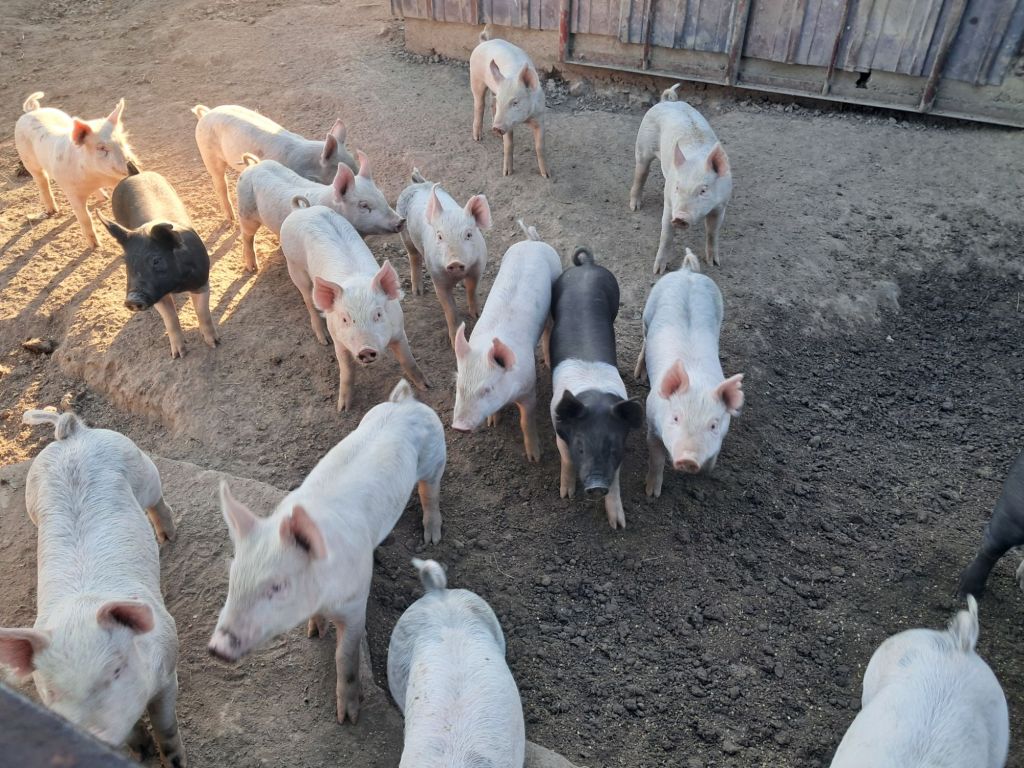
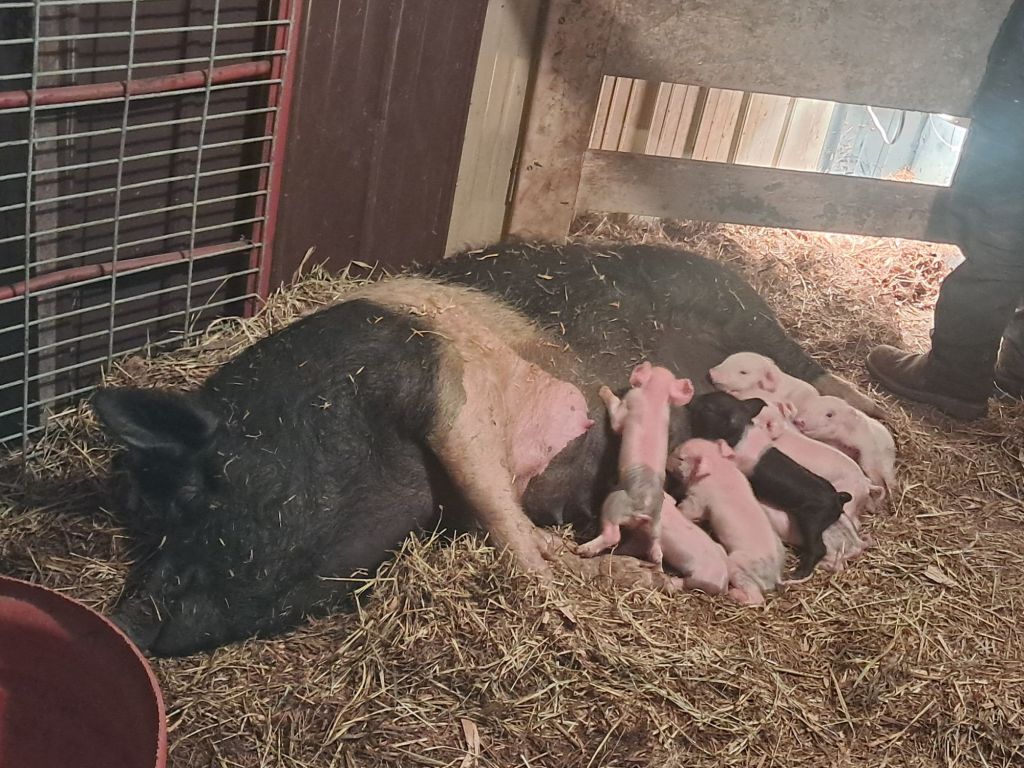
    Preparing for our first-time pig farrowing feels a bit like bracing for a homestead hurricane. We’ve pored over library books, talked with several experienced pig farmers, and built out our setup—all in anticipation of our first gilt farrowing on Mother’s Day weekend, with the second following about a week later.

    She doesn’t even know she’s about to be a momma!

    Here’s how we’re getting ready to welcome these piglets.

    Research Meets Real Talk

    We’ve devoured books on pig reproduction—favorites include Storey’s Guide to Raising Pigs and various university extension guides—while my husband has gathered insight from a couple of experienced local pig farmers.

    The most memorable advice? “Make sure the piglets have a place to get away from their mom if her hormones kick in and she starts stomping around.” It’s the kind of practical wisdom that no book quite captures.

    Building Farrowing Infrastructure

    My husband jumped into a crash course on setup, spending about two weeks transforming a dilapidated shed into a functional farrowing space.

    We poured a concrete floor using old silo staves set in mortar, framed the interior with reclaimed barn tin, added electricity and a small light, and built a piglet-only area where mom can’t reach. A heat lamp hangs over that space to keep them warm and safe.

    The piglets will stay inside for 30–60 days depending on the weather, but since they’re arriving in mid-May, we’re hopeful it will be closer to 30 before they can start venturing out. In the meantime, we’ve also reinforced a space between several of our outbuildings so they’ll eventually be able to enjoy the outdoors. The front is framed with reclaimed bunk pieces—nothing fancy, but solid and functional.

    Front of pen made from reclaimed cow bunk

    Vaccination and Nutrition Boost

    We administered the FarrowSure vaccine before conception to help prevent scours and erysipelas.

    We’re also adjusting their feed after realizing we let them overeat for a bit too long. They’re now on controlled portions of about four pounds per gilt each day, which they’re not exactly thrilled about. Most nights, they root their straw bedding into chaos, but scattering corn kernels around the pen has helped redirect that energy into foraging instead of destruction.

    Spotting Mama’s Behavior Cues

    As the due dates get closer, we’re watching carefully for signs. Their udders began swelling about 3–5 weeks ahead of time, and we’re told that nesting and restlessness usually mean we’re within 24 hours. When that’s paired with grunting and constant lying down and getting back up, it’s likely go time.

    What Could Go Wrong—and How We’re Preparing

    The risks feel big right now, especially going into our first litter. There’s overlay—a 400-pound gilt rolling onto 2-pound piglets—as well as the chance a first-time mom might reject her litter or that weaker piglets will need help getting colostrum.

    As one farmer told us, “Your first litter teaches you more than all the books.” With that in mind, we’re relying on our crate setup and rails to reduce the biggest risks while staying realistic about the learning curve ahead.

    What’s Next for Us

    About a week out, we’ll move the gilts into their farrowing space, begin daily udder checks, reinforce anything that looks questionable, and give the FarrowSure booster.

    We’re expecting somewhere between 10–16 piglets and feeling equal parts nervous and excited. The plan, at least for now, is to sell about half and raise the rest for pork—but we’ll see what kind of interest there is.


    Have you ever gone through a first farrowing? What caught you off guard—or what would you do differently next time?


    If you’re raising pigs—or thinking about it—tap like and share this with someone who’s in the thick of homestead life too. It helps more than you know 🤍

    Subscribe for weekly homesteading tips:

    Read Next: Our Biggest Homesteading Challenge: First-Time Pig Farrowing

  • Foraging Stinging Nettles—A Wild, Nutritious Spring Green

    Foraging Stinging Nettles—A Wild, Nutritious Spring Green

    Here’s what foraging stinging nettles looked like for me this spring, and how I turned them into a safe, nourishing meal for my family.

    As I walk outside armed with a plant identification book, rubber gloves, and an open mind, I can’t help but feel that I’m about to violate a fundamental law of food. Among the waterlogged ground, I scan for juvenile stinging nettles—those tough, serrated leaves covered in tiny, hair‑like stingers. This spring, I’ve begun foraging stinging nettles on our property, turning a backyard “weed” into a free, nutrient‑dense green for our family. It’s especially welcome in the early months of the year, when fresh vegetables are harder to come by.

    Nettles nestled among grass

    Foraging Nettles Safely

    From experience, I know that if I’m not careful, I’ll quickly become aware that the plant has grazed my skin: the stingers bring an immediate, sharp pain and soon after a scattering of blisters. As someone who is slowly learning to step away from the industrialized food system, I feel hesitant to collect food that can actually hurt me. Yet there’s also a quiet humility in working with a plant that demands respect—this is nothing like reaching for a plastic‑wrapped bunch of lettuce at the grocery store.

    I chuckled at the thought of how hungry the first person must have been to discover how to disable the stingers and savor this tasty, nutritious wild larder hiding in plain sight. On the other hand, there’s a childlike wonder in identifying a “weed” that others avoid. That sense of discovery encourages me to continue my quest.

    Harvesting becomes a mindful ritual. I crouch down and gently collect the plants, pinching off the leaves just above the stem. Where nettles grow most aggressively, I pull them from the ground—our property is overgrown with nettles that spread via rhizomes. The plants rustle as I work, releasing a faint, green herbal aroma into the air.

    A bowl full of nettle leaves

    In a moment of carelessness, my arm grazes the plant, and I receive several painful blisters in turn. The soreness is uncomfortable, yes, but it also feels like a badge of honor. The temporary sting is a small price for the nutritional bounty. As my basket fills, I marvel at the efficiency of nature, at its pure, unmediated abundance.

    To keep myself and my family safe, here are the practical steps I use to handle stinging nettles while working with them:

    • Wear long sleeves and long pants to keep as much skin as possible covered.
    • Use thick rubber or leather gloves that fully cover the wrists.
    • Pull the gloves over the cuffs of long sleeves so stingers can’t slip in between.
    • Avoid touching your face or neck while harvesting.
    • If a sting happens, rinse the area with cool water and mild soap, then apply a soothing cream or cool compress as needed.
    • If you’re foraging with kids, let them wear gloves and long sleeves too, and keep them close by so you can guide their hands and steps.

    These simple precautions make the experience feel less intimidating and more like a teachable moment, not a painful surprise.

    Cooking Nettles Safely: How to Neutralize the Sting

    By the time I’m back in the kitchen, the nettles are in a vibrant heap in the sink. Before I wash them, I remind myself: Stinging nettles must never be eaten raw. The stingers release a mildly irritating compound that can cause discomfort and a burning sensation in the mouth and throat.

    To make them safe to eat, I always use one of these two methods:

    • Blanch in boiling water:
      • Bring a pot of water to a boil.
      • Drop the nettle leaves into the boiling water for 1–2 minutes.
      • Drain and rinse with cool water.
      • The leaves will feel soft and silky and will no longer sting.
    • Sauté in a hot pan:
      • Add the fresh nettles to a hot pan with a bit of butter or oil.
      • Stir constantly for 2–3 minutes until the leaves wilt and darken.
      • The heat neutralizes the stingers and turns the leaves into a tender, spinach‑like green.

    Both methods are quick and simple. The important point is: any stinging nettle serving larger than a small nibble should be processed with heat. That’s the non‑negotiable rule if you don’t want a painful, unpleasant experience.

    Once the sting is gone, the nettles are ready to shine. I usually sauté them in garlic and butter, then season with salt. The simplicity of the dish is empowering; the only extras are salt, garlic, and butter to let the flavor of the greens shine. They taste grassy and slightly nutty, with a depth that store‑bought greens rarely match.

    A recent dinner, the vegetable was asparagus and nettles boiled in salted water, seasoned with butter and pepper. Delicious!

    Every bite carries the satisfaction of knowing that at least some of the food on our table comes directly from the land, unmediated by plastic packaging or price tags and paid for instead with time and attention. This is the kind of meal I want to share with my children, teaching them that “weeds” can become dinner and that food is something the earth offers, not just something we buy.

    Nutritional Benefits of Nettles

    Stinging nettles are often called a “wild supergreen” for good reason. A small serving of cooked nettles delivers a surprising amount of important nutrients, including:

    • Iron (useful for supporting energy and blood health)
    • Calcium (beneficial for bones and teeth)
    • Vitamins A and C (supporting immune function and skin health)
    • Magnesium and other trace minerals
    • A moderate amount of plant‑based protein for a leafy green
    • Nettles have also been traditionally used for their gentle antihistamine‑like properties, especially when prepared as an herbal infusion.

    In a world where we often think of “healthy food” as something expensive or packaged, nettles remind me that deep nourishment can emerge from the edges of the yard, if we’re willing to learn how to use it.

    Reflections on Foraging and Community

    Later, I ponder the experience, which was more rewarding than I imagined. Supplementing my diet with nettles shrinks my food miles while my pantry is enriched by the seasons. Grocery store runs feel less urgent when the yard offers a free, nutrient‑dense green harvested in spring. There’s a quiet pride in crafting meals from plants many call weeds, a small act of rebellion against the idea that all good food must be bought.

    On a deeper level, I’m participating in a cycle that predates grocery stores, rekindling a bond with the earth that modern life often severs. I’m learning to see my yard—and my children’s yard—as a living pantry, not just a backdrop to our days. And when I share a pot of nettle soup or a plate of sautéed greens with a neighbor, the act of foraging becomes part of a small, quiet web of community, where knowledge and food move between people instead of only through registers.

    Defiance, Devotion, and the Gift of the Land In a world built on convenience, foraging for nettles becomes an act of both defiance and devotion. It roots me in the present, reminds me that the earth provides—often lavishly, and often in plain sight—for those willing to look, learn, and gratefully receive.


    Have you ever foraged stinging nettles or another wild green? Or would you ever try nettles in your family’s meals? Let me know in the comments—I’d love to hear your stories and tips!


    If this post inspires you to look at your yard a little differently, I’d love it if you shared it with another parent or forager who’s curious about wild food. You can like or share it on Facebook, pin it on Pinterest, or forward it to a friend who loves seasonal, hands on food adventures.

    Subscribe for weekly homesteading tips:

    Read Next: Foraging Ramps with Kids in the Midwest

  • Foraging Ramps with Kids in the Midwest

    Foraging Ramps with Kids in the Midwest

    Early spring in the hardwood forests of the Midwest brings one of the season’s first wild edibles: ramps, also called wild leeks. For many families across the region, foraging ramps in early spring is more than a pantry project—it’s a seasonal ritual. For our family, ramp season marks the beginning of a rhythm we return to each year—one that ties together growing food, raising children, and learning how to belong to a place.

    The forest hums with the quiet magic of early spring. Buds swell on maple, birch, and willow, their tips blushing green and red. Sunlight filters through bare branches, thin but persistent, casting shifting patterns across the damp, leaf‑strewn ground. Moss returns in soft patches, and the stream—freed from ice—chatters over stones as it carries winter’s melt downhill.

    I gather my supplies, lift my toddler onto my hip, and take my son’s hand as we step into the woods outside our small town in southeastern Wisconsin, though the rhythm of this season is the same across much of the Midwest. The ground gives softly beneath our boots, releasing the scent of damp earth and last season’s decay. Around us, birds stitch sound into the morning—robins scratching at softened soil, sparrows darting with nesting twigs, woodpeckers tapping their steady rhythm.

    How to Identify Ramps

    As we walk, I coach my son on what to look for: clusters of broad, smooth, lance‑shaped leaves, bright green with a reddish or burgundy base. Before long, he spots them.

    The ramps rise in small patches, their leaves vivid against the brown forest floor. Nearby, trout lilies speckle the ground, their mottled leaves catching bits of sunlight. It feels, as it often does, like the forest is offering quiet clues—if you slow down enough to notice.

    If you’re new to foraging, take extra care here. Once you learn how to identify ramps safely, they become a gateway plant for spring foraging in the Midwest with kids. Ramps can be confused with toxic look‑alikes like lily of the valley. The key difference is the smell—ramps have a strong onion‑garlic scent when the leaf is torn and the stem is crushed.

    Foraging with Kids

    I set my daughter down and kneel beside the patch. The earth is cool and soft under my hands. I pick a leaf, tear a small piece, and pass it to each child.

    Their reactions are immediate—the sharp, garlicky bite softened by a fresh green sweetness. It’s a flavor that feels like spring distilled into something edible.

    We dig carefully. I show them how to loosen the soil around the base of the plant, how to follow the slender white bulb without tearing it. Their small hands work with focus and excitement, uncovering each ramp like buried treasure.

    Foraging with kids requires patience, but it also invites something better than efficiency:

    • Slowing down enough to observe
    • Letting curiosity lead the pace
    • Accepting a bit of mess and distraction along the way

    At one point, my daughter tries to eat a blade of grass. We gently redirect and keep going. This is exactly the kind of moment that makes foraging ramps with kids so formative: a small, repeated lesson in paying attention and tasting the world responsibly.

    Harvesting Sustainably

    Before we gather too many, I pause to explain: we only take what we need. This is one of the most important rules for harvesting ramps sustainably, especially in forests that are already seeing pressure from foragers.

    Ramps grow slowly and can be easily overharvested. In many parts of the Midwest, foraging pressure has already affected local patches, so we follow a simple rule—never take more than a small portion from any patch, and leave plenty behind to regenerate.

    Sometimes we harvest just a single leaf instead of the whole plant. It’s a small choice, but it reinforces something bigger: we’re not just taking from the land—we’re participating in its long‑term health. Sustainable harvesting teaches kids that food is part of a cycle, not just a product on a shelf.

    From Forest to Table

    We leave with muddy knees, full hands, and a modest basket of green.

    Back home, we rinse the ramps and prepare them simply—sautéed in butter with pasta and a bit of lemon zest. The sharpness mellows into something rich and savory, still carrying the unmistakable imprint of the woods.

    After a morning outside, the meal feels earned in a way that’s hard to replicate. The kids recognize the flavor immediately. It’s no longer just food—it’s something they found, touched, and helped prepare. This is how foraging ramps with kids in the Midwest becomes more than a one‑day outing; it weaves into our seasonal food story.

    Growing More Than Food

    Later, reflecting on the day, I realize that foraging is doing several kinds of work at once.

    It feeds us, yes—but it also teaches patience, observation, and restraint. It gives my children a direct relationship with where food comes from, outside of stores and packaging. And it connects us, quietly, to the people who have walked these woods before, gathering the same plants in the same season.

    Over time, I hope these small rituals grow into something lasting. Not just knowledge of edible plants, but a sense of responsibility—to the land, to each other, and to the idea that food is something we participate in, not just consume. If you’re curious about starting foraging ramps with kids in the Midwest, begin simply. Go for a walk in early spring. Learn one plant. Bring your kids. Take a little, leave plenty, and pay attention to what’s growing around you.

    That’s how it starts.


    What’s the first wild food you teach your kids to recognize in spring? Let me know in the comments—I’d love to hear your family’s outdoor food traditions.


    If this post resonates with your family’s spring rhythm, I’d love for you to share it with another parent who’s curious about foraging with kids.

    You can like or share it on Facebook, pin it on Pinterest, or forward it to a friend who loves hiking and seasonal food.

    Every time someone takes a small step toward learning about wild plants, we’re all one step closer to a more grounded, connected food culture.


    Subscribe for weekly homesteading tips:

    Read Next: Perfect Pan-Fried Fish Recipe | Ice Fishing Family Time

  • A Gentle Return to the Blog

    Thank you so much for your patience while I took a short break to focus on my family. Stepping back was exactly what I needed—it helped me rest, reconnect with my reasons for blogging, and remember why I started writing in the first place.

    Over the past year I’ve been writing this blog, something unexpected has happened: we’ve built a small but mighty community. I’m so grateful for the readers who share their own stories, ask questions, and cheer one another on in the comments and messages. This isn’t just a blog—it’s a space where families, homesteaders, and food lovers lean into the same rhythms of growing food, raising kids, and caring for the land.

    Coming back now, I want to keep that focus front and center. I’ll still share my two cornerstone posts each week, released on Thursdays and Sundays, and I’ll respond to some of the daily prompts—but I’m letting go of my perfectionistic tendencies and letting the writing breathe more. I’d love to post more about real, messy family days, the little triumphs of the garden, and the ways we’re learning to live more simply and sustainably.

    I think I was a little burned out from writing, but I’m coming back to it from a more grounded, renewed place. I’d love to have you join me again as I dive back into the stories that matter most to our family, our homestead, and this community.


    If you’re still here reading this, what would you most like to see more of on the blog—family adventures, homesteading how‑tos, or seasonal recipes? Leave a comment and let me know. I’m so grateful for this small but mighty community and for the way we’re learning and growing together.

    And if you like this content, please consider subscribing, to join our growing community of like-minded people who value family, the “village”, and slow food.

    Read Next: Why I Hate “What Do You Do?” – Homesteader’s Answer

  • Short Break for Family & Syrup Season

    Hey friends, quick update from the homestead—I’m taking a short break from blogging to focus on family right now. Life with kids, maple syruping season in full swing, and all the usual chaos needs my full attention. I’d rather share quality stories and insights when I’m back, so I’ll be here soon.

    Thanks for understanding!

  • Letter to My 100-Year-Old Self: Homestead + Kids Dreams

    Letter to My 100-Year-Old Self: Homestead + Kids Dreams

    Daily writing prompt
    Write a letter to your 100-year-old self.

    Dear 100-year-old self,

    Right now, our days overflow with three big works. I’m writing this when I’m 36 years old. I hope you’re looking back on this time fondly, with a loving husband, two beautiful young children, and a growing homestead and writing hobby that is starting to bear some fruit.

    Raising Emotionally Intelligent Kids

    I’m working hard to help my children grow into emotionally intelligent, successful people who can easily integrate into society. I’m working internally on myself before I radiate love out to them. All while making sure they pick up their socks and eat their dinner. Will my work be worth it, and will they look back on their childhood fondly?

    Building Our Homestead

    My husband and I are also working on building our homestead. Last year, I learned how to grow mushrooms (the logs are colonized!), and this year we’re learning how to farrow pigs (first litter due Mother’s Day). Things don’t always go smoothly, but every homestead lesson learned is one that we can apply to the next set of skills. Will we continue to build and expand our homestead?

    Growing My Writing Community

    I’m also working hard on a writing hobby. Ever since I was a little girl, I loved to write. My first short story was about a herd of cows that escaped and exacted revenge on their owner (I was 8, and I grew up on a farm). And now I’m sharing homestead stories about my family and my hobbies. And people are listening and writing back! It is amazing to find kindred spirits out in the world. I hope we meet in person someday. Will I become a successful writer and continue building this community?

    Only you can tell me.


    Feature Photo by Saif Taee on Unsplash


    Which of these three works feels hardest right now—kids, homestead, or writing community? Be honest below!

    Loved this letter to my future self? Like + share if you’re wondering about your own 100-year-old dreams! 💌 Tag your homestead bestie below.

    Loved this? Subscribe for weekly homesteading thoughts:

    Read Next: Signed House Contract at Used Car Lot-On our Honeymoon Trip to Alaska

  • Mid-Season Maple Syrup: 5 Gallons from 200 Gallons Sap

    Mid-Season Maple Syrup: 5 Gallons from 200 Gallons Sap

    Hey friends—three weeks into sugaring season and we’ve already pulled 5 gallons of homemade maple syrup from about 200 gallons of sap boiled down slow over endless oak, ash, and maple fires.

    We’re smack in the middle of the season, with more sap flowing and wood to burn. 5 gallons now, 10-15 more expected. $18/quart jars. Some of this golden 66° Brix goodness is headed for pancake-fueled weekends, some for gifting to neighbors, and some we’ll sell to the surrounding community. Comment below (or DM) if local and interested (SE Wisconsin)!

    Sap Keeps Coming, Fire Keeps Burning

    Our 10-year tubing setup is still humming—healthy maples dripping steadily into jugs thanks to these perfect freeze/thaw cycles we’ve been getting. My husband and I take turns tending the evaporator around the clock. Meanwhile, our 6-year-old chops firewood like a little lumberjack (he’s getting scary good with that axe). And our 2-year-old daughter is absorbing the entire process.

    That ~40:1 sap-to-syrup ratio means we’ve gone through a mountain of wood already. The air stays thick with that woodsmoke-sweet steam that chases away every bit of March chill—honestly, it’s my favorite part.

    Those Quiet Evenings by the Flames

    These firelit nights are pure magic. We watch the flames shifting from orange to fiery red as they devour log after log. That primal mix of crackling wood and caramelizing sap beats anything from a store bottle by a mile.

    And when we filter and finish the syrup in the house, our entire house smells like a diner. I’ve commented about this during virtual meetings to my colleagues, who always get a chuckle, then ask me more about our syruping setup.

    Kitchen Mishaps (Learning the Hard Way)

    • Spigot fail: Husband cleaned it but didn’t reinstall properly—bumped the bucket and concentrated sap flooded our kitchen floor (sticky nightmare cleanup).
    • Double boil-over: Syrup bubbled over twice, turning the stove into a sugar tar pit (vigilance lesson learned). Here’s hoping that doesn’t happen again.

    What’s Next in the Sugar Shack

    We’re hoping to finish strong with another 5-10 gallons total (fingers crossed the weather holds). Soon it’ll be time to filter everything through cheesecloth, bottle it up pretty, and label jars for neighbors, future sales, and of course our own pancake feasts. Can’t wait to taste test the first batch with that homemade rye bread from our recent Reuben quest.

    Maple season = sauerkraut’s woodsmoke cousin—clear sap to liquid gold through fire, time, one pot at a time.

    Any of you making syrup this season? What’s your boil ratio been like? Favorite tree to tap? Tell me everything below—I love swapping sugaring stories!

    Practical Homesteading: growing food, raising kids, building community.

    Loved this maple magic? Like + share so sugaring families find us! 💛 Tag your syrup-making crew below.

    Loved this? Subscribe for weekly homesteading tips:

    Read Next: Signed House Contract at Used Car Lot-On our Honeymoon Trip to Alaska

  • My Middle Name: Marjorie

    My Middle Name: Marjorie

    Daily writing prompt
    What is your middle name? Does it carry any special meaning/significance?

    My middle name is Marjorie, sharing a birthday with The Simpsons premiere (handy icebreaker, though nobody calls me Marge).

    Marjorie honors my late grandmother. We lived 30 miles apart, seeing her at Christmas where I’d play their electric piano while she and her jovial second husband laughed together.

    She brought knick-knacks from trips for us six granddaughters—a Florida seashell globe stands out. At their Wisconsin cabin, we shared dive-bar battered mushrooms before her health declined.

    The name carries her quiet presence through those visits and our last October Christmas photo, still framed in my hall.

    Featured Photo by Annie Spratt on Unsplash

    What’s YOUR middle name story? Share below!

    Loved this? Subscribe for more reflections:

    Read Next: Why I Hate “What Do You Do?” – Homesteader’s Answer

  • Homemade Reuben from Scratch: Sauerkraut to Success

    Homemade Reuben from Scratch: Sauerkraut to Success

    Daily writing prompt
    What is the last thing you learned?

    Mastering a homemade Reuben sandwich from scratch taught me that real learning comes through patient layers—sauerkraut, rye bread, corned beef. Each step built skills I didn’t know I needed.

    From Garden to Ferment

    It started last fall with Megaton hybrid cabbages from our garden. Shredded fine, salted at 2% by weight, packed into our antique Red Wing crock with a water-filled garbage bag seal. Three and a half months later in the basement, it emerged tangy, crisp, golden—pure magic. This homemade sauerkraut became the tangy heart of every bite.

    Curing Corned Beef at Home

    Winter freed up freezer space for a 4-lb sirloin tip roast from Gruenberger Farms. Brined 5-7 days in kosher salt, pink curing salt, brown sugar, and pickling spices (ground + whole), flipped daily at first. Slow-cooked 6 hours low in the crock pot, finished high for tenderness at 195-205°F. Sliced thin against the grain, it was pink, flavorful—worked as well as a brisket for this homestead experiment.

    Rye Bread Reality Check

    Rye dough is sticky and stubborn—no big lift like wheat. Mixed bread flour, rye flour, honey, yeast, olive oil; proofed twice, baked in a steam-trapped roasting pan setup at 425°F. Flatter than ideal, but the hearty tang paired perfectly with no caraway on hand. Homemade rye bread held up under melty Swiss and Thousand Island (store-bought, no shame).

    Reuben Night Triumph

    Twelve sandwiches baked golden on sheet trays: rye, corned beef, sauerkraut, cheese, dressing. Family devoured 10 immediately—only two leftovers by lunch. The kitchen smelled like a deli dream.

    The Real Lesson Learned

    This homemade Reuben quest showed me iteration through failure—soggy ferments avoided, lean cuts perfected, stubborn dough humbled. Homesteading scratches teach that last lesson sticks deepest when you taste the payoff. Garden to plate, one sandwich at a time.


    What’s the last thing you learned making food from scratch? Share below!

    Loved this Reuben quest? Like + share so fellow homesteaders can taste the scratch-made magic! 💚 What’s your latest kitchen win?

    Loved this? Subscribe for more homestead reflections:

    Read Next: Our Biggest Homesteading Challenge: First-Time Pig Farrowing