Our Late-May Garden Tour: What We Planted and Why
Somehow, May is already almost over. If you plant a garden, have you gotten yours in yet?
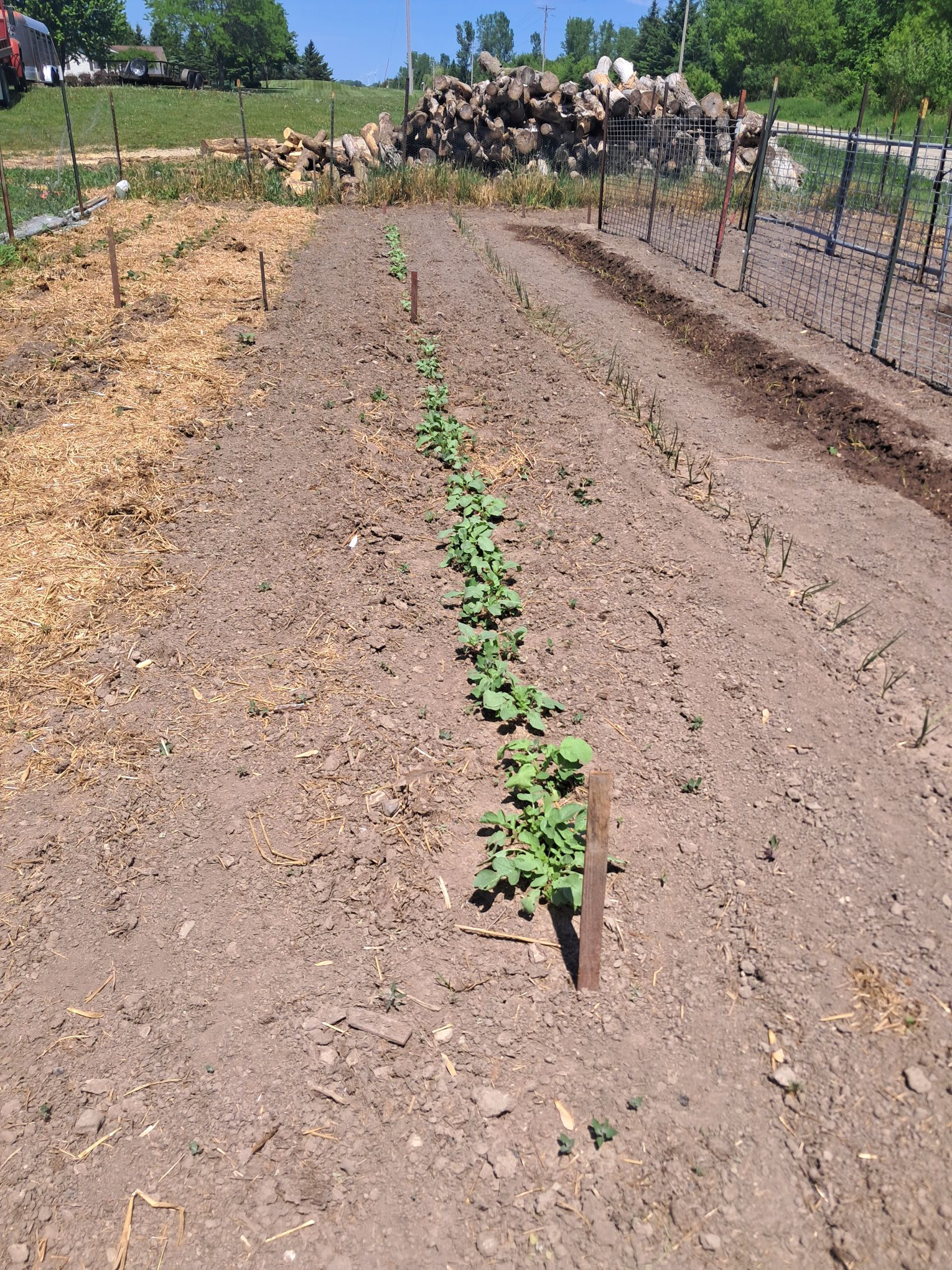
We’re in Zone 4B, and by late May our garden is finally in full swing. If you’re looking for ideas for your own Zone 4B vegetable garden, here’s exactly what we planted this year and why. In this post, I’m sharing what we planted in our garden this year and the order we planted it in (spoiler: it definitely did not all happen in one day). Think of this as a walk-through of our garden rows, plus a few notes on what’s working, what isn’t, and what we’re excited to try.
Strawberries: The Semi-Permanent Front Row
We started about a month ago by dedicating the first two rows of our garden to strawberries. This will be a semi-permanent location for them.
Here’s our basic setup:
- Transplanted strawberry plants into two full rows.
- Plan to layer straw on top to help suppress weeds and hold moisture in during the warm months.
- I’m pinching the blossoms off all the plants for the first two months.
The blossom-pinching feels a little cruel in the moment, but it lets the plants focus on strong root and leaf growth. If all goes well, we should be enjoying delicious berries by July or August from the everbearing varieties.

Root Vegetables: Fresh Salads Now, Storage Roots Later
Next, we planted our root vegetables and salad greens. This is one of my favorite parts of the garden because it gives both quick wins and long-term rewards. (You’ll notice I have a lot of “favorite” parts—my garden just brings me that much joy.)
In this section we planted:
- Parsnips – for fresh roots next March and April.
- Radishes – for quick crunch and color in early salads.
- Lettuce and spinach – fast growers, so we can enjoy fresh greens in just a couple weeks.
- Carrots – for fresh eating in the next couple months and for later winter storage.
- Beets – for roasting, pickling, and everything in between.
I plan to share in a future post how we keep garden-fresh carrots through the Wisconsin winter, and also how we turn all of these roots and greens into actual meals (rather than just “good intentions” in the crisper drawer).

Onions: The Powerhouse Vegetable (and a Confession)
After the root bed came two full rows of onions—both red and yellow.
I prefer transplanting onion plants rather than using onion sets. That was the plan this year too…in theory.
Confession time:
- I did start onion seeds this year.
- Between poor starting soil, my “casual” watering habits, and not trimming the tops, my onion starts never made it to the garden.
Instead, my dad kindly shared some surplus onion plants he purchased from the Amish, and they became our onion rows.

Why we love onions:
- They’re a true powerhouse vegetable in the kitchen.
- They store well when kept under the right conditions.
- Even in our less-than-perfect storage setup, I pulled my last onion from last year’s harvest about a month and a half ago.
We plant:
- Red onions for fresh eating and pickling (they’re fantastic pickled).
- Yellow onions for long-term storage and everyday cooking.
Peas: Kid-Favorite Garden Candy
Next up: peas.
Peas are one of our family’s favorite vegetables to eat right in the garden. The kids love:
- Picking them straight off the vine.
- Popping the pods open.
- Eating the peas fresh, still warm from the sun.
They disappear almost as soon as they ripen.
We installed a trellis right away, but “trellis” might be a generous term. In true homestead fashion, we used:
- An old corn crib side as the main panel.
- Old fence posts to hold it in place.
We love recycling old farm implements wherever possible—it saves money, reduces waste, and gives these materials a second life.

Cucumbers in the Middle (On Purpose) + Tomatoes and Peppers
Next came cucumbers.
Some gardeners might be clutching their pearls at this, but yes: we plant our cucumber patch in the middle of the garden.
The reason we can get away with this is our trellis. Instead of letting the vines sprawl everywhere, we:
- Use an old cattle panel as a trellis.
- Hold it in place with old fence posts.
This keeps the vines mostly vertical and contained, which makes it easier to walk around the garden and keeps the cucumbers cleaner and easier to harvest. It might not be traditional, but it works for us.
Once the cucumbers were in, we filled the rest of that row with transplanted veggies:
- Peppers (both bell and hot).
- Tomatoes – a mix of early-ripening varieties, Romas (for sauce), and Mortgage Lifters (for big slicing tomatoes).

Cruciferous Row: Cauliflower, Kale, Broccoli, and Brussels Sprouts
The next row is devoted to some of my favorite vegetables: cauliflower, kale, broccoli, and Brussels sprouts.
I love cruciferous veggies for a few reasons:
- They’re incredibly versatile in the kitchen.
- They freeze beautifully, which makes them a big part of how we keep eating vegetables all winter without visiting the grocery aisle.
- They’re hardy and forgiving once established.
In a future post, I hope to share exactly how we prep and freeze these so they stay tasty and usable.
Quick kale note: I may be late to the party, but I also love kale soup. I’m still not sold on kale chips—mine tend to swing between soggy and burnt—but I’m open to conversion if someone can show me the magic method. Shoutout to my friend who shared her Zuppa Toscana (and the recipe!) and officially turned me into a kale-soup person.
Cabbage, More Cauliflower, Bok Choy, and Kohlrabi
The next row is a mix of:
- Cabbage – destined for sauerkraut.
- More cauliflower – because we’re not sure how well the older seed in the other row will germinate.
- Bok choy – for stir-fries and Chinese dumplings.
- Kohlrabi – one of my underrated favorites.
A quick note about kohlrabi: the name literally translates from German as “turnip cabbage,” describing its shape. I grew up with it, but I don’t know how many people outside German ancestry know what it is.
Why I love kohlrabi:
- It grows above the ground and matures in about two months.
- Around the 4th of July, it’s usually ready, and it’s one of my favorite veggies to snack on then.
- It’s delicious raw—peeled and sliced.
- The flavor is like a cross between a mild radish and broccoli.
I’ve experimented with cooking it, but honestly, we usually eat it raw before I get a chance to cook or roast it. I’ve also pickled it with great success.
If you’ve never tried kohlrabi and you love cruciferous veggies, I’d highly recommend grabbing some seed and giving it a spot in your garden.
Summer Squash and Rutabagas
In the back corner of the garden, we planted summer squash—three hills of it.
In my unsolicited opinion, three hills is about two hills too many. If you’ve ever been buried in zucchini or summer squash, you know exactly what I mean.
The rest of that row holds garlic and rutabagas.
- The garlic was planted way too late last October, and it shows; it didn’t come up well.
- To make better use of the space, we interplanted rutabagas.
Rutabagas are another veggie I’ve only recently fallen for. They make a great “potato” replacement in mid-summer and are wonderful:
- Sautéed.
- Roasted.
- In pot pies.
Sweet Corn and Cantaloupe at the Front
The front of the garden holds our sweet corn patch.
Full honesty: I have not had the best luck with sweet corn in recent years. The local raccoons and possums seem to love it even more than we do. We’ll see how it goes this year.
On the other side, we planted cantaloupe. In my experience (Zone 4B), you don’t need to transplant cantaloupe:
- When you plant seed directly into soil that’s warm enough (late May here), it catches up quickly.
- Direct-seeding saves time and space in the seed-starting area.
If you’re curious about how we store carrots, freeze broccoli and cauliflower, or use bok choy in dumplings, those posts are coming (or, in the case of Chinese dumplings, are already here).
Potatoes, Pumpkins, and Future Plans
Beyond the main garden rows, we have two additional patches:
- My husband planted a patch of potatoes using a restored potato planter, which was a fun bit of old-meets-new on the homestead.
- Behind our barn, we plan to establish a pumpkin patch.
I’m already dreaming of fall pumpkins, roasted seeds, and maybe even some homegrown pumpkin purée for baking.
That’s our lineup for this year’s Zone 4B garden, from strawberries in front to pumpkins out back.
Planning a garden that works for your real life?
Download the free Grow What You’ll Use planner to map out your crops, expected harvests, and how you hope to use them.
What’s growing in your garden this year, and which veggie are you most excited to harvest first?
If this little garden tour gave you some ideas (or just made you feel less behind on planting), would you share it with a fellow gardener or save it for later?
You can also join my email list for more honest, Zone 4B garden updates, planting ideas, and what’s actually working for us from season to season.
Subscribe for weekly homesteading tips:
Read Next: Biggest Garden Yet: Lessons, Laughs, and Pig-Approved Produce


Leave a Reply