Category: Agriculture

  • The Attic That Remembered the Harvest

    A quiet corner of the house becomes a window into the rhythm of old farm life


    The Secret History in the Rafters

    There are places in a home that carry silence differently. Our attic is one of them. The floorboards creak with memory, and dust glows like soft smoke in the afternoon sun. At first glance, it’s just old timber and rusted hardware—until you notice the nails. Thousands of them, hammered deep into the beams.

    Three thousand, give or take. They jut out like punctuation marks in a story written by hands who walked within these walls but I’ll never meet. Each nail represents a note of effort, a record of someone’s steady persistence. I remember asking my husband about them the first time I followed him upstairs. He smiled and said simply, “Corn drying nails.”

    Rediscovering an Old Tradition

    I had no idea what he meant. Then autumn arrived, and our blue dent corn ripened in our garden. We carried the harvest up the narrow attic stairs, a banana box full of bright, heavy ears. Instead of looping the husks and hanging them as I had envisioned, my husband pressed the cobs straight onto the nails.

    It was slow, almost ceremonial work. The corn slid onto the metal with a satisfying scrape. One by one, the wall filled with color—deep blue, sun-gold, and flickers of red silk. In that dim, quiet light, the attic became a mosaic of patience and practicality.

    For generations before hybridization transformed agriculture, this was how families saved their seed stock. The previous year’s corn dried high above ground, away from moisture and rodents, until it was ready to be shelled in spring and replanted. Every cob represented not just a meal, but a promise for next year’s planting—a steady thread of survival and renewal.

    The Weight of Time and Work

    Sometimes, when I’m up there alone, I imagine those who lived here before me. Maybe a farmer with calloused hands, wiping sweat from his temple as he climbed the attic stairs. Maybe a child trailing behind, helping to hold the basket. The air would have smelled like a granary, of earth, timber, and ripened grain—a hand-me-down scent that tied one harvest to the next.

    Now the nails stand empty, gleaming faintly in the warm shadows. They hold no corn, but they still anchor something larger: a memory of endurance, a rhythm of life that didn’t depend on abundance but on balance, care, and steady effort.

    Every time the wind hums through the eaves, I think of those nailed-up seasons—how work once lingered in simple materials, how love was measured in continuity, not convenience.

    What Stories Live in Your Home?

    Look around your own space. Maybe there’s a scuffed tabletop, a patch of paint that doesn’t quite match, or a worn stair tread that speaks of every footstep before yours. What places in your home hold quiet stories of labor and love?

    Keep the Story Going

    If this glimpse into an old farming tradition resonated with you, please show your support: Like, share, and subscribe for more reflections on rural living, heritage, and the small acts of abundance that fill ordinary days. Let’s keep these stories alive—because sometimes, the past is only a floorboard away.

    #FarmLife #HomesteadHeritage #RuralStories #TraditionAndCraft #CornHarvest #SustainableLiving #CountryWisdom #SlowLiving #StorytellingSunday #CountryRoots
  • Learning from the Three Sisters

    Ancient Wisdom, Modern Lessons

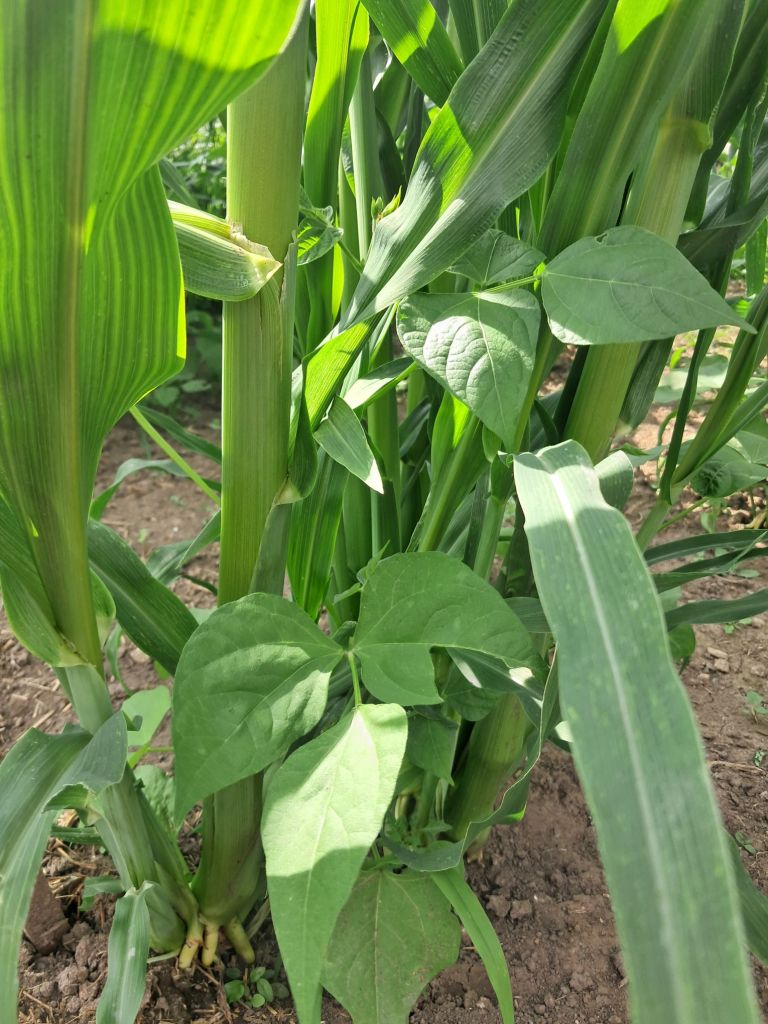
    The “Three Sisters” — corn, beans, and squash — show what true collaboration looks like. Rooted in ancient Indigenous wisdom, this companion-planting method isn’t just sustainable; it’s a living model of balance.

    Corn stands tall and strong, offering the beans a natural trellis. The beans return the favor, fixing nitrogen that enriches the soil. Meanwhile, squash sprawls across the ground, shading the earth to keep in moisture and crowd out weeds. Together, they form a self-sustaining ecosystem — one that thrives through cooperation and reciprocity.

    A Lesson Replanted

    I first learned about the Three Sisters in grade school, probably around Thanksgiving, during a brief mention of Indigenous agricultural knowledge. I didn’t think much of it then. But last year, while searching for more sustainable gardening methods, the lesson resurfaced. Curious and skeptical, I decided to try it myself.

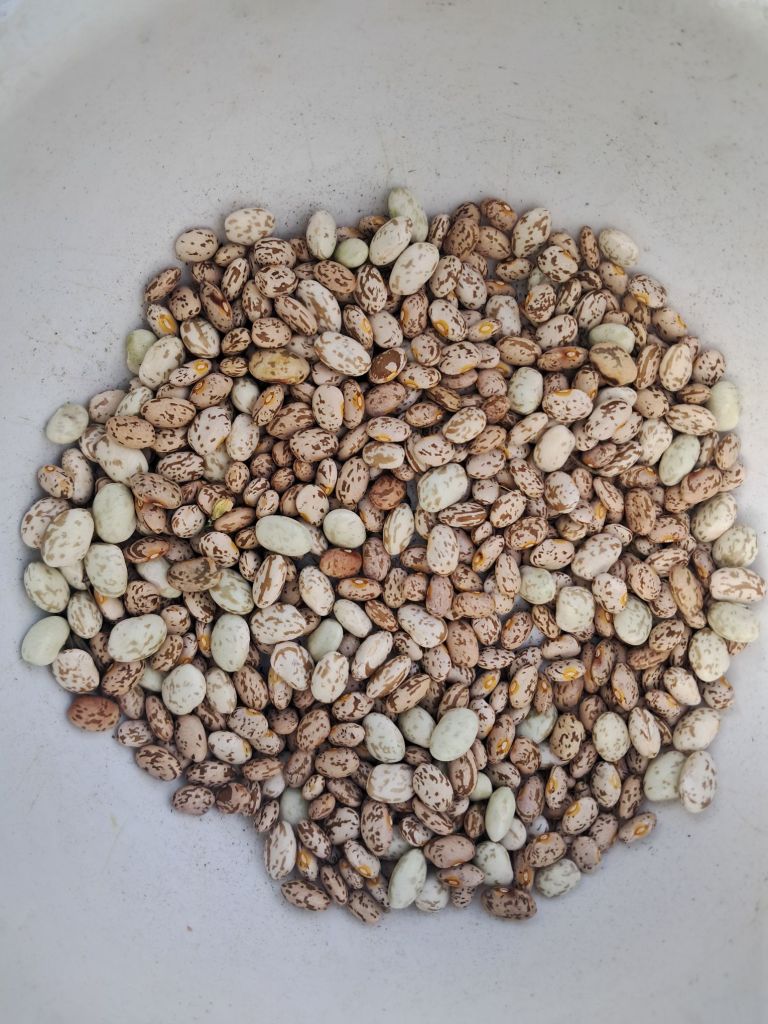
    Armed with blue dent corn seeds for homemade tortillas, pinto beans for the adventure, and leftover spaghetti squash seeds (because I couldn’t justify buying more), I planted in late May. The corn went in first, followed by the beans once the stalks reached ten inches, and then the squash two weeks after that.

    A Living Experiment

    To my delight, the beans twined effortlessly up the corn, just as promised. The old squash seed lagged behind but eventually pushed through, turning what looked like a “Two Sisters” garden into a full trio. For good measure, I added spent oyster mushroom substrate from another homestead experiment. Volunteer cherry tomatoes, which I didn’t have the heart to thin, soon joined the party — a wild, happy sprawl of coexistence.

    Harvest and Harmony

    By October, our small 25×10-foot plot had given us a treasure: a banana box of blue dent corn drying in the attic, a pound of pinto beans, and two proud spaghetti squashes still ripening. Even the leftover oyster mushroom spawn revived after each rain, and cherry tomatoes kept offering up baskets of surprises — nature’s generous encore.

    Seeing this ancient partnership unfold transformed a childhood lesson into something alive and immediate. The “Three Sisters” reminded me that balance isn’t about control — it’s about trust, patience, and reciprocity.

    Looking Ahead

    Next spring, we’ll start earlier and use fresh squash seeds. But even now, the garden has offered more than food — it’s fed our curiosity, connection, and hope. My son’s dreaming of blue tortilla chips, and I’m dreaming of next year’s lessons, both in the soil and beyond it.

    Your Turn

    Have you ever grown something that changed how you see the world? Share your story in the comments — and if this post inspired you, give it a like, share it with a fellow grower, and subscribe for more gardening stories!

    #ThreeSistersGarden #RegenerativeGardening #IndigenousWisdom #SustainableLiving #GrowYourOwnFood #HomeGarden #NatureInspired #GreenLiving #SoilHealth #HomesteadLife #EcoFriendly

  • When Egg Prices Crack, Local Farms Hold Steady

    Just months ago, the price of eggs soared past $7 a dozen—triple what most people were used to paying. A food so ordinary it’s almost invisible suddenly looked like a luxury. Prices have since eased, but the memory lingers: how did something so basic get so expensive? And why did the shock land so unevenly—upending some farms while leaving others steady?

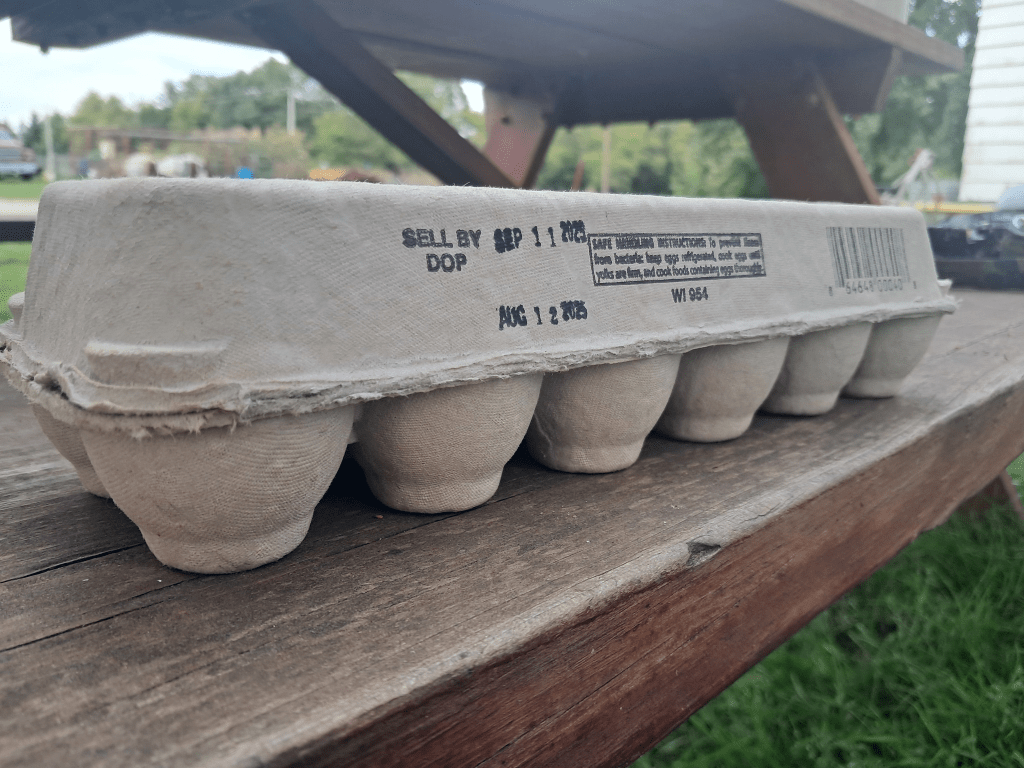
    On our farm, a dozen eggs still sells for $4. That number has barely budged in years. While supermarket prices swung wildly, ours held firm. The contrast is more than a curiosity. It hints at how food really travels from barnyard to breakfast table.

    The spike began with avian influenza. In 2022 and 2023, the virus swept through major poultry operations, wiping out more than 43 million egg-laying hens nationwide. When a third of the national flock disappears, supply collapses and prices shoot up. Industrial farmers also faced surging costs for feed, fuel, and transport. A production system designed for tight efficiency became brittle: when disease struck, the whole country felt it at the checkout line.

    Small farms like ours face the same threats, but the impact lands differently. Three features matter most:

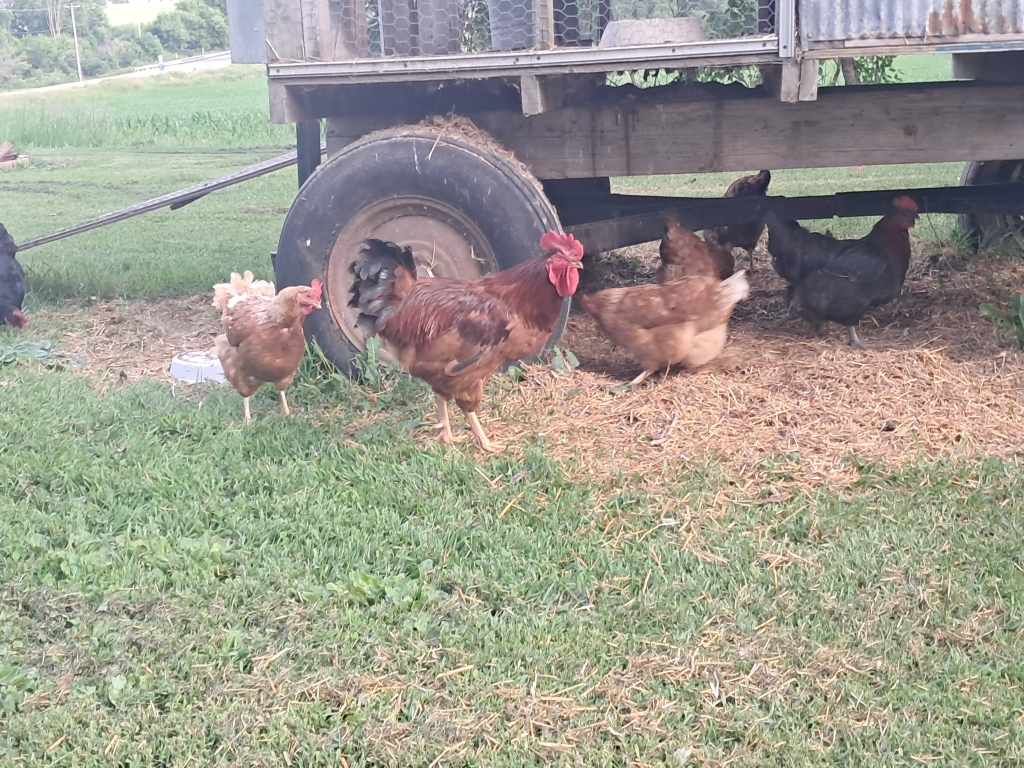
    • Flock diversity. We keep mixed-breed, free-range hens. Losing a handful to illness is painful, but a single disease rarely jumps across breeds with equal force. Uniform flocks in industrial barns don’t have that buffer.
    • Local sourcing. Most of our feed comes from what we can grow or source locally. Last winter, when global grain costs spiked, our stockpile of grain grown during the previous year was still there, and the cost to produce it did not change. That insulation saved us from the roller coaster.
    • Short supply chains. Our eggs travel from our house to their house, a distance of less than ten miles, not five hundred to a distribution hub. Fuel hikes and cold-storage fees barely touch us.

    That structure explains why our price holds steady. $4 a dozen looks high when the grocery store is running specials at $2. But when shelves empty or sticker shock sets in, suddenly our carton looks like the bargain. What customers are buying isn’t just eggs—they’re buying reliability.

    Of course, small farms can’t replace industrial ones. We don’t feed cities by the million, and local food generally costs more up front. Volume and convenience still matter. But the lesson of the egg crisis isn’t that one system must win. It’s that balance matters. Industrial agriculture delivers abundance when conditions are smooth. Small farms deliver stability when they’re not. Together they form a more resilient food web than either system could alone.

    And “smooth” is becoming rare. Disease, war, fuel shocks, and extreme weather tug constantly at a tightly wound system. When that system cracks, as we saw with eggs, the cost gets passed to the consumer.

    There’s another way to measure value. It’s not the absolute lowest price when times are calm—it’s the carton that’s still there, at the same price, when times are not. In food, resilience isn’t a luxury. It may be the most essential ingredient of all.

    Next time you crack an egg into the pan, think about how far it traveled to get there. If you want your breakfast to come with stability as well as protein, consider keeping part of your food dollar close to home. The steadiness might taste better than you expect.

    What is the true cost of cheap food—and what values should guide us when something as everyday as eggs suddenly becomes a luxury? Share your thoughts below, and subscribe to join a group of like-minded people.

    #FoodSystem #LocalFood #FarmFresh #FoodResilience #EggPrices #KnowYourFarmer

  • The Place with the Two Blue Silos

    If you’ve ever driven through the Midwest, you’ve seen silos. They rise from the fields like punctuation marks in the long, flat sentences of corn and beans—periods, exclamation points, sometimes ellipses trailing off into the distance. Most people don’t think twice about them. But on my childhood farm, they weren’t just part of the scenery. They were the story.

    Our landmark was unmistakable: two midnight‑blue Harvestore silos standing side by side at the edge of the barnyard, a glacial drumlin lifting in the west behind them. You could see them from miles away, shining like church steeples in the sun. Whenever someone asked for directions, the answer was simple: the place with the two blue silos. No map required—just look for the cobalt towers breaking the horizon. That was home.

    As a child, they seemed impossibly tall, almost otherworldly. I’d tilt my head back until my eyes watered and my neck ached, trying to catch the curve of their domes. Birds wheeled around their crowns, dust curled at their bases, and summer storms lit their sides with a brilliance that made them glow as if lightning paused there on purpose. They weren’t just farm equipment; they were guardians, keeping watch over our days.

    With time, though, I learned they carried a complicated legacy. For my parents’ generation, a Harvestore wasn’t just storage—it was a pledge to the future. The glossy blue walls promised fresher feed, healthier herds, easier labor. To build one was to take a stand for progress, to believe that farming could evolve and endure.

    But by my childhood, that faith had thinned. Repairs were costly. Lawsuits and disappointment trailed the company’s once‑gleaming reputation. Neighbors grumbled about cracked panels and complicated unloaders; some tore their silos down, hauling away the dream they once anchored. Ours, though, remained. Not because they worked flawlessly, but because they had become more than machinery. They held memory as much as silage—hope, pride, stubbornness, and the refusal to let go.

    The longer I live away from that farm, the more I realize those silos were never only about feed. They were about identity—the way families pin themselves to symbols long after the shine has dulled. They remind me of the uneasy truth that progress is both promise and burden, that we measure ourselves by what rises from our yards: a new tractor, a bigger shed, two blue towers that said we belonged to an era of ambition.

    Even today, when I drive through farm country, my eyes scan the horizon for Harvestores. Some still gleam, others lean into rust, many stand abandoned. Each one is its own monument: to the optimism of a certain time, and to the hard reckoning that followed. When I spot one, I don’t just see steel and glass. I see the soft evenings of my childhood—when the setting sun stained our silos deep indigo and anchored me to a place I’ll always claim as home.

    That farm doesn’t need to be drawn on any map. For anyone driving those roads, the directions are still enough: look for the two blue silos.

    Have you ever had a landmark—on a farm, in a town, or in your neighborhood—that became more than just scenery, something that carried your family’s history or identity? Share your thoughts below, and subscribe to join a group of like-minded people.

    #FarmHeritage#RuralRoots#HarvestoreHistory#SymbolsOfHome#MidwestStories#HeartlandMemory#FarmLegacy#LandmarksOfLife

  • If You Buy Your Wife a Chicken

    If you buy your wife a chicken, she’ll inevitably need a coop.

    If you build your wife a coop, she will need some feed.

    If you think ground feed is too expensive, you need to buy a tractor, corn planter, grain drill, and combine.

    If you plant too much grain to feed the chickens, she’ll ask for some pigs.

    If you buy your wife some pigs, she’ll want a sturdy fence to keep them safe.

    If you build her a fence, she’ll need a bigger shed to shelter all the animals in winter.

    If you expand the shed, she’ll decide it’s the perfect place for a turkey.

    If you bring home a turkey, she’ll need special feed and a cozy spot for it to roost.

    If you set up the perfect roost, she’ll think a garden nearby would help with fresh veggies for the animals.

    If you help her plant a garden, she’ll ask for a greenhouse to start seeds early.

    And when the greenhouse is filled, she’ll bake you a fresh pie and bring it out to the shed—

    where you’ll both watch the chickens, pigs, and the turkey,

    and she’ll mention that what would really make it perfect is…

    another chicken.

    Have you started down the slippery slope to homesteading yet? Share your experiences, and subscribe to join a group of like-minded people.

  • Generations on the Land: Reflections for June Dairy Month

    Generations on the Land: Reflections for June Dairy Month

    Growing up on a dairy farm in Wisconsin, my days were shaped by the rhythm of the cows and the turning of the seasons.  Each morning began before sunrise, the air crisp with the scent of damp earth as my family and I made our way to the barn.  The gentle lowing of the cows was our alarm clock, their needs dictating every hour.  Summers meant long days baling hay and tending fields; winters brought the challenge of breaking ice in water troughs and cleaning icy yards.  Even now, years after leaving the farm, that heritage remains woven into who I am.  The values of hard work, responsibility, and respect for the land and animals continue to guide me, especially as June Dairy Month arrives each year.

    June Dairy Month always brings a sense of pride and community across Wisconsin.  As families gather for breakfasts on the farm and other celebrations, I’m reminded of the camaraderie that comes from being part of such a vital tradition.  It’s a time to reflect on my roots, appreciate the dedication of today’s dairy farmers, and feel connected to the land and lifestyle that shaped my upbringing.

    As a child, I didn’t fully grasp the significance of June Dairy Month. I simply felt the special energy it brought:  early mornings in the barn, the mingled scents of fresh hay and silage, the gentle clatter of milk pails, and the creamy taste of fresh milk.  My parents stressed that cows don’t wait, and chores don’t take vacations.  I learned this during many summer afternoons as I missed parties and other gatherings to clean the cow yard.  The cows needed tending, indifferent to my disappointment and frustration.  In those moments, responsibility became more than a lesson, but a way of life.

    Looking back, I see how my family’s story is part of a much larger one.  Wisconsin’s identity as “America’s Dairyland” began with a dramatic transformation in the late-19th century, when wheat fields gave way to pastures and dairy barns.  Innovations like the refrigerated rail car and the Babcock butterfat tester, along with the support of the University of Wisconsin, helped turn the state into a national leader in milk and cheese production.  June Dairy Month, which began in 1937, celebrates the contributions of dairy farmers to our nutrition, agriculture, and economy.

    What stands out most from those years is the sense of community.  Our work mattered, not just to us, but to neighbors and friends who relied on us for fresh dairy, and to the local businesses that depended financially on our success.  June Dairy Month specifically meant hearty breakfasts on the farm, farm tours, and the joy of sharing what we produced.  These traditions instilled in me a deep appreciation for collaboration and generosity.

    Though I no longer live on a dairy farm, those values guide how I raise my own family.  We keep a small garden and some poultry, and I make sure my kids know where their food is sourced.  Every June, we attend the local Breakfast on the Farm, reconnecting with my roots and supporting our neighbors.  We make homemade ice cream and talk about the farmers who make it possible.  These experiences help my family feel connected not only to our food, but to the people who produce it.

    Today’s dairy farmers face unprecedented challenges: rising costs, unpredictable weather, ever-evolving pests and diseases, emotional strain, and the pressures of a global market, among many other worries.  The long hours and physical demands deter many from continuing the legacy.  And yet, every day, farmers rise before dawn, meeting each obstacle with grit and creativity.  Their perseverance sustains not only their families, but our communities and traditions. Recently, I attended a June Dairy Breakfast with my parents and children. The aroma of fresh pancakes mingled nicely with the scent of blooming lilacs, and my kids’ eyes lit up at the sights and sounds.  Watching my kids and my parents interacting together on the farm, I felt the invisible threads of community and legacy binding us together, a living tapestry woven from shared labor and respect.  The future of farming depends on all of us: supporting local farms, honoring the land, and teaching the next generation about where food is sourced.  In every glass of milk, every slice of cheese, and every community breakfast, the story of perseverance and pride continues.  It’s up to us to ensure this heritage thrives for generations to come.

    Do you celebrate June Dairy Month? Share your thoughts below, and subscribe to join a group of like-minded people.

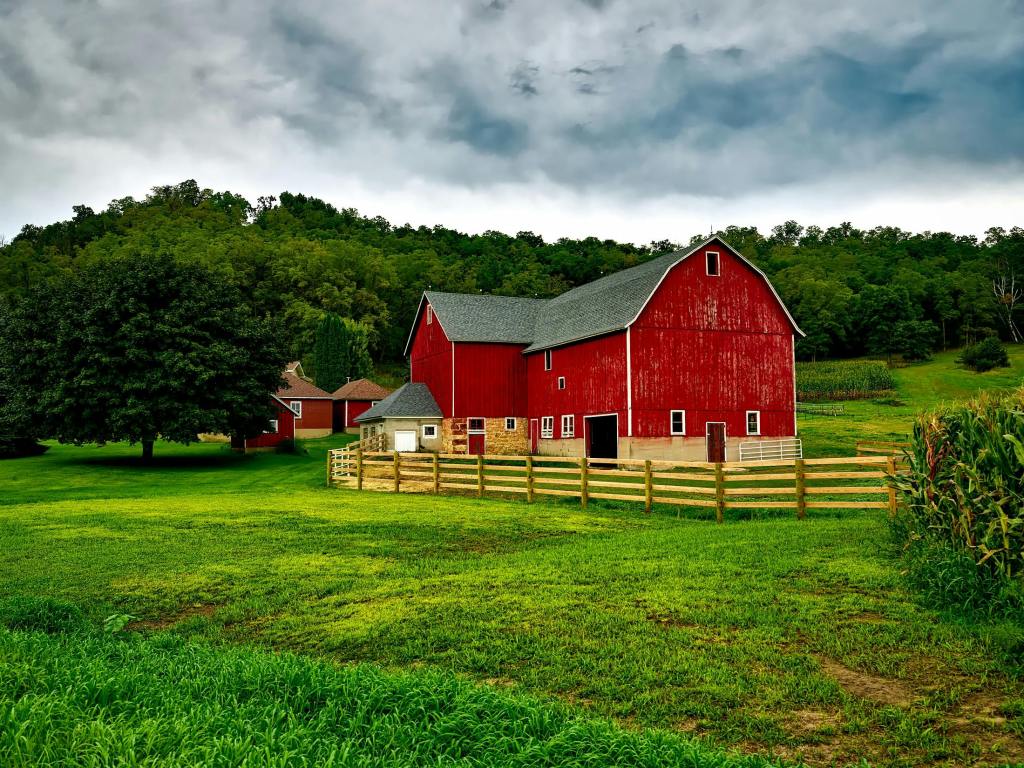
    Photo by Pixabay: https://www.pexels.com/photo/red-barn-235725/

    #JuneDairyMonth