Category: Gardening

  • Biggest Garden Yet: Lessons, Laughs, and Pig-Approved Produce

    Biggest Garden Yet: Lessons, Laughs, and Pig-Approved Produce

    We grew onions the size of softballs, harvested mushrooms from straw, and accidentally bred watermelons that tasted like cucumbers. It wasn’t perfect—but it was unforgettable.


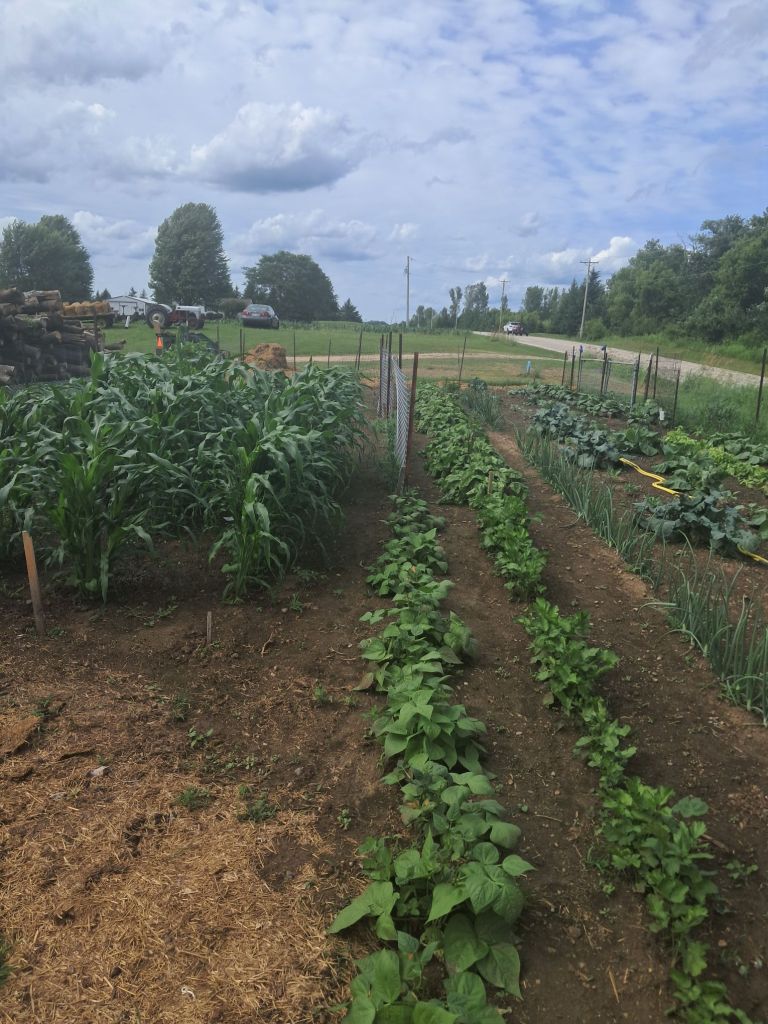
    There’s something grounding about tucking a garden in for winter. As we wrap up the 2025 season, I can’t help but look back on all the experiments. There were victories and “well, that didn’t work” moments from our biggest garden yet. From one-pound onions to hybrid mishaps, it’s been a year full of growth in more ways than one.

    Strong Starts and Small Wins

    This year, we tried something new—consistent weeding. Just fifteen minutes each evening turned the chaos of past summers into tidy, thriving rows. It wasn’t perfect, but it felt like real progress. Small, steady habits made a big difference.

    The Stars of the Season

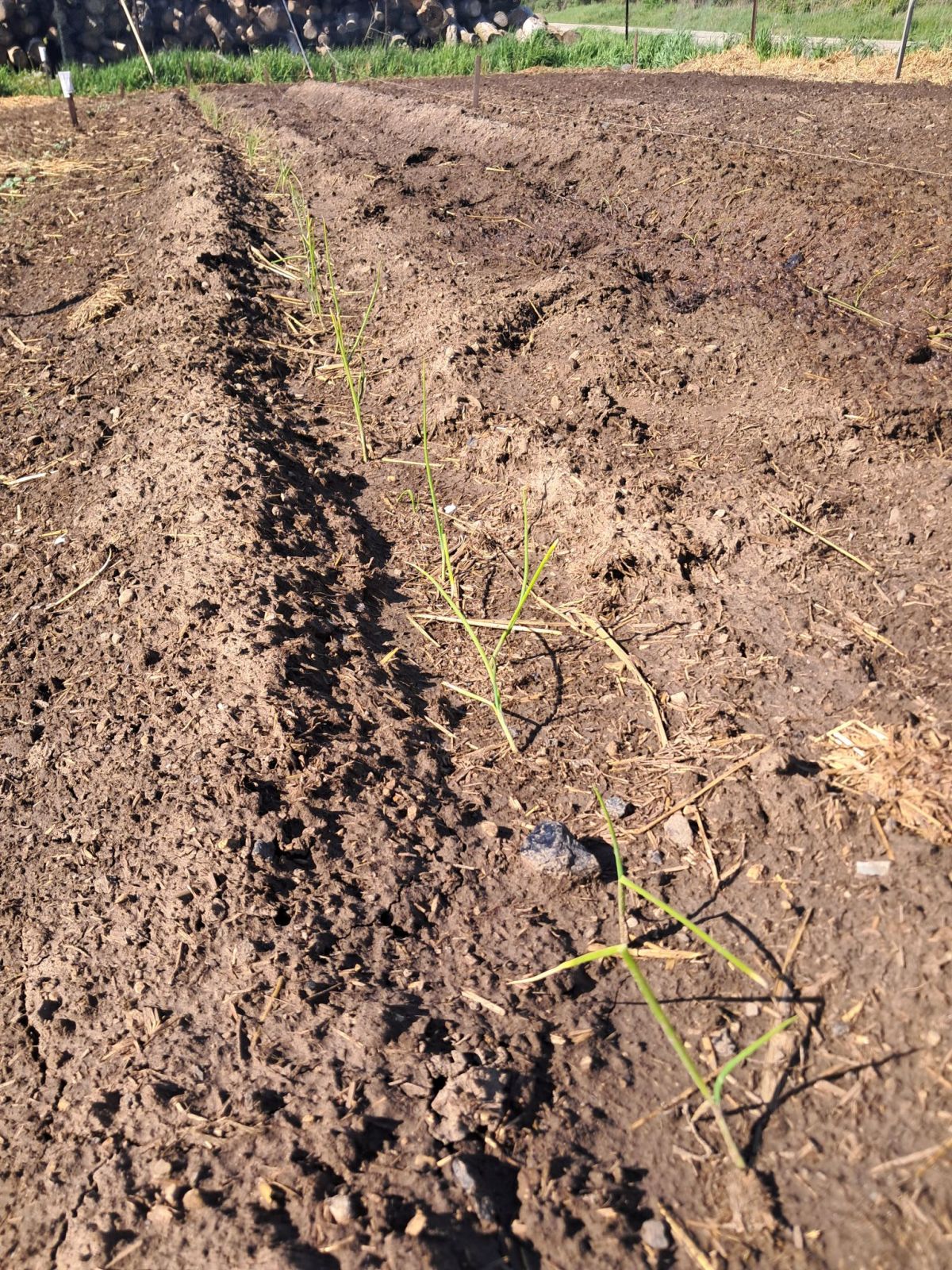
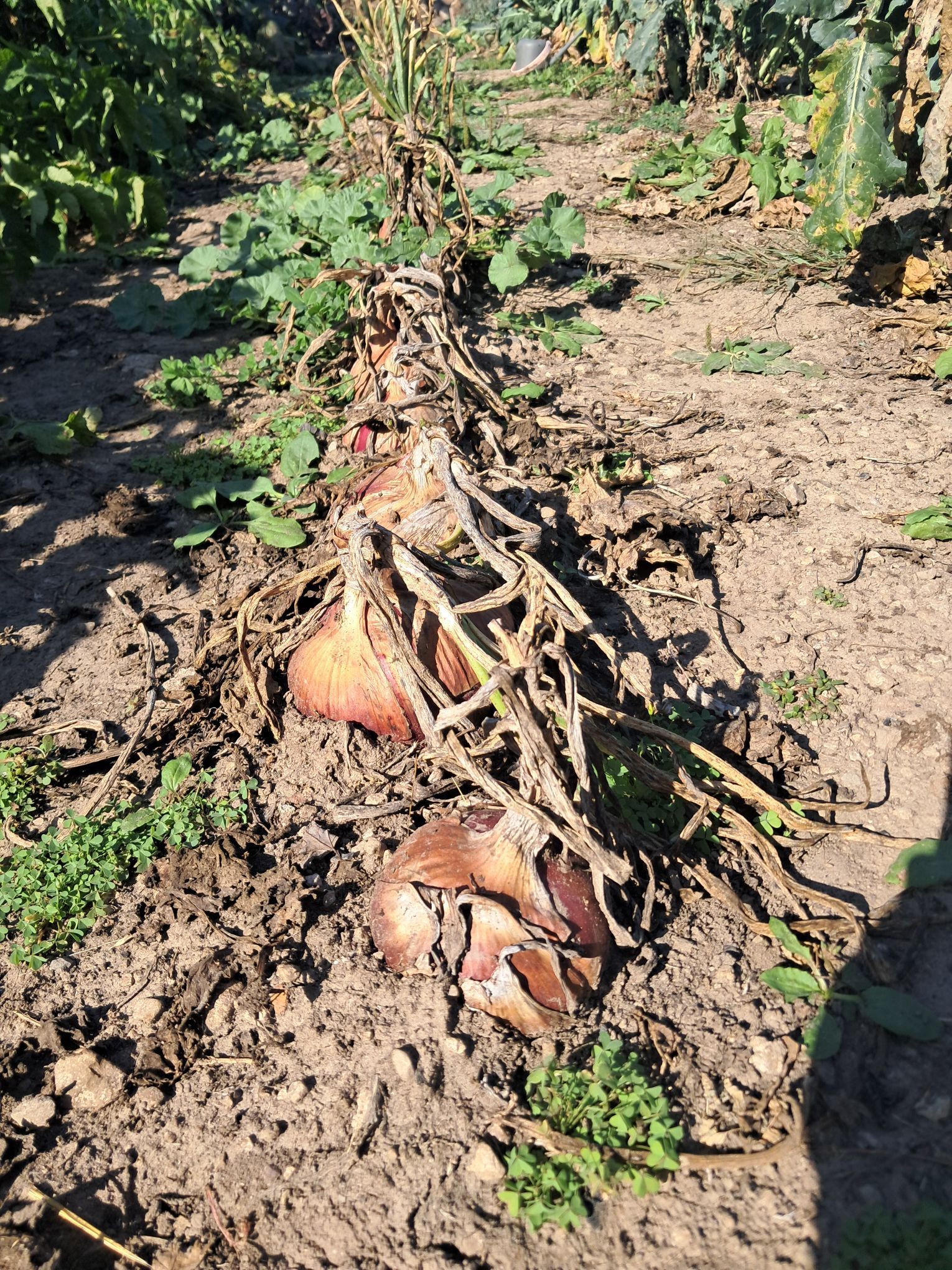
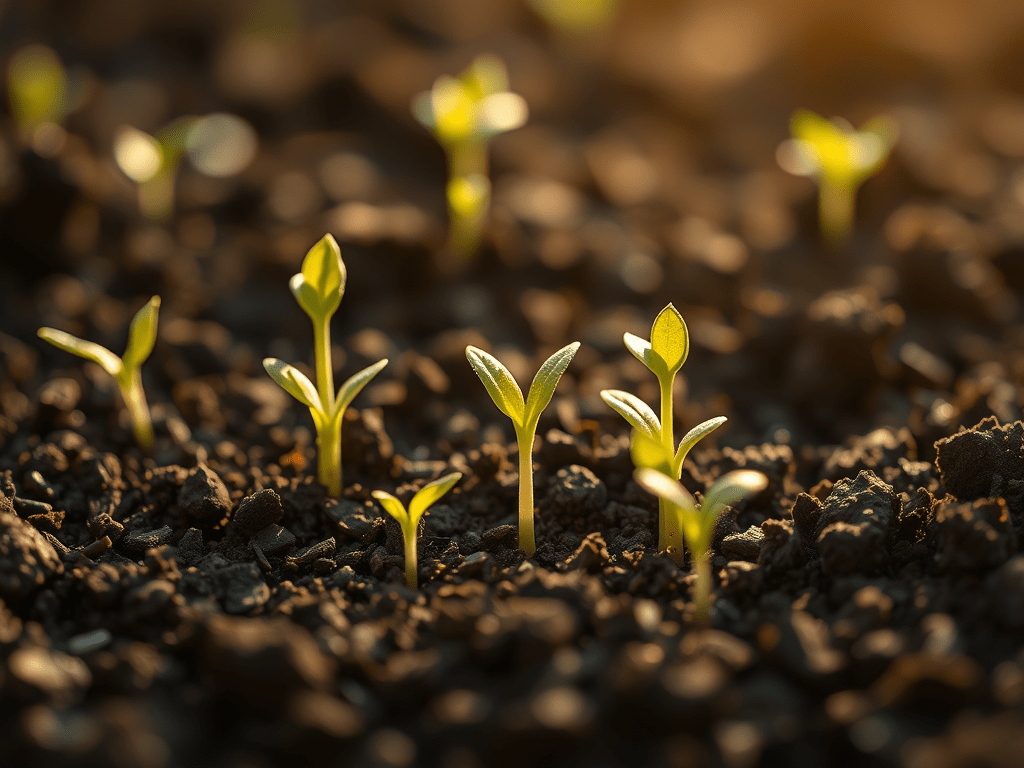
    Our onions stole the show. Started from seed, they matured into hefty red and yellow bulbs, some weighing over a pound. They’ll serve us well through the winter. It’s hard not to feel proud knowing how far they came from those tiny seeds.

    Onion sprouts

    We also are running a few fun experiments. Carrots will overwinter right in the garden under a thick layer of straw. The celery turned out beautifully—tall, green, and crisp—and I’m exploring ways to preserve it for soups and sauces. We even grew oyster mushrooms on straw, then added the spent substrate to enrich our Three Sisters garden beds.

    Natural Harmony: The Three Sisters Garden

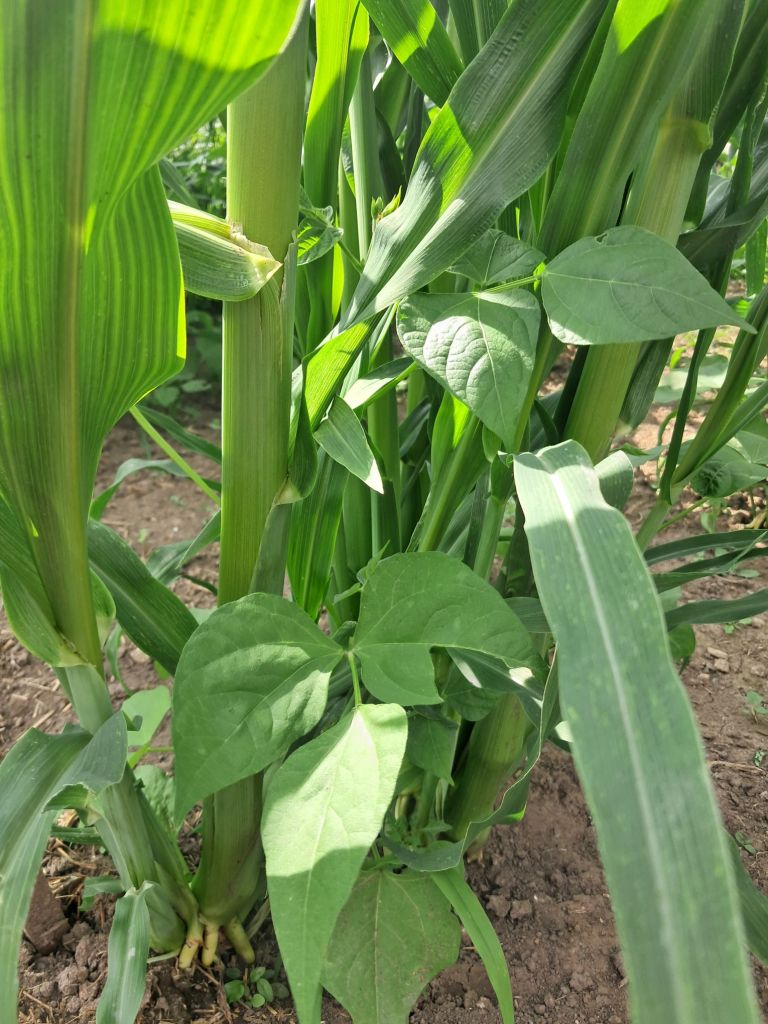
    The corn, beans, and squash worked together like old friends. The corn stood tall. The beans climbed gracefully up the stalks. The squash spread wide, shading the soil and keeping weeds away. Watching that ancient partnership in motion felt like seeing teamwork at its best.

    Tomato Chaos and Watermelon Surprises

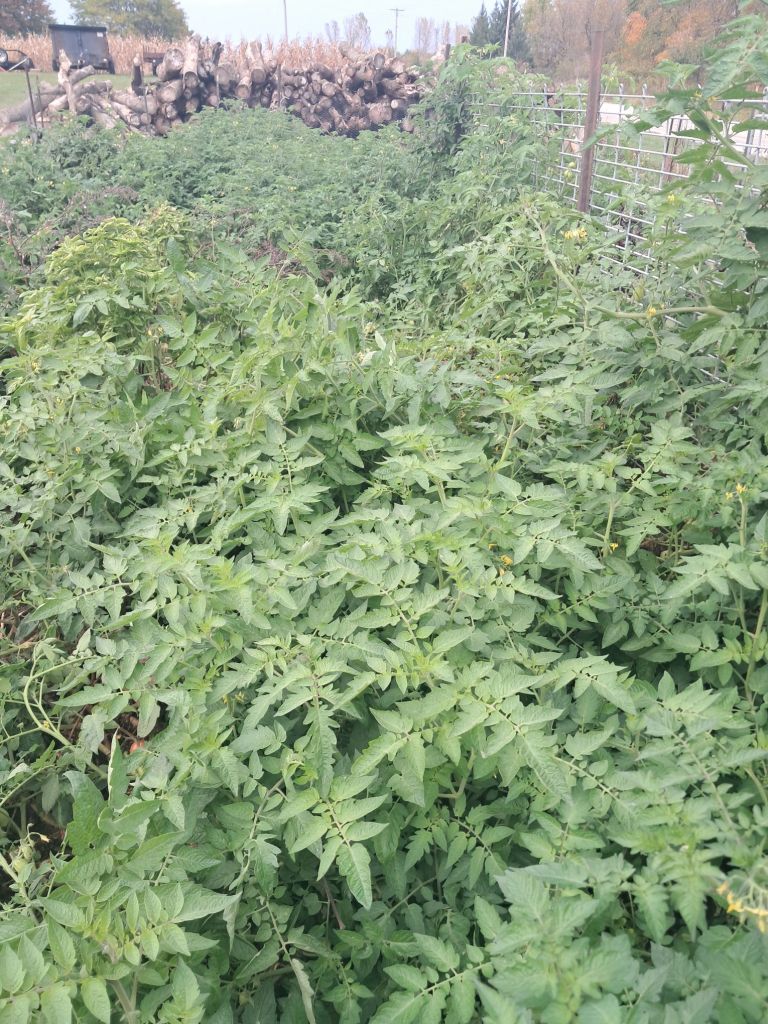
    Of course, no season is without its blunders. Our tomato patch turned into a jungle. Skipping the trellis was a rookie mistake, and by midsummer, the plants were an impenetrable mass of green. The cherry tomatoes only added to the chaos.

    Tomato jungle

    And then there were the watermelons—except they weren’t just watermelons. Somehow, they crossed with cucumbers, resulting in fruits that looked beautiful but tasted dismal. Definitely not something we’ll repeat, but it gave us a good laugh and another lesson in garden genetics.

    Beauty, Abundance, and a Helping Hoof

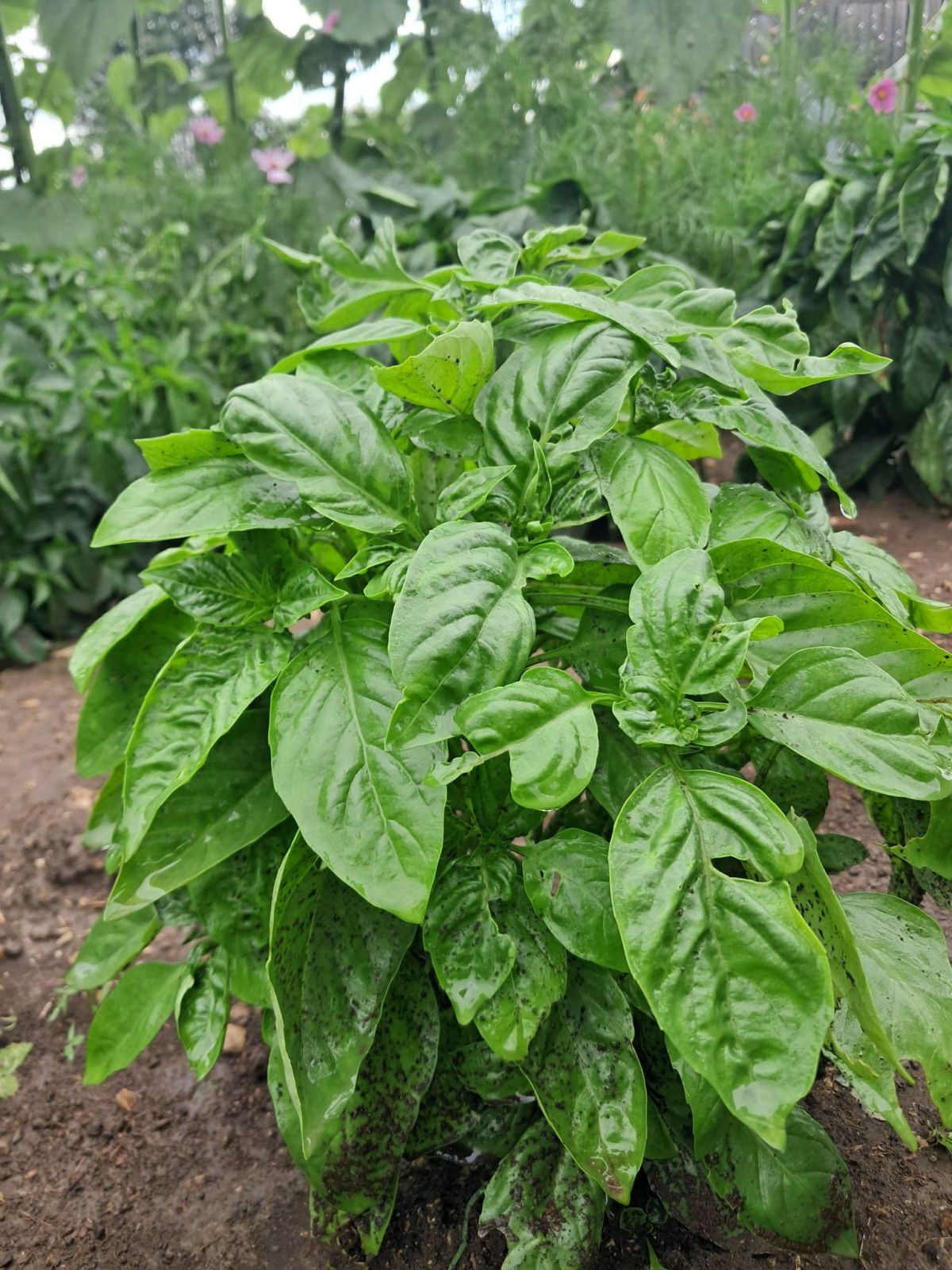
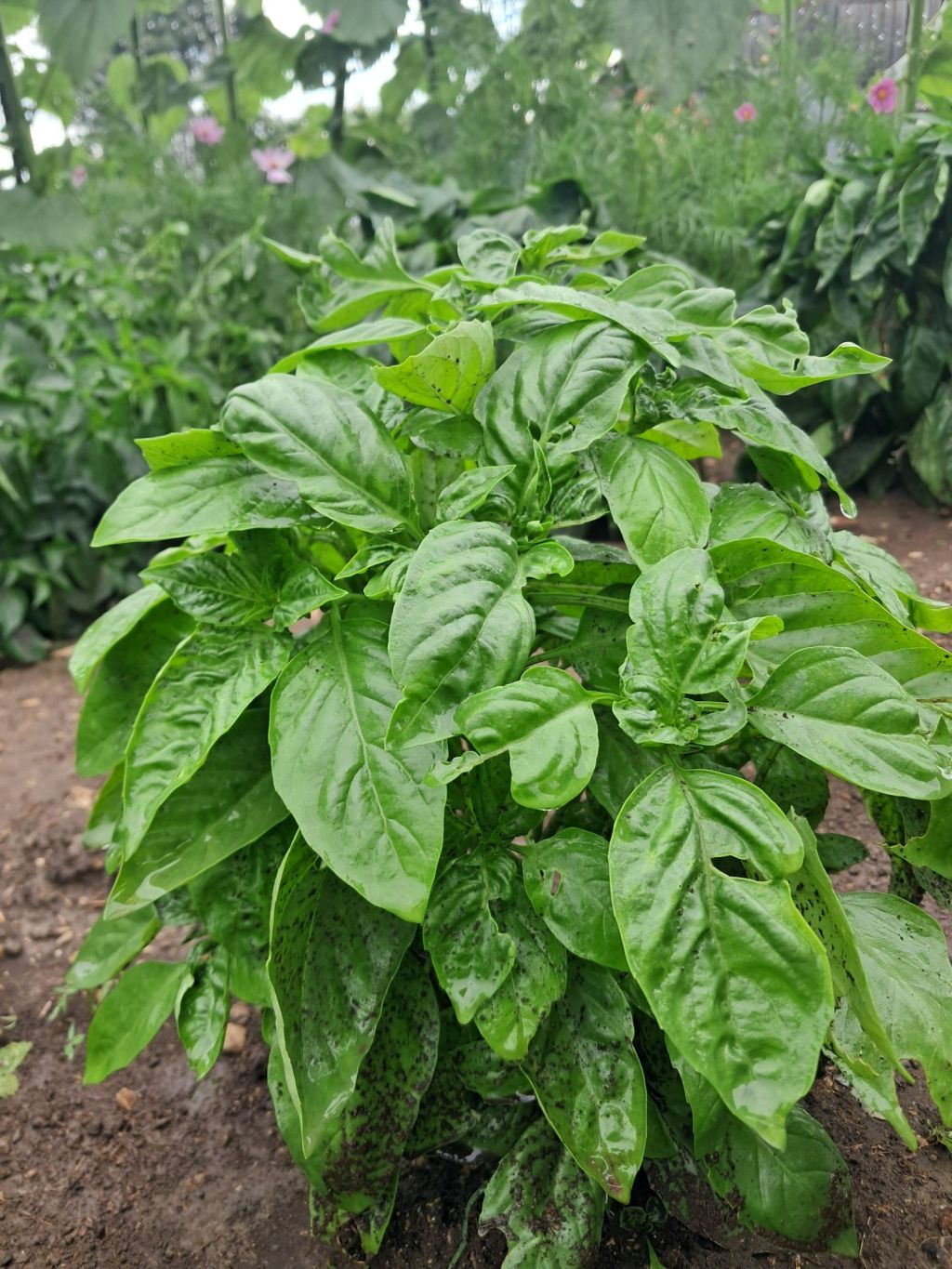
    The basil overflowed this year, so we got creative—pesto, basil salt, and enough dried leaves to last till next summer. It was fun sharing armfuls with friends and neighbors.

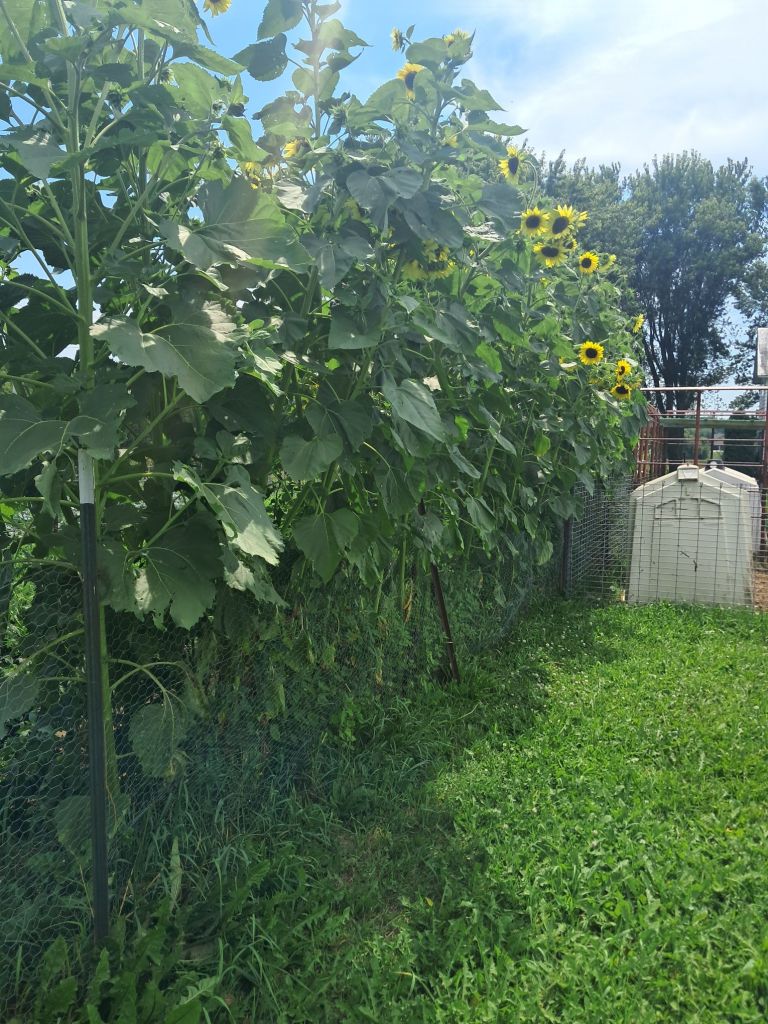
    Cosmos, marigolds, and sunflowers framed the whole garden, drawing pollinators and adding a cheerful backdrop to every harvest. And when our produce exceeded what we could use, our pigs were more than happy to indulge. Nothing went to waste; every harvest found its purpose.

    Lessons That Stick

    Every season teaches something new. This one reinforced patience, balance, humor, and gratitude. From those oversized onions to the watermelon-cucumber mystery, the garden reminded us that even the oddest outcomes have value.

    As we close the gate on this season, I’m thankful for muddy hands. I appreciate the full baskets and the quiet wisdom that comes from working close to the soil.

    Your Turn

    What garden surprises or “oops” moments stood out for you this year? Did something unexpected turn into a favorite memory? Share your stories in the comments below!

    Keep the Story Going
    If you enjoyed this peek into our growing season, give this post a like. Share it with your fellow gardeners. Subscribe for more garden updates, experiments, and lessons learned along the way.

    #gardening #garden #gardeninspiration #plants #nature #growyourown #homegrown #vegetablegardening #gardenlife #flowers #plantlover #springgardening

  • Learning from the Three Sisters

    Ancient Wisdom, Modern Lessons

    The “Three Sisters” — corn, beans, and squash — show what true collaboration looks like. Rooted in ancient Indigenous wisdom, this companion-planting method isn’t just sustainable; it’s a living model of balance.

    Corn stands tall and strong, offering the beans a natural trellis. The beans return the favor, fixing nitrogen that enriches the soil. Meanwhile, squash sprawls across the ground, shading the earth to keep in moisture and crowd out weeds. Together, they form a self-sustaining ecosystem — one that thrives through cooperation and reciprocity.

    A Lesson Replanted

    I first learned about the Three Sisters in grade school, probably around Thanksgiving, during a brief mention of Indigenous agricultural knowledge. I didn’t think much of it then. But last year, while searching for more sustainable gardening methods, the lesson resurfaced. Curious and skeptical, I decided to try it myself.

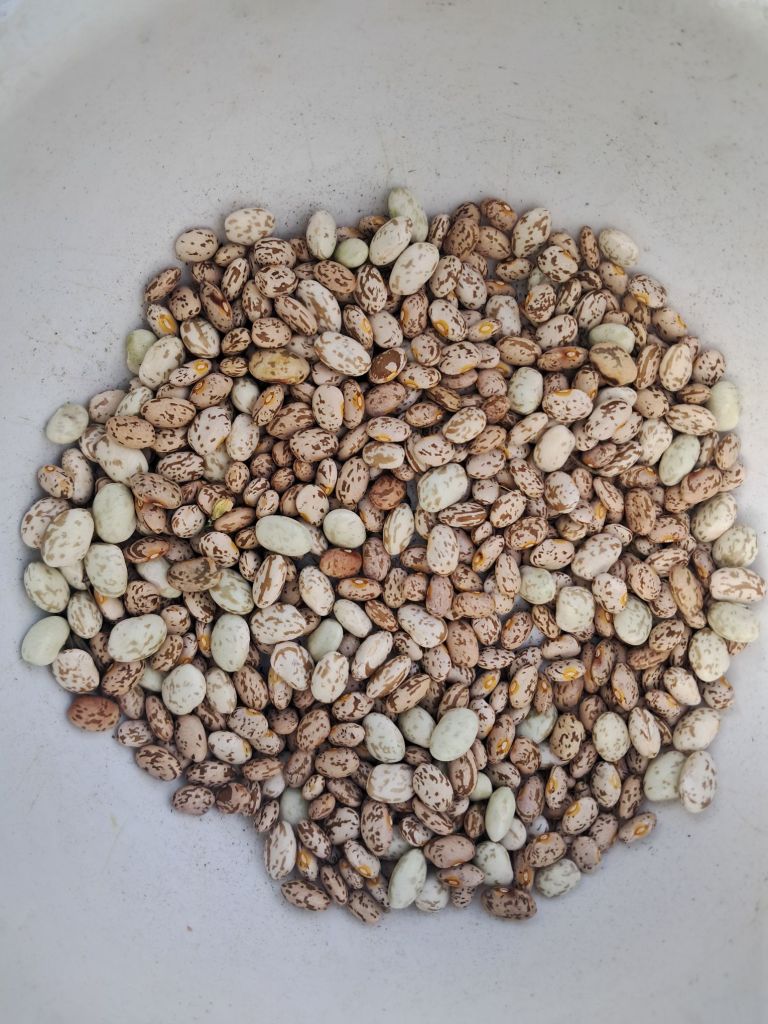
    Armed with blue dent corn seeds for homemade tortillas, pinto beans for the adventure, and leftover spaghetti squash seeds (because I couldn’t justify buying more), I planted in late May. The corn went in first, followed by the beans once the stalks reached ten inches, and then the squash two weeks after that.

    A Living Experiment

    To my delight, the beans twined effortlessly up the corn, just as promised. The old squash seed lagged behind but eventually pushed through, turning what looked like a “Two Sisters” garden into a full trio. For good measure, I added spent oyster mushroom substrate from another homestead experiment. Volunteer cherry tomatoes, which I didn’t have the heart to thin, soon joined the party — a wild, happy sprawl of coexistence.

    Harvest and Harmony

    By October, our small 25×10-foot plot had given us a treasure: a banana box of blue dent corn drying in the attic, a pound of pinto beans, and two proud spaghetti squashes still ripening. Even the leftover oyster mushroom spawn revived after each rain, and cherry tomatoes kept offering up baskets of surprises — nature’s generous encore.

    Seeing this ancient partnership unfold transformed a childhood lesson into something alive and immediate. The “Three Sisters” reminded me that balance isn’t about control — it’s about trust, patience, and reciprocity.

    Looking Ahead

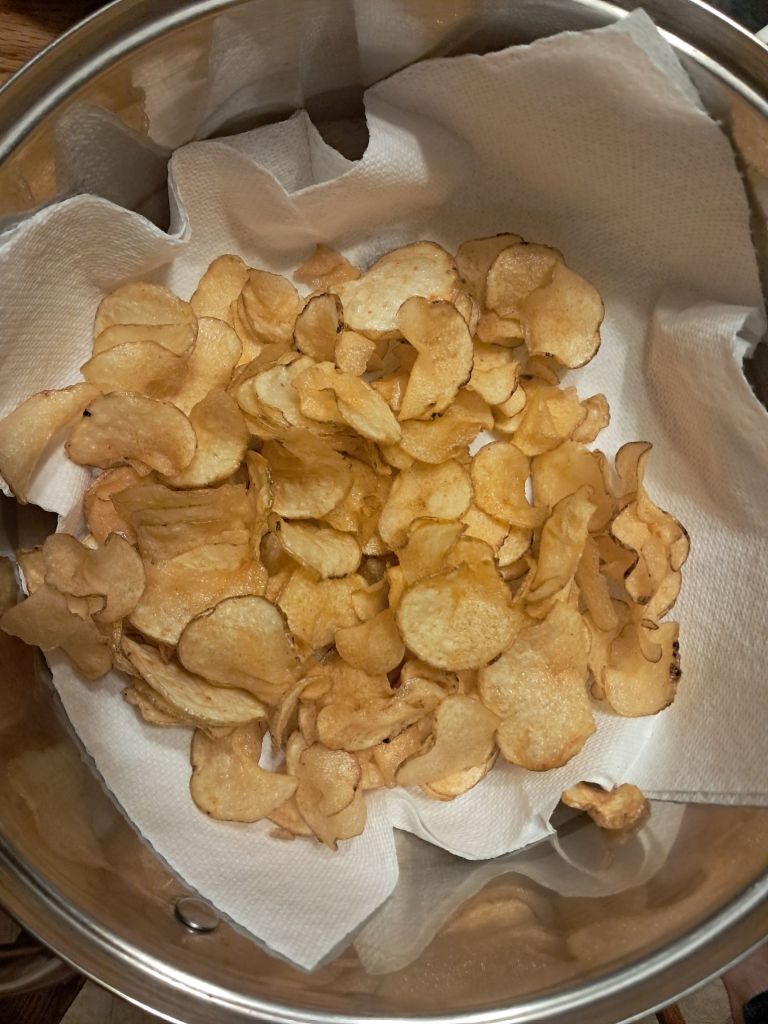
    Next spring, we’ll start earlier and use fresh squash seeds. But even now, the garden has offered more than food — it’s fed our curiosity, connection, and hope. My son’s dreaming of blue tortilla chips, and I’m dreaming of next year’s lessons, both in the soil and beyond it.

    Your Turn

    Have you ever grown something that changed how you see the world? Share your story in the comments — and if this post inspired you, give it a like, share it with a fellow grower, and subscribe for more gardening stories!

    #ThreeSistersGarden #RegenerativeGardening #IndigenousWisdom #SustainableLiving #GrowYourOwnFood #HomeGarden #NatureInspired #GreenLiving #SoilHealth #HomesteadLife #EcoFriendly

  • The Power of Local Food: Lessons from Ethnic Cooking

    Until I attended college, I believed that cultural influences on food were largely a thing of the past.  I grew up in a part of small-town Wisconsin where the cultural influence of my German dairy farming heritage had diminished over the years.  Regional dishes, while still present, were largely nationalized.  Food was sourced from boxes at the grocery store in the wintertime.  Even in summer, the food from gardens supplemented our dishes, but were never the bulk source of our food.  Farmers’ markets were present, but we did not patronize them.  I thought this was how everyone lived.

    The first chance I had to learn about different culinary experiences was after I started college in Madison, a nearby city.  From childhood on, I had always wanted to learn how other people lived, and suddenly I was surrounded by many different cultures.  European, Asian, and African cultures all coexisted together on campus, practically begging for me to observe their customs.  During my 6-year undergrad and graduate school tenure, I made Asian dumplings, drank Turkish coffee, watched African dance, and had hot pot many times with such great company.

    Towards the end of undergrad, I began working in a soils lab, performing experiments to better understand the swelling properties of bentonite clay.  For a person who majored in geological engineering, it was a dream come true and my first real job in my chosen industry.  Although the work was tedious and painstaking, I felt like I was finally flourishing as a professional.  And it beat one of my previous jobs of counting corn kernels.

    During this time, I frequently ate lunch with my Chinese coworker, whose parents had recently immigrated to Madison from China. I was always fascinated with his lunches.  Every day, he ensured he ate every morsel of food on his plate, saying “Every grain of rice is a drop of sweat from a farmer’s brow.”  His sautéed wood ear mushrooms looked delicious every time he brought them, which was frequently.  In turn, he seemed fascinated with my own solo culinary exploits during “spaghetti week”, the time I inadvertently made a pot of spaghetti so large it lasted for a whole week’s worth of lunches and dinners.  I was only too happy to share some with him, as anyone who has made too much spaghetti knows.  We became such good friends that he gladly accommodated me at his parents’ house during “Homeless Night”, the one night every year when the apartments near campus are prepared for next year’s leasers, and I needed a place to stay.

    That night, I was excited to ask how I could help him prepare supper.  The rice cooker was already humming as he grabbed a knife and basket and gestured me to follow him to his back yard.  Just outside the door was a green grass carpet about 6 inches tall and the footprint of a child’s backyard swing set.  These were Chinese chives, also known as garlic chives.  The patch was (and still is) the largest I had ever seen.  Using the knife, he carefully severed handfuls of chives at the base, leaving an inch for the stubs to regrow.  He slowly filled his basket, then proceeded to lead me back to the house.

    I kept him company that night as he prepared the most delicious sauteed Chinese chives over a bed of rice.  The wok sizzled as he poured in the oil then added the chives.  A faint allium smell wafted over to me as he added salt and pepper to taste.  Dinner was on the table in short order.  The chives were garlicky, salty, and chewy.  The rice was fluffy and perfect.  He prepared another dish, but for the life of me I cannot remember what it was.

    Ethnic traditions and edible landscaping were not completely new concepts at the time.  My family grew asparagus, horseradish, and rhubarb, perennial plants that were beautiful as well as being edible.  But it always seemed that these foods augmented a grocery store-sourced meal, not the other way around.  That simple dinner that my friend prepared was the first time I truly observed the power of the “outdoor pantry” in action.  Fresh, local food that comprises much of your dinner can be as close as your backyard and eaten within an hour of harvesting.  That meal made an indelible mark on me, and I’ve strived to source the bulk of my meals from local sources ever since.

    I’ve lost contact with this friend in the intervening years.  I moved several times, got married, and had 2 wonderful children.  Last I heard from him, he was still in Madison and enjoying himself.  If he’s reading this, I wish him well as he’s moving through life.  Your humble meal inspired me to prepare many simple delicious meals from my backyard.
    My personal priorities have changed over time, but my feelings about food remain unchanged.  I have been successful in expanding my food preparation skills over the years, learning to bake bread, preserve vegetables, and ferment cabbage into sauerkraut, a practice in line with my cultural heritage.  I have even started growing mushrooms for our table.  I still remember my friend from time to time as I establish and expand my chives patch or harvest an especially large bounty of food to share with family and friends.
    Did you learn something valuable from another culture? Share your stories below, and subscribe to join a community of like-minded people.