Category: Holiday

  • Our Simple, Budget‑Friendly Camping Setup for Family Road Trips

    Our Simple, Budget‑Friendly Camping Setup for Family Road Trips

    Camping was a big part of how we kept our 5‑day family road trip under $1,000, but we also wanted everyone to be comfortable enough to sleep. If you’re looking for a simple, budget‑friendly family camping gear list for road trips, here’s the camping setup and gear that worked for us—as well as what we’d change next time.


    This post is part of our 5‑Day Family Road Trip Series.
    We took our family of four (kids ages 2.5 and 6) on an 800‑mile road trip from southeastern Wisconsin to Michigan’s Upper Peninsula, camping most nights and keeping our total cost under $1,000. If you’d like to see the whole picture, check out the other posts in this series:

    You’re currently reading: Our Simple Camping Setup for Family Road Trips (On a Budget).


    Our Tent and Sleeping Setup

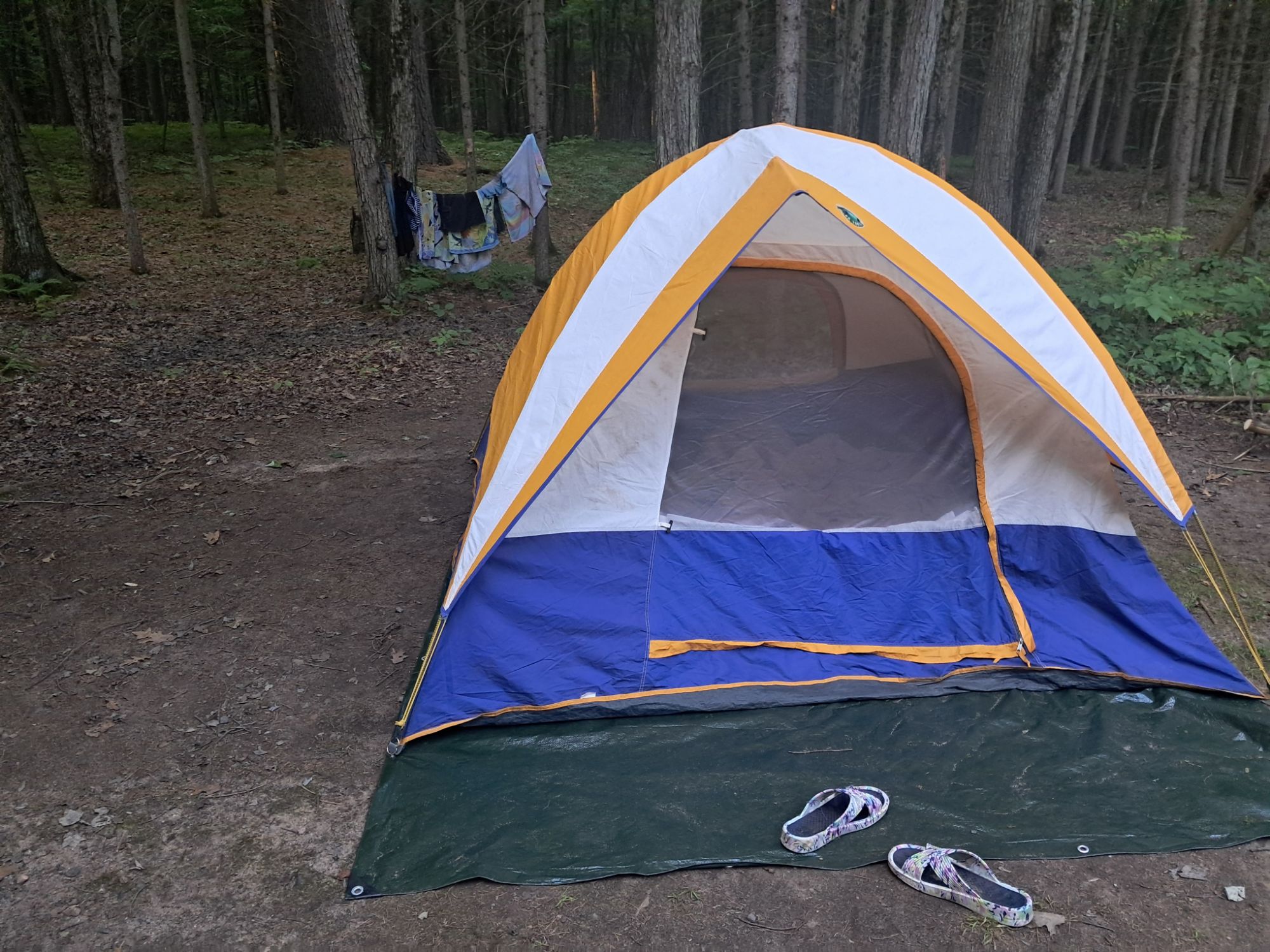
    We used a 4‑person tent with a tarp underneath to protect the floor. Inside, our layering strategy looked like this:

    Here’s our setup!
    • A puzzle‑piece mat covering the floor (36 pieces, each 1′×1′). Our kids loved assembling and disassembling it each day; it became part of the bedtime routine.
    • Four foldable sleeping mats on top of the puzzle mat to cushion and insulate.
    • A base blanket, then our main comforter on top.

    Temperatures at night were around 55°F. The kids were comfortable temperature‑wise, and we stayed warm, though my husband and I did wake up a bit stiff in the morning. This setup worked well for summer nights; for colder trips, we’d add more insulation.

    We also had headlamps for when it got dark, plenty of bug spray, and sunscreen, which made bedtime routines and late‑night bathroom trips much easier.

    Cooking at Camp

    We kept dinners simple and hearty:

    • Rotisserie chicken and potato wedges one night (easy grocery‑store meal).
    • Chorizo, black beans, and rice tacos with all the fixings.
    • Potato hash with chorizo, onions, and peppers from our garden.
    • A dehydrated jambalaya mix “boosted” with hot dogs.
    Jambalaya, I prepared the rice mixture earlier and dehydrated it, then we sliced and fried the hot dogs before we rehydrated the rice in a Dutch oven.

    Pre‑Dehydrated Meals

    For two of those dinners—the black beans and rice tacos and the jambalaya—I did most of the work ahead of time. I cooked the dishes in my Instant Pot at home, then used my dehydrator to dry them. At camp, we simply rehydrated them in our Dutch oven. The food was delicious, and I’d recommend this approach to anyone looking for easier camping cooking with limited gear. It also helped reduce what we needed to keep cold in the cooler.

    Breakfasts included:

    • One failed experiment with overnight oats (we ate a few bites and tossed the rest).
    • Leftover tacos repurposed as breakfast tacos (a win).
    • Classic bacon and eggs on the other mornings.

    S’mores were a nightly ritual, and the kids were happily sticky by the end of each evening.

    We didn’t rely on elaborate gear—just basic cooking equipment suitable for a campfire or simple stove. We had a Dutch oven, a coffee percolator, tongs, a spoon and spatula, a camping set of metal plates, bowls, and cups, plus a cutting board and a knife.

    We stored our coolers on the back rack of the car, which freed up interior space and made food access easier at camp. For water, we hauled it in a repurposed 1‑gallon plastic jug (not from milk) and refilled as needed from campground spigots.

    The “Oh No” Box

    My husband prepared an “oh no” box to cover basic car troubles:

    • Essential tools like wrenches, pliers, a hammer, and screwdrivers.
    • Tow straps.
    • A basic code reader.

    To make it less tempting for theft, he tucked the toolbox inside an old cooler and strapped it shut in the car. We didn’t end up needing it, but knowing it was there made us more comfortable camping and driving in unfamiliar areas.

    Our “Oh No” box, which we hid in a cooler on the back rack of the car to deter potential marauders.

    Managing Limited Space

    We were tight on space in our 2018 Subaru Crosstrek. Every morning, my husband essentially played car Tetris to fit everything:

    • Camping gear
    • Food and cooking supplies
    • Clothes and personal items

    We used a back rack for coolers and realized that a roof “bubble” would have made packing easier; that’s on our list for future trips. If you’re in a small SUV or crossover, this kind of packing puzzle will probably feel familiar.

    What We’d Keep and What We’d Change

    We’d keep:

    • The puzzle mat, which doubled as a comfort upgrade and a kid activity.
    • Simple, filling meals that didn’t require fancy equipment, especially the pre‑dehydrated Instant Pot meals we could easily rehydrate at camp and that saved cooler space.
    • The “oh no” box for peace of mind.

    We might change:

    • Add a few more comfort touches for adult sleep—slightly thicker mats or compact pillows.
    • Invest in that roof carrier to ease packing and unloading.

    If you’re assembling your own camping setup for a family road trip, you don’t need to buy everything new or go ultra‑technical. Focus on warmth, cushioning, and simplicity—and on what will make your particular family feel safe and at ease.


    Want help pulling all the trip details together?

    My printable Family Road Trip Planner & Budget Pack includes a camping-friendly packing checklist, budget tracker, itinerary planner, and meal planner.


    What’s one piece of camping gear or one meal that’s become a must have for your family on the road? Share your favorites—or what you’d add to this setup—in the comments, and send this post to a friend planning a camping road trip.

    Read More Here: Mixtapes, Meltdowns, and Magic: A Family Road Trip to Remember

  • How We Survived Long Car Days with a 2.5‑Year‑Old and a 6‑Year‑Old

    How We Survived Long Car Days with a 2.5‑Year‑Old and a 6‑Year‑Old

    We loved our 5‑day, 800‑mile road trip—but we also had moments when our kids (and us, for that matter) clearly had too much car time. Here’s what helped us get through the long stretches on our road trip with a 2.5‑year‑old and a 6‑year‑old in the back seat.


    This post is part of our 5‑Day Family Road Trip Series.
    We took our family of four (kids ages 2.5 and 6) on an 800‑mile road trip from southeastern Wisconsin to Michigan’s Upper Peninsula, camping most nights and keeping our total cost under $1,000. If you’d like to see the whole picture, check out the other posts in this series:

    You’re currently reading: How We Survived Long Car Days with a 2.5‑Year‑Old and a 6‑Year‑Old.


    Naming the Challenge: Too Much Car Time

    Even with a thoughtfully planned itinerary, there were stretches where everyone was tired, squirmy, and ready to be anywhere other than buckled into a car. We tried to acknowledge that openly instead of expecting perfect behavior just because we were “on vacation.”

    We also chose not to use screens in the car. Both my husband and I grew up taking long car rides without screens, and our stance is that it takes patience from us as parents to instill a “sense of boredom” in our kids so they’re not constantly engaged by devices.

    This approach won’t be the right fit for every family, but it’s working for us right now.

    It can be challenging, but we’re already seeing the fruit of that effort—our son is very observant, and our daughter is becoming more so every day.

    Our Go‑To Tools

    We leaned on a few simple things to make long stretches more manageable.

    Spotify playlists
    We played a lot of ’60s–’80s music—songs we knew well enough to sing along with, and that set a different mood than everyday kid music. My son loves to sing along, and like me, he likes to make up his own humorous lyrics at times. A fun example is “I got my tractor stuck” instead of AC/DC’s “thunderstruck.” My daughter is just getting to that age where she’s starting to sing along to the words.

    “I spy” and simple games
    Classic, but effective. Looking for colors, shapes, and specific kinds of vehicles or buildings helped keep their eyes outside and minds engaged.

    Simple Toys
    We did have a little light up fidget toy (with switches and knobs to control the lights) and an erasable drawing board in the car. We’ve used them for previous road trips, but we didn’t need them this time.

    This is the toy we have. I have no idea why, but the kids absolutely love it, and it’s helped my daughter calm down from temper tantrums on numerous occasions.

    Talking about the sights outside
    When we passed mines, ore docks, old industrial sites, lakes, or unusual rock cuts, we pointed them out and talked about what they were. We also talk about transmission lines, interesting buildings, and the architecture of the time—we all have a thing for well‑built Victorian buildings.

    Just one of the many places we talked about. This is an ore dock in Marquette, MI that actively loads iron ore onto ships to haul around the Great Lakes. We stood and watched the ship be loaded for about 45 minutes, and a ship engineer even came and talked to us for a couple minutes about the ship. My son talked about this for days after the fact.

    Stories tied to places
    My husband and I shared specific memories about towns, rivers, or landmarks we’d known from earlier in life, which made the drive feel like a tour of our own past as well.

    Science, History, and Mining Conversations

    Because this trip visited several mining sites and industrial areas, we had natural openings to talk about:

    • Where materials like iron ore and copper come from.
    • How ships and trains move goods.
    • What these towns were built around historically.

    We didn’t turn the car into a classroom, but weaving in science and history kept everyone thinking and made the landscape more interesting.

    Geological pothole below a waterfall, just one of the things we talked about on our road trip.

    Snacks (and Realistic Expectations)

    We brought plenty of snacks, but not all of them were kid hits. Our wasabi‑soy almonds were a flop with the kids and a win for the adults. They liked simpler, familiar snacks—things they’d eat at home and didn’t have to “learn” in the car.

    We found it helped to:

    • Offer snacks at natural breaks, not constantly.
    • Pair snack time with a quick stretch outside the car whenever possible.

    Our Longest Drive and What We’d Do Differently

    Our longest drive was about 5 hours. We planned that for the second day of the trip, when we were all still freshest. That was also the night we let the kids run amok on the nearby playground instead of asking them to help set up camp. After that much car time, they needed the freedom to move more than they needed to “help.”

    If we were planning another similar trip:

    • We’d probably shorten a couple of the driving days or add an extra playground stop on the longest stretches, even though we did already schedule the longest drive early in the trip.
    • We’d prep more kid‑specific playlists or audiobooks, so they had something “of their own” to look forward to within our screen‑free framework.

    The main lesson: long car days with little kids can be rough, but music, conversation, games, snacks, and realistic expectations—plus a willingness to embrace some boredom—go a long way toward making them manageable.


    If you’re planning a road trip with kids and want to keep all the practical details in one place, I made a printable 5-Day Family Road Trip Planner & Budget Pack with itinerary, packing, and meal-planning pages.


    How do you handle long car rides with your kids—screens, games, music, or something else? Share what’s worked (or what hasn’t!) in the comments, and pass this along to a friend planning a family road trip.

    If this screen‑free approach and set of ideas was helpful, please like this post and share it with another parent who’s gearing up for a long drive with little kids.

    Read More Here: How Curiosity Keeps Me From Feeling Bored (Even on Long Car Rides With Kids)

  • 5‑Day Upper Peninsula Family Road Trip Itinerary (With Kids)

    5‑Day Upper Peninsula Family Road Trip Itinerary (With Kids)

    If you’re dreaming about taking your family to Michigan’s Upper Peninsula, here’s the exact 5‑day Upper Peninsula family road trip itinerary we followed with our 2.5‑year‑old and 6‑year‑old. We camped most nights, kept drives manageable, and built in plenty of kid‑friendly stops.

    We booked our campground reservations ahead of time through the state and local park systems, which made it easier to relax and not worry about finding last‑minute sites once we were on the road. The region is full of lakes, forests, and mining history, and it’s a great alternative to more crowded tourist areas.


    This post is part of our 5‑Day Family Road Trip Series.
    We took our family of four (kids ages 2.5 and 6) on an 800‑mile road trip from southeastern Wisconsin to Michigan’s Upper Peninsula, camping most nights and keeping our total cost under $1,000. If you’d like to see the whole picture, check out the other posts in this series:

    You’re currently reading: Our Upper Peninsula Family Road Trip Itinerary (5 Days with Kids).


    Day 1 / Night 1: Green Bay, Wisconsin

    We drove from southeastern Wisconsin to Green Bay (about 2 hours), stayed with good friends, and had pizza for dinner. This first evening was intentionally simple: a shorter drive, familiar faces, and an easy meal.

    Day 2 / Night 2: Palms Book State Park and Marquette

    We drove about 3 hours to Palms Book State Park to see Kitch‑iti‑kipi, the “Big Spring,” with its glass‑bottom viewing raft. From there, we continued about 2 hours on to Marquette, Michigan. We camped at Tourist Park Campground, where the kids could burn off energy on the playground while we set up camp.

    Kitch-iti-kipi and the crystal clear water in Palms Book State Park.

    This day blended driving with a memorable natural stop and playground time, which helped keep the kids balanced.

    Day 3 / Night 3: Marquette, Ishpeming, and Lake Linden

    Ore dock loading iron ore in Marquette, Michigan.

    We spent a slow morning in Marquette watching the ore dock and a ship being loaded with iron ore from the overhead trains. Then we drove about 20 minutes to Ishpeming, Michigan, to tour the Cliffs Mine, giving us all a chance to learn more about the area’s mining history. After the tour, we continued about 2 hours northwest to Lake Linden, just beyond Houghton/Hancock. We camped at Lake Linden Campground.

    An old mining truck that is now on display at Cliffs Mine Museum in Ishpeming, Michigan.

    The mix of industrial scenery, hands‑on learning, and a quieter campground made this day feel full but not frantic.

    Day 4 / Night 4: Hancock, Quincy Mine, and Porcupine Mountains

    We drove around the Keweenaw Peninsula, visiting an old lake sediment dredge and copper processing site—visual reminders of the region’s mining past. We toured the Quincy Mine, another highlight for both kids and adults. We hadn’t booked our tour in advance and got lucky with availability; for future trips, we’d recommend reserving Quincy Mine tickets ahead of time, especially in busier seasons.

    We explored an old dredge that was abandoned near Hancock, Michigan.

    We stopped at Keweenaw Brewing Company for a flight of beers (parents’ treat), then headed about 1.5 hours south to Porcupine Mountains State Park and watched the sunset over Lake Superior after setting up camp.

    The sunset at the Porkies was one of the emotional peaks of the trip: simple, beautiful, and shared as a family.

    Sunset over Lake Superior

    Day 5 / Night 5: Porcupine Mountains, Wakefield, and Council Grounds

    We spent the morning exploring the Porcupine Mountains—sights, overlooks, and waterfalls. On our way south, we grabbed pasties in Wakefield, Michigan, a local staple. We drove back into Wisconsin to Council Grounds State Park (about 3 hours away), where we went swimming above the dam in the Wisconsin River.

    Swimming in Council Grounds State Park.

    This was a high‑activity day, heavy on nature and movement, which worked well after several driving days.

    Day 6: Stevens Point and Home

    We enjoyed a slow morning at Council Grounds State Park. Then we stopped in Stevens Point (about 1 hour away) for a picnic lunch by the water at Iverson Park. Finally, we finished the roughly 2‑hour drive home to southeastern Wisconsin.

    Ending with a relaxed morning and a picnic kept the return from feeling abrupt.

    Why This Itinerary Worked for Us

    • Drives were broken up by playgrounds, parks, and tours, so the kids weren’t stuck in the car all day.
    • We alternated high‑activity days (waterfalls, mine tours) with slower ones (scenic viewing, playground time).
    • The route offered natural beauty, industrial history, and kid‑friendly stops without expensive theme parks.
    • Booking campgrounds ahead of time removed a layer of stress, while leaving some flexibility (like our Quincy Mine visit) for serendipity—though next time, we’d reserve that tour in advance too.

    This Upper Peninsula family road trip with kids worked well for our 2.5‑year‑old and 6‑year‑old. Use it as a starting point, and don’t be afraid to swap in your own favorite parks or small towns along the way.


    Planning your own version of this trip?

    I put together a printable Family Road Trip Planner & Budget Pack with a 5-day itinerary planner, budget worksheet, packing checklist, and meal planner to make the process easier.


    Have you taken your kids to the Upper Peninsula or somewhere similar? Share your favorite stops—or what you’d add to this route—in the comments.

    And if you know a family planning a UP trip, send this itinerary their way!

    Read More: Signed House Contract at Used Car Lot-On Our Honeymoon Trip to Alaska

  • How Our Family of Four Took a 5‑Day Road Trip for Under $1,000

    How Our Family of Four Took a 5‑Day Road Trip for Under $1,000

    My family of four recently took a 5‑day, 800‑mile budget road trip from southeastern Wisconsin to Michigan’s Upper Peninsula—and spent under $1,000. Here’s our exact budget and the choices that made it possible.


    This post is part of our 5‑Day Family Road Trip Series.

    We took our family of four (kids ages 2.5 and 6) on an 800‑mile road trip from southeastern Wisconsin to Michigan’s Upper Peninsula, camping most nights and keeping our total cost under $1,000. If you’d like to see the whole picture, check out the other posts in this series:

    You’re currently reading: How Our Family of Four Took a 5‑Day Road Trip for Under $1,000.


    Trip Overview

    We traveled with our 2.5‑year‑old daughter and 6‑year‑old son, camping most nights and staying with friends for one night. Our route took us through Green Bay, Marquette, the Keweenaw Peninsula, the Porcupine Mountains, and back home via central Wisconsin.

    I didn’t set out with a specific budget target in mind; I simply tracked expenses along the way. Looking back at the numbers showed us what really helped keep costs down.

    Our Budget Breakdown

    Here’s how our costs shook out for 5 days:

    • Lodging (4 nights camping in state and local parks, 1 night with friends): $156
    • Food (mostly groceries: sandwich supplies, snacks, beer, campfire dinners): $404
    • Gas (2018 Subaru Crosstrek, about 32 miles per gallon): $101
    • Entertainment and souvenirs (mine tours, a brewery flight, small treats): $195

    Total for 5 days, family of four: $856.

    Under $1,000 is still a significant amount of money, but for us, it felt like a good balance between keeping costs reasonable and enjoying meaningful experiences.


    Want a printable version of this planning process?

    I made a simple 5-Day Family Road Trip Planner & Budget Pack with a budget tracker, itinerary planner, packing checklist, and meal planner. It’s designed to help families plan a road trip without starting from scratch.


    Tips That Helped Us Keep Our Family Road Trip Under $1,000

    Each of these decisions ties directly to one of our main expense categories—lodging, food, gas, and entertainment.

    Camp instead of hotels for most nights.
    Four nights in state and local parks kept lodging costs low and gave the kids built‑in playgrounds, nature time, and playmates.

    Our camping setup

    Cook most dinners at camp.
    Rotisserie chicken, tacos, potato hash, and a simple jambalaya made from a dehydrated mix and hot dogs were all easy to cook over a camp stove or fire. Groceries cost less than restaurant meals, especially for a family of four.

    Jambalaya, one of the camping dehydrator meals we made ahead of time and rehydrated at the campsite.

    Pack an “oh no” box.
    My husband, an auto mechanic by training, packed a box with basic tools, tow straps, and a simple code reader. We never needed it, but knowing we could handle minor roadside issues kept us from feeling pressured into extra services “just in case.”

    Our “Oh No” box, with simple tools that would help us if we had trouble on the road.

    Choose a route with low‑cost, high‑value stops.
    State parks, playgrounds, scenic ore docks, mines, waterfalls, and lake views gave us plenty to do without pricey attraction tickets every day.

    Overlooked Falls in Porcupine Mountains State Park

    Let kids help with camp setup and fun.
    Our puzzle‑piece floor mat became a nightly “game,” and s’mores and playgrounds turned simple evenings into memorable ones.

    Have a contingency plan for bad weather.
    We agreed that if it poured, we’d grab a hotel instead of pushing through miserable camping. We didn’t end up needing that backup, but it helped us relax while still budgeting primarily for camping.

    A Quick Look at Our Route

    Here’s a short overview of where we went each day:

    • Night 1: Drive to Green Bay, stay with friends.
    • Day 2: Palms Book State Park and Kitch‑iti‑kipi; camp in Marquette.
    • Day 3: Ore dock in Marquette, Cliffs Mine in Ishpeming, camp near Lake Linden.
    • Day 4: Hancock and old industrial sites, Quincy Mine tour, camp and sunset at Porcupine Mountains State Park.
    • Day 5: Porcupine Mountains waterfalls, pasties in Wakefield, camp at Council Grounds State Park.
    • Day 6: Slow morning, picnic in Stevens Point, then home.

    If you’d like a detailed day‑by‑day itinerary, I’ve written that up separately and will share it here when it’s posted.

    What It Was Like with Young Kids

    We definitely had moments where the kids had too much car time—every parent knows that special brand of restlessness. Spotify playlists (mostly ’60s–’80s music), “I spy,” conversations about the sights outside, and lots of science, history, and mining talk helped turn those stretches into shared experiences instead of just “Are we there yet?” loops.

    I’ll cover our car‑time strategies in more detail in another post, but the short version is: simple games, engaging conversation, and familiar music go a long way.

    A Few Caveats and Small Joys

    We were lucky with weather: it didn’t rain, which made camping much more pleasant. We also met kind people along the way—camp neighbors who shared s’mores, a ship’s chief engineer and his son who took a moment to explain the ore dock, and a stranger who offered to take a sunset photo of all four of us at the Porcupine Mountains.

    Those moments reminded us that budget travel isn’t just about saving money; it’s also about being open to the small connections you find on the road.

    Want a printable version of this planning process?


    If you’ve taken a budget minded family road trip, I’d love to hear one choice you made that helped keep costs down without cutting out the fun. Share your story in the comments—and if you know someone planning a family trip, send this their way!

    If this breakdown was helpful, please like this post and share it with a friend who’s dreaming about a family road trip on a budget.

    Read More: Simple Summer Fun that Doesn’t Break the Budget

  • How to Be Quietly Patriotic This Fourth of July

    How to Be Quietly Patriotic This Fourth of July

    Every Fourth of July, there’s a lot of noise—fireworks, parades, red‑white‑and‑blue everything. I don’t begrudge any of it.  In fact, I embrace all of it, and these events are some of my favorite of the summer. But my own patriotism tends to show up in quieter ways, especially as we head toward America’s 250th birthday in 2026.

    This season isn’t just about looking up at the sky. It’s about looking back with gratitude, looking around with clear eyes, and asking how we can love this place well in the small, ordinary days we’ve been given.


    Remembering the People Who Got Us Here

    When I think about America 250, my mind goes first to gratitude—for the people who made it possible for me to be here at all.

    My own ancestors left Germany in the mid‑1800s, walking away from upheaval and uncertainty. They traded familiar villages and language for the unknowns of an ocean crossing and a new country. I think about what it must have taken for them to move entire families and villages to a new country. I picture them on crowded docks, clutching children and trunks.  In their arms they carried everything they owned in the world, placing a fragile hope in a place they had never seen.

    They came because they believed there might be room here to build a life, raise families, worship freely, work hard, and build a legacy. That courage—and the opportunities they found—is a gift I didn’t earn but get to receive. Remembering that fills me with humility and gratitude, not guilt.


    Learning Our History as an Act of Love

    When we love a person, we usually want to know their whole story—the good, the hard, the in‑between. I think loving a country can be similar.

    Quiet patriotism, for me, means:

    • Celebrating the ideals that shaped this place—liberty, self‑government, freedom of speech and assembly.
    • Learning more about the people who helped build those ideals into reality: farmers and factory workers, teachers and soldiers, abolitionists and suffragists, civil rights leaders and small‑town organizers.
    • Making room in my understanding for stories that aren’t just like mine, so I can better appreciate how wide and complicated “we the people” really is.

    For me, learning the harder parts of our history doesn’t lessen my love for this country; it deepens it. This isn’t about dwelling on what’s wrong. It’s about loving our country enough to know it deeply, the way you’d want to really know a friend or a spouse. The more I learn, the more amazed I am by the resilience, creativity, and everyday goodness woven through our history.


    Noticing the “Good” Right Where We Live

    It’s easy to talk about “America” in big, abstract terms. But most of the reasons I love this country show up in small, local ways:

    • The freedom to plant a garden on a little patch of ground and teach my child our core values.
    • The mix of people in even a small town—different backgrounds, different stories—finding ways to live side by side.
    • The libraries, parks, and back roads that quietly serve as the backdrop of our lives.
    • The ability to speak, write, and vote without asking permission, even when we disagree with our leaders.

    These are not small things. They’re daily gifts my ancestors hoped for and that many people in the world still long for. Part of being patriotic, to me, is pausing long enough to notice and appreciate them.


    Everyday Acts That Feel Patriotic

    Fireworks last only a few minutes. The rest of the year, love of country looks much more ordinary.

    In my own life, quiet patriotism shows up when I:

    • Tend our little homestead with care—paying attention to soil and water, making efficient use of everything we have, remembering that stewardship is part of gratitude.
    • Try to be a steady wife, mom, daughter, and friend—keeping promises, apologizing when I’m wrong, showing up as my whole self even when no one is watching.
    • Raise a child who understands both the gifts and responsibilities of living here: that others fought, marched, worked, and invented so we could enjoy things we now call “normal.”
    • Show up for neighbors—bringing casseroles, clearing brush, watching kids—because strong communities are one of the best defenses against despair and division.

    Those things may never be described as patriotic in a speech. But they are my way of saying, “I’m grateful to be here, and I want to leave this place a little better than I found it.”


    Civic Habits That Keep Hope Alive

    Beyond our own homes and neighborhoods, there are also quiet ways to care for the wider country we share.

    Love of country isn’t only a feeling; it’s also a set of habits that keep a free society going. That can sound intimidating, but it often looks quite simple:

    • Voting, even in the “small” elections (because that’s where the decisions that most affect our lives are anyway), and explaining to our kids why it matters.
    • Paying attention to what’s happening in our town, not just on national headlines.
    • Writing or calling leaders respectfully when something matters deeply to us.
    • Practicing kindness and curiosity toward people who see things differently, remembering we share more than we think.

    These habits aren’t a burden; they’re privileges. They are some of the ways we get to participate in the experiment our founders started and that many generations in between have since tried to improve.


    Letting the Fourth Be Joyful and Honest

    I don’t want a Fourth of July that’s only serious and heavy. I want room for joy too:

    • For kids waving flags at small‑town parades.
    • For families gathering around grills and picnic tables.
    • For fireworks reflected in ponds and rivers and wide‑open fields.

    At the same time, I don’t want a Fourth that’s only sentimental. I want a celebration that honors the good, acknowledges the hard, and leans toward hope.

    It’s possible to be deeply grateful for America’s gifts and still honest about its flaws. In fact, I think that combination—gratitude plus honesty—is one of the most patriotic stances we can take.


    A Gentle Invitation for America 250

    As we move toward America’s 250th birthday, you don’t have to overhaul your life to “be patriotic.” You might simply:

    • Learn one new story from America’s past that you didn’t know before—maybe from a perspective different from your own.
    • Take a moment on the Fourth to name out loud a few things you genuinely love about this country.
    • Thank someone in your life who quietly embodies the best of what you hope America can be.
    • Choose one small civic habit—registering to vote, attending a local meeting, supporting a local farm or business—and commit to it as an act of gratitude.

    My ancestors crossed an ocean so I could live here. My way of honoring that isn’t loud or flashy. It’s to keep learning, keep noticing the good, keep tending my little corner, and keep believing that our shared story can keep bending toward something truer and kinder.

    Feature Photo by Aaron Burden on Unsplash


    If you’re willing to share, I’d love to hear: what’s one thing you’re genuinely grateful for about this country—and one small way you’d like to pass that gift on to the next generation?


    If this resonated with you, would you pass it along to a friend or family member who loves this country in a quieter way too? Your shares and comments help these reflections find the people who might need them.

    Read Next: The Heart of Knowles: Fourth of July Traditions

  • Keeping Time With the Land: How Seasonal Living Can Help You Slow Down

    Keeping Time With the Land: How Seasonal Living Can Help You Slow Down

    What the seasons can teach us about slowing down, finding balance, and belonging
    A version of this essay appears in the January 8, 2026 edition of the Dodge County Pionier.


    Ask most people how they measure time today, and the answers sound familiar: alarms, deadlines, color‑coded calendars, the endless scroll of days on a glowing screen. Phone notifications cut across dinner, school schedules slice afternoons into drop‑offs and pickups, and the next bill due date is never far from mind.

    Where I live, time follows a different rhythm—guided not by screens but by the soil itself.

    My family keeps time by the signals nature gives: sap rising in March, turtles crossing the road in May, fireflies at dusk in June, corn drying into gold by October. A cold north wind can say “November” more clearly than any app. These cycles remind us that time isn’t a race toward exhaustion; it’s a loop—a pattern of effort, rest, and return.

    In a world obsessed with productivity, the land offers a quiet lesson: slowing down isn’t falling behind. It’s catching up to what matters.


    Winter: the radical act of rest

    When the holidays end and snow hushes the fields, stillness takes hold. The world outside the window turns soft and muted, as if someone turned down the volume. Days stretch long. Nights invite reading, conversation, and quiet.

    In modern life, that slowness often gets labeled “unproductive.” Inbox counters climb even as the sun sets before dinner. But in the rural calendar, winter is preparation—the season the earth itself uses to heal. Under the frozen top layer, roots are resting, waiting for their cue.

    Inside, a different kind of work takes over: soup on the stove, a deck of cards on the table, a cat snoring near the heat register. There’s no badge for this kind of work, but the house feels fuller for it.

    Winter offers permission to pause. Even without a farm or a woodstove, anyone can claim a bit of that wisdom: choose a few evenings when nothing is scheduled, let the phone stay in another room, and let the quiet do its work.


    Spring: a rehearsal for renewal

    Spring announces itself quietly at first—a drip of meltwater from the eaves, the smell of mud, the first bird that sings before sunrise. One morning the snow looks tired; the next, you notice a thin green line where the lawn meets the sidewalk.

    We tap trees and plant seeds, acts that serve no instant gratification. The sap runs clear and cold, one slow drop after another into plastic jugs. Seed trays sit under lights, all dirt and hope, for weeks before anything green appears. Yet when syrup warms pancakes or sprouts unfurl in a window box, you can taste reward drawn from patience.

    Spring teaches urgency without panic. Ramps, asparagus, morels, and rhubarb arrive in a rush, then slip away as if they were never there. The season reminds us that beginnings are not one-time events but recurring invitations. The world doesn’t ask, “Did you start perfectly?” It asks, “Are you willing to start again?”

    You don’t need a sugar bush or a greenhouse to feel this. A single pot of herbs on a balcony, or a commitment to walk the same city block once a week and notice what’s blooming, can turn spring into a ritual rather than a blur.

    And after that first rush of green, the land hardly pauses—by July, it’s in full voice.


    Summer: where work and joy meet

    By midsummer, everything hums. In the afternoon heat, insects buzz like a low electric current in the fields. Lawnmowers start and stop up and down the street. Windows are open, and someone, somewhere, is grilling.

    Gardens overflow. Tomatoes split if you don’t pick them in time. Zucchini multiplies on the counter and quietly appears on neighbors’ doorsteps. Kids shriek through sprinklers, leaving wet footprints on hot pavement. Even the air smells different: cut grass, sunscreen, diesel from a tractor on a distant road.

    Like the growing season, our best days often mix effort with enjoyment. Summer’s lesson is simple: work and joy are not enemies. They often belong in the same hour. There is satisfaction in going to bed with dirt under your fingernails and the memory of a late sunset still bright in your mind.

    The reward for effort can be as close as a ripe berry, a shared picnic in a city park, or a tired, happy body at the end of a long, light-filled day.


    Autumn: gratitude and gathering

    Autumn softens the light and sharpens the air. Mornings carry that first hint of frost, and you can see your breath if you step outside before the sun gets serious. Leaves turn from green to gold and red, then crunch underfoot in the driveway.

    The season’s abundance—pumpkins on porches, apples piled in crates, shelves lined with jars and loaves—reminds us how much depends on cooperation: between people, earth, and time. No one person makes a harvest alone. There are seed savers, farm workers, truck drivers, grocers, and cooks all woven into the meal.

    Gratitude, in this season, isn’t just a word reserved for a single holiday. It’s the habit of looking at an ordinary table—soup, bread, a piece of fruit—and seeing the many hands and seasons that brought it there.

    Even in an apartment, autumn can become a practice of gathering: inviting friends over for a simple pot of chili, walking through a park under changing trees, or taking five extra minutes to watch the early dark settle in instead of rushing past it.


    What circles can teach a linear world

    When winter returns, it’s easy to see it as a setback: dark, cold, the end of something. But the more closely the seasons are watched, the clearer it becomes that time does not move in a straight line. It hums in a circle.

    Each season brings another chance to begin again—not by doing more, but by noticing more. The calendar on the wall may march from one square to the next, but the world outside repeats its old, trustworthy patterns: thaw, bloom, heat, harvest, rest.

    Wherever you live—city or countryside—you can keep time with the land in your own way. Let January be a little slower. Let spring mean at least one meal built around what is fresh where you are. Let summer include a night spent outdoors until it’s fully dark. Let autumn carry a moment of thanks, even if it’s just whispered over a sink full of dishes.

    The land has never hurried. It always arrives where it should. Maybe we can too, if we’re willing to step out of the race now and then and walk in circles for a while instead.


    How could you bring a bit of seasonal balance into your daily routine? Please let me know below in the comments.

    If this reflection on seasonal living resonated with you, please take a moment to like and share it with someone who might need a gentler rhythm right now.

    To receive future essays on slow, seasonal living straight to your inbox, subscribe to the blog and join this little community of people learning to keep time with the land.

    Related Posts

    The Quiet Wealth of These Fields

    Welcome to the rural economy—where value isn’t counted in cash but in connections. Beneath the wide-open sky, where grain silos and fence posts stitch the land into neat parcels, the real currency is not minted or printed. It’s grown and built, raised and traded. Trust, hard work, the barter of honest services and handmade goods.…

    Keep reading
  • The Night After Christmas and the Family Flu

    The Night After Christmas and the Family Flu

    Sometimes the most memorable Christmases aren’t the picture-perfect ones, but the years when everything falls apart and love holds things together anyway. This is the story of the year the flu came to visit right after Christmas—and how crackers, Gatorade, and a lot of teamwork got us through.


    ’Twas the night after Christmas, all peaceful and deep,
    Our stockings hung empty, the house fast asleep.
    The lights softly shimmered, the hearth gave a sigh,
    While snow whispered secrets to stars in the sky.

    ’Round midnight it started—a twinge and a pain,
    A twist in my stomach I couldn’t explain.
    I tiptoed off slowly, the floorboards all still,
    I said to my husband, “I think I might be ill.”

    And I wasn’t alone—two soft feet drew near,
    My daughter behind me soon made herself clear.
    She followed and whimpered, her cries urgent, strong—
    She already knew that something was wrong.

    “Oh, sweetheart,” I whispered, though queasy and gray,
    “We’re in this together—it’s starting today.”
    Her little face wet, her sobs catching fast,
    I knew this long night would be sure to pass.

    Two more hours rolled by, and then, half past four,
    My son padded in through the barely cracked door.
    Still sleepy but worried, he frowned, half-convinced,
    “Is everyone sick now?”—and then we all winced.

    By morning, our room was a whirlwind of care—
    Blankets and towels were strewn everywhere.
    The tree in the corner still twinkled on cue,
    While a water cup army assembled in view.

    My husband, though sleepless, laced boots with intent,
    Murmured, “Crackers and Gatorade,” and then off he went.
    He came back exhausted but noble and true,
    His face wind-bitten, but his heart shining through.

    Later, with laughter he told me with glee,
    The noises I made (embarrassing me!).
    Not cruelly, of course—just the way that love leans,
    Finding small humor in less-than-grand scenes.

    Meanwhile our daughter, though fevered and small,
    Was strangely composed through the worst of it all.
    So dainty, so sweet in her sickly haze,
    Even illness can’t quite dent a toddler’s ways.

    And when things got rougher, we had helping hands near—
    Grandma and Grandpa, steadfast and dear.
    They took on our laundry, our chaos, our chores,
    Returning it folded with love through the doors.

    Our Black Cat peeked in from the kitchen’s safe line,
    Surveying the scene with a gaze most divine.
    He blinked, turned around with his usual grace,
    And decided, “I’ll check on them later—just in case.”

    The day after Christmas was quiet and slow,
    With naps and faint smiles in the furnace’s glow.
    Two days gone by, and though fevers still nipped,
    We were mostly upright, though thoroughly whipped.

    By three days post-Christmas, we’d climbed to a cheer—
    About eighty percent, though not quite in the clear.
    An ache here, a groan and a bit of fatigue,
    But hope had returned to the flu-ridden league.

    We smiled through the mess, the trials and dread,
    Through crackers and Gatorade close to each bed.
    It wasn’t the Christmas of bright, shining scenes,
    But it was real love—somewhere in between.

    So here’s to the chaos that family life knows,
    The laughter that follows wherever it goes.
    For even when plans fall wildly askew,
    We’re rich in the stories that see us all through.


    Have you ever had a holiday completely derailed by sickness, weather, or plans gone sideways? Share your story in the comments—I promise we’ll be over here laughing (and sympathizing) with you.

    If this made you smile or feel a little less alone in the chaos of family life, please take a moment to like, share, or subscribe. It helps this little corner of the internet reach more families who appreciate honest, imperfect holidays as much as we do.

    Related Posts

    If You Buy Your Wife a Chicken

    If you buy your wife a chicken, she’ll inevitably need a coop. If you build your wife a coop, she will need some feed. If you think ground feed is too expensive, you need to buy a tractor, corn planter, grain drill, and combine. If you plant too much grain to feed the chickens, she’ll…

    Keep reading

    #FamilyLife #RealChristmas #MomLife #ParentingHumor #HolidayStories #FluSeason #PerfectlyImperfect

  • Holiday Traditions That Root Us: Family, Food, and Connection on the Homestead

    Holiday Traditions That Root Us: Family, Food, and Connection on the Homestead

    Every December, I feel the year take a deep, satisfied breath. The first frost settles on the garden beds and the house grows quiet under early sunsets.

    The holidays don’t arrive in a rush of gifts or glitter. They come as a gentle exhale. It’s an invitation to pause, look back, and give thanks for all we’ve built together as a family.


    The Joy of Holiday Cards

    One of my favorite ways to mark the season is through the tradition of holiday cards. Each one feels like a small window into someone’s life. There’s a handwritten note, a new baby’s smile, a captured moment of love.

    We hang the cards over our doorway. That way, each time we step outside, we pass under a colorful arch of friendship and memory. It’s a daily reminder that while we may live miles apart, the ties that bind us remain close and bright.


    The Tree That Tells Our Story

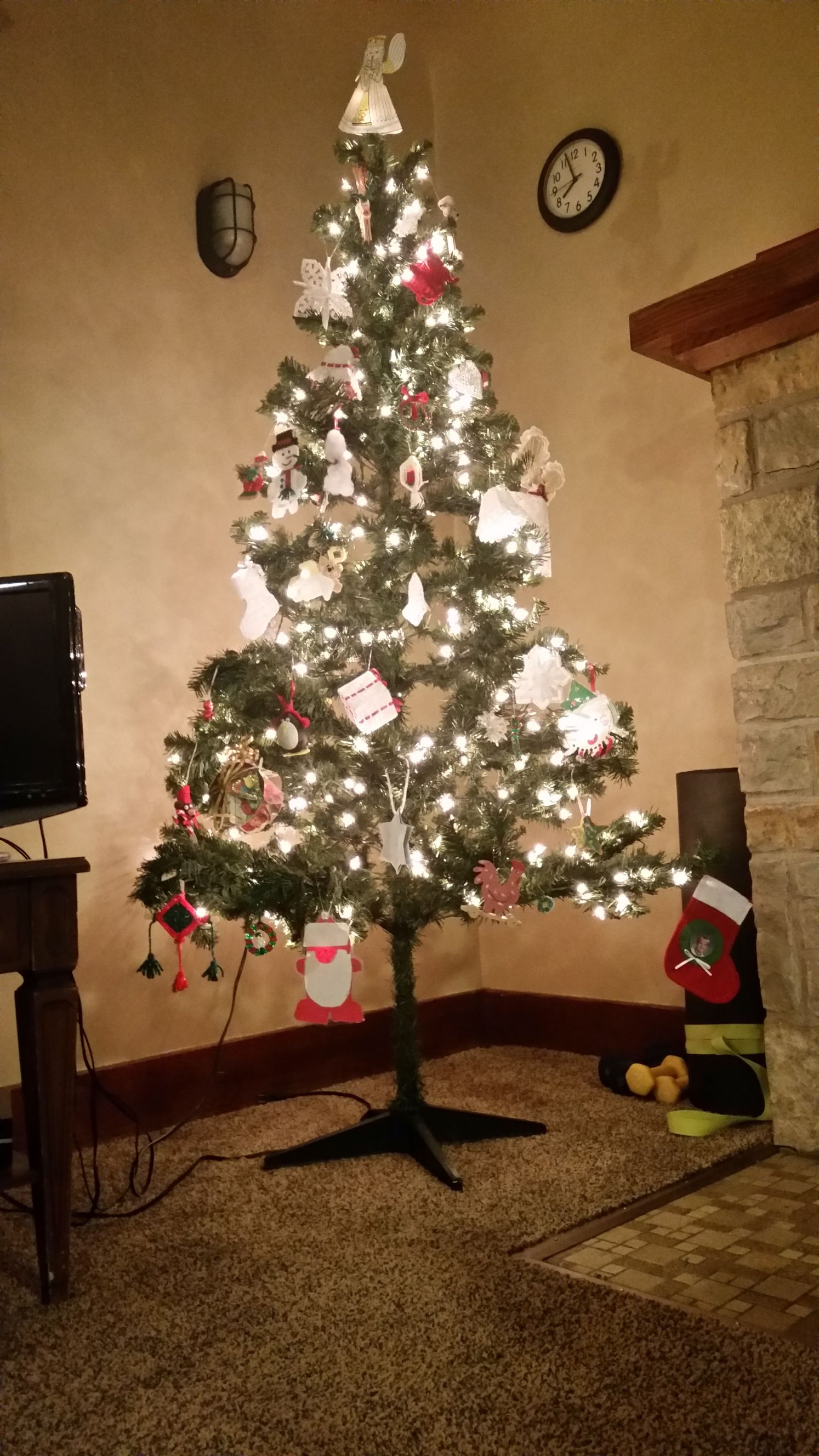
    Our Christmas tree may not be grand or freshly cut. It’s an old artificial one, gifted by a coworker more than a decade ago. The branches are slightly bent, and a few bulbs refuse to light. Yet when we pull it from the box each year, it feels like greeting an old friend.

    Each ornament holds a fragment of our story. There are handmade trinkets from the kids, crocheted snowflakes from my mother-in-law, and treasures from years past. The tree stands as a quiet symbol of continuity and gratitude. It reminds me that beauty often lives in what endures.


    Simple Joys and Shared Stories

    Every season brings a moment to slow down and savor the familiar. I always find myself rewatching It’s a Wonderful Life.

    George Bailey’s struggles and small joys remind me that even in life’s messiest seasons, there’s beauty in simply showing up. I carry that spirit into my workplace, too. Working remotely most of the year, my in-person time with coworkers feels extra special.

    There’s an ease in sharing stories beyond the screen. We share laughter over drinks, conversations that meander like old friendships, and the reminder that connection doesn’t depend on proximity.


    A Season for Sweetness

    At home, the kitchen becomes the heart of the season. The air fills with the scent of butter, cinnamon, and sugar—the unmistakable signal that it’s cookie time.

    My favorite tradition, though, is baking kranz kuchen. It’s a tender, yeasted bread folded with hickory nuts, brown sugar, cinnamon, and dates. The recipe has been passed down through generations. Every year we forage the hickory nuts ourselves.

    There’s something sacred about that ritual. We gather food from the land, turn it into something fragrant and celebratory, and share it with those I love.


    Gifts Made of Experience

    Instead of focusing on material gifts, our family gives each other an experience every year.

    A few winters ago, we wandered through the glowing quiet of Cave of the Mounds. Last year, our son’s eyes lit up at the Manitowoc Maritime Museum as he marveled at the USS Cobia.

    This year, we’re heading to Oshkosh to see the light show, visit the EAA Museum, and end the day with dinner and laughter at the Mineshaft. These experiences spark curiosity and wonder. They remind me that time and attention are the greatest gifts we can give our children.


    Gathered Around the Table

    Christmas Eve dinner with my parents is the anchor of the season.

    We gather around a table filled with food that tells our story. The main coarse is pork roast from pigs we raised and sauerkraut made from cabbage grown in my parents’ garden. It’s more than a meal. It’s a celebration of patience, hard work, and the quiet rhythm of the land that sustains us. Every bite tastes like gratitude made tangible.

    The next day, we join my in-laws for a night of laughter, games, and gift exchanges that always end in joyful mayhem.

    Once February arrives, the festivities begin again when my extended family gathers for our belated celebration. Some of my sisters can’t travel in December, but that second gathering has become its own cherished tradition. It’s a spark of warmth that keeps the season alive well into the new year.


    The Heart of Tradition

    Each of these rituals—whether we’re baking, sharing stories through holiday cards, or sitting around the table—reminds me that traditions aren’t about repetition.

    They’re about remembering who we are. The holidays teach me to slow down, to honor what we’ve grown, and to see abundance in what’s already here.

    When the lights fade and the tree comes down, I tuck the cards into a small box. Their words and faces carry the season’s glow into the months ahead.

    And I’m left with the same quiet truth: home isn’t a place or a moment. It’s a feeling—built from love, gratitude, and the steady rhythm of returning to what matters most.


    Join the Conversation

    If these reflections resonate with you, I’d love to share more glimpses of slow, seasonal living from our little homestead.

    Like this post. Share it with someone who cherishes their own family traditions. Subscribe for more reflections on homesteading, family life, and intentional living.

    Let’s keep growing together, one season and one story at a time.


    Related Posts

    The Quiet Wealth of These Fields

    Welcome to the rural economy—where value isn’t counted in cash but in connections. Beneath the wide-open sky, where grain silos and fence posts stitch the land into neat parcels, the real currency is not minted or printed. It’s grown and built, raised and traded. Trust, hard work, the barter of honest services and handmade goods.…

    Keep reading

    Bread Crumbs of Connection

    They say food is a universal language, but sometimes, it also has a quiet legacy. Eleven years ago, I was on a road trip with my mom, aunt, and sister when we stopped at a small restaurant and ordered Swedish meatballs. I still remember how delicious they were: comforting, perfectly spiced, and unforgettable. That afternoon,…

    Keep reading

    #HolidayTraditions #FamilyTime #HomesteadLife #SimpleLiving #SustainableHolidays #HomemadeHolidays #IntentionalLiving #FamilyTraditions #SlowLiving #ChristmasTheHomestead

  • The Best Holiday Gifts You Can’t Order Online

    The Best Holiday Gifts You Can’t Order Online

    How Local and Handmade Traditions Make the Season Truly Meaningful

    What if the best holiday gift wasn’t something you ordered in seconds, but something made by a neighbor, a local shop, or your own two hands?

    Gifts That Actually Stick

    Think about it: what was the last gift you really remembered a year later? Chances are, it wasn’t the priciest thing on your list. More often, it’s the homemade jam from a friend’s kitchen. It could be the mug thrown by a local potter. Perhaps it’s the scarf someone knitted while thinking about you. Those kinds of gifts carry a story and quietly say, “You’re worth my time.”

    The Smoked Cream Cheese Surprise

    One of my favorite examples came from a retired farmer who gifted us smoked cream cheese. It was infused with cherry and oak from his backyard smoker. Shared around the table on simple crackers, it tasted like patience and pride. It sparked a whole conversation about how he learned to smoke cheese—something no anonymous online order could ever deliver.

    Family Recipes That Last Generations

    That same spirit shows up in family traditions. In my family, my mom’s kranz kuchen—a crescent-shaped bread layered with dates, brown sugar, and hand-foraged hickory nuts—has been on the holiday table for four generations. It’s not just dessert; it’s a lineage of hands and stories. When someone slices into it, they’re tasting time, memory, and love as much as sugar and spice.

    Local Shops, Real Connections

    Local shops can hold that kind of magic, too. They’re often packed with small-batch cheeses, handmade ornaments, candles, and art that reflect the character of your town. A couple of years ago at a tiny cheese factory, I got chatting with the woman behind the counter. We swapped recipes and laughs. I walked out not just with cheese. She had tucked a quirky chocolate-pairing poster into my bag. No algorithm could have predicted how much that silly poster would delight me. I think of her now and then when I find it among my things.

    Start Small This Holiday

    You don’t have to overhaul your whole holiday routine to lean into this. Start small. Maybe this year you bake a batch of cookies. You could write a poem. Paint a simple ornament. Or put together a little basket featuring a couple of local favorites. Even if you don’t have many nearby shops, you can still support small makers online. Alternatively, share something only you can offer. This could be a playlist, a letter, a framed photo, or a recipe.

    Over time, those small choices can grow into traditions: an annual baking day, a visit to a favorite market, a handmade gift exchange among friends. Years from now, when people look back on “the good holidays,” they probably won’t reminisce about two-day shipping. They’ll remember the smoked cream cheese, the kranz kuchen, the unexpected poster, and the feeling of being truly seen.

    Your Turn to Share

    What’s one handmade or local gift you’ve received (or given) that you still think about? Why did it stick with you?

    If this resonated with you, tap like. Share it with someone who loves local makers. Subscribe so you don’t miss future posts on intentional, community-rooted living.

    #LocalGifts #HandmadeHolidays #ShopSmall #SupportLocalMakers #SlowLiving #IntentionalGifting #HolidayTraditions #SustainableGifting #CommunityOverConsumption #SmallBusinessLove

  • Crescents of Resilience

    Crescents of Resilience

    Do you or your family make any special dishes for the holidays?

    Flour-dusted hands trembled over a bowl at 3 a.m., measuring cups snapping in the silent kitchen. Everything was a desperate attempt to summon my mother from the hospital. An undiagnosed intestinal blockage had her rejecting even water.

    The family lineage traces to heavy German roots. My father’s ancestors came from Austria in the 1870s, my mother’s from northern Germany in the 1850s. Her kranz kuchen recipe endures from her grandmother’s penciled cards. Yeasted dough rolled thin, layered with my dad’s foraged hickory nuts, chopped dates, cinnamon, and brown sugar. Twisted into crescents, baked golden, and glazed, dozens emerge each year for us six daughters, neighbors, and church friends, embodying a quiet hospitality.

    Last Christmas, that rhythm fractured. Hospitalized, she could not retain food; us sisters started a text string, asking one question. “What if they never pinpoint the cause?” No flour clouds rose, no yeasty warmth filled the air—only silence amplifying the dread of a holiday without her.


    Insomnia seized the nights. Each fragmented update jolted awake any fragile rest. Kneading became refuge: egg yolks merging into warm, proofed milk and yeast, the dough yielding beneath palms like hope taking form. As it rose under a towel, yeast’s scent enveloped the darkness. Folding in the nuts, dates, and spice, then rolling and shaping crescents, the hands of generations guided mine.


    The oven’s glow dispelled shadows; caramelized sugar perfumed the halls. Frosting traced uneven paths, mirroring hers. Those crescents transformed rupture into resilience.


    A single bite of spice-laced crumb now evokes my dad’s meticulous toil, my mother’s assured fold, my midnight vigil—a resilient pastry proving adversity does not sever us but reshapes us, crescent intact. She recovered. The tradition persists. We endure.

    If this story of family tradition and quiet strength resonates with you, like this post. Share it with someone who needs a reminder that resilience often starts in the kitchen. Subscribe for more heartfelt essays on heritage and hope.

    Related Posts