We loved our 5‑day, 800‑mile road trip—but we also had moments when our kids (and us, for that matter) clearly had too much car time. Here’s what helped us get through the long stretches on our road trip with a 2.5‑year‑old and a 6‑year‑old in the back seat.
This post is part of our 5‑Day Family Road Trip Series.
We took our family of four (kids ages 2.5 and 6) on an 800‑mile road trip from southeastern Wisconsin to Michigan’s Upper Peninsula, camping most nights and keeping our total cost under $1,000. If you’d like to see the whole picture, check out the other posts in this series:
- Budget Breakdown: How Our Family of Four Took a 5‑Day Road Trip for Under $1,000
- Itinerary: Our Upper Peninsula Family Road Trip Itinerary (5 Days with Kids)
- Kids in the Car: How We Survived Long Car Days with a 2.5‑Year‑Old and a 6‑Year‑Old
- Camping Setup: Our Simple Camping Setup for Family Road Trips (On a Budget)
You’re currently reading: How We Survived Long Car Days with a 2.5‑Year‑Old and a 6‑Year‑Old.
Naming the Challenge: Too Much Car Time
Even with a thoughtfully planned itinerary, there were stretches where everyone was tired, squirmy, and ready to be anywhere other than buckled into a car. We tried to acknowledge that openly instead of expecting perfect behavior just because we were “on vacation.”
We also chose not to use screens in the car. Both my husband and I grew up taking long car rides without screens, and our stance is that it takes patience from us as parents to instill a “sense of boredom” in our kids so they’re not constantly engaged by devices.
This approach won’t be the right fit for every family, but it’s working for us right now.
It can be challenging, but we’re already seeing the fruit of that effort—our son is very observant, and our daughter is becoming more so every day.
Our Go‑To Tools
We leaned on a few simple things to make long stretches more manageable.
Spotify playlists
We played a lot of ’60s–’80s music—songs we knew well enough to sing along with, and that set a different mood than everyday kid music. My son loves to sing along, and like me, he likes to make up his own humorous lyrics at times. A fun example is “I got my tractor stuck” instead of AC/DC’s “thunderstruck.” My daughter is just getting to that age where she’s starting to sing along to the words.
“I spy” and simple games
Classic, but effective. Looking for colors, shapes, and specific kinds of vehicles or buildings helped keep their eyes outside and minds engaged.
Simple Toys
We did have a little light up fidget toy (with switches and knobs to control the lights) and an erasable drawing board in the car. We’ve used them for previous road trips, but we didn’t need them this time.

Talking about the sights outside
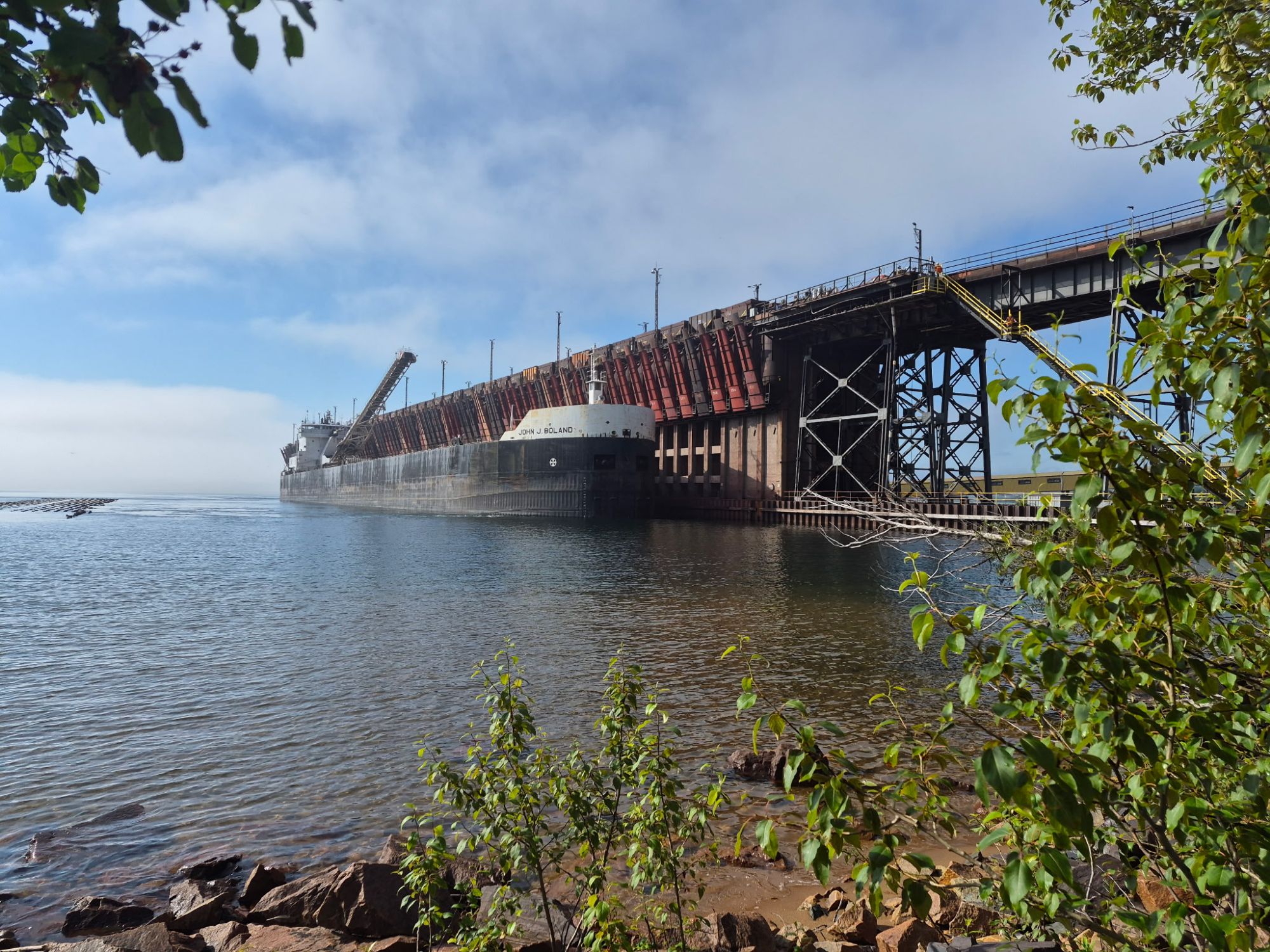
When we passed mines, ore docks, old industrial sites, lakes, or unusual rock cuts, we pointed them out and talked about what they were. We also talk about transmission lines, interesting buildings, and the architecture of the time—we all have a thing for well‑built Victorian buildings.

Stories tied to places
My husband and I shared specific memories about towns, rivers, or landmarks we’d known from earlier in life, which made the drive feel like a tour of our own past as well.
Science, History, and Mining Conversations
Because this trip visited several mining sites and industrial areas, we had natural openings to talk about:
- Where materials like iron ore and copper come from.
- How ships and trains move goods.
- What these towns were built around historically.
We didn’t turn the car into a classroom, but weaving in science and history kept everyone thinking and made the landscape more interesting.

Snacks (and Realistic Expectations)
We brought plenty of snacks, but not all of them were kid hits. Our wasabi‑soy almonds were a flop with the kids and a win for the adults. They liked simpler, familiar snacks—things they’d eat at home and didn’t have to “learn” in the car.
We found it helped to:
- Offer snacks at natural breaks, not constantly.
- Pair snack time with a quick stretch outside the car whenever possible.
Our Longest Drive and What We’d Do Differently
Our longest drive was about 5 hours. We planned that for the second day of the trip, when we were all still freshest. That was also the night we let the kids run amok on the nearby playground instead of asking them to help set up camp. After that much car time, they needed the freedom to move more than they needed to “help.”
If we were planning another similar trip:
- We’d probably shorten a couple of the driving days or add an extra playground stop on the longest stretches, even though we did already schedule the longest drive early in the trip.
- We’d prep more kid‑specific playlists or audiobooks, so they had something “of their own” to look forward to within our screen‑free framework.
The main lesson: long car days with little kids can be rough, but music, conversation, games, snacks, and realistic expectations—plus a willingness to embrace some boredom—go a long way toward making them manageable.
If you’re planning a road trip with kids and want to keep all the practical details in one place, I made a printable 5-Day Family Road Trip Planner & Budget Pack with itinerary, packing, and meal-planning pages.

How do you handle long car rides with your kids—screens, games, music, or something else? Share what’s worked (or what hasn’t!) in the comments, and pass this along to a friend planning a family road trip.
If this screen‑free approach and set of ideas was helpful, please like this post and share it with another parent who’s gearing up for a long drive with little kids.
Read More Here: How Curiosity Keeps Me From Feeling Bored (Even on Long Car Rides With Kids)
Leave a Reply