Category: Personal Growth

  • Growing Together in Small Moments

    It had already been a week that stretched me thin. One of those weeks where fatigue doesn’t just live in your body—it seeps into your spirit. Each day stacked heavier than the last. Even small inconveniences pressed harder than they should have, like tiny weights layered until my shoulders ached. By Thursday, I was frayed at every seam, moving on nothing but habit and the faint hope of rest.

    So that evening, when I finally shuffled into the kitchen after a day that left me wrung out, all I wanted was silence. A moment to unclench. To exhale. My body sagged, my mind buzzed, and I was counting the minutes until I could collapse onto the couch.

    That’s when it happened.

    My toddler stood at the table with her cup of water. One slip, one sudden clatter—and water skidded across the linoleum, racing under chair legs in glistening threads. The sharp crash jolted me, slicing through the fog of my fatigue.

    Frustration surged, hot and quick. Words crowded behind my teeth, sharp enough to sting us both.

    I looked at her. Wide eyes. Startled. Searching. Not defiant, not careless—just small. Just learning.

    I stopped. Breathed. The anger loosened its grip.

    Instead of scolding, I bent and wrapped her soggy little frame in my arms. Relief softened her face as she leaned against me. I handed her a towel, and together we chased the puddle across the floor. Her laughter bubbled, bright and contagious. With each giggle, the cleanup turned from chore to game, our hands colliding in playful pursuit of running droplets.

    That sound stayed with me. She wasn’t only learning balance and cause and effect. I was learning too—how to pause before impatience, how to choose connection even when I am worn thin.

    When we finished, she lugged the damp towel to the basket with pride, dropping it like treasure. I kissed her damp hair and made a quiet vow: to keep trying. Even when I am tired. Even when the water runs wild again.

    That week had felt like a storm I couldn’t quite step out of. Yet in the middle of it, she reminded me of something I had forgotten. Growth doesn’t wait for the calm, polished moments. It slips in through the mess, through the spills, through the pauses where frustration almost overwhelms love.

    She is still learning how to hold her cup steady. And I am still learning how to hold my patience steady. Both of us fumbling, both of us growing—together.

    Have you ever caught yourself on the edge of snapping, only to realize that patience could change everything in that moment? Share your story below, and subscribe to join a group of like-minded people.

    #ParentingJourney #GentleParenting #PatiencePractice #EverydayLessons #ParentGrowth

  • Carrying Their Lessons: A Career Woven with Connection

    Carrying Their Lessons: A Career Woven with Connection

    The first time I heard, “Good morning, men!” echo off the beige cubicle walls, I felt invisible, a ghost in a room full of voices. Fresh out of grad school and just one of two professional women in the office, I was convinced someone would soon discover the imposter I believed myself to be: a farm girl, unversed in technical jargon, pretending at professionalism. I knew the morning greeting was a matter of habit, not malice. Each day, I replied, sometimes timidly, sometimes with a wry smile, wondering when I would truly feel I belonged.

    I remember my first lunch with the team, sitting quietly and listening to stories about the “old days,” still unsure of my place. But gradually, I learned the nicknames, the inside jokes, and the rhythm of conversation. Slowly, I began to feel less like an outsider and more like a thread in the fabric of the office.

    A decade later, it’s not only the projects or deadlines I remember, but the faces, the laughter, and above all, the lessons that shaped me.

    Mentors Who Made a Mark

    I’ve been fortunate to know incredible mentors and colleagues, each leaving an indelible mark on my life. While there are too many to count, a few stand out.

    One mentor had vibrant white hair, a tall, stocky frame, and a booming laugh that filled any room. He seemed to know something about everything, and a quick question could turn into a story about baling hay or bowhunting. Kind and generous, he once gave me a Christmas tree we still use and delivered a bucket of shucked hickory nuts to my parents’ house. He taught me the importance of being well-rounded and thoughtful.

    My next mentor was quieter and more athletic, sometimes inviting me on lunchtime runs. When I traveled somewhere for vacation, he would pull out a full atlas book to know where I went and how I got there.  Humble and never seeking credit, he gave me the freedom to shape my own career. When I had my first child, he sent me a book of Shel Silverstein poems:  a small gesture that meant a lot. From him, I learned the power of consideration and quiet strength, especially during difficult times.

    My current mentor is eclectic and curious, always ready for a conversation about travel, music, or food. He and his wife hosted annual casino nights for the team, opening their beautiful home for games and laughter. He supported me through my second parental leave, making sure I felt secure both at work and at home. Above all, he has shown me the value of technical expertise and the importance of asking questions until you truly understand.

    Remarkably, as each manager neared retirement, I was invited to help choose my next:  a gesture that showed trust and confidence in my growth. Now, at another crossroads, I reflect with gratitude on the lessons each mentor has given me and how their trust has shaped my path.

    Influences Beyond the Office

    Some of my most valuable mentors didn’t even work at my company. Early on, I admired an independent consultant whose work embodied the values I aspired to. Five years in, I finally had the chance to collaborate with him as he neared retirement and needed someone to take over his projects.

    He taught me not just technical expertise, but also patience, generosity, and professionalism. He trusted me with clients and never dismissed my questions, no matter how many I asked. Working alongside him, I learned that true expertise is as much about attitude as it is about knowledge.

    The Power of Female Friendship

    Among my colleagues, one woman became a touchstone in my career. A few years my senior, she joined two years after I did, bringing warmth, experience, and a collaborative spirit. I watched her build a specialty team, get married, and become a mother:  all while excelling at work. She proved it was possible to thrive both personally and professionally.

    She organized workshops and social events; “palette and pub” nights became some of my favorite workplace memories. She supported me through major life changes, introduced me to a line of work I love, and showed that kindness and competence can most certainly go hand in hand.

    Her recent departure left a void. Her going-away lunch was bittersweet:  filled with laughter, memories, and the kind of black humor that perfectly encapsulated our office spirit.

    Seasons of Change

    Each retirement and departure has been challenging in its own way, pushing me to grow. It would be easy to settle into routines and resist change, but my coworkers have shown me, through mentorship, friendship, and example, the importance of adaptability, resilience, and gratitude.

    I remember my first time leading a client call after one of my mentors retired. Pacing nervously, I could almost hear his voice reminding me that questions are good. Of course, I made mistakes, but I learned to recover, laugh at myself, and keep moving forward.

    The office itself has changed too:  weathering downturns, celebrating promotions, and rallying around coworkers in times of need. There are inside jokes that have lasted years, traditions like the annual chili, soup, and dessert cook-off, and spontaneous celebrations when someone passes a certification exam or secures a new client. New faces bring fresh perspectives, but the spirit endures:  a place where people care for each other, and coworkers’ new children are still celebrated with Kringle, one per kid.

    Looking Forward Looking back, my admiration and gratitude for my coworkers is immense. They have shaped not just my career but my character:  supporting me through milestones and helping me become a better version of myself. As the next chapter unfolds, I am ready to pay it forward, mentoring the next generation and sharing the gifts I’ve received.

    Who has been a mentor or colleague that left an indelible mark on your career, and what lesson from them do you carry with you today? Share your stories below, and subscribe to join a group of like-minded people.

    #MentorshipMatters #CareerGrowth #LeadershipLessons #WorkplaceCulture #GratitudeInLeadership #ProfessionalJourney #CareerReflections #PayItForward

    Photo by kate.sade on Unsplash

  • Unmuted: Laughing Together at Last

    I never expected to feel this nervous just walking into a donut shop. The bell above the door chimed softly, and I paused—heart rattling, palms damp against my blue Yeti water bottle. The air was thick with sugar and dough, but I wasn’t here for pastries. I was listening for a voice I’d only ever heard through a laptop speaker, wondering if the easy laughter we’d shared across years of meetings and screens would feel the same in person. What if it didn’t? What if the connection I’d leaned on for the past two years dissolved under fluorescent lights and powdered sugar?

    As I waited, memories pressed in. In late 2019, I became a parent. Just as I was finding my postpartum rhythm, everything collapsed into lockdown—the office dark, daycare shuttered, my carefully drawn plans erased overnight. I worked with my son strapped to my chest in a faded carrier, answering client calls in a whisper and typing emails during his naps, his small breaths rising and falling against my shirt. Days blurred: Teams calls splicing with supper, laughter from colleagues mixing with the gurgle of my baby.

    And through those strange years, I built relationships that somehow felt intimate without ever being fully real. Colleagues became friends across time zones—from Washington D.C. to Washington State. We swapped puns, traded parenting hacks, learned that one always wore a baseball cap, another had a cat that loved to photobomb. But still, I never saw anyone’s shoes. They were voices, faces, pixels—familiar yet unfinished.

    That was what brought me here now, nerves jangling in the donut shop. Screen to handshake. Username to real name.

    The door swung open. Before I saw him, I heard it—that buoyant, unmistakable “hello!” My coworker grinned, taller than I’d imagined, and the shop seemed brighter around him. I reached for a handshake, but he wrapped me in a hug: careful, genuine, years of laughter pressed into one human gesture. And in that split second, I noticed his brown shoes. Something so ordinary anchored him in the real world in a way no video call ever could.

    What followed was a blur: client meetings buzzing with in-person energy, a conference thrumming with voices, a dinner table crowded with fifteen colleagues. The restaurant glowed with sound and light. Glasses clinked, stories overlapped, shoes scuffed beneath the table. I caught myself glancing down, almost laughing at my inability to match this tangle of footwear with the disembodied voices I once knew.

    The difference was everywhere. Online, laughter had always rung crisp and flattened; here it tumbled, messy and contagious, spilling over conversations. Online, quirks were caught in passing—a cat tail swiping across a camera. But in person, gestures and glances wove a richer language: an eyebrow raised across the table, a quick smile before the words landed. Even the iced tea tasted sharper somehow, as though human presence itself added flavor.

    By the last afternoon, as my coworker and I lingered and debriefed a client meeting, I felt the shift. What we’d built on screens had always been real, but being face to face gave it weight. When it came time to leave, I didn’t hesitate. I stepped forward and hugged my friend—this time without the awkwardness of strangers meeting for the first time, but with the recognition of something solid.

    Driving home, the city blurring past, I replayed it all: the nervous pause at the door, the laughter around a crowded table, the shoes underfoot. Connection had sprouted from a distance. But it blossomed in person, where voices vibrate through the air and laughter shakes the body, not just the screen. If someone asked me about the trip, I’d simply smile and say: It’s hard to describe. You think you know people online—but then you hear them laugh beside you, and it suddenly feels real.

    Have you ever “met” someone online, only to meet them in person? Share your experiences below, and subscribe to join a group of like-minded people.

  • Tickets, Trade-Offs, and Tilt-a-Whirls

    We stepped through the county fair gates with twenty ride tickets to last the whole day.

    To my five-year-old son, they were a golden key to unlimited fun. To me, they were a limited resource — and a math lesson waiting to happen.

    The August sun pressed down, bouncing off the metal siding of food carts, warming the air thick with sugar and frying oil. My daughter rode pressed against me in her carrier, legs dangling. My son’s grip on my hand was insistent, his eyes wide at the swirl of lights, music, and cotton candy threaded like clouds on sticks.

    Food first. He inhaled a slice of pizza that bent under its own cheese. My daughter and I nibbled golden little corn dogs, dipping them into mustard between chilly, sweet spoonfuls of chocolate malt. Around us, the whole fair smelled like carnival excess — fried dough and roasted corn braided with the faint, earthy whisper of hay from the barns.

    In the barns, we slowed. Cool sawdust underfoot. Pigs sprawled, twitching in their sleep. Cows blinked at us, slow and old as if they carried time in their eyelids. Ducks moved like a marching band, utterly synchronized. My daughter pressed her palm against the fence, giggling at the goats’ wiry coats, until my son tugged again: “Can we go see the rides now?” He could hardly hold still long enough to notice the animals.

    And so, to the midway. Even in daylight, the rides blazed with flashing reds, blues, and yellows. The Tilt‑a‑Whirl roared and spun as somewhere behind us a game vendor promised, “Everyone’s a winner!”

    At the ticket booth, the glossy sign read:
    $1.50 per ticket, or 20 tickets for $25.

    I slipped the bills across and felt the tickets fall into my palm, brittle and new. Twenty was both so many and so few. I crouched beside my son and set the rule: “This is all we have for rides. Once they’re gone—we’re done.”

    He looked so serious, nodding in a way almost too mature for him — and then, in the same breath, he pointed at the Ferris wheel, towering and slow, irresistible.

    “That costs twelve just to get us all on,” I reminded him. More than half, for one spin.

    He thought hard. I swear I could see the weight of the numbers pressing through his forehead. After a pause: “Hmm… maybe the train?”

    And so we boarded the little track, faces shining as we looped past hand‑painted scenery and strangers who waved like old friends. Each ride became a miniature act of accounting. Nine tickets for all three of us. Three if it was something just for him. By the next stop, he was calculating first before I could prompt, as if the tickets themselves had aged him in the space of an afternoon.

    We skipped bumper cars (he didn’t meet the height requirement), found delight in a giant slide, and ended at a kiddie racetrack where his laughter spun circles larger than the ride itself. The tickets thinned until only five were left, curling soft in my pocket.

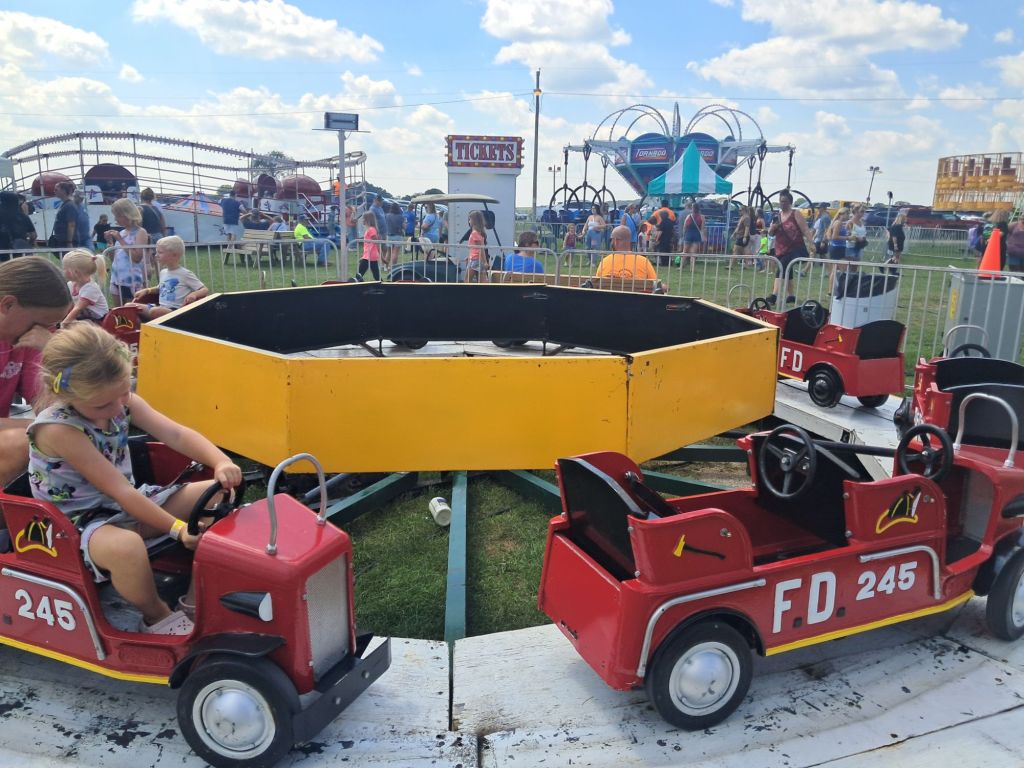
    That’s when the firetrucks gleamed at us: bright red, silver bells clanging steadily. My son clutched three tickets with steady hands, climbing in like a child stepping into destiny. My daughter tugged me, wide‑eyed: “Mama, me too?”

    The operator leaned on the lever with a grin. “She can ride her own for two.”

    Perfect symmetry.

    I buckled her in, and when the trucks began to roll, her voice rang out: “Whee! Whee! Whee!” — not polite squeals, but unabashed joy so pure it turned heads. Parents around us laughed in recognition. My son dismounted, flushed and victorious, announcing, “We used them just right, huh, Mom?”

    And he was right. The Ferris wheel still turned in the distance, massive and romantic, but I didn’t regret skipping it. Twenty tickets had carried us farther than I’d expected. They had bought laughter, choice, restraint, and — maybe what moved me most — a glimpse of my son practicing something like grown‑up wisdom, while still small enough to believe everything around him was magic.

    We left with empty pockets, sticky fingers, tired children. But the memory lingers still — golden as the tickets themselves, and spent exactly right.

    Do you have experience with teaching children about money? Share your experiences below, and subscribe to join a group of like-minded people.

  • From ‘For-Et’ to Fortitude: A Story About Big Boxes and Big Feelings

    Sometimes the most important thing we build isn’t made of cardboard.

    A Big Idea (and a Bigger Mess)

    My 5-year-old son was determined to build a fort, though he pronounced it “for-et,” which made it even more endearing. I try hard to encourage his creative play, if it doesn’t involve wrecking things, so I said, “Of course, go ahead!”

    He began his mission by gathering the many cardboard boxes we had stacked in our basement waiting to be cleared. Soon, these became a haphazard fortress-in-progress outside our back door. It quickly turned into a cluttered obstacle course we had to navigate. My husband was less than thrilled.

    The Deal

    The next morning before leaving for work, my husband struck a deal with our fort architect:

    If he could move all the basement boxes for disposal and clear a large new box we’d just acquired, he could use that big box as the foundation of his fort.

    Simple enough.

    So before breakfast, my son excitedly dragged everything out of the biggest box and scattered its contents across the driveway, completely ignoring the deal. Then he bounded in, wide-eyed, asking me to help cut a door into the fort.

    One Box, Infinite Overwhelm

    I stepped outside and surveyed the scene. None of the other boxes had moved. And now, there was a fresh mess on top of the old one.

    When I gently reminded him of the first part of his task, his smile drooped. He looked at the towering stack of boxes and sighed.

    “There are so many,” he said. “It will take 100 years to move them all!”

    At first, I wanted to say what I usually say: It’s not that many. Or: If you’d started earlier, you’d be almost done by now.

    But I caught myself.

    Would those words help him—or just shame him?

    Choosing Empathy

    Instead, I sat down, pulled him into my lap, and gave him a squeeze.

    “Sounds like you’re feeling overwhelmed,” I said.

    He nodded, eyes watery.

    “You know, I feel that way sometimes too. When I have so much to do, I don’t even know where to start.”

    “You do?” he asked, brightening.

    “Of course,” I smiled. “When that happens, I take a deep breath.”

    I took an exaggerated inhale and exhale, which made him giggle. Then I added:

    “And I try to do just one thing at a time for half an hour. You’d be surprised how much you can get done that way.”

    “Okay!” he said.

    Momentum (and Breakfast)

    “But first,” I said, “you need breakfast. You’ll have more energy after eating.”

    “I’m already strong enough,” he insisted.

    “I know,” I smiled. “But strong people get hungry too.”

    After breakfast, he set to work. Later, he proudly announced:

    “Mom! I stacked some boxes inside others. It made moving them faster!”

    “Genius!” I said. “What about the other pile?”

    “Huh?!”

    A short follow-up pep talk was in order, and before long, he had moved all the boxes.

    It didn’t even take 100 years.

    Somewhere along the way, the project transformed from a for-et into a clubhouse (don’t ask me how).

    The Clubhouse Reveal

    Next came door-cutting. He wanted it done immediately.  I made him wait until I finished a task of my own.

    Then, I carefully helped carve a doorway into the giant box to his exacting specifications.

    After lunch, armed with a black Sharpie, he decorated the clubhouse with the enthusiasm that only kids can generate. He led me out for the grand tour:

    “See the man on the door? He’s inviting everyone inside.
    Here’s a sign that shows who can come in, even old people.
    What do these letters spell?” (They were random, adorable runes.)
    “There’s a whale… and another whale… and my name.
    And these are solar panels to power the clubhouse. Come inside!

    I squeezed through the narrow doorway. He followed.

    “Turn on the light, Mom!” he said. “The switch is right behind you.”

    Of course it was.

    What His Fort Taught Me

    Watching my son struggle reminded me how easy it is to feel overwhelmed when faced with a big, messy task.

    His honest frustration echoed feelings I often hide behind adult composure.
    And instead of rushing to correct him, I chose empathy, and it changed everything.

    Helping him break the job into tiny steps, encouraging him to breathe through the hard parts, taught both of us that real progress doesn’t come from powering through:  it comes from pausing, noticing, and taking the next small step.

    Final Thoughts

    I still lose my patience more often than I’d like to admit. But in moments like these, I’m reminded that the real “for-et” we build each day isn’t made of cardboard at all:
    it’s built of patienceunderstanding, and kindness.

    And just like my son’s fort, it might not look perfect.

    But it stands strong:  messy, magical, and full of love.💬 Got your own “clubhouse moment” or parenting win (or fail)? I’d love to hear it in the comments. Don’t forget to share and subscribe if this resonated with you.

  • The Endless Night

    The digital clock on my nightstand glows an accusatory 2:13 AM, its red numbers burning my retinas.  As I roll over for the thousandth time, the sheets tangle around my legs.  My bedroom, once a sanctuary, has become a prison cell.  The familiar outlines of furniture loom in the darkness, taking on sinister shapes in the shadows.  The green stars of a night light cast an eerie glow on the ceiling.  The curtains flutter slightly in the breeze from the fan.

    This is only my most recent visit to the space between consciousness and sleep.  Over the last year, my nightly dance with insomnia has left me both exhausted and wired.  My mind races, a carousel of worries and regrets that won’t stop spinning.  Will my mom ever feel better?  Are my kids going to grow up and be decent people?  Why did I say that silly thing earlier today?  Will anyone ever really want to be my friend?  I quickly calculate that if I fall asleep right now, I’d have exactly three hours of sleep.  Anxiety coils in my stomach, a physical presence that drives sleep even further away.

    I focus on my breathing.  In, and out.  In, and out.  My body starts to feel heavy, sinking into the mattress.  And yet there’s a restless energy thrumming through my veins, an incessant urge to move.  I throw off the covers and head to the bathroom, my bare feet padding silently on the faded teal carpet.  I focus on the floor pushing up on my feet, the smoothness of the water glass as I bring it to my lips, the car lights that shine through the picture window as they pass by.  The house creaks and settles around me.  I envy its ability to find peace in the night.

    Back in bed, I toss and turn.  My mind refuses to quiet; every position is uncomfortable.  My pillow is too flat, then too puffy.  The room is too warm, then too cold.  My hips hurt from lying in one position too long, and my arm falls asleep.  I can’t find that elusive perfect spot that will finally let me settle.

    As the night continues, my thoughts take a darker turn.  What if I never sleep again?  How does this affect my mood and stress tolerance during the day?  How can I be patient with my children or be productive at work if my physical needs are not being met? How is this shortening my lifespan?  The fear of sleeplessness becomes a self-fulfilling prophecy, anxiety feeding insomnia feeding anxiety in an endless loop.  I feel myself spiraling, falling into a pit of despair as black as the night around me.  In a short while, my alarm will sound.  The weight of the coming day presses in, squeezing my chest and shortening my breath.  The thought of navigating work, social interactions, childcare, and basic tasks on another empty tank fills me with an indescribable weariness.

    The first hints of dawn begin to creep around the edges of my curtains.  Birds taunt me with their cheerful and energetic morning chorus.  The world is awake, moving forward, while I’m stuck in this limbo between night and day.  My thoughts, so sharp and insistent earlier, begin to blur.  My limbs feel heavy, and I finally surrender to exhaustion.

    All too soon, my alarm clock sounds.  I linger between sleep and wakefulness for a little while longer before rising to start my day.  I clear the crust from my eyes and stretch.  As I stumble to the bathroom, catching sight of my haggard reflection, I make a silent promise to myself.  Tonight, I’ll try something different.  Mindfulness, writing my thoughts and feelings, no coffee past noon.  Anything to break this cycle of sleepless nights.

    In the meantime, I brace myself for the day ahead.  Coffee will be my crutch, and sheer determination my fuel.  I’ll do what I can to show up as my best self today, and then I’ll try again tonight.  Because one of these nights, I will find my way back to the land of dreams and peace.

    I take a deep breath, and begin my day.

    Have you ever dealt with a bout of insomnia? How did you work through it? Share your thoughts below, and subscribe to join a group of like-minded people.

    #insomnia

    Illustration by ands on Unsplash

  • Learning to Let Go: Saying Goodbye to Our Homestead and Pond

    Letting go of our homestead and moving back to our hometown taught me deep lessons about change, motherhood, and the beauty of transient moments.

    A Summer Afternoon by the Pond

    The warm afternoon sun casts a golden glow over our quiet half-acre pond, its surface shimmering gently with ripples that appear to dance in the light breeze. The air is filled with the soft chorus of birds, humming of cicadas, and croaking of frogs. Sunbeams softly illuminate the water, mirroring the expansive blue sky and fluffy white clouds above. The air is fragrant with the crisp scent of freshly mown grass and wildflowers. Around the pond, nature seems to pause, inviting a deep sense of relaxation and contentment. This perfect, peaceful afternoon seems to contain the very essence of summer itself.

    A Little Boy, a Frog, and a Memory

    Near the water’s edge, a barefoot blonde-haired three-year-old boy crouches low, completely absorbed in the world before him.

    His blue jeans are rolled to the knees as he steps into the lukewarm murky water, feet brushing against the soft mud and slippery algae. His tiny hands reach eagerly toward his feet and a cloud of sediment disturbs the surrounding water. His determined eyes reflect the pond surface as he tries to catch the elusive frogs that leap and splash just out of reach. Every time a frog slips away, Andrew’s face scrunches in concentration, his golden brow furrowing as he plots his next move.

    Watching from the porch, I feel the urge to study the shape of him, with dirty knees, hair wild, and cheeks flushed with summer. I smile, waving encouragement, but my chest aches with the weight of what is coming. In a few short weeks, this pond, this homestead, our home of five years, will belong to someone else. The frogs will leap for other children, and the sun will set on different faces. I try to root myself in the moment, to let the warmth of the day and the joy in his eyes completely fill my heart. But the knowledge of our impending move threads through my happiness, tightening into something poignant and precious.

    Motherhood, Growth, and Letting Go

    This pond bore witness to my own personal growth as I learned to become a mother, deepened my relationship with my husband, and had moments of intense joy and agonizing struggle while living on our homestead. Here is where we hosted countless cookouts, campfires, and nature walks with family and friends. Leaving feels like closing a chapter of my own story as a young mother learning to let go.

    With a sudden splash, he emerges from the water with a frog, holding it a little too tightly in his hands as it attempts to wriggle away. My son’s delighted laughter carries a joyful, pure, infectious energy as he calls me over to admire his trophy, pants completely soaked. I walk toward my son as he clutches his frog, eyes squinting against the sunlight. I kneel in the grass beside him and observe both the frog’s slick skin and legs tensing to spring. I reach out to steady his hand and for a heartbeat, the world narrows to just the four of us: my son, the frog, me, and his unborn sibling kicking in my womb.

    His wonder-filled eyes and rudimentary language work hard to persuade me to keep this frog as a pet as he prepares a makeshift house comprised of a plastic coffee can full of water and a couple sticks. As he looks at me, I try to memorize the sound of the breeze in the cattails, the way the pond smells of earth and water, the exact shade of green on the frog’s back. Every detail feels urgent, as if I can hold onto this place by sheer force of will to preserve it for both my children. I cannot escape the fact that this memory is being made even as it slips away, colored by the bittersweet certainty that some joys can only be borrowed, never kept.

    Learning to Let Go of a Place

    The meaning of this moment is not lost on me. My child wants to keep this frog as much as I want to make this moment stretch forever. He has connected with a wild, living creature and felt its energy. But the frog cannot be kept forever, and holding on for too long will only hurt it. In the same way, me clinging to life’s transient joys and sorrows will only lead to disappointment and loss.

    With watery eyes and a softer tone than I intend, I urge him to release the frog back to the pond. I encourage him to appreciate his brief time with the frog, but the frog’s nature is to leap, move, and be free. He looks blankly at me, oblivious to the undercurrent in my words or my tear-streaked face. For a moment, I envy him his innocence. After some thought, he reluctantly liberates the frog, and we watch as it vanishes below the pond surface with a flash. I commend Andrew for his empathy for all living things.

    As I watch him immediately crouch down to try catching another frog, I reflect on the parallels of this moment to my own current struggles. He honored the frog’s nature and the flow of life. Similarly, I need to embrace change for me to grow, adapt, and appreciate the beauty of each moment.

    Just as I have encouraged my son to cherish his brief encounter with the frog, my impending move urges me to be fully present and savor this moment by the pond, knowing that this may be my last memory here. Embracing the fact that each moment is transient is what makes our experiences richer, our relationships deeper, and our gratitude more profound.

    Saying Goodbye to Our Homestead

    We are moving back to our childhood hometown to make space for new and strengthened connections, revisited childhood memories, and renewed growth. I must trust that the next chapter will bring its own unforgettable moments as we welcome another child into the world while continuing to provide my son with rich experiences. I allow myself to feel both grief and optimism and remind myself that there is a unique beauty in the ephemeral impermanence of life.

    I carry the most meaningful gifts—the memories, lessons, and love—from this place no matter where life takes me. I pause to honor this space for its teachings and guidance over the past five years and prepare to say a heartfelt goodbye.

    Watching my son catch and release frogs has reminded me that I cannot hold on to anything forever, but I can cherish each memory, embrace change, and find beauty in the dance of constant transformation. In letting go, I invite myself to truly live.

    Join the Conversation

    Have you ever had trouble letting go of a place, a season, or a chapter of your life? Share your story in the comments below, and subscribe to join a community of like-minded people learning to embrace change together.

  • How to Overcome Fear of Judgment and Find Authentic Connection

    How to Overcome Fear of Judgment and Find Authentic Connection

    How to Overcome Fear of Judgment and Find Authentic Connection

    Throughout adulthood, I’ve turned self-expression into a high-stakes gamble where the fear of judgment feels like a referendum on my right to exist. Here’s how overcoming fear of judgment became my path to authentic living.

    The Emotional Cost of Fear of Judgment

    The terror of exposing my innermost thoughts is like standing emotionally naked before a crowd. Every flaw and contradiction feels exposed to scrutiny. Alarm bells ring before I share anything meaningful, warning that my words could be dissected, dismissed, or weaponized against me.

    If I bare my inner world, it becomes subject to forces beyond my control—deemed unworthy, irrational, or contemptible. This fear of being judged has led me to dilute opinions, laugh at unsettling jokes, nod along to disagreed ideologies, and stay stoic to avoid rejection anxiety.

    How Withholding Creates Isolation

    Every withheld thought became a self-imposed gag order. As inauthenticity became armor, my inner voice grew louder. Before speaking, I’d replay rejections: raised eyebrows dismissing ideas, nervous chuckles hollowing confessions, silence following bold statements.

    This withholding ritual protected tender parts but cost me deeply—increasing emotional isolation. Trapped behind glass, I ached for connection: See me. Understand me. Yet the glass stayed cold, leaving me wondering if the fault lines were mine alone.

    The Consequences of Staying Silent

    To be known risks devastation, but remaining unknown is a slower death. Relationships turned transactional—trust replaced by calculation, authenticity by performance, dialogue into echo chambers.

    Fear of judgment fostered social isolation. I felt truly myself only with select people or alone, alienated from communities that could affirm or challenge me healthily. This created a feedback loop where vulnerability anxiety felt ever more dangerous.

    My sense of self fragmented into half-truths and omissions. Relationships anchored in politeness, not depth. The world grew colder; authenticity became liability. A quiet grief emerged for the unlived life—unspoken ideas, unmade connections.

    Breaking Free: Overcoming Fear of Judgment

    Yet within this grief lies liberation—not in abolishing fear, but recalibrating its power. Small acts of courage rebuild trust in my resilience:

    • Sharing unpopular opinions
    • Tolerating disagreement discomfort
    • Embracing that no one is universally understood

    Rejection of an idea doesn’t mean total rejection of me. Authentic self-expression becomes assertion of presence, not plea for validation.

    Reclaiming Your Narrative Through Vulnerability

    The fear of scrutiny battles for sovereignty over my mind. To speak anyway reclaims my narrative—flawed, evolving, unapologetically human.

    Overcoming fear of judgment doesn’t erase social anxiety. It transforms vulnerability from threat to strength. Emotional authenticity connects us across the glass walls we all build.

    Feature Photo by mohamed Bouboul on Unsplash


    What small act of self-expression will you try this week? Share in comments—your courage might shatter someone else’s glass.

    Share your experiences below, and subscribe to the link below to join a group of like-minded people.