Category: Travel

  • Our Simple, Budget‑Friendly Camping Setup for Family Road Trips
    Our Simple, Budget‑Friendly Camping Setup for Family Road Trips

    Camping was a big part of how we kept our 5‑day family road trip under $1,000, but we also wanted everyone to be comfortable enough to sleep. If you’re looking for a simple, budget‑friendly family camping gear list for road trips, here’s the camping setup and gear that worked for us—as well as what we’d change next time.


    This post is part of our 5‑Day Family Road Trip Series.
    We took our family of four (kids ages 2.5 and 6) on an 800‑mile road trip from southeastern Wisconsin to Michigan’s Upper Peninsula, camping most nights and keeping our total cost under $1,000. If you’d like to see the whole picture, check out the other posts in this series:

    You’re currently reading: Our Simple Camping Setup for Family Road Trips (On a Budget).


    Our Tent and Sleeping Setup

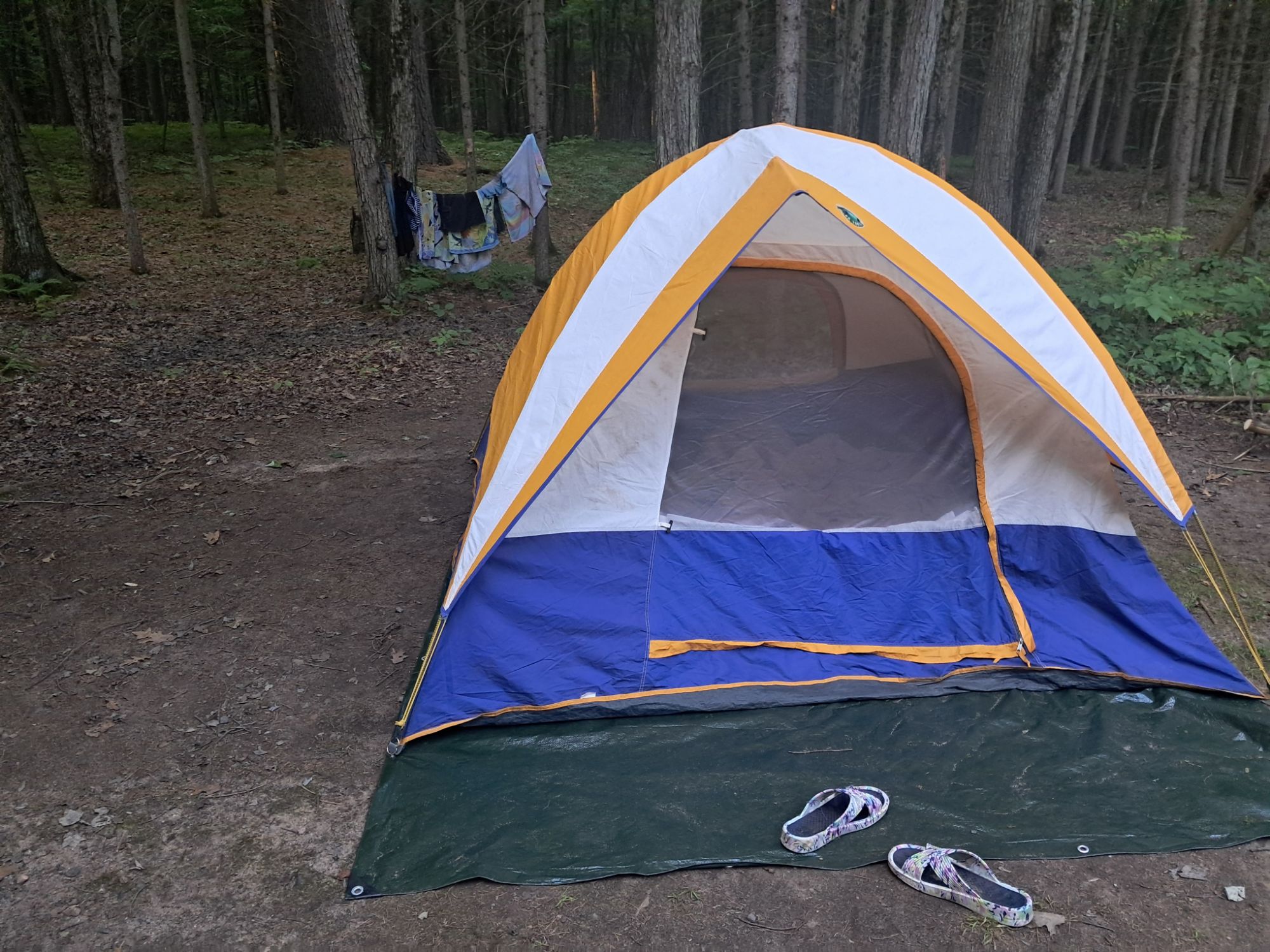
    We used a 4‑person tent with a tarp underneath to protect the floor. Inside, our layering strategy looked like this:

    Here’s our setup!
    • A puzzle‑piece mat covering the floor (36 pieces, each 1′×1′). Our kids loved assembling and disassembling it each day; it became part of the bedtime routine.
    • Four foldable sleeping mats on top of the puzzle mat to cushion and insulate.
    • A base blanket, then our main comforter on top.

    Temperatures at night were around 55°F. The kids were comfortable temperature‑wise, and we stayed warm, though my husband and I did wake up a bit stiff in the morning. This setup worked well for summer nights; for colder trips, we’d add more insulation.

    We also had headlamps for when it got dark, plenty of bug spray, and sunscreen, which made bedtime routines and late‑night bathroom trips much easier.

    Cooking at Camp

    We kept dinners simple and hearty:

    • Rotisserie chicken and potato wedges one night (easy grocery‑store meal).
    • Chorizo, black beans, and rice tacos with all the fixings.
    • Potato hash with chorizo, onions, and peppers from our garden.
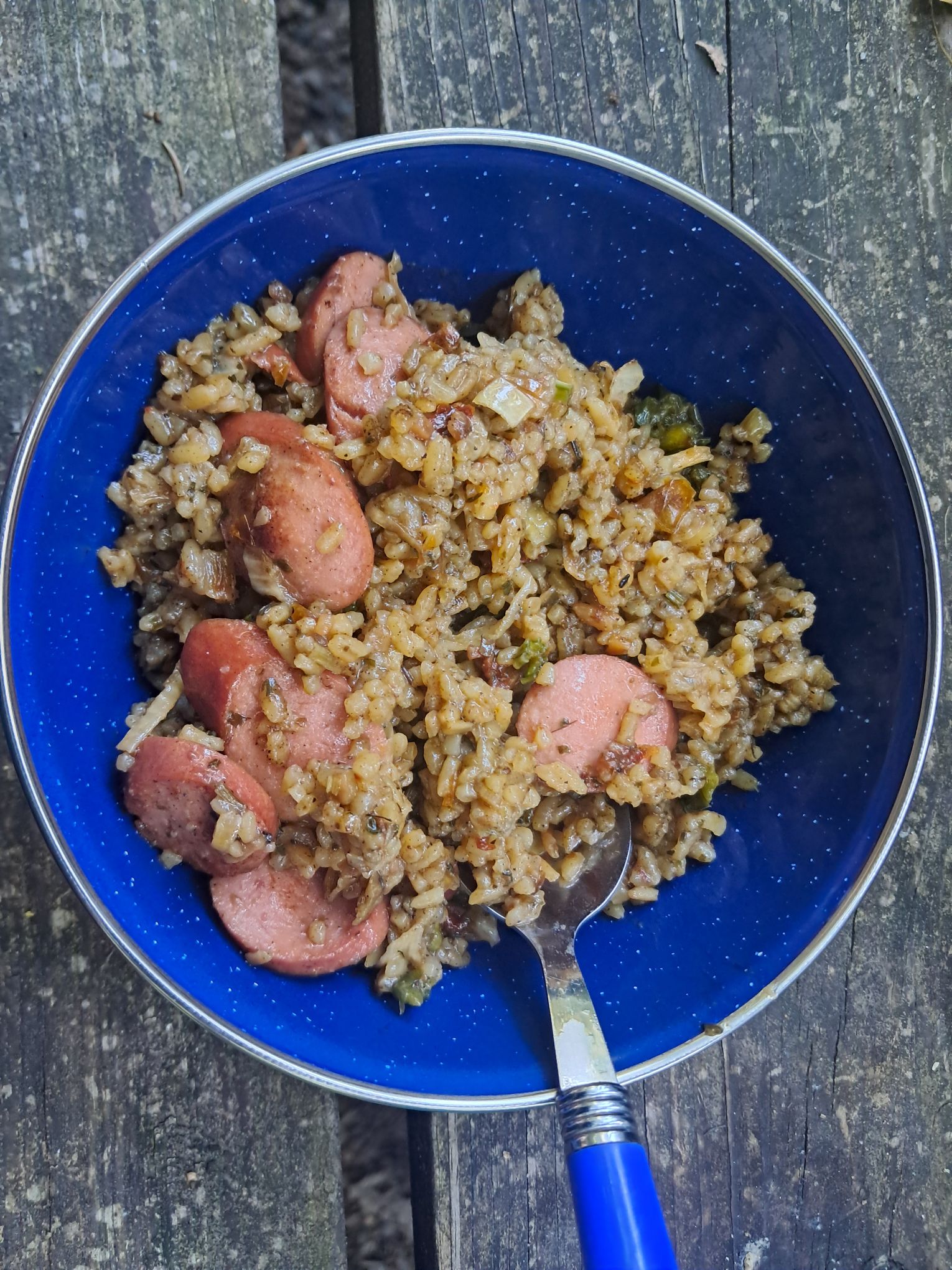
    • A dehydrated jambalaya mix “boosted” with hot dogs.
    Jambalaya, I prepared the rice mixture earlier and dehydrated it, then we sliced and fried the hot dogs before we rehydrated the rice in a Dutch oven.

    Pre‑Dehydrated Meals

    For two of those dinners—the black beans and rice tacos and the jambalaya—I did most of the work ahead of time. I cooked the dishes in my Instant Pot at home, then used my dehydrator to dry them. At camp, we simply rehydrated them in our Dutch oven. The food was delicious, and I’d recommend this approach to anyone looking for easier camping cooking with limited gear. It also helped reduce what we needed to keep cold in the cooler.

    Breakfasts included:

    • One failed experiment with overnight oats (we ate a few bites and tossed the rest).
    • Leftover tacos repurposed as breakfast tacos (a win).
    • Classic bacon and eggs on the other mornings.

    S’mores were a nightly ritual, and the kids were happily sticky by the end of each evening.

    We didn’t rely on elaborate gear—just basic cooking equipment suitable for a campfire or simple stove. We had a Dutch oven, a coffee percolator, tongs, a spoon and spatula, a camping set of metal plates, bowls, and cups, plus a cutting board and a knife.

    We stored our coolers on the back rack of the car, which freed up interior space and made food access easier at camp. For water, we hauled it in a repurposed 1‑gallon plastic jug (not from milk) and refilled as needed from campground spigots.

    The “Oh No” Box

    My husband prepared an “oh no” box to cover basic car troubles:

    • Essential tools like wrenches, pliers, a hammer, and screwdrivers.
    • Tow straps.
    • A basic code reader.

    To make it less tempting for theft, he tucked the toolbox inside an old cooler and strapped it shut in the car. We didn’t end up needing it, but knowing it was there made us more comfortable camping and driving in unfamiliar areas.

    Our “Oh No” box, which we hid in a cooler on the back rack of the car to deter potential marauders.

    Managing Limited Space

    We were tight on space in our 2018 Subaru Crosstrek. Every morning, my husband essentially played car Tetris to fit everything:

    • Camping gear
    • Food and cooking supplies
    • Clothes and personal items

    We used a back rack for coolers and realized that a roof “bubble” would have made packing easier; that’s on our list for future trips. If you’re in a small SUV or crossover, this kind of packing puzzle will probably feel familiar.

    What We’d Keep and What We’d Change

    We’d keep:

    • The puzzle mat, which doubled as a comfort upgrade and a kid activity.
    • Simple, filling meals that didn’t require fancy equipment, especially the pre‑dehydrated Instant Pot meals we could easily rehydrate at camp and that saved cooler space.
    • The “oh no” box for peace of mind.

    We might change:

    • Add a few more comfort touches for adult sleep—slightly thicker mats or compact pillows.
    • Invest in that roof carrier to ease packing and unloading.

    If you’re assembling your own camping setup for a family road trip, you don’t need to buy everything new or go ultra‑technical. Focus on warmth, cushioning, and simplicity—and on what will make your particular family feel safe and at ease.


    Want help pulling all the trip details together?

    My printable Family Road Trip Planner & Budget Pack includes a camping-friendly packing checklist, budget tracker, itinerary planner, and meal planner.


    What’s one piece of camping gear or one meal that’s become a must have for your family on the road? Share your favorites—or what you’d add to this setup—in the comments, and send this post to a friend planning a camping road trip.

    Read More Here: Mixtapes, Meltdowns, and Magic: A Family Road Trip to Remember

  • How We Survived Long Car Days with a 2.5‑Year‑Old and a 6‑Year‑Old

    How We Survived Long Car Days with a 2.5‑Year‑Old and a 6‑Year‑Old

    We loved our 5‑day, 800‑mile road trip—but we also had moments when our kids (and us, for that matter) clearly had too much car time. Here’s what helped us get through the long stretches on our road trip with a 2.5‑year‑old and a 6‑year‑old in the back seat.


    This post is part of our 5‑Day Family Road Trip Series.
    We took our family of four (kids ages 2.5 and 6) on an 800‑mile road trip from southeastern Wisconsin to Michigan’s Upper Peninsula, camping most nights and keeping our total cost under $1,000. If you’d like to see the whole picture, check out the other posts in this series:

    You’re currently reading: How We Survived Long Car Days with a 2.5‑Year‑Old and a 6‑Year‑Old.


    Naming the Challenge: Too Much Car Time

    Even with a thoughtfully planned itinerary, there were stretches where everyone was tired, squirmy, and ready to be anywhere other than buckled into a car. We tried to acknowledge that openly instead of expecting perfect behavior just because we were “on vacation.”

    We also chose not to use screens in the car. Both my husband and I grew up taking long car rides without screens, and our stance is that it takes patience from us as parents to instill a “sense of boredom” in our kids so they’re not constantly engaged by devices.

    This approach won’t be the right fit for every family, but it’s working for us right now.

    It can be challenging, but we’re already seeing the fruit of that effort—our son is very observant, and our daughter is becoming more so every day.

    Our Go‑To Tools

    We leaned on a few simple things to make long stretches more manageable.

    Spotify playlists
    We played a lot of ’60s–’80s music—songs we knew well enough to sing along with, and that set a different mood than everyday kid music. My son loves to sing along, and like me, he likes to make up his own humorous lyrics at times. A fun example is “I got my tractor stuck” instead of AC/DC’s “thunderstruck.” My daughter is just getting to that age where she’s starting to sing along to the words.

    “I spy” and simple games
    Classic, but effective. Looking for colors, shapes, and specific kinds of vehicles or buildings helped keep their eyes outside and minds engaged.

    Simple Toys
    We did have a little light up fidget toy (with switches and knobs to control the lights) and an erasable drawing board in the car. We’ve used them for previous road trips, but we didn’t need them this time.

    This is the toy we have. I have no idea why, but the kids absolutely love it, and it’s helped my daughter calm down from temper tantrums on numerous occasions.

    Talking about the sights outside
    When we passed mines, ore docks, old industrial sites, lakes, or unusual rock cuts, we pointed them out and talked about what they were. We also talk about transmission lines, interesting buildings, and the architecture of the time—we all have a thing for well‑built Victorian buildings.

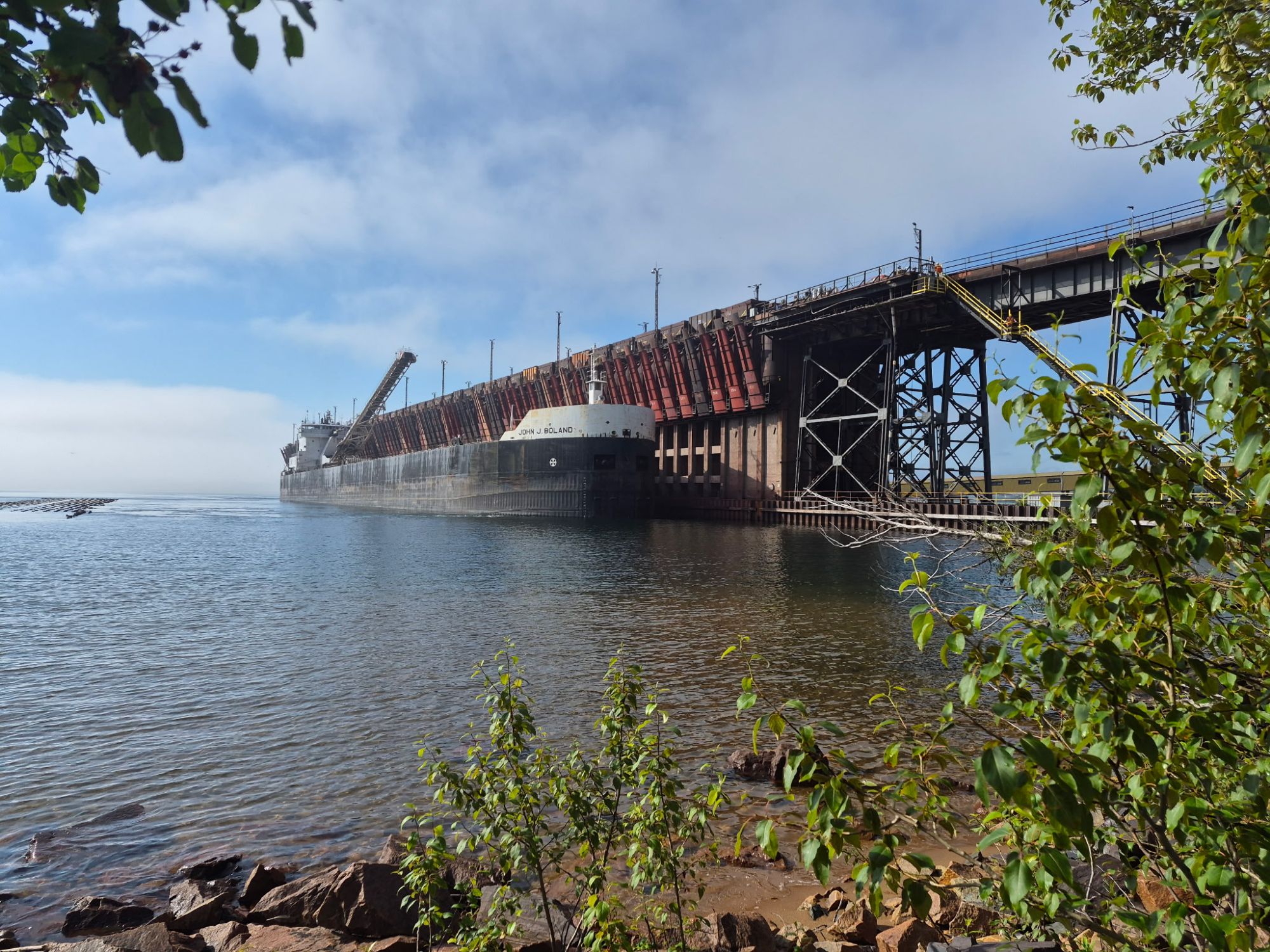
    Just one of the many places we talked about. This is an ore dock in Marquette, MI that actively loads iron ore onto ships to haul around the Great Lakes. We stood and watched the ship be loaded for about 45 minutes, and a ship engineer even came and talked to us for a couple minutes about the ship. My son talked about this for days after the fact.

    Stories tied to places
    My husband and I shared specific memories about towns, rivers, or landmarks we’d known from earlier in life, which made the drive feel like a tour of our own past as well.

    Science, History, and Mining Conversations

    Because this trip visited several mining sites and industrial areas, we had natural openings to talk about:

    • Where materials like iron ore and copper come from.
    • How ships and trains move goods.
    • What these towns were built around historically.

    We didn’t turn the car into a classroom, but weaving in science and history kept everyone thinking and made the landscape more interesting.

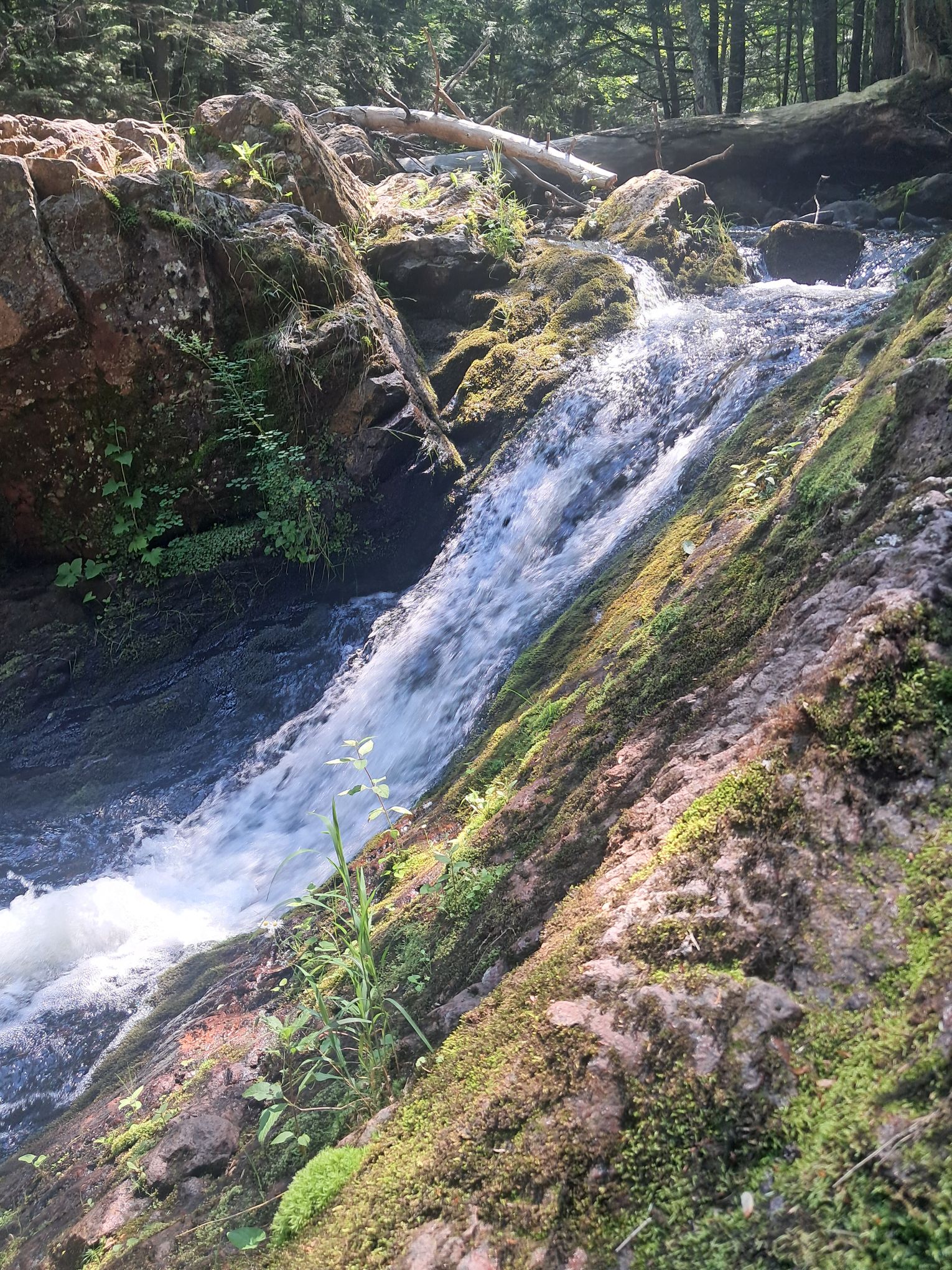
    Geological pothole below a waterfall, just one of the things we talked about on our road trip.

    Snacks (and Realistic Expectations)

    We brought plenty of snacks, but not all of them were kid hits. Our wasabi‑soy almonds were a flop with the kids and a win for the adults. They liked simpler, familiar snacks—things they’d eat at home and didn’t have to “learn” in the car.

    We found it helped to:

    • Offer snacks at natural breaks, not constantly.
    • Pair snack time with a quick stretch outside the car whenever possible.

    Our Longest Drive and What We’d Do Differently

    Our longest drive was about 5 hours. We planned that for the second day of the trip, when we were all still freshest. That was also the night we let the kids run amok on the nearby playground instead of asking them to help set up camp. After that much car time, they needed the freedom to move more than they needed to “help.”

    If we were planning another similar trip:

    • We’d probably shorten a couple of the driving days or add an extra playground stop on the longest stretches, even though we did already schedule the longest drive early in the trip.
    • We’d prep more kid‑specific playlists or audiobooks, so they had something “of their own” to look forward to within our screen‑free framework.

    The main lesson: long car days with little kids can be rough, but music, conversation, games, snacks, and realistic expectations—plus a willingness to embrace some boredom—go a long way toward making them manageable.


    If you’re planning a road trip with kids and want to keep all the practical details in one place, I made a printable 5-Day Family Road Trip Planner & Budget Pack with itinerary, packing, and meal-planning pages.


    How do you handle long car rides with your kids—screens, games, music, or something else? Share what’s worked (or what hasn’t!) in the comments, and pass this along to a friend planning a family road trip.

    If this screen‑free approach and set of ideas was helpful, please like this post and share it with another parent who’s gearing up for a long drive with little kids.

    Read More Here: How Curiosity Keeps Me From Feeling Bored (Even on Long Car Rides With Kids)

  • 5‑Day Upper Peninsula Family Road Trip Itinerary (With Kids)

    5‑Day Upper Peninsula Family Road Trip Itinerary (With Kids)

    If you’re dreaming about taking your family to Michigan’s Upper Peninsula, here’s the exact 5‑day Upper Peninsula family road trip itinerary we followed with our 2.5‑year‑old and 6‑year‑old. We camped most nights, kept drives manageable, and built in plenty of kid‑friendly stops.

    We booked our campground reservations ahead of time through the state and local park systems, which made it easier to relax and not worry about finding last‑minute sites once we were on the road. The region is full of lakes, forests, and mining history, and it’s a great alternative to more crowded tourist areas.


    This post is part of our 5‑Day Family Road Trip Series.
    We took our family of four (kids ages 2.5 and 6) on an 800‑mile road trip from southeastern Wisconsin to Michigan’s Upper Peninsula, camping most nights and keeping our total cost under $1,000. If you’d like to see the whole picture, check out the other posts in this series:

    You’re currently reading: Our Upper Peninsula Family Road Trip Itinerary (5 Days with Kids).


    Day 1 / Night 1: Green Bay, Wisconsin

    We drove from southeastern Wisconsin to Green Bay (about 2 hours), stayed with good friends, and had pizza for dinner. This first evening was intentionally simple: a shorter drive, familiar faces, and an easy meal.

    Day 2 / Night 2: Palms Book State Park and Marquette

    We drove about 3 hours to Palms Book State Park to see Kitch‑iti‑kipi, the “Big Spring,” with its glass‑bottom viewing raft. From there, we continued about 2 hours on to Marquette, Michigan. We camped at Tourist Park Campground, where the kids could burn off energy on the playground while we set up camp.

    Kitch-iti-kipi and the crystal clear water in Palms Book State Park.

    This day blended driving with a memorable natural stop and playground time, which helped keep the kids balanced.

    Day 3 / Night 3: Marquette, Ishpeming, and Lake Linden

    Ore dock loading iron ore in Marquette, Michigan.

    We spent a slow morning in Marquette watching the ore dock and a ship being loaded with iron ore from the overhead trains. Then we drove about 20 minutes to Ishpeming, Michigan, to tour the Cliffs Mine, giving us all a chance to learn more about the area’s mining history. After the tour, we continued about 2 hours northwest to Lake Linden, just beyond Houghton/Hancock. We camped at Lake Linden Campground.

    An old mining truck that is now on display at Cliffs Mine Museum in Ishpeming, Michigan.

    The mix of industrial scenery, hands‑on learning, and a quieter campground made this day feel full but not frantic.

    Day 4 / Night 4: Hancock, Quincy Mine, and Porcupine Mountains

    We drove around the Keweenaw Peninsula, visiting an old lake sediment dredge and copper processing site—visual reminders of the region’s mining past. We toured the Quincy Mine, another highlight for both kids and adults. We hadn’t booked our tour in advance and got lucky with availability; for future trips, we’d recommend reserving Quincy Mine tickets ahead of time, especially in busier seasons.

    We explored an old dredge that was abandoned near Hancock, Michigan.

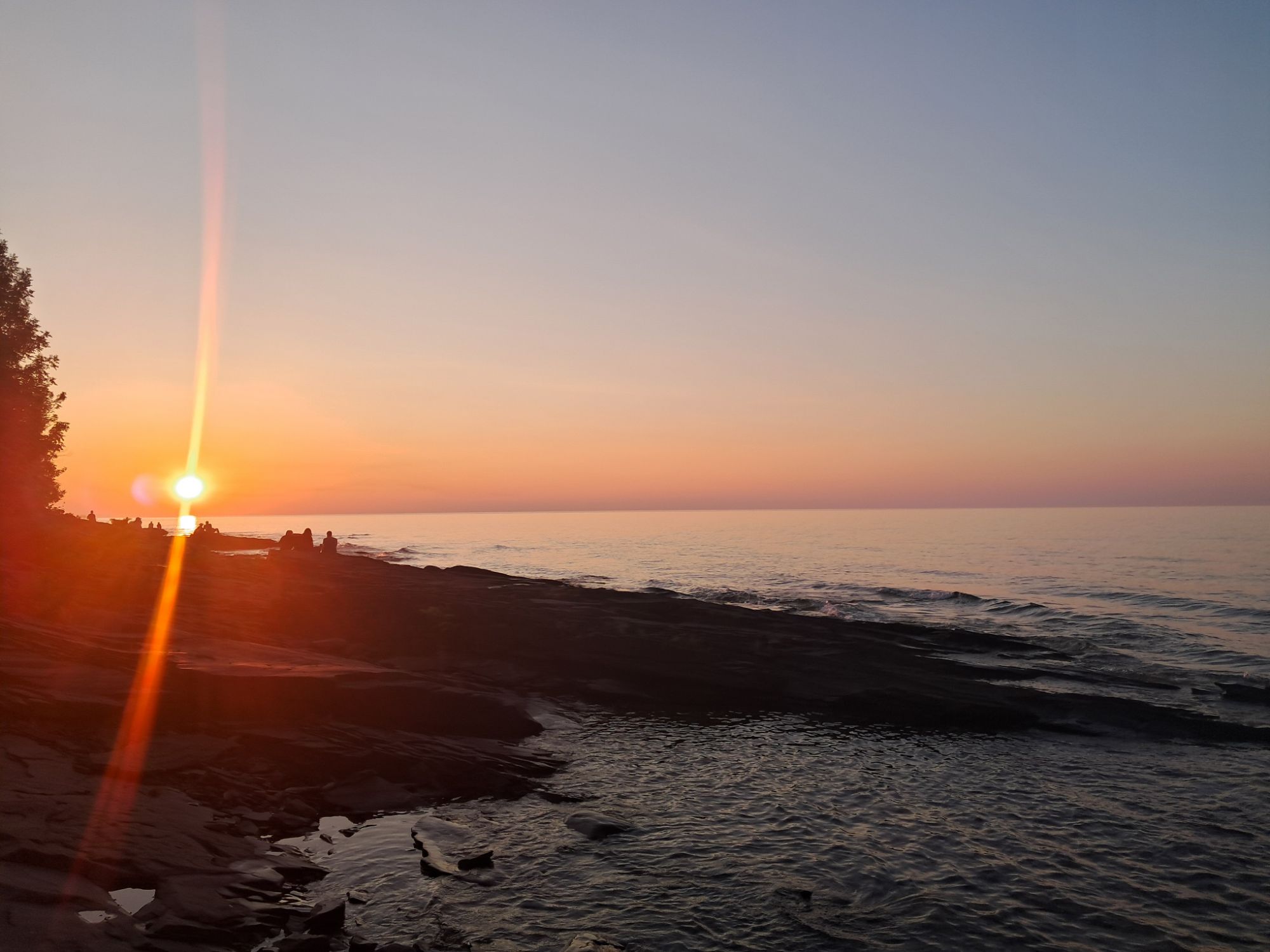
    We stopped at Keweenaw Brewing Company for a flight of beers (parents’ treat), then headed about 1.5 hours south to Porcupine Mountains State Park and watched the sunset over Lake Superior after setting up camp.

    The sunset at the Porkies was one of the emotional peaks of the trip: simple, beautiful, and shared as a family.

    Sunset over Lake Superior

    Day 5 / Night 5: Porcupine Mountains, Wakefield, and Council Grounds

    We spent the morning exploring the Porcupine Mountains—sights, overlooks, and waterfalls. On our way south, we grabbed pasties in Wakefield, Michigan, a local staple. We drove back into Wisconsin to Council Grounds State Park (about 3 hours away), where we went swimming above the dam in the Wisconsin River.

    Swimming in Council Grounds State Park.

    This was a high‑activity day, heavy on nature and movement, which worked well after several driving days.

    Day 6: Stevens Point and Home

    We enjoyed a slow morning at Council Grounds State Park. Then we stopped in Stevens Point (about 1 hour away) for a picnic lunch by the water at Iverson Park. Finally, we finished the roughly 2‑hour drive home to southeastern Wisconsin.

    Ending with a relaxed morning and a picnic kept the return from feeling abrupt.

    Why This Itinerary Worked for Us

    • Drives were broken up by playgrounds, parks, and tours, so the kids weren’t stuck in the car all day.
    • We alternated high‑activity days (waterfalls, mine tours) with slower ones (scenic viewing, playground time).
    • The route offered natural beauty, industrial history, and kid‑friendly stops without expensive theme parks.
    • Booking campgrounds ahead of time removed a layer of stress, while leaving some flexibility (like our Quincy Mine visit) for serendipity—though next time, we’d reserve that tour in advance too.

    This Upper Peninsula family road trip with kids worked well for our 2.5‑year‑old and 6‑year‑old. Use it as a starting point, and don’t be afraid to swap in your own favorite parks or small towns along the way.


    Planning your own version of this trip?

    I put together a printable Family Road Trip Planner & Budget Pack with a 5-day itinerary planner, budget worksheet, packing checklist, and meal planner to make the process easier.


    Have you taken your kids to the Upper Peninsula or somewhere similar? Share your favorite stops—or what you’d add to this route—in the comments.

    And if you know a family planning a UP trip, send this itinerary their way!

    Read More: Signed House Contract at Used Car Lot-On Our Honeymoon Trip to Alaska

  • How Our Family of Four Took a 5‑Day Road Trip for Under $1,000

    How Our Family of Four Took a 5‑Day Road Trip for Under $1,000

    My family of four recently took a 5‑day, 800‑mile budget road trip from southeastern Wisconsin to Michigan’s Upper Peninsula—and spent under $1,000. Here’s our exact budget and the choices that made it possible.


    This post is part of our 5‑Day Family Road Trip Series.

    We took our family of four (kids ages 2.5 and 6) on an 800‑mile road trip from southeastern Wisconsin to Michigan’s Upper Peninsula, camping most nights and keeping our total cost under $1,000. If you’d like to see the whole picture, check out the other posts in this series:

    You’re currently reading: How Our Family of Four Took a 5‑Day Road Trip for Under $1,000.


    Trip Overview

    We traveled with our 2.5‑year‑old daughter and 6‑year‑old son, camping most nights and staying with friends for one night. Our route took us through Green Bay, Marquette, the Keweenaw Peninsula, the Porcupine Mountains, and back home via central Wisconsin.

    I didn’t set out with a specific budget target in mind; I simply tracked expenses along the way. Looking back at the numbers showed us what really helped keep costs down.

    Our Budget Breakdown

    Here’s how our costs shook out for 5 days:

    • Lodging (4 nights camping in state and local parks, 1 night with friends): $156
    • Food (mostly groceries: sandwich supplies, snacks, beer, campfire dinners): $404
    • Gas (2018 Subaru Crosstrek, about 32 miles per gallon): $101
    • Entertainment and souvenirs (mine tours, a brewery flight, small treats): $195

    Total for 5 days, family of four: $856.

    Under $1,000 is still a significant amount of money, but for us, it felt like a good balance between keeping costs reasonable and enjoying meaningful experiences.


    Want a printable version of this planning process?

    I made a simple 5-Day Family Road Trip Planner & Budget Pack with a budget tracker, itinerary planner, packing checklist, and meal planner. It’s designed to help families plan a road trip without starting from scratch.


    Tips That Helped Us Keep Our Family Road Trip Under $1,000

    Each of these decisions ties directly to one of our main expense categories—lodging, food, gas, and entertainment.

    Camp instead of hotels for most nights.
    Four nights in state and local parks kept lodging costs low and gave the kids built‑in playgrounds, nature time, and playmates.

    Our camping setup

    Cook most dinners at camp.
    Rotisserie chicken, tacos, potato hash, and a simple jambalaya made from a dehydrated mix and hot dogs were all easy to cook over a camp stove or fire. Groceries cost less than restaurant meals, especially for a family of four.

    Jambalaya, one of the camping dehydrator meals we made ahead of time and rehydrated at the campsite.

    Pack an “oh no” box.
    My husband, an auto mechanic by training, packed a box with basic tools, tow straps, and a simple code reader. We never needed it, but knowing we could handle minor roadside issues kept us from feeling pressured into extra services “just in case.”

    Our “Oh No” box, with simple tools that would help us if we had trouble on the road.

    Choose a route with low‑cost, high‑value stops.
    State parks, playgrounds, scenic ore docks, mines, waterfalls, and lake views gave us plenty to do without pricey attraction tickets every day.

    Overlooked Falls in Porcupine Mountains State Park

    Let kids help with camp setup and fun.
    Our puzzle‑piece floor mat became a nightly “game,” and s’mores and playgrounds turned simple evenings into memorable ones.

    Have a contingency plan for bad weather.
    We agreed that if it poured, we’d grab a hotel instead of pushing through miserable camping. We didn’t end up needing that backup, but it helped us relax while still budgeting primarily for camping.

    A Quick Look at Our Route

    Here’s a short overview of where we went each day:

    • Night 1: Drive to Green Bay, stay with friends.
    • Day 2: Palms Book State Park and Kitch‑iti‑kipi; camp in Marquette.
    • Day 3: Ore dock in Marquette, Cliffs Mine in Ishpeming, camp near Lake Linden.
    • Day 4: Hancock and old industrial sites, Quincy Mine tour, camp and sunset at Porcupine Mountains State Park.
    • Day 5: Porcupine Mountains waterfalls, pasties in Wakefield, camp at Council Grounds State Park.
    • Day 6: Slow morning, picnic in Stevens Point, then home.

    If you’d like a detailed day‑by‑day itinerary, I’ve written that up separately and will share it here when it’s posted.

    What It Was Like with Young Kids

    We definitely had moments where the kids had too much car time—every parent knows that special brand of restlessness. Spotify playlists (mostly ’60s–’80s music), “I spy,” conversations about the sights outside, and lots of science, history, and mining talk helped turn those stretches into shared experiences instead of just “Are we there yet?” loops.

    I’ll cover our car‑time strategies in more detail in another post, but the short version is: simple games, engaging conversation, and familiar music go a long way.

    A Few Caveats and Small Joys

    We were lucky with weather: it didn’t rain, which made camping much more pleasant. We also met kind people along the way—camp neighbors who shared s’mores, a ship’s chief engineer and his son who took a moment to explain the ore dock, and a stranger who offered to take a sunset photo of all four of us at the Porcupine Mountains.

    Those moments reminded us that budget travel isn’t just about saving money; it’s also about being open to the small connections you find on the road.

    Want a printable version of this planning process?


    If you’ve taken a budget minded family road trip, I’d love to hear one choice you made that helped keep costs down without cutting out the fun. Share your story in the comments—and if you know someone planning a family trip, send this their way!

    If this breakdown was helpful, please like this post and share it with a friend who’s dreaming about a family road trip on a budget.

    Read More: Simple Summer Fun that Doesn’t Break the Budget

  • Simple Summer Fun That Doesn’t Break the Budget

    Simple Summer Fun That Doesn’t Break the Budget

    Summer goes fast, especially with kids. The kids are off school, the days are long, and the temptation to spend big on activities is everywhere. Big trips can be wonderful, but they’re not the only way to give kids a great summer. Some of the best memories don’t require plane tickets, pricey passes, or a suitcase—just a little creativity, some local resources, and a willingness to enjoy what you already have.

    Here are a few ways to save money while still having a genuinely fun summer with your kids.


    Turn Your Yard Into “Casa de Backyarda”

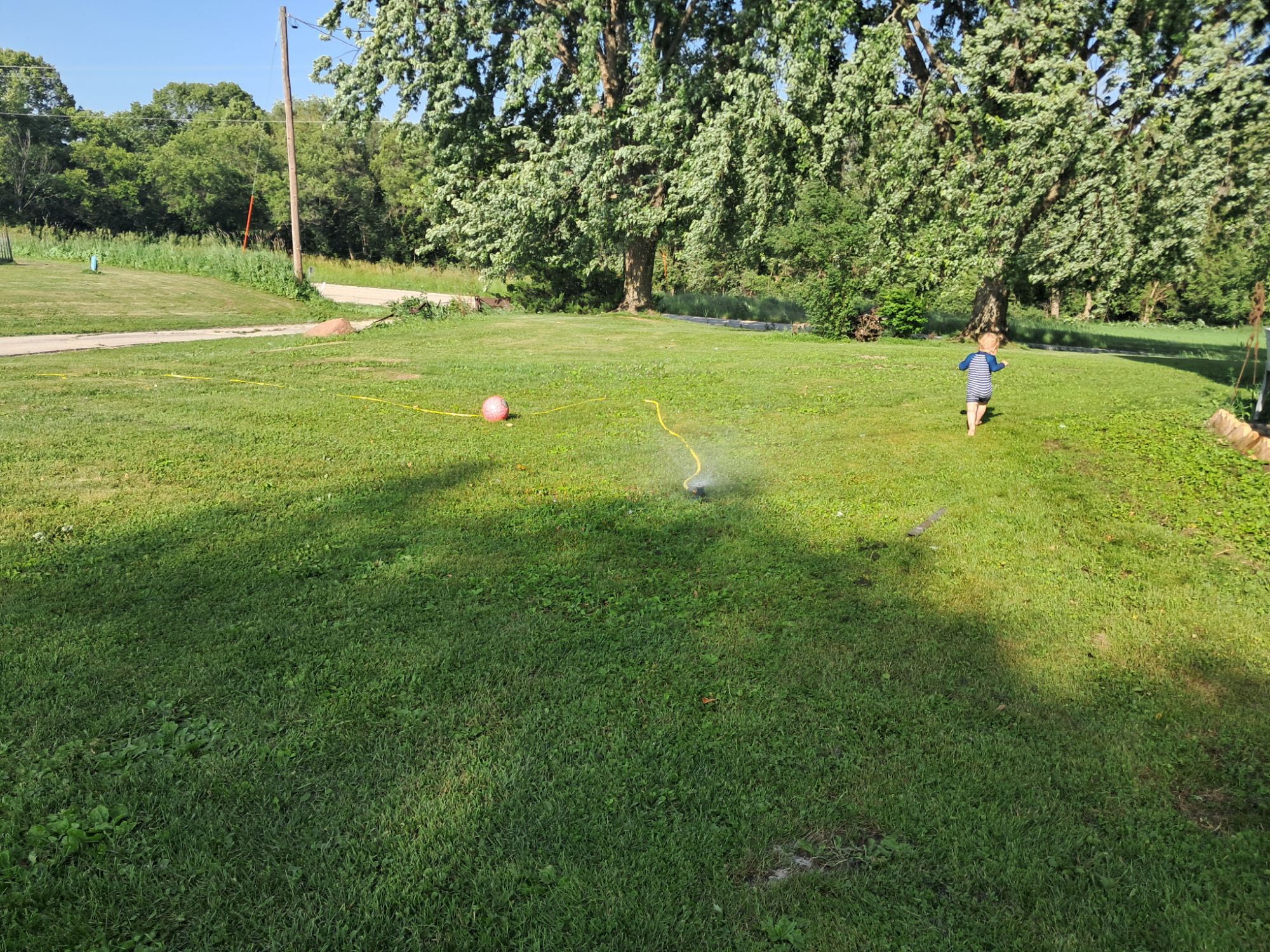
    You don’t need a fancy inflatable water park to make the backyard magical. Sometimes all it takes is a hose and a simple sprinkler.

    In our house, we call it “Casa de Backyarda.” When the weather heats up, we:

    • Set up a basic sprinkler in the yard.
    • Add a few extras—a plastic kiddie pool, buckets, or cups for pouring water.
    • Let the kids run, jump, and invent their own games.

    Pair it with popsicles, bubbles, a simple little picnic on a blanket, or a “no shoes” rule, and suddenly you’ve got a full afternoon of fun for the cost of water and whatever you already own. It’s low-stress, low-prep, and high joy.


    Make the Most of Your Local Library

    Your local library can be a quiet powerhouse for summer fun and savings. Many libraries offer far more than books and story time.

    Depending on your library system, you may find:

    • Passes you can borrow for local pools, museums, zoos, and other attractions.
    • Discounts on souvenirs or gift shop purchases at partner locations.
    • Free or reduced parking when you visit certain spots with a library‑issued pass.
    • Summer reading programs with small rewards, events, and special activity days.
    • Free equipment rentals (such as Bluetooth speakers) which really amp up the vibe of any activity.

    Not every library has every perk, but it’s worth checking what your local system offers—you might be surprised. A simple habit: before you buy tickets or plan an outing, check what your library offers. Sometimes all it takes is a library card and a bit of planning ahead to turn a “maybe too expensive” activity into something doable.


    Camping as a Main Summer Trip

    You don’t have to fly across the country to have a memorable family vacation. A simple camping trip can be both an adventure and a major cost saver.

    When camping is your main trip for the summer, you often get to:

    • Save on lodging. Campsites are usually much cheaper than hotels or rentals.
    • Spend more time outdoors—hiking, swimming, stargazing, cooking over a fire.
    • Build traditions around campfire stories, card games, and simple meals.

    Camping can be as rustic or “soft” as your family needs—anything from tent camping at a state park to renting a small cabin or camper. Either way, the focus shifts from expensive attractions to shared experiences: setting up camp together, exploring trails, and unplugging a bit from screens.


    Lean Into “Small Fun” That Adds Up

    Kids often remember the small, repeated joys more than the one big, expensive outing. A few “small fun” ideas that don’t cost much:

    • Weekly library visits with a special snack afterward.
    • Neighborhood walks or bike rides with a stop at a playground.
    • Walking a storybook trail at a local park.
    • Firefly chasing in the backyard.
    • Living room movie nights with blankets and popcorn.
    • Simple crafts using what you already have—chalk, cardboard, paints.

    You don’t have to fill every day with something elaborate. A few steady, simple traditions can carry a lot of weight over a whole summer.


    A Gentle Reminder for Summer Parents

    It’s easy to feel pressure to do “everything” in the summer—big trips, fancy outings, perfect memories. But your kids don’t need perfection. They need you, some time, and a few simple experiences to hang onto.

    A sprinkler in the yard. A borrowed library pass. A weekend camping trip instead of a hotel. A stack of books and a bowl of popcorn. Those can be enough.


    If you have a favorite low‑cost summer tradition, I’d love to hear: what’s one simple thing your family does every year that makes summer feel special without stretching the budget?


    If this post gave you a few ideas or reminded you of the simple things you already love, would you share it with another parent or caregiver? Your shares and comments help these budget friendly ideas reach families who might need them.

    Read Next: Where the Red Fern Grows and the Sprinkler Flows

  • Why I Chose Homesteading

    Why I Chose Homesteading

    Disclosure: This post contains affiliate links. As an Amazon Associate, I earn from qualifying purchases. Thanks for supporting Practical Homesteading!


    I turn 36 this week, and it feels like as good a time as any to tell you who I am.

    I am

    • a wife
    • a working mother of 2 beautiful children
    • an environmental professional
    • a homesteader
    • a gardener
    • a reader
    • an animal caretaker
    • an aspiring writer (the blog you’re reading is me practicing)
    • an amateur historian
    • a perfectionist
    • a ruminator
    • a friend
    • a daughter
    • a sister

    Growing Up on a Wisconsin Dairy Farm
    I grew up on a family dairy farm in Southeastern Wisconsin during the 1990s—a tough decade when small operations were disappearing fast.

    Our farm had a 60-cow herd through years of economic stress. In 2001, we sold the herd and rented the land to a larger operation. By then, my five older sisters had mostly moved on. My parents took “city jobs”—Ma at the local grocery store, Dad first as a farmhand, then for a local drilling company. They bought beef cattle for me to raise through my teen years.

    The Teenage Rebel Who Wanted Out
    Before my dad took over from his father, farmers traveled no more than a mile to access all their land. By the time he changed careers 25 years later, some had to drive an hour or more to reach the farthest corners of their acreage. The world I grew up in was already shifting fast beneath my feet.

    But as a teenager, I couldn’t have cared less about the cattle I was entrusted with. Farming felt pointless. I was determined to “get out of Dodge County” and go to college in nearby Madison. Books came easily to me, and I wore that like armor. I had a chip on my shoulder—I thought I was smarter than the farm life, better than staying put, that I had everything figured out.

    Pride, Pain, and Coming Back to Earth
    Pride comes before a fall, as they say. I never had one dramatic crash, but I had low moments that humbled me.

    When I was 17, I sustained serious burn injuries on my arms and chest. I received skin grafts on my arms. I spent a long season wrestling with shame and the fact that I was marked by scars. When I finally reached Madison—the dream I’d chased—I felt small next to high achievers who hadn’t come from farms and had flawless skin.

    Even after landing a job as an environmental professional, I stood in rooms feeling inadequate beside people who seemed to know so much more. It took years to accept I wasn’t the smartest person in the room—but I still had something valuable to offer.

    Love, Long Courtship, and Hotel-Hopping 20s
    I started dating my now-husband at 19. We’d known each other longer, but that’s when our story began. He didn’t grow up on a farm but found agriculture fascinating. He thought it was neat that I’d spent my childhood around cows, even as I ran away from that identity.

    After a long courtship, we married when I was 27. We loved each other deeply, but finding our rhythm took time. Through trial and error, we landed on shared ground: children, homesteading, and country living.

    All along, I’d quietly loved making things from scratch, even if I didn’t call it homesteading. Freshman year of college, I made pizza entirely from scratch (except the cheese). It took three times longer than it should have. I ruined zucchini bread by confusing tablespoons for teaspoons of salt. Junior year, I bought a crockpot (affiliate link) that made my dorm floor jealous of the dinner smells wafting from my room.

    Motherhood Opened My Eyes
    I graduated grad school at 24 and we moved near Green Bay for my job. For the next six years—my freewheeling late 20s—we traveled heavily—for work and fun—with each other, family, and friends. Hotels became our second home. It was a wonderful season of freedom I hated to see end.

    Then I had my son just before turning 30. Motherhood was like someone handing me color television after a lifetime of black-and-white. The challenges were endless—physical, emotional, exhausting. But when he smiled and grabbed my finger with his tiny, chunky hand, everything faded. I wanted to be better for him.

    That first year coincided with Covid. No village. Husband working a lot. Our beautiful house on 18 acres of “dream land” suddenly felt hollow. Land doesn’t raise children. Pride in property lines doesn’t fill the gaps. As we talked about baby number two, we made a deliberate choice: we moved back to our hometown near Mayville, Wisconsin.

    Photo by Markus Spiske on Unsplash

    Choosing This Life Freely
    I watched our family navigate those farm changes—not out of obligation, but circumstance. Now I’m choosing this life freely. We’re gardening, raising chickens, baking bread, and raising kids.

    The girl who couldn’t wait to escape Dodge County returned on her own terms. At 36, I’m still learning I don’t need to be the smartest person in the room—just someone who shows up, learns, and shares.

    This blog is me doing that. Someone standing in the middle of her story. Rooted, growing, still in progress.

    Practical Homesteading: growing food, raising kids, building community.


    If you enjoyed reading this post, please like it. Share with an interested friend. And subscribe for more reflections on the messiness of life (and a couple recipes too). Thank you for reading.

    Related Posts

  • Signed House Contract at Used Car Lot-On Our Honeymoon Trip to Alaska

    Signed House Contract at Used Car Lot-On Our Honeymoon Trip to Alaska

    Think back on your most memorable road trip.

    Disclosure: This post contains affiliate links. As an Amazon Associate, I earn from qualifying purchases. Thanks for supporting Practical Homesteading!

    We signed a house contract at a used car lot—on our honeymoon road trip to Alaska.

    My husband and I postponed our honeymoon for a year because we both dreamed of driving from Wisconsin to Alaska. At first, we planned to fly, but then he asked why we didn’t look up the driving logistics. I did, and it came out to about 60 continuous hours on the road.

    “That doesn’t seem too bad,” I thought.

    So we began planning a three-week road trip for June 2018. We bought a new Subaru Crosstrek, figured out the perfect gear and packing technique, and anxiously counted down the days.

    Affiliate Links for Recommended Travel Gear:

    Trailer hitch

    Rear mounted cargo hold

    Cooler

    Blackout Shades

    The House That Hijacked Our Honeymoon
    What we didn’t plan for happened the day before we left. We toured a beautiful house and property that was for sale by owner. We were actively looking, and this one appeared on the market that Monday. The day before departure, we put in an offer. The next morning, already packed and driving down the highway, we got the call: they accepted it. Then came the catch—they insisted we turn around, come back without a realtor, and negotiate the terms in person.

    In hindsight, the red flags were glaring. At the time, we were just young and excited. We’d only made it to the next town over, so back we went to sit with them and work out an agreement that we later learned was heavily biased toward the seller.

    The Used Car Lot “Realtor”
    They had plenty of experience. They’d bought rental properties before, were about thirty years older than us, and had their real estate friend there “just to write up the paperwork.” We met them at his actual business building: a used car sales lot. Meanwhile, we had a suitcase in the backseat, a printed itinerary to Alaska, and a lot of naive trust that people were generally fair. We signed what they put in front of us, then handed the agreement to a lawyer we hired sight unseen because the deal needed to close before we returned from our trip— because this was the trip of a lifetime we’d already postponed once.

    We told ourselves it was fine. We didn’t know enough yet to recognize just how stacked against us the whole setup really was.

    Alaska via Internet Cafés
    From Velva, North Dakota, we hired a real estate lawyer over the phone. From Saskatoon, Saskatchewan, we tracked down a home inspector willing to examine a property we hadn’t even emotionally committed to yet. From a restaurant with spotty Wi-Fi, we opened our email and read the lawyer’s first warning that the terms weren’t great. From Watson Lake, Yukon—somewhere between the Sign Post Forest and actual spruce forests—we began to grasp just how bad the terms really were. And from Anchorage, Alaska, with mountains filling the windows and our honeymoon dreams fading in the background, my husband was completely fed up and trying to convince me to walk away from the whole deal.

    I pushed on anyway, stubborn and hopeful as ever. I hunted down internet cafés and libraries in small towns, asking clerks if they had a scanner I could borrow. I hunched over public computers, printing documents, signing them, re-scanning, and emailing everything back to the lawyer and sellers while other travelers casually checked weather reports or email. There’s a particular absurdity to signing legal addendums about well inspections with bear safety posters hanging on the wall behind you.

    We felt like we were in a real-life Subaru commercial

    Honeymoon Highlights Amid the Chaos
    The road trip itself was everything we’d dreamed of and nothing like we imagined. We drove long stretches of highway that seemed to belong to no one, met kind strangers at gas stations, and watched the sky turn light again at 3 am . We ate sandwiches in the car, argued about which way to turn, and pointed out every moose sighting like excited kids. But running underneath all the glaciers and mountain passes was this constant undercurrent of “Did that email go through?” “What did the lawyer say now?” “Are we making a huge mistake?”

    Geeking out over moose sightings
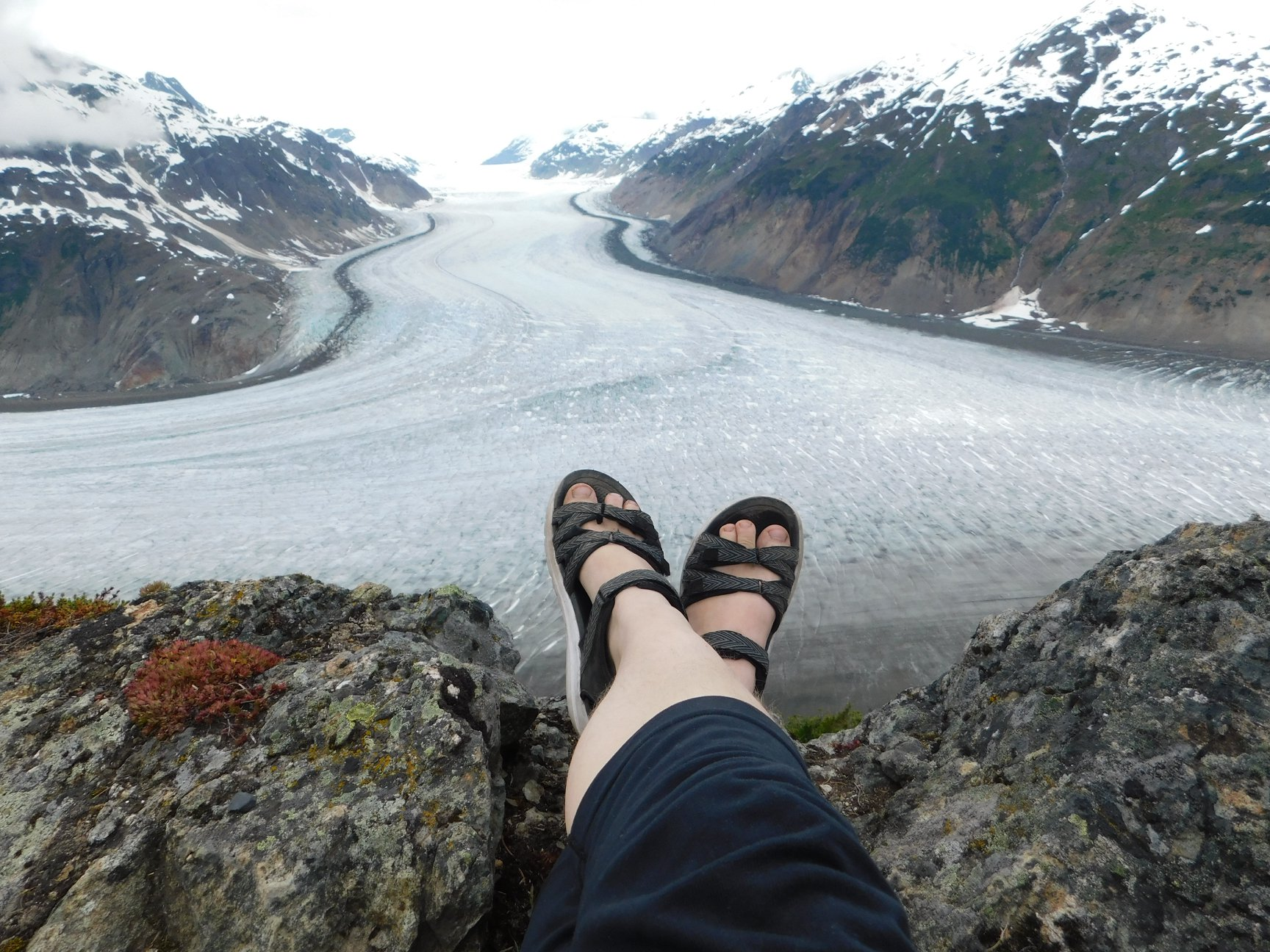
    The glacier view to end all glacier views

    What That House Meant to Us
    Looking back, what makes this road trip so memorable isn’t just the honeymoon or the bad real estate decision. It was us—very early in our marriage—learning how each of us handles pressure. He was ready to cut our losses for the sake of peace. I was determined not to walk away from something we’d already invested so much in: time, money, emotion, and the dream of that house and property. We took turns being the calm one and the panicked one. We learned how to argue in a car without a door to slam and how to apologize at the next gas station.

    In the end, the house did become ours, but not without real emotional and financial cost.

    However, that property saw us bring home our first child, learn how to garden from scratch, fix a house that needed a lot of love, grade our first driveway, and bring home our very first chickens—the true beginning of our homesteading life. Five years later, we sold it. Not because we didn’t love it, but because we needed to move closer to family as we planned for our daughter.

    The road from Wisconsin to Alaska became the backdrop for midnight phone calls, scanned signatures, and the slow realization that experience and age really do matter when you’re sitting across from someone at a negotiation table—or their used car lot “realtor.”

    If I had it to do over, I’d bring a realtor, a lawyer, and a far more cautious pen. But that trip also forced us to grow up a little faster and see each other clearly, flaws, stubbornness, and all.

    When I think of my most memorable road trip, I don’t just picture mountains or long stretches of Canadian highway. I see a young couple in an overstuffed Subaru, chasing one dream all the way to Alaska while fighting not to lose another one back home.


    **Loved this wild story?**
    ❤️ Comment and Like if you’ve signed something sketchy 
    📲 Share with your first-time home buyer friend 
    📧 Get more real homesteading stories

    Related Posts

    What the World Taught Me About Home

    Do you have a favorite place you have visited? Where is it? The place I love most isn’t on any map. It’s not a landmark or an exotic beach, but it’s the center of everything I’ve learned about belonging. When I trace the path to it, I travel through every memory that once made the…

    Keep reading
  • When Nostalgia Sneaks In: A Journey Through Music, Memories, and Meaning

    When Nostalgia Sneaks In: A Journey Through Music, Memories, and Meaning

    What makes you feel nostalgic?

    You never expect it—the way a few chords of a song or the smell of something sizzling in the kitchen can throw open a door straight into your past. Nostalgia sneaks in quietly like that. One moment, I’m focused on the day in front of me, and the next, I’m somewhere else entirely—caught between who I was and who I’ve become.

    The Sound of Self-Discovery
    For me, music is the quickest time machine. Just a few seconds of a song, and I’m back in the place where it first meant something.

    When “Fix You” by Coldplay plays, I’m no longer folding laundry or driving home—I’m back in my college dorm room, freshman year. The lights were harsh, the walls thin, and life felt uncertain in that way it only does when you’re eighteen and still finding your place in the world. I’d wait for my roommate to leave, turn up the volume, and sing at the top of my lungs—no audience, no expectations, just a girl trying to make peace with herself, one verse at a time.

    A Taste of Freedom
    A few years later, life expanded far beyond that dorm room. When I taste pupusas, I’m taken back to my first time traveling internationally—a trip to San Salvador where I turned twenty-one. That birthday was wrapped in humidity, adventure, and the quiet thrill of doing something new and a little bit scary.

    I remember sitting in a small open-air restaurant, watching the cook press pupusas by hand—pinto beans and cheese sealed inside dough, sizzling on the griddle. The first bite was simple but unforgettable: chewy, salty, rich, and alive with flavor. Maybe it tasted like freedom.

    Or maybe it just marked the moment I realized how big the world really was.

    Even now, I still try to recreate them at home. My husband doesn’t quite share the same fascination. They never taste exactly like they did that day. For me, they carry the rush of youth and discovery and the quiet joy of realizing how travel can stretch your sense of home.

    A Song for the Road Ahead
    Years later, nostalgia found me again. It was during a bittersweet season of change. It was wrapped in the opening chords of “Helplessness Blues” by Fleet Foxes. I can still see it clearly. Our Subaru Crosstrek was packed with the last of our things as we left what I used to call our “dream home”.

    My husband drove ahead in another vehicle. I followed behind, six months pregnant with our daughter. Our three-year-old son was strapped into his car seat. He watched out the window, humming softly. The sky was that early-summer color somewhere between gray and blue. It was the kind that feels like an ellipsis instead of a period.

    As we drove, I sang along for my son, voice steady, heart full. We’d listened to Fleet Foxes so often that summer. He had chosen his own favorite song, “Quiet Houses.” He adorably called it “the Meh-me-gah song.” That tiny mispronunciation still makes me smile. It’s one of those details you don’t realize will someday become its own memory.

    If “Fix You” reminds me who I was becoming, “Helplessness Blues” reminds me how far I’d come and how much life can change when you’re not looking.

    Laughter That Lasts
    And then there’s “Jump Around.” That one doesn’t carry reflection—it’s pure, unfiltered joy. It takes me straight back to Camp Randall Stadium, surrounded by thousands of college students in a sea of red and white. We jumped in unison until the stands shook beneath our feet. Later, it made its way into every wedding of my college friends—ties loosened, heels kicked off, laughter spilling loud and unrestrained.

    Every time that song comes on, I catch a glimpse of all those versions of me—young, hopeful, tired, happy—and somehow, they all still belong to each other.

    Memory You Can Taste and Hear
    Music and food both have that power—to transport, to remind, to reawaken. Each song and flavor brings back a different version of who I’ve been, like pages from a well-loved journal I never meant to write but somehow did through living.

    Nostalgia reminds me that our lives are stitched together by these small, unforgettable moments—songs, tastes, and places that once felt ordinary but now glow quietly in memory. It isn’t just remembering; it’s re-feeling. Every sensory spark reveals how much of us we carry forward, even without realizing it.

    Maybe that’s what nostalgia really is—not a longing for the past, but a gentle reminder that who we were still lives within who we are. And when it sneaks up on me, I don’t resist it. I just pause, smile, and let the moment wash over me—one note, one flavor, one heartbeat at a time.


    What sparks nostalgia for you? A song, a recipe, a smell you can’t forget? I’d love to hear what brings your favorite memories rushing back—share your story in the comments below.

    If this story stirred a memory or made you smile, please take a moment to like, share, or subscribe. Your support helps this small corner of the internet grow into a space for family, reflection, and life’s beautifully ordinary moments.

    Join me each week for reflections on family, simplicity, and the small sparks that make life meaningful. Subscribe below to bring a little calm nostalgia into your inbox.

    Related Posts

  • Raising Curious Kids: Travel Dreams From the Backseat

    What cities do you want to visit?

    I never expected a six-year-old to remind me what travel is really about — but that’s exactly what happened on our drive to school this morning.

    I decided to ask today’s daily blog prompt to my son, thinking it might spark a fun pre-drop-off conversation. His answer caught me off guard in the best way. It was one of those simple parenting moments that shows just how quickly their little worlds are expanding.

    He didn’t even pause. “I want to see the Statue of Liberty and the Capitol building,” he said from the backseat. He swung his feet as sunlight spilled across the dashboard. Maybe he meant the Capitol in Madison, Wisconsin — he was spellbound by it when we visited — but I’d like to imagine he meant Washington, D.C., that grand center of United States history. Either way, his answer made my heart swell.

    We don’t travel far — not yet, anyway. Most of our adventures stay close to home. That’s what works for now with snacks, naps, and his two-year-old sister in tow. But this morning reminded me that curiosity doesn’t need a plane ticket. We journey daily through the library books scattered across our table, Nova episodes and Ken Burns documentaries that keep his questions coming. His curiosity is boundless. It’s such a joy to watch him connect the dots between what he reads, what he watches, and the world he dreams of exploring.

    Out here on our little homestead, we tend a lot of things — the soil, our routines, our growth as a family. But maybe the most important seed we’re planting is curiosity itself. That gentle, persistent pull toward learning, seeing, and understanding more.
    Someday, we’ll stand beneath that soaring Statue or climb the steps of the Capitol together. For now, I’m content to let the journeys begin from the backseat — one question at a time.


    If this story spoke to you, will you take a moment to support this little corner of the internet? You can like this post, share it with a friend who’s raising a curious kid, or subscribe so you don’t miss future reflections on homesteading, parenting, and growing a love of learning at home.

    And if you’d like to keep the conversation going, scroll down and tell me: what cities are your kids dreaming about?

    Related Posts

    What the World Taught Me About Home

    Do you have a favorite place you have visited? Where is it? The place I love most isn’t on any map. It’s not a landmark or an exotic beach, but it’s the center of everything I’ve learned about belonging. When I trace the path to it, I travel through every memory that once made the…

    Keep reading

    A Short Drive to Heaven: Why Lake Michigan Wins for Us

    Beach or mountains? Which do you prefer? Why? The crunch of gravel echoes under the car tires as I set out for what has become a cherished ritual: a short drive to the nearest beach. It’s funny. When people ask me if I prefer the beach or the mountains, the answer isn’t as simple as…

    Keep reading

    From Ghost Ships to Dragons: Growing a Family of Readers

    What book are you reading right now? Some of my earliest memories are of getting lost in a book. I read on the school bus until the motion made me queasy but I never quite wanted to stop. Books have always been my favorite escape into bigger worlds. That love of stories has shaped much…

    Keep reading
  • What the World Taught Me About Home

    What the World Taught Me About Home

    Do you have a favorite place you have visited? Where is it?

    The place I love most isn’t on any map. It’s not a landmark or an exotic beach, but it’s the center of everything I’ve learned about belonging. When I trace the path to it, I travel through every memory that once made the world feel both huge and intimate.

    I remember a quiet afternoon on a Pacific beach in El Salvador—the crash of waves against the sand, the sun melting into the horizon, my first taste of discovery outside the familiar. The ocean taught me that beauty can silence everything, even thought.

    In Glacier National Park, I learned that wonder thrives in stillness. My parents and soon-to-be husband and I climbed along the Going-to-the-Sun Road, chasing glaciers that remained just out of reach. A mountain goat appeared on the rocks as we paused, breathless. In that hush between sky and earth, I understood that some connections—like some landscapes—reveal their depth only in silence.

    Las Vegas was the opposite of quiet. My sister and I rode an outdoor escalator lit by neon, laughing at nothing. I held a beer, feeling halfway mischievous, halfway adult. The city taught me that joy doesn’t need purpose—it simply asks to be felt.

    Then came Hyder, Alaska, on our honeymoon. We walked a boardwalk beside a still river, two weeks too early to watch bears catching salmon. But the air smelled of ocean and pine, and the stillness felt earned. There, I realized peace is less a destination than a rhythm you carry home.

    All those places remain with me—freedom, quiet, joy, peace—woven into the life my husband and I have built. Our home hums with life: a garden bursting with vegetables, pigs rooting in the dirt, chickens scattering across the yard, our children’s laughter rolling through the air. The world feels small here, in the best way, and full of meaning.

    Sometimes, as evening settles in, I imagine a fireplace flickering in the corner—an extra measure of warmth for all that already glows. Because here, in this home stitched together from every place I’ve loved, every sunset feels both familiar and new, as if the journey never really ended—it just found its hearth.

    If these words made you think about your own favorite place—or what “home” truly means—share them with someone who might need the reminder. If you’d like to read more reflections like this, remember to like and share. Subscribe for future stories about finding beauty in the everyday.

    Related Posts

    My Most Beautiful Place in the World

    If you could live anywhere in the world, where would it be? Before dawn, I awoke to toddler kisses on my cheeks and the faint crow of a rooster calling the day to begin. The scent of coffee drifted through the kitchen as my husband and I eased into the morning. Our six-year-old son stirred…

    Keep reading

    Where the Red Fern Grows and the Sprinkler Flows

    The moment I stepped outside in the morning, sweat prickled down my back:  a warning that today would be a scorcher. The thermometer already hovered above 90 degrees, and the rest of the day promised no relief. My husband would be gone this afternoon, off helping family with farm chores, leaving me alone with our…

    Keep reading

    The Quiet Wealth of These Fields

    Welcome to the rural economy—where value isn’t counted in cash but in connections. Beneath the wide-open sky, where grain silos and fence posts stitch the land into neat parcels, the real currency is not minted or printed. It’s grown and built, raised and traded. Trust, hard work, the barter of honest services and handmade goods.…

    Keep reading