Camping was a big part of how we kept our 5‑day family road trip under $1,000, but we also wanted everyone to be comfortable enough to sleep. If you’re looking for a simple, budget‑friendly family camping gear list for road trips, here’s the camping setup and gear that worked for us—as well as what we’d change next time.
This post is part of our 5‑Day Family Road Trip Series.
We took our family of four (kids ages 2.5 and 6) on an 800‑mile road trip from southeastern Wisconsin to Michigan’s Upper Peninsula, camping most nights and keeping our total cost under $1,000. If you’d like to see the whole picture, check out the other posts in this series:
- Budget Breakdown: How Our Family of Four Took a 5‑Day Road Trip for Under $1,000
- Itinerary: Our Upper Peninsula Family Road Trip Itinerary (5 Days with Kids)
- Kids in the Car: How We Survived Long Car Days with a 2.5‑Year‑Old and a 6‑Year‑Old
- Camping Setup: Our Simple Camping Setup for Family Road Trips (On a Budget)
You’re currently reading: Our Simple Camping Setup for Family Road Trips (On a Budget).
Our Tent and Sleeping Setup
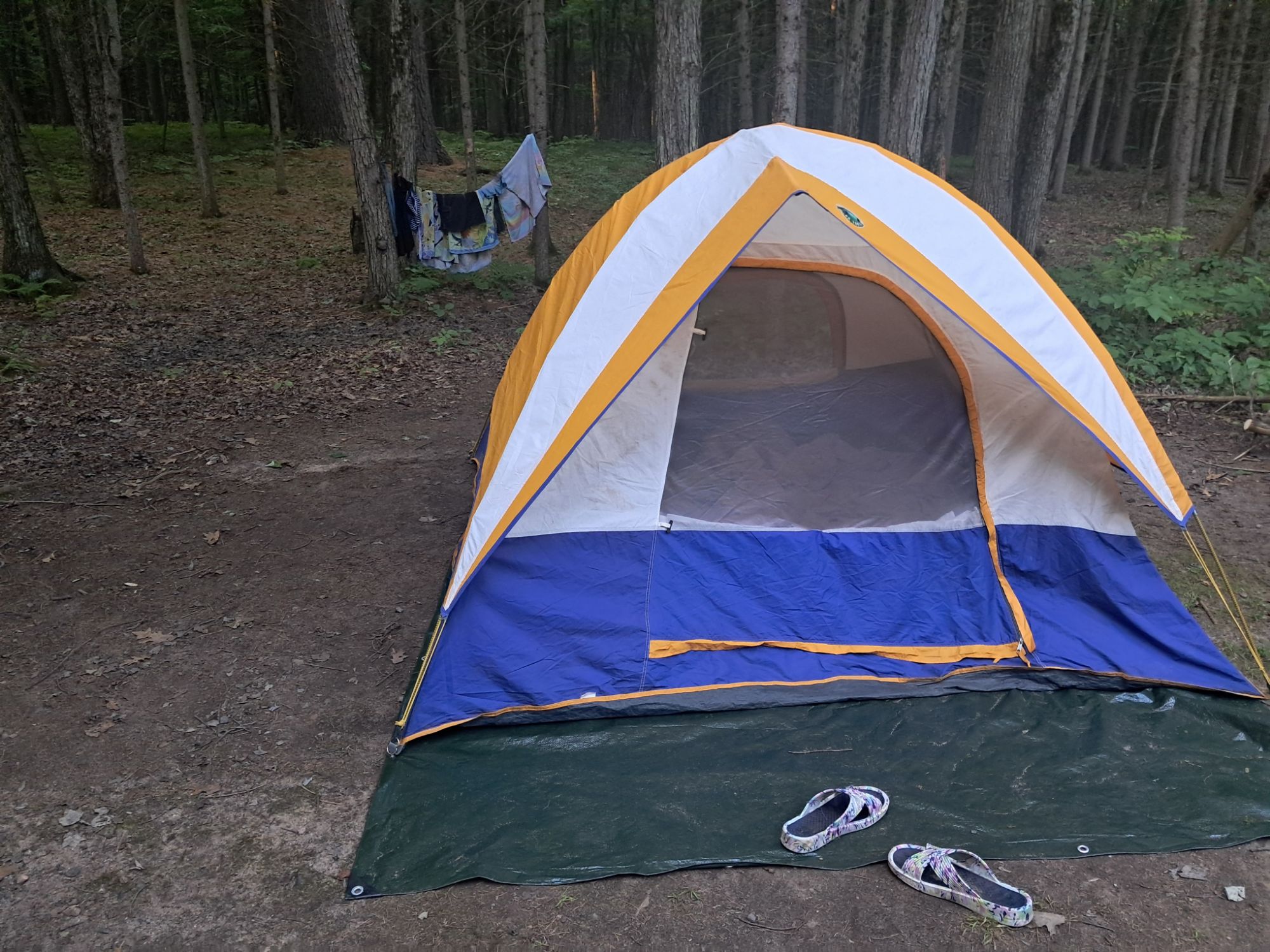
We used a 4‑person tent with a tarp underneath to protect the floor. Inside, our layering strategy looked like this:

- A puzzle‑piece mat covering the floor (36 pieces, each 1′×1′). Our kids loved assembling and disassembling it each day; it became part of the bedtime routine.
- Four foldable sleeping mats on top of the puzzle mat to cushion and insulate.
- A base blanket, then our main comforter on top.
Temperatures at night were around 55°F. The kids were comfortable temperature‑wise, and we stayed warm, though my husband and I did wake up a bit stiff in the morning. This setup worked well for summer nights; for colder trips, we’d add more insulation.
We also had headlamps for when it got dark, plenty of bug spray, and sunscreen, which made bedtime routines and late‑night bathroom trips much easier.
Cooking at Camp
We kept dinners simple and hearty:
- Rotisserie chicken and potato wedges one night (easy grocery‑store meal).
- Chorizo, black beans, and rice tacos with all the fixings.
- Potato hash with chorizo, onions, and peppers from our garden.
- A dehydrated jambalaya mix “boosted” with hot dogs.

Pre‑Dehydrated Meals
For two of those dinners—the black beans and rice tacos and the jambalaya—I did most of the work ahead of time. I cooked the dishes in my Instant Pot at home, then used my dehydrator to dry them. At camp, we simply rehydrated them in our Dutch oven. The food was delicious, and I’d recommend this approach to anyone looking for easier camping cooking with limited gear. It also helped reduce what we needed to keep cold in the cooler.
Breakfasts included:
- One failed experiment with overnight oats (we ate a few bites and tossed the rest).
- Leftover tacos repurposed as breakfast tacos (a win).
- Classic bacon and eggs on the other mornings.
S’mores were a nightly ritual, and the kids were happily sticky by the end of each evening.

We didn’t rely on elaborate gear—just basic cooking equipment suitable for a campfire or simple stove. We had a Dutch oven, a coffee percolator, tongs, a spoon and spatula, a camping set of metal plates, bowls, and cups, plus a cutting board and a knife.
We stored our coolers on the back rack of the car, which freed up interior space and made food access easier at camp. For water, we hauled it in a repurposed 1‑gallon plastic jug (not from milk) and refilled as needed from campground spigots.
The “Oh No” Box
My husband prepared an “oh no” box to cover basic car troubles:
- Essential tools like wrenches, pliers, a hammer, and screwdrivers.
- Tow straps.
- A basic code reader.
To make it less tempting for theft, he tucked the toolbox inside an old cooler and strapped it shut in the car. We didn’t end up needing it, but knowing it was there made us more comfortable camping and driving in unfamiliar areas.

Managing Limited Space
We were tight on space in our 2018 Subaru Crosstrek. Every morning, my husband essentially played car Tetris to fit everything:
- Camping gear
- Food and cooking supplies
- Clothes and personal items
We used a back rack for coolers and realized that a roof “bubble” would have made packing easier; that’s on our list for future trips. If you’re in a small SUV or crossover, this kind of packing puzzle will probably feel familiar.
What We’d Keep and What We’d Change
We’d keep:
- The puzzle mat, which doubled as a comfort upgrade and a kid activity.
- Simple, filling meals that didn’t require fancy equipment, especially the pre‑dehydrated Instant Pot meals we could easily rehydrate at camp and that saved cooler space.
- The “oh no” box for peace of mind.
We might change:
- Add a few more comfort touches for adult sleep—slightly thicker mats or compact pillows.
- Invest in that roof carrier to ease packing and unloading.
If you’re assembling your own camping setup for a family road trip, you don’t need to buy everything new or go ultra‑technical. Focus on warmth, cushioning, and simplicity—and on what will make your particular family feel safe and at ease.
Want help pulling all the trip details together?
My printable Family Road Trip Planner & Budget Pack includes a camping-friendly packing checklist, budget tracker, itinerary planner, and meal planner.

What’s one piece of camping gear or one meal that’s become a must have for your family on the road? Share your favorites—or what you’d add to this setup—in the comments, and send this post to a friend planning a camping road trip.
Read More Here: Mixtapes, Meltdowns, and Magic: A Family Road Trip to Remember