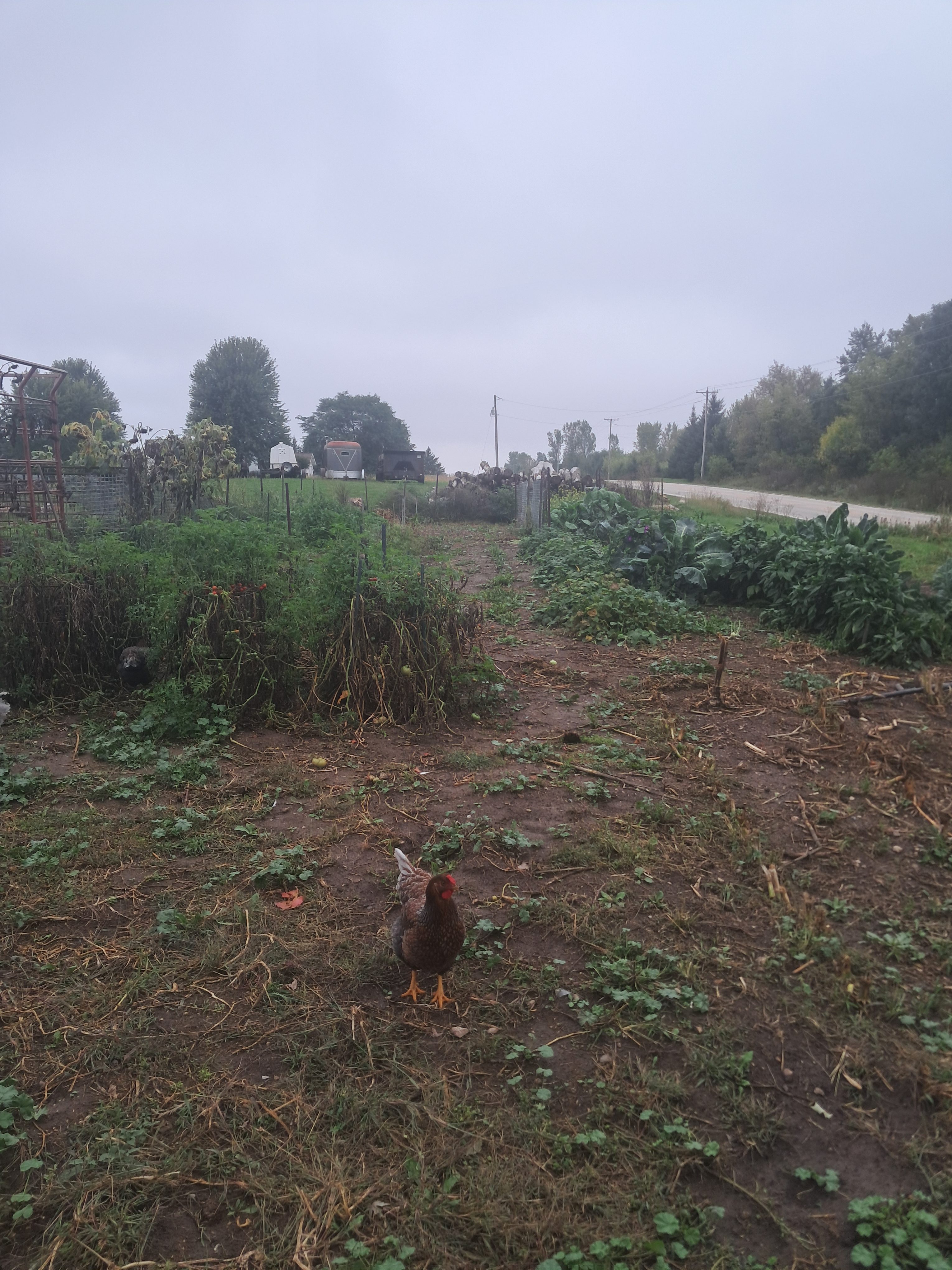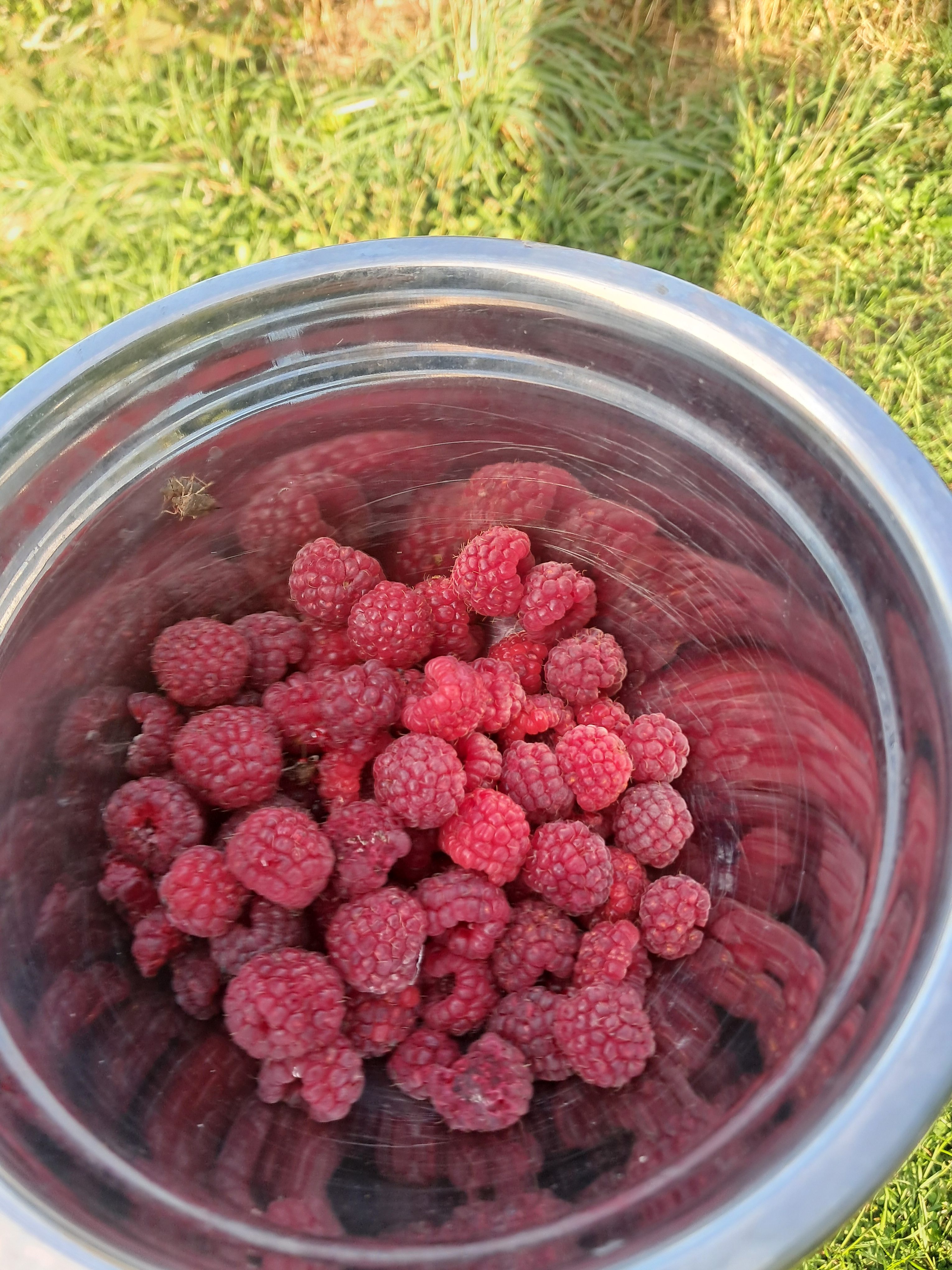
When most of the garden is winding down, we’re still picking bowls of fresh raspberries. Around here, we call them “grandma berries”—and they’ve earned a place in both our fall harvest and our family story.
Our raspberry starts came from my in-laws’ patch, which began with plants from my husband’s paternal grandmother. In April 2024, we dug out a section of sod on a south-facing hill here in southeastern Wisconsin, planted and watered the starts, and mulched around them with straw.
Then we let them do their thing.
And they certainly did.

Our fairly fertile, loamy soil may have helped them establish themselves. With minimal maintenance, that patch of grass has become a prolific raspberry bed, giving us a smaller crop in July and a much larger one in October.
The plants spread on their own, too. Red raspberries send up new shoots, called suckers, from buds on their roots. Those shoots become new canes, allowing an established patch to fill in and expand beyond its original planting area.
Fresh Raspberries When the Garden Is Winding Down
The fall harvest is my favorite part of growing these raspberries. We generally rely on our canned and frozen fruit rather than buying fruit from the store, and we also preserve surplus produce my sister shares with us—a story I’ve told in “50 lemons and a lesson in waste.”
We do occasionally bring home bananas, although they usually become banana bread. Apparently, they look more appealing than they taste, at least in our house.
The raspberries, on the other hand, have no trouble finding willing eaters.
By early October 2025, about a year and a half after planting, our patch was producing enough berries to fill a big bowl in one morning. Later that month, it was still loaded, right when we thought the season was nearly finished.

The kids were enjoying every juicy moment. Those berries felt like the last fresh little bits of summer, giving us a reason to step outside and see what had ripened.
Even the kids couldn’t keep up with the patch that fall, which surprised me. I froze some of the extra berries and later thawed them to make fruit roll-ups with mango from the freezer, without adding sugar. Next time, I’ll strain out the raspberry seeds for a smoother texture.
If your berry patch gets ahead of you, my post on freezing berries and other no-blanch produce walks through how to save the extras for later.
A Simple Raspberry Planting and Care Checklist
If you’re thinking about starting a patch of your own, here are the basics to consider:
- Choose a sunny, well-drained site. Avoid places where water stands after rain.
- Start with healthy plants. If you’re buying raspberry starts, look for disease-free nursery stock suited to your growing region.
- Prepare the bed. Remove sod and perennial weeds, and use a soil test to guide amendments.
- Plant at the right time. Dormant bare-root starts can go in early in spring, as soon as the soil can be worked. Tender, actively growing transplants should wait until frost danger has passed.
- Water thoroughly after planting. Continue checking soil moisture as plants establish. During flowering and harvest, raspberries generally need about 1 to 1½ inches of water per week, including rainfall.
- Mulch around the plants. Straw or other suitable mulch can help conserve moisture and suppress weeds without burying emerging shoots.
- Keep the patch manageable. Thin crowded canes and remove unwanted suckers to maintain airflow and room for picking.
- Choose your pruning approach. Everbearing raspberries can be managed for one fall crop or both summer and fall crops; the pruning section below explains each option. 1016
- Watch for visitors. Check for beetle damage, and keep clear of active wasp nests.
Our July and October harvests reflect this particular patch grown in Zone 4B. Harvest timing elsewhere will depend on the variety, growing conditions, and when frost arrives.
Planning a garden around what your family actually eats?
My “Grow What You’ll Use” printable can help you think through what deserves a place in your garden—and how you’ll use the harvest.
Everbearing vs. Summer-Bearing Raspberries
Our raspberries are everbearing, also called fall-bearing or primocane-fruiting raspberries. Despite the name, they don’t produce continuously all year. The distinction is which canes bear fruit:
- Summer-bearing raspberries produce their crop on second-year canes. Those canes die after fruiting, while the new canes remain to produce the following summer.
- Everbearing raspberries produce a late-summer or fall crop on the upper portions of first-year canes. If retained, the lower portions of those same canes can produce another crop the following summer. New canes grow alongside them to provide that year’s fall harvest.
How to Prune Everbearing Raspberries
With everbearing raspberries, you can prune for one fall harvest or retain canes for both summer and fall crops.
For One Fall Crop
Cut all canes to ground level after the plants become dormant in late fall, or in early spring before growth begins. The new season’s canes will produce the fall crop, but there will be no summer crop from overwintered canes.
For Summer and Fall Crops
Keep healthy first-year canes through winter. In early spring, remove the upper portions that fruited in fall, along with winter-damaged growth. The remaining lower portions can produce summer berries.
After those second-year canes finish their summer harvest, remove them at ground level. Leave the new canes growing that season to produce the fall crop.
The summer crop depends on those retained canes surviving winter; winter damage can reduce or eliminate it.
Japanese Beetles and Other Raspberry Patch Visitors
Our raspberries have needed relatively little attention, but we do keep an eye on a few visitors.
Japanese Beetles
Japanese beetles have been our biggest recurring nuisance. They feed on the leaves, sometimes leaving little more than a lacy framework. The plants can tolerate some damage, but heavy feeding can reduce the harvest, so we try to keep their numbers down.
We tried Japanese beetle traps, but found they seemed to bring more beetles into the area. Wisconsin Extension also cautions that traps can attract more beetles than they catch and may increase damage in small gardens.
Instead, we usually knock them into a bucket of plain water in the morning and late evening, when we find them more sluggish and easier to collect. Handpicking is a recommended control method.
I like giving this job to my son, who approaches it with great gusto. At the end of the day, after the chickens are back in their coop, we give them the collected beetles. They absolutely love them.
Because the beetles become chicken treats, we leave soap out of the collection bucket. An Ask Extension expert recommends collecting without soapy water when the insects will be fed to chickens.
Chickens With a Taste for Raspberries
The chickens don’t limit their enthusiasm to beetles. They love the raspberries, too, and their idea of helping includes getting to the ripe fruit before we do.
Fortunately, the patch produces enough that there is usually plenty to go around.
Ground-Nesting Wasps
In 2025, ground-nesting wasps took up residence around the patch. Luckily, no one got stung.
An active nest is something to keep clear of rather than disturb while picking, weeding, or tending the plants.
A Family Planting Worth Keeping
These raspberries have given us a lot of delicious fruit for relatively little work. We turned a section of lawn into a place that feeds us—and kept a family planting growing for another generation.
Now our children are picking grandma berries of their own.
Your Turn
Have you grown plants passed down through your family? I’d love to hear what you’re keeping growing.
If you enjoyed this look at our raspberry patch, please like and share it with someone who loves growing food. Follow along for more stories about growing food, raising kids, and building community.
Read More: The Tomato Product I Use Most: Canning Tomato Juice for Winter