Month: June 2026

  • June Dairy Month Recap: Stories from the Farmyard

    June Dairy Month Recap: Stories from the Farmyard

    As June Dairy Month comes to a close, I’ve been thinking about how much this month’s writing has revolved around farmers, hayfields, and the quiet weight of rural life. It wasn’t a strategic content plan so much as an honest outflow of what’s on my heart—and on my mind—this time of year.

    In case you missed any of the recent posts (or want to revisit them with fresh eyes), here’s a look back at the stories we’ve walked through together.


    The Old New Holland Baler and a Haying Legacy

    In one post, I took you out to the hayfield, where an old New Holland baler still clatters its way across the field, tying bales as steadily as it did in the 1960s. We followed its story from my grandfather’s horse-drawn days, through my dad’s years of frantic shear-pin changes and late‑night repairs, all the way to today’s summers under my father’s care.

    That baler became more than a machine—it stood in for a family legacy of persistence, resourcefulness, and care passed down from one set of hands to the next. Each bale it drops is a small monument to the people who refused to let it quit.


    Learning to Stop Hiding My Farm Roots

    Another post shifted from machinery to identity. I shared my “confession” that, for years, I tried to tuck my farm background away—doing just enough chores, avoiding being “too farm kid,” and choosing choirs over FFA. I wanted the values without the label.

    But homesteading habits kept creeping back: blanching green beans, learning to make sauerkraut, failing (and eventually succeeding) at homemade pizza. A glut of cucumbers and a Facebook post finally opened my eyes to how unusual my access to fresh food really was—and how much others valued what I took for granted.

    Through coworkers’ questions and friends’ enthusiasm, I began to see my rural upbringing not as a liability, but as an asset: a source of work ethic, resourcefulness, and a perspective that still shapes how I parent, homestead, and show up in my community.


    Naming the Hidden Weight Farmers Carry

    We also zoomed out to look more directly at farmer mental health. That post walked through the way farming has changed over the past forty years: fewer, larger farms; bigger equipment; “land rich and cash poor” realities; new diseases and pests; and markets that feel like a roller coaster.

    Layer by layer, we named the unseen pressures—chronic stress, isolation, identity and legacy, and stigma around asking for help. The goal wasn’t to drown anyone in statistics, but to give words to what many farmers and farm families are already feeling: that toughness doesn’t make you immune to stress, and that talking about it is an act of courage, not weakness.

    We also talked about what farmers need to hear (that being exhausted doesn’t mean you’re failing) and what the rest of us can do in small but meaningful ways: listening well, supporting local, sharing resources, and checking in after hard news.


    June Dairy Month from the Farmyard Side

    In honor of June Dairy Month, another piece turned the camera toward what June actually feels like on the farm. While towns see smiling cow posters, ice cream specials, and farm breakfasts, farmers see early alarms, hot barns, hayfields racing storms, and bills riding in their back pockets.

    I shared memories of June as “hold on tight and hope the machinery cooperates,” and explored how it can feel to be “celebrated” while you’re barely keeping up. For some, June Dairy Month is joyful; for others, it’s complicated. We imagined what farmers might actually want this month: fewer speeches and more listening, real prayers for safety and rest, quiet texts that say, “How are you holding up?” and resources that gently say, “You don’t have to carry this alone.”

    I also mention practical ways to honor farmers—asking better questions, dropping off food or encouragement during haying, and telling kids the story behind the milk in their glasses.


    A Barn Roof, a Helping Hand, and a Farm Friendship

    Most recently, I shared a story from before I was born, about how one small act—stopping to help on a red barn roof—turned two neighboring farmers into lifelong friends. A neighbor pulled in, climbed up despite a fear of heights, and offered a hand. From that afternoon on the peak, their lives became deeply intertwined through haying days, shared meals, weddings, and tough seasons.

    As a kid, I joined those hay crews, stacked bales until I was covered in dust, and ate big meals that felt like our own modern threshing bees. Looking back, I can see how that one moment of courage and kindness rippled through decades and shaped the community I grew up in.


    What Threads These Stories Together

    Across all these posts, a few themes keep surfacing:

    • The steady, sometimes unnoticed persistence of farmers and farm families
    • The way small acts—fixing an old baler, sharing cucumbers, stopping to help on a roof—carry forward into generations
    • The tension between public celebrations of agriculture and the private weight many farmers carry
    • The quiet, sturdy beauty of rural friendships and communities

    June Dairy Month may be the official reason to talk about cows and fields, but the stories don’t fit neatly into one month on a calendar. They’re ongoing, season after season.


    Feature Photo by GG LeMere on Unsplash


    If one of these posts resonated with you, I’m glad you were here. And if you’re a farmer, or love one, thank you—for the work you do, the courage it takes, and the stories you’re still living.


    If you have a minute, I’d love to know: which of these stories stuck with you most, and what would you like to see more of in the months ahead?

    If you know someone who loves farm stories—or someone who lives them—would you share this recap with them? Your shares and comments help these stories find the people who need them.

    Read Next: Growing Up on a Wisconsin Dairy Farm: Reflections for June Dairy Month
  • How Two Neighboring Farmers Became Lifelong Friends

    How Two Neighboring Farmers Became Lifelong Friends

    In today’s post, I want to share a story from more than a decade before I was born—one that shaped my childhood in a foundational way. It’s the story of how two farmers became friends, and how that friendship became part of the fabric of our family.

    The Farmer on the Barn Roof

    My dad, set to inherit the family farm, was working on my grandparents’ red barn roof. He had not yet met my mom and was about 25. My grandparents were laying the groundwork for the farm handover. They’d helped him buy the property next door (where I eventually grew up) and taught him farming from childhood (as was customary).

    That day, he was up on their red barn. This wasn’t some tiny shed—it stretched about 60 feet long, with the roof starting roughly 25 feet off the ground and peaking even higher. In other words, working up there was no small task.

    A Simple Act of Help Changes Everything

    A local farmer, a couple years older than my dad, drove by and spotted him. He pulled in, climbed up to the roof, and offered a hand. My dad said yes, and the farmer sat on the peak for a couple minutes—gathering his nerve—before joining in the work. What my dad didn’t know at the time was that this farmer was afraid of heights. That detail makes the moment even more meaningful to me—he set his fear aside to help a neighbor.

    From that afternoon on the barn roof, a friendship sparked that continues to this day.

    A Farm Friendship That Shaped Decades—and My Childhood

    They wove themselves into each other’s lives completely. They attended each other’s weddings (sharing not just the same first name, but wives with the same first name too). They sponsored each other’s kids and teamed up for big jobs like baling hay across large fields.

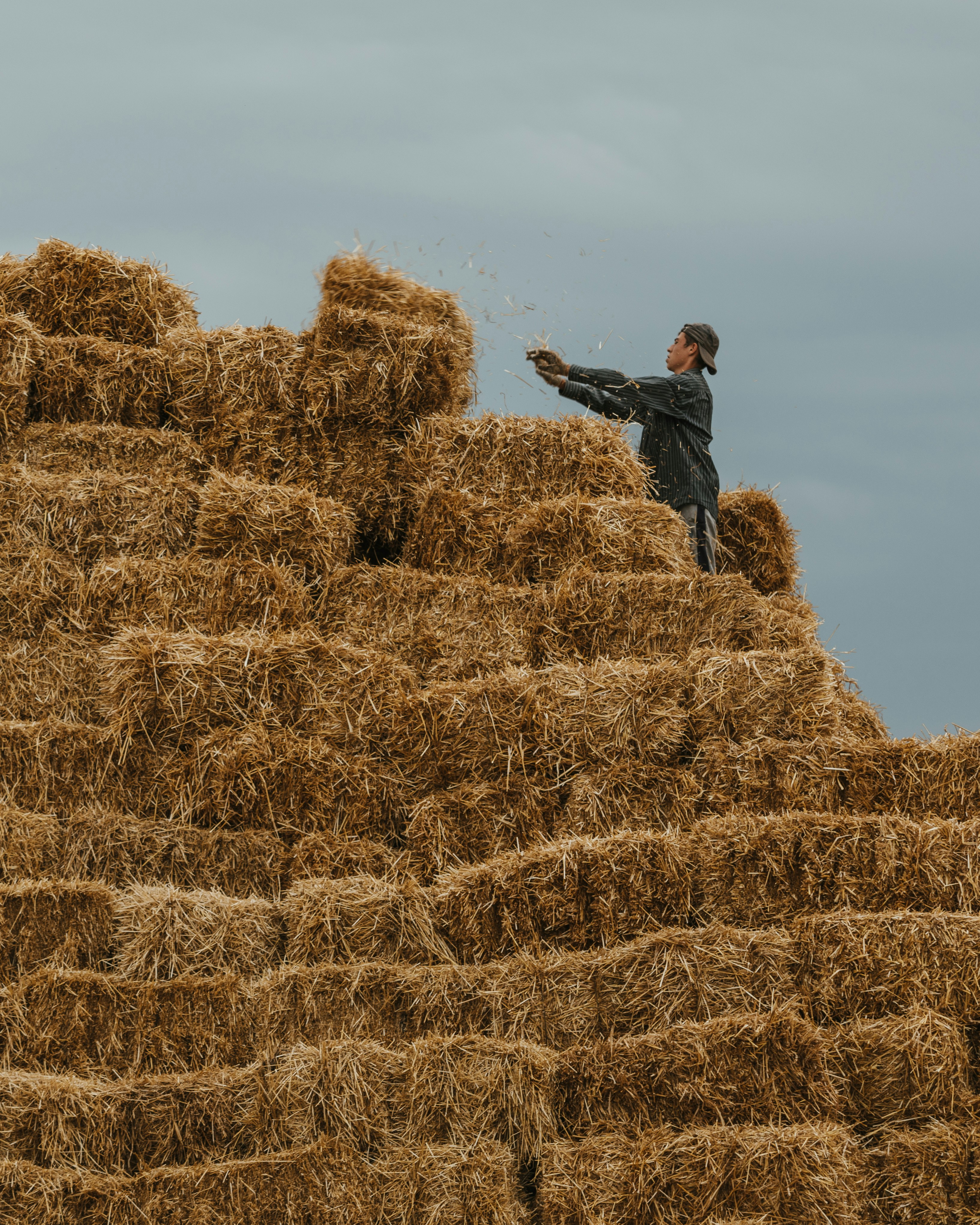
    From the time I could lift bales, I pitched in during those haying days. As one large team with two small New Holland balers, we would bale 2,000 to 3,000 small bales in a day—enough to fill a haymow and feed the cattle for months. I’d finish covered in dust and sweat—I didn’t exactly love it then—but I look back on those memories fondly now.

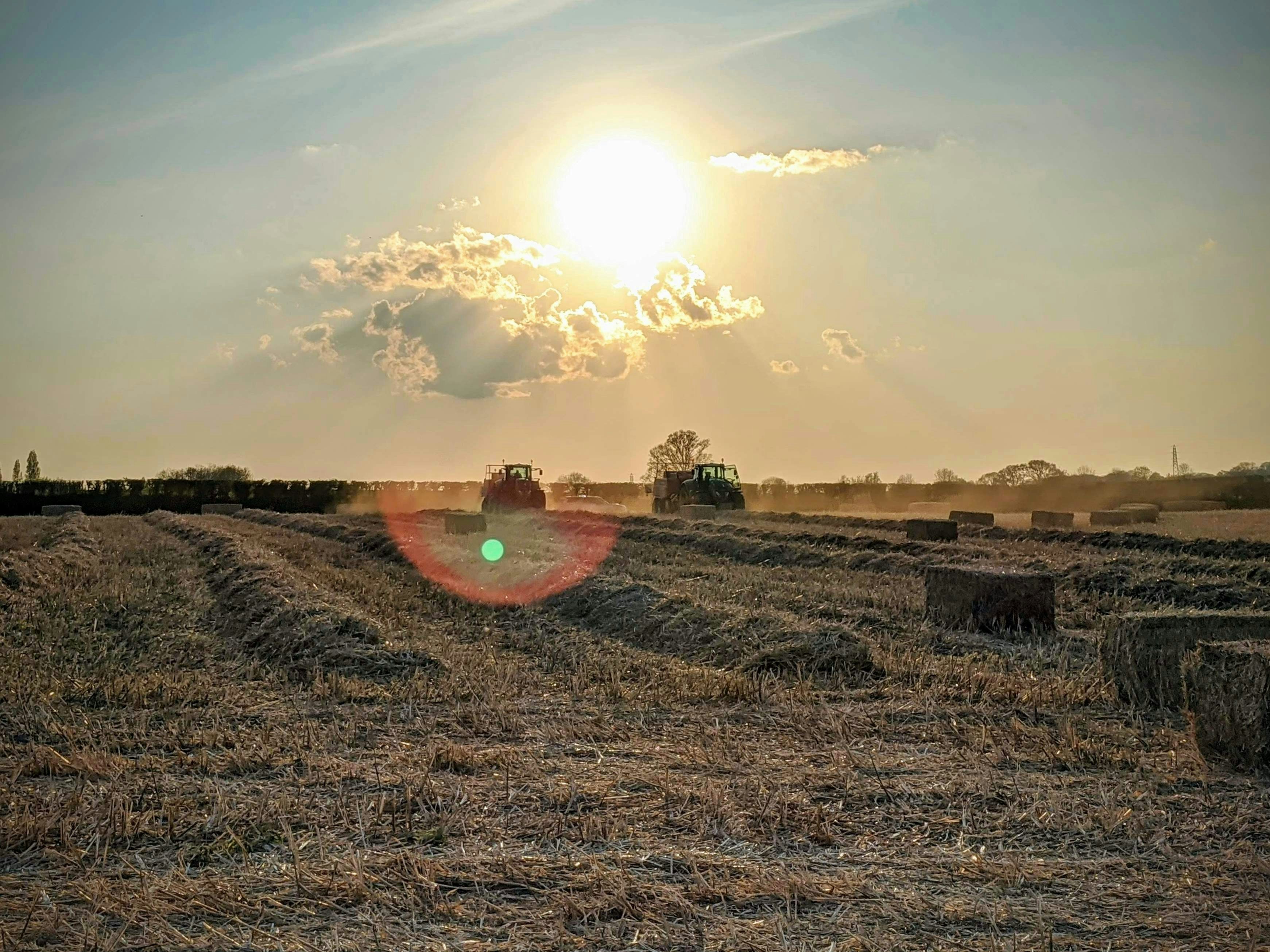
    Baling hay was always a big endeavor.

    After the hard work wrapped up, we’d always share a big meal together. I didn’t realize it as a kid, but it felt like our own version of the old threshing bees, where neighbors gathered to help put away the feed, eat, and celebrate the harvest.


    Before that day on the roof, they were just acquaintances. Afterward, they were like brothers. That one choice—to stop, help, and climb despite his fear—rippled through shared work, celebrations, tough seasons, and the community I grew up in.

    And it all started with one farmer seeing another on a tall red barn and deciding not to drive on by.


    Photo by Maksym Ivashchenko on Unsplash


    Do you have a story of a neighbor or friend whose one small act changed the course of your farm or family?


    If this story brought someone to mind—a neighbor, a friend, or a farmer you’re grateful for—would you pass it along to them or share it so others can be reminded how much small acts of help matter?

  • How to Truly Celebrate Farmers During June Dairy Month

    How to Truly Celebrate Farmers During June Dairy Month

    This piece is written in honor of the farmers who live June from the farmyard side of the fence, and for the neighbors who want to understand and support them a little better.

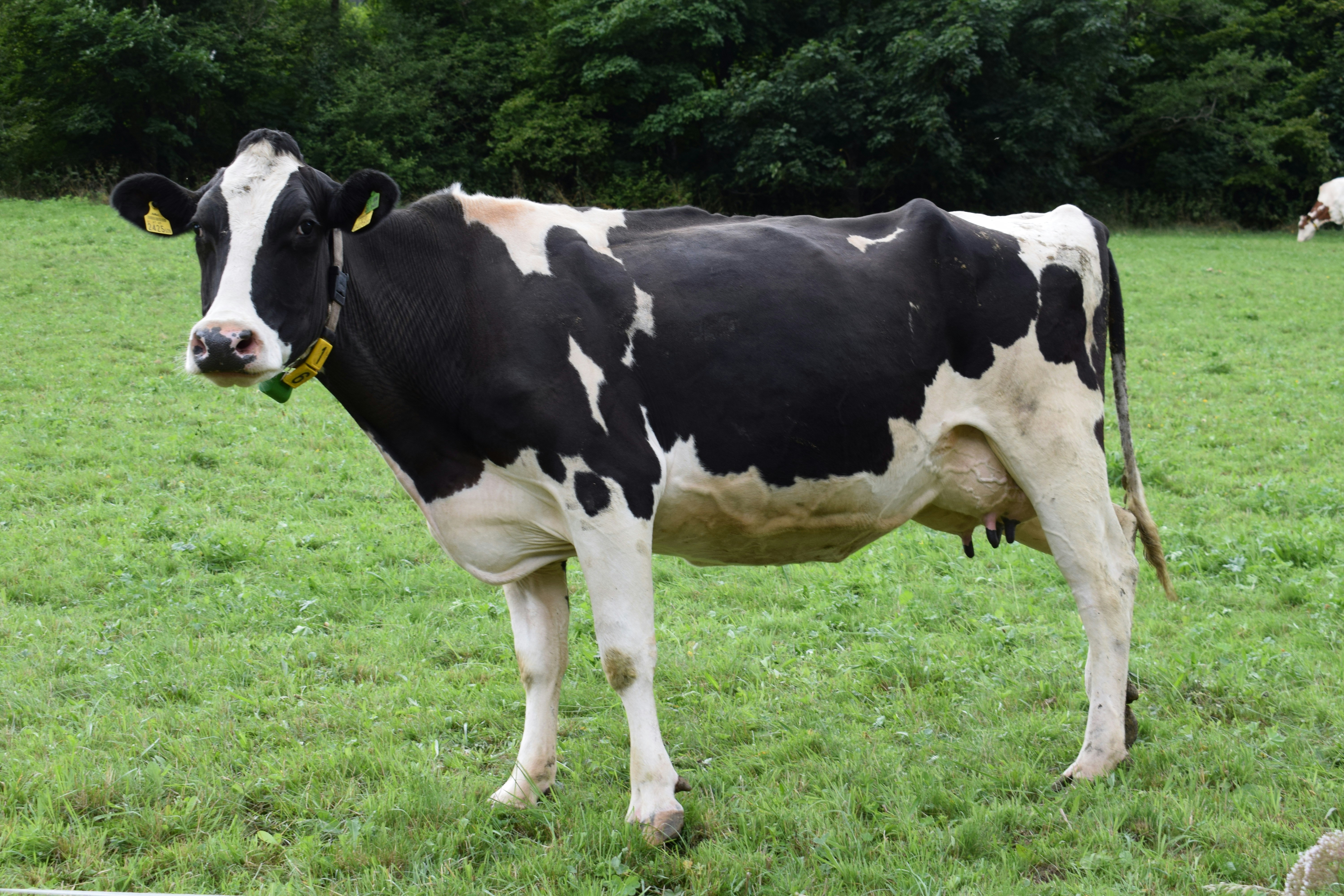
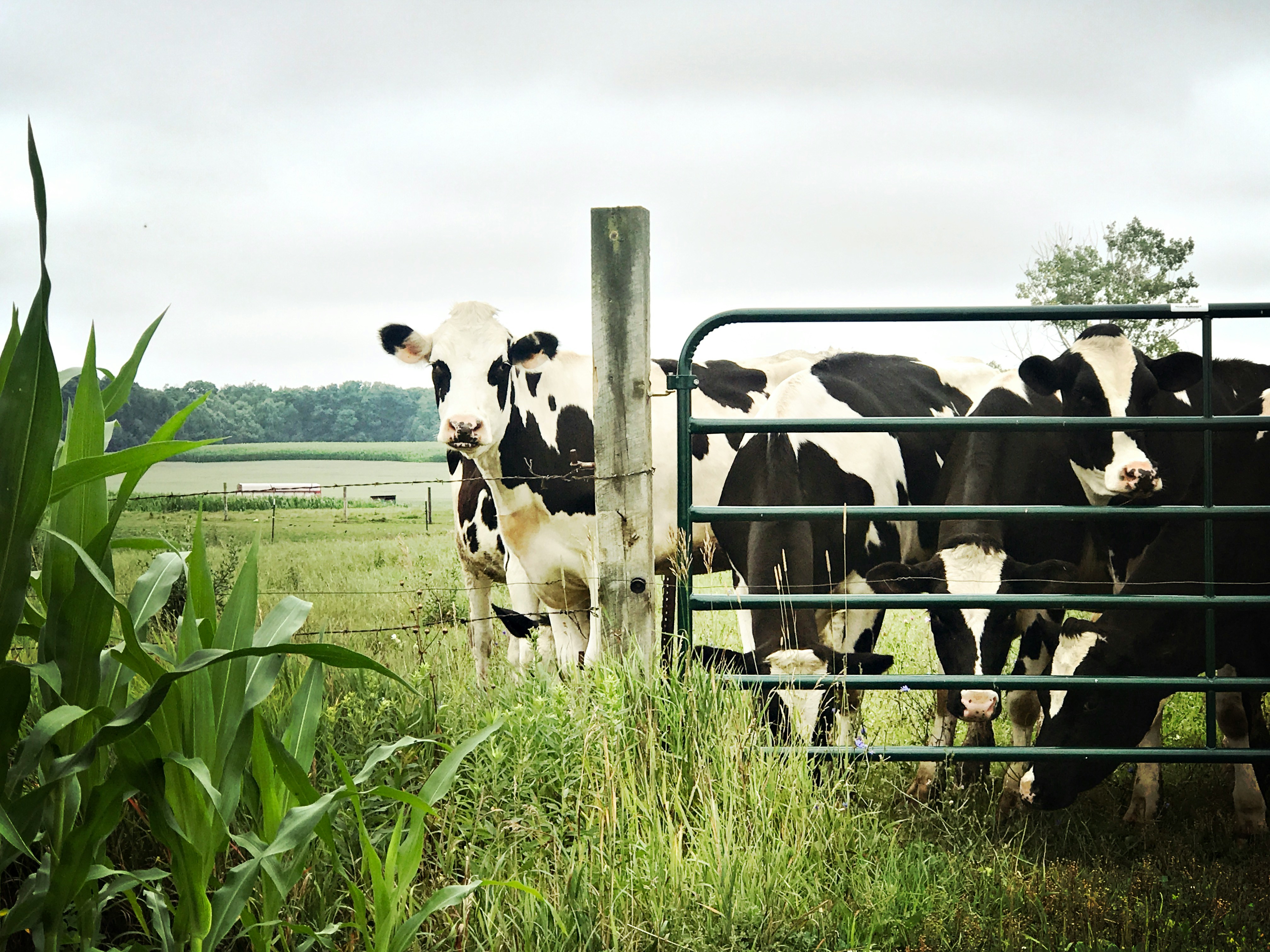
    Dairy cow in the field during June Dairy Month, cared for by farmers working long days.
    June celebrates dairy on the shelf, but every cow stands behind a farmer who got up early to care for her.

    June shows up every year with smiling cow cartoons, ice cream specials, and “June Dairy Month!” signs at the grocery store. Those things make me smile too. I love a good squeaky cheese curd or a deep‑fried cheese curd as much as the next person.

    But when I see those displays, my mind doesn’t go first to the dairy case. It goes to the people behind it—the farmers who are too busy scraping alleys, baling hay, fixing something that broke, or trying to make the numbers work to even notice that it’s “their month.”


    What June Looks Like From the Farm Side

    From town, June Dairy Month looks like ice cream socials and farm breakfasts. From the farmyard, it looks like:

    • An alarm that rings before the sky is pink.
    • Cows that don’t know it’s a holiday—they just know it’s milking time again.
    • Hayfields that are finally dry enough to cut and bale, and a forecast that may or may not cooperate.

    Maybe you’re hustling to get first‑crop hay in before a line of storms. Maybe you’re watching the thermometer climb and worrying about how your cows will handle the heat. Maybe you’re waiting on a haybine part that’s “supposed to be here tomorrow” while the grass gets a little older every day.

    Somewhere in the middle of it all, there’s a calf kicking up her heels in fresh bedding or a field that finally looks just right in the evening light—and you tuck that away as quiet fuel to keep going. When the world says, “Let’s celebrate farmers!,” June often says, “Let’s see how much more you can carry.”


    The Part the Posters Don’t Show

    When I was a kid, June didn’t feel like a themed month; it felt like “hold on tight and hope the machinery cooperates.” I remember:

    • The way supper got pushed later and later because there was still hay to bale, still a calf to treat, still a broken something to put back together.
    • The quiet mental math of “Can we afford this repair?” and “Will the milk check stretch far enough this month?”

    You didn’t see that on the posters at the grocery store. You still don’t. The public sees the ice cream cone; you see the list of bills in your back pocket while they enjoy it.


    How It Feels to Be “Celebrated”

    If you’re a farmer, you might get a lot of “Thank you, farmers!” posts in your feed this month. They’re kind, and they’re appreciated. But sometimes they land in a funny place in your chest.

    On the one hand, it feels good to be noticed. On the other hand, you may be thinking:

    • “If you really knew what this took, you’d understand why I’m too tired to come to the celebration.”
    • “I’m glad you love cheese, but I wish someone would ask how we’re really doing.”
    • “I don’t feel like a hero. I feel like I’m barely keeping up.”

    Being celebrated can be strange when you’re also wondering if the next generation will be able to keep doing this the way your family always has. Some farmers genuinely love every minute of June Dairy Month; others feel a twinge of something more complicated under the surface.


    What Farmers Might Actually Want This June

    If I could rewrite June Dairy Month from the farm side, it would still have ice cream and farm breakfasts. But it might also have:

    • A quiet text from a neighbor that says, “How are things holding up on your farm this spring?” or, better yet, “Can we help you with haying?”
    • A church announcement that includes not just a dairy potluck, but a prayer for farmers’ safety, sanity, and sleep.
    • A flyer at the co‑op with real support resources and a simple line: “You don’t have to carry this alone.”

    It might look like fewer speeches and more listening. Less, “Tell us your success story,” and more, “What’s been heavy this year, and how can we stand with you in it?”


    A Small Invitation for Non‑Farm Folks

    If you don’t farm but you love your milk, cheese, and summer sweet corn, you don’t need a big platform to make June “land” differently for the farmers in your life.

    You could:

    • Ask one real question and give space for a real answer: “What’s June like for you on the farm?”
    • Drop off a pan of bars or brownies, a pizza, or a gift card during haying or harvest, no strings attached.
    • Tell your kids, “This milk didn’t start in a carton. It started with a family that got up early today.”
    • Share a hotline number or farm stress resource quietly with a farmer friend and say, “No pressure at all. I just want you to have this in your back pocket.”

    None of that fixes markets or weather. But it tells a farmer, “I see you—not just what you produce.”


    A Word to the Farmers Reading This

    If June feels heavy instead of festive this year, you’re not doing it wrong.

    You can be proud of your work and still be tired of the fight. You can love your cows and your land and still feel worn down by the paperwork, the payments, and the pressure. You can be grateful and still be honest that this is hard.

    If all you do this June is keep going, catch your breath when you can, maybe say out loud to one safe person, “This is a lot right now”—that is enough. You’re more than a photo op or a slogan. You’re a whole person in boots and jeans and calloused hands, carrying decisions that most people never see.


    More Than a Month on the Calendar

    I’m glad we set aside a month to celebrate dairy and the farmers who make it possible. But when the banners come down and the sales end, the work goes on.

    My hope is that June can be more than a marketing campaign—that it can be a yearly reminder to look past the milk carton and into the lives of the people behind it, to ask better questions, listen a little longer, and remember that “supporting farmers” is about more than buying another gallon.


    Feature Photo by Screenroad on Unsplash


    If you’re a farmer (dairy or otherwise), what do you wish people understood about June on your farm?


    If this resonated with you, would you pass it along to someone who cares about farmers—or share it where other farm families might see it? I’d also love to hear from you in the comments: what’s one small way you’ve seen someone truly honor a farmer, or one thing you wish people understood about June on your farm?

    Read Next: Farmer Mental Health: The Hidden Toll of Bigger Farms and Bigger Debt

  • Farmer Mental Health: The Hidden Toll of Bigger Farms and Bigger Debt

    Farmer Mental Health: The Hidden Toll of Bigger Farms and Bigger Debt

    Hay season means long days, heavy decisions, and worries that don’t clock out when the sun gets low.

    When most people picture a farmer, they imagine strong hands, early mornings, and a deep connection to the land. Those things are true. But what’s less visible is the mental and emotional weight that modern farmers carry—often in silence.

    Over the last 40 years, farming has changed dramatically. We’ve seen consolidated farms, bigger machinery, larger herds, and new technology. Alongside those changes came something else: bigger debt, more uncertainty, and worries that don’t clock out when the day is done.

    This piece isn’t about statistics. It’s about naming some of the pressures farmers feel, and why mental health deserves to be part of the conversation when we talk about agriculture.


    From Many Small Farms to Fewer, Bigger Ones

    A generation or two ago, it was common to see many small and mid-sized family farms clustered within a few miles of each other. They could lean on each other for basic help. My dad and a good farmer friend lived two miles apart and shared haymaking equipment and labor. We would spend a day baling hay at the friend’s place, and another day baling hay on our farm.

    On a good day with lots of help, we could bale and put away 2,000–3,000 small square bales—enough to fill a hay mow from the floor to the rafters and keep a dairy herd fed for months. All the while, we had good conversations, got a solid workout, and ate a good meal afterward. There was a sense of satisfaction I didn’t fully appreciate at the time as I coughed up dust all night and well into the next day. We could rely on each other for reciprocal help that taught me what true community support looks like.

    Over the past few decades:

    • Many small operations have closed or merged.
    • Land has consolidated into fewer, larger farms.
    • Surviving farms often feel pressure to “get bigger or get out.”

    This shift means:

    • Less shared workload between neighbors.
    • More land, animals, and responsibilities on fewer shoulders.
    • A sense of loss—not just of businesses, but of communities and a way of life.

    My dad and his friend both sold their cows around the same time. I remember the farm auction they jointly held when I was an early teenager. At the time, I was thrilled that we didn’t have the cows anymore. In adulthood, that relief turned into sadness, because it meant there were two fewer dairy farms in the area. Now, the farms with 100 or fewer cows are few and far between. My dad used to joke that FFA—“Future Farmers of America”—really stood for “Father Farming Alone.” He wasn’t wrong.

    For the farmers who remain, this consolidation can bring a mix of gratitude (for still being here) and grief (for those who aren’t).


    “Land Rich,” Cash Poor

    Another layer in all of this is what people sometimes call being “land rich.”

    Many farmers:

    • Own or are paying on hundreds of acres of land.
    • Have barns, sheds, and equipment worth significant money on paper.

    From the outside, it can look like wealth. But the reality is often:

    • Most of that value is tied up in land and buildings that can’t be easily sold without dismantling the farm.
    • Day-to-day cash flow can be tight, especially when prices are low or inputs are high.
    • The same land that represents security also represents responsibility, taxes, and debt.

    Being “land rich and cash poor” is its own kind of mental strain. Farmers can feel:

    • Trapped between the desire to keep the farm going and the weight of the bills.
    • Guilty for even considering selling something that generations built.
    • Misunderstood by people who only see acreage and assume comfort, not stress.

    When the balance sheet says “asset,” but the checking account says “barely,” it adds another quiet layer of pressure.


    Bigger Equipment, Bigger Debt

    With larger farms comes larger equipment:

    • Bigger tractors, combines, balers, and harvesters.
    • More sophisticated technology—GPS, monitors, sensors, and software.

    These tools can boost efficiency, but they come at a cost:

    • High purchase prices, ongoing payments, and subscription fees.
    • Expensive parts and repairs when something breaks (usually at the worst possible time).
    • The constant knowledge that a breakdown—or a bad year—could put the whole operation at risk.

    Carrying that level of debt isn’t just a line item in a budget. It’s a weight in the back of a farmer’s mind, especially at night. Farming has always been stressful, but when you add costs that are ten or a hundred times higher than they used to be, the stress compounds right along with it.


    Mutating Diseases, New Pests, and Biosecurity Worries

    The last few decades have also brought:

    • New or mutating livestock diseases.
    • Crop diseases and pests that adapt quickly.
    • Rising biosecurity concerns, especially with larger, more concentrated herds.

    This adds another layer of stress:

    • One outbreak can threaten years of hard work.
    • Farmers must constantly update protocols, vaccinations, and preventative care.
    • There’s a nagging worry: “What if something slips through? What if we miss something?”

    The responsibility of caring for animals and crops isn’t just physical; it’s emotional. When animals get sick or crops fail, it can feel like a personal failure—even when it isn’t.

    I recently heard the sad story of a local strawberry farm that lost much of its crop to a disease that thrives in wet soil after a particularly rainy spring. I’ve also watched them rebound in a way that is truly inspiring—launching a strawberry-scented skincare line made from the berries they could salvage and using their platform to educate the public about soil health. Even in resilience, you can feel the weight of what was lost and the effort it took for them to pivot.


    Markets That Feel Like a Roller Coaster

    Farmers today live with:

    • Fluctuating commodity prices.
    • Sudden changes in demand, trade policies, and global events.
    • Input costs (fuel, fertilizer, feed, repairs) that don’t always match what they’re paid.

    That means:

    • It’s harder to plan even one year ahead, let alone several.
    • A good production year doesn’t always mean a good financial year.
    • Farmers carry the constant question: “Will this be the year we can’t make it work?”

    Uncertainty isn’t just a math problem. It’s a mental burden—especially when an entire family’s livelihood, legacy, and identity are tied to the farm.


    More Worries, Less Margin for Error

    Put all of that together, and you get a heavy load:

    • Bigger farms and fewer people to share the work.
    • Bigger machines and bigger debts.
    • Disease, pests, and biosecurity concerns that never truly go away.
    • Markets that can swing wildly from one season to the next.
    • Land that looks like wealth on paper, but doesn’t always translate into financial breathing room.

    And yet, despite all this, many farmers still:

    • Get up before sunrise.
    • Work long days in all kinds of weather.
    • Care deeply about their animals, crops, and customers.
    • Try to show up at community events and be good neighbors.

    They do it not because it’s an easy business decision, but because farming is a calling—a way of life they care about too deeply to walk away from lightly.

    From the outside, it’s easy to see just the toughness. From the inside, farmers know: toughness doesn’t make you immune to stress, anxiety, or depression. It just makes you more likely to keep quiet about it.


    The Quiet Strain on Farmer Mental Health

    Some common mental health pressures on farmers include:

    • Chronic stress. There is always something to worry about—weather, prices, animals, equipment, finances.
    • Isolation. Many farms are rural and remote, with fewer opportunities to socialize or talk openly about struggles. The isolation has only increased as farms have consolidated and neighbors have sold out.
    • Identity and legacy. The farm often isn’t “just a job.” It’s a family identity and a multi-generation story. The fear of being “the one who couldn’t keep it going” runs deep.
    • Stigma. In many farm communities, there’s an unspoken rule: you work hard, keep your head down, and don’t complain. Asking for help can feel like weakness, even when it’s actually courage.

    It’s not unusual for farmers to feel:

    • Overwhelmed
    • Guilty for feeling overwhelmed
    • Unsure where to turn or what resources exist

    Naming these realities doesn’t mean farmers are broken. It means they’re human.


    What Farmers Need to Hear

    If you’re a farmer, or married to one, or raising farm kids, you may need to hear that:

    • Feeling stressed or anxious doesn’t mean you’re failing.
    • Being exhausted by the weight of decisions and responsibilities is understandable.
    • You are not the only one who lies awake at night worrying about the bank, the herd, the crops, the land, the next generation.
    • Talking to someone—a friend, pastor, counselor, doctor—is not a sign of weakness. It’s one more way of caring for your farm and family, because you are part of both.

    What the Rest of Us Can Do

    For those who aren’t farming but care about farmers, there are small but meaningful ways to help:

    • Acknowledge the weight. Simply saying, “I know things are tough right now, and I appreciate what you do,” can matter more than you realize.
    • Listen without minimizing. Resist the urge to say “It’ll all work out” or “At least you get to live in the country.” Instead try: “That sounds really hard. Do you want to talk about it?”
    • Support local when you can. Buying from local farms and small businesses helps, even if it’s not a complete solution.
    • Share resources. If you hear about mental health hotlines, local support groups, or farm stress programs, pass them along without pressure: “I saw this and thought it might be useful if you ever wanted it.”
    • Check in after hard news. A bad storm, a price crash, a big equipment breakdown—these are good times to send a message or stop by.

    A Small Invitation

    Over the past 40 years, farms have gotten bigger, equipment has gotten bigger, and the to-do lists and worries have grown right alongside them. What hasn’t grown at the same pace is our willingness to talk honestly about what all of that does to a farmer’s mind and heart.

    For many farmers, this work is more than a career. It’s a calling they’ve been born into, chosen, or both—and that’s part of why the weight can feel so heavy.

    I don’t pretend to speak for every farmer or every situation, but these are some of the patterns I’ve seen and lived.

    We can’t solve everything in one conversation or one blog post. But we can:

    • Start naming the pressures.
    • Make it normal to talk about stress and mental health in farm communities.
    • Remind farmers that their worth is not measured only in bushels, pounds, acres, or how many acres they “own” on paper.

    If you’re a farmer, or you love one, I hope this gives you language for some of what you’re feeling—or seeing.

    And if you’re reading this from town or city, maybe the next time you pass a tractor on the road, pour a glass of milk, have a steak, or drive by a field, you’ll remember: behind that scene is a person carrying more than just a workload.


    Feature Photo by John-Mark Strange on Unsplash


    If you feel comfortable sharing, I’d love to hear: what’s one thing you wish people understood about the mental load farmers carry—or one small way you think we could better support them?

    If this post helped put words to what you’ve seen or felt, would you share it with someone who cares about farmers—or save it to revisit later? Your stories matter too. I’d be honored if you shared a small piece of your experience or tagged a farmer who deserves a quiet “thank you.”

    Read Next: Buying Meat from a Farmer: A Complete Guide to Bulk Meat, Freezers, and Butchers

  • Growing Up on a Farm: How I Learned to Appreciate My Dairy Roots

    Growing Up on a Farm: How I Learned to Appreciate My Dairy Roots

    “I grew up on a farm.”

    For a long time, that sentence felt like something I needed to tuck away, not lead with. In high school, I carefully sidestepped anything that might mark me as “too farm kid.” I avoided FFA and agriculture classes, choosing instead to spend time with the choir crowd—some of the kindest people you’ll ever meet (and, let’s be honest, who doesn’t love friends who can sing?).

    On the surface, I was doing what a lot of teenagers do: trying to blend in. Underneath, I was quietly distancing myself from a way of life that had shaped me more than I realized.

    Trying to Tuck My Farm Roots Away

    Looking back, I can see how much effort I put into not looking “too farm.”

    • I did the bare minimum caring for the steers assigned to me.
    • I half-heartedly tended the garden that had been so generously entrusted to my “care.”
    • I laughed off my farm chores as “no big deal,” even when they meant missing events or coming to school smelling faintly of silage.

    I share more about the steers here, but the short version is this: I wanted the values of my upbringing (work ethic, responsibility, resourcefulness) without the label that came with them. I thought being “the farm kid” made me less interesting, less sophisticated, less…something.

    Even in college, I was hesitant to share details about my rural background. I listened to friends talk about their favorite coffee shops and city neighborhoods, and I stayed quiet about gravel roads, hay balers, and cleaning cow yards.

    The Homesteading Bug That Never Quite Left

    And yet, there was always a part of me that genuinely enjoyed homesteading.

    The summer after my freshman year of college, I found myself slipping back into familiar rhythms:

    It was as if my hands remembered what my pride wanted to forget. I loved the feeling of putting food by, the satisfaction of seeing freezer bags full of vegetables, and the simple rhythm of working alongside my parents.

    At the time, I still didn’t connect this with identity. It just felt like “what we do in the summer”—use what we have, store what we can, waste as little as possible.

    The Cucumber Story That Started to Change My Perspective

    I remember clearly when my perspective started to shift.

    Shortly before my junior year of college, our garden produced a glut of cucumbers. In a moment of practicality, I posted on Facebook asking if anyone wanted some. Several college friends responded enthusiastically.

    I didn’t believe they were serious.

    To me, cucumbers were just…there. They showed up in the garden, we ate what we wanted, and the rest sometimes ended up in the compost if we couldn’t keep up. I assumed everyone had access to as many fresh vegetables as they wanted, if they just “put in the effort.”

    So I left the cucumbers at home.

    When I saw my friends later, their disappointed faces told me I’d made a mistake. They had genuinely looked forward to those garden-fresh cucumbers. In that moment, it hit me: my experience of having plentiful fresh vegetables was not typical. What I saw as ordinary was, to many others, special.

    That simple misunderstanding planted a metaphorical seed. Maybe my farm background wasn’t something to hide. Maybe it was something to share.

    Realizing My Background Was an Asset, Not a Liability

    Later, at my post-college job, that seed grew.

    Coworkers would ask the usual small-talk questions: “Where did you grow up?” “What did your parents do?” When I mentioned my agricultural background—dairy cows, hay fields, chores before school—I was surprised by their reactions.

    They were impressed.

    They asked follow-up questions. They wanted to know what milking was like, how long haying days really were, what it meant to care for animals every single day. They didn’t hear “small town, limited experience.” They heard “work ethic,” “responsibility,” and “a perspective I don’t have.”

    Slowly, I began to see that the very things I had once tried to downplay were the things that made my story unique and valuable.

    What Farm Life Actually Gave Me

    When I think about my farm childhood now, I don’t just see early mornings and missed parties. I see the deeper gifts standing behind them:

    • A strong work ethic. You show up even when you’re tired, because the animals still need care.
    • Follow-through. You don’t quit halfway through cleaning the yard or milking a herd.
    • Resourcefulness. You learn to fix things, make do, and find ways to stretch what you have.
    • Respect for land and animals. You see firsthand that your choices affect living creatures and the soil under your feet.
    • Community awareness. You understand that your work feeds people you know by name.

    Those values follow me into parenting, into how I manage our small homestead now, and into how I show up in my community.

    Sharing the “Confession” with Pride

    Today, I share my “confession”—that I grew up on a farm—not as something to gloss over, but as something I’m proud of.

    I’m proud of:

    • My parents, who modeled consistency and care when no one was watching.
    • My extended family, who have been (and still are) stewards of the land.
    • The countless farmers who live out the same story in their own quiet, steadfast way.

    I’m also grateful for the friends and coworkers who helped me see my background differently—those who wanted the cucumbers I thought were nothing special, and those who lit up when I shared stories about dairy cows and hay fields.

    A Note of Thanks for June Dairy Month

    So, in the spirit of June Dairy Month, consider this post a small thank-you:

    • To the farmers who are up before dawn, again.
    • To the families who build their lives around the needs of animals and land.
    • To the kids who might someday feel tempted to hide their farm roots, just like I did.

    If you’re one of those kids, I hope you’ll come to see what I finally did: your story matters, and your background is a strength—not something to be smoothed over.

    Happy June Dairy Month—to all the hardworking farmers out there, and especially to the friends and family who keep showing up, season after season.


    If this story resonated with you—or reminded you of your own farm kid days—would you share it with a friend or save it for later?

    I’d also love to hear from you: did you grow up on a farm, or are you just now learning where your food comes from? Your perspective matters too.

    Read Next: Buying Meat from a Farmer: A Complete Guide to Bulk Meat, Freezers, and Butchers

  • Our 1964 New Holland Baler and the Legacy of A Dairy Farm

    Our 1964 New Holland Baler and the Legacy of A Dairy Farm

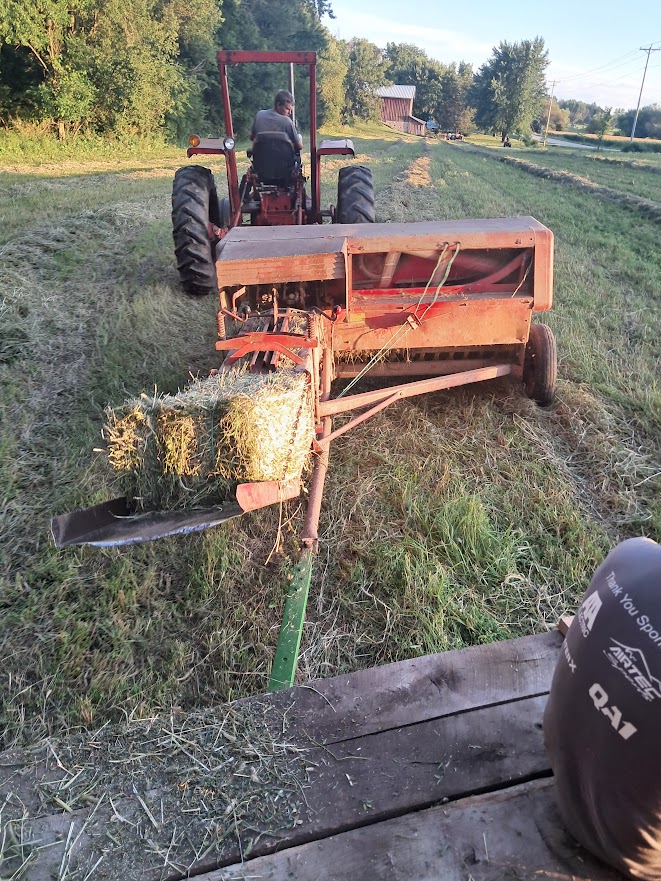
    The baler rattles across the field, kicking up dust in its wake. Each stroke of the plunger on our old New Holland baler strikes a rhythm I’ve known for as long as I can remember, growing up on a hay farm. To most, it’s just an old machine grinding through another hay crop. To me, it’s the steady heartbeat of family history.

    My grandfather was born in 1911 and grew up working with horses in the field. He didn’t fully retire the horses until after World War II. In 1951, he bought his own farm, and in 1977 he purchased the farm next door—the place where I would grow up, and the one I hope to someday manage.

    Somewhere in the middle of all that change, he bought this New Holland baler new in 1964. Sixty-two years later, under my father’s care, it’s still knotting twine and spitting out hay bales—stubborn as ever.

    A tool that old doesn’t survive by luck. It lasts because hands refuse to let it quit.

    I think of frantic shear pin replacements in the field before storms, grease-slicked wrenches, evenings spent tightening chains or swapping bearings as clouds pushed in.

    Each repair was more than maintenance; it was a promise that the baler would see another hay harvest. Its clatter is proof of care passed from one set of hands to the next.

    What I value most isn’t only its reliability, but the story etched into every dent and weld. Farming has changed in ways my grandfather never could have imagined—mammoth tractors, bigger bales, GPS-guided rows—but this old New Holland baler remains, a bridge tying his summers to mine. Each bale it drops is more than forage; it’s a small monument to persistence, tangible proof that his investment still pays forward.

    There’s a quiet pride in watching it work—steady, unassuming, framed by sun and dust. I sometimes imagine my grandfather and father standing beside me, hearing that same hum carry across the field, nodding at the machine they once trusted with a season’s livelihood.

    And as long as the chute spits out hay beneath the summer sky, their legacy endures. Someday, when I hand the lines to the next set of hands, I hope they’ll listen closely. If they do, they won’t just hear an old clatter in the field. They’ll hear the rhythm of persistence, the echo of care, the sound of a haying legacy worth continuing.


    I’d also love to hear from you: is there a piece of equipment, a tool, or a sound that instantly takes you back to your own family’s farm story?


    If this little glimpse into our haying history resonated with you, would you share it with someone who loves old equipment or grew up on a farm?

    Read Next: Buying Meat from a Farmer: A Complete Guide to Bulk Meat, Freezers, and Butchers