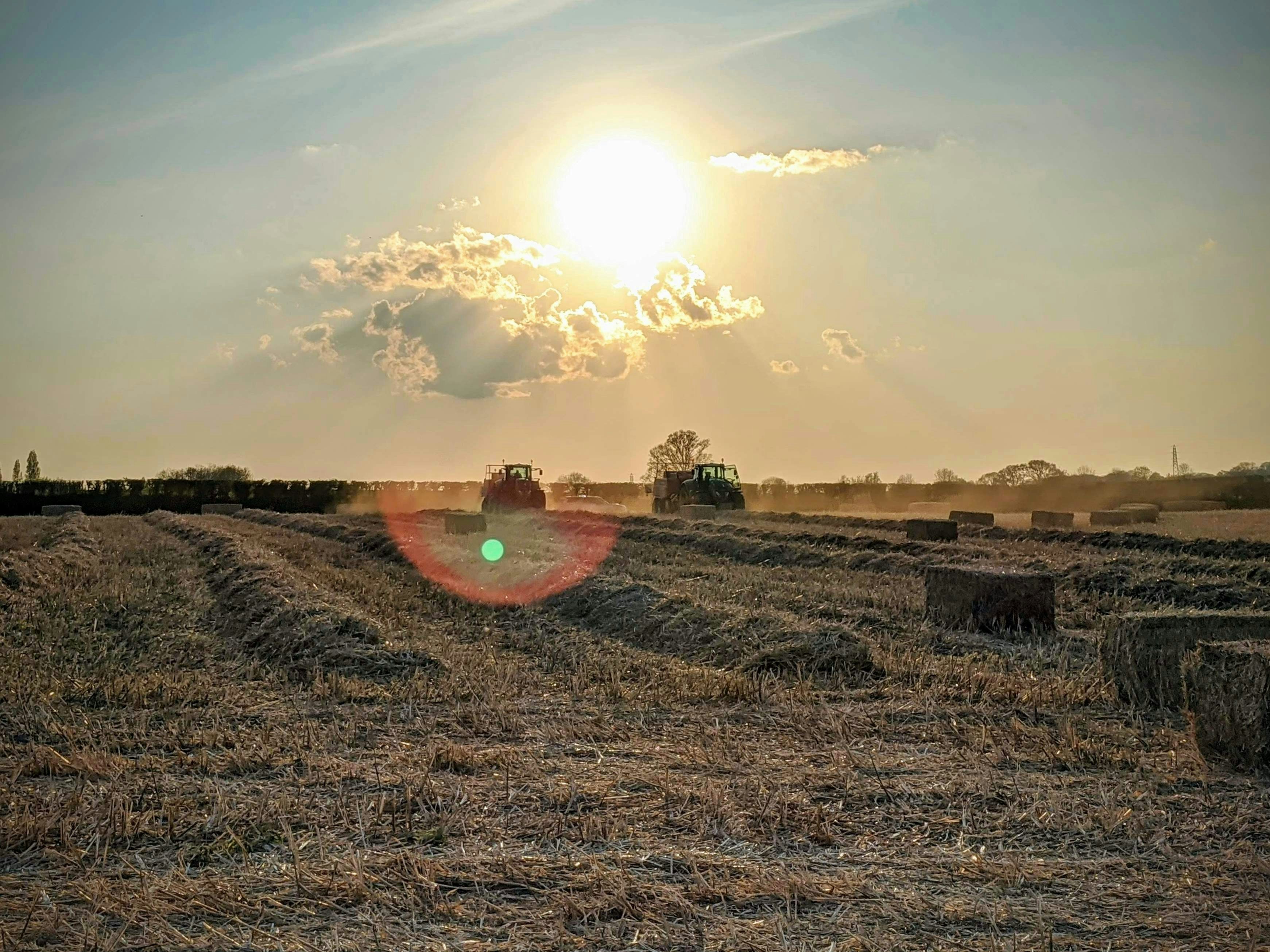

When most people picture a farmer, they imagine strong hands, early mornings, and a deep connection to the land. Those things are true. But what’s less visible is the mental and emotional weight that modern farmers carry—often in silence.
Over the last 40 years, farming has changed dramatically. We’ve seen consolidated farms, bigger machinery, larger herds, and new technology. Alongside those changes came something else: bigger debt, more uncertainty, and worries that don’t clock out when the day is done.
This piece isn’t about statistics. It’s about naming some of the pressures farmers feel, and why mental health deserves to be part of the conversation when we talk about agriculture.
From Many Small Farms to Fewer, Bigger Ones
A generation or two ago, it was common to see many small and mid-sized family farms clustered within a few miles of each other. They could lean on each other for basic help. My dad and a good farmer friend lived two miles apart and shared haymaking equipment and labor. We would spend a day baling hay at the friend’s place, and another day baling hay on our farm.
On a good day with lots of help, we could bale and put away 2,000–3,000 small square bales—enough to fill a hay mow from the floor to the rafters and keep a dairy herd fed for months. All the while, we had good conversations, got a solid workout, and ate a good meal afterward. There was a sense of satisfaction I didn’t fully appreciate at the time as I coughed up dust all night and well into the next day. We could rely on each other for reciprocal help that taught me what true community support looks like.
Over the past few decades:
- Many small operations have closed or merged.
- Land has consolidated into fewer, larger farms.
- Surviving farms often feel pressure to “get bigger or get out.”
This shift means:
- Less shared workload between neighbors.
- More land, animals, and responsibilities on fewer shoulders.
- A sense of loss—not just of businesses, but of communities and a way of life.
My dad and his friend both sold their cows around the same time. I remember the farm auction they jointly held when I was an early teenager. At the time, I was thrilled that we didn’t have the cows anymore. In adulthood, that relief turned into sadness, because it meant there were two fewer dairy farms in the area. Now, the farms with 100 or fewer cows are few and far between. My dad used to joke that FFA—“Future Farmers of America”—really stood for “Father Farming Alone.” He wasn’t wrong.
For the farmers who remain, this consolidation can bring a mix of gratitude (for still being here) and grief (for those who aren’t).
“Land Rich,” Cash Poor
Another layer in all of this is what people sometimes call being “land rich.”
Many farmers:
- Own or are paying on hundreds of acres of land.
- Have barns, sheds, and equipment worth significant money on paper.
From the outside, it can look like wealth. But the reality is often:
- Most of that value is tied up in land and buildings that can’t be easily sold without dismantling the farm.
- Day-to-day cash flow can be tight, especially when prices are low or inputs are high.
- The same land that represents security also represents responsibility, taxes, and debt.
Being “land rich and cash poor” is its own kind of mental strain. Farmers can feel:
- Trapped between the desire to keep the farm going and the weight of the bills.
- Guilty for even considering selling something that generations built.
- Misunderstood by people who only see acreage and assume comfort, not stress.
When the balance sheet says “asset,” but the checking account says “barely,” it adds another quiet layer of pressure.
Bigger Equipment, Bigger Debt
With larger farms comes larger equipment:
- Bigger tractors, combines, balers, and harvesters.
- More sophisticated technology—GPS, monitors, sensors, and software.
These tools can boost efficiency, but they come at a cost:
- High purchase prices, ongoing payments, and subscription fees.
- Expensive parts and repairs when something breaks (usually at the worst possible time).
- The constant knowledge that a breakdown—or a bad year—could put the whole operation at risk.
Carrying that level of debt isn’t just a line item in a budget. It’s a weight in the back of a farmer’s mind, especially at night. Farming has always been stressful, but when you add costs that are ten or a hundred times higher than they used to be, the stress compounds right along with it.
Mutating Diseases, New Pests, and Biosecurity Worries
The last few decades have also brought:
- New or mutating livestock diseases.
- Crop diseases and pests that adapt quickly.
- Rising biosecurity concerns, especially with larger, more concentrated herds.
This adds another layer of stress:
- One outbreak can threaten years of hard work.
- Farmers must constantly update protocols, vaccinations, and preventative care.
- There’s a nagging worry: “What if something slips through? What if we miss something?”
The responsibility of caring for animals and crops isn’t just physical; it’s emotional. When animals get sick or crops fail, it can feel like a personal failure—even when it isn’t.
I recently heard the sad story of a local strawberry farm that lost much of its crop to a disease that thrives in wet soil after a particularly rainy spring. I’ve also watched them rebound in a way that is truly inspiring—launching a strawberry-scented skincare line made from the berries they could salvage and using their platform to educate the public about soil health. Even in resilience, you can feel the weight of what was lost and the effort it took for them to pivot.
Markets That Feel Like a Roller Coaster
Farmers today live with:
- Fluctuating commodity prices.
- Sudden changes in demand, trade policies, and global events.
- Input costs (fuel, fertilizer, feed, repairs) that don’t always match what they’re paid.
That means:
- It’s harder to plan even one year ahead, let alone several.
- A good production year doesn’t always mean a good financial year.
- Farmers carry the constant question: “Will this be the year we can’t make it work?”
Uncertainty isn’t just a math problem. It’s a mental burden—especially when an entire family’s livelihood, legacy, and identity are tied to the farm.
More Worries, Less Margin for Error
Put all of that together, and you get a heavy load:
- Bigger farms and fewer people to share the work.
- Bigger machines and bigger debts.
- Disease, pests, and biosecurity concerns that never truly go away.
- Markets that can swing wildly from one season to the next.
- Land that looks like wealth on paper, but doesn’t always translate into financial breathing room.
And yet, despite all this, many farmers still:
- Get up before sunrise.
- Work long days in all kinds of weather.
- Care deeply about their animals, crops, and customers.
- Try to show up at community events and be good neighbors.
They do it not because it’s an easy business decision, but because farming is a calling—a way of life they care about too deeply to walk away from lightly.
From the outside, it’s easy to see just the toughness. From the inside, farmers know: toughness doesn’t make you immune to stress, anxiety, or depression. It just makes you more likely to keep quiet about it.
The Quiet Strain on Farmer Mental Health
Some common mental health pressures on farmers include:
- Chronic stress. There is always something to worry about—weather, prices, animals, equipment, finances.
- Isolation. Many farms are rural and remote, with fewer opportunities to socialize or talk openly about struggles. The isolation has only increased as farms have consolidated and neighbors have sold out.
- Identity and legacy. The farm often isn’t “just a job.” It’s a family identity and a multi-generation story. The fear of being “the one who couldn’t keep it going” runs deep.
- Stigma. In many farm communities, there’s an unspoken rule: you work hard, keep your head down, and don’t complain. Asking for help can feel like weakness, even when it’s actually courage.
It’s not unusual for farmers to feel:
- Overwhelmed
- Guilty for feeling overwhelmed
- Unsure where to turn or what resources exist
Naming these realities doesn’t mean farmers are broken. It means they’re human.
What Farmers Need to Hear
If you’re a farmer, or married to one, or raising farm kids, you may need to hear that:
- Feeling stressed or anxious doesn’t mean you’re failing.
- Being exhausted by the weight of decisions and responsibilities is understandable.
- You are not the only one who lies awake at night worrying about the bank, the herd, the crops, the land, the next generation.
- Talking to someone—a friend, pastor, counselor, doctor—is not a sign of weakness. It’s one more way of caring for your farm and family, because you are part of both.
What the Rest of Us Can Do
For those who aren’t farming but care about farmers, there are small but meaningful ways to help:
- Acknowledge the weight. Simply saying, “I know things are tough right now, and I appreciate what you do,” can matter more than you realize.
- Listen without minimizing. Resist the urge to say “It’ll all work out” or “At least you get to live in the country.” Instead try: “That sounds really hard. Do you want to talk about it?”
- Support local when you can. Buying from local farms and small businesses helps, even if it’s not a complete solution.
- Share resources. If you hear about mental health hotlines, local support groups, or farm stress programs, pass them along without pressure: “I saw this and thought it might be useful if you ever wanted it.”
- Check in after hard news. A bad storm, a price crash, a big equipment breakdown—these are good times to send a message or stop by.
A Small Invitation
Over the past 40 years, farms have gotten bigger, equipment has gotten bigger, and the to-do lists and worries have grown right alongside them. What hasn’t grown at the same pace is our willingness to talk honestly about what all of that does to a farmer’s mind and heart.
For many farmers, this work is more than a career. It’s a calling they’ve been born into, chosen, or both—and that’s part of why the weight can feel so heavy.
I don’t pretend to speak for every farmer or every situation, but these are some of the patterns I’ve seen and lived.
We can’t solve everything in one conversation or one blog post. But we can:
- Start naming the pressures.
- Make it normal to talk about stress and mental health in farm communities.
- Remind farmers that their worth is not measured only in bushels, pounds, acres, or how many acres they “own” on paper.
If you’re a farmer, or you love one, I hope this gives you language for some of what you’re feeling—or seeing.
And if you’re reading this from town or city, maybe the next time you pass a tractor on the road, pour a glass of milk, have a steak, or drive by a field, you’ll remember: behind that scene is a person carrying more than just a workload.
Feature Photo by John-Mark Strange on Unsplash
If you feel comfortable sharing, I’d love to hear: what’s one thing you wish people understood about the mental load farmers carry—or one small way you think we could better support them?
If this post helped put words to what you’ve seen or felt, would you share it with someone who cares about farmers—or save it to revisit later? Your stories matter too. I’d be honored if you shared a small piece of your experience or tagged a farmer who deserves a quiet “thank you.”
Read Next: Buying Meat from a Farmer: A Complete Guide to Bulk Meat, Freezers, and Butchers
Leave a Reply