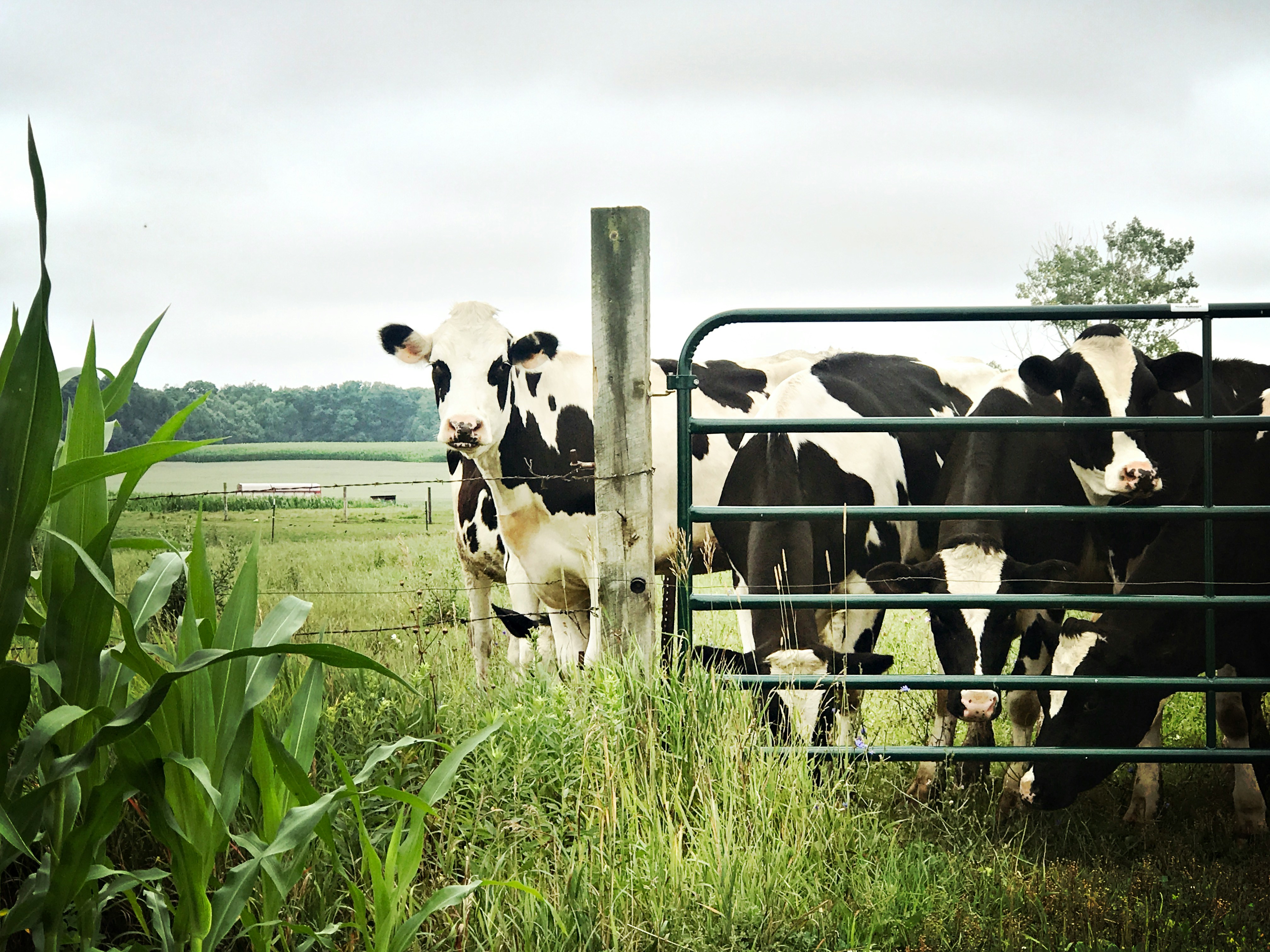
As June Dairy Month comes to a close, I’ve been thinking about how much this month’s writing has revolved around farmers, hayfields, and the quiet weight of rural life. It wasn’t a strategic content plan so much as an honest outflow of what’s on my heart—and on my mind—this time of year.
In case you missed any of the recent posts (or want to revisit them with fresh eyes), here’s a look back at the stories we’ve walked through together.
The Old New Holland Baler and a Haying Legacy
In one post, I took you out to the hayfield, where an old New Holland baler still clatters its way across the field, tying bales as steadily as it did in the 1960s. We followed its story from my grandfather’s horse-drawn days, through my dad’s years of frantic shear-pin changes and late‑night repairs, all the way to today’s summers under my father’s care.
That baler became more than a machine—it stood in for a family legacy of persistence, resourcefulness, and care passed down from one set of hands to the next. Each bale it drops is a small monument to the people who refused to let it quit.
Learning to Stop Hiding My Farm Roots
Another post shifted from machinery to identity. I shared my “confession” that, for years, I tried to tuck my farm background away—doing just enough chores, avoiding being “too farm kid,” and choosing choirs over FFA. I wanted the values without the label.
But homesteading habits kept creeping back: blanching green beans, learning to make sauerkraut, failing (and eventually succeeding) at homemade pizza. A glut of cucumbers and a Facebook post finally opened my eyes to how unusual my access to fresh food really was—and how much others valued what I took for granted.
Through coworkers’ questions and friends’ enthusiasm, I began to see my rural upbringing not as a liability, but as an asset: a source of work ethic, resourcefulness, and a perspective that still shapes how I parent, homestead, and show up in my community.
Naming the Hidden Weight Farmers Carry
We also zoomed out to look more directly at farmer mental health. That post walked through the way farming has changed over the past forty years: fewer, larger farms; bigger equipment; “land rich and cash poor” realities; new diseases and pests; and markets that feel like a roller coaster.
Layer by layer, we named the unseen pressures—chronic stress, isolation, identity and legacy, and stigma around asking for help. The goal wasn’t to drown anyone in statistics, but to give words to what many farmers and farm families are already feeling: that toughness doesn’t make you immune to stress, and that talking about it is an act of courage, not weakness.
We also talked about what farmers need to hear (that being exhausted doesn’t mean you’re failing) and what the rest of us can do in small but meaningful ways: listening well, supporting local, sharing resources, and checking in after hard news.
June Dairy Month from the Farmyard Side
In honor of June Dairy Month, another piece turned the camera toward what June actually feels like on the farm. While towns see smiling cow posters, ice cream specials, and farm breakfasts, farmers see early alarms, hot barns, hayfields racing storms, and bills riding in their back pockets.
I shared memories of June as “hold on tight and hope the machinery cooperates,” and explored how it can feel to be “celebrated” while you’re barely keeping up. For some, June Dairy Month is joyful; for others, it’s complicated. We imagined what farmers might actually want this month: fewer speeches and more listening, real prayers for safety and rest, quiet texts that say, “How are you holding up?” and resources that gently say, “You don’t have to carry this alone.”
I also mention practical ways to honor farmers—asking better questions, dropping off food or encouragement during haying, and telling kids the story behind the milk in their glasses.
A Barn Roof, a Helping Hand, and a Farm Friendship
Most recently, I shared a story from before I was born, about how one small act—stopping to help on a red barn roof—turned two neighboring farmers into lifelong friends. A neighbor pulled in, climbed up despite a fear of heights, and offered a hand. From that afternoon on the peak, their lives became deeply intertwined through haying days, shared meals, weddings, and tough seasons.
As a kid, I joined those hay crews, stacked bales until I was covered in dust, and ate big meals that felt like our own modern threshing bees. Looking back, I can see how that one moment of courage and kindness rippled through decades and shaped the community I grew up in.
What Threads These Stories Together
Across all these posts, a few themes keep surfacing:
- The steady, sometimes unnoticed persistence of farmers and farm families
- The way small acts—fixing an old baler, sharing cucumbers, stopping to help on a roof—carry forward into generations
- The tension between public celebrations of agriculture and the private weight many farmers carry
- The quiet, sturdy beauty of rural friendships and communities
June Dairy Month may be the official reason to talk about cows and fields, but the stories don’t fit neatly into one month on a calendar. They’re ongoing, season after season.
Feature Photo by GG LeMere on Unsplash
If one of these posts resonated with you, I’m glad you were here. And if you’re a farmer, or love one, thank you—for the work you do, the courage it takes, and the stories you’re still living.
If you have a minute, I’d love to know: which of these stories stuck with you most, and what would you like to see more of in the months ahead?
If you know someone who loves farm stories—or someone who lives them—would you share this recap with them? Your shares and comments help these stories find the people who need them.
Read Next: Growing Up on a Wisconsin Dairy Farm: Reflections for June Dairy Month
Leave a Reply