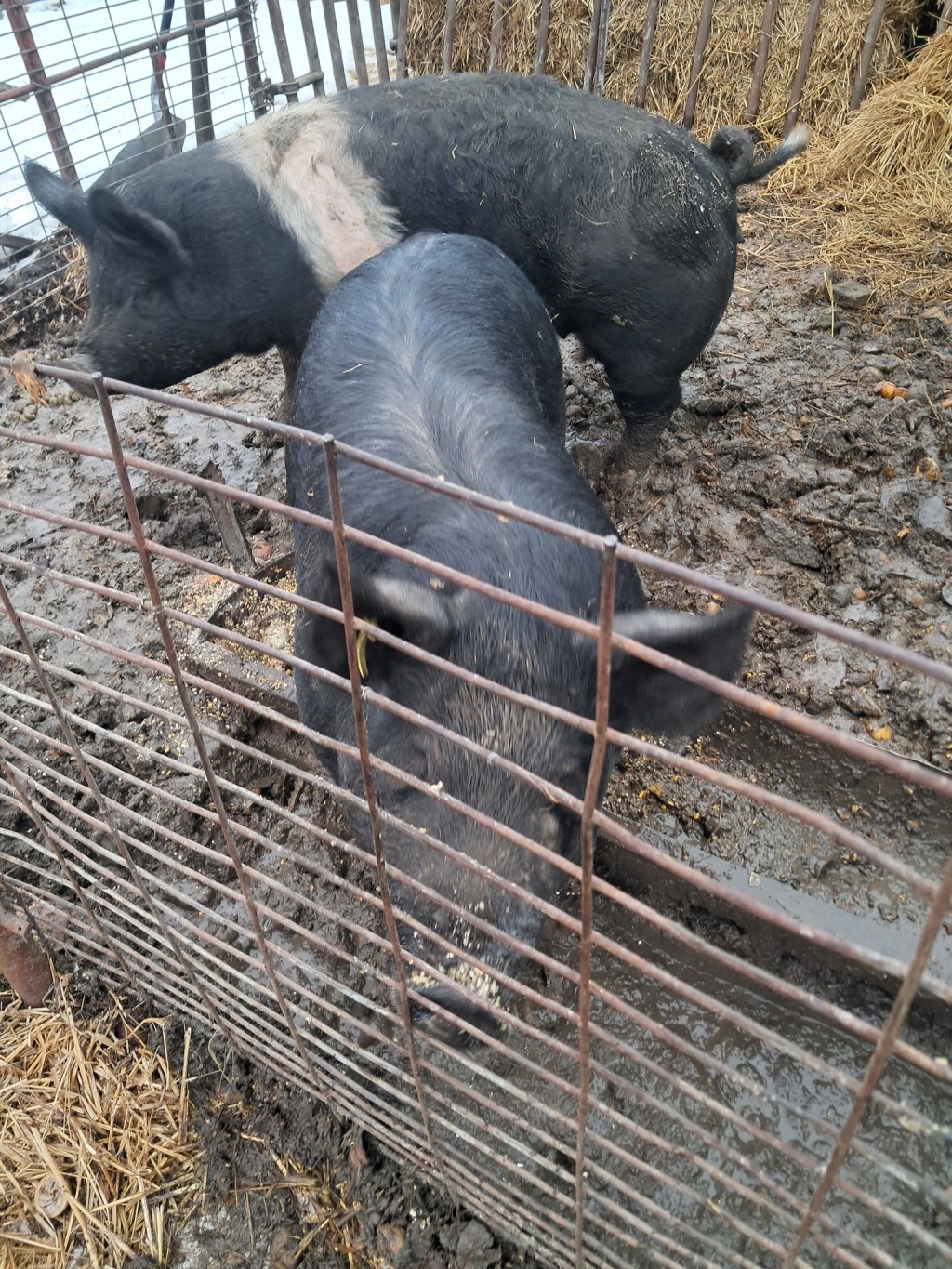
Over the next six months, our biggest homesteading challenge will be learning how to nurture new life on our homestead. Specifically, helping two first-time pig moms safely deliver and raise their piglets around Mother’s Day.
From Meat Pigs to Breeding Gilts
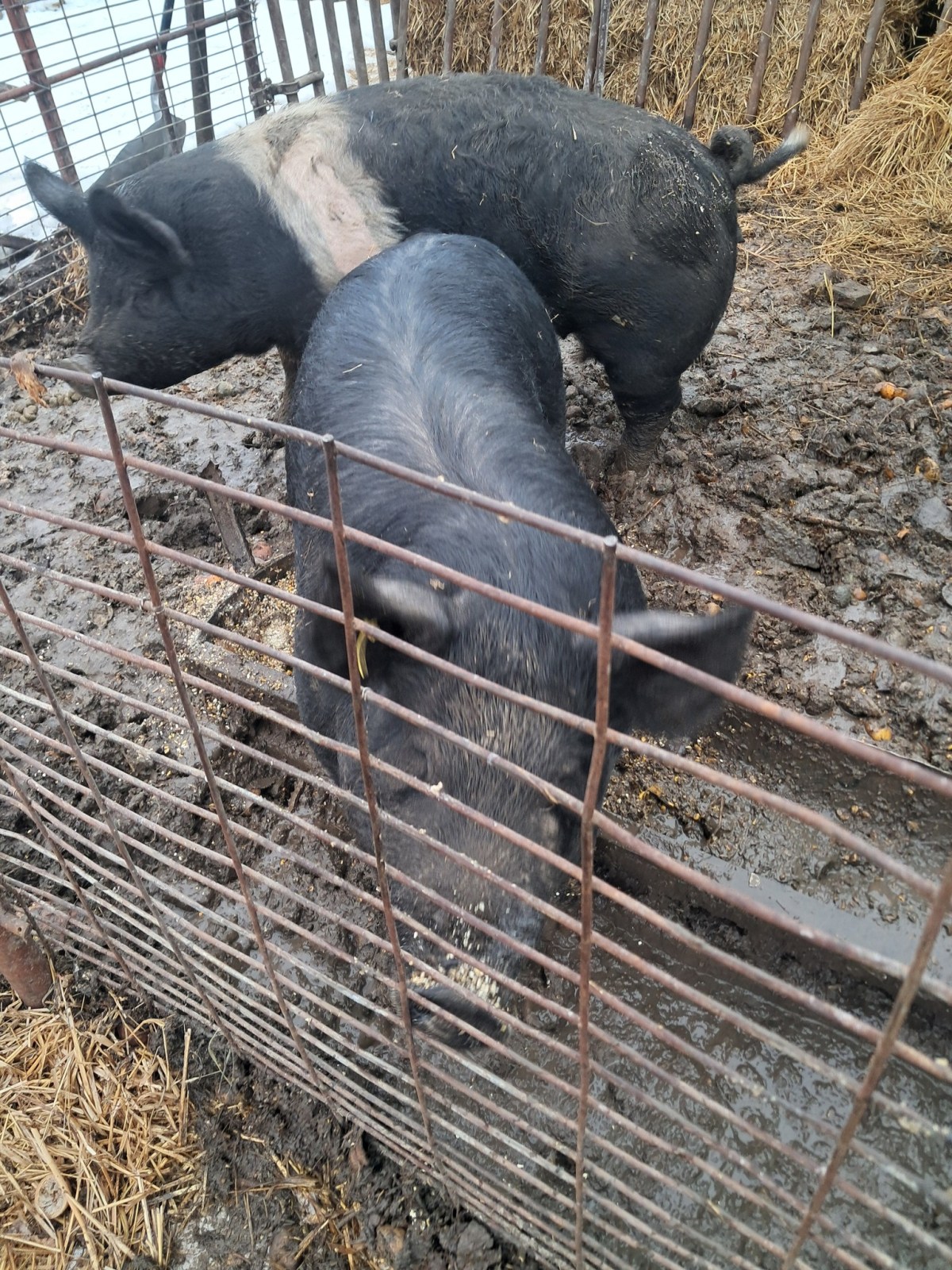
My husband and I have raised pigs on our homestead for two years, mostly for meat. Last year we ended up with two young gilts originally intended for processing. But as we watched their personalities emerge and realized we had enough pigs for last year’s orders, we made a different choice.
These two became our first step into pig breeding territory, which meant learning winter pig care for full-size gilts. We’ve learned cold weather management, water access, mud containment, and the general chaos of long-term livestock keeping.
Pig Breeding: No Swipe-Right App Required
Pig breeding doesn’t come with modern dating apps. Artificial insemination is possible but tricky for homesteaders like us without the required training and equipment. So we borrowed a boar from family for two weeks instead. The boar settled immediately, smacking his lips (apparently a pig mating technique we’ve never heard of before).
The eligible bachelorettes couldn’t get enough of him. They went from wary strangers, sniffing and posturing through social hierarchy, to “getting lucky” overnight. It was equal parts farm practicality and genuine wonder about new life coming to our land.
The Farrowing Timeline
Pig gestation follows the classic 3 months, 3 weeks, 3 days timeline. If our calculations hold, Gilt #1 farrows around Mother’s Day 2026, with Gilt #2 following about a week later. It’s perfect timing for our first experience with pig birth coinciding with a holiday celebrating mothers.
What Makes First-Time Farrowing Challenging
First-time farrowing intimidates me most. New sows face surging hormones, labor pain, and instincts they don’t yet understand. They sometimes pace frantically or accidentally step on newborns while nesting.
My grandfather, a lifelong pig man, stayed up all night in farrowing barns watching over nervous moms. He would even give them small amounts of whiskey to mellow them out—an old-school remedy I’m definitely not trying.
Our Farrowing Preparations
We’re preparing by seeking advice from local old timers with experience. We’re also acquiring and staging farrowing crates and deep straw bedding for their comfort.
Success to us means 8-12 healthy piglets per litter with thriving moms and minimal intervention.
Why Piglets Are Worth Every Challenge
Homestead piglets represent more than cute photos—they’re future meat pigs, potential breeders, or weaned piglets for local sale. But truly, watching new life stumble into the world with tiny hooves, squeaky snouts, and wobbly legs racing their mama captures pure homestead magic worth every sleepless night.
What’s your next big homesteading challenge? Pig farrowing, goat kidding, chick hatching? Share below—someone needs your wisdom.
If you’re facing pig farrowing, goat kidding, or any livestock birth for the first time, LIKE + SHARE this with your homestead crew!
Loved this? Subscribe for more homesteading stories and tips:
Why I Would Change Food Safety Laws for Homesteaders and Small Farms
I would change food safety laws—not to make food less safe, but to make them more personal, local, and community-centered for homesteaders and small farms who want to sell direct to their neighbors.
Current food safety regulations overwhelmingly favor industrial giants over small-scale farmers. They’re built around the assumption that all our food comes from nameless corporations and massive processing plants located hundreds of miles away, placing all trust and responsibility out there with distant regulators. The practical result? It’s dramatically easier for a huge company to manufacture and distribute shelf-stable, ultra-processed food across the entire nation than it is for the family down the road to legally sell you homegrown pork or a backyard chicken they raised themselves with care.
The Homestead Processing Cost Barrier
Here’s our homestead reality: My family raises our own pigs right here on our land, pouring love and quality feed into every animal. But when it comes time to process them, the USDA processing costs make our homestead pork3x more expensive per pound than the stuff at the grocery store. Those mandatory, government-inspected facilities charge small-batch farmers like us up to 3x higher per pound because we can’t meet their high-volume minimums. Cross one state line or trigger one additional regulation, and suddenly small farms like ours simply can’t compete with factory-farmed bacon that’s been shipped cross-country. The current system prioritizes industrial food safety over practical direct-to-consumer meat options that build real relationships.
Why Food Safety Regulations Exist
I completely understand why these food safety regulations exist in the first place—I read The Jungle by Upton Sinclair. The book exposed absolutely horrifying conditions in early 20th-century meatpacking plants: rats running through meat, workers falling into rendering tanks, sawdust and chemicals covering everything. Those food safety laws that followed genuinely saved countless lives and cleaned up a dangerous industry. But in the century since, ordinary people have gradually offloaded personal food safety responsibility onto those same labels, USDA stamps, and distant inspectors. We’ve largely forgotten the common-sense skills our grandparents used to judge food quality ourselves—smell, sight, source.
Modern Food Safety Failures
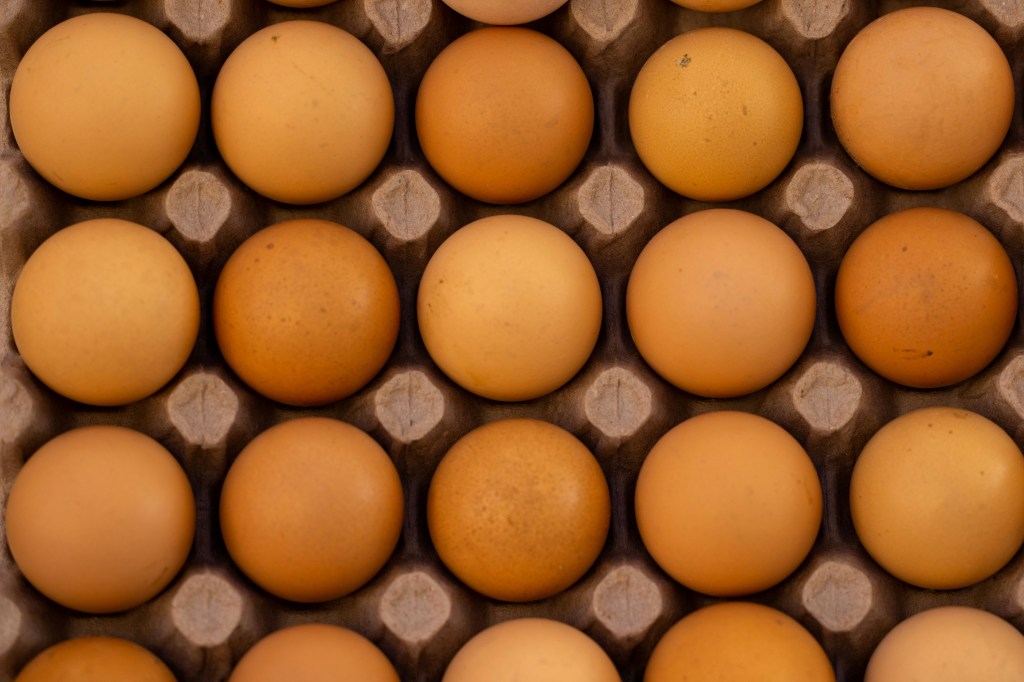
Even with all these regulations, industrial food safety still fails spectacularly and regularly. Meat recalls, produce outbreaks, and contamination in shelf-stable items make headlines every single year—the CDC tracks 128,000 salmonella cases annually, with the vast majority tied to conventional industrial sources, not local farms. This proves knowing your food source matters more than ever, especially when “regulated” supply chains break down. Plus, fresher local food simply tastes better—don’t believe me? Crack open a factory-raised egg next to one from pasture-raised chickens allowed outside to eat grass and bugs. The deep orange yolk color, richer flavor, and firmer texture in the local egg will convince anyone on the spot.
My Food Law Change for Small Farms
If I could change one law, I’d create tiered food safety regulations: light-touch rules for small-scale direct sales (under 1,000 lbs/year, strictly on-farm or direct-to-consumer only) paired with mandatory honest labeling and full transparency, while keeping strict oversight for anything headed to commercial scale. This isn’t either/or—keep industrial options for convenience, unlock local for those ready. This would finally enable practical local meat processing, community butchering days where neighbors share skills and tools, and simple backyard chicken sales—without the slippery slope of scale creep into larger operations.
Not reckless at all—consumer choice plus farm transparency (visit anytime, ask questions, see living conditions firsthand) beats blind trust in a logo every time. Custom-exempt processors already work extremely safely for personal use; we just need to thoughtfully extend that proven model.
Reclaim Food Freedom and Community
With smarter food safety laws, homesteaders could finally save real money by skipping expensive middlemen and mandatory big-facility processing. Families would reclaim food sovereignty through hands-on knowledge, kids would actually see where food comes from instead of just trusting packaging, and entire communities would grow stronger around this shared, meaningful work—swapping time-tested recipes, teaching traditional skills, and caring for the land in hands-on ways our great-grandparents took for granted.
Safety comes from knowing your farmer personally, combined with those great-grandparents’ practical skills and smart, tiered rules. Better food regulations would deliver healthier eating, stronger communities, and the local food freedom we’ve quietly lost over generations.
Want to dive deeper? Read The Omnivore’s Dilemma by Michael Pollan—it brilliantly unpacks exactly these tensions in modern food systems.
If this resonates with your homesteading journey, like + share to help other families reclaim their food freedom! What food law would YOU change? Drop it in the comments! 👇
Loved this? Subscribe for weekly homesteading tips:
I used to be a champion complainer—until I realized it never planted a single seed worth growing.
I try not to complain too much. It’s a nasty habit that usually leaves me feeling worse than before I started. Instead, I try to live by the words of the Serenity Prayer:
“God, grant me the serenity to accept the things I cannot change, The courage to change the things I can, And the wisdom to know the difference.”
When I catch myself slipping into that spiral of frustration, I remind myself of those lines. If there’s something I can fix, I get to work on it. If there isn’t, I try to shift my perspective. Some days, that works beautifully. Other days, not so much—but it’s a practice, and a worthwhile one.
When Passion Comes from Frustration
Still, there are some things bigger than myself that I can’t quite let go of—issues that deserve our collective attention. That’s where my frustration tends to turn into passion.
If you really want to know what gets me on my soapbox, it’s this: how undervalued the foundation of our society has become—the farmer.
Lessons from the Milking Barn
I grew up on a dairy farm surrounded by fields, animals, and five hardworking older sisters. My dad, like many farmers, cautioned us not to follow in his footsteps. He didn’t say that out of bitterness; he said it out of love.
He knew farming demanded endless hours, uncertain pay, and a body that rarely got a day off. The cows still needed milking before dawn, even after a night of broken sleep or if you were sick. The hay still needed to come in, even if rain clouds were gathering on the horizon. And no matter how hard you worked, the weather or the market could undo it all in a single season. With today’s global markets, that uncertainty feels even sharper than it did thirty years ago.
The Great Disconnect
Despite all that labor, society often treats farmers as an afterthought. We depend on them for our most basic need: food. Yet we seem disconnected from what it truly takes to put dinner on the table. It’s astonishing how quickly that disconnect happened. In just two or three generations, we’ve gone from home gardens, backyard chickens, and canning jars in the pantry to drive‑thru dinners and foods that travel thousands of miles before reaching us.
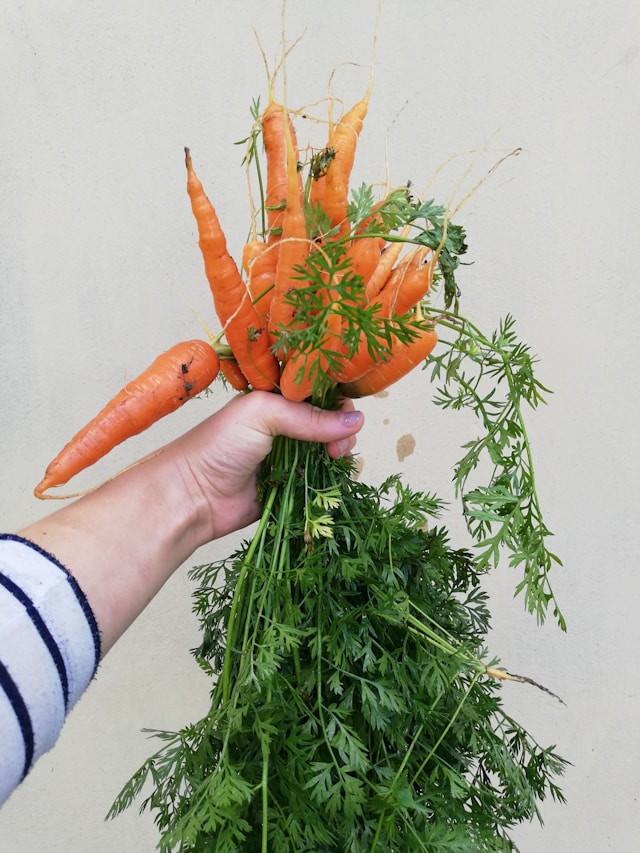
Our modern food system is complicated. We’ve gained convenience but lost some wisdom along the way—wisdom about soil, seasons, and self‑sufficiency. Many children have never pulled a carrot from the ground or gathered a fresh egg. Even adults often feel surprised to learn where their food comes from.
Marketing Replaces Memory
Not long ago, I saw a potato chip bag proudly labeled “Made with Real Potatoes,” as if that were some sort of revelation. It made me laugh—and then it made me sad.
Somewhere along the way, marketing replaced knowledge. We began trusting brands more than the soil, and food became a product instead of a shared experience. When I mentioned it on my Facebook page, people chimed in from everywhere. It turns out, so many of us feel the same way—grateful for convenience, but yearning to reconnect.
Growing, Raising, and Reconnecting
That little moment reminded me why I care so deeply about growing food, raising kids, and building community. These things are intertwined. When children understand where their meals come from, when we grow even a small piece of what we eat, when neighbors come together to share skills, seeds, and harvests—we start to rebuild that lost connection. Even something as simple as buying from a local farmers market, planting herbs on a windowsill, or teaching a child how to cook can make a difference.
So maybe I don’t really complain all that much anymore. Maybe what I’m doing is something better: advocating, educating, and planting small seeds of change and connection in my backyard and in my community. Because while I can’t change the world overnight, I can nurture the soil right in front of me. And that feels like a pretty good start.
Resources I Recommend
Disclosure: This section contains Amazon affiliate links. If you purchase through them, I may earn a small commission at no extra cost to you. Thank you for supporting Practical Homesteading!
If this post stirred something in you, here are a few places to start learning, growing, and preserving more of your own food. I only share resources I truly find useful.
Read and reflect: One book that has deeply shaped how I think about food and farming is The Omnivore’s Dilemma by Michael Pollan. It follows several different meals from source to table and invites you to really consider where your food comes from and who grows it. You can buy it in my link or borrow it from your local library.
Learn the basics of preserving: The Ball Book of Preserving is a solid, economical place to start if you’re new to canning. It covers the fundamentals clearly without feeling overwhelming, and it’s a great first step into safe home food preservation.
Go deeper with more recipes: The Ball Complete Book of Home Preserving is a much more comprehensive resource, with many more recipes and techniques. It’s a bigger investment, but worth it if you discover that preserving is something you love and want to keep expanding.
My home preservation essentials: I’ve put together an Amazon list of tools and books I use or recommend for dehydrating, canning, and freezing food at home. You can find it here: Home Preservation Essentials.
If you have favorite books, tools, or simple tips for beginners who want to grow or preserve their own food, please share them in the comments—I’d love to learn from you, too!
Loved this? Hit that ❤️ if it resonated. Share with a friend who needs to hear it. Subscribe for more real talk about growing food and building community. Your support means everything!
Discover why growing food, raising children, and building community are at the heart of my homesteading mission. Together, we can return to the roots of connection, resilience, and hope.
Growing up on a dairy farm in Wisconsin, my days were shaped by the rhythm of the cows and the turning of the seasons. Each morning began before sunrise, the air crisp with the scent of damp earth as my family and I made our way to the barn. The gentle lowing of the cows…
Working mom of 2 shares her homesteading origin story – from Wisconsin dairy farm rebel to choosing chickens, gardening and bread making. Environmental professional finds freedom in practical homesteading.
If you could make your pet understand one thing, what would it be?
Disclosure: This post contains affiliate links. As an Amazon Associate, I earn from qualifying purchases. Thanks for supporting Practical Homesteading!
Every morning, our little homestead stirs to life—snorts, clucks, rustles, and all. The pigs grunt impatiently for breakfast, the chickens dart around my boots like gossipy toddlers, and the black cat takes her morning post on the fence, tail flicking in quiet judgment.
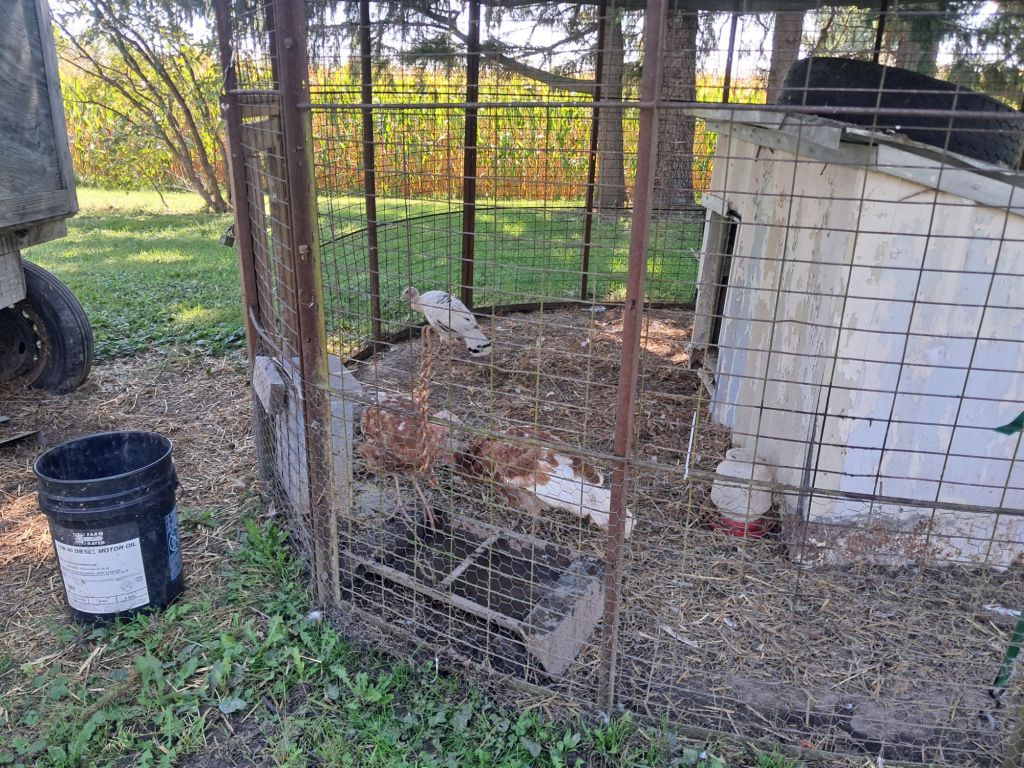
And then there are the turkeys—watching from their enclosure, eyes wide, feathers puffed, too afraid to venture near the very hands that feed and bed them.
If I could make my animals understand just one thing, I’d tell them, “You are safe and valued, every single day you’re here.”
The truth is, one day we will butcher the turkeys. That’s part of the rhythm of the homestead life—raising animals with respect, giving them good days filled with deep bedding, and ensuring they’re never hungry or afraid. But that doesn’t make their time here any less meaningful. It actually makes the responsibility deeper. If they could understand one thing, I’d want them to know that their days matter. That their comfort matters. That I’m grateful for the life they live and the life they’ll one day give .
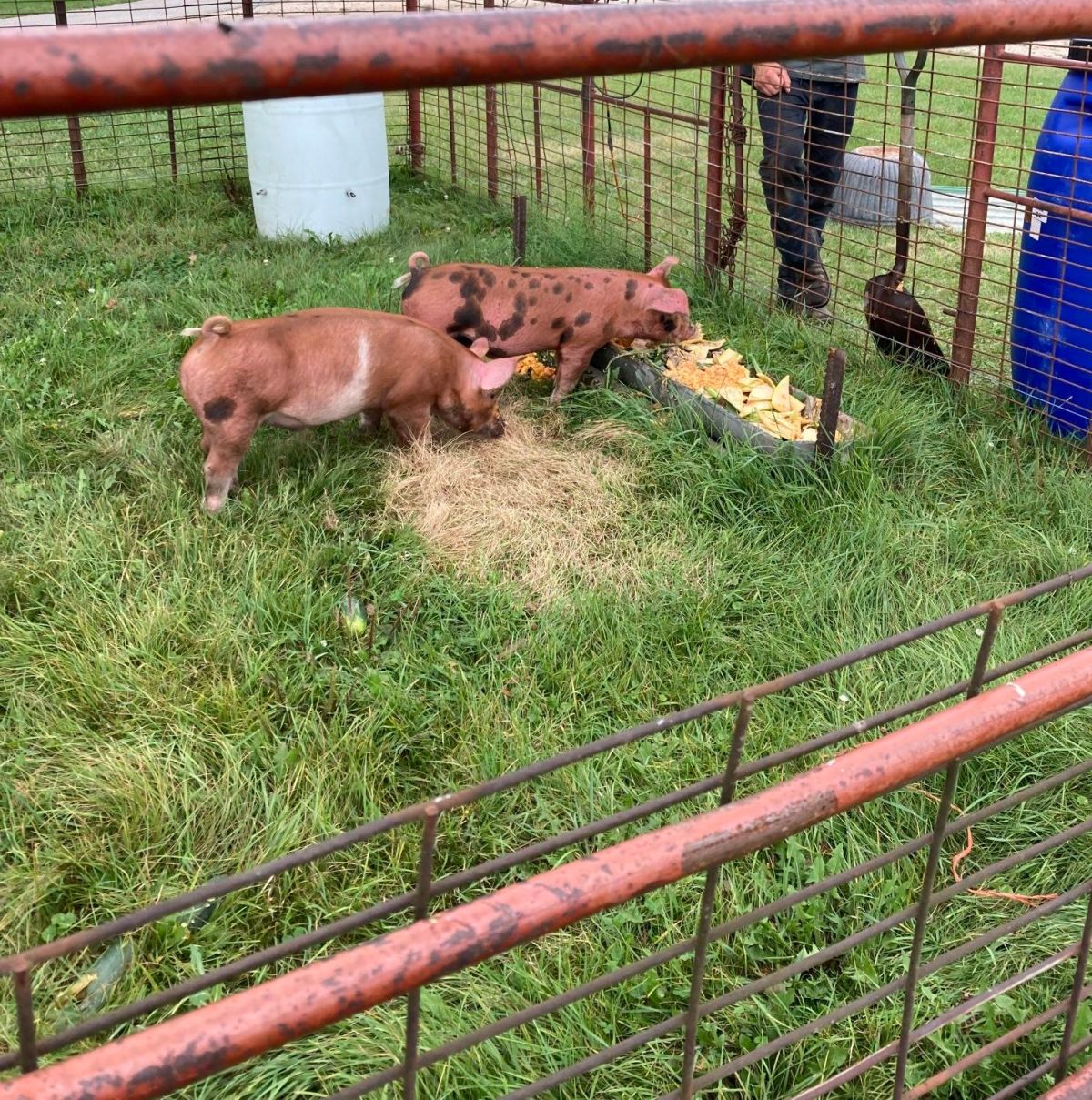
The pigs already seem to get it. They’ll eat, play, and then flop into straw with satisfied sighs, blissfully unbothered by anything beyond their next meal. The chickens scurry and squawk, confident in the routine they’ve built around their 25 lb self-feeder (affiliate link) and DIY 5-gallon bucket waterer (affiliate link). Even Black Cat, aloof as he pretends to be, knows he belongs to this rhythm—this gently imperfect, beautifully grounded life we share .
That’s what sustainability really means to me—caring deeply, even when the hard parts come. I can’t explain to my animals that I love them, that I worry about them on cold nights, or that I always want their lives to be good ones. But I can show it. Through full buckets, soft hay, and calm voices. Through care that doesn’t need translation.
Because this life, this work, is built on gratitude—on giving more than we take, and honoring every part of the cycle that feeds us. And if my animals could understand that, even for a moment, it would be enough.
If your animals could understand one truth, what would you tell them? Comment below 👇
Did this post resonate with you? Like if you farm with heart, share with your homesteading crew, subscribe for real farm wisdom!
Discover the joys and challenges of raising backyard turkeys in this heartfelt story about patience, humor, and the journey from fluffy poults to Thanksgiving centerpiece. Learn personal lessons and practical insights from a family’s wild turkey-raising adventure.
Never wanted pigs on the homestead? How chickens → ducks → homestead pigs transformed farm life. Pig pen build, pig feed lessons, pig health scares, and why raising pigs beginners find unexpected joy. Real homesteading story.
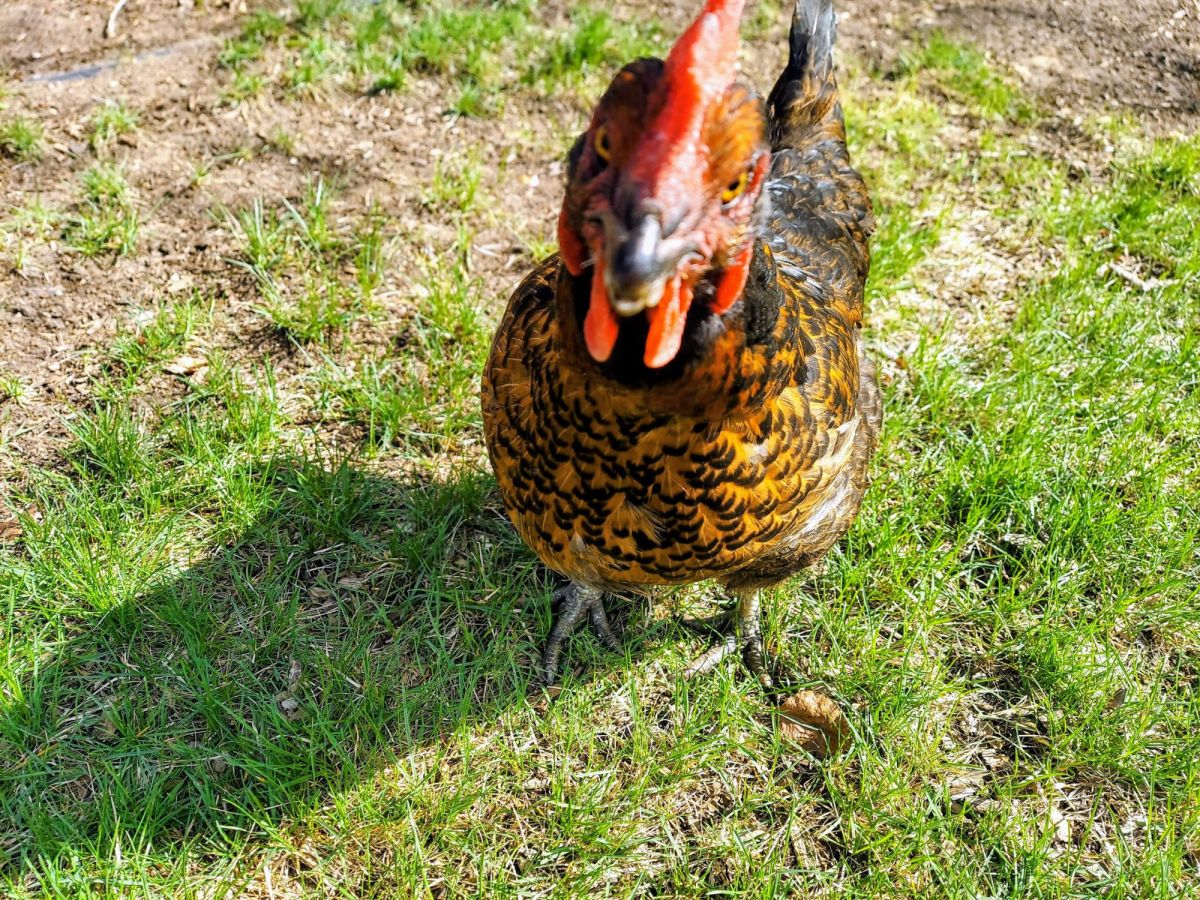
What are your favorite animals? I remember he day our delivery person lingered just to pet a chicken. It marked a quiet but unforgettable connection between humans and animals in our lives. That black hen with golden feathers wasn’t just beautiful. She was a symbol of the surprising personalities and stories hidden in every farm…
Disclosure: This post contains affiliate links. As an Amazon Associate, I earn from qualifying purchases. Thanks for supporting Practical Homesteading!
I turn 36 this week, and it feels like as good a time as any to tell you who I am.
I am
a wife
a working mother of 2 beautiful children
an environmental professional
a homesteader
a gardener
a reader
an animal caretaker
an aspiring writer (the blog you’re reading is me practicing)
an amateur historian
a perfectionist
a ruminator
a friend
a daughter
a sister
Growing Up on a Wisconsin Dairy Farm I grew up on a dairy farm in Southeastern Wisconsin during the 1990s. It was a tumultuous time in farming—small family-run dairy farms were rapidly disappearing into larger, consolidated operations.
My dad secretly never wanted to be a farmer. Born an only child into a multigenerational operation, he inherited the responsibility anyway. Despite that, he managed to hold onto his land and his 60-cow herd through years of stress and hardship. All the while, there was this undercurrent—he’d tell us kids, “Don’t farm. There’s no money in it.” That story deserves its own post someday.
In 2001, my dad sold the herd and rented the land to a nearby large farm. By that point, my five older sisters had mostly graduated high school and left to make their own way. My parents took “city jobs”—Ma at the local grocery store, my dad first as a farmhand, then for a local horizontal drilling company. They bought beef cattle for me to care for during my teenage years.
The Teenage Rebel Who Wanted Out Before my dad took over from his father, farmers traveled no more than a mile to access all their land. By the time he changed careers 25 years later, some had to drive an hour or more to reach the farthest corners of their acreage. The world I grew up in was already shifting fast beneath my feet.
But as a teenager, I couldn’t have cared less about the cattle I was entrusted with. Farming felt pointless. I was determined to “get out of Dodge County” and go to college in nearby Madison. Books came easily to me, and I wore that like armor. I had a chip on my shoulder—I thought I was smarter than the farm life, better than staying put, that I had everything figured out.
Pride, Pain, and Coming Back to Earth Pride comes before a fall, as they say. I never had one dramatic crash, but I had low moments that humbled me.
When I was 17, I sustained serious burn injuries on my arms and chest. I received skin grafts on my arms. I spent a long season wrestling with shame and the fact that I was marked by scars. When I finally reached Madison—the dream I’d chased—I felt small next to high achievers who hadn’t come from farms and had flawless skin.
Even after landing a job as an environmental professional, I stood in rooms feeling inadequate beside people who seemed to know so much more. It took years to accept I wasn’t the smartest person in the room—but I still had something valuable to offer.
Love, Long Courtship, and Hotel-Hopping 20s I started dating my now-husband at 19. We’d known each other longer, but that’s when our story began. He didn’t grow up on a farm but found agriculture fascinating. He thought it was neat that I’d spent my childhood around cows, even as I ran away from that identity.
After a long courtship, we married when I was 27. We loved each other deeply, but finding our rhythm took time. Through trial and error, we landed on shared ground: children, homesteading, and country living.
All along, I’d quietly loved making things from scratch, even if I didn’t call it homesteading. Freshman year of college, I made pizza entirely from scratch (except the cheese). It took three times longer than it should have. I ruined zucchini bread by confusing tablespoons for teaspoons of salt. Junior year, I bought a crockpot (affiliate link) that made my dorm floor jealous of the dinner smells wafting from my room.
Motherhood Opened My Eyes I graduated grad school at 24 and we moved near Green Bay for my job. For the next six years—my freewheeling late 20s—we traveled heavily—for work and fun—with each other, family, and friends. Hotels became our second home. It was a wonderful season of freedom I hated to see end.
Then I had my son just before turning 30. Motherhood was like someone handing me color television after a lifetime of black-and-white. The challenges were endless—physical, emotional, exhausting. But when he smiled and grabbed my finger with his tiny, chunky hand, everything faded. I wanted to be better for him.
That first year coincided with Covid. No village. Husband working a lot. Our beautiful house on 18 acres of “dream land” suddenly felt hollow. Land doesn’t raise children. Pride in property lines doesn’t fill the gaps. As we talked about baby number two, we made a deliberate choice: we moved back to our hometown near Mayville, Wisconsin.
Dad Endured. I’m Choosing. Dad held onto that farm through brutal years—not because he loved it, but because he was born into it as the only child carrying a multigenerational legacy. He’d tell us, “Don’t farm—there’s no money in it.” Now I’m choosing this life freely—not out of obligation, but because it fits who I’m becoming. We’re gardening, raising chickens, baking bread, and raising two children. The girl who couldn’t wait to escape Dodge County came back on her own terms.
At 36, I’m still a perfectionist and a ruminator. Still learning that I don’t need to be the smartest to serve well—I just need to show up, learn, and share what I find.
This blog is me doing that. Someone standing in the middle of her story. Rooted, growing, still in progress.
Practical Homesteading: growing food, raising kids, building community.
If you enjoyed reading this post, please like it. Share with an interested friend. And subscribe for more reflections on the messiness of life (and a couple recipes too). Thank you for reading.
When my husband and I left our 18-acre homestead to move closer to family, pregnancy, exhaustion, and logistics forced me to rethink fate, free will, and the serenity prayer. A story about choosing change with support.
First time mom nerves about motherhood + pregnancy joy (belly talks, flutters). Honest story of life before kids freedom → Lake Michigan beach adventures with 6yo + 2yo sister. Motherhood trade-offs worth every goodbye.
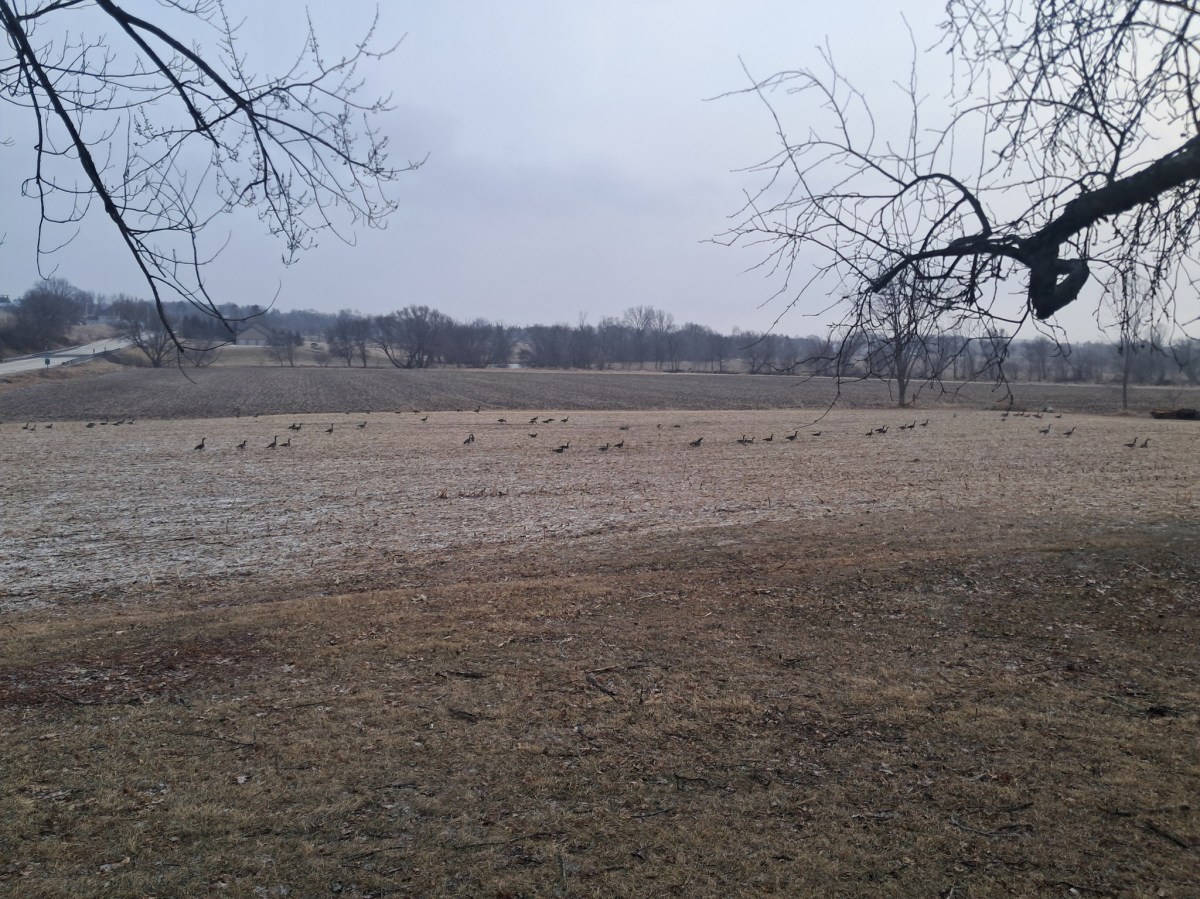
Early signs of spring on the homestead: geese at Horicon Marsh, melting snow, maple syrup temps (40°F/20°F), longer days. First signs of spring you might miss + subtle signs of spring everywhere. What’s YOUR first hint? 🌱
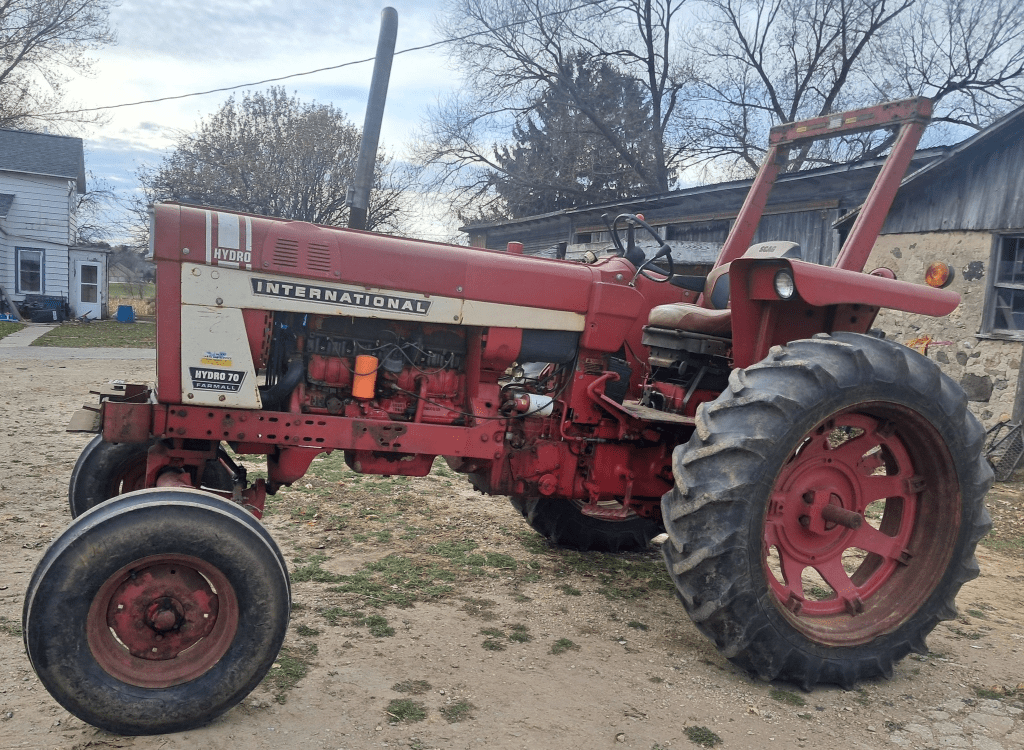
There’s something quietly magical about the sound of an old tractor rumbling across our little homestead.
That deep, earthy growl—it’s like a song I’ve known all my life. More than a machine, it feels like a heartbeat that steadies me, connecting me to something ancient and familiar.
When I was young, I spent hours riding on open-air tractors like this—sometimes with my dad, sometimes with one of my older sisters at the wheel.
I still remember the cold morning air, the scent of diesel and turned soil, the steady roar carrying across the fields. Back then, it was just life happening around me—the background music of home.
Now, when this engine comes to life, a quiet joy stirs inside me. It’s as if the girl I once was lifts her head again, smiling at something she forgot she loved. Maybe it’s nostalgia—or maybe it’s the sound of healing.
Our century farm renovation near Horicon Marsh: DIY homestead projects while pregnant + newborn care. From dumpsters to Victorian farmhouse ceilings, ambitious DIY lessons after 3 years. Family teamwork transforms fixer-upper. Our most ambitious DIY project ever! 🛠️
Should statements create guilt + shame. How overcoming should thinking frees us from judgment. Alternatives to should statements + why banning “should” from self-talk changes everything. Self-compassion for busy moms.
Homesteading challenge: First-time pig farrowing around Mother’s Day! From pig breeding timeline to winter pig care and farrowing prep—piglets, farrowing crates, heat lamps. Real homestead story.
“We’re stronger together.” — A lesson from the land, the past, and the heart.
Some days, I find myself wondering why I share so much of my messy, joyful, back-to-the-land life. Then I remember—it’s not just a blog; it’s a declaration of purpose. I’m not just learning to grow food or raise livestock. I’m learning to build a life rooted in connection, resilience, and love—the kind of life that feels increasingly rare in our modern world.
Growing Food
My mission comes back to the words that guide everything I do: “Growing food, raising kids, building community.”
Growing food isn’t just about self-sufficiency; it’s about slowing down and remembering that life takes time. Whether it’s a full garden, a few backyard hens, or a pot of herbs on a sunny windowsill, each act connects us to the earth and to the generations who worked it before us.
You don’t need acres to begin—just a seed, a container, and a little sunlight.
Even one small step can be the beginning of a more grounded life. Each seed planted is a reminder that we can create abundance with our own hands.
Raising Kids
Just as tending the garden teaches patience, so does parenting. Homesteading is a classroom like no other—muddy, humbling, and full of wonder.
It teaches our children what no textbook can: that hard work matters, that life is cyclical, and that family is their safe harbor in a sometimes harsh world.
My hope is that my kids grow up knowing home isn’t merely a place—it’s a legacy we build with care and intention. Whether they keep chickens, plant tomatoes, or simply carry these values forward, I want them to understand where they come from and who they are.
Building Community
And then there’s community—the heartbeat of homesteading and, I believe, our survival as humans.
American society often tells us that strength comes from independence—that we should manage everything ourselves, and outsource what we can’t, because we’re too exhausted to do it all. But that version of “strength” leaves us burned out and disconnected.
True strength doesn’t grow in isolation—it blossoms in interdependence.
Sometimes that means swapping seeds or recipes; other times, it’s checking on a neighbor or being brave enough to ask for help. We were never meant to do this alone.
Lessons from the Past
When I think about how far we’ve drifted from those roots, I can’t help but look back with respect. Our great-grandparents understood community in ways we’ve forgotten.
Their lives weren’t easy—many faced relentless hardship. I once read about children in rural Wisconsin in the 1930s who walked miles to town barefoot, carrying their shoes so they wouldn’t wear them out. They’d put them on only once they reached town, because those shoes had to last—and often be passed down to the next child.
Those stories remind me that while the past wasn’t perfect, it carried wisdom worth keeping. People ate real food, raised resilient children, and looked out for their neighbors. They knew that survival wasn’t just about grit—it was about connection and care.
Planting Hope
In the end, that’s what I want my life—and this blog—to reflect. I want to inspire others to live intentionally, grow their own food, raise their families with love, and reconnect with the people around them.
Because when we nurture the soil, our children, and each other, we’re planting more than gardens—we’re planting hope. And in that hope, we rediscover a simple truth our ancestors never forgot:
We are always stronger together.
Now it’s your turn. How do you balance modern life’s demands with a desire to live more simply? Tell me about it in the comments. Let’s start a conversation!
If this post spoke to you, I’d love for you to help the message spread:
💬 Share your thoughts in the comments — I truly enjoy hearing your stories.
💚 Share this post with a friend who believes we’re stronger together.
🌾 Subscribe to the blog for more reflections on growing food, raising kids, and building community—one season at a time.
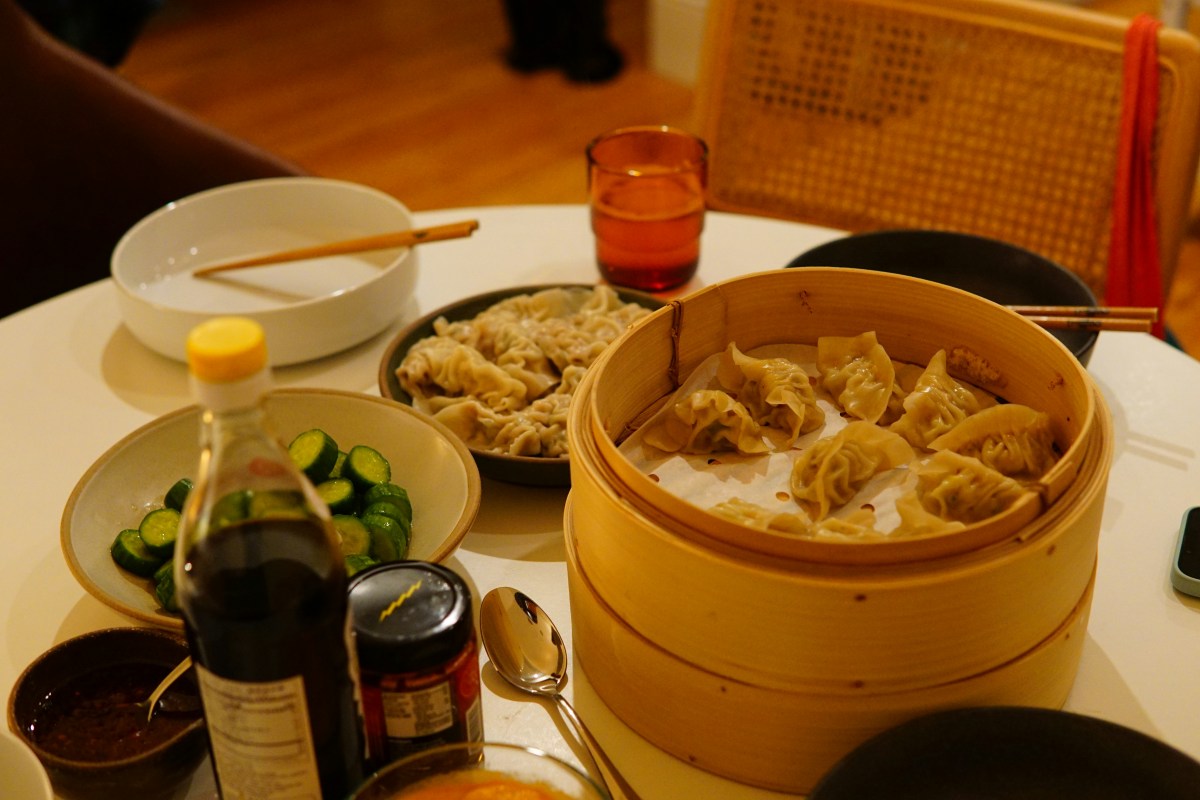
Make homemade dumplings the easy, kid‑friendly way! A warm, family‑tested recipe using garden‑fresh veggies, simple dough, and lots of laughter around the table.
I’m not being boastful — that really was a commercial I remember from childhood, announcing The Simpsons as “the show that defined a decade” and giving my actual birthdate. Maybe that’s why the phrase stuck with me. It felt like the world and I arrived on the same wave of something new — a time buzzing with energy and change.
The world in 1990 was shifting fast. The Berlin Wall had just fallen, Nelson Mandela walked free after 27 years in prison, and for a while, it felt like anything was possible. At home in the U.S., George H. W. Bush was president, grunge was brewing in Seattle, and the first home computers were finding their way into family living rooms. Back then, families were swapping cassette tapes for computer disks, unaware of how much life was about to speed up.
I don’t remember those big events firsthand — my world then was much smaller. My earliest memories are of the dairy barn, helping with chores before sunrise. I’d carry buckets and gently clean udders before it was time to milk. The smell of hay, cows, and the cool morning air still lingers in my memory.
We also had a big garden that helped feed our family all year long. My parents even kept a separate garden just for potatoes — and we worked hard to fill the cellar every fall. Summer days were spent picking beans, baling hay, and gathering whatever the earth offered. My parents may not have been the most patient, but they taught me what perseverance looks like. If something needed doing, you didn’t wait around — you did the work. That mindset has never left me.
Now, decades later, those lessons have come full circle. These days, we can vegetables and fruits, raise our own pork, and tend our garden much like my family always did. Only now, I understand the meaning behind the work. Homesteading isn’t just about self-reliance. It’s about finding peace in the effort, purpose in the blisters, and gratitude in what each season provides.
So maybe 1990 really was the year history was made. It was also the year one farm kid began learning what it means to build a life from the ground up — shaped by family, faith, and the steady rhythm of work that still anchors me today.
Now it’s your turn. What year shaped you, and what lessons from your childhood still guide you today?
If you’ve ever looked back and seen the roots of who you are, you’ll fit right in here. Like this post and share with your friends. Subscribe for more stories about homesteading, family life, and finding meaning in the work that sustains us.
Growing up on a dairy farm in Wisconsin, my days were shaped by the rhythm of the cows and the turning of the seasons. Each morning began before sunrise, the air crisp with the scent of damp earth as my family and I made our way to the barn. The gentle lowing of the cows…
Hello, everyone. I have a confession to make:I grew up on a farm. For the longest time, this felt like something I needed to hide. In high school, I avoided FFA and agriculture classes, choosing instead to spend time with the choir crowd, some of the kindest people you’ll ever meet (and, let’s be honest,…
If you’ve ever driven through the Midwest, you’ve seen silos. They rise from the fields like punctuation marks in the long, flat sentences of corn and beans—periods, exclamation points, sometimes ellipses trailing off into the distance. Most people don’t think twice about them. But on my childhood farm, they weren’t just part of the scenery.…
Beef prices are higher than ever, and it’s hard not to flinch when you see the total at the checkout. But there’s a bigger story behind that price tag. It’s a story of weather, supply, and the everyday people who make your meals possible.
The Shrinking Herd Across the country, the U.S. cattle herd is the smallest it’s been since 1951. Years of drought have dried up pastures. Rising feed and fuel costs have forced many families to sell breeding cows just to hold on.
With fewer calves entering the pipeline and beef taking about two years to raise from birth to butcher, this shortage doesn’t rebound quickly. Meanwhile, Americans still love their beef—consuming around 57 pounds per person each year, according to USDA estimates.
When demand stays strong and supply runs short, prices naturally climb.
Family Farms Under Pressure But economics only tell half the story. On my sister’s small farm, she and her husband raise beef—a side project that grew out of their love for good food and good land. Like many small producers, they both work jobs outside the home to keep their operation going.
What started as a passion for raising healthy animals and feeding their neighbors has become a delicate balance between purpose and practicality. For them, and countless others, farming isn’t just about income—it’s about identity, family, and stewardship of the land.
Their experience isn’t unique. The average farmer in the U.S. is now around 58 years old, and for younger generations, getting started can feel impossible. Land, equipment, and livestock cost hundreds of thousands of dollars before the first calf is ever born.
On top of that, just a handful of large companies control most of the nation’s beef processing. That means family farms earn less, even as consumers pay more at the store. It’s a painful disconnect that continues to squeeze rural families across the country.
Watching my sister pour her time and heart into those cattle reminds me of something deeper. Homesteading—like life—rarely offers shortcuts. The work is long, often quiet, but filled with meaning that doesn’t show up on a price tag.
The Cost of Keeping Food Safe Processing adds another layer of expense. Federal law requires a USDA inspector to be on-site during every moment of slaughter and processing. Their presence ensures animal health, cleanliness, and safety—vital safeguards that protect us all—but compliance adds time, labor, and cost.
Some experts believe these inspections could be modernized and streamlined to preserve safety while easing financial pressure on small processors. For now, those costs carry through the system, one steak at a time.
Beyond the Farm Gate Every link in the supply chain—from pastures and processors to packaging and transport—feels the strain of rising fuel prices, labor shortages, and inflation. And behind that rising price tag are families working early mornings and late nights to keep barns running, pastures green, and herds healthy.
For many, it’s more than work—it’s a calling built on resilience and pride.
And for those of us on the other end, part of honoring that work is learning to value the whole animal. Beef isn’t just ribeyes and tenderloins. It’s also the flavorful roasts, shanks, and stewing cuts that take time, effort, and patience to cook.
When we learn to use every cut—every bit of what an animal gives—we stretch our dollar, reduce waste, and show respect for the life and effort behind our food. In a way, that practice is at the very heart of homesteading: using wisely, wasting little, and cooking with gratitude.
What You Can Do Understanding the system is a great first step. Visit your local butcher or farmers’ market. Ask where your beef comes from. Learn from small farmers who raise animals with care and integrity—and don’t be afraid to try new cuts or cooking methods.
If you have the freezer space, consider buying a quarter beef directly from a local farmer. It’s roughly 200 pounds of meat—everything from premium steaks and roasts to ground beef and lesser cuts. Buying this way often saves money per pound, puts more of your dollars directly into the farmer’s pocket, and helps keep local processors and butchers in business.
This is what a quarter beef looks like, directly from the butcher.
Supporting local producers and cooking with intention helps preserve the values that built rural communities: thrift, respect, and connection to the land. When you approach food with awareness, every meal becomes an act of gratitude.
If you try a new cut or buy in bulk from a local farm, share your experience in the comments. I’d love to hear how you’re honoring the hands and hearts behind your food.
A Final Thought The next time you pick up a steak—or a simple pack of stew meat—remember the weather, markets, and families who make it possible. Every mindful purchase helps sustain not just a food system, but a tradition of stewardship that keeps families—and their farms—going strong.
If this story resonated with you, give it a like. Share it with a friend or pass it along to someone who loves good food and community.
Your support helps this blog keep shining a light on local farmers, homesteading life, and the values that keep our tables full of meaning.
Subscribe for more stories—and practical tips—on living simply, eating well, and staying connected to the land.
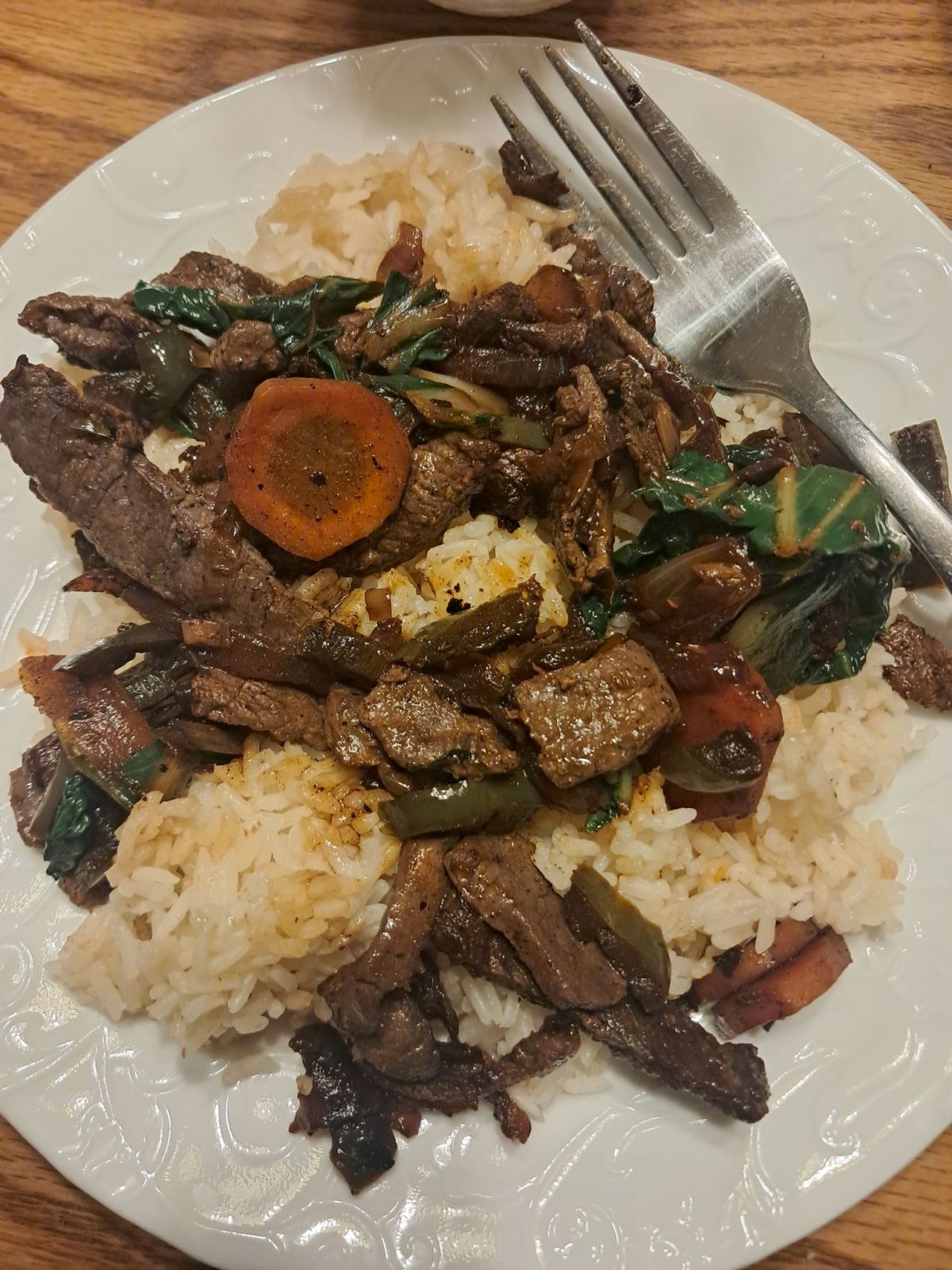
Learn how to turn wild venison into a tender, flavorful stir fry with simple slicing tricks, an overnight marinade, and a hot skillet. A homesteader’s guide to cooking with heart — from field to family table.
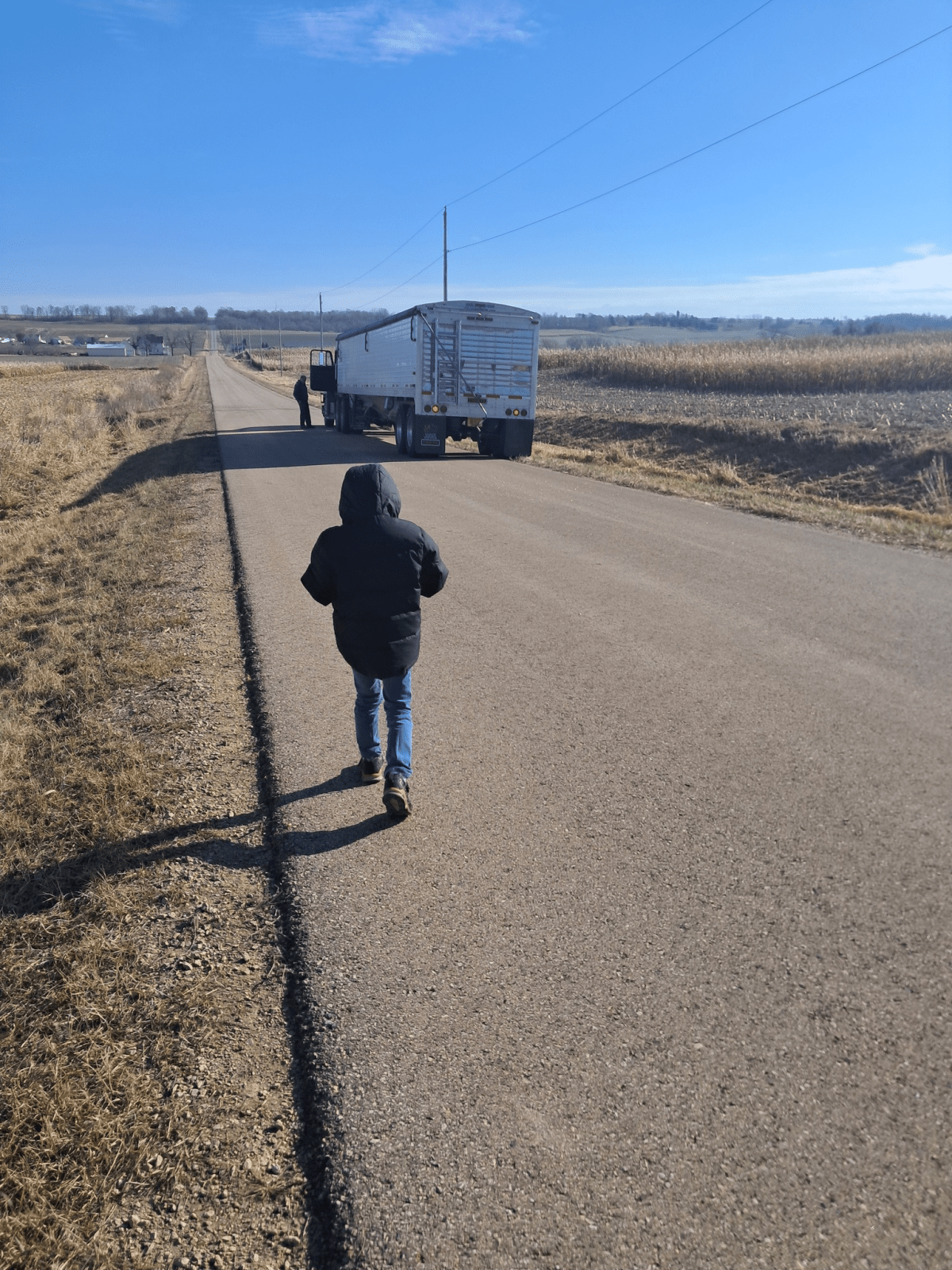
The hum of diesel engines and the scent of dusty corn fill the air every fall, signaling harvest season and long days ahead. For the local farmers, this time of year brings both relief and pressure—hundreds of acres to harvest before rain or early snow set in. My dad is always there to help, his…
What are your family’s top 3 favorite meals? Disclosure: This post contains affiliate links. As an Amazon Associate, I earn from qualifying purchases. Thanks for supporting Practical Homesteading! Imagine standing in your kitchen after a long day, staring into the fridge and pantry. Hungry family members are standing by waiting not-so-patiently. You juggle not only…
Disclosure: This post contains affiliate links. As an Amazon Associate, I earn from qualifying purchases. Thanks for supporting Practical Homesteading!
If you walked down a typical grocery store aisle with me, you might think I’m lost. While most American shoppers reach for convenience, I’m the one squinting at sacks of flour, jars of yeast, and tubs of coconut oil — the same staples my great-grandmother probably chose 75 years ago. I don’t shop for ready-made meals; I shop for possibility.
At home, those bulk ingredients become whatever we need — bread, tortillas, sauces, or even snacks. If I don’t know how to make something, I learn. A simple search and a quiet evening in the kitchen have taught me more than any cookbook could. This hands-on, old-fashioned approach has saved us thousands over the years, but more importantly, it’s built confidence, patience, and gratitude for every meal we share.
Now, that doesn’t mean I don’t enjoy Chinese takeout once in a while! I’ve learned to make my own dumpling and stir-fry recipes — they’re delicious when they turn out, and hilarious when they don’t. (One of my most epic flops was a lemon pepper chicken so salty it could’ve been used as a salt lick.) Mistakes keep me humble, and in a way, they’re the best ingredient for growth.
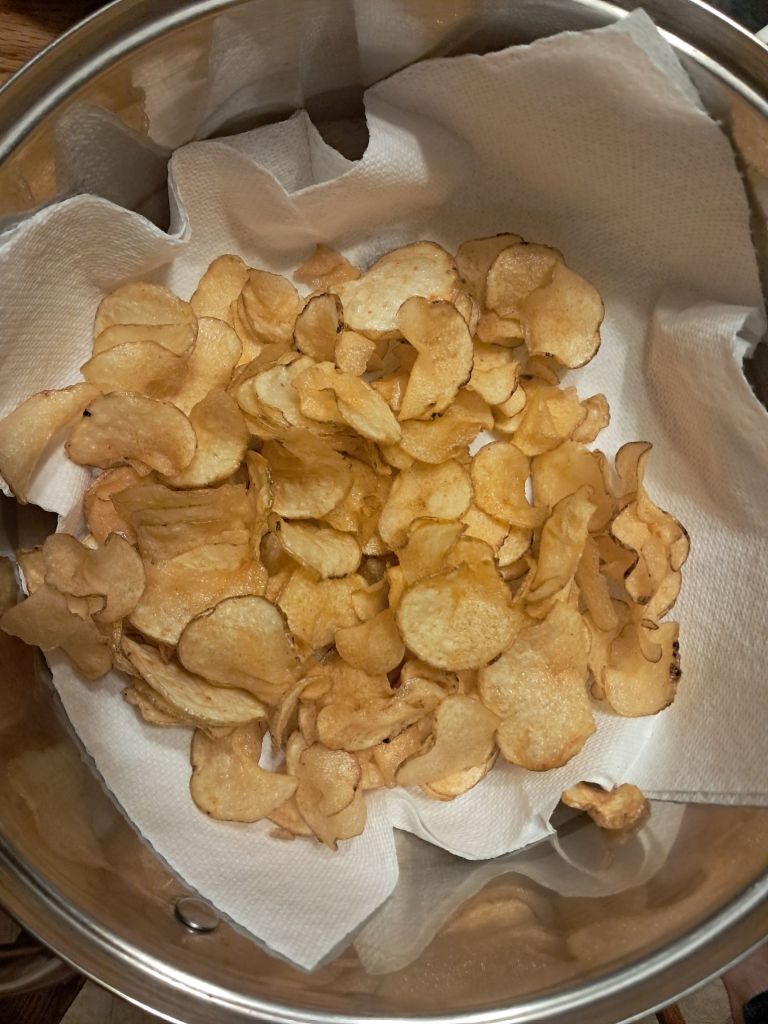
Homemade potato chipsBloody Mary with mostly homegrown ingredients
So with gratitude — and a dash of humility — here are my five most essential grocery items and how they shape my kitchen life on the homestead.
5. Coconut Oil
Coconut oil (affiliate link) is my go-to multipurpose fat. It melts like butter and works wonders in place of lard or shortening. I use it to pop popcorn, bake desserts, and even blend it into homemade flour tortillas.
Its aroma — faintly sweet and buttery — adds a subtle depth you can’t quite place but always appreciate.
Tip: For tender baked goods, replace half the butter or shortening in your recipe with coconut oil, then reduce liquid slightly. It gives just enough chew without the greasy feel.
4. Active Dry Yeast
Yeast (affiliate link) is the quiet hero of my kitchen — small, simple, and full of potential. Watching dough rise never loses its magic, especially when the kitchen smells of warm, sweet yeast and anticipation.
It symbolizes self-reliance: turning flour, water, and salt into something living, breathing, and nourishing.
Tip: Always proof yeast with a pinch of sugar in warm water (around 110°F). If it bubbles within 10 minutes, your dough is ready to rise.
3. Chicken and Beef Bouillon Powder
I lean on chicken (affiliate link) and beef (affiliate link) bouillon powders for soups, gravies, and especially rice. Cooking rice in chicken or beef stock instead of water transforms it from plain to crave-worthy.
I also mix beef bouillon into my homemade onion soup powder — it adds warmth and richness that store mixes can’t match.
Tip: Swap half the water for stock when cooking noodles, grains, or vegetables. It’s the fastest way to round out flavor without extra sauces or salt.
2. Plain White Sugar
Plain old white sugar earns a spot near the top because it does so much more than sweeten desserts. It wakes up yeast, balances tomato acidity, and — lately — fuels our lemonade habit.
My sister keeps me well-supplied with lemons, so I make fresh lemonade weekly. When the kids come in sun-dusted and thirsty, that chilled pitcher waiting in the fridge makes them light up.
Tip: Add a teaspoon of sugar to tomato sauces or soups to tame acidity without losing depth of flavor.
1. Flour
If coconut oil is the heart of my pantry, flour is its backbone. I buy high-gluten flour for breadmaking (affiliate link), but I’m excited to experiment more with ancient grains soon.
The feel of dough under my hands, the smell of a fresh loaf cooling on the counter, and the crackle as it’s sliced — it’s the rhythm that grounds my kitchen.
Flour builds loaves, tortillas, focaccia, and even desserts. It’s humble, forgiving, and powerful — no one in my house has ever once complained about home-baked anything.
We rarely buy vegetables from the store, relying instead on what we’ve grown and preserved — jars of tomatoes, beans, and pickles lining the pantry. They remind me that what we grow in summer sustains us long after the frost sets in.
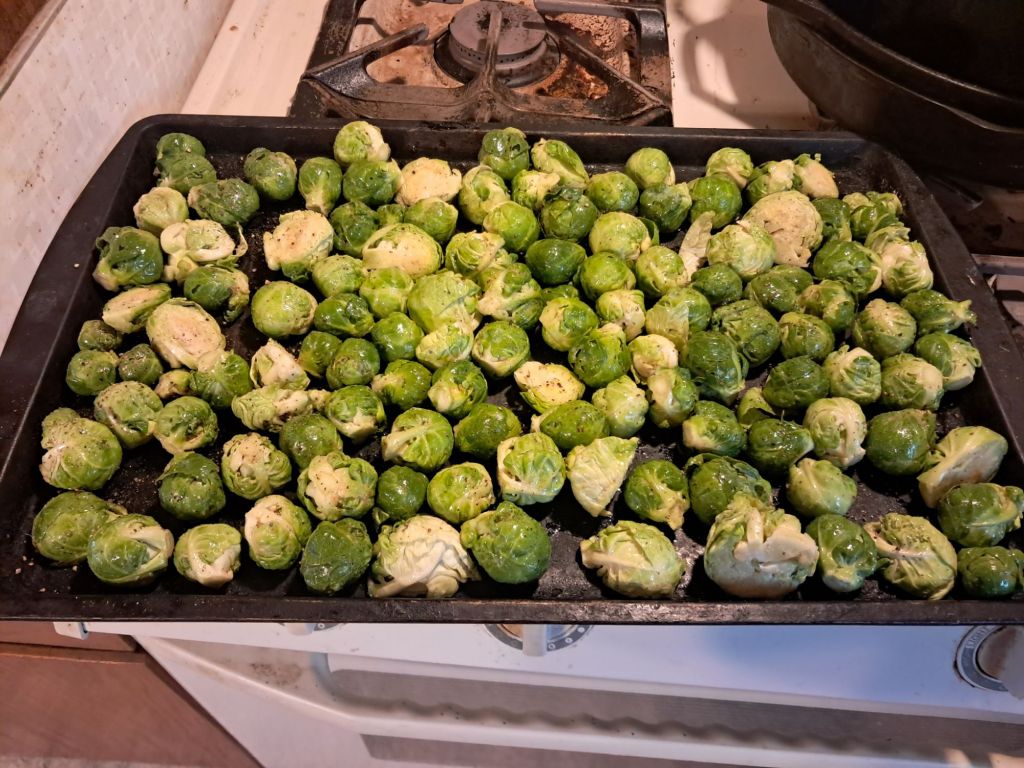
Our winter meals center around potatoes, onions, and frozen vegetables like broccoli and bell peppers. We’ve experimented with extending our garden season using a small greenhouse and straw. There’s something deeply satisfying about pulling greens or a carrot from a garden while snow still glitters outside.
As for meat, we’re still building toward full independence. We raise our own pork, purchase beef from my sister’s grass-fed herd, and still buy chicken from the store — for now. One day soon, meat birds will join the homestead lineup, and the circle will feel more complete.
Each grocery item on this list earns its place not for novelty but for versatility. They remind me that eating well doesn’t require endless ingredients — just a few solid building blocks and the creativity to make them shine.
This slower, more deliberate approach to cooking has taught me creativity, patience, and gratitude — lessons that spill over into every other area of life.
Homesteading has shown me that ingredients matter less than the care and love you pour into them. Every loaf, jar, and meal built from raw goods feels like an act of heritage — and hope — in a world that moves too fast.
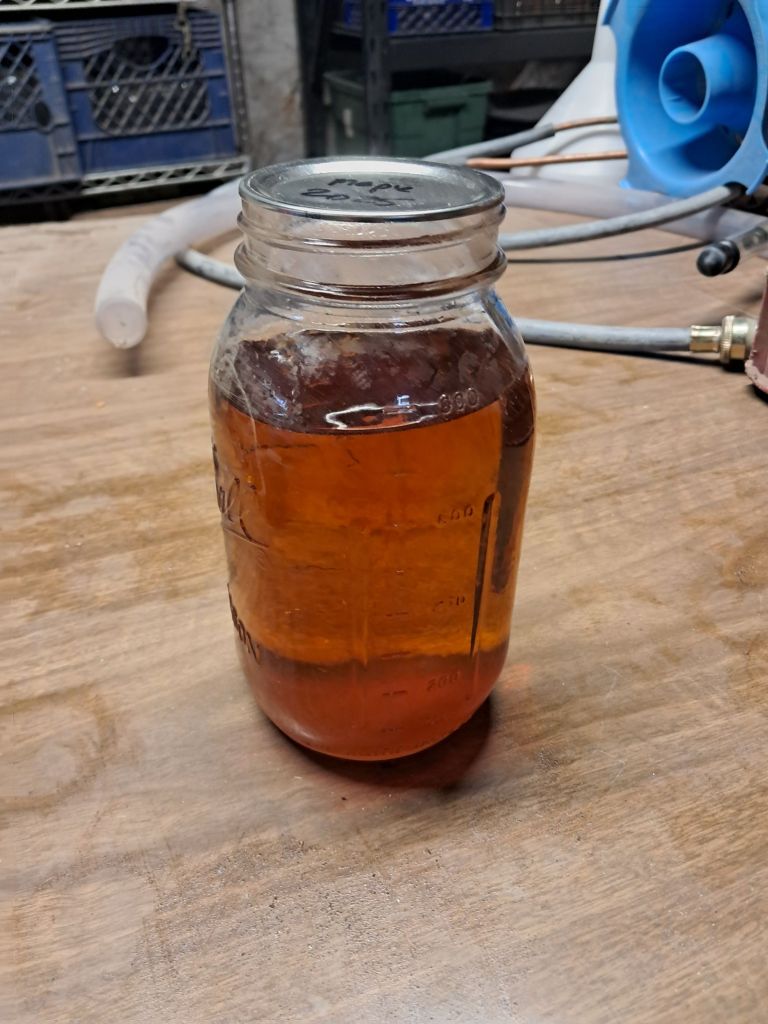
Homestead maple syrup
What five grocery staples would make your list? Please share them in the comments. And if this post inspired you, please like, share, or subscribe to follow more homesteading stories, seasonal recipes, and simple living tips.
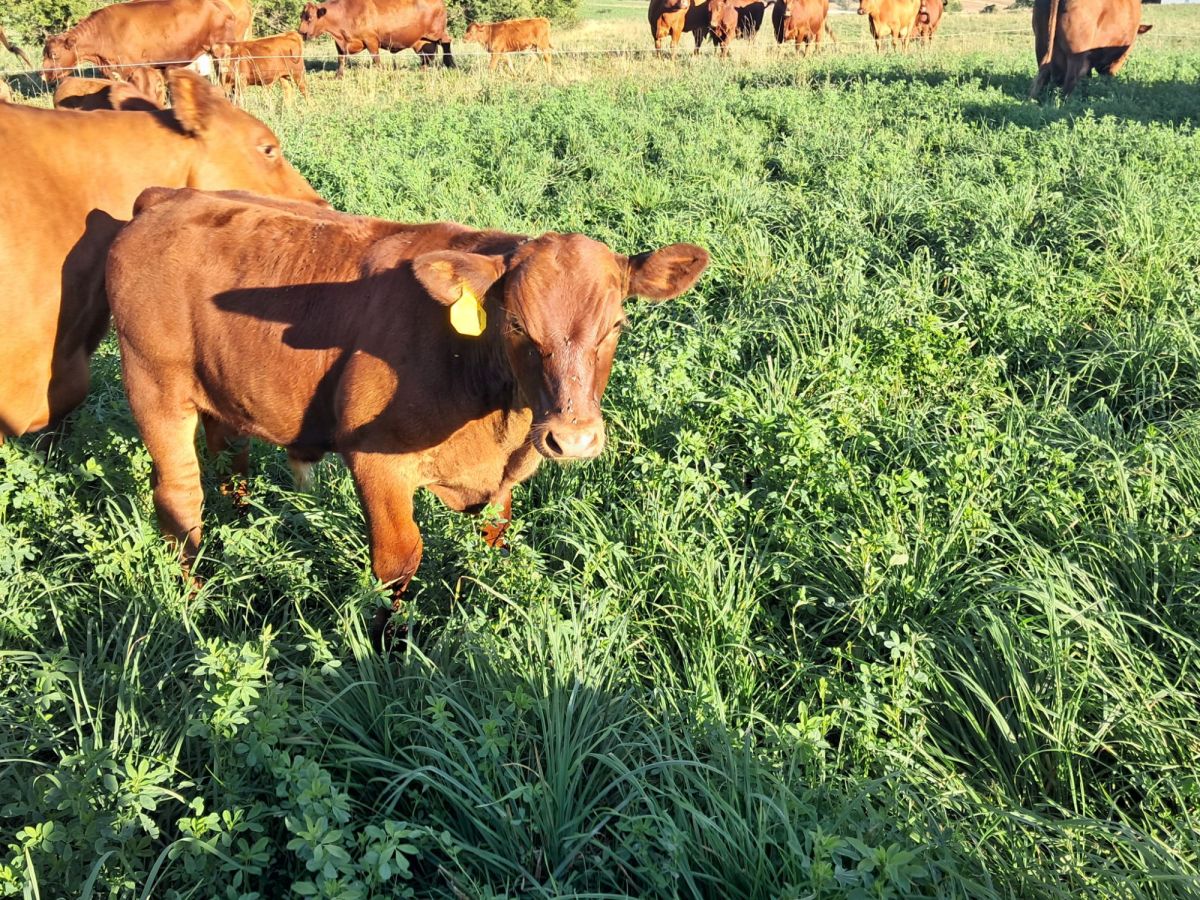
Experience a vivid farm story about rotational grazing, resilience, and regenerative land stewardship through the eyes of a family and their Red Angus herd. Discover how cattle, people, and pasture move together in balance
Disclosure: This post contains affiliate links. As an Amazon Associate, I earn from qualifying purchases. Thanks for supporting Practical Homesteading! There’s something special about meals that tell a story. The kind of food that’s more than a recipe — but part of life. For us, that story came together in one simple dish: a homemade…
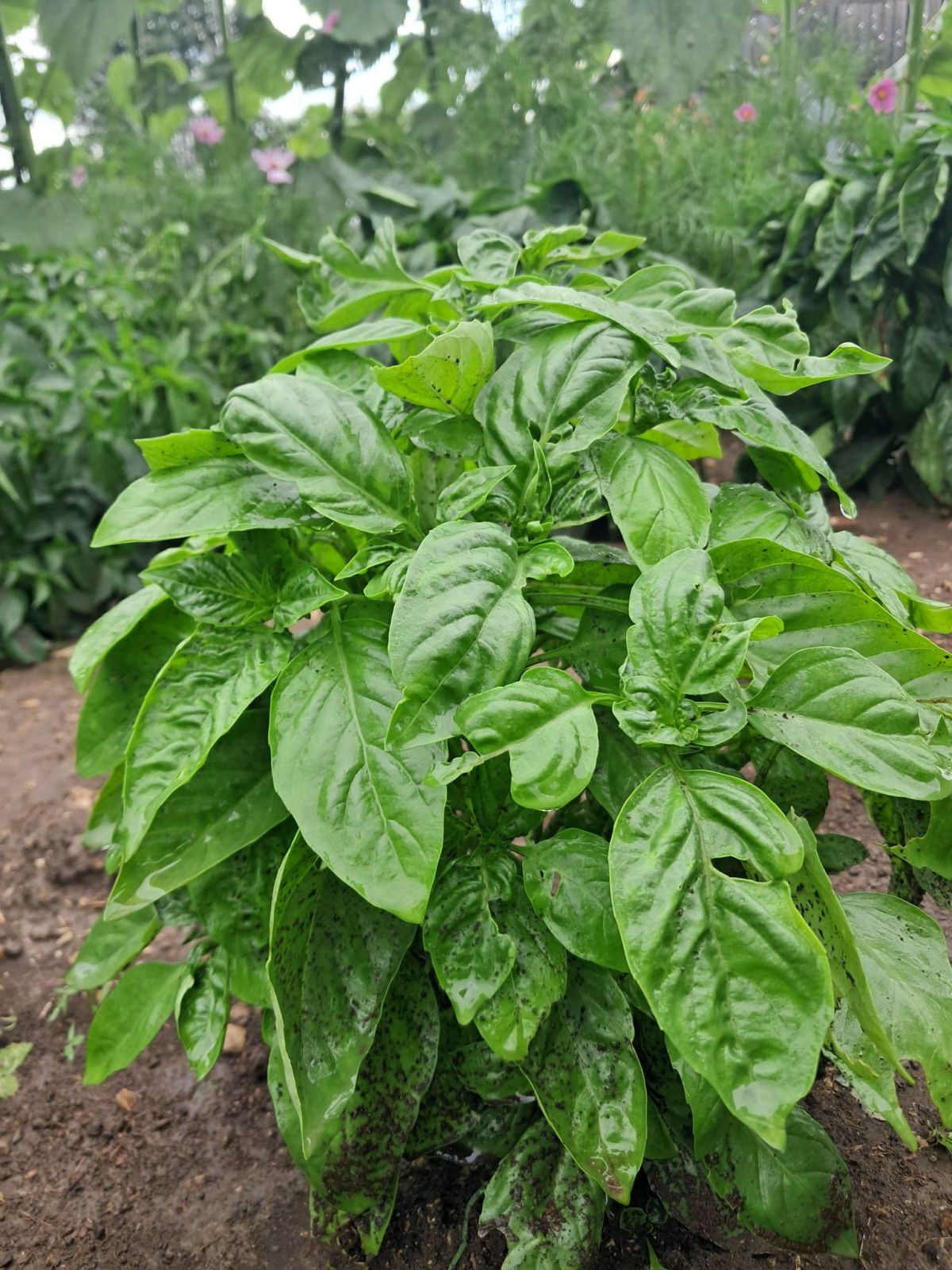
A 2025 garden reflection full of lessons, surprises, and laughter—one-pound onions, overflowing basil, hybrid watermelon mishaps, and happy pigs. Discover the stories and takeaways from our most rewarding gardening season yet.
















 Practical Homesteading