Category: Seasons

  • Zone 4B Vegetable Garden Ideas: What We Planted in 2026

    Zone 4B Vegetable Garden Ideas: What We Planted in 2026

    Our Late-May Garden Tour: What We Planted and Why

    Somehow, May is already almost over. If you plant a garden, have you gotten yours in yet?

    We’re in Zone 4B, and by late May our garden is finally in full swing. If you’re looking for ideas for your own Zone 4B vegetable garden, here’s exactly what we planted this year and why. In this post, I’m sharing what we planted in our garden this year and the order we planted it in (spoiler: it definitely did not all happen in one day). Think of this as a walk-through of our garden rows, plus a few notes on what’s working, what isn’t, and what we’re excited to try.

    Strawberries: The Semi-Permanent Front Row

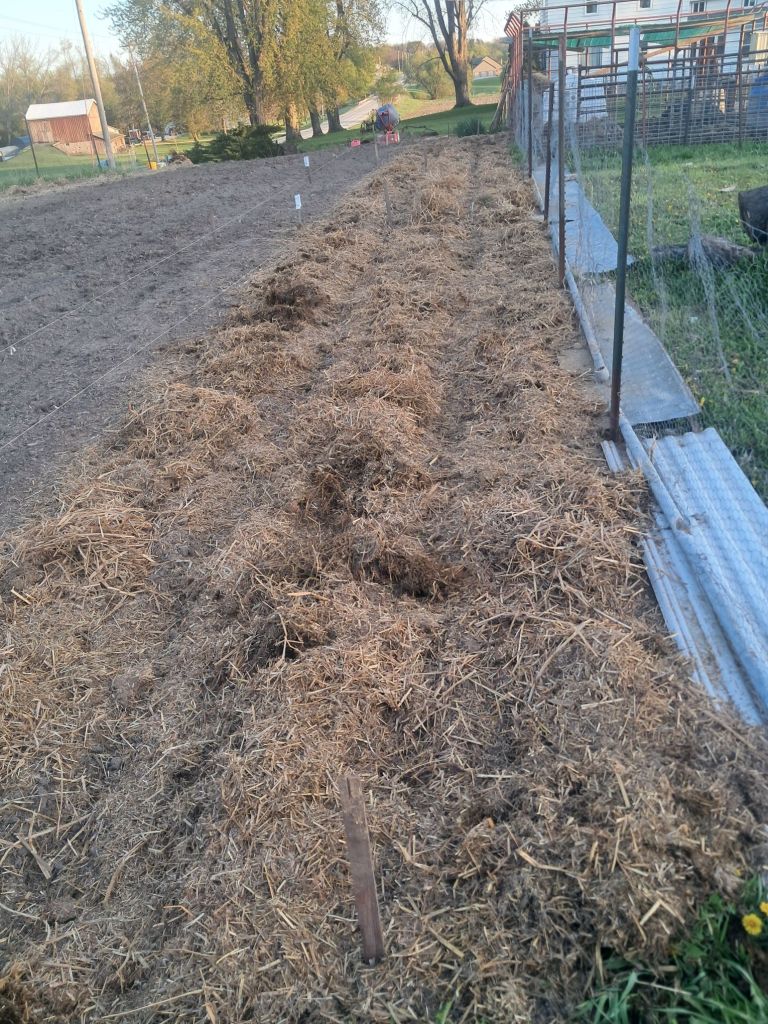
    We started about a month ago by dedicating the first two rows of our garden to strawberries. This will be a semi-permanent location for them.

    Here’s our basic setup:

    • Transplanted strawberry plants into two full rows.
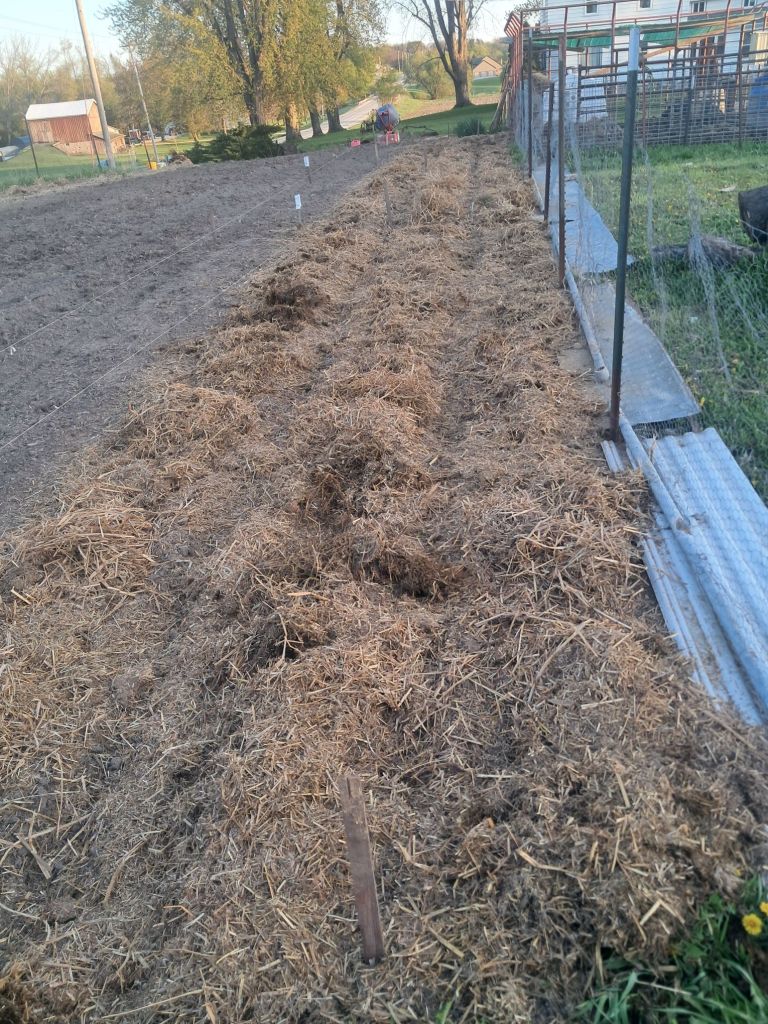
    • Plan to layer straw on top to help suppress weeds and hold moisture in during the warm months.
    • I’m pinching the blossoms off all the plants for the first two months.

    The blossom-pinching feels a little cruel in the moment, but it lets the plants focus on strong root and leaf growth. If all goes well, we should be enjoying delicious berries by July or August from the everbearing varieties.

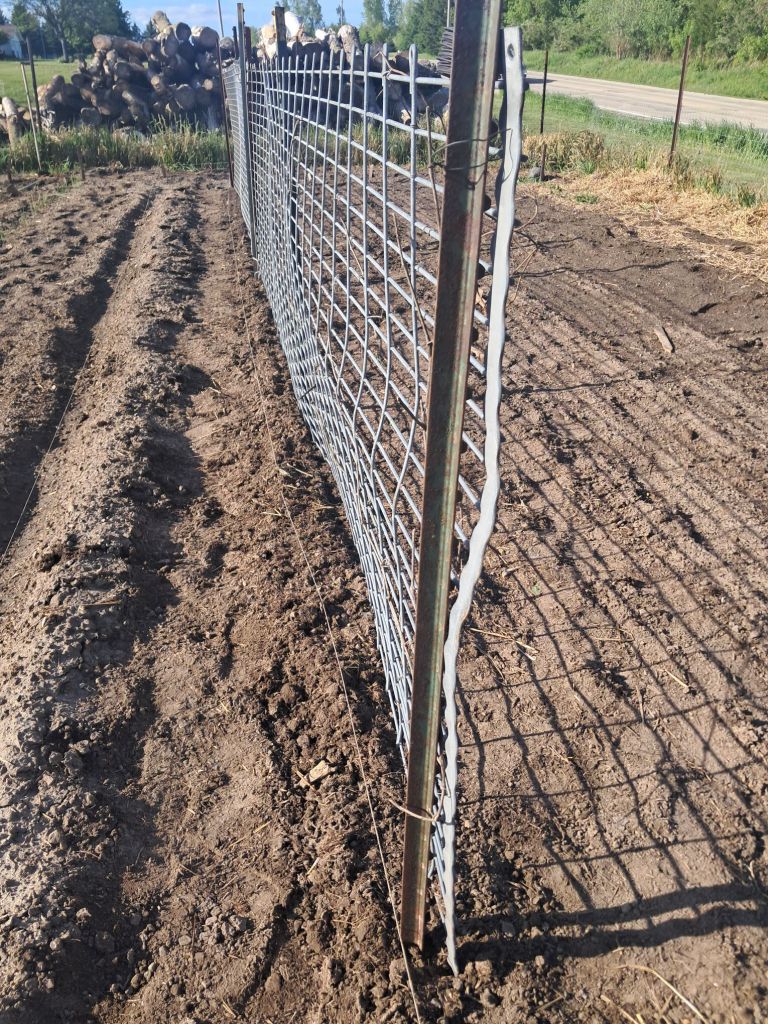
    Strawberries plants are hidden amongst the straw (for now)

    Root Vegetables: Fresh Salads Now, Storage Roots Later

    Next, we planted our root vegetables and salad greens. This is one of my favorite parts of the garden because it gives both quick wins and long-term rewards. (You’ll notice I have a lot of “favorite” parts—my garden just brings me that much joy.)

    In this section we planted:

    • Parsnips – for fresh roots next March and April.
    • Radishes – for quick crunch and color in early salads.
    • Lettuce and spinach – fast growers, so we can enjoy fresh greens in just a couple weeks.
    • Carrots – for fresh eating in the next couple months and for later winter storage.
    • Beets – for roasting, pickling, and everything in between.

    I plan to share in a future post how we keep garden-fresh carrots through the Wisconsin winter, and also how we turn all of these roots and greens into actual meals (rather than just “good intentions” in the crisper drawer).

    Radishes, we just harvested our first bunch last night!

    Onions: The Powerhouse Vegetable (and a Confession)

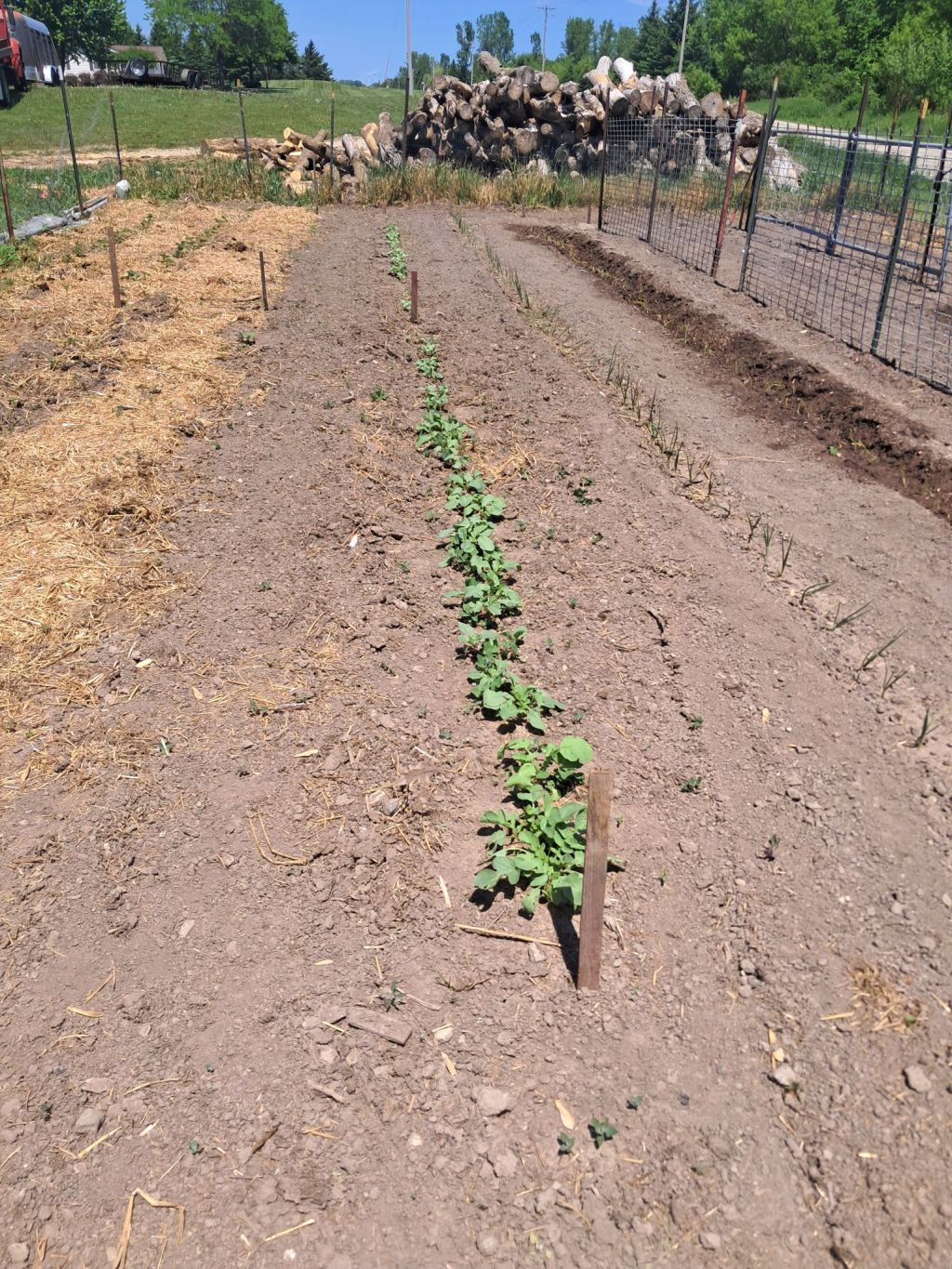
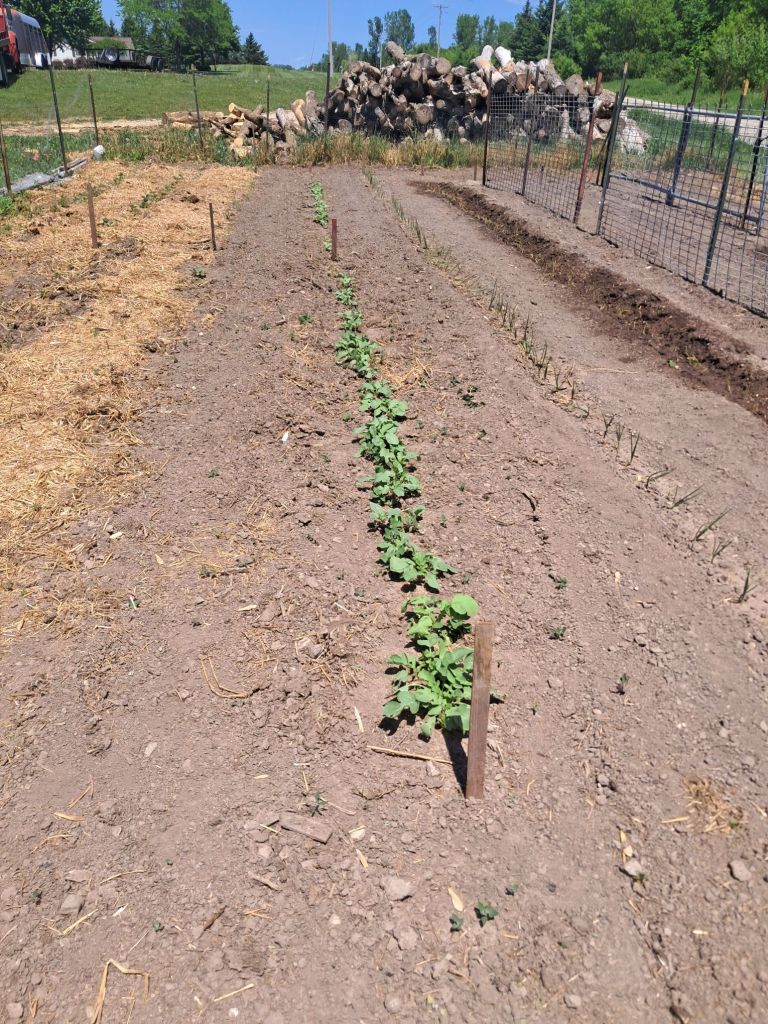
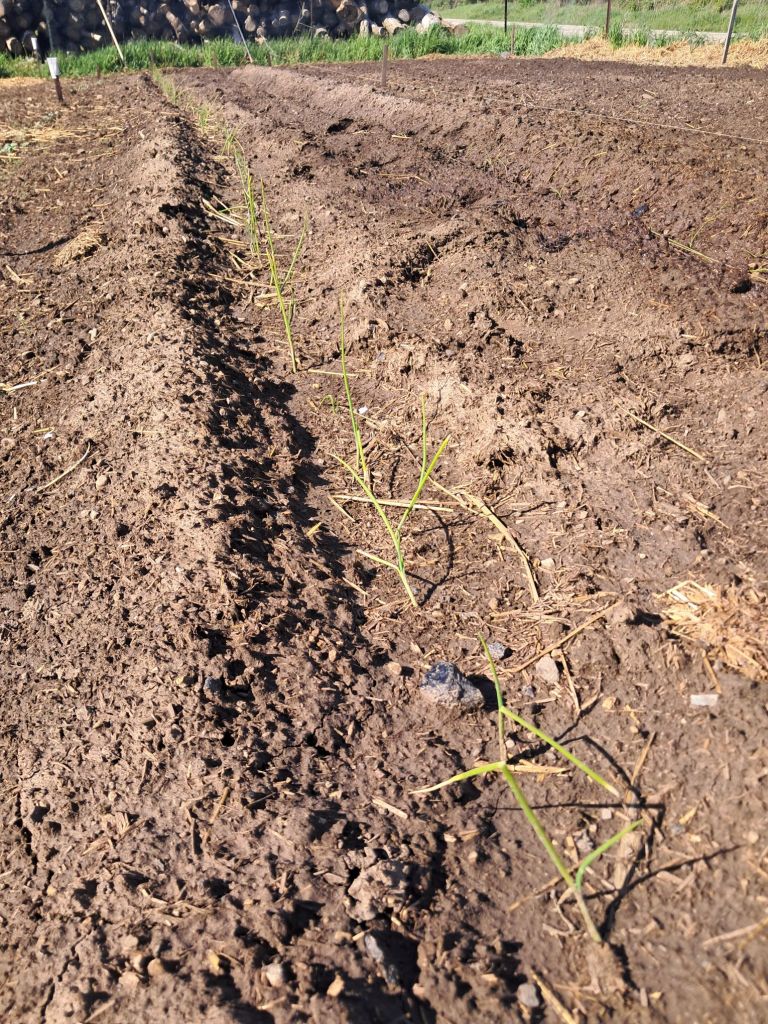
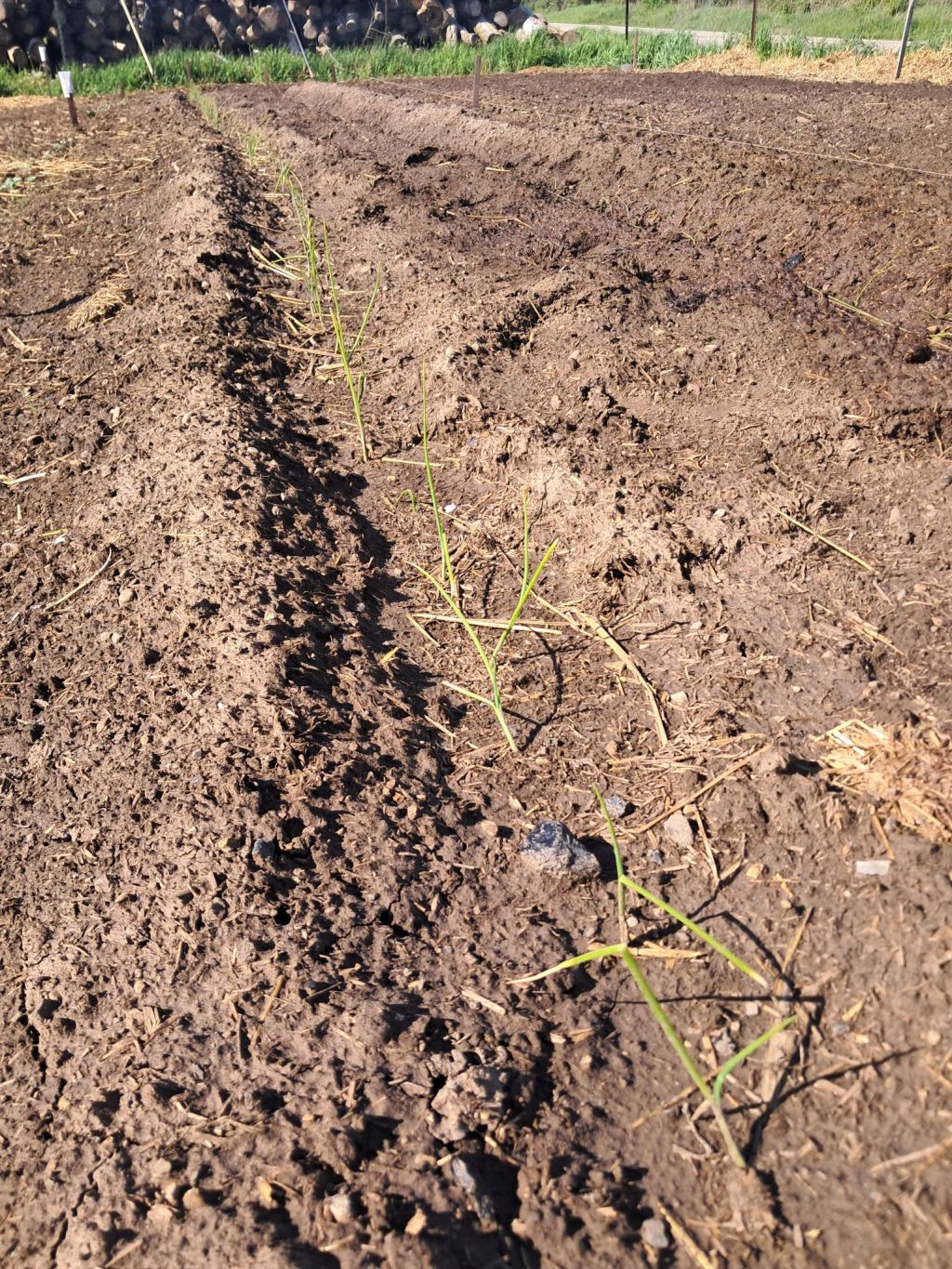
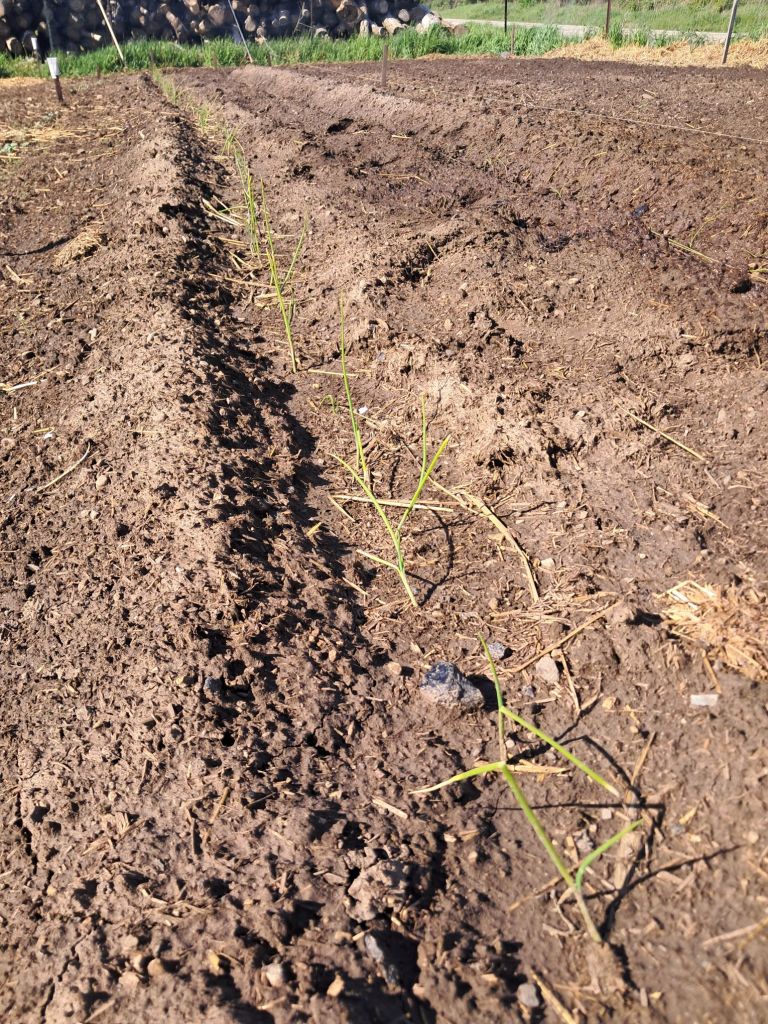
    After the root bed came two full rows of onions—both red and yellow.

    I prefer transplanting onion plants rather than using onion sets. That was the plan this year too…in theory.

    Confession time:

    • I did start onion seeds this year.
    • Between poor starting soil, my “casual” watering habits, and not trimming the tops, my onion starts never made it to the garden.

    Instead, my dad kindly shared some surplus onion plants he purchased from the Amish, and they became our onion rows.

    Don’t judge me too harshly for the crooked row. I was planting with a toddler in tow…

    Why we love onions:

    • They’re a true powerhouse vegetable in the kitchen.
    • They store well when kept under the right conditions.
    • Even in our less-than-perfect storage setup, I pulled my last onion from last year’s harvest about a month and a half ago.

    We plant:

    • Red onions for fresh eating and pickling (they’re fantastic pickled).
    • Yellow onions for long-term storage and everyday cooking.

    Peas: Kid-Favorite Garden Candy

    Next up: peas.

    Peas are one of our family’s favorite vegetables to eat right in the garden. The kids love:

    • Picking them straight off the vine.
    • Popping the pods open.
    • Eating the peas fresh, still warm from the sun.

    They disappear almost as soon as they ripen.

    We installed a trellis right away, but “trellis” might be a generous term. In true homestead fashion, we used:

    • An old corn crib side as the main panel.
    • Old fence posts to hold it in place.

    We love recycling old farm implements wherever possible—it saves money, reduces waste, and gives these materials a second life.

    Somewhere in the sky, an old farmer is smiling down on our resourcefulness (I hope)

    Cucumbers in the Middle (On Purpose) + Tomatoes and Peppers

    Next came cucumbers.

    Some gardeners might be clutching their pearls at this, but yes: we plant our cucumber patch in the middle of the garden.

    The reason we can get away with this is our trellis. Instead of letting the vines sprawl everywhere, we:

    • Use an old cattle panel as a trellis.
    • Hold it in place with old fence posts.

    This keeps the vines mostly vertical and contained, which makes it easier to walk around the garden and keeps the cucumbers cleaner and easier to harvest. It might not be traditional, but it works for us.

    Once the cucumbers were in, we filled the rest of that row with transplanted veggies:

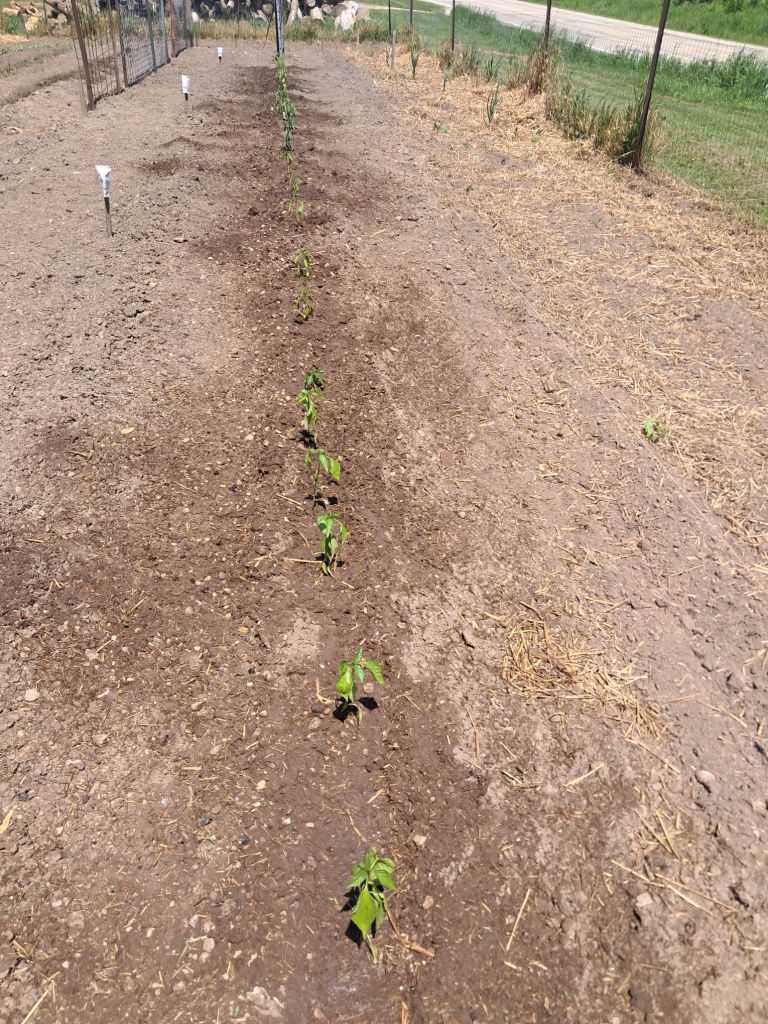
    • Peppers (both bell and hot).
    • Tomatoes – a mix of early-ripening varieties, Romas (for sauce), and Mortgage Lifters (for big slicing tomatoes).
    Peppers galore!

    Cruciferous Row: Cauliflower, Kale, Broccoli, and Brussels Sprouts

    The next row is devoted to some of my favorite vegetables: cauliflower, kale, broccoli, and Brussels sprouts.

    I love cruciferous veggies for a few reasons:

    • They’re incredibly versatile in the kitchen.
    • They freeze beautifully, which makes them a big part of how we keep eating vegetables all winter without visiting the grocery aisle.
    • They’re hardy and forgiving once established.

    In a future post, I hope to share exactly how we prep and freeze these so they stay tasty and usable.

    Quick kale note: I may be late to the party, but I also love kale soup. I’m still not sold on kale chips—mine tend to swing between soggy and burnt—but I’m open to conversion if someone can show me the magic method. Shoutout to my friend who shared her Zuppa Toscana (and the recipe!) and officially turned me into a kale-soup person.

    Cabbage, More Cauliflower, Bok Choy, and Kohlrabi

    The next row is a mix of:

    • Cabbage – destined for sauerkraut.
    • More cauliflower – because we’re not sure how well the older seed in the other row will germinate.
    • Bok choy – for stir-fries and Chinese dumplings.
    • Kohlrabi – one of my underrated favorites.

    A quick note about kohlrabi: the name literally translates from German as “turnip cabbage,” describing its shape. I grew up with it, but I don’t know how many people outside German ancestry know what it is.

    Why I love kohlrabi:

    • It grows above the ground and matures in about two months.
    • Around the 4th of July, it’s usually ready, and it’s one of my favorite veggies to snack on then.
    • It’s delicious raw—peeled and sliced.
    • The flavor is like a cross between a mild radish and broccoli.

    I’ve experimented with cooking it, but honestly, we usually eat it raw before I get a chance to cook or roast it. I’ve also pickled it with great success.

    If you’ve never tried kohlrabi and you love cruciferous veggies, I’d highly recommend grabbing some seed and giving it a spot in your garden.

    Summer Squash and Rutabagas

    In the back corner of the garden, we planted summer squash—three hills of it.

    In my unsolicited opinion, three hills is about two hills too many. If you’ve ever been buried in zucchini or summer squash, you know exactly what I mean.

    The rest of that row holds garlic and rutabagas.

    • The garlic was planted way too late last October, and it shows; it didn’t come up well.
    • To make better use of the space, we interplanted rutabagas.

    Rutabagas are another veggie I’ve only recently fallen for. They make a great “potato” replacement in mid-summer and are wonderful:

    • Sautéed.
    • Roasted.
    • In pot pies.

    Sweet Corn and Cantaloupe at the Front

    The front of the garden holds our sweet corn patch.

    Full honesty: I have not had the best luck with sweet corn in recent years. The local raccoons and possums seem to love it even more than we do. We’ll see how it goes this year.

    On the other side, we planted cantaloupe. In my experience (Zone 4B), you don’t need to transplant cantaloupe:

    • When you plant seed directly into soil that’s warm enough (late May here), it catches up quickly.
    • Direct-seeding saves time and space in the seed-starting area.

    If you’re curious about how we store carrots, freeze broccoli and cauliflower, or use bok choy in dumplings, those posts are coming (or, in the case of Chinese dumplings, are already here).

    Potatoes, Pumpkins, and Future Plans

    Beyond the main garden rows, we have two additional patches:

    • My husband planted a patch of potatoes using a restored potato planter, which was a fun bit of old-meets-new on the homestead.
    • Behind our barn, we plan to establish a pumpkin patch.

    I’m already dreaming of fall pumpkins, roasted seeds, and maybe even some homegrown pumpkin purée for baking.

    That’s our lineup for this year’s Zone 4B garden, from strawberries in front to pumpkins out back.


    What’s growing in your garden this year, and which veggie are you most excited to harvest first?


    If this little garden tour gave you some ideas (or just made you feel less behind on planting), would you share it with a fellow gardener or save it for later?

    You can also join my email list for more honest, Zone 4B garden updates, planting ideas, and what’s actually working for us from season to season.

    Subscribe for weekly homesteading tips:

    Read Next: Biggest Garden Yet: Lessons, Laughs, and Pig-Approved Produce

  • First-Time Farrowing on Our Homestead: How Our Gilts Welcomed 20 Piglets

    First-Time Farrowing on Our Homestead: How Our Gilts Welcomed 20 Piglets

    If you’ve been following along, you know our family just welcomed 20 new homestead inhabitants. Both of our gilts farrowed 10 healthy piglets each, within eight days of one another. In this post, I’m sharing the good, the bad, and the “ugly” (if you consider birth in all its rawness “ugly”) from our first farrowing season.

    If you’re a human parent, you may find yourself nodding along—there are a lot of parallels between farrowing and real childbirth.

    Planning for Piglet Due Dates and Farrowing

    Our first gilt was due on Mother’s Day, which felt poetic and slightly nerve‑wracking.

    We estimated her due date by:

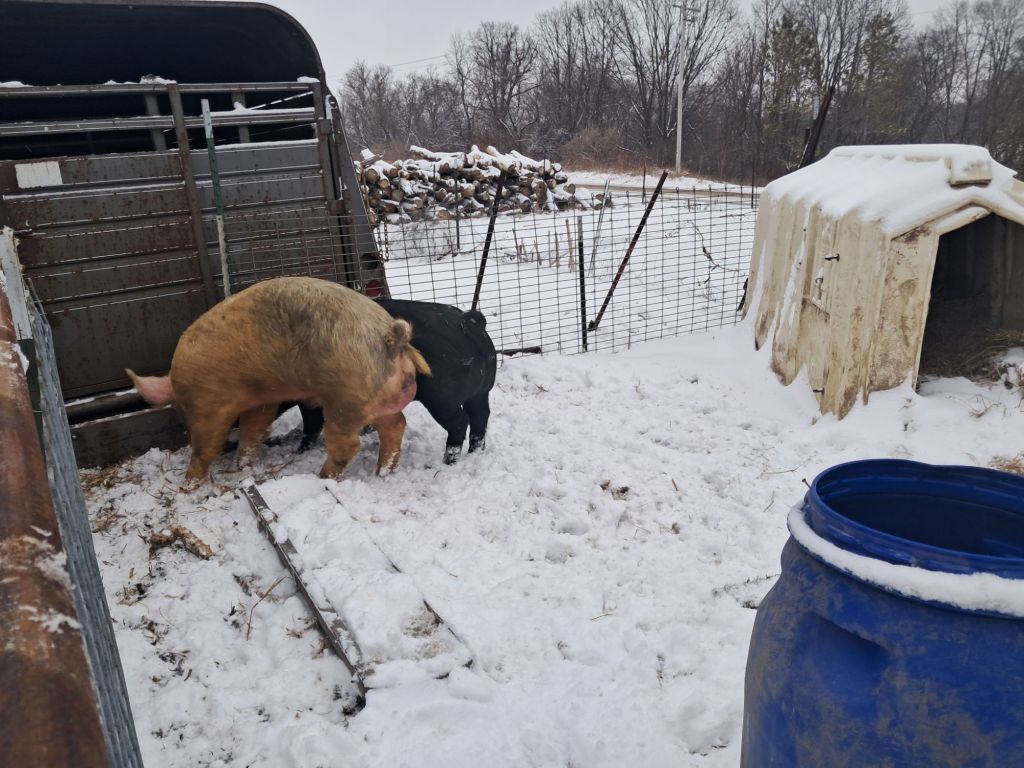
    Mr.Eligible boar (pink)

    Just like with human pregnancies, a “due date” for pigs is more like a due window. There’s a grace period on either side, and you quickly learn that the animals don’t read calendars.

    About four days before the due date, we moved our soon-to-be mama into her farrowing quarters—a fixed-up building on our property. Her udder had been noticeably full for about three weeks, but it really expanded in the three days leading up to the due date.

    On the calendar due date itself, she turned…feisty. And by feisty, I mean she was ready to bite anything that got within range of her snout. But she did not actually farrow that day.

    My husband and I were both on high alert. He checked on her several times from Sunday into Monday, but nothing happened. Then, midday Monday, he checked on her again, saw no progress, ran a quick errand, and came back to a surprise: three piglets, mostly dried off and already attempting to nurse.

    Watching the First Piglets Arrive

    He came to pull me away from my home office, and we stood there, just watching.

    It’s incredible how quickly piglets transition from birth to motion:

    • They got up on shaky legs
    • They walked toward mom’s teats
    • They instinctively nuzzled and attempted to latch

    When they wandered too close to her head or drifted off too far, she would grunt, and they would back off. You could see the communication happening instantly between mother and babies.

    Based on how quickly those first three arrived, we expected more piglets to appear almost immediately. But an hour went by with no action.

    We knew there were more piglets in there. A typical first-time gilt can have between 6 and 12 piglets, and we could see our girl straining. But nothing was moving.

    When Birth Doesn’t Go Smoothly

    At this point, we knew we were out of our depth and that simply “waiting” might not be enough. My husband called my brother-in-law, who came over quickly (we still cannot thank him enough) with oxytocin to help speed up the process if needed.

    Oxytocin for pigs is similar to Pitocin for humans. It’s also a hormone our bodies naturally produce to help labor progress and to promote bonding with our young.

    Before he arrived, though, the next piglet finally emerged—and it was stillborn.

    Based on its size, we could tell it hadn’t fully developed in the womb, which is fairly common in pig litters. What I didn’t know beforehand was how much a stillborn piglet can slow down the farrowing process.

    In a normal birth:

    • The sow pushes
    • The piglet wriggles and helps move itself along the birth canal

    When the piglet is stillborn, there’s no wriggling, which reduces the sow’s natural urge to push and makes things much slower and harder.

    The Rest of the Litter and Piglet Safety

    Once the stillborn piglet was out, everything sped up. The next seven piglets arrived within about half an hour. Some came out in groups of three, one right after another.

    We:

    • Caught each piglet
    • Used towels to dry them off
    • Placed them under a heat lamp in a designated corner of the farrowing crate

    We had intentionally designed a piglet-only corner in the crate—an area where the babies could go but the sow could not. This gives them a protected space if mom’s hormones are running high or she’s moving around clumsily during or after farrowing.

    My brother-in-law arrived during this time, showed us how to administer oxytocin, and—equally important—gave us some perspective.

    He reminded us that sometimes you need to “sit on your hands.” The sow often knows what to do, and constant interference can create more problems than it solves.

    Mere minutes before this, we had to sit on our hands as we were nervous the new mom would lay flat on her babies. Imagine 10 little ones walking underneath you, going in front of you as you try not to walk into them, and you can understand our apprehension.

    Instincts, Bonding, and the Early Days

    It was awe-inspiring to watch a first-time mom become a mother in an instant.

    When we picked up a piglet, it squealed, and she would leap up, immediately on guard, ready to defend her baby. That bond is powerful and very, very real.

    In the first week, we watched the piglets:

    • Double, then nearly triple in size
    • Learn to find the warmest spot under the heat lamp
    • Figure out (and fight over) the best spots on the udder

    Because the weather was initially cold, we added a second heat lamp in the piglet-only section to keep them warm enough. Those first days felt like a delicate balancing act between warmth, safety, and giving the sow enough space to relax and recover.

    Just as the first litter was settling into a rhythm, we realized we were about to do it all over again with our second gilt.

    Preparing for Our Second Gilt’s Farrowing

    Five days later, we moved our second gilt into her farrowing crate. In classic Wisconsin fashion, the weather changed dramatically—now it was suddenly warm.

    That temperature swing added a whole different layer of worry.

    Several times, we thought she was laying down to start farrowing. My husband lost more than a few nights of sleep, watching her, waiting for contractions that never came. Instead, she was simply overheated and panting, trying to cool herself down.

    A few things to remember about pigs:

    • They don’t have sweat glands
    • They carry a good layer of insulating fat
    • Dumping excess heat is genuinely hard for them

    We ended up spraying her gently with a hose during the worst of the heat, and it made a noticeable difference. She relaxed, her breathing slowed, and it was a good reminder that not every “change” in position or breathing is labor.

    Sometimes, it’s just a hot pig.

    A Dramatic Second Farrowing

    Naturally, our second gilt chose a wonderfully inconvenient time to start farrowing.

    Right as I was heading out the door for my monthly book club meeting, she decided it was go time. By the time I returned, seven piglets were already out.

    My husband filled me in on what I’d missed:

    • One piglet was born breech (butt first), and he had to help pull it out
    • By the time it emerged, it was struggling to breathe, so he rubbed it vigorously to stimulate it

    Then came another challenge—the largest piglet of the litter got stuck in the sow’s pelvis. It took about an hour for that baby to finally make its way out. Once it did, the remaining piglets arrived quickly, followed by the placenta (what some people call the “afterbirth” or “cleanings”).

    That hour with the stuck piglet felt much longer than sixty minutes. It was one of those situations where you’re walking a line between stepping in and letting nature work, all while trying not to panic.

    Second litter, they also made a dramatic entrance

    What We Didn’t Need—and What We Did

    Looking back at both farrowings, a few specific tools and supplies made a big difference—and a few things we were sure we’d need stayed in the box.

    One small but encouraging discovery: we didn’t end up needing the iodine we had ordered for antiseptic purposes. Both gilts instinctively chewed off their piglets’ umbilical cords on their own, just as nature designed them to.

    During the second farrowing, we did use the sleeve-length veterinary gloves, which my husband used to check the second sow and see where the piglet was in the birth canal. Having those on hand gave us a safer way to assess what was happening without introducing as much risk of infection.

    After each birth:

    • Mom would eventually lay down flat, exposing her full udder
    • The piglets would find their spots and latch on
    • The first milk, just like in humans, was rich colostrum
    • Later, her full milk let-down came in

    The sow grunts to call her babies over and often continues to grunt the entire time she’s nursing. It’s a sound that becomes the background track to your days during those first weeks—steady, rhythmic, and weirdly comforting.

    She nurses about once an hour around the clock, and in between, she rests, eats, drinks, and even teaches her babies where to defecate (in a designated corner).

    Lessons We Learned from Our First Farrowing

    This whole experience left us humbled, exhausted, and incredibly grateful. It also taught us some practical lessons we’ll carry into every future farrowing season.

    We learned:

    • How much can go smoothly without our intervention when we give the sow space
    • How quickly things can go wrong—and how critical it is to have knowledgeable help on call
    • How important it is to be prepared for both cold snaps and heat waves during spring farrowing
    • How valuable a piglet-only safe zone and basic supplies (like gloves and towels) can be
    • How strong maternal instinct is, whether in pigs or humans

    If you’re reading this because you’re considering raising pigs, or you’re just here for the many parallels to human childbirth, I hope this gives you a real, honest picture of what farrowing can look like.

    It’s messy, beautiful, stressful, and holy all at once—and when you’re standing there in a dusty farrowing crate, watching a brand-new piglet wobble toward its first meal, it’s hard not to feel a little awe.


    If you’ve been through your own version of ‘first farrowing’—with pigs, other livestock, or even human babies—I’d love to hear about it. What surprised you the most about birth and early days on your homestead?


    If this story was helpful (or reassuring) as you think about raising pigs, would you share it with a fellow homesteader or save it for later? You can also join my email list for more honest, behind-the-scenes looks at our homestead wins, mistakes, and everything in between.

    Subscribe for weekly homesteading tips:

    Read Next: Buying Meat from a Farmer: A Complete Guide to Bulk Meat, Freezers, and Butchers

  • Spring Homestead Projects: Fruit Trees, Piglets, and Property Improvements

    Spring Homestead Projects: Fruit Trees, Piglets, and Property Improvements

    This spring on our homestead has been both chaotic and full of life. Between new animals, fresh plantings, and long-awaited property upgrades, it feels like everything is waking up at once. If you’re curious what real-life spring homestead projects look like for us—or looking for ideas for your own place—here’s what we’ve been up to.

    Spring Planting: Fruit Trees, Strawberries, and Garden Beds

    This spring, we’ve focused heavily on long-term food production. We planted new fruit trees, added strawberries, and finally started planting the garden.

    Fruit Trees

    We put in three apple trees to start planning ahead for the day when our older orchard slows down. Our established apple trees are slowly starting to die off, so these new trees are our way of making sure future us still has apples to harvest. In addition, we’ve planted two pear trees (because my 6-year-old son absolutely loves pears, and we love them too). All the fruit trees should start producing a small amount of fruit in about three years, with bigger harvests in the years after that. The kids are already talking about how they “can’t wait” to pick our own apples and pears someday.

    Strawberries

    We also planted 75 strawberry plants in three different varieties. About two-thirds are everbearing strawberries, which produce fruit throughout the growing season. The remaining third are June-bearing strawberries, the kind that give you that big flush of berries in June—what most people know from U-pick strawberry farms.

    Hard to see, but the strawberries are there!

    We’ll pinch the blossoms off the everbearing strawberries for the first couple of months while their root systems establish, then we’ll start letting them fruit. For the June-bearing strawberries, we’ll pinch all the blossoms this year so they can focus on roots, and we should start seeing fruit next summer. The kids are already excited, asking when they’ll get to pick strawberries and dreaming aloud about “strawberry snacks” straight from the garden.

    Field and Garden

    Out in the field, my husband planted our two-acre plot of oats, then tilled up a 120-foot by 30-foot field behind our barn (I know, cute) where we planted high population corn (planted more closely than typical field corn). These crops are intended to become feed for our pigs, chickens, and turkeys, which feels like a big step toward growing more of our own animal feed.

    Once the April flooding finally receded, we started planting the main garden. So far we’ve gotten radishes (the perfect cool-weather crop), rutabagas, parsnips, and transplanted onions in the ground. There’s still plenty more to do, but it feels good to see those first rows planted.

    Don’t judge my not-too-straight row of onions too harshly please!

    Spring Animal Projects: Piglets, Chicks, and Turkeys

    Anyone with animals knows that adding more livestock takes planning, patience, and a little bit of risk.

    Piglets

    Last year, we added two gilts to our pig herd and decided—almost on a whim—that we wanted to try farrowing piglets. Of course, biology says you can’t have piglets without a boar, so my brother-in-law graciously lent us his boar for two weeks in mid-January. In return, we helped him by cutting down a tree. Homestead barter at its finest.

    Mr. Eligible Bachelor (pink) as he wooed his lady.

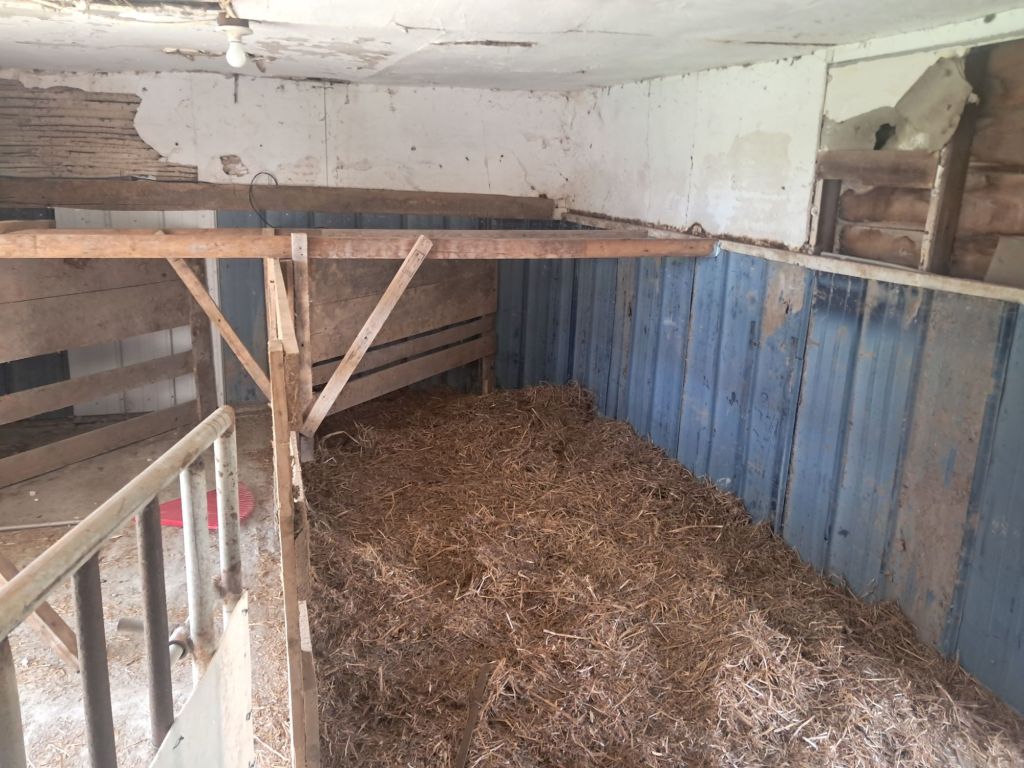
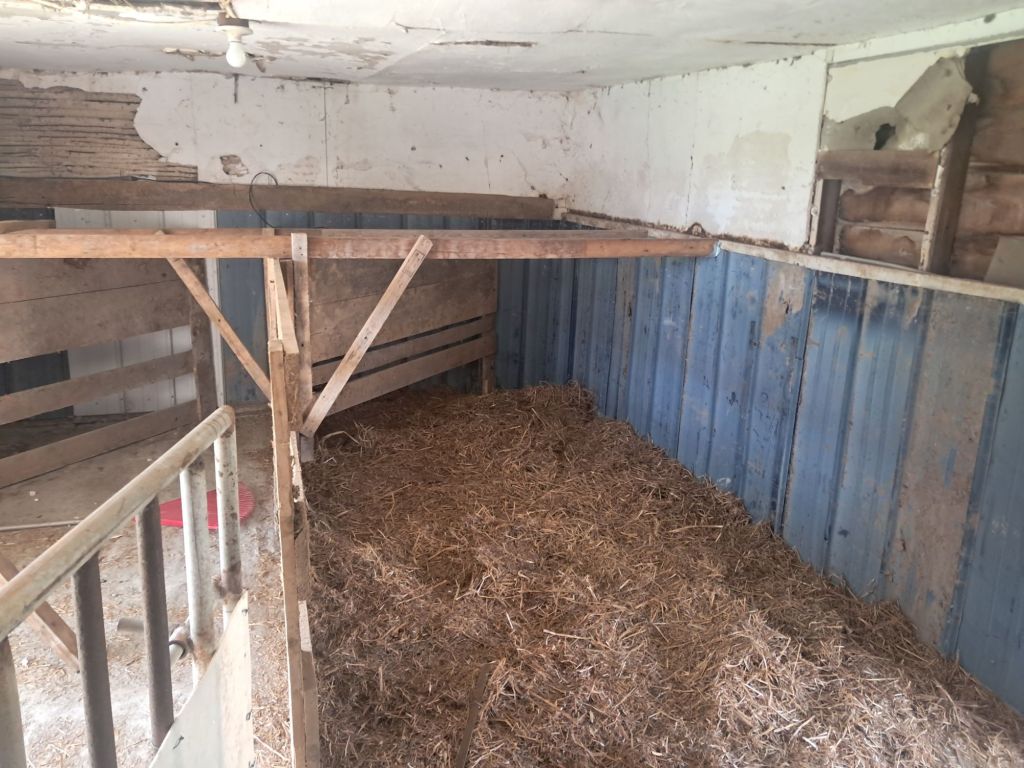
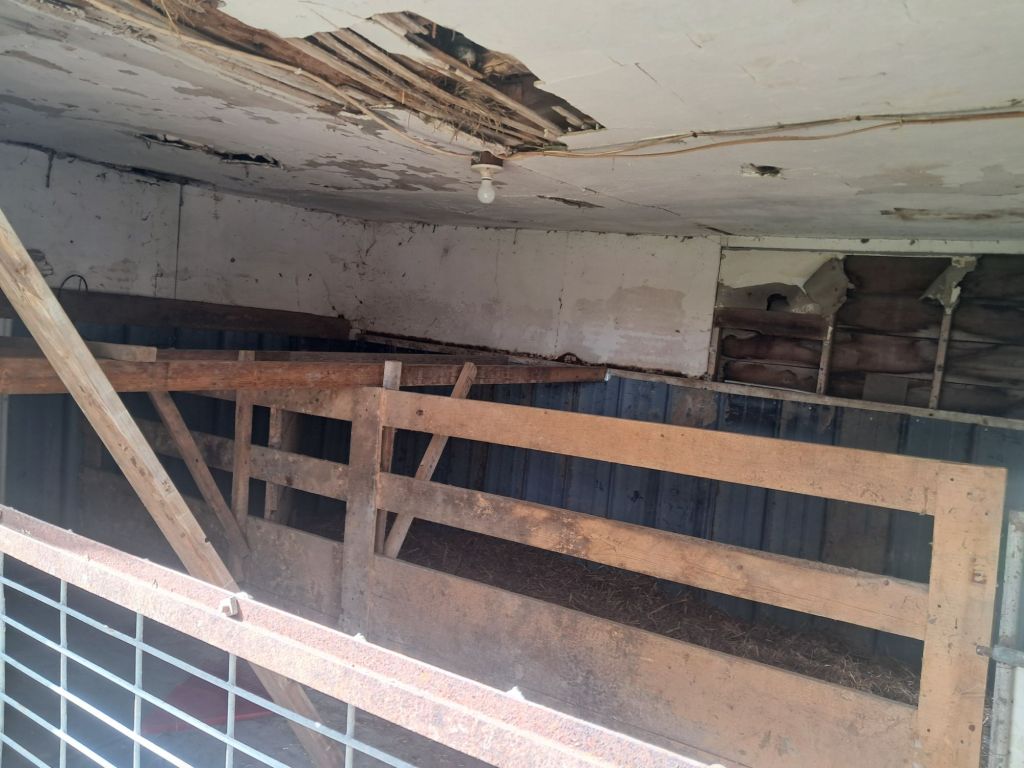
    Next, we needed a safe space for piglets to be born and grow for the first several weeks. My husband converted an old dilapidated shed into functional farrowing quarters. He shored up rotten sections, set used silo staves in cement to make a makeshift floor, and built a farrowing crate from reclaimed wood. He even added lights, knowing we’d be checking on her at all hours until she finally gave birth.

    All ready for some babies!

    So far, one gilt has farrowed 10 piglets, and the second is due any day. We love having little babies around the homestead—it’s noisy, busy, and pretty wonderful.

    Our plan is to either sell some of the piglets as feeder pigs or raise them for pork that’s grown outside on pasture. If you’re local (SE WI) and interested in either, feel free to reach out.

    Chicks

    About a month ago, we also added to our poultry flock. We purchased 15 straight-run Wyandotte chicks and set them up in our basement. At the same time, I set up my incubator with 22 eggs.

    My first attempt at incubating eggs was a complete failure—I didn’t hatch a single chick from 47 eggs. Lesson learned: the orientation of the eggs in the incubator matters. They can’t be placed upright in egg cartons; they need to lie horizontally or they simply won’t develop.

    This time, with the eggs properly positioned, 10 chicks hatched and 9 survived. That gives us 24 new chicks total. In theory, about half will be roosters and half hens. We plan to keep one rooster as our new stud, and the rest of the roosters will eventually head to “freezer camp” and become shredded chicken for soups, broth, and casseroles (yes, I’m from Wisconsin, and we call it casserole). The kids love checking on the chicks in the brooder, counting them, and reporting back on who’s sleeping, who’s eating, and which one is “their” favorite.

    Turkeys

    Our turkeys have their own spring plans. Both turkey hens found separate hidden spots around the property to sit on nests—despite the small detail that there are no toms currently on the homestead. My husband decided to do a little switcheroo and swapped one turkey’s eggs for fertile chicken eggs. We’ll see if any of those end up hatching. There’s never a dull moment with birds.

    Property Improvements: Upstairs Progress and Cleanup

    Spring hasn’t been all about plants and animals; we’ve made progress on the house and property, too.

    Upstairs Progress

    For those who don’t know, we bought our house in 2023 with an unfinished upstairs. Earlier this month, carpet was finally installed in most of that space, and now we’re down to finishing touches like closet doors and furniture. The last third of the upstairs still needs to be completed, and we’re planning to add a bathroom upstairs so we don’t have to navigate steep stairs in the middle of the night.

    Outside Cleanup

    Outside, my husband has been on a mission to clean up the property again, hauling away loads of scrap metal. The plan for this summer is to shore up one of the existing buildings so we can use it as temporary cover for our equipment while we demolish old structures and replace them with something more functional.


    It’s a lot—but it’s the good kind of work.

    Spring on a homestead is always busy, but seeing these projects come together—fruit trees in the ground, piglets in the barn, chicks in the brooder, and an upstairs that finally feels like it’s becoming livable—makes all the mud, mess, and chaos feel worth it.

    It’s one more season of growing food, raising kids alongside all this work, and slowly building the kind of place we want to call home.


    What spring projects are you working on around your home or homestead right now—plants, animals, or house upgrades?


    If this gave you ideas—or just made you feel less alone in the spring chaos—tap like and share it with a friend who’s also growing, raising, or rebuilding something this season.

    Subscribe for weekly homesteading tips:

    Read Next: Mid-Season Maple Syrup: 5 Gallons from 200 Gallons Sap

  • Our First Gilt Farrowed: 10 Piglets on a Monday Afternoon

    This is a shorter post this week, but it feels like a big one.

    We have piglets.

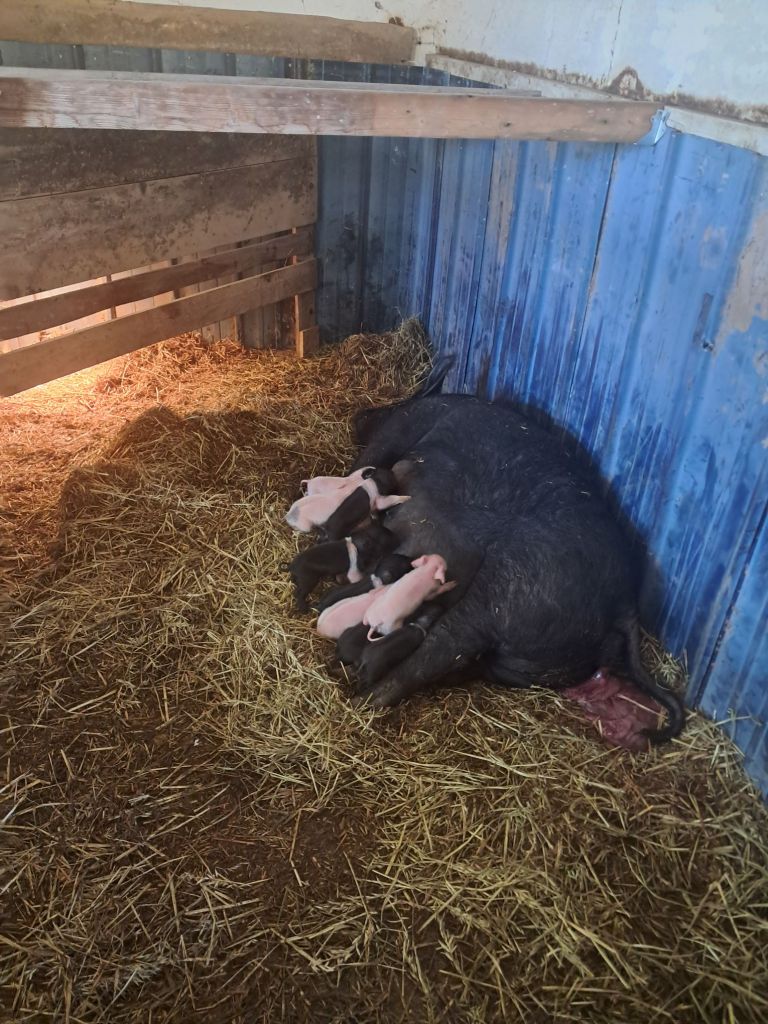
    On Monday afternoon, our first gilt farrowed 10 piglets (and one stillborn), and it was our first time experiencing pig farrowing firsthand. One minute we were checking on her like we had so many times before, and the next we were in the middle of something real and messy and alive. There’s no easing into it when it starts—you go from waiting to catching babies in what feels like a breath.

    At one point, the farrowing process stalled, which raised our anxiety pretty quickly. From what we’ve learned, pauses can happen during farrowing, but in the moment it’s hard to know when to wait and when to step in. We hovered, second-guessed ourselves, and tried to stay calm. In the end, she worked through it on her own, which was both a relief and a reminder that animals often know exactly what to do if we give them space.

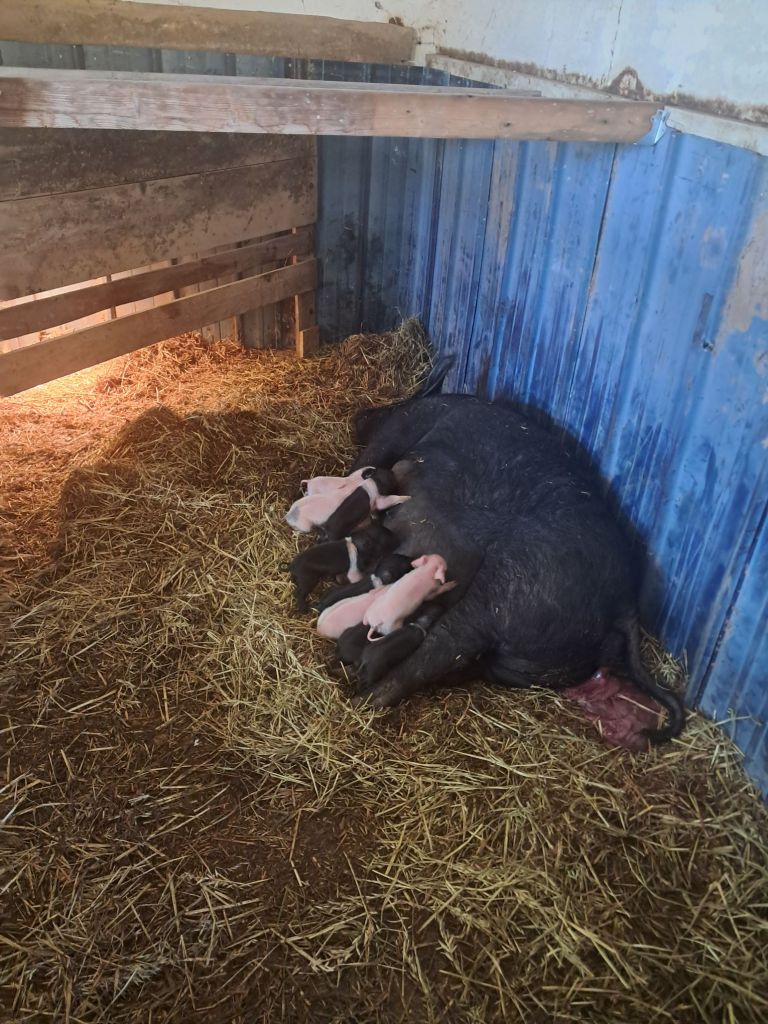
    Once the piglets were here, things shifted into action mode. We cleaned them off, making sure each one was breathing well and able to stay warm. My brother-in-law walked us through administering oxytocin so she could relax and start nursing. Watching those piglets root and latch felt like a turning point—less “are we going to be okay?” and more “okay, this is working.”

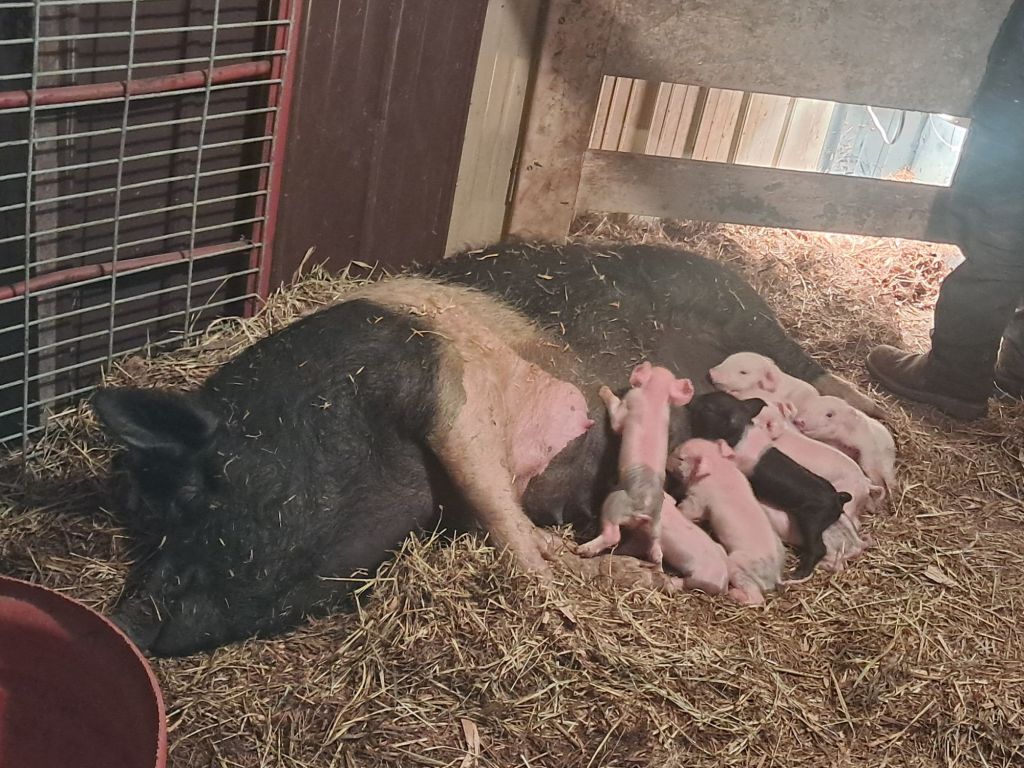
    Momma and babies as they attached for the first time.

    We stayed with her for the first couple of hours, keeping a close eye out so no piglets were accidentally crushed. One thing we learned quickly is how important it is to watch the sow’s movements closely, especially when she shifts or lays down. It’s a strange balance of awe and vigilance. Every small movement feels important. Every squeal makes you look twice—and resist the urge to intervene to prevent piglet crushing.

    This is the part of raising animals, and growing food, that doesn’t always make it into the highlight reel. It’s messy, a little nerve-wracking, and very real. But it’s also where the learning happens: in the doing, in the watching, and in showing up before you feel fully ready.

    And maybe that’s the overlap I keep noticing lately—between raising animals and raising kids. You prepare as much as you can, gather advice, set things up the “right” way… and then you step back and let life unfold, staying close enough to help but far enough away to let growth happen.

    Right now, the piglets are tucked in close to momma, and we’re checking on them more often than we probably need to. It feels a little like bringing home a newborn again—equal parts wonder, worry, and watching something new take its first steps in the world.

    Growing food, raising kids, building community… sometimes all three show up at once, in a farrowing pen on a Monday afternoon.


    Have you ever been present for an animal birth on your farm? What surprised you most?


    If this little farrowing story made you smile (or taught you something), please like and share with fellow homesteaders!

    Subscribe for weekly homesteading tips:

    Read Next: First-Time Pig Farrowing Prep: What We’re Doing Before Our Mother’s Day Litter

  • Coffer Dams and Motherhood: Being Seen on the Hard Days

    Coffer Dams and Motherhood: Being Seen on the Hard Days

    Happy Mother’s Day to all the moms out there. Motherhood is one of the most rewarding and difficult jobs of my life. Some days it stretches me to my limits, and some days it surprises me with small moments of grace. I wouldn’t trade it for anything.

    When Motherhood Feels Heavy

    The other day was one of the hard ones. Nothing dramatic—just the slow pileup of decisions, messes, and worries that comes with raising small humans while trying to keep everything else in life moving forward.

    By bedtime, I felt wrung out and a little hollow, like I was running on fumes and expectations.

    That’s when my 6-year-old son, who knows how much I love reading about infrastructure and engineering, surprised me. That world is part of my work as an environmental professional, and it was a big focus in college. I still find it endlessly fascinating: how bridges stand, how dams hold, how someone once looked at a river or a marsh and thought, “We can build something here.” I love the history behind it too—the choices, mistakes, and bursts of ingenuity that gave us running water, paved roads, and power at the flip of a switch.

    An Engineering Book and a Small Act of Love

    That night, when it was time to pick out a book to read, my son paused a little longer than usual in front of the shelf. Normally he reaches for something about pirates or a familiar favorite. Instead, he pulled out an engineering book someone had given him. He flipped through the pages with a purpose and then landed on a section about coffer dams. He looked up at me and said he picked “the engineering part” because he knew it would make me happy.

    It stopped me in my tracks more than any store-bought Mother’s Day card ever could.

    We settled in to read. I started explaining what a coffer dam is, how it lets people work in a dry space while water is held back by steel walls, called sheet piles, driven into the earth. As I explained, I remembered my college professor with a Latin American accent who loved teaching about sheet piles. He knew exactly how the term sounded when he said it and would stretch it out with mock innocence that had the entire class laughing every single time. It’s a silly, fond memory, and it reminds me that even in the most technical fields, there’s a human side behind all the math and steel.

    As I read and shared those stories, I realized what my son had really done. He hadn’t just picked a book; he had reached for something that felt like me. In his 6-year-old way, he was saying, “I see you, Mom. I know what you like. I want to bring a little bit of that back to you.”

    His 2-year-old sister climbed into my lap too, not concerned with coffer dams or sheet piles—just happy to be included, her small body warm against mine. One child choosing the book he knew I’d love, the other snuggling in for the sound of my voice and the feel of my arms around her.

    There I was: tired, a little worn down, and surrounded by the two people who make this job both exhausting and holy.

    How Motherhood Feels Like Engineering

    It struck me how much motherhood feels like those engineering concepts I love. We build supports we hope will hold. We design routines and boundaries like invisible scaffolding. We stand in the middle of messy, rushing currents—school schedules, work deadlines, dinner, tantrums—and try to carve out solid ground where connection can happen. Some days the structure wobbles. Some days the coffer dam leaks. But then there are nights like this, when a 6-year-old chooses an engineering book to make his mom smile, and a 2-year-old tucks herself under my arm, and for a moment everything feels steady.

    This Mother’s Day, I’m thinking less about flowers or brunch and more about these small, thoughtful gestures—the way our kids notice us, even when they can’t quite put it into words. The way they remind us who we are outside of “Mom,” and love that person too.


    To all the moms who are tired, overwhelmed, and still showing up: I see you. May you get your own small coffer-dam moments—just enough dry ground, just enough support, and a few unexpected ways your kids show you they’re paying attention.


    What’s a small, thoughtful thing your child has done that made you feel truly seen as a mom?


    If this story resonated with you, would you take a moment to like, comment, or share it with another mom who might need a little encouragement today?

    Subscribe for weekly homesteading tips:

    Read Next: Amish Bakery Visit for Bulk Groceries: A Homesteading Family Tradition

  • Amish Bakery Visit for Bulk Groceries: A Homesteading Family Tradition

    Amish Bakery Visit for Bulk Groceries: A Homesteading Family Tradition

    About every two months, I make the hour-long trip to the nearest Amish settlement to stock up on bulk groceries. It’s a steady rhythm in our homesteading life—bringing home 50-pound bags of bread flour, dried vegetables, bulk pasta, and active dry yeast that stock our pantry and turn into loaves of bread, tortillas, and buns in the weeks that follow.

    But if you ask my kids, the highlight of every trip is the same: the Amish bakery.

    On this particular Saturday, it seemed like everyone else had the same idea. The parking lot was full, and the line stretched halfway across the gravel lot. For a moment, I considered turning around—but one look at my 6-year-old son and 2-year-old daughter made it clear we were staying.

    So, we settled in.

    There was a chill in the wind, but standing in the sun made it feel like a perfect spring day. Nearby, a little Amish boy—maybe three—chased a chicken across the yard, getting just close enough each time to keep trying.

    We started with a round of “I Spy,” which didn’t last long. Soon, we were watching horses in the pasture, sheep grazing in the distance, and pigeons circling overhead—much to my daughter’s delight, who confidently called them all “ducks.”

    As the line slowly moved, the wait began to shift. What felt long at first softened into something slower and more enjoyable. People started talking. A couple behind us—one from Sun Prairie, another from Watertown—struck up an easy conversation about travel, baking, and everyday life.

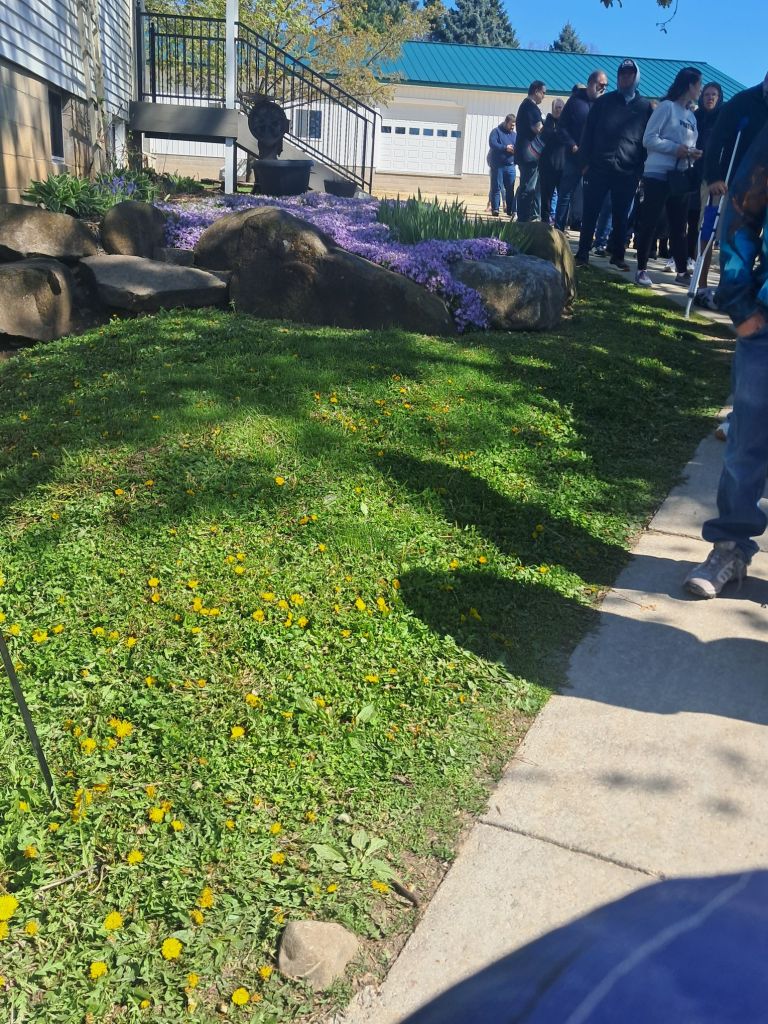
    The line as I got closer to the entrance. The smell of freshly baked bread and pastries was intoxicating.

    Meanwhile, my kids wandered off and found a little girl to play with, disappearing into their own world for nearly twenty minutes.

    My kids found a little girl to play with while I waited in line.

    By the time we reached the door, the smell of the Amish bakery had already found us—warm bread, sweet glaze, and something deeply comforting. Inside, shelves were lined with cakes, pies, and fresh-baked goods, but there was no question what we came for.

    We walked out with warm donuts in hand—chocolate for my daughter and me, glazed for my son—and barely said a word as we ate them back at the car.

    Somehow, the hour-long wait didn’t feel long at all.

    Trips like this are never just about bulk groceries or even the Amish bakery itself. They’re about filling a pantry that feeds our family, giving our kids space to grow and learn patience, and finding small moments of connection with people we might not otherwise meet.

    It’s growing food, raising kids, and building community—sometimes in the most unexpected places.

    And yes… the donuts help, too.


    Have you ever stuck out a long wait and realized it was actually the best part of the day?


    If you’re trying to slow down, raise your kids a little differently, or build a more intentional life—like and share this with someone on that path too.

    Subscribe for weekly homesteading tips:

    Read Next: How Curiosity Keeps Me From Feeling Bored (Even on Long Car Rides With Kids)

  • First-Time Pig Farrowing Prep: What We’re Doing Before Our Mother’s Day Litter

    First-Time Pig Farrowing Prep: What We’re Doing Before Our Mother’s Day Litter

    Preparing for our first-time pig farrowing feels a bit like bracing for a homestead hurricane. We’ve pored over library books, talked with several experienced pig farmers, and built out our setup—all in anticipation of our first gilt farrowing on Mother’s Day weekend, with the second following about a week later.

    She doesn’t even know she’s about to be a momma!

    Here’s how we’re getting ready to welcome these piglets.

    Research Meets Real Talk

    We’ve devoured books on pig reproduction—favorites include Storey’s Guide to Raising Pigs and various university extension guides—while my husband has gathered insight from a couple of experienced local pig farmers.

    The most memorable advice? “Make sure the piglets have a place to get away from their mom if her hormones kick in and she starts stomping around.” It’s the kind of practical wisdom that no book quite captures.

    Building Farrowing Infrastructure

    My husband jumped into a crash course on setup, spending about two weeks transforming a dilapidated shed into a functional farrowing space.

    We poured a concrete floor using old silo staves set in mortar, framed the interior with reclaimed barn tin, added electricity and a small light, and built a piglet-only area where mom can’t reach. A heat lamp hangs over that space to keep them warm and safe.

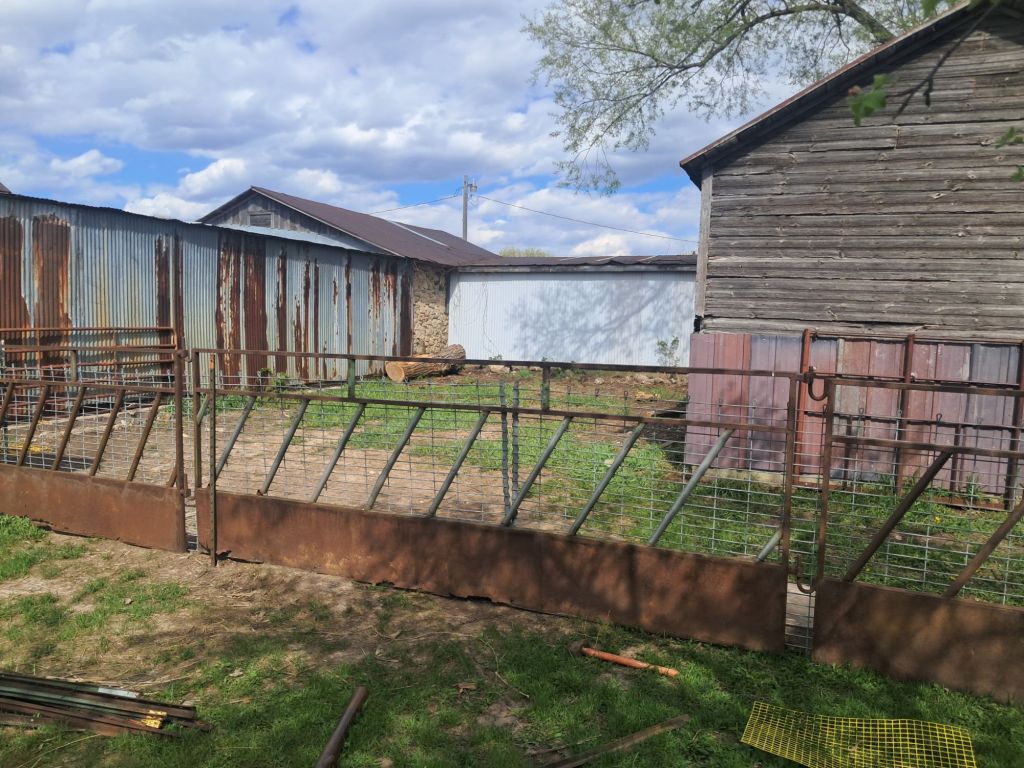
    The piglets will stay inside for 30–60 days depending on the weather, but since they’re arriving in mid-May, we’re hopeful it will be closer to 30 before they can start venturing out. In the meantime, we’ve also reinforced a space between several of our outbuildings so they’ll eventually be able to enjoy the outdoors. The front is framed with reclaimed bunk pieces—nothing fancy, but solid and functional.

    Front of pen made from reclaimed cow bunk

    Vaccination and Nutrition Boost

    We administered the FarrowSure vaccine before conception to help prevent scours and erysipelas.

    We’re also adjusting their feed after realizing we let them overeat for a bit too long. They’re now on controlled portions of about four pounds per gilt each day, which they’re not exactly thrilled about. Most nights, they root their straw bedding into chaos, but scattering corn kernels around the pen has helped redirect that energy into foraging instead of destruction.

    Spotting Mama’s Behavior Cues

    As the due dates get closer, we’re watching carefully for signs. Their udders began swelling about 3–5 weeks ahead of time, and we’re told that nesting and restlessness usually mean we’re within 24 hours. When that’s paired with grunting and constant lying down and getting back up, it’s likely go time.

    What Could Go Wrong—and How We’re Preparing

    The risks feel big right now, especially going into our first litter. There’s overlay—a 400-pound gilt rolling onto 2-pound piglets—as well as the chance a first-time mom might reject her litter or that weaker piglets will need help getting colostrum.

    As one farmer told us, “Your first litter teaches you more than all the books.” With that in mind, we’re relying on our crate setup and rails to reduce the biggest risks while staying realistic about the learning curve ahead.

    What’s Next for Us

    About a week out, we’ll move the gilts into their farrowing space, begin daily udder checks, reinforce anything that looks questionable, and give the FarrowSure booster.

    We’re expecting somewhere between 10–16 piglets and feeling equal parts nervous and excited. The plan, at least for now, is to sell about half and raise the rest for pork—but we’ll see what kind of interest there is.


    Have you ever gone through a first farrowing? What caught you off guard—or what would you do differently next time?


    If you’re raising pigs—or thinking about it—tap like and share this with someone who’s in the thick of homestead life too. It helps more than you know 🤍

    Subscribe for weekly homesteading tips:

    Read Next: Our Biggest Homesteading Challenge: First-Time Pig Farrowing

  • Foraging Stinging Nettles—A Wild, Nutritious Spring Green

    Foraging Stinging Nettles—A Wild, Nutritious Spring Green

    Here’s what foraging stinging nettles looked like for me this spring, and how I turned them into a safe, nourishing meal for my family.

    As I walk outside armed with a plant identification book, rubber gloves, and an open mind, I can’t help but feel that I’m about to violate a fundamental law of food. Among the waterlogged ground, I scan for juvenile stinging nettles—those tough, serrated leaves covered in tiny, hair‑like stingers. This spring, I’ve begun foraging stinging nettles on our property, turning a backyard “weed” into a free, nutrient‑dense green for our family. It’s especially welcome in the early months of the year, when fresh vegetables are harder to come by.

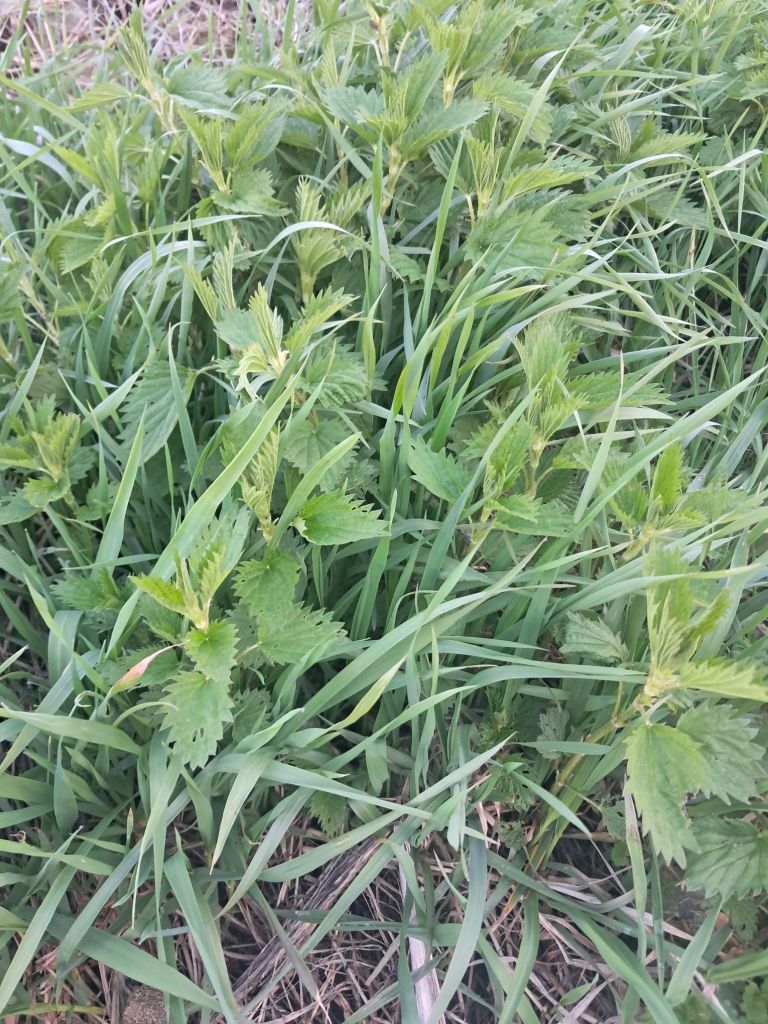
    Nettles nestled among grass

    Foraging Nettles Safely

    From experience, I know that if I’m not careful, I’ll quickly become aware that the plant has grazed my skin: the stingers bring an immediate, sharp pain and soon after a scattering of blisters. As someone who is slowly learning to step away from the industrialized food system, I feel hesitant to collect food that can actually hurt me. Yet there’s also a quiet humility in working with a plant that demands respect—this is nothing like reaching for a plastic‑wrapped bunch of lettuce at the grocery store.

    I chuckled at the thought of how hungry the first person must have been to discover how to disable the stingers and savor this tasty, nutritious wild larder hiding in plain sight. On the other hand, there’s a childlike wonder in identifying a “weed” that others avoid. That sense of discovery encourages me to continue my quest.

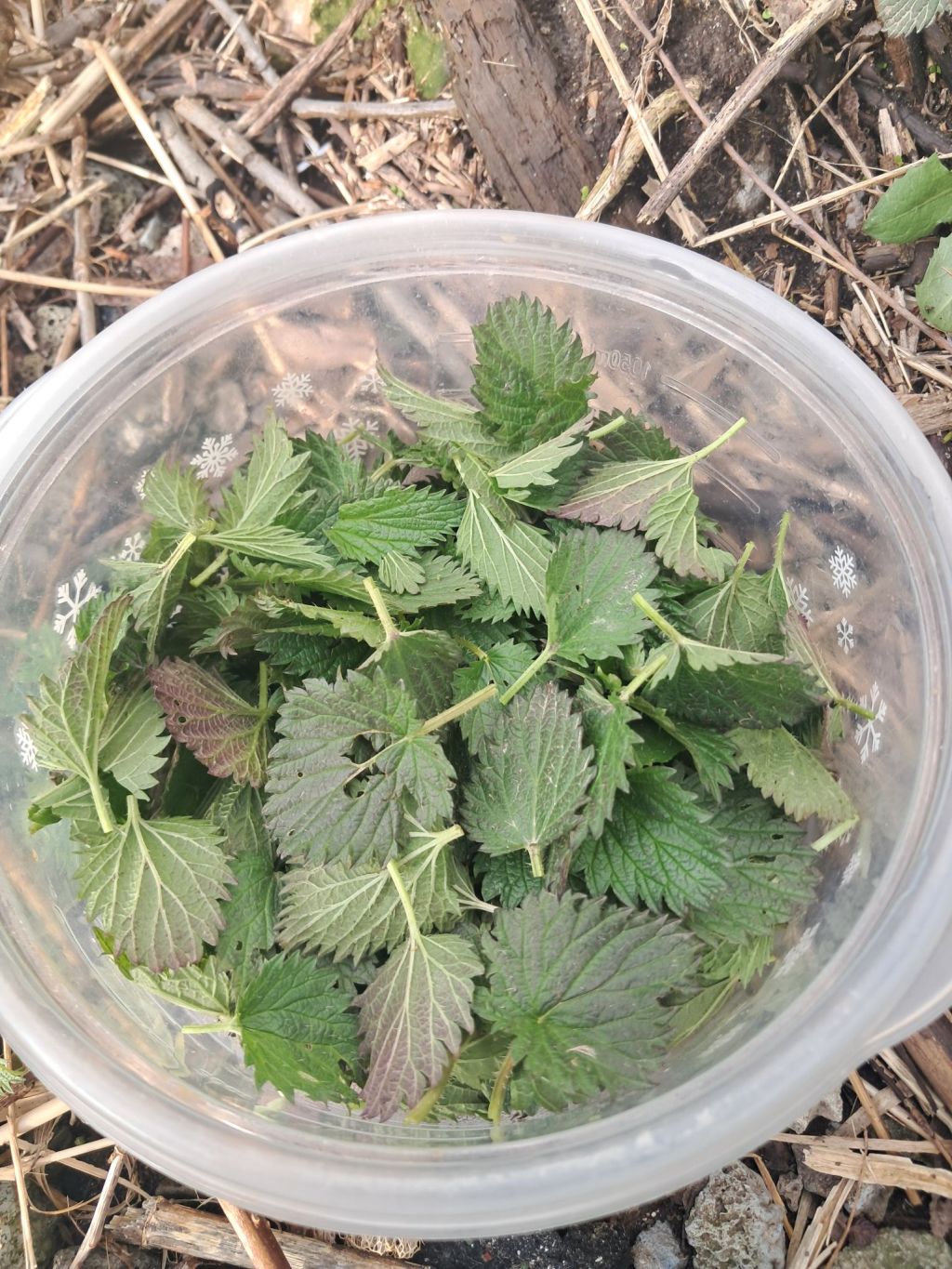
    Harvesting becomes a mindful ritual. I crouch down and gently collect the plants, pinching off the leaves just above the stem. Where nettles grow most aggressively, I pull them from the ground—our property is overgrown with nettles that spread via rhizomes. The plants rustle as I work, releasing a faint, green herbal aroma into the air.

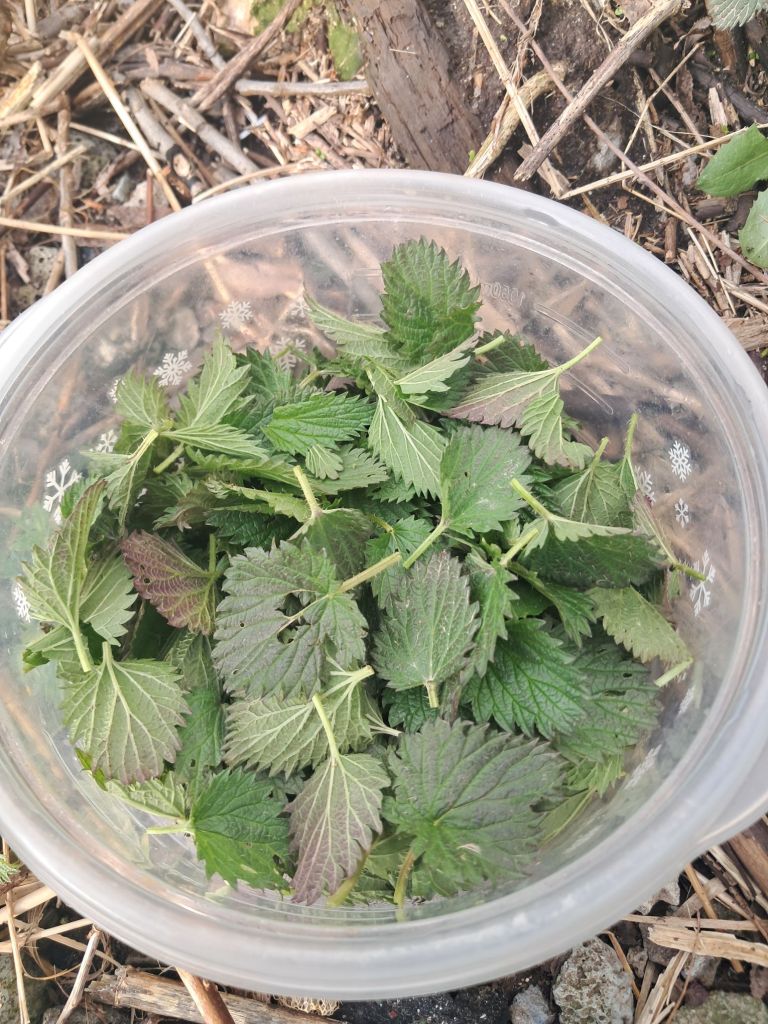
    A bowl full of nettle leaves

    In a moment of carelessness, my arm grazes the plant, and I receive several painful blisters in turn. The soreness is uncomfortable, yes, but it also feels like a badge of honor. The temporary sting is a small price for the nutritional bounty. As my basket fills, I marvel at the efficiency of nature, at its pure, unmediated abundance.

    To keep myself and my family safe, here are the practical steps I use to handle stinging nettles while working with them:

    • Wear long sleeves and long pants to keep as much skin as possible covered.
    • Use thick rubber or leather gloves that fully cover the wrists.
    • Pull the gloves over the cuffs of long sleeves so stingers can’t slip in between.
    • Avoid touching your face or neck while harvesting.
    • If a sting happens, rinse the area with cool water and mild soap, then apply a soothing cream or cool compress as needed.
    • If you’re foraging with kids, let them wear gloves and long sleeves too, and keep them close by so you can guide their hands and steps.

    These simple precautions make the experience feel less intimidating and more like a teachable moment, not a painful surprise.

    Cooking Nettles Safely: How to Neutralize the Sting

    By the time I’m back in the kitchen, the nettles are in a vibrant heap in the sink. Before I wash them, I remind myself: Stinging nettles must never be eaten raw. The stingers release a mildly irritating compound that can cause discomfort and a burning sensation in the mouth and throat.

    To make them safe to eat, I always use one of these two methods:

    • Blanch in boiling water:
      • Bring a pot of water to a boil.
      • Drop the nettle leaves into the boiling water for 1–2 minutes.
      • Drain and rinse with cool water.
      • The leaves will feel soft and silky and will no longer sting.
    • Sauté in a hot pan:
      • Add the fresh nettles to a hot pan with a bit of butter or oil.
      • Stir constantly for 2–3 minutes until the leaves wilt and darken.
      • The heat neutralizes the stingers and turns the leaves into a tender, spinach‑like green.

    Both methods are quick and simple. The important point is: any stinging nettle serving larger than a small nibble should be processed with heat. That’s the non‑negotiable rule if you don’t want a painful, unpleasant experience.

    Once the sting is gone, the nettles are ready to shine. I usually sauté them in garlic and butter, then season with salt. The simplicity of the dish is empowering; the only extras are salt, garlic, and butter to let the flavor of the greens shine. They taste grassy and slightly nutty, with a depth that store‑bought greens rarely match.

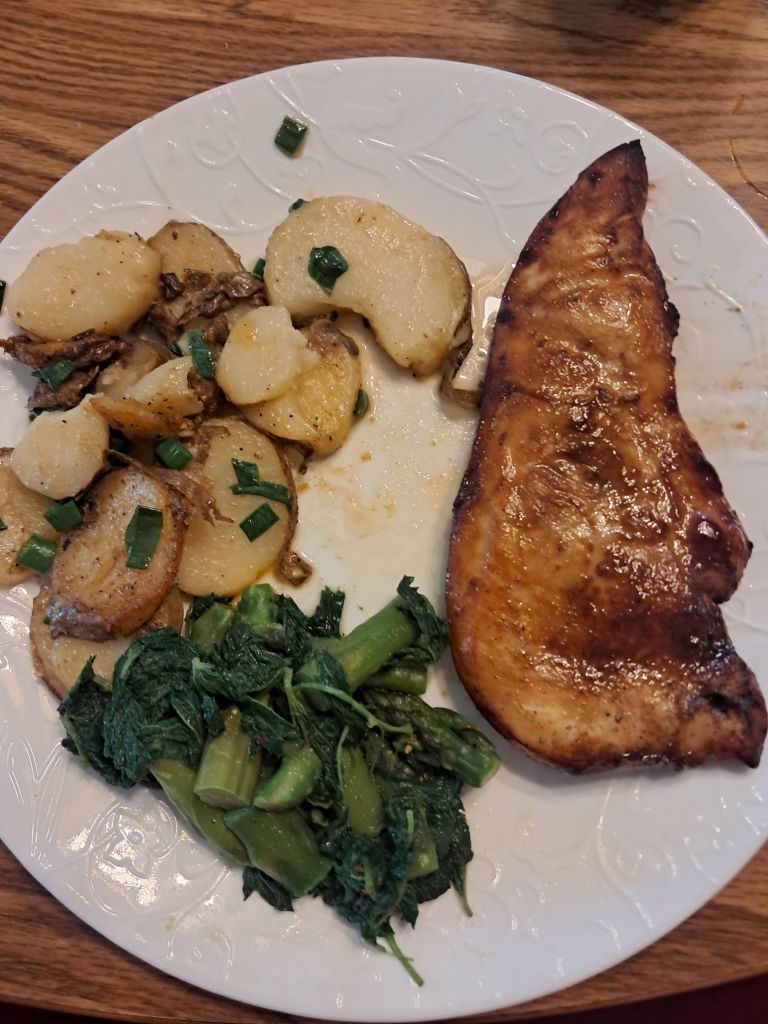
    A recent dinner, the vegetable was asparagus and nettles boiled in salted water, seasoned with butter and pepper. Delicious!

    Every bite carries the satisfaction of knowing that at least some of the food on our table comes directly from the land, unmediated by plastic packaging or price tags and paid for instead with time and attention. This is the kind of meal I want to share with my children, teaching them that “weeds” can become dinner and that food is something the earth offers, not just something we buy.

    Nutritional Benefits of Nettles

    Stinging nettles are often called a “wild supergreen” for good reason. A small serving of cooked nettles delivers a surprising amount of important nutrients, including:

    • Iron (useful for supporting energy and blood health)
    • Calcium (beneficial for bones and teeth)
    • Vitamins A and C (supporting immune function and skin health)
    • Magnesium and other trace minerals
    • A moderate amount of plant‑based protein for a leafy green
    • Nettles have also been traditionally used for their gentle antihistamine‑like properties, especially when prepared as an herbal infusion.

    In a world where we often think of “healthy food” as something expensive or packaged, nettles remind me that deep nourishment can emerge from the edges of the yard, if we’re willing to learn how to use it.

    Reflections on Foraging and Community

    Later, I ponder the experience, which was more rewarding than I imagined. Supplementing my diet with nettles shrinks my food miles while my pantry is enriched by the seasons. Grocery store runs feel less urgent when the yard offers a free, nutrient‑dense green harvested in spring. There’s a quiet pride in crafting meals from plants many call weeds, a small act of rebellion against the idea that all good food must be bought.

    On a deeper level, I’m participating in a cycle that predates grocery stores, rekindling a bond with the earth that modern life often severs. I’m learning to see my yard—and my children’s yard—as a living pantry, not just a backdrop to our days. And when I share a pot of nettle soup or a plate of sautéed greens with a neighbor, the act of foraging becomes part of a small, quiet web of community, where knowledge and food move between people instead of only through registers.

    Defiance, Devotion, and the Gift of the Land In a world built on convenience, foraging for nettles becomes an act of both defiance and devotion. It roots me in the present, reminds me that the earth provides—often lavishly, and often in plain sight—for those willing to look, learn, and gratefully receive.


    Have you ever foraged stinging nettles or another wild green? Or would you ever try nettles in your family’s meals? Let me know in the comments—I’d love to hear your stories and tips!


    If this post inspires you to look at your yard a little differently, I’d love it if you shared it with another parent or forager who’s curious about wild food. You can like or share it on Facebook, pin it on Pinterest, or forward it to a friend who loves seasonal, hands on food adventures.

    Subscribe for weekly homesteading tips:

    Read Next: Foraging Ramps with Kids in the Midwest

  • Perfect Pan-Fried Fish Recipe | Ice Fishing Family Time

    Ice Fishing Brothers and Perfect Pan-Fried Fish

    My husband’s been ice fishing more with his brother lately — and I love it.

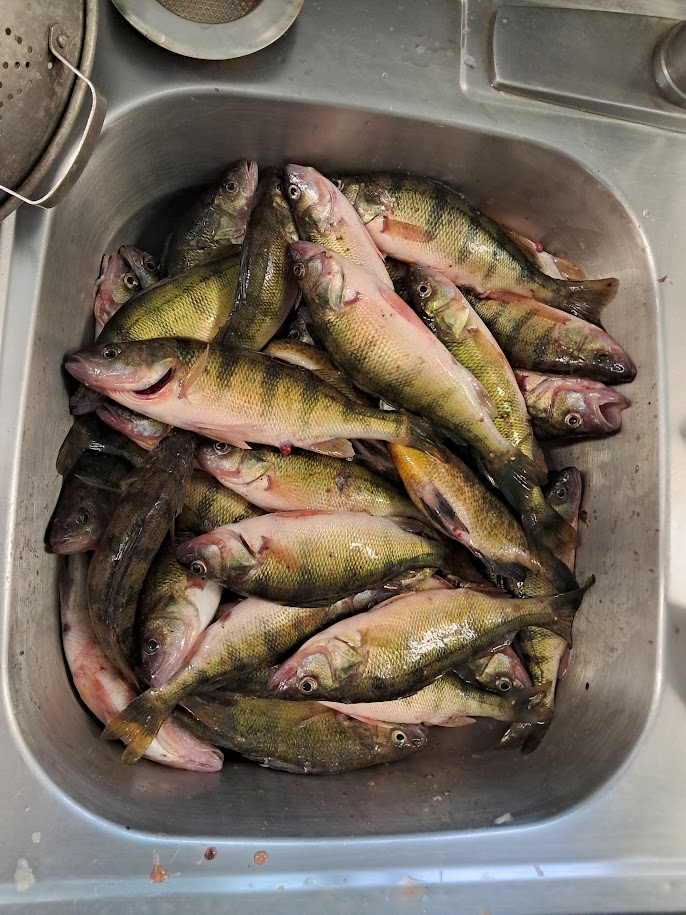
    He gets fresh air, laughter, and some friendly competition. And him coming home refreshed with rosy cheeks and a bucket of perch or bluegills (he always brags about outfishing his brother, but I never know what’s true).

    Some of the perch we cook

    Here’s the recipe that makes it all worthwhile — simple homestead cooking at its best:

    Perfect Pan-Fried Fish Recipe (Serves 4)

    Prep time: 10 minutes | Cook time: 10 minutes | Total: 20 minutes

    Ingredients

    • 1–1½ lbs fish fillets (perch, walleye, tilapia, or catfish)
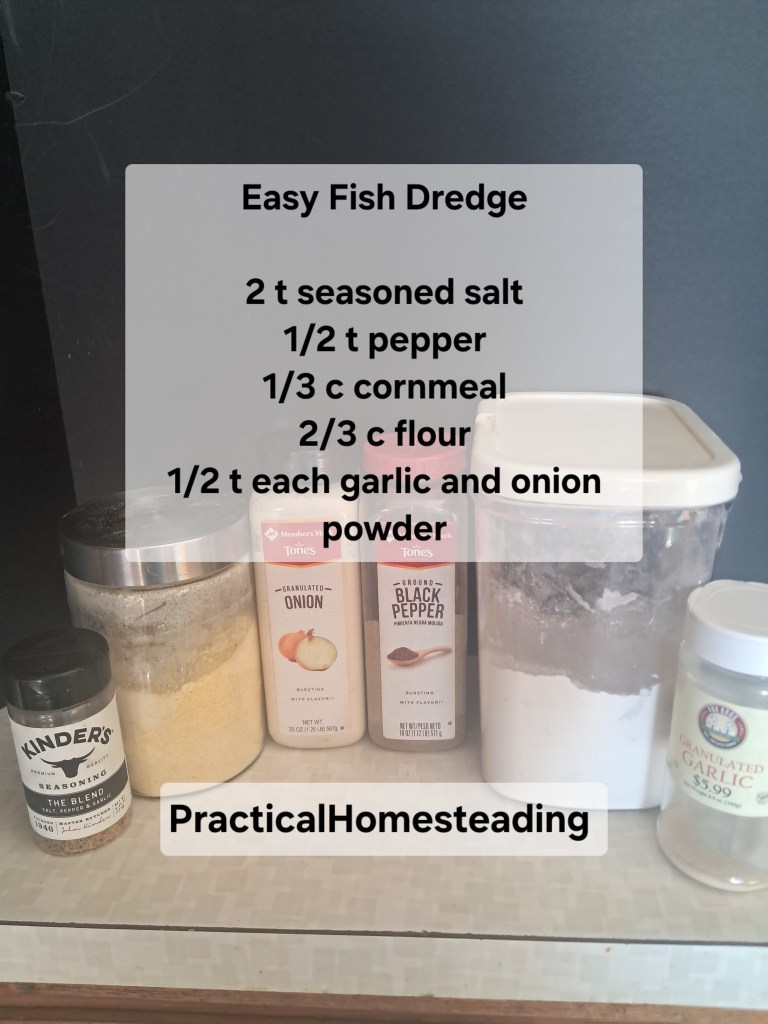
    • Dredge: ⅔ cup flour, ⅓ cup cornmeal, 2 tsp seasoned salt, ½ tsp pepper, ½ tsp garlic powder, ½ tsp onion powder
    • ¼–⅓ inch lard, tallow, or coconut oil (we use lard from our pigs)
    • Lemon wedges + tartar sauce for serving

    Instructions

    1. Prep fish: Cut into ⅛ inch (3mm) pieces. Drain but don’t pat dry.
    2. Mix dredge: Whisk dry ingredients. (My years of tweaking: more cornmeal = better crunch.)
    3. Heat skillet: Cast iron over medium-high until fat shimmers (350°F).
    4. Fry: Dredge fish, fry 3–4 min per side until golden.
    5. Finish: Drain on paper towels, salt while hot. Serve immediately.

    Pro Tips for Crispy Fish

    • Thickness: 3mm pieces cook evenly, never dry.
    • Cornmeal magic: Creates perfect crunch.
    • Hot oil: Sizzles immediately = crisp exterior.

    Serve with: Coleslaw + potatoes, homemade fries, or simple greens.

    Why This Works for Real Families

    Forgiving, fast, uses pantry staples. Whether ice fishing haul or store fillets, it delivers crispy, golden fish kids devour. Using our pig lard makes it true homestead cooking.


    Your Turn to Share

    Pan-fried fish in cast iron? Your dredge secrets? Ice fishing stories? Drop them in comments — and subscribe for more homestead recipes!

    ⭐ **Loved this recipe or ice fishing story?** Tap ❤️, drop a comment with your fish-fry tips, and share with your outdoorsy friends! Your support helps this little homestead kitchen grow. Thank you! 🐟🔥

    Loved this? Subscribe for more reflections on life:

    Read More: Mixtapes, Meltdowns, and Magic: A Family Road Trip to Remember

  • Early Signs of Spring on the Homestead (2026)

    Early Signs of Spring on the Homestead (2026)

    Spring is on the move! The geese are back in our corn field, snacking on the kernels we missed last fall as they make their way north. During the day they feast here, and at night they head back to the Horicon Marsh—just two miles west of us. It’s a rhythm we’ve come to count on, almost like the turning of a calendar page that only nature can read.

    Early Spring Signs: From Geese to Goslings

    Soon the quiet honks in the distance will give way to a full chorus overhead. As their numbers grow, they become our entertainment—chasing each other away from the best spots, flapping their wings and honking aggressively. Then they will begin to form pairs.

    It won’t be long before we’re seeing those fuzzy little goslings wobbling around on unsure legs. I always smile at how they’re both awkward and perfectly at home in the world at the same time. They don’t rush their growing, they just…are. There’s a lesson in that for the rest of us, I think.

    Subtle Signs of Spring You Might Miss

    Around here, early signs of spring start small if you’re paying attention:

    • The snow melts back from the south-facing sides of buildings first, leaving little ribbons of bare ground.
    • Puddles form in the ruts of the driveway, full of reflected sky.
    • The air still has a bite to it, but every now and then, in the afternoon, there’s a softness you can feel on your cheeks. The kind of air that makes you stop and think, “Oh. It’s changing.” It’s when you know it’s time to tap the trees for maple syrup. Sap flows best at days above freezing, and nights below freezing.

    The soil starts to loosen its grip, too. Boots sink a little deeper, and you can smell that rich, damp scent of earth waking up. The barn cats linger longer in patches of sun. The chickens get a bit braver, scratching farther from the coop, as if they also sense that winter’s hold is slipping.

    The Magic of Longer Days

    I always notice the light first. The sun sets 2 minutes later each day now, stretching out the day bit by bit. Supper dishes are ready to serve while there’s still a faint glow in the west.

    That extra light brings with it a quiet invitation: to dream about the garden, to flip through seed packets, to imagine rows of green where right now there’s only brown and grey.

    First Signs of Spring in Everyday Life

    Spring on the homestead, in this in-between time, is easy to miss if you’re only looking for flowers and green grass. But if you look closer, it’s there in the geese in the field, the drip of melting snow, the mud on the boots piled by the door.

    It shows up in the way we start talking about “when it warms up” instead of “if it ever warms up.”

    What Are Your Early Signs of Spring?

    What early signs of spring are showing up where you are? Maybe it’s a certain bird call you only hear this time of year, or the first brave shoots pushing up through the cold ground.

    Maybe it’s kids trading snow pants for lighter jackets, or the way your houseplants suddenly seem a little happier near the windows.

    What’s your first sign of spring? Drop it in the comments—we’re all watching for those first hints together! 🌱

    Early signs of spring are HERE! Geese honking, sap flowing, sun lingering longer. Which first sign of spring did you notice today? LIKE + SHARE if you’re feeling that seasonal shift! 🌿

    Loved this? Subscribe for more homesteading tips:

    Read Next: Homestead Maple Syrup Making: Sugar Shack to 66 Brix Gold