Category: Community

  • Pet Peeves Can Teach Us More Than We Think

    Name your top three pet peeves.

    Everyone has pet peeves—those small irritations that can silently gnaw at our patience. For me, they reveal more than just frustration; they mark my journey toward empathy and self-awareness. I try hard not to complain because I know I am truly fortunate. I have a life filled with comfort and people who support me. When I’m asked about my top three pet peeves, I realize they reflect who I am beneath the surface. They also show how far I’ve come. My three top pet peeves are based on how we treat each other: moral superiority, selfishness, and condescension.

    The Weight of Judgmental, Morally Superior People
    I learned a painful lesson about judgment from a friend. She rightfully withdrew after I reacted to her with criticism rather than compassion. That moment still lingers—when they vulnerably shared their struggles, and I judged their choices instead of hearing their heart. The sting of that loss taught me how easy it is to judge without walking in someone else’s shoes. Now, when I face moral superiority, from others or myself, I pause to remember. We all live complex lives shaped by experiences others can’t fully grasp. Judgment is a quick and lonely reaction; empathy takes more courage but builds connection.

    The Sting of Selfishness and Isolation
    Selfishness frustrates me deeply. I am especially frustrated by the refusal to embrace community in parenting and care giving. I once believed I could handle everything alone, armed with sheer will and rigid routines. Yet endless sleepless nights and isolation soon shattered that illusion. I still recall the raw exhaustion and quiet desperation before I accepted help and found strength in community. Watching others withdraw or show impatience with children stings because it undermines what I now know. We thrive in villages, not in solo isolation. People can also act selfishly without fully understanding how their choices ripple outward and affect those around them. This makes compassion and honest conversation even more important.

    The Quiet Poison of Condescension from a Loved One
    Condescension is unlike judgment in a profound way. It is steeped in strong feelings and visible actions: the raised eyebrow, the patronizing tone, the dismissive glance. These actions communicate contempt and make you feel small. I unfortunately became intimately familiar with those feelings from a trusted loved one during my childhood. Back then, I believed shrinking myself might somehow earn their approval. The sting of those subtle rejections echoed for years. Building my confidence has been a slow, ongoing process that still unfolds. Recognizing condescension as thought, behavior, and emotion has helped me protect my worth today. It has also marked a crucial part of healing.

    From Peeves to Perspective
    These pet peeves are more than annoyances; they are milestones on my path of growth. They lay bare the familiar traps of judgment, selfishness, and contempt. They remind me of how far I have come in responding with compassion toward others and myself. Complaining only raises my heart rate and drags me into a negative head space. Instead, I lean into these moments of discomfort as invitations to think and learn. After all, life is a messy, beautiful journey, and we are all works in progress navigating it together.

    If this essay resonated with you, please like, share, and subscribe to stay connected. Your support helps spread these reflections on growth and empathy to others who need them. Join the conversation and let’s learn and grow together.

    Related Posts

  • Bridging Time: Meeting the Courage of My Ancestors

    Bridging Time: Meeting the Courage of My Ancestors

    If you could meet a historical figure, who would it be and why?

    If given the chance to meet any historical figure, I would choose not a famous leader or thinker.

    I’d choose to meet my own ancestors in both Germany and Austria between the 1850s and 1870s. These were ordinary people facing an extraordinary choice-to leave everything familiar behind and journey into the unknown by migrating to the United States.

    I imagine sitting with them around a simple wooden table lit by flickering candlelight. We’d share a modest meal of bread, butter, and cheese. The scent of wood smoke would fill the room as we would gaze out at the garden beyond. In that humble setting, I would listen intently to their stories, carried across time with quiet strength.

    Their decision was not made lightly, fueled by hope yet shadowed by uncertainty. I see cold, harsh winters; backbreaking labor; and political unrest shaping their daily lives. They were bound by tradition and faced limited opportunity. They risked everything—their homes, their communities, their ways of life. They crossed a vast ocean in search of freedom and a new beginning.

    What fears kept them awake at night? What sacrifices did they endure silently? Hearing their firsthand accounts would reveal the resilience and courage that anchored their journey.

    This connection would deepen my gratitude for the life I live today. Their sacrifices laid the foundation for my family’s present and inspire me to face my own challenges with courage. Knowing they braved the unknown encourages me to take risks of my own. I dare to put my words to the page. I push forward even in moments of fear and uncertainty. My ancestors did not seek to change history; they aimed to build a future. Their journey teaches me that true growth often requires stepping boldly into the unknown.

    Meeting my ancestors would mean more than satisfying curiosity—it would strengthen my roots and nourish my spirit. Their legacy reminds me who I am and empowers me to write my own story. Hope, resilience, and gratitude will flow through every word.

    If you could meet an ancestor or historical figure from your own family history, who would it be? What would you most want to ask or learn from them? Share your thoughts and stories in the comments below.  I’d love to hear about the journeys and courage that inspire you!

    And if this story of courage, sacrifice, and connection resonated with you, please like and share it with others who appreciate the power of family history. Don’t forget to subscribe for more reflections that honor our roots and inspire us to face our own journeys with hope and resilience.

    Related Posts

  • My Most Beautiful Place in the World

    If you could live anywhere in the world, where would it be?

    Before dawn, I awoke to toddler kisses on my cheeks and the faint crow of a rooster calling the day to begin.

    The scent of coffee drifted through the kitchen as my husband and I eased into the morning. Our six-year-old son stirred under his blanket, still half-dreaming, and soon began retelling the Great Lakes ghost ship story we’d read the night before. Our two-year-old daughter tugged at my sleeve, eager to gather eggs from the chicken coop. Outside, the sky hung pale gray, the world quiet except for the rustle of animals waking.

    In that stillness, surrounded by the people I love, I felt an unshakable peace—the kind that reminds me I could never imagine living anywhere else.

    If I could live anywhere in the world, I would choose to be right here—with my family and our small but lively homestead. Together, we’ve shaped a life that’s rooted in rhythm and purpose, surrounded by gardens that feed us and animals that fill our days with energy and laughter.

    Pigs snuffle in the mud, turkeys strut proudly in their corn crib enclosure, and chickens announce each new egg as if it were an accomplishment worth celebrating. Our home isn’t grand, but it hums with life.

    Our community, too, has become an extension of that home. When we start a renovation project, chase a runaway chicken, or need an extra hand keeping the kids busy, help is never far away. Friends arrive with tools, spare time, and easy smiles. That kind of closeness doesn’t come from a picture-perfect place. It grows from shared effort, trust, and the understanding that we rise and thrive together.

    I could wake up to a mountain sunrise or fall asleep to the lull of the ocean, but it wouldn’t compare to mornings like this one. The warmth of my daughter’s tiny hands, the echo of my son’s laughter, and the smell of coffee mingling with fresh earth from the garden. For us, home isn’t measured by scenery or luxury; it lives in the laughter, labor, and love that fill each day.

    And as the first light spills across our field, I feel her tiny kiss still warm on my cheek. In this moment, I know this truly is the most beautiful place in the world.

    If reflections like this resonate with you, subscribe for more small moments of gratitude and intentional living.

  • Seasons of Adventure: Reflections as My Son Turns Six

    Seasons of Adventure: Reflections as My Son Turns Six

    The Early Adventure

    Six years. A lifetime and a blink all at once. It’s hard to imagine my tall, curious six‑year‑old as the little baby who once fit perfectly in my arms. Yet some days, it feels like only yesterday. As his birthday approaches, I find myself reflecting—not just on how much he’s grown, but on how much I’ve changed too.

    Before motherhood, I was an adventurer. I loved travel, new experiences, and the freedom of not knowing what came next. My job and life took me across the country, and I chased opportunity with excitement. But as thirty approached, another kind of calling began to whisper. Parenthood. I knew that if I waited too long, it might be harder to step into that new identity. With my husband’s encouragement, we leapt into the unknown together.

    The Lessons of Change

    Pregnancy came easily. A touch of morning sickness, a few sleepless nights, but otherwise, it was smooth. I exercised right up until my water broke. I don’t share that to boast—only to show how everything shifted the moment he arrived. Nothing prepared me for the intensity of that change.

    When labor began, I shook uncontrollably—terrified of the pain, the sleepless nights ahead, the loss of freedom I’d always cherished. That fear slowed everything down. Twenty‑one long hours passed before he was born. Later, I learned that anxiety floods the body with adrenaline, making labor harder. But in hindsight, that physical slowing mirrored something deeper: my fear of what it meant to become someone’s mother.

    I was afraid of failing him, of not knowing enough, of being unequal to the task. That fear didn’t just tighten my muscles—it tightened my sense of self. It made every decision feel heavier, every moment charged with doubt. I thought “harder” meant only the literal—long labor, sleepless nights, feeding struggles—but parenting revealed its metaphorical weight too. Fear made everything take longer: the acceptance, the confidence, even the joy.

    In time, I learned that fear wasn’t an enemy. It was a mirror. It showed me what mattered most, where I still needed to grow, and what I was willing to face for love. The same fear that once froze me taught me grace, patience, and surrender.

    Finding Strength

    Returning to work after parental leave was another reckoning. I cried every day that first week, missing him in a way that words can’t fully capture. The ache didn’t disappear—it only softened with time.

    And then, just as I was finding my footing, the world changed again. Six weeks after returning to work, COVID arrived. Suddenly, I was balancing deadlines with diaper changes, spreadsheets with nap schedules. The days felt endless, looping between exhaustion and small, quiet triumphs. Yet amid the chaos, we found a rhythm—working during naps, finishing tasks after my husband got home, creating pockets of peace wherever we could.

    Through it all, I discovered something unexpected: strength in letting go. Parenting isn’t meant to be done alone. It takes a village—not just helping hands, but willing hearts. When family, friends, and neighbors dropped off meals, shared advice, or simply listened, I experienced the power of community. That kind of support transforms everything. But living far from family meant we only had so much of it, and that ache for connection stayed with us.

    Building Community

    Perhaps that season of isolation made our next decision clear—it was time to move closer to family. We wanted the support we’d missed, not only for ourselves but for our children. It wasn’t an easy decision, and it took a couple of years, but it was the right one. By the time his little sister arrived, we were settled, and our son was starting preschool. Watching him become a big brother—gentle, silly, protective—has been one of the greatest joys of my life.

    What I didn’t anticipate was how deeply our sense of belonging would bloom. For the first time, people weren’t just offering help—they were eager to be part of our world. Family members plan afternoons filled with backyard discoveries, storytelling, and unhurried laughter. Cousins race through the house, inventing games, sharing snacks, and building the kind of bonds that belong entirely to childhood. Our son now has the freedom to spend time with people who love him independently of us. He’s learned that family extends far beyond the walls of home.

    For my husband and me, that has been a blessing beyond measure. We now have people we can count on—family who arrives without being asked, friends who show up simply to share time, a network that steadies us. Parenting no longer feels like a fragile balancing act. It feels shared, supported, deeply rooted. There is peace in knowing our children are surrounded by people who delight in them and find joy in being part of their story.

    A New Kind of Adventure

    Adventure still has a place in my life, but it looks different now. It’s not plane tickets and new cities—it’s beach trips, museum visits, and long walks through the park. It’s watching my children encounter the world: splashing in waves, chasing balls, collecting shells. The wonder on their faces brings more joy than I ever could have anticipated.

    My adventures have changed, but I’ve learned this, too, is a season. The world will still be waiting, and when the time comes, new journeys will find their way to me. For now, I’m grateful to be here—growing, learning, loving, and finding beauty in this quieter kind of voyage.

    My son shares my love of history and stories. He’s a curious little traveler at heart, always ready to laugh and explore. As he steps into middle childhood, I can’t wait to see where his curiosity leads him next. And maybe, if I’m lucky, he’ll still want me along for part of the ride.

    Perhaps that’s what motherhood truly is—learning that the greatest adventures begin not in faraway places, but in the heartbeat of home.

    Closing Note

    Writing this reminded me that every stage of life carries its own kind of adventure. The early years of motherhood can feel all‑consuming, but they’re also fleeting and filled with meaning. This season—messy, joyful, exhausting, extraordinary—is one I can’t hold onto forever, and one I’ll always treasure. To any parent reading this: wherever you are in your story, remember that adventure doesn’t disappear—it simply changes shape.


    Your Turn

    What season of life are you in right now, and how has your idea of adventure changed along the way? I’d love to hear your thoughts and stories in the comments.


    Keep the Story Going

    If this story resonated with you, please take a moment to like it. Share this story as well. Subscribe for more reflections on parenthood, change, and the beauty of everyday life. Your support helps this space grow and reach others walking a similar path.

    #ParentingJourney #MotherhoodMoments #FamilyLife #SeasonsOfLife #ParentReflection #MomBlog #EverydayAdventure

  • October’s Echo: A Season of Memory and Magic

    October’s Echo: A Season of Memory and Magic

    Some months pass quietly—but October lingers, glowing with memory, magic, and the warmth of home.


    The Quiet Gift of Autumn’s Return

    I love October. There’s something about this month that feels like coming home. The leaves shift from summer’s green to a fiery mosaic of gold, amber, and crimson. They swirl down streets and crunch softly beneath every step. Porches glow with pumpkins and corn stalks, windows flicker with candlelight, and neighborhoods seem to hum with gentle anticipation.

    I love the comfort of pulling on a warm sweater as the evenings grow cooler. I enjoy wrapping up in a thick blanket. The air carries the first faint scent of wood smoke and fallen leaves. The gardens slow their rhythm. The soil rests after months of tireless giving. The earth itself seems to exhale—a sigh of contentment before winter’s long sleep. There’s peace in harvesting the last tomatoes. There’s tranquility in gathering the last handfuls of herbs. We savor one final taste of summer before the frost settles in.

    A Childhood Revisited Through Pumpkin Light

    But October’s beauty runs deeper than the colors and the cold. It reminds me of past celebrations, those experienced and those I simply wished to experience.

    I think back to the St. Andrew’s costume party I attended once as a child. I can still picture the warm, crowded gym. The scent of caramel and popcorn filled the air. Laughter echoed between the walls. Though the old school is gone now, torn down years ago, the spirit of that place still lingers.

    The party lives on in a new building, but when I returned last year for the first time in three decades—with my own children by my side—it felt as if time hadn’t passed at all. The candy walk, the costume contest, the same spirited laughter—it was all there. Even some of the faces were familiar, now softened by age and framed by parenthood. We smiled at each other knowingly, as if to say, we made it back.

    That night reminded me how October can blur the line between past and present, turning nostalgia into something alive again.

    The Magic of Living the Dreams We Once Imagined

    And of course, there’s Halloween and the magic of trick-or-treating. It is a tradition I always longed for as a child but never had the chance to experience. I used to wonder what it felt like. I imagined the excitement of dressing up. I thought about the sound of other children’s laughter carried on the wind. I dreamt of the thrill of walking house to house, bag full of sweet treasures, under a canopy of stars. For years, it was a wish left unfulfilled, a tiny missing piece of wonder.

    Now, through my children, I can finally live that dream. I watch their anticipation as they choose their costumes—a pirate and Tigger—and plan their routes with careful excitement.

    The afternoon itself feels electric: porch lights glowing like beacons, leaves scattering under quick footsteps, the calls of “thank you!” trailing off into crisp air. I listen to their candy buckets clink, watch their laughter spill into the darkness, and think of all the years I imagined what this would feel like. In their joy, I see both who I was and who I’ve become: a child rediscovering wonder and a parent guiding it forward.

    October, for me, has grown into something sacred—a bridge linking memory and experience, longing and fulfillment. It’s a season that teaches me about cycles, about how endings carry new beginnings quietly within them. Through my children, I relive the magic I once missed, while creating bright new memories all our own.

    When the last porch lights flicker out and my children’s footsteps fade into the cool evening, I feel the month settle gently in my heart. October has a way of staying—with its color, its warmth, its echoes of laughter. It lingers like the glow of a jack-o’-lantern long after the candle inside has gone out.

    Your turn

    What’s your favorite October memory—the one that still feels alive no matter how many years have passed?

    Keep the Story Going

    If this story wraps you in that cozy fall feeling, give it a like. Then share it with someone who loves autumn too and subscribe for more stories that celebrate memory and meaning.

    #OctoberMagic #AutumnVibes #FallMemories #NostalgiaSeason #Storytelling #ParenthoodMoments #PumpkinGlow #HalloweenNights #CozySeason #ThroughTheYears

  • Life by Stratigraphy

    The first sound I remember from that trip wasn’t birdsong or the crackle of firewood—it was my professor’s baritone voice drifting through a soft Michigan mist. Waking to that unlikely serenade, I understood for the first time that geology wasn’t only about rocks. It was about connection.

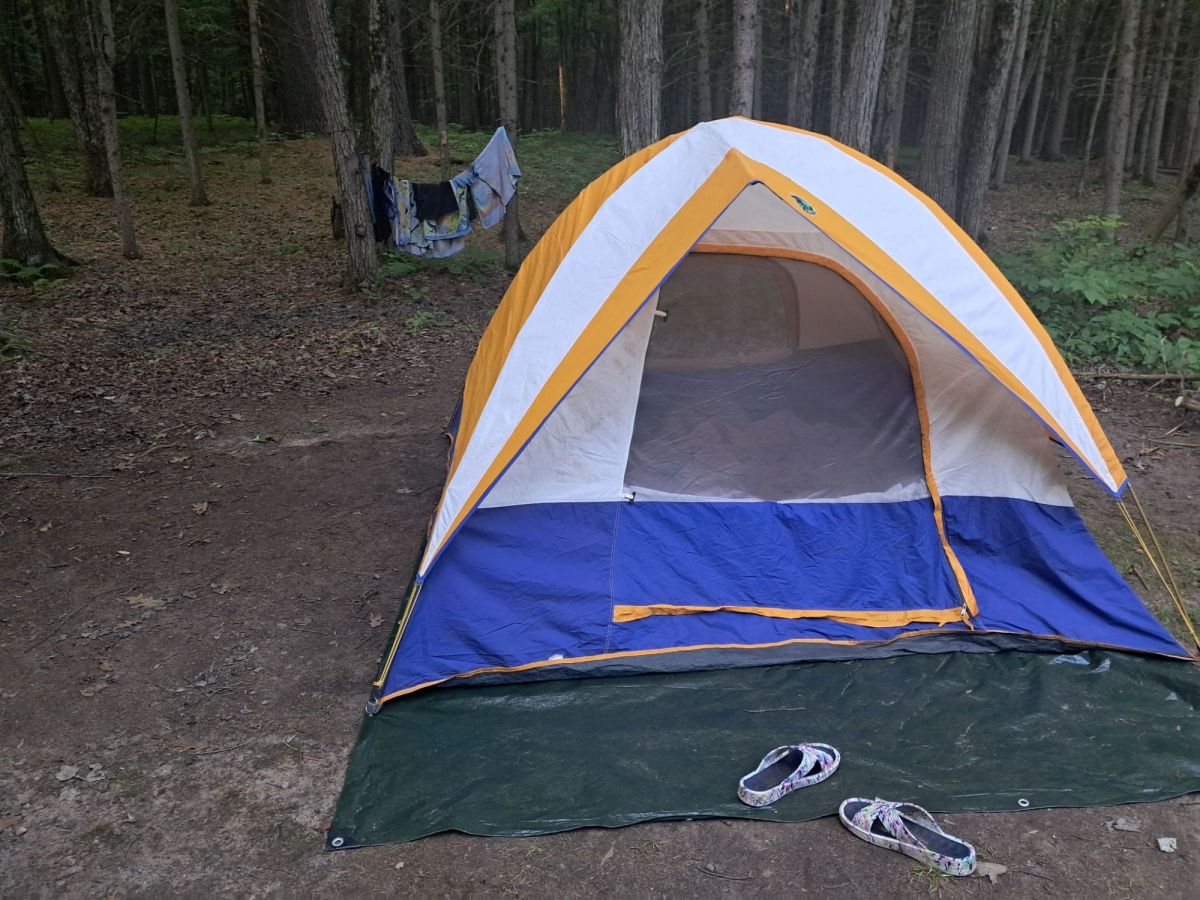
    I was a sophomore then, half-frozen in an April campsite among classmates who still felt like strangers. We shivered through fog, stumbled through tent poles, and passed trail mix in squeaky vans that smelled of sunscreen and coffee. By the time we gathered around cast-iron pots of jambalaya that evening, laughter had cracked the surface. Those strangers were already turning into companions.

    That weekend held a dozen firsts—my first field notes, my first tent pitched incorrectly, my first realization that landscapes told stories. Stratigraphy became a language: layers pressed with memory, stone turned to archive. We spent days trudging through mud, tracing formations in notebooks, learning to see the earth as something alive. Nights filled with smoke and banjo chords, the kind of tiredness that makes everything simple, everything good.

    Fifteen years later, the same circle still gathers—different campsite, different season, same warmth. We no longer ride in university vans. Now we drive in caravans of minivans and hybrids, dogs panting in the back seats, children singing off-key. Some arrive with spouses, children, and dogs, others with partners who share different rhythms of life. Each presence matters.  The ones without kids often become the fresh energy in the group—playing with children, keeping traditions, reminding us that life is not only about caretaking but also about curiosity, independence, and joy on one’s own terms.

    The jambalaya has been replaced by pudgie pies browned over coals, each stuffed with cheese, vegetables, and pepperoni. Mornings rise with a tangle of sounds—an infant crying, kids chasing dogs, coffee sputtering in a percolator. The hikes are shorter, the pace slower, but the laughter feels unchanged. We talk about work, gardening, art, and aging parents. Between stories of milestones and mishaps, the old tales surface too—professors coaxing us to read the earth, tents blown loose in South Dakota, the mud and sand that never washed out of our journals.

    Geology taught me that layers never vanish; they shift and hold. Those early days formed the base layer of my life: dusty trails, notes stained with wonder, campfires burning into friendship. Above them, new layers rise—my child tugging tent cords, friends trading stories across the fire, dogs circling the light.

    Sometimes I still hear my professor’s voice through the morning hush, calling across time. It echoes now in the laughter of friends, the shouts of children, the quiet gratitude of belonging. Like the rocks I once studied, I carry every layer within me. Together, they form not just a good life—but a whole one.

    What places or experiences have left layers in your life—ones you still carry years later? I’d love to hear your story in the comments.

    If reflections like this speak to you, subscribe below to join a circle of readers who believe in the quiet beauty of memory, connection, and time—one layer at a time.

    #Storytelling #Nostalgia #GeologyOfLife #FriendshipThroughTime #OutdoorMemories #Reflection #NatureWriting #LifeLayers #CampfireStories #WritingCommunity

  • The Place with the Two Blue Silos

    If you’ve ever driven through the Midwest, you’ve seen silos. They rise from the fields like punctuation marks in the long, flat sentences of corn and beans—periods, exclamation points, sometimes ellipses trailing off into the distance. Most people don’t think twice about them. But on my childhood farm, they weren’t just part of the scenery. They were the story.

    Our landmark was unmistakable: two midnight‑blue Harvestore silos standing side by side at the edge of the barnyard, a glacial drumlin lifting in the west behind them. You could see them from miles away, shining like church steeples in the sun. Whenever someone asked for directions, the answer was simple: the place with the two blue silos. No map required—just look for the cobalt towers breaking the horizon. That was home.

    As a child, they seemed impossibly tall, almost otherworldly. I’d tilt my head back until my eyes watered and my neck ached, trying to catch the curve of their domes. Birds wheeled around their crowns, dust curled at their bases, and summer storms lit their sides with a brilliance that made them glow as if lightning paused there on purpose. They weren’t just farm equipment; they were guardians, keeping watch over our days.

    With time, though, I learned they carried a complicated legacy. For my parents’ generation, a Harvestore wasn’t just storage—it was a pledge to the future. The glossy blue walls promised fresher feed, healthier herds, easier labor. To build one was to take a stand for progress, to believe that farming could evolve and endure.

    But by my childhood, that faith had thinned. Repairs were costly. Lawsuits and disappointment trailed the company’s once‑gleaming reputation. Neighbors grumbled about cracked panels and complicated unloaders; some tore their silos down, hauling away the dream they once anchored. Ours, though, remained. Not because they worked flawlessly, but because they had become more than machinery. They held memory as much as silage—hope, pride, stubbornness, and the refusal to let go.

    The longer I live away from that farm, the more I realize those silos were never only about feed. They were about identity—the way families pin themselves to symbols long after the shine has dulled. They remind me of the uneasy truth that progress is both promise and burden, that we measure ourselves by what rises from our yards: a new tractor, a bigger shed, two blue towers that said we belonged to an era of ambition.

    Even today, when I drive through farm country, my eyes scan the horizon for Harvestores. Some still gleam, others lean into rust, many stand abandoned. Each one is its own monument: to the optimism of a certain time, and to the hard reckoning that followed. When I spot one, I don’t just see steel and glass. I see the soft evenings of my childhood—when the setting sun stained our silos deep indigo and anchored me to a place I’ll always claim as home.

    That farm doesn’t need to be drawn on any map. For anyone driving those roads, the directions are still enough: look for the two blue silos.

    Have you ever had a landmark—on a farm, in a town, or in your neighborhood—that became more than just scenery, something that carried your family’s history or identity? Share your thoughts below, and subscribe to join a group of like-minded people.

    #FarmHeritage#RuralRoots#HarvestoreHistory#SymbolsOfHome#MidwestStories#HeartlandMemory#FarmLegacy#LandmarksOfLife

  • Tickets, Trade-Offs, and Tilt-a-Whirls

    We stepped through the county fair gates with twenty ride tickets to last the whole day.

    To my five-year-old son, they were a golden key to unlimited fun. To me, they were a limited resource — and a math lesson waiting to happen.

    The August sun pressed down, bouncing off the metal siding of food carts, warming the air thick with sugar and frying oil. My daughter rode pressed against me in her carrier, legs dangling. My son’s grip on my hand was insistent, his eyes wide at the swirl of lights, music, and cotton candy threaded like clouds on sticks.

    Food first. He inhaled a slice of pizza that bent under its own cheese. My daughter and I nibbled golden little corn dogs, dipping them into mustard between chilly, sweet spoonfuls of chocolate malt. Around us, the whole fair smelled like carnival excess — fried dough and roasted corn braided with the faint, earthy whisper of hay from the barns.

    In the barns, we slowed. Cool sawdust underfoot. Pigs sprawled, twitching in their sleep. Cows blinked at us, slow and old as if they carried time in their eyelids. Ducks moved like a marching band, utterly synchronized. My daughter pressed her palm against the fence, giggling at the goats’ wiry coats, until my son tugged again: “Can we go see the rides now?” He could hardly hold still long enough to notice the animals.

    And so, to the midway. Even in daylight, the rides blazed with flashing reds, blues, and yellows. The Tilt‑a‑Whirl roared and spun as somewhere behind us a game vendor promised, “Everyone’s a winner!”

    At the ticket booth, the glossy sign read:
    $1.50 per ticket, or 20 tickets for $25.

    I slipped the bills across and felt the tickets fall into my palm, brittle and new. Twenty was both so many and so few. I crouched beside my son and set the rule: “This is all we have for rides. Once they’re gone—we’re done.”

    He looked so serious, nodding in a way almost too mature for him — and then, in the same breath, he pointed at the Ferris wheel, towering and slow, irresistible.

    “That costs twelve just to get us all on,” I reminded him. More than half, for one spin.

    He thought hard. I swear I could see the weight of the numbers pressing through his forehead. After a pause: “Hmm… maybe the train?”

    And so we boarded the little track, faces shining as we looped past hand‑painted scenery and strangers who waved like old friends. Each ride became a miniature act of accounting. Nine tickets for all three of us. Three if it was something just for him. By the next stop, he was calculating first before I could prompt, as if the tickets themselves had aged him in the space of an afternoon.

    We skipped bumper cars (he didn’t meet the height requirement), found delight in a giant slide, and ended at a kiddie racetrack where his laughter spun circles larger than the ride itself. The tickets thinned until only five were left, curling soft in my pocket.

    That’s when the firetrucks gleamed at us: bright red, silver bells clanging steadily. My son clutched three tickets with steady hands, climbing in like a child stepping into destiny. My daughter tugged me, wide‑eyed: “Mama, me too?”

    The operator leaned on the lever with a grin. “She can ride her own for two.”

    Perfect symmetry.

    I buckled her in, and when the trucks began to roll, her voice rang out: “Whee! Whee! Whee!” — not polite squeals, but unabashed joy so pure it turned heads. Parents around us laughed in recognition. My son dismounted, flushed and victorious, announcing, “We used them just right, huh, Mom?”

    And he was right. The Ferris wheel still turned in the distance, massive and romantic, but I didn’t regret skipping it. Twenty tickets had carried us farther than I’d expected. They had bought laughter, choice, restraint, and — maybe what moved me most — a glimpse of my son practicing something like grown‑up wisdom, while still small enough to believe everything around him was magic.

    We left with empty pockets, sticky fingers, tired children. But the memory lingers still — golden as the tickets themselves, and spent exactly right.

    Do you have experience with teaching children about money? Share your experiences below, and subscribe to join a group of like-minded people.

  • Guns, Smoke, and Summer Steel

    Guns, Smoke, and Summer Steel

    If you’ve spent any time in farm country, you know that summer is a season steeped in tradition: sweet corn roasting on the grill, fireworks bursting above open fields, and parades weaving through small-town streets. Another tradition that perfectly captures the spirit of summer for me is the roar of engines and the gritty spectacle of a tractor pull.

    This fascination goes back generations. Our grandparents told stories of the early days when tractors were just transforming American agriculture:  mechanical workhorses that symbolized grit, self-reliance, and progress. What began as casual farmyard boasts over who had the stronger machine has since evolved into something far more ceremonial: a celebration of horsepower, heritage, and the unbreakable threads that tie country communities together.

    That’s why, on a sun-drenched Sunday afternoon, I find myself heading to the local gun club, an unexpected but oddly fitting venue, to catch this year’s edition of the Farmersville pull, colorfully named the Guns, Smoke, and Beer Tractor and Truck Pull.

    I find a spot along the chain-link fence, close enough to feel the rumble. Behind the scenes, tractors line up like gladiators awaiting their turn:  some lovingly restored antiques with curved fenders and hand-lettered paint jobs, others futuristic behemoths fitted with exposed engine blocks, massive rear tires, and vertical stacks that shimmer like weapons under the noonday sun. Each machine has its own name, its own backstory, its own fan club.

    The PA system crackles and the announcer wastes no time bringing the crowd to life. The first competitor is already strapping on a helmet. There’s a hush. The green flag lifts.

    Then:  ignition.

    A bellow of power splits the silence. The tractor lurches forward, chained to a sled ominously named The Eliminator. The front wheels lift clean off the clay. Dust flares as the driver leans in, holding the machine straight as the sled ratchets its weight forward, sinking deeper into the earth with every passing foot. The engine howls. My chest vibrates with it.

    That tractor is really working! Photo by Hillary S.

    Instinctively, my hands tighten on the fence. Cheers rise. For a few heartbeats, it feels less like a pastime and more like a proving ground:  man and machine battling inertia in unspoken defiance of gravity and time.

    When the tractor finally grinds to a halt and lets out a victorious hiss, the crowd roars approval. The driver remains still in the cab just long enough to savor it.

    Between runs, the rhythm slows but never stops. A blade-toting grader drags the track smooth again. Kids sprint along the fence pretending to drive their own invisible rigs, engines sputtering gleefully. Neighbors swap guesses on winners while sipping sweating cans of beer and soda. Raffle volunteers roam the crowd with plastic buckets and tickets. From the speakers, the announcer plays local DJ:  blending stats and wit with hometown shout-outs. All the while, the tension builds toward the next burst of combustion.

    And as the event rolls on, camaraderie deepens. Nostalgia mingles with anticipation. Every round adds to a growing patchwork of shared memory:  anecdotes of legendary pulls from years past and parents pointing out last year’s champion to wide-eyed children.

    By early evening, as the final competitors rumble down the track and the engines begin to cool, golden light falls across the dispersing crowd. A breeze kicks up, lifting grit into the sky like smoke from a burn pile. People linger, reluctant to let the day end. No one’s in a rush. Kids hang off the backs of UTVs. Parents gather chairs and grass-filled blankets. There’s laughter, hugs, and long goodbyes.

    Driving home, dust clinging to my shoes and the growl of engines still echoing in my ribs, I realize this wasn’t just a distraction or a show. It was a testament:  to tradition, to craftsmanship, to communities that still gather not just to watch, but to belong.

    And as the countryside stretches before me, each field burnished by the fading sun, I already know: I’ll be back next year, same track, same dust, same roar. Some rituals are worth waiting for.

    Have you ever been to a tractor pull? Comment below, and subscribe to join a community of like-minded people.