Category: Food

  • Homemade Family Breakfast with Child Sous Chefs (Hashbrowns, Sausage, Eggs)

    Homemade Family Breakfast with Child Sous Chefs (Hashbrowns, Sausage, Eggs)

    Perfect Saturday Morning Bonding

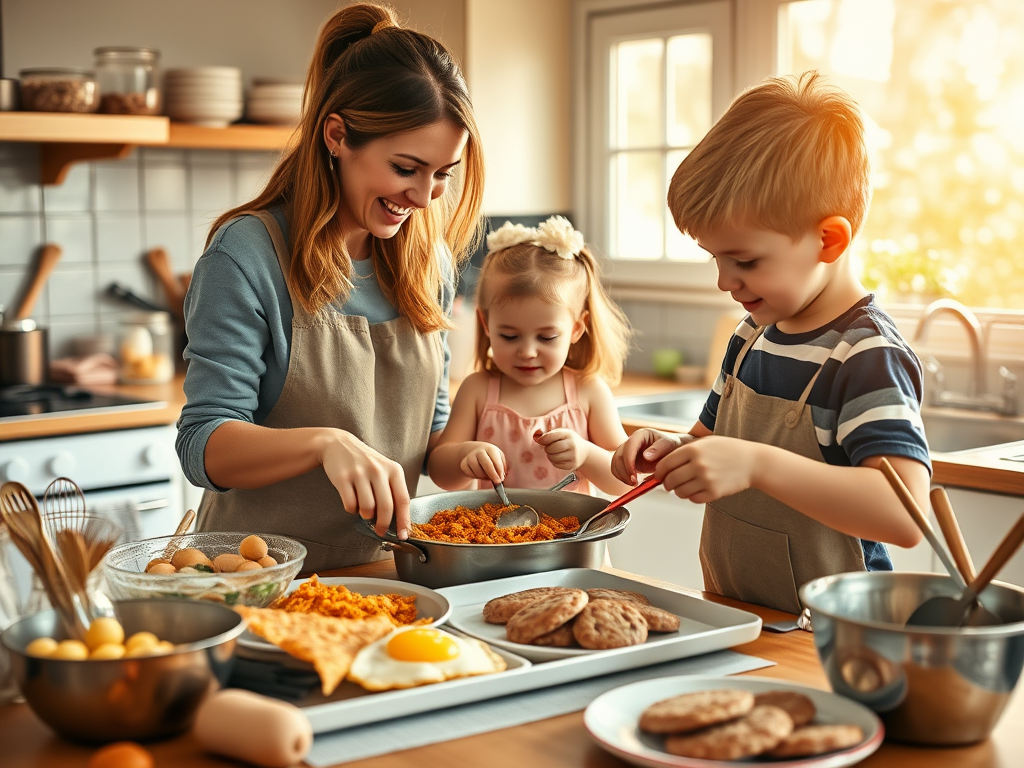
    It’s a bright morning, the kind of day that feels full of promise and potential. My husband and I are sitting in the living room with our two children, a toddler girl and a 5-year-old boy. Sunlight casts a warm glow over the carpet where toys, books, and a blanket fort are staged.

    The television is broadcasting Saturday morning cartoons, and we discuss our dreams from the night before. The gurgling of the coffeepot can be heard from the kitchen and the smell of coffee wafts into the room.

    The day stretches ahead invitingly with no work or school obligations pressing—a perfect opportunity for family bonding and completing homestead tasks. The pace is unhurried and the mood is light as the cartoons end and I shepherd my family into the kitchen to prepare breakfast.

    Weekend Diner Breakfast from Homestead Ingredients

    Weekend breakfasts are a big deal in our household, and I pride myself in making a meal you could order in a greasy spoon diner. I open the refrigerator to discover leftover boiled potatoes, fresh eggs, and the pound of ground pork that defrosted from last night. Based on the contents of the refrigerator, I decide that we will prepare hashbrowns, eggs, and sausage—a classic family breakfast recipe.

    I have two sous chefs and an assistant who will help me prepare the food.

    Cooking with Children: Kitchen Chaos and Teamwork

    I locate the box grater and ask my son to help grate potatoes. He excitedly pushes a chair over to the counter where the potatoes, grater, and cutting board are staged. As he begins to grate potatoes, I hear my daughter screeching in protest as she toddles over to the chair, climbs up, and uses all her strength to push my son off the chair.

    My son grunts in frustration as he struggles to maintain his position, gripping both hands on the counter. Sensing a conflict, I push a second chair over to the counter and place my daughter there. My daughter then contents herself with eating cold potatoes while my son continues his task.

    Homemade Sausage Patties: Family-Sized Recipe

    I proceed to my next job, preparing the seasoning for the homemade pork sausage. I slide past my son and daughter to gain access to the spice cabinet. After spinning the lazy Susan a couple of times, I extract brown sugar, sage, paprika, salt, and pepper, then mix these spices in the proper ratio before adding the ground pork.

    I squeeze the pork/spice mixture, trying to ignore the discomfort from cold exposure. After the sausage is properly mixed, I divide it into 4 uneven balls: a small one for my daughter, a medium one for my son, a large one for me, and an extra-large one for my husband.

    My husband then stages two plates and two pieces of saran wrap, positioning the two plastic pieces between the plates. He places the pork balls one by one between the two plastic pieces, using his weight to flatten the balls into sausage patties.

    The Magic of Cast Iron Cooking

    While my husband is preparing the sausage patties, the cast iron skillet is preheating. As the patties are formed, I place them into the skillet and hear the characteristic sizzle. The kitchen begins to fill with the smell of rendering fat and toasting spices, blending well with the nutty coffee undertones. After the sausage bottoms are properly browned, they release easily from the pan as I flip them.

    Kitchen Helpers Make Hashbrowns

    By this time, my son has grated most of the potatoes, and I place them into a bowl. I also add dehydrated onion, celery, garlic, and green pepper, salt, and black pepper. The sausage patties are removed from the pan and placed on a plate. The rendered sausage fat is used to flavor and brown the grated potatoes. In this way, nothing is wasted.

    Teaching Kids Stainless Steel Pan Science

    As the hashbrowns cook in the pan, I remove the eggs from the refrigerator. I crack the eggs, and my daughter insists on crushing the eggs to release the yolk and white. Some eggshells inevitably find their way into the clear and marigold-colored mixture, but I do not mind expending extra effort to extract them. I add a splash of milk, a few shakes of salt, and freshly cracked pepper. I then pass the scrambling fork to my daughter. She beams with pride as she blends the ingredients. I am close by with a rag to wipe up spills.

    The smell of browned potatoes intermingles with the pork sausage, making my mouth water. I flip the potatoes, remove a stainless-steel pan from my kitchen drawer, place it on the stove, and turn the dial to high heat. The stove clicks to life, and blue flames emanate from the burner.

    I point out the hot stove, then show my daughter and my son how a stainless-steel pan can be made non-stick by heating the pan hot enough for the water to dance rather than instantly evaporate.

    Perfect Scrambled Eggs with Child Help

    Once the pan is ready, I add oil, then ask my son to add the scrambled egg mixture. Steam rises from the pan as the eggs rapidly cook. I trust my son to stir the eggs until they are mostly cooked while remaining close by in case I am needed. When the eggs are ready, they slide effortlessly from the pan onto a plate. I remove the hashbrown skillet from the stove and place it in the middle of the table.

    Family Breakfast: The Reward of Teamwork

    I thank my family for their help with preparing the meal. My daughter has already climbed onto her dining chair booster seat in anticipation. While I finish prepping, my husband places appropriate amounts of eggs, hashbrowns, and sausage on her plate, cuts the food, and allows her to eat. She squeals in approval as she dives into the sausage, then asks for a cup of milk. My son also starts with the sausage, then the eggs, then the hashbrowns.

    My husband and I discuss our plans for the day as we savor our meal and our time together. My son shares interesting facts about his newest fascination, the Titanic. The eggs are creamy and rich with a velvety texture. The pork imparts an earthy, well-rounded taste that pairs well with the crispy exterior and juicy interior. The hashbrowns offer a pleasant balance of saltiness and a satisfying crunch. The trio together makes for an excellent family breakfast recipe, and a great way for me to bond with my family.

    Lessons Beyond the Kitchen

    After breakfast, I collect the dishes to wash. My daughter and my son push chairs to the sink and play in the water while I wash the dishes. As I dip my hands in the warm soapy water, I feel a deep sense of pride in their burgeoning skills. Each small success, whether it’s a perfectly cracked egg or a well-seasoned hashbrown, sparks a gleam of confidence that I know will serve them far beyond the kitchen.

    The warmth of these moments lingers long after the plates are cleared and the dishes are washed. We share stories, swap jokes, and sometimes, simply enjoy the quiet comfort of working side by side.

    These are the moments when our bond grows stronger, forged in the gentle rhythm of morning routines and the shared satisfaction of a meal made together. I treasure these simple rituals, knowing they nourish more than just our bodies. They plant seeds of independence, resilience, and togetherness in my children and our family.

    Years from now, I hope they will remember not just the taste of homemade sausage, but the feeling of belonging, capability, and love that filled our kitchen these mornings. These memories, built one breakfast at a time, are the true sustenance of our family.


    What’s your favorite family breakfast recipe? Share your cooking with toddlers stories below!

    Do you have a beloved tradition in your family? Share your experiences below, and subscribe to join a group of like-minded people.
  • The Power of Local Food: Lessons from Ethnic Cooking

    Until I attended college, I believed that cultural influences on food were largely a thing of the past.  I grew up in a part of small-town Wisconsin where the cultural influence of my German dairy farming heritage had diminished over the years.  Regional dishes, while still present, were largely nationalized.  Food was sourced from boxes at the grocery store in the wintertime.  Even in summer, the food from gardens supplemented our dishes, but were never the bulk source of our food.  Farmers’ markets were present, but we did not patronize them.  I thought this was how everyone lived.

    The first chance I had to learn about different culinary experiences was after I started college in Madison, a nearby city.  From childhood on, I had always wanted to learn how other people lived, and suddenly I was surrounded by many different cultures.  European, Asian, and African cultures all coexisted together on campus, practically begging for me to observe their customs.  During my 6-year undergrad and graduate school tenure, I made Asian dumplings, drank Turkish coffee, watched African dance, and had hot pot many times with such great company.

    Towards the end of undergrad, I began working in a soils lab, performing experiments to better understand the swelling properties of bentonite clay.  For a person who majored in geological engineering, it was a dream come true and my first real job in my chosen industry.  Although the work was tedious and painstaking, I felt like I was finally flourishing as a professional.  And it beat one of my previous jobs of counting corn kernels.

    During this time, I frequently ate lunch with my Chinese coworker, whose parents had recently immigrated to Madison from China. I was always fascinated with his lunches.  Every day, he ensured he ate every morsel of food on his plate, saying “Every grain of rice is a drop of sweat from a farmer’s brow.”  His sautéed wood ear mushrooms looked delicious every time he brought them, which was frequently.  In turn, he seemed fascinated with my own solo culinary exploits during “spaghetti week”, the time I inadvertently made a pot of spaghetti so large it lasted for a whole week’s worth of lunches and dinners.  I was only too happy to share some with him, as anyone who has made too much spaghetti knows.  We became such good friends that he gladly accommodated me at his parents’ house during “Homeless Night”, the one night every year when the apartments near campus are prepared for next year’s leasers, and I needed a place to stay.

    That night, I was excited to ask how I could help him prepare supper.  The rice cooker was already humming as he grabbed a knife and basket and gestured me to follow him to his back yard.  Just outside the door was a green grass carpet about 6 inches tall and the footprint of a child’s backyard swing set.  These were Chinese chives, also known as garlic chives.  The patch was (and still is) the largest I had ever seen.  Using the knife, he carefully severed handfuls of chives at the base, leaving an inch for the stubs to regrow.  He slowly filled his basket, then proceeded to lead me back to the house.

    I kept him company that night as he prepared the most delicious sauteed Chinese chives over a bed of rice.  The wok sizzled as he poured in the oil then added the chives.  A faint allium smell wafted over to me as he added salt and pepper to taste.  Dinner was on the table in short order.  The chives were garlicky, salty, and chewy.  The rice was fluffy and perfect.  He prepared another dish, but for the life of me I cannot remember what it was.

    Ethnic traditions and edible landscaping were not completely new concepts at the time.  My family grew asparagus, horseradish, and rhubarb, perennial plants that were beautiful as well as being edible.  But it always seemed that these foods augmented a grocery store-sourced meal, not the other way around.  That simple dinner that my friend prepared was the first time I truly observed the power of the “outdoor pantry” in action.  Fresh, local food that comprises much of your dinner can be as close as your backyard and eaten within an hour of harvesting.  That meal made an indelible mark on me, and I’ve strived to source the bulk of my meals from local sources ever since.

    I’ve lost contact with this friend in the intervening years.  I moved several times, got married, and had 2 wonderful children.  Last I heard from him, he was still in Madison and enjoying himself.  If he’s reading this, I wish him well as he’s moving through life.  Your humble meal inspired me to prepare many simple delicious meals from my backyard.

    My personal priorities have changed over time, but my feelings about food remain unchanged.  I have been successful in expanding my food preparation skills over the years, learning to bake bread, preserve vegetables, and ferment cabbage into sauerkraut, a practice in line with my cultural heritage.  I have even started growing mushrooms for our table.  I still remember my friend from time to time as I establish and expand my chives patch or harvest an especially large bounty of food to share with family and friends.

    Did you learn something valuable from another culture? Share your stories below, and subscribe to join a community of like-minded people.

  • Sourdough Bread

    Sourdough Bread

    To me, sourdough is both fascinating and frustrating.  How can something based only on simple pantry staples:  flour, water, and salt, result in such a delicious cornerstone food of society?  Once you attempt your first few loaves, you begin to understand.  There’s a certain alchemy in the starter, the captured yeast on which the success of your culinary exploits rest.  I’ve observed that like all worthwhile things in life, sourdough is not just bread, but a lesson in patience, a crash course in humility, and a reminder that the messiest things in life often taste the best.  And even a failure is really just toast, breadcrumbs, or croutons waiting to happen.

    You begin by adopting a starter, a sentient lump of flour and water that demands more attention than the most finicky orchid.  The starter acts like a child who only communicates via bubbles and guilt.  Feed it too much flour and it floweth over, creating a bubbly mess.  Forget it for a day, and it develops both the boozy aroma and the clear liquid on top.  Nurturing a starter can be unpredictable, expensive, and prone to failure.  Meanwhile, your actual orchid withers away in jealousy.

    After mixing the dough, you begin the ultimate test of patience.  You’ll attempt to stretch and fold the dough, only to end up with a glue-like substance clinging to your hands like wet clay.  The dough metaphorically laughs as it oozes across the counter, mocking your attempts at control.  After much coaxing over several iterations, the dough relaxes and begins to cooperate.

    After stretching and folding, you enter the bulk fermentation phase, where time becomes a myth.  The recipe claims four to eight hours, but your dough adheres to its own cosmic clock.  If the dough is too cold, it will remain as dense as a rock.  If the dough is too warm, it will overproof into an exhausted heap.  You’ll obsessively poke the dough, whisper encouragement, and question your life choices as it defies every timeline you’ve read online.

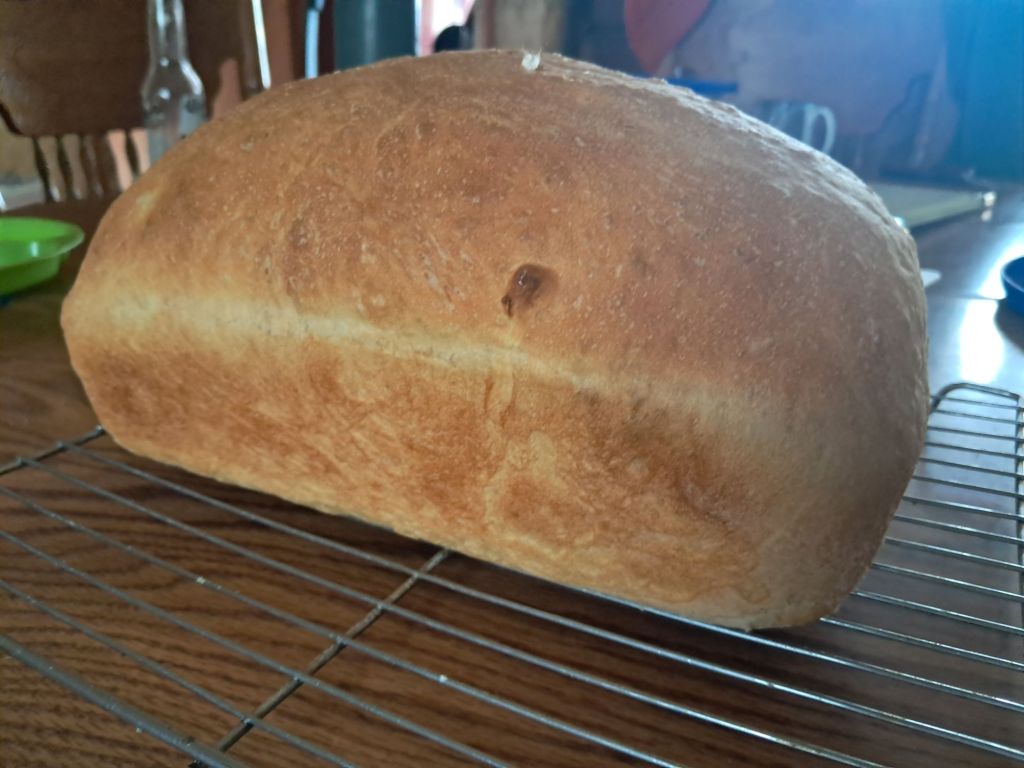
    After bulk fermentation, the dough must be shaped into a loaf.  It’s the dough’s version of a spa day, where it is pampered, tucked, and rolled into a sleek new outfit before its big debut in the oven.  You gently flatten the dough into a rectangle. Next comes the folding, first the top third down, then the bottom third up, creating a snug little dough envelope that’s hopefully ready to rise to the occasion.  As you forgot to dust your hands, you now need to scrape dough off your elbows before beginning the roll.  After thoroughly cleaning your extremities, you pinch the seams with the seriousness of a detective sealing evidence, tuck in the ends, and flip the dough seam-side down into the loaf pan, ready for its oven transformation.

    You’ve shaped your loaf into something resembling art. Because you’re difficult and don’t like the fancy sourdough boule shape, you preheat a roasting pan like an oblong sarcophagus.  When you finally score the loaf, your razor either drags like a butter knife or gashes the dough like a horror movie prop. The result is a crust that resembles a topographical map of Greenland.  Into the oven it goes, and for the next half hour you pace and agonize more than an expectant parent.  Will it spring?  Will it split?  Or will it burn?  The smell of success fills the air.  You optimistically crack the lid, only to find a solid brick replacing the airy loaf of bread you expected.  Because you always finish what you start, you dutifully lower the oven heat to finish the bake, watching through the glass door as the crust turns darker than your humor.

    Sliding the pan from the oven, you wait until the loaf is cool enough to slice.  The knife skids across the bread crust as if it is duller than a spoon.  After much cajoling, the crumb finally stares back like a party guest trying desperately to impress.  Instead of a light, airy charm, the holes are somehow all wrong, tiny, and, tight.  The mouthfeel is wet and chewy rather than fluffy and inviting.  And yet, I will inevitably try again to make that elusively perfect loaf.  Kneading dough is cheaper and tastier than therapy, and I’ve learned to love my finicky starter.  It’s part pet, part science experiment, and entirely a reminder that chaos can, occasionally, rise to greatness.  Finally, I can bond with fellow bakers over our shared failures.  After all, misery loves company, especially if that company brings fresh bread.

    If you enjoy content like this, subscribe below to join a circle of readers who understand the frustrations, and joys, of a perfect loaf of bread.