Tag: homesteading

  • My Top 5 Essential Grocery Staples for Homesteading and Scratch Cooking

    My Top 5 Essential Grocery Staples for Homesteading and Scratch Cooking

    List your top 5 grocery store items.

    Disclosure: This post contains affiliate links. As an Amazon Associate, I earn from qualifying purchases. Thanks for supporting Practical Homesteading!


    If you walked down a typical grocery store aisle with me, you might think I’m lost. While most American shoppers reach for convenience, I’m the one squinting at sacks of flour, jars of yeast, and tubs of coconut oil — the same staples my great-grandmother probably chose 75 years ago. I don’t shop for ready-made meals; I shop for possibility.

    At home, those bulk ingredients become whatever we need — bread, tortillas, sauces, or even snacks. If I don’t know how to make something, I learn. A simple search and a quiet evening in the kitchen have taught me more than any cookbook could. This hands-on, old-fashioned approach has saved us thousands over the years, but more importantly, it’s built confidence, patience, and gratitude for every meal we share.

    Now, that doesn’t mean I don’t enjoy Chinese takeout once in a while! I’ve learned to make my own dumpling and stir-fry recipes — they’re delicious when they turn out, and hilarious when they don’t. (One of my most epic flops was a lemon pepper chicken so salty it could’ve been used as a salt lick.) Mistakes keep me humble, and in a way, they’re the best ingredient for growth.

    Homemade potato chips
    Bloody Mary with mostly homegrown ingredients

    So with gratitude — and a dash of humility — here are my five most essential grocery items and how they shape my kitchen life on the homestead.


    5. Coconut Oil

    Coconut oil (affiliate link) is my go-to multipurpose fat. It melts like butter and works wonders in place of lard or shortening. I use it to pop popcorn, bake desserts, and even blend it into homemade flour tortillas.

    Its aroma — faintly sweet and buttery — adds a subtle depth you can’t quite place but always appreciate.

    Tip: For tender baked goods, replace half the butter or shortening in your recipe with coconut oil, then reduce liquid slightly. It gives just enough chew without the greasy feel.


    4. Active Dry Yeast

    Yeast (affiliate link) is the quiet hero of my kitchen — small, simple, and full of potential. Watching dough rise never loses its magic, especially when the kitchen smells of warm, sweet yeast and anticipation.

    It symbolizes self-reliance: turning flour, water, and salt into something living, breathing, and nourishing.

    Tip: Always proof yeast with a pinch of sugar in warm water (around 110°F). If it bubbles within 10 minutes, your dough is ready to rise.


    3. Chicken and Beef Bouillon Powder

    I lean on chicken (affiliate link) and beef (affiliate link) bouillon powders for soups, gravies, and especially rice. Cooking rice in chicken or beef stock instead of water transforms it from plain to crave-worthy.

    I also mix beef bouillon into my homemade onion soup powder — it adds warmth and richness that store mixes can’t match.

    Tip: Swap half the water for stock when cooking noodles, grains, or vegetables. It’s the fastest way to round out flavor without extra sauces or salt.


    2. Plain White Sugar

    Plain old white sugar earns a spot near the top because it does so much more than sweeten desserts. It wakes up yeast, balances tomato acidity, and — lately — fuels our lemonade habit.

    My sister keeps me well-supplied with lemons, so I make fresh lemonade weekly. When the kids come in sun-dusted and thirsty, that chilled pitcher waiting in the fridge makes them light up.

    Tip: Add a teaspoon of sugar to tomato sauces or soups to tame acidity without losing depth of flavor.


    1. Flour

    If coconut oil is the heart of my pantry, flour is its backbone. I buy high-gluten flour for breadmaking (affiliate link), but I’m excited to experiment more with ancient grains soon.

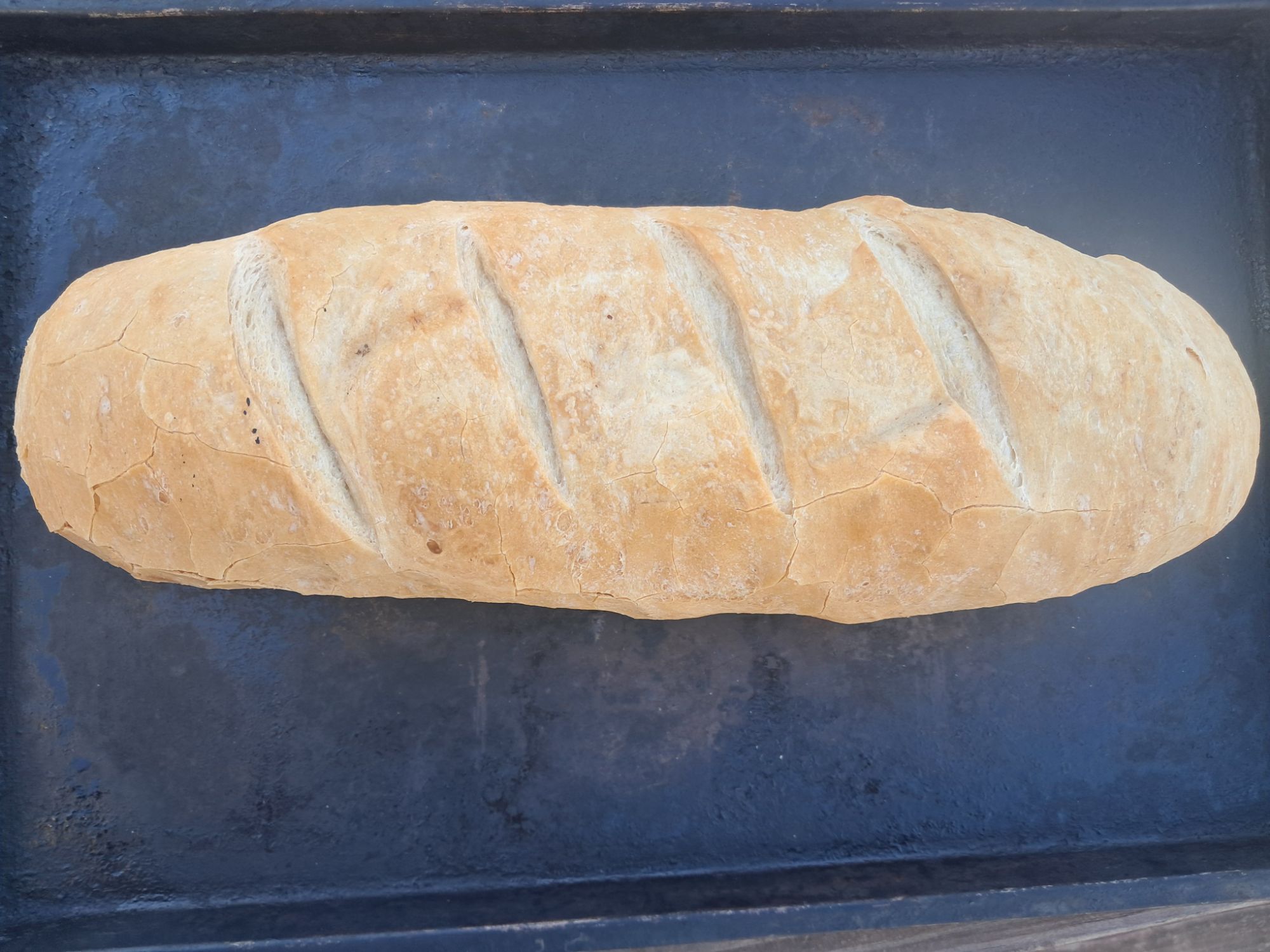
    The feel of dough under my hands, the smell of a fresh loaf cooling on the counter, and the crackle as it’s sliced — it’s the rhythm that grounds my kitchen.

    Flour builds loaves, tortillas, focaccia, and even desserts. It’s humble, forgiving, and powerful — no one in my house has ever once complained about home-baked anything.


    We rarely buy vegetables from the store, relying instead on what we’ve grown and preserved — jars of tomatoes, beans, and pickles lining the pantry. They remind me that what we grow in summer sustains us long after the frost sets in.

    Our winter meals center around potatoes, onions, and frozen vegetables like broccoli and bell peppers. We’ve experimented with extending our garden season using a small greenhouse and straw. There’s something deeply satisfying about pulling greens or a carrot from a garden while snow still glitters outside.

    As for meat, we’re still building toward full independence. We raise our own pork, purchase beef from my sister’s grass-fed herd, and still buy chicken from the store — for now. One day soon, meat birds will join the homestead lineup, and the circle will feel more complete.

    Each grocery item on this list earns its place not for novelty but for versatility. They remind me that eating well doesn’t require endless ingredients — just a few solid building blocks and the creativity to make them shine.

    This slower, more deliberate approach to cooking has taught me creativity, patience, and gratitude — lessons that spill over into every other area of life.

    Homesteading has shown me that ingredients matter less than the care and love you pour into them. Every loaf, jar, and meal built from raw goods feels like an act of heritage — and hope — in a world that moves too fast.

    Homestead maple syrup

    What five grocery staples would make your list? Please share them in the comments. And if this post inspired you, please like, share, or subscribe to follow more homesteading stories, seasonal recipes, and simple living tips.

    Related Posts

    How a Simple Venison Stir Fry Taught Our Family the Heart of Homesteading

    Disclosure: This post contains affiliate links. As an Amazon Associate, I earn from qualifying purchases. Thanks for supporting Practical Homesteading! There’s something special about meals that tell a story. The kind of food that’s more than a recipe — but part of life. For us, that story came together in one simple dish: a homemade…

    Keep reading
  • Feathers, Frogs, and Family: Lessons from Our Chickens

    Feathers, Frogs, and Family: Lessons from Our Chickens

    What are your favorite animals?

    I remember he day our delivery person lingered just to pet a chicken. It marked a quiet but unforgettable connection between humans and animals in our lives. That black hen with golden feathers wasn’t just beautiful. She was a symbol of the surprising personalities and stories hidden in every farm animal. These stories have shaped my family and me in ways I never expected.

    Farm animals have always felt special to me. More than simple creatures in a barnyard, they each hold distinct characters and life lessons. Chickens, in particular, embody a fascinating mix of contradictions: small yet bold, practical yet full of surprises. Take the first time I saw one catch and eat a frog, for example. I was both fascinated and startled. There she was, darting through the grass with sharp precision, capturing a hopping frog with a triumphant snap. This wild side of chickens revealed itself suddenly but clearly—showing me they are more than gentle garden pets. They are resourceful, lively members of the natural world.

    Equally meaningful to me has been watching my son grow alongside these animals. From tentative first touches to bursts of laughter as he ran alongside the flock, his connection with the chickens deepened steadily over time. This growing bond reached a milestone when we gathered our first pullet egg together. It was a small, warm marvel that tasted like patience and hope. Sharing that fresh egg was a celebration of both life and the quiet rituals that come from care and attentiveness.

    Beyond their intriguing personalities and practical benefits like eating food scraps and producing fertilizer, these animals have woven themselves into our daily rhythms and affections. It’s no wonder our delivery person was so drawn to that golden-feathered hen. Her presence brought him brief moments of comfort and joy. When she passed away, it marked a quiet loss that reminded me how deeply animals can touch human lives and how these bonds leave lasting marks on our hearts.

    Farm animals are, in truth, companions who teach us to slow down, observe, and connect with the cycle of life. Chickens, with their surprising mix of wildness and gentleness, stand out as providers with vibrant personalities and teachers. In their company, I have found moments of laughter, reflection, and an enduring appreciation for the simple, rich realities of living closely with nature.

    What’s your favorite farm animal or memorable moment with animals that has touched your heart? Share your stories in the comments below—I’d love to hear about the special connections you’ve had with animals!


    If you enjoyed this essay and found these stories meaningful, please like this post. Share it with fellow animal lovers. Subscribe for more heartfelt reflections and stories about life with animals. Your support means the world!

    Related Posts

  • The Quiet Wealth of These Fields

    The Quiet Wealth of These Fields

    In rural communities, value is often exchanged in more than dollars. This is a reflection on the informal rural economy built through barter, shared labor, local food, practical skills, and the neighbors who show up when help is needed.


    Welcome to the rural economy—where value isn’t counted in cash but in connections.

    Beneath the wide-open sky, where grain silos and fence posts stitch the land into neat parcels, the real currency is not minted or printed. It’s grown and built, raised and traded. Trust, hard work, the barter of honest services and handmade goods.

    The Rural Economy Runs on Relationships

    “I’ll help bale your hay for a case of beer.” Ben slips on worn leather gloves on a hot Saturday afternoon. The beer isn’t the payment—it’s the belonging. That ice cold drink shared on the porch afterward says more than any invoice could. It says: I see you. I appreciate you. We’re in this together.

    The economy pulses with this rhythm—a living network of mutual aid.

    “If you take down this old corn crib, you can have it.” Greg offers, pointing to the leaning relic beside his barn. Built in a time before combines shelled corn off the cob, it holds memories even if it’s no longer useful. Maybe it’ll become a turkey sanctuary, or a trellis for cucumbers—simple trades honoring the past while planting seeds for the future.

    You can’t swipe a card for this. Labor, passed from calloused hand to calloused hand, infused with sweat and meaning.

    “I’ll give you this cattle trailer if you can run a wire to the barn.” Michael digs a trench, sets the wire, ties it into the circuit. Later, he hauls the trailer from the weeds, restoring forgotten utility.

    “I’ll help you in the garden if I can take home fresh vegetables.” Kneeling side by side amid tomatoes and melons, two neighbors barter time for harvest. Dirt under their nails, backs aching, they share more than produce—they share community.

    “I’ll trade a quarter steer for a full pig.” Livestock swaps sealed over a tailgate and a beer, destined for winter freezers packed by hands skilled in care. No money changes hands, but survival is guaranteed.

    Each exchange personal. No bills or invoices: just an invisible ledger of favors, marked by quiet gratitude.  Cooperation is the currency of these parts. Nobody gets rich in the usual sense, but wealth? It blooms everywhere.

    In tools returned sharper than they left. In firewood stacked so high it could outlast a blizzard. In tractors dragging trucks from the ditch under a bruised sky.

    But the days feel tighter now. Full-time jobs keep people away until the sun is gone. Obligations pile up—commutes, deadlines, the endless list that swallows daylight and weekends. There’s less time to drop by unannounced, less room for the slow barter of help for help.

    And yet, it still happens. A storm drops a tree across the lane, and before you can call, a chainsaw is already singing in the cold air. A casserole shows up on a porch, still warm, with a note in handwriting you’d know anywhere.

    Time may press in, but this ledger will never close. Not while we refuse to let it.


    What’s the most meaningful trade or favor you’ve exchanged with a neighbor – not for money, but for connection? Share your experiences below, and subscribe to join a group of like-minded people.

    Read more: How Two Neighboring Farmers Became Lifelong Friends

    #rurallife#barterandtrade#countryliving#communityovercurrency#neighborshelpingneighbors#farmlife#RuralTradition#oldwaysnewdays#TrustIsTheCurrency#backyardbarter#smalltownsstrong#HandsThatBuild#LivingConnected#CountryValues